Home Blog Page 90

Iran says draft US deal includes oil sanctions waiver, nuclear limits and asset release

Iran says draft US deal includes oil sanctions waiver, nuclear limits and asset release

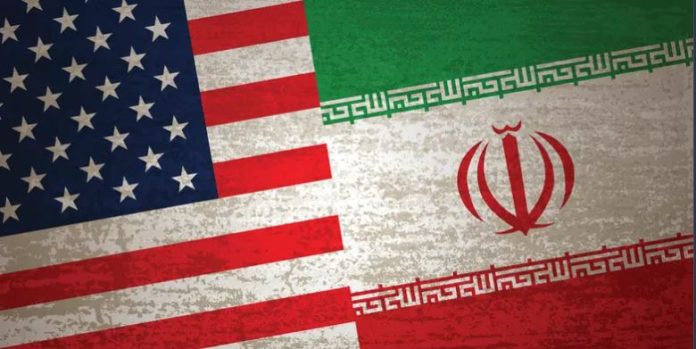
TEHRAN, JUN 14: A senior Iranian official told Reuters a final draft of the memorandum of understanding with the US covered a range of issues from Tehran’s nuclear work to reopening the Strait of Hormuz and US waivers on oil sanctions, with a final deal to be discussed in the 60 days following agreement by the two sides.

The Iranian official said the draft memorandum included the following:

Strait of Hoemuz

Iran immediately reopens the Strait of Hormuz to all commercial vessels, while the US lifts its naval blockade on Iranian ports
Financial

The US agrees not to impose any new sanctions on Iran until a final deal is reached
The US will waive oil sanctions on Iran for a specified period, allowing Tehran to sell oil and receive revenue
The US agrees to release $25 billion of Iran’s frozen assets, including via direct cash transfers, cooperation among regional countries, and financial credit lines.
Nuclear

Tehran agrees that it will neither produce nor acquire nuclear weapons
Tehran agrees to maintain the nuclear status quo until a final deal is reached, including by not enriching uranium and not expanding nuclear facilities
The US agrees Tehran will dilute its highly enriched uranium stockpile inside Iran, with a mechanism for doing so to be discussed within 60 days.

India win toss, elect to bat first against Pakistan in Women’s T20 World Cup clash

India win toss, elect to bat first against Pakistan in Women's T20 World Cup clash

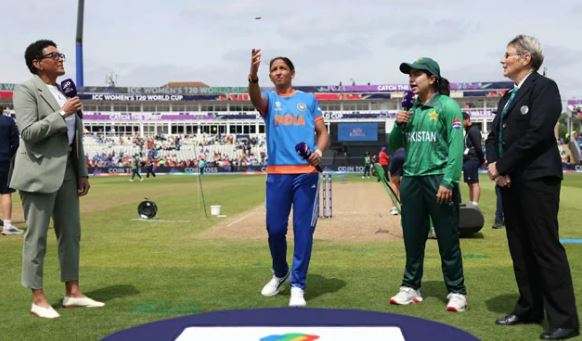
BIRMINGHAM, JUN 14: India won the toss and elected to bat first against Pakistan in their Women’s T20 World Cup fixture at Edgbaston in Birmingham on Sunday.

India hold a dominant record against Pakistan, having won 13 of the 16 T20 internationals between the sides, while Pakistan have claimed three victories.

Playing XIs

Pakistan: Gull Feroza, Muneeba Ali (wk), Ayesha Zafar, Saira Jabeen, Natalia Pervaiz, Aliya Riaz, Fatima Sana (c), Rameen Shamim, Nashra Sandhu, Sadia Iqbal and Tasmia Rubab.

India: Smriti Mandhana, Shafali Verma, Jemimah Rodrigues, Harmanpreet Kaur (c), Bharti Fulmali, Richa Ghosh (wk), Deepti Sharma, Arundhati Reddy, Kranti Gaud, Shree Charani and Shreyanka Patil.

‘Rulers deceiving themselves’: Opposition leaders reject budget, say public crushed by poverty

'Rulers deceiving themselves': Opposition leaders reject budget, say public crushed by poverty

ISLAMABAD: Opposition leaders on Sunday rejected the federal budget, accusing the government of ignoring economic realities, burdening citizens with taxes and failing to address rising poverty.

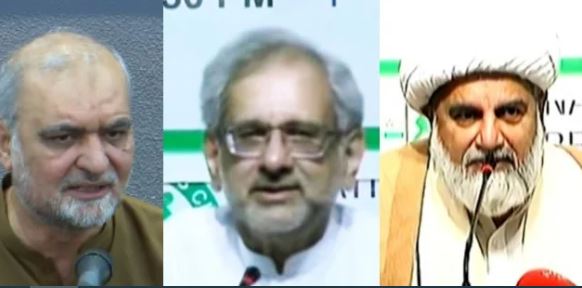
“They [rulers] are deceiving themselves,” Senate Opposition Leader Allama Raja Nasir Abbas said while addressing a budget seminar in Islamabad, criticising the government’s claim that a person earning Rs280 a day was not below the poverty line.


Abbas said the rulers were “not ready to see facts with their own eyes” and alleged that the government had failed to provide services to the people.

“The people of Pakistan are being crushed in the mill of poverty,” he said, adding that prices of food items were “touching the sky”.

Comparing the country’s finances to a household budget, the opposition leader said that when a family’s expenses exceeded its income, it came under the burden of debt and then started selling its assets.

“Pakistan’s income is less than its expenses,” he said, adding that no serious effort had been made to reduce expenses and increase income.

Abbas also warned that if the next elections were held under the same system, the results would be “the worst”.

‘Budget cannot succeed without solving public problems’
Tehreek-e-Tahafuz-e-Ayeen-e-Pakistan leader Mustafa Nawaz Khokhar said the rise in poverty was proof of the failure of economic policies.

“The real measure of economic growth is improvement in people’s lives,” he said, adding that life had become difficult for low-income groups.

Khokhar said a tax system could not be effective without state services, stressing that citizens must be provided with facilities if taxes were being collected from them.

“Economic success is meaningless if poverty is not reduced,” he said, adding that the budget could not succeed without solving public problems.

He said the government had failed to reduce its own expenses, while heavy taxes continued to be imposed despite a lack of services.

‘Budget is sign of economic crisis’
PTI senior leader Salman Akram Raja described the budget as an “economic emergency” for Pakistan, saying the country’s economy was trapped in a severe crisis and debt burden.

He said claims of economic development were contrary to reality, while the increase in loans posed a major threat to the country’s future.

“The federal government is trapped in interest payments,” he said, adding that running the system through loans was not a sustainable solution.

Raja said poverty was increasing instead of declining, while Pakistan was far behind in spending on health and education.

“Investment in human development is necessary for competing globally,” he said, adding that fundamental changes were needed to address the economic crisis.

‘No serious effort to cut expenses’
Former prime minister and Awam Pakistan Party leader Shahid Khaqan Abbasi said the last four years had been the worst for Pakistan’s economy.

He said government expenditure had become larger than development spending, while pension expenses had exceeded the cost of running the government.

“Interest and debt payments have started exceeding income,” Abbasi said, adding that the country’s debt was increasing every year and the crisis was becoming more serious.

He said additional taxes had placed a further financial burden on the people, while the government was taking new loans to meet its expenses.

Abbasi said budget relief claims appeared far from reality, adding that ordinary Pakistanis were bearing the burden of indirect taxes.

He also called for basic reforms in the system, saying investment would not come without rule of law, political stability and policy continuity.

‘Budget only changes numbers’
Jamaat-e-Islami Emir Hafiz Naeemur Rehman said Pakistan had a “cruel tax system” and claimed that the common man was paying 60% taxes.

“The people get no relief in the budget; only numbers are changed,” he said at a press conference in Islamabad.

Hafiz Naeem demanded the abolition of the petroleum levy and called for ending capacity charges of independent power producers.

He also said funds for MNAs in the Public Sector Development Programme should be abolished and official vehicles should not be above 1300cc.

“The budget has merely become the name of moving numbers up and down,” he said, adding that electricity, petrol and gas prices directly affected the public.

He said the government itself admitted pressure from the IMF, while large sums had been kept in the budget to hide incompetence.

Govt terms budget ‘relief-oriented’
Separately speaking during the National Assembly Session, Minister for Information and Broadcasting Attaullah Tarar termed the budget for the next financial year a “relief-oriented” budget that caters to the demands of all segments of society.”

He said that the budget has received a positive response from various quarters, including economists and opinion makers. He said the government welcomes constructive proposals from the opposition but emphasised that the positive measures introduced in the budget should also be acknowledged by members of the opposition.

Tarar said that substantial relief has been given to the salaried class in the budget, adding that this relief is for the entire salaried class. He pointed out that there is no tax on those earning up to Rs50,000, while those earning between Rs50,000 and Rs100,000 per month are subject to a tax rate of only one percent.

The information minister said that the country has achieved macroeconomic stability as a result of the consistent efforts of the present government. He also credited the Chief of Army Staff and Chief of Defence Forces Field Marshal Syed Asim Munir, for his contributions towards economic stability.

Expressing confidence in the country’s economic outlook, he said Pakistan’s economy is now firmly on the path of growth.

Referring to reforms in the FBR, Tarar said such a system has been introduced under which taxpayers will no longer bear the burden of those who do not pay taxes.

Tehran resists Trump’s timeline

Tehran resists Trump's timeline

The Israel Defense Forces launched targeted, precise missile strikes on the Dahiyeh neighborhood in Beirut’s southern suburbs

Centreline Report

TEHRAN: A high-stakes diplomatic race between Washington and Tehran has collided with a dangerous spike in regional violence. Even as U.S. President Donald Trump pushes for an immediate signing of a new Middle East framework agreement, Iranian state media reports that Tehran is slow-walking the process—accusing Trump of seeking personal mileage to celebrate his 80th birthday today, June 14, while Israeli airstrikes rock the Lebanese capital.

A major diplomatic showdown is unfolding on the timeline of the U.S. President’s birthday celebrations. While President Trump announced that a major Memorandum of Understanding to end the wider West Asia war and reopen the strategic Strait of Hormuz was close to being finalized, Tehran has aggressively put on the brakes. Iranian state negotiators flatly rejected the U.S.-driven timeline, with the Revolutionary Guards-affiliated Fars News Agency stating that Tehran has not yet taken or announced its final decision as experts continue to review the political, technical, and legal aspects of the framework.

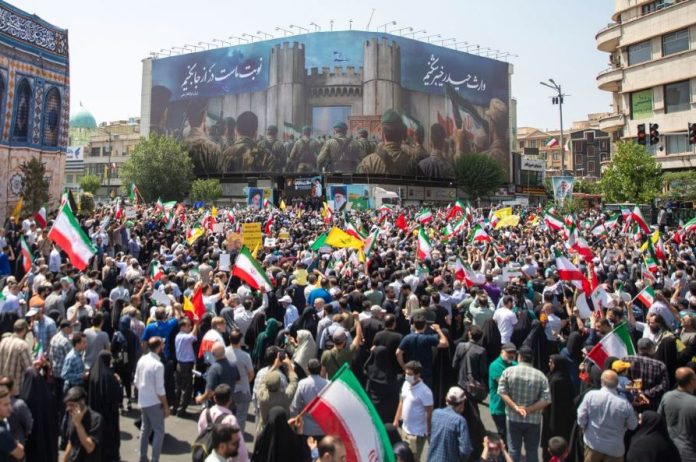
State-linked channels explicitly criticized Trump’s unusual insistence on signing the preliminary deal today, accusing the U.S. administration of trying to turn a sensitive national security agreement into a symbolic publicity event and political propaganda maneuver for the President’s personal benefit. Iranian officials clarified that while a deal in the coming days remains possible, it would certainly not happen today. Hardline factions within Iran have also launched street protests in cities like Mashhad, accusing their own diplomatic team of offering too many concessions to Washington.

Compounding the diplomatic gridlock, the battlefield in Lebanon has flared up violently, threatening to derail the fragile U.S.-led talks entirely. The Israel Defense Forces launched targeted, precise missile strikes on the Dahiyeh neighborhood in Beirut’s southern suburbs. According to joint statements from Israeli Prime Minister Benjamin Netanyahu and Defense Minister Israel Katz, the airstrikes targeted a Hezbollah command center. The attack resulted in casualties and sent thick plumes of smoke over the Lebanese capital. Israel stated the bombardment was a direct retaliation after Hezbollah launched projectiles and drones into northern Israeli territory earlier in the day.

The escalation strikes a direct blow to the peace process, as Iran has repeatedly insisted that a total cessation of hostilities in Lebanon is a non-negotiable prerequisite for any broader regional agreement with the United States. Following the strikes in Beirut, Ebrahim Rezaei, spokesperson for Iran’s parliamentary national security committee, issued a sharp warning to Washington, stating that if the United States seeks an agreement, it must control the Zionist regime, or it will ruin the agreement before the ink is dry.

 As Qatari mediators land in Tehran to salvage the multi-nation framework, the dual pressures of military escalation in Lebanon and political friction over the signing timeline leave the fate of the historic U.S.-Iran MoU hanging in the balance.

The Strategic Legacy Written in Shusha

The Strategic Legacy Written in Shusha

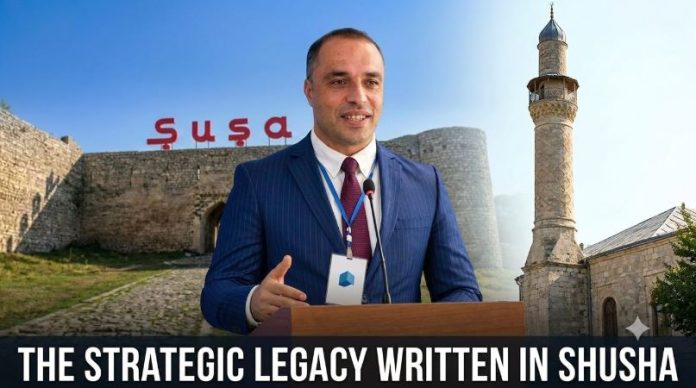
Farid Mustafayev

History does not merely explain the past; it also outlines the contours of the future. Documents signed between states often appear to be diplomatic formalities, yet there are some agreements whose significance transcends legal frameworks and becomes part of a nation’s strategic destiny. The Shusha Declaration is one such document.

When I reflect on this event, I do not view it simply as an agreement signed between two states. Rather, I see it as an expression of political will distilled from a long and shared historical memory. There are moments that go beyond the boundaries of diplomacy and become fundamental pillars shaping the security, cooperation, and future vision of entire nations.

The Shusha Declaration represents precisely such a moment. Relations between Azerbaijan and Türkiye have always been rooted in deep historical foundations. These ties have never been measured solely by political interests; they have been shaped by a common culture, linguistic affinity, historical memory, and the similar challenges both nations have faced throughout history. While times have changed, the essence of this bond has remained intact, becoming even stronger and acquiring new dimensions.

 The Declaration signed in the city of Shusha symbolizes the transition of these relations into a new phase. Shusha itself is not merely a city; it is one of the central symbols of cultural memory, national identity, and historical heritage. Consequently, a political message delivered from such a place carries a unique weight and profound moral significance.

The realities that emerged in the South Caucasus following the 2020 Patriotic War transformed the region’s geopolitical landscape. The long-standing status quo became a thing of the past, creating the necessity for a new security architecture. It was in this context that the Shusha Declaration was signed, securing its place in history as a significant document aimed at strengthening regional stability and strategic trust.

A closer examination of the Declaration reveals that it extends far beyond the concepts of friendship and cooperation. It envisages mutual support in defense matters, enhanced coordination in security affairs, and the elevation of strategic partnership to a higher level. This constitutes a powerful political message with direct implications for the regional balance of power.

In my view, one of the most important aspects of the Shusha Declaration is its future-oriented nature. Some documents are signed to affirm the past, while others are designed to shape the future. The Shusha Declaration belongs to the latter category. While formalizing existing relations, it also introduces a new model of strategic thinking. History demonstrates that sustainability in international relations depends not only on converging interests but also on reliable partnerships. Trust is a value forged through years of experience, strengthened during difficult times, and validated through concrete actions.

The strength of Azerbaijani-Turkish relations stems precisely from this reality. The Shusha Declaration also plays an important role in the formation of a new regional security architecture. At a time when global centers of power are shifting and regional processes are becoming increasingly complex, such agreements serve as essential pillars of stability.

Stability is preserved not only through domestic policies but also through effective international cooperation. Viewed from a broader perspective, the Declaration’s impact extends well beyond the immediate region. New opportunities are emerging in areas such as energy security, transport corridors, defense cooperation, and economic integration.

These opportunities will significantly influence the future development trajectory of the region.

The moral significance of the political message delivered from Shusha also deserves special attention. Some places connect the past with the present, and Shusha is one such place. Every document signed there embodies both respect for historical memory and responsibility toward the future.

 Looking back today, it becomes evident that the Shusha Declaration is not merely a diplomatic event but a strategic step symbolizing the beginning of a new era. By elevating the concept of cooperation to a deeper level, it places mutual trust and coordinated action at the center of regional relations.

In the contemporary international system, the position of states is determined not only by their resources but also by the alliances they establish. In this regard, the Shusha Declaration represents a significant milestone in Azerbaijan’s foreign policy strategy while also contributing to the emergence of new realities at both regional and global levels.

As time passes, the significance of this document will become even more apparent. History has shown that some decisions reveal their true impact not immediately, but years later. The Shusha Declaration is one of those strategic decisions whose consequences will be felt on a broader scale by future generations.

The essence of this document can be expressed in a single sentence: the strength derived from a shared past is transformed into a strategic will for a shared future. And this will lays the foundation for a new phase of stability, security, and development throughout the region.

Farid Mustafayev

“Progress” social and economic research public union deputy chairman , Member of the New Azerbaijan Party, Member Of The Western Azerbaijan Community, Board Member Of The Youth Anti-Drug Public Union

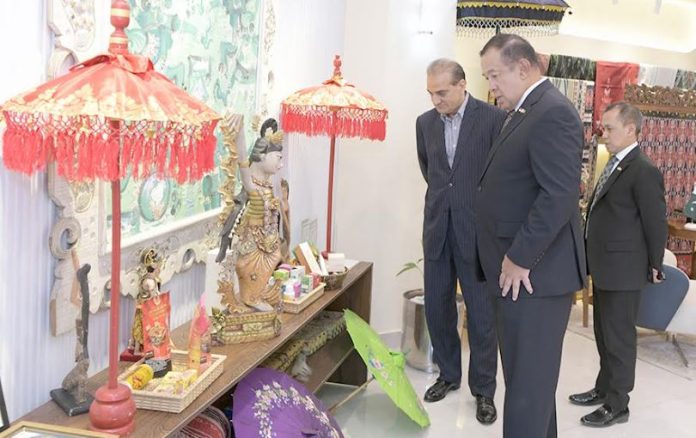
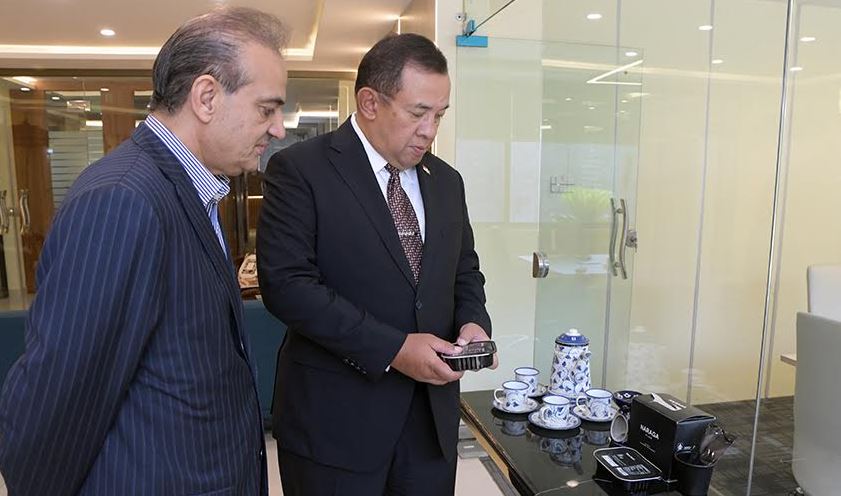
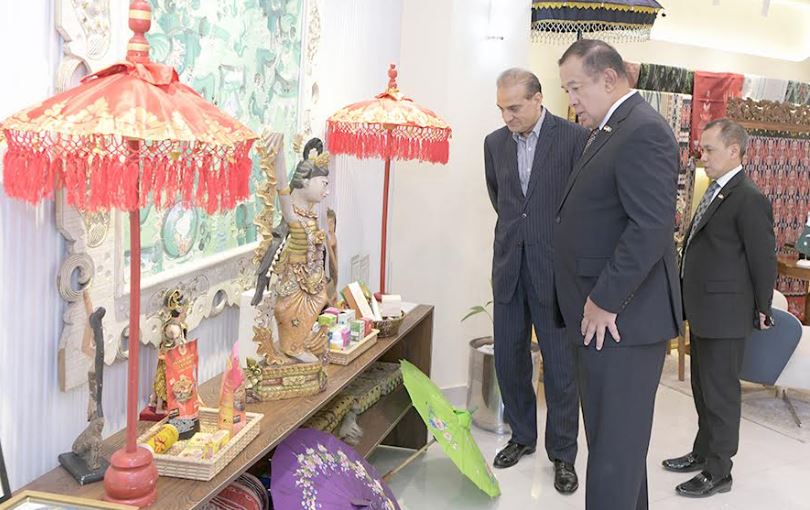
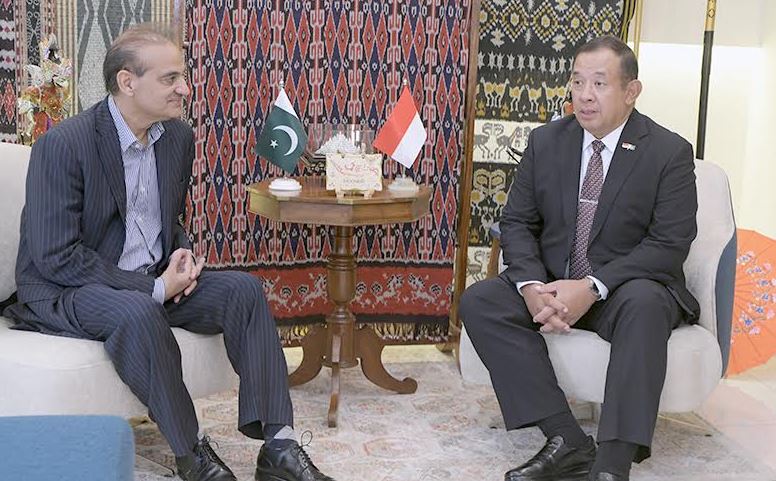
Amb. Sukotjo talks to Islamabad POST: Indonesia-Pak relations move toward Concrete outcomes

Indonesia-Pak relations move toward Concrete outcomes

Amb. Sukotjo talks to Islamabad POST: Indonesia-Pak relations move toward Concrete outcomes

Ansar M Bhatti / DNA

ISLAMABAD: In an exclusive conversation with Daily Islamabad POST, the Ambassador of Indonesia to Pakistan  H.E. Chandra W. Sukotjo highlighted the growing depth of bilateral cooperation across education, investment, regional policy, and tourism.

Speaking on academic exchanges, he explained that the Indonesian government annually offers the KNB Scholarship (Kemitraan Negara Berkembang), which promotes international cooperation by enabling students from developing countries to pursue higher education in Indonesia.

Indonesia-Pak relations move toward Concrete outcomes

Pakistan is currently the largest recipient, with more than 500 Pakistani students enrolled. In addition, several Indonesian universities independently provide scholarships for international students, including Pakistanis. He noted that hundreds of Indonesian students are studying in Pakistan, particularly at the International Islamic University Islamabad and Jaamia Binoria Aalamia in Karachi. Earlier this month, the Embassy also hosted a delegation from the World Universities Association for Community Development, which briefed on collaboration with OIC-COMSTECH to strengthen academic ties. The Ambassador expressed his readiness to support such initiatives to further enrich Indonesia-Pakistan relations.

On investment opportunities, the Ambassador identified halal pharmaceuticals and surgical equipment as immediate areas where Pakistani firms could move into co-production models within Indonesia’s regulatory framework.

Indonesia-Pak relations move toward Concrete outcomes

He also pointed to healthcare institutions, agriculture logistics, and cold chain infrastructure as promising sectors. For Indonesian investors in Pakistan, he emphasized edible oil refining, vaccine and pharmaceutical manufacturing, halal meat processing, IT development centers, fintech collaboration, and mining ventures in copper, gold, and lithium. These, he said, could transform bilateral economic engagement from commodity trade to infrastructure-led value creation.

Discussing ASEAN, the Ambassador reaffirmed Indonesia’s commitment to the ASEAN Way of peaceful dispute resolution, non-interference, and consensus-based decision-making. He highlighted ASEAN’s role in regional stability through forums such as the East Asia Summit and ASEAN Regional Forum. For Pakistan, he noted, ASEAN is a central pillar of the Look East policy, offering integration with a bloc of 11 member states representing over 700 million people and an economy nearing USD 4 trillion.

Indonesia-Pak relations move toward Concrete outcomes

Tourism was another area of focus. Indonesia, a leading global destination, hosted over 15 million tourists in 2025, though only a small fraction were from Pakistan. He shared that Pakistani tourist arrivals in Indonesia have steadily increased over the past five years, while the number of Indonesian tourists visiting Pakistan has also grown.

He underscored the potential for Indonesian construction firms to contribute to Pakistan’s tourism infrastructure and suggested that Indonesia’s hospitality expertise—particularly the “Bali model”—could help unlock the tourism potential of northern regions such as Hunza and Skardu.

Unrest amongst tobacco growers, government need to play a role 

Unrest amongst tobacco growers, government need to play a role 

Shamim Shahid 

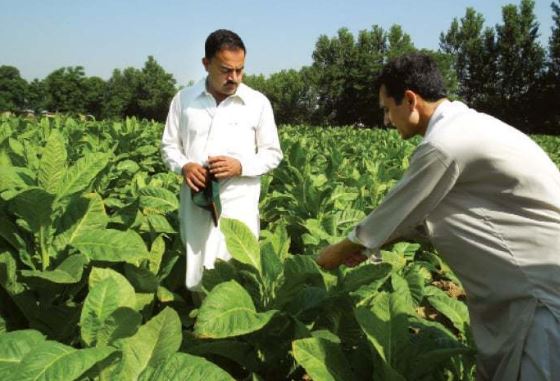
No one can neglect the fact that tobacco is considered a key factor of agriculture and agriculture based economy of the country. Almost of Peshawar Valley along with adjacent districts of Buner, Mansehra, Swat and several other parts and parcels throughout Khyber Pakhtunkhwa are known for production  of quality tobacco crops. 

All these regions are known for production of both Virginia and barley tobacco leaves. And beside others, almost cigarette manufacturing factories and industries are also exists in this region, thus tobacco is considered major revenue source for the government and Livelihoods for millions of people. 

Since a long tobacco is considered major cash crop of making self reliant maximum farmers, peasants, labourers and even industrialists and entrepreneurs. Earlier, till end of 20th century, the systems of tobacco production, its drying and selling to companies was remained very systematic and satisfactory, in according to rules and regulations framed by previous British colonial rulers. Similarly, the government had also constituted Pakistan Tobacco Board for playing a role of mediator between the two sides.

 Unfortunately, through one or the  other ways, like other government, semi government and autonomous bodies, the PTB had lost its credibility and become a toy in hands of multi national companies. Due to failure of PTB and other givernment institutions  from last over two decades, the multi national companies through one or the others made disturbed the procedures. Along with fixing choice rate, management of multi national, national and local companies are also reluctant to purchase almost of the produced crops. As a result, the growers ahead with huge losses. This time, the situation has been changed.

 The affected tobacco growers from all over Khyber Pakhtunkhwa have initiated a movement in a bid to force both Government and companies for purchasing all production in return of reasonable rates or prices. The tobacco growers from Swabi, Mardan and Bunet have constituted an Action Committee with active socio-political figure Muhammad Irshad Khan as its chief. The Action Committee members are holding shuttle cock meeting with authorities concerned for resolving of the issue, which besides ensuring sale of all produced dry Virginia leaves and burley leaves.

 Similarly, through Action Committee, the tobacco growers and exporters in Khyber Pakhtunkhwa have strongly criticized the government’s current tax policy, describing it as “tax upon tax” and an “economic massacre of thousands of families.” All such taxes posing bad impacts on growers rather than multi national companies and cigarette manufacturers. They demanding of both the federal and provincial governments to immediately abolish unnecessary and discriminatory taxes imposed on the tobacco sector in order to protect national exports and local employment. 

According to leaders of the farmers’ associations, tobacco is the only agricultural crop in Pakistan that is subjected to 11 different types of taxes from cultivation to sale. In addition to the provincial government’s tobacco cess of Rs. 27.50 per kilogram, another separate tax of Rs. 50 per kilogram has also been imposed. Representatives of the Tobacco Action Committee complained that both the federal and provincial governments are treating this vital sector of Khyber Pakhtunkhwa unfairly. They stated that cotton farmers and textile exporters in Punjab receive billions of rupees in incentives through electricity, gas, and export-duty concessions, whereas the tobacco sector in Khyber Pakhtunkhwa is being burdened with additional taxes instead of being provided similar support.

Exporters pointed out that around the world, exports are generally exempted from taxes to encourage trade and economic growth. However, tobacco exports from Pakistan are subject to heavy duties, making Pakistani tobacco less competitive in international markets.

They further stated that available statistics clearly show that the tobacco sector is among the country’s largest contributors to tax revenues and plays a significant role in Pakistan’s economy. The tobacco growers, traders, and exporters jointly appealed to the Prime Minister, the Finance Minister, the Interior Minister, and the Chief Minister of Khyber Pakhtunkhwa to immediately withdraw the provincial tobacco cess and the additional tax. They also demanded that tobacco exporters be granted the same facilities and incentives available to other export sectors so that foreign exchange earnings can increase and the livelihoods of thousands of families can be safeguarded.

French ambassador awards Francophonie Talents winner in Islamabad

French ambassador awards Francophonie Talents winner in Islamabad

ISLAMABAD, JUN 14 /DNA/ – The Ambassador of France to Pakistan, Nicolas Galey, presented the award to the winner of the Francophonie Talents competition during a ceremony held in the capital. The event, which celebrated linguistic and cultural diversity, brought together members of the diplomatic community and cultural enthusiasts.

The ambassadors of Romania and Belgium were also present on the occasion, standing alongside the French envoy as he handed over the prize to the recipient. Their presence underscored a spirit of diplomatic camaraderie and shared commitment to promoting the French language and Francophone culture in Pakistan.

Following the award ceremony, guests were treated to a Francophonie buffet, adding a culinary dimension to the evening’s cultural exchange. The event highlighted the continued relevance of Francophone cooperation and the role of cultural diplomacy in strengthening international ties. — DNA

Brazil and Morocco share the spoils in World Cup clash

Brazil and Morocco share the spoils in World Cup clash

DNA

RIYADH: One of the most anticipated matches of the 2026 FIFA World Cup group stage came to a close with neither side able to find a winner.

Brazil and Morocco played out a 1-1 draw in front of a sell-out crowd at the MetLife Stadium, with Ismael Saibari and Vinicius Junior canceling each other out in the first half. But the frantic opening period left much to be desired in the second.

Morocco kicked off the Mohamed Ouahbi era at a blistering pace. For long spells of the opening exchanges, it looked as though the five-time world champions were not wearing yellow and blue, but red and green.

The Atlas Lions gave Brazil little room to breathe and almost capitalized on their early pressure, if not for a series of blocks from Gabriel Magalhaes.

After their energetic start, Morocco dropped into a 4-4-2 shape and allowed Brazil to enjoy more of the ball.

It was then that Vinicius Junior began to emerge, narrowly getting the better of Achraf Hakimi down the left flank before delivering a cross toward Igor Thiago, who could not direct his header on target.

But that shift in momentum ultimately led to the opening goal. In the 21st minute, Brahim Diaz threaded a pass through the Brazilian defense for Ismael Saibari, who caught Alisson off his line with a chip and calmly finished for the opener.

A hydration break immediately followed, but it did not halt Morocco’s momentum. Hakimi grew into a more attacking role, driving deep into Brazil’s half before unleashing a shot that went wide of Alisson’s goal.

Vinicius Junior had other plans, however. Just five minutes later, he received a pass from Bruno Guimaraes on the left flank before beating Neil El-Aynaoui and curling a crisp finish beyond Yassine Bounou to level the score. Morocco switched off for a brief moment and the Selecao immediately capitalized.

If the first half was played at a blistering pace, the second was the complete opposite. Morocco were content to allow Brazil, who introduced Danilo and Fabinho in place of Roger Ibanez and Casemiro, more time on the ball.

The Atlas Lions appeared content to settle for a point — the contrast in their attacking output between the two halves was striking.

Morocco registered 12 attempts before the break, but failed to muster another shot until stoppage time.

Brazil threatened from time to time, but their attacking output was largely muted by Morocco’s disciplined low block.

They found a gap in the 77th minute when Vinicius Junior burst forward on the counterattack and picked out Raphinha inside the box, but the Barcelona winger’s effort was comfortably saved by Bounou.

The Selecao almost found a late winner in the 83rd minute when Issa Diop misjudged a back pass to Bounou, allowing Raphinha to nearly latch onto the loose ball. The Moroccan goalkeeper reacted quickly, however, racing off his line to clear the danger.

In the eighth minute of stoppage time, the Atlas Lions almost found a winner themselves. El-Aynaoui unleashed a powerful effort from distance that Alisson could only parry into the path of substitute Ayoube Amaimouni.

The forward looked destined to snatch a dramatic winner, but the Brazilian goalkeeper reacted brilliantly to produce a stunning point-blank save.

In the end, neither side was able to find a breakthrough. Morocco will likely be the happier of the two teams after frustrating Carlo Ancelotti’s side, while Brazil were left to reflect on a match in which they struggled to consistently break down a well-organized Atlas Lions defense.

Beyond the result, one of Morocco’s brightest positives on the night was the performance of 18-year-old Ayyoub Bouaddi.

The midfielder, who switched his international allegiance to Morocco just last month, looked completely at ease on his World Cup debut.

His composure in possession and ability to progress the ball under pressure provided the Atlas Lions with a valuable outlet throughout the contest.

England reunited with World Cup kit after ‘heist’

Two men charged over theft of $18,000-worth of kit and equipment from England, says US prosecutor

England goalkeeper Dean Henderson said he had his boots back after training equipment was stolen ahead of the squad’s arrival at their World Cup training base on Saturday.

Kansas City mayor Quinton Lucas earlier put out a statement on the “heist”.

He said officials at “local, state and federal levels” were investigating the theft from vehicles transferring equipment from England’s training camp in Florida.

But is understood most of the items have now been recovered.

Henderson was asked after England’s first training session at Swope Soccer Village whether he had lost his boots.

“I think I did, but I got them back, so it’s all good,” said the Crystal Palace goalkeeper.

“I think they got everything back, so it’s all good.”

Defender Dan Burn was relaxed about the episode.

“Obviously it was to do with the police,” he said. “So I don’t know how much people know about it. We didn’t know a lot about it, but I’ve got all my kit and all my boots.”

Thomas Tuchel’s England, among the favourites to win the World Cup, had a gentle training session in front of scores of watching fans on Saturday.

They open their World Cup campaign against Croatia on Wednesday, before further games in Group L against Ghana and Panama.

Meanwhile, two men were charged Saturday over the theft of $18,000-worth of kit and equipment from the England team at the World Cup, a US prosecutor said.

Mustafa Salik and Erfan Kamal each face one count of receiving stolen property, according to a statement from the office of Jackson County Prosecutor Melesa Johnson.

The offence under Missouri law carries a prison sentence of up to seven years.

Johnson’s office said in a statement that the stolen property is estimated to be worth about $18,000.

“Jackson County will not tolerate any criminal activity that targets World Cup visitors, including the international teams that have traveled here to compete,” Johnson said.

“We thank the Kansas City Police Department and our on-call attorneys for their quick work investigating this incident and filing charges immediately.”

APNS Federal Committee demands fair distribution of advertisements

APNS Federal Committee demands fair distribution of advertisements

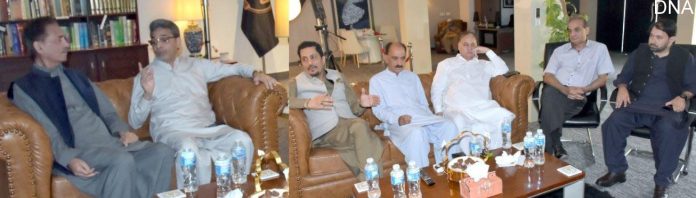
The participants urged the need for fixing meetings with Minister for Information and Broadcasting Attaullah Tarar, Secretary Information and the Principal Information Officer to force them to resolve these issues

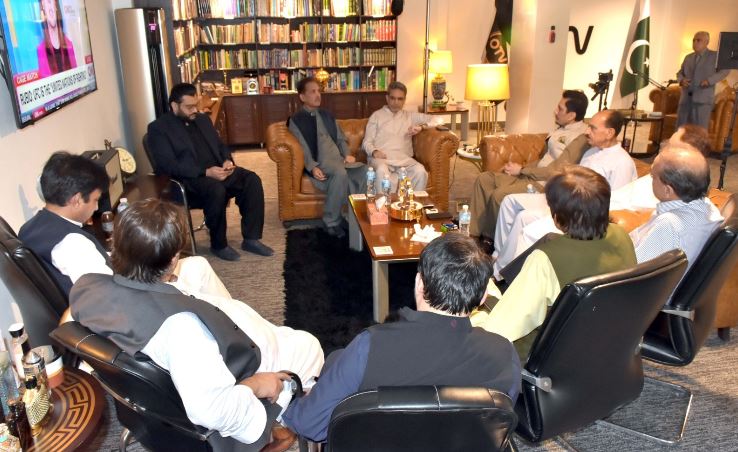
ISLAMABAD, JUN 14 /DNA/ – A meeting of the Federal Committee of the All Pakistan Newspapers Society (APNS) was held at Ali Akbar House, Islamabad, chaired by the Committee Chairman and Editor-in-Chief of Pakistan Observer, Mr. Faisal Zahid Malik.

The meeting reviewed in detail the issues facing the newspaper industry. Participants expressed grave concern that the newspaper industry is currently facing a severe crisis and its survival is at stake, and therefore the government and relevant authorities must take immediate action. Participants regretted that the Ministry of Information & Broadcasting and its subordinate bodies have failed to ensure fair and transparent distribution of advertisements to newspapers. Furthermore, the Press Information Department (PID) has not cleared newspaper dues despite several years having passed.

The meeting noted that three years have passed since the current government came to power, but during this period no effective measures have been taken for the welfare of the newspaper industry or to resolve its financial difficulties. Participants demanded that at least 50% of outstanding dues be paid immediately during June 2026 to ease the financial hardships faced by newspapers. The meeting also emphasized that the current system of government advertisement distribution has been unjust for a long time and must be made transparent and merit-based without delay.

Federal Committee members warned that if dues are not paid within the next six months, APNS will consider suspending advertisements for defaulting government institutions again. Participants also expressed dissatisfaction that PID’s role in recovering payments from various government institutions has not been effective. The meeting demanded that immediate meetings be arranged with the Federal Minister for Information & Broadcasting Attaullah Tarar, the Secretary of Information, and the Principal Information Officer to take practical steps to resolve the issues facing the newspaper industry.

Participants urged APNS leadership to review various public and private clients and make the dues recovery process more effective and organized. It was also agreed that unity and solidarity among all APNS members is essential for the protection of the newspaper industry.

At the conclusion of the meeting, it was decided that the next meeting of the APNS Federal Committee will be convened soon to review progress on these matters.

The meeting was attended by Hafiz Asim (Nawa-i-Waqt/The Nation), Naveed Niazi (Daily Pakistan), Ansar Bhatti (Centreline), Tariq Mughal (Nawa-i-Pak), Waseem Ahmed (Daily Awaam), Syed Ahmed Ali (Daily Jang), Khushnood Ali Khan (Daily Sahafat), Rafi Niazi (Daily Patriot), and Syed Irfan Shah.

Stay Connected

64FansLike
60FollowersFollow

Latest Reviews

Exchange Rates

USD - United States Dollar
EUR
1.15
GBP
1.35
AUD
0.70
CAD
0.71