Home Blog Page 89

Saudi Arabia welcomes US-Iran agreement

Saudi Arabia welcomes US-Iran agreement

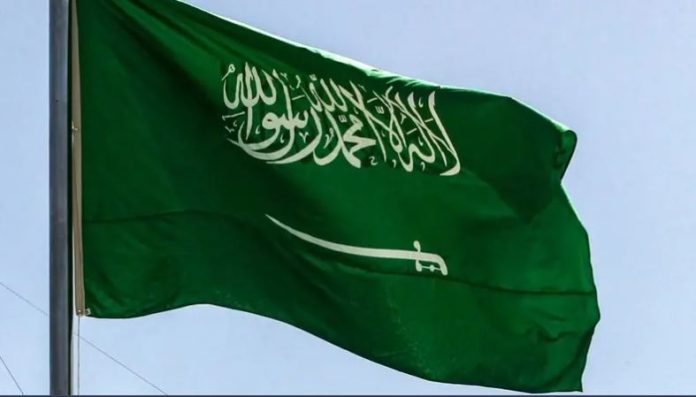
RIYADH, JUN 15: Saudi Arabia on Monday welcomed a US-Iran agreement to end hostilities and kickstart peace talks, adding that any lasting arrangement should take into account the security interests of the region.

The Kingdom welcomed “the agreement reached between the United States of America and the Islamic Republic of Iran to end military operations and initiate detailed negotiations within 60 days to reach a permanent agreement,” the foreign ministry said in a statement shared on X.

The Kingdom said it appreciated the mediation efforts undertaken by Pakistan and Qatar as well as the response to these efforts by both the US and Iran.

It also underscored the importance of restoring security and the freedom of navigation in the Strait of Hormuz to how it was before the war broke out in February.

The Kingdom said it hopes that peace will be achieved in a manner that enhances regional and global security through a lasting deal that would “take into consideration the security interests of regional states, sticking to the principle of non-interference in the interior affairs of other countries.”

Iran team arrives in US for Fifa World Cup opener

Iran team arrives in US for Fifa World Cup opener

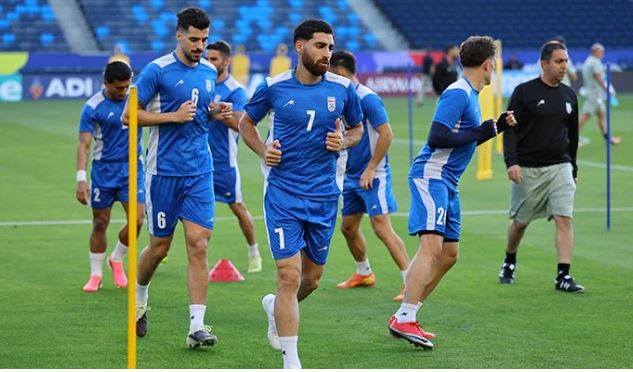
LOS ANGELES, JUN 15: Iran’s soccer team arrived in the United States for the first time at this World Cup on Sunday, landing at Los Angeles International Airport and holding a press conference on the same day that a peace deal between the two nations was announced.

The Iran squad arrived after a short flight from Tijuana, Mexico, where they left their base camp earlier to a rousing sendoff ahead of their opening game against New Zealand at Los Angeles Stadium on Monday.

“I am very happy to be representing the great, proud and strong nation of Iran,” Iran coach Amir Ghalenoei said through a translator in a press conference at the stadium.

“I hope that football will bring about joy and enjoyment, and bring closer the cultures and countries.”

The squad’s Group G fixture against New Zealand will be played against the backdrop of the US war with Iran and the newly-announced peace deal, adding a charged atmosphere to a contest between two nations who have never met at a World Cup.

Iran moved their World Cup base camp from a sports complex in Arizona to Mexico late last month after the US and Israel conducted joint strikes on Iran beginning in late February.

Iran will now have to make the trip from Mexico to the US for each of their three group matches and Ghalenoei said the travel and the denial of visas into the US for some members of their soccer federation had negatively affected the squad.

The US-Iran deal to end the war will be signed during an official ceremony on Friday in Switzerland, US President Donald Trump and Pakistani Prime Minister Shehbaz Sharif said on social media on Sunday.

Ghalenoei said the squad’s players and coaches were “not political people.”

“We are here to play football and represent the respectful people of Iran, be it the Iranians inside Iran or the Iranian diaspora.”

‘Mexico stands with you’
Earlier in Tijuana, supporters lining five-deep on a packed sidewalk outside Iran’s hotel chanted “Team Melli” — Persian for “national team” — as the Iranian players emerged from the hotel and walked towards the waiting bus.

Many of the players waved and smiled at those who had gathered while some members of the delegation took video of the scene with their phones.

One supporter held a yellow sign with black lettering reading: “Iran, you will never walk alone. Mexico stands with you.”

A young boy perched on someone’s shoulders clutched the official Panini Fifa World Cup 2026 sticker album, open to the Iran squad page.

At one point, the crowd sang in Spanish, “Iran, brother, you are Mexican now.”

Iranian soccer federation President Mehdi Taj stood outside the hotel as the players left with many of the supporters following the bus down the street as it drove away.

The Iranian community in Tijuana is tiny – around 20 people – and much smaller than that of Los Angeles, which is home to the largest Iranian community outside Iran.

Tens of thousands of Iranian Americans live in Los Angeles, where a distinct diaspora often referred to as “Tehrangeles” has taken root.

This is the first World Cup ⁠since its inception in 1930 in which a host nation has received a country it is at war with.

Britain to ban under 16s from social media

Britain to ban under 16s from social media

LONDON, JUN 15: British Prime Minister Keir Starmer said he would ban social media sites for the under-16s and impose restrictions on gaming and livestreaming platforms, in some of the most far-reaching online restrictions to date globally.

Starmer said on Monday he would introduce sweeping changes to social media regulation to better protect the well-being of children when they are online.


“It is clear to me a full ban is the right choice,” he said, adding that while it would not be easy, the government had agency in pushing back against the power of big technology companies.

Britain has increasingly toughened its approach to tech companies in recent years, urging or forcing them to impose age verification, adapt their algorithms and, most recently, prevent children from circulating nude images taken on mobile phones.

But with a growing awareness of the mental health risks posed by children spending too much time online, Starmer has decided to go further after speaking to parents and considering evidence from Australia, which brought in a ban for under 16s last year.

Starmer, who is likely to face a leadership challenge in the coming weeks, said people rightly expected action.

Australia leads the way
Australia was the first country to ban social media for children under 16, blocking them in December from platforms including TikTok, Alphabet’s YouTube and Meta’s Instagram and Facebook.

Since then, a raft of countries has said they are looking to regulate access to social media amid mounting concerns over the impact on children’s health and safety.

Britain has consulted teachers, parents and young people on new restrictions, including a possible ban for under-16s, as well as curfews, app time limits and curbs on what the government has described as addictive design features.

It received more than 116,000 responses from parents, industry and young people. More than 83% of parents who responded said risks from social media outweighed benefits, while 90% backed a minimum age of 16 to access social media platforms.

While many parents and politicians back a ban, some psychologists and researchers have said there is no proof that it would work, and a group of school children in London told Reuters they had a conflicted relationship with the technology.

‘Clinically stable’: Imran Khan receives fifth eye injection during follow-up at Pims

'Clinically stable': Imran Khan receives fifth eye injection during follow-up at Pims

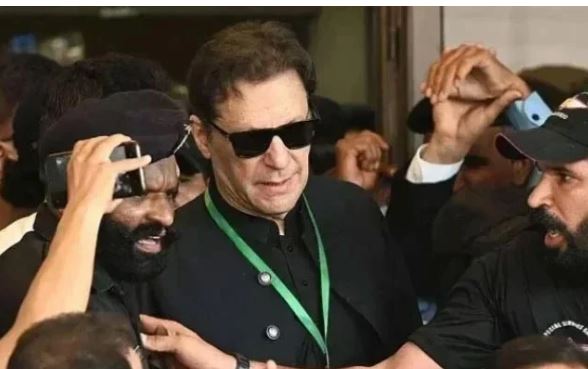
ISLAMABAD, JUN 15: Pakistan Tehreek-e-Insaf (PTI) founder Imran Khan was brought to the Pakistan Institute of Medical Sciences (Pims) on Monday for a scheduled follow-up eye treatment, where doctors administered his fifth intravitreal injection after medical examinations indicated clinical improvement in his condition.

According to a statement issued by the Pims administration, the 74-year-old politician — who is currently incarcerated at Rawalpindi’s Adiala jail — underwent the procedure as part of ongoing treatment for an eye condition that has required a series of intravitreal injections.

Hospital officials said ophthalmologists examined the ousted prime minister before the procedure and found him “clinically stable”. “[Imran’s] optical coherence tomography was performed, which showed clinical improvement,” the statement added.

Pims officials said the procedure was performed under microscopic guidance by specialist surgeons and was completed as a day-care intervention without complications.

“During the course of his stay, he remained vitally stable before, during and after the procedure and was discharged along with instructions for further care and follow-up advice and documents,” it added.

The latest procedure marks the fifth intravitreal injection administered to Imran Khan as part of his ongoing ophthalmic treatment. He was earlier shifted to the hospital from Adiala jail on April 28, when he received the fourth dose following a comprehensive examination.

While PIMS did not disclose the exact diagnosis or medication used, intravitreal injections are commonly employed in the management of retinal diseases, including diabetic eye disease, retinal vein occlusion and age-related macular degeneration.

Officials did not indicate when the next follow-up examination would take place, but sources familiar with the treatment process said patients receiving serial intravitreal injections are usually monitored periodically to assess response and determine the need for further doses.

The jailed PTI founder was diagnosed with central retinal vein occlusion (CRVO), a serious eye condition, according to a report submitted to the Supreme Court by his lawyer and the court’s amicus curiae, Salman Safdar.

The condition occurs when the main vein draining blood from the retina becomes blocked and is often associated with cardiovascular risk factors such as high blood pressure, high cholesterol, diabetes and heart disease.

PAF, Navy pilots martyred in trainer aircraft crash near Mardan: ISPR

PAF, Navy pilots martyred in trainer aircraft crash near Mardan: ISPR

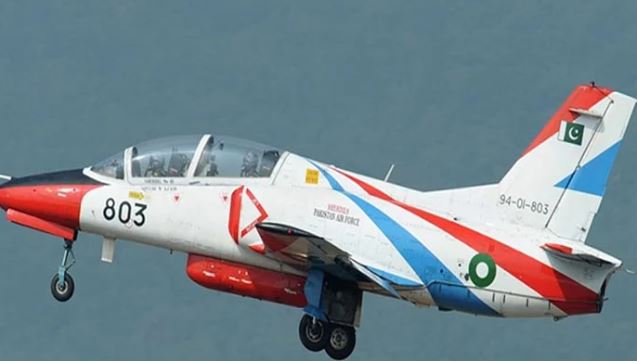
RAWALPINDI, JUN 15: A Pakistan Air Force (PAF) trainer aircraft on a routine training sortie crashed near Mardan on Monday, martyring both pilots on board, the Inter-Services Public Relations (ISPR) said in a statement.

According to the military’s media wing, the pilots were identified as Flight Lieutenant Muhammad Qasim Abdullah of the PAF and Lieutenant Taha Abbasi of the Pakistan Navy.

Air Headquarters has constituted a board of inquiry to ascertain the cause of the accident, the statement said.

Chief of Army Staff and Chief of Defence Forces, Field Marshal Asim Munir, along with the services chiefs and all ranks of the Pakistan Armed Forces, expressed deep grief over the tragic loss of precious lives and extended heartfelt condolences to the bereaved families.

The latest crash occurred five days after another aircraft accident.

Earlier on June 10, an Mi-17 helicopter of the Pakistan Army Aviation crashed near Muzaffarabad on Wednesday due to “technical fault” occurred during the chopper’s take-off, the military’s media wing said.

“All personnel on board embraced Shahadat. There were no survivors,” the ISPR said. It added that a board of inquiry has been ordered to ascertain the exact technical cause of the accident.

Last year in September, five personnel were martyred when an army helicopter crashed in Gilgit-Baltistan’s Diamer district due to a technical fault.

Meanwhile, President Asif Ali Zardari and Prime Minister Shehbaz Sharif expressed deep grief over the crash of a Pakistan Air Force (PAF) trainer aircraft near Mardan that claimed the lives of two pilots.

In separate statements, President Zardari paid tribute to Flight Lieutenant Muhammad Qasim Abdullah and Lieutenant Taha Abbasi, who embraced martyrdom in the accident.

The president prayed for the elevation of the martyrs’ ranks and for strength and patience for their bereaved families.

He said the nation would always remember the sacrifices of its brave sons who laid down their lives in defence of the country, and extended heartfelt condolences and sympathies to the grieving families.

Prime Minister Shehbaz also expressed sorrow over the crash and offered condolences on the martyrdom of Flight Lieutenant Muhammad Qasim Abdullah of the Pakistan Air Force and Lieutenant Taha Abbasi of the Pakistan Navy.

The premier prayed for the departed souls and for the bereaved families to bear the loss with courage and fortitude.

He said the professionalism and dedication of Pakistan’s armed forces in defending the country were unparalleled, and extended his sympathies to the families of the two martyred officers.

US-Iran deal a “triumph” of peace, diplomacy; Pakistan to host Geneva signing ceremony on Jun 19: PM

US-Iran deal a “triumph

Ansar M Bhatti

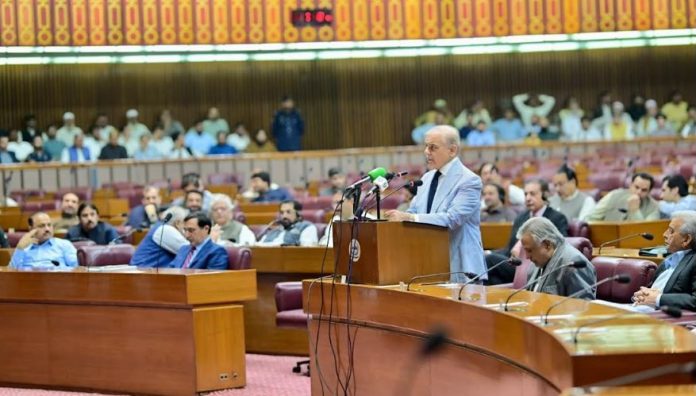
          ISLAMABAD, JUN 15 /DNA/ – Prime Minister Shehbaz Sharif on Monday announced that Pakistan would host the historic signing ceremony of the US-Iran peace agreement in Geneva on June 19, terming the deal a “monumental milestone” for global peace and a “triumph” of peace and dialogue over the devastation of war.

“Today the world has witnessed that the pursuit of peace has achieved a great victory and the flames of war have begun to subside. This is a historic moment that historians will record in golden letters,” the prime minister said, addressing the National Assembly, hours after he and President Donald Trump announced that the deal between the United States and Iran had been reached.

Describing the moment as a divine blessing after three months and sixteen days of immense trials, he said, “Following the dark night of war, the sun of peace has finally risen.”

He told the House that under the deal, Iran and the US have announced the immediate and permanent end to military operations on all fronts, including Lebanon.

“This is not just an agreement between two nations, but a victory for peace, dialogue, and diplomacy over the devastation of war,” the prime minister said, adding that the prestige and honor Allah has bestowed upon Pakistan today is something nations seek for centuries.

Prime Minister Shehbaz expressed deep gratitude to Qatar’s Amir Sheikh Tamim bin Hamad Al Thani, Saudi Crown Prince Mohammed bin Salman, Turkish President Recep Tayyip Erdogan, Chinese President Xi Jinping, US President Donald Trump, Iranian Supreme Leader Mojtaba Khamenei and President Dr. Masoud Pezeshkian, alongside the negotiation teams of both countries, for demonstrating immense wisdom, prudence, and patience under extremely difficult circumstances.

He extended heartfelt congratulations to the entire Pakistani nation including President Asif Ali Zardari, PPP Chairman Bilawal Bhutto Zardari, PML-N leader Mian Muhammad Nawaz Sharif, and other party heads for their guidance and support.

He particularly praised the extraordinary role played by Field Marshal Syed Asim Munir, who devoted day and night to bring an end to the war and securing peace.

He said that there were some critical moments when negotiations seemed close to falling apart, but the Field Marshal remained steadfast which ensured this monumental success.

The prime minister also lauded Deputy Prime Minister and Foreign Minister Senator Mohammad Ishaq Dar, Interior Minister Mohsin Naqvi, and Foreign Ministry’s team and other institutions for their tireless efforts.

The prime minister called upon the nation to offer prayers of gratitude to Allah Almighty for bestowing unprecedented honour and dignity upon Pakistan.

Acknowledging the economic toll, the prime minister noted that the devastating effects of the conflict had placed immense pressure on Pakistan’s economy, but the nation demonstrated exemplary resilience.

He commended the federal and provincial leaderships, particularly the provincial chief ministers, for playing an excellent role during this period.

He assured the nation that the fruits of global economic stability resulting from this peace accord would reach the doorstep of every Pakistani through joint efforts, and the government would not rest until this responsibility was fulfilled.

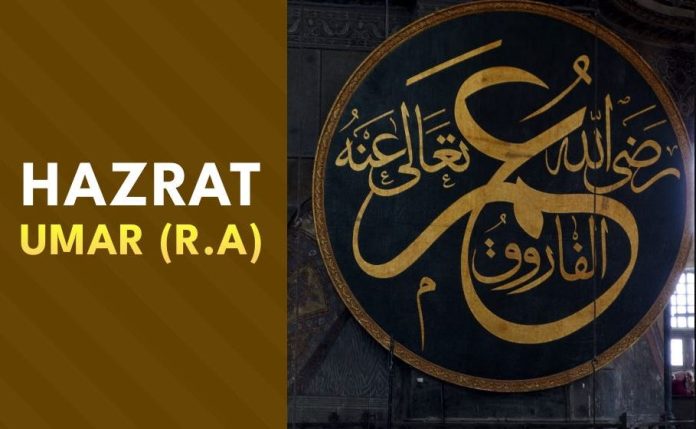
Hazrat Umar (R.A.): Model of Justice & Leadership

Hazrat Umar (R.A.): Model of Justice & Leadership

Written by: M Rashid Tabassum

Among the greatest personalities in Islamic history, Hazrat Umar ibn al-Khattab (R.A.) occupies a unique and prominent place. Known for his bravery, wisdom, and commitment to justice, he played a pivotal role in strengthening Islam and building one of the most successful systems of governance in history. His life offers valuable lessons in leadership, accountability, and public service that remain relevant even today.

Hazrat Umar (R.A.) was born in 583 CE in Makkah and belonged to the respected Quraysh tribe. From an early age, he was known for his strong character, intelligence, and leadership qualities. He worked as a caretaker of camels and developed skills in horse riding, wrestling, and warfare. At a time when literacy was uncommon, he was among the few people in Makkah who could read and write. Because of his confidence and influence, he was widely respected in Quraysh society.

Initially, Hazrat Umar (R.A.) strongly opposed Islam. However, the Holy Prophet Muhammad (S.A.W) prayed that Allah strengthen Islam through either Umar ibn al-Khattab or Abu Jahl. Allah accepted this prayer, and Hazrat Umar (R.A.) embraced Islam in the sixth year of Prophethood. His acceptance of Islam marked a turning point for the Muslim community, which gained confidence and strength from his support. Recognizing his commitment to truth, the Prophet (S.A.W) gave him the title “Al-Farooq,” meaning the one who distinguishes between truth and falsehood.

Furthermore, Hazrat Umar (R.A.) remained a close companion of the Prophet Muhammad (S.A.W) and participated in most of the major battles (Ghazwaat). His daughter, Hazrat Hafsa (R.A.), later married the Prophet (S.A.W), strengthening his bond with the Prophet’s family. The Prophet (S.A.W) greatly valued his faith and character, and his opinions often reflected deep wisdom and sincerity.

Following the passing of the Prophet Muhammad (S.A.W), Hazrat Umar (R.A.) played an important role in supporting Hazrat Abu Bakr (R.A.) as the first Caliph. During Abu Bakr’s caliphate, he served as a trusted advisor and close companion. Before his death, Hazrat Abu Bakr (R.A.) nominated Hazrat Umar (R.A.) as the second Caliph of Islam.

As Caliph, Hazrat Umar (R.A.) established an exemplary system of governance based on justice, consultation, and accountability. In his first address, he invited people to correct him if he ever deviated from the teachings of Islam. This reflected his belief that leadership was a responsibility rather than a personal benefit.

During his ten-year caliphate, the Islamic state expanded significantly, reaching Iraq, Persia, Syria, Palestine, Egypt, and parts of Central Asia. Alongside these achievements, he introduced important administrative reforms. He established the Bayt al-Mal, organized the judiciary and military departments, introduced the Hijri calendar, conducted population censuses, and developed roads and canals. He also ensured salaries for teachers, judges, and public officials.

In 23 Hijri, Hazrat Umar (R.A.) was martyred by Abu Lu’lu’a al-Majusi. Before his passing, he appointed a committee of senior companions to select the next Caliph, demonstrating his commitment to consultation and stability.

Today, Hazrat Umar (R.A.) is remembered as a symbol of justice, integrity, and effective governance. His life continues to inspire leaders and societies seeking fairness, accountability, and service to humanity.

The Ball and the Bridge: Pakistan’s Quiet Contributions to the World

The Ball and the Bridge: Pakistan’s Quiet Contributions to the World

by Muhammad Mohsin Iqbal

In a world often divided by politics, geography, and competing interests, there are few forces capable of bringing humanity together on a common platform. Football is one of those rare forces. Known as soccer in some countries, it is far more than a sport. It is a universal language spoken by millions, transcending borders, cultures, races, and creeds. From the bustling streets of great cities to the remotest villages, the game inspires dreams, ignites passions, and fosters a sense of shared humanity that few other activities can rival.

The FIFA World Cup 2026, being staged across sixteen cities in the United States, Canada, and Mexico, once again captures the imagination of the world. Nations compete for glory, players strive for immortality, and billions of spectators follow every pass, tackle, and goal with unwavering devotion. Pakistan, regrettably, is not among the participating teams. Yet to conclude that Pakistan is absent from this grand spectacle would be to overlook a remarkable reality.

At the very heart of the tournament lies a contribution that bears the unmistakable imprint of Pakistani craftsmanship. The official match ball of the FIFA World Cup 2026, aptly named “Trionda,” has been manufactured in Sialkot, a city whose name has become synonymous with excellence in sports goods. For decades, Sialkot’s skilled artisans and modern manufacturing units have supplied footballs to the most prestigious tournaments in the world. The footballs used in previous FIFA World Cups, UEFA Champions League finals, and numerous international competitions have often originated from this industrious city.

The story of Sialkot is one of perseverance, skill, and quiet achievement. Though the finished products may eventually carry the logos of international brands, the world is well aware of where these footballs are born. Every stitch, every panel, and every carefully engineered design reflects the expertise of Pakistani workers whose hands help shape the very game that captivates billions. Pakistan may not be competing on the field, but it remains an indispensable participant in the tournament itself. Without the products manufactured in its factories, many of the world’s greatest sporting occasions would be difficult to imagine.

This phenomenon is not unique to sport. Nations often contribute to global affairs in ways that extend beyond headlines and formal recognition. At present, the world faces another challenge of far greater consequence than any sporting contest. The tensions and conflict involving the United States and Iran have cast a long shadow over international stability. The disruption of energy supplies and the resulting uncertainty in oil markets have sent tremors through the global economy. Nations far removed from the immediate theatre of conflict have felt the effects through rising costs, economic anxiety, and concerns over regional security. The peace and prosperity of the Gulf region, so vital to global economic well-being, have also been placed under strain.

In these difficult circumstances, Pakistan has sought to play a constructive and responsible role. Recognising the dangers of prolonged confrontation, the country’s civil and military leadership worked with determination to encourage dialogue and understanding. Diplomatic engagements intensified, consultations were held, and efforts were undertaken to facilitate communication between the concerned parties. Pakistan’s objective was neither political gain nor international acclaim; rather, it was the pursuit of peace in a region whose stability affects the entire world.

The endeavour demanded patience, persistence, and an unwavering commitment to reconciliation. Diplomacy is seldom dramatic. Its successes are often measured not by public celebrations but by crises averted and conflicts prevented. Yet such efforts matter profoundly. They represent the belief that dialogue is preferable to confrontation and that cooperation is more enduring than hostility.

Reports now suggest that an understanding between the concerned parties may be within reach. While there had been hopes that a formal agreement might emerge in Islamabad, indications point towards Switzerland as the likely venue for any final accord. The location, however, is of secondary importance. What truly matters is the prospect of peace and the collective efforts that have contributed to bringing it closer. Pakistan can take satisfaction in having played its part in this process, helping to create conditions conducive to dialogue and mutual understanding.

There is an interesting parallel between Pakistan’s role in global sport and its role in international diplomacy. In both instances, the contribution may not always occupy the centre stage, yet it remains significant and widely recognised. Just as the football used in the World Cup carries the craftsmanship of Sialkot regardless of the brand displayed upon it, efforts that promote peace retain their value regardless of where the final agreement is signed or who ultimately receives the spotlight.

The modern world often celebrates visible achievements while overlooking the foundations upon which they rest. Yet true influence is not always measured by appearances. Sometimes it is found in the skilled hands that craft the ball before it reaches the stadium, and sometimes in the patient diplomacy that helps avert conflict before it reaches the battlefield. In both spheres, Pakistan has demonstrated qualities worthy of recognition: industriousness, resilience, and a commitment to contributing positively to the international community.

As the world cheers the goals scored on football’s grandest stage and hopes for peace in regions troubled by uncertainty, Pakistan’s contributions offer a reminder that meaningful participation is not confined to the spotlight. Whether through the craftsmanship of Sialkot or the pursuit of dialogue among nations, Pakistan continues to leave its mark on a world that knows well the value of both the ball and the bridge.

India register commanding win over Pakistan in Women’s T20 World Cup clash

India register commanding win over Pakistan in Women's T20 World Cup clash

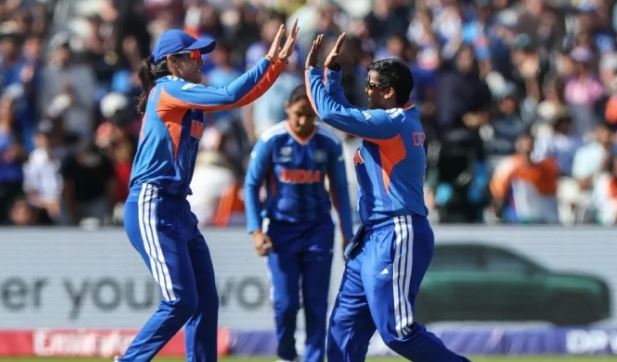
BIRMINGHAM, JUN 14: Deepti Sharma led India’s bowling attack with a five-wicket haul as they beat Pakistan by 64 runs in their Women’s T20 World Cup 2026 encounter at Edgbaston in Birmingham on Sunday.

Chasing 171, Pakistan were bowled out for 106 in 17 overs, as India’s disciplined bowling attack staged a strong comeback after a steady start from the opposition.


Pakistan began positively, with the openers putting on crucial runs. Muneeba Ali led from the front and applied early pressure on the Indian attack.

Deepti made the breakthrough by ending the 38-run opening stand, dismissing Gull Feroza for 12 off nine deliveries, which included two boundaries.

Muneeba and Ayesha Zafar then steadied the innings and took Pakistan past the 50-run mark, but Deepti struck again to remove Ayesha for 12 off eight balls, leaving Pakistan at 53/2 in 6.3 overs.

Despite Muneeba’s resistance, Pakistan continued to lose wickets at regular intervals. Shree Charani added to the pressure by dismissing Saira Jabeen for two runs.

Muneeba was eventually run out after a composed 41 off 35 deliveries, including five boundaries, leaving Pakistan struggling at 75/4 in 10.5 overs.

Captain Fatima Sana fell for a duck, dismissed by Shafali Verma, while Natalia Pervaiz contributed seven runs before becoming the sixth wicket to fall.

Charani claimed her third wicket by removing Rameen Shamim, reducing Pakistan further after she managed just four runs from six deliveries.

Deepti then returned to clean up the tail, dismissing Aliya Riaz and Tasmia Rubab before Nashra Sandhu became the final wicket, sealing a dominant Indian victory.

Deepti finished with outstanding figures of 5/10 in four overs, while Charani took three wickets. Shafali Verma also chipped in with a wicket as India wrapped up a comprehensive win.

Batting first, the Girls in Blue posted 170-6 in their allotted 20 overs, courtesy of a crucial partnership between Smriti Mandhana and Harmanpreet Kaur.

India made a mixed start as opener Shafali Verma opened the scoring with a six off the very first delivery, but was dismissed later in the same over by spinner Sadia Iqbal.

Jemimah Rodrigues came to the crease after Mandhana was already finding runs at the other end following an early dismissal, aiming to steady the innings and rebuild momentum towards a competitive total.

However, India suffered another setback as Rodrigues was dismissed cheaply for one off seven balls by Tasmia Rubab, leaving the team reeling at 18-2 after 3.2 overs.

Kaur quickly found her rhythm after walking in, and alongside Smriti, she built a solid partnership that helped India cruise past the 50-run mark in the ninth over.

Mandhana looked in sublime touch with the bat, easing the pressure as runs flowed freely, before bringing up her 34th T20I fifty of her career.

Kaur continued the onslaught as India’s run rate kept climbing, taking the side past the 100-run mark.

However, the 91-run stand was eventually broken when spinner Rameen Shamim dismissed Mandhana, who played an exceptional knock of 68 off 44 deliveries, laced with nine fours and two sixes.

India were reduced to four wickets early as Sadia Iqbal struck again, removing middle-order batter Bharti Fulmali for just one run via a stumping, leaving India struggling at 110-4 in 14.2 overs.

Pakistan gained the upper hand as Fatima Sana picked up her first wicket give India yet another blow as Kaur was dismissed after contributing 36 off 35 deliveries comprising of four boundaries.

Richa Ghosh and Deepti Sharma carried the innings forward in the final overs of the first innings, with Sharma accelerating the scoring through a flurry of boundaries, helping the team sail past the 150-run mark.

Sana bowled the final over, conceding 14 runs, which included the wicket of Ghosh, who played a fiery 17-ball 34 featuring five boundaries and a six, while Sharma remained unbeaten on 12.

For Pakistan, Sadia Iqbal and Fatima Sana claimed two wickets each, while Tasmia Rubab and Rameen Shamim chipped in with one wicket apiece.

Playing XIs
Pakistan: Gull Feroza, Muneeba Ali (wk), Ayesha Zafar, Saira Jabeen, Natalia Pervaiz, Aliya Riaz, Fatima Sana (c), Rameen Shamim, Nashra Sandhu, Sadia Iqbal and Tasmia Rubab.

India: Smriti Mandhana, Shafali Verma, Jemimah Rodrigues, Harmanpreet Kaur (c), Bharti Fulmali, Richa Ghosh (wk), Deepti Sharma, Arundhati Reddy, Kranti Gaud, Shree Charani and Shreyanka Patil.

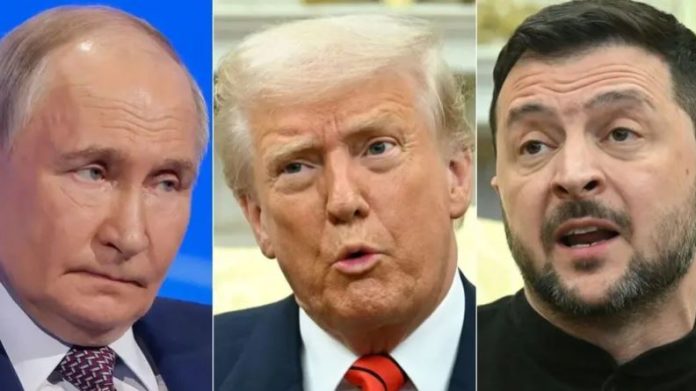
Trump discusses Iran and Ukraine in separate calls with Putin and Zelenskyy

Trump discusses Iran and Ukraine in separate calls with Putin and Zelenskyy

WASHINGTON, JUN 14: Ukrainian President Volodymyr Zelenskyy discussed war, peace and diplomacy with US counterpart Donald Trump on Sunday, the Ukrainian presidency said, in what it called a “substantive” conversation on Trump’s 80th birthday.

The call comes as US-led talks to end the conflict in Ukraine — grinding through its fifth year — have been sidelined by the Iran war and as Russian advances on the battlefield were showing signs of losing steam.

“It was a quite substantive conversation about everything — from birthday wishes to diplomacy and war/peace,” Zelenskyy’s adviser Dmytro Lytvyn told journalists, adding that the call had lasted “30-35 minutes.”

For all the latest headlines, follow our Google News channel online or via the app.

Meanwhile, Russian President Vladimir Putin called on Sunday, Trump’s 80th birthday, and discussed the wars in Ukraine and Iran and an upcoming visit of Washington’s envoys to Russia, the Kremlin said.

“The conversation focused on the situation surrounding the memorandum of understanding being drafted between the United States and Iran. Donald Trump said an agreement is close,” Kremlin aide Yuri Ushakov told reporters.

Ushakov also said that “it has been agreed that US presidential special representatives Steve Witkoff and Jared Kushner, who are currently closely involved in Iranian affairs, will return to Russia soon.”

Trump has pushed both sides to end the conflict after boasting he could end the war within a day of taking office.

He also repeatedly leaned on Ukraine to make compromises to Russia, which invaded in February 2022.

Trump will take part in a G7 working session with Zelenskyy in France on Tuesday, but no bilateral meeting between the two is scheduled, according to a senior administration official who spoke on condition of anonymity.

Trump has faced criticism for berating Zelenskyy in their tense White House meeting last year while inviting Putin to a summit in Alaska in August 2025.

Stay Connected

64FansLike
60FollowersFollow

Latest Reviews

Exchange Rates

USD - United States Dollar
EUR
1.15
GBP
1.35
AUD
0.70
CAD
0.71