Home Blog Page 876

PM says it would be a shame to go back to IMF again after 3 years

PM says it would be a shame to go back to IMF again after 3 years

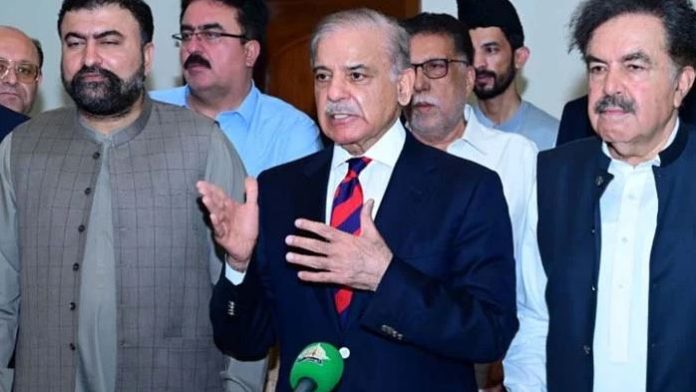
QUETTA: Lamenting that the burden of debt has mortgaged the future of nation’s generations, Prime Minister Shehbaz Sharif has said it will be a matter of great shame if Pakistan has to once again return to the International Monetary Fund (IMF) for another loan after three years.

“To free ourselves from this cycle of debt, the federal and provincial governments, along with the relevant institutions, must work together,” the premier said while addressing a signing ceremony to launch a significant initiative aimed at the solarisation of agricultural tube wells in Balochistan on Monday.

“If we make this collective effort, future generations will be grateful. However, if we fail to make tough decisions, we will find ourselves seeking assistance from the IMF once again,” the PM, who was on a daylong visit to Quetta, said.

Pakistan is looking to strike a staff-level deal on an IMF bailout of more than $6 billion this month after addressing all of the Washington-based lender’s requirements in its annual budget.

Moreover, the country’s debt has soared since the mid-2000s, as authorities failed to invest a gusher of loans from international bondholders and countries including China and Gulf nations into productive, export-oriented sectors.

Minister for Finance Muhammad Aurangzeb warned on Sunday that Pakistan would continue to seek the IMF bailouts “if it fails to boost tax revenue”.

The finance czar said that he was “relatively confident” of reaching a staff-level agreement with the global lender this month for an estimated loan of $6 to $8 billion.

“But it will not be our last Fund programme if we don’t bring our tax revenues up,” said the finance minister while speaking during an interview with the Financial Times.

The federal government presented the tax-loaded Rs18.877 trillion budget for the fiscal year 2024-25 (FY25) last month, aimed at shoring up public revenue and satisfying the IMF, which has repeatedly demanded improved tax collection.

The budget aims to raise Rs13 trillion by next July, a roughly 40% increase from the current financial year, to bring down a ruinous debt burden that has caused 57% of government revenue to be swallowed by interest payments.

Maintaining that turning to the IMF was a necessity, the PM Shehbaz said Pakistan had to finalise a deal with the IMF this month.

“Tomorrow in Islamabad, I will discuss measures to provide relief to the poor. The federal government stands with Balochistan in its development and prosperity. We will embrace anyone who genuinely cares for the well-being of Balochistan and Pakistan.”

PM Shehbaz further said that security and maintenance of law and order were imperative for investment to flow into Balochistan and Khyber Pakhtunkhwa.

Regarding Gwadar, he said: “I am not complaining, but the Safe City project there has been halted. Gwadar, by the grace of God, will prove to be more beneficial than the Reko Diq mines. We are committed to transforming Gwadar into a magnificent port. Together, we will eradicate the scourge of terrorism.”

Solarisation of tube wells in Balochistan
The solarisation of agricultural tube wells in Balochistan, the premier said, was part of the broader government efforts to address the economic challenges facing Pakistan and to promote sustainable development in the region.

“The government is commitment to economic reforms, security, and development, particularly in the underserved regions of Balochistan and Khyber Pakhtunkhwa,” the PM added.

During the ceremony, the prime minister oversaw the signing of the agreement between the federal and the Balochistan governments in Quetta. Federal ministers, the governor and the chief minister of Balochistan, and members of the provincial cabinet were also present on the occasion.

Speaking on the occasion, PM Shehbaz said the federal government in cooperation with the Balochistan government would shift around 28,000 agricultural tube wells of the province from electricity to solar energy.

He said the total cost of “this project is Rs55 billion and its 70% will be provided by the federal government”, while the rest by the Balochistan government.

Premier Shehbaz said that Balochistan Chief Minister Mir Sarfaraz Bugti had assured that the solarisation of tube wells would be completed in three months and it would help save around Rs90 billion annually.

“In the next phase, we are going for the solarisation of 1 million agricultural tube wells across the country, saving $3.5 billion, being spent on imported fuel every year,” the PM added.

He also said a 10% quota had been earmarked for the students of Balochistan, who would be sent to China at government expense for the latest professional training in the agriculture sector.

Similarly, a 10% quota has been reserved for the students of Balochistan to get training in the field of Information Technology under the Chinese company Huawei, the premier said adding that funds had been allocated in the federal budget for the establishment of Danish Schools in Balochistan.

He expressed the hope that Balochistan Governor Sheikh Jaffar Khan Mandokhail, CM Bugti, and the entire provincial cabinet would continue playing their due role for the development and prosperity of the province.

Meanwhile, Governor Mandokhail met with the Prime Minister, discussing the conversion of the province’s tube wells to solar power, party matters, and other mutual interests.

The governor expressed gratitude to the Prime Minister for his special interest in the province’s development and prosperity. Both leaders agreed to further strengthen and enhance the relationship between the federal and provincial governments.
FIA briefs Interior Minister on over billing for protected users

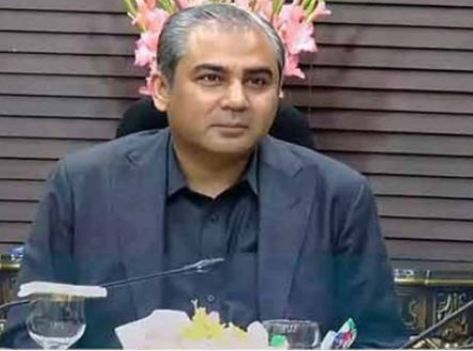
Mohsin Naqvi

ISLAMABAD, JUL 08 (DNA) —The Federal Investigation Agency (FIA) on Monday briefed the Federal Minster for Interior Mohsin Naqvi on over-billing after in reply to the notice taken by the minister.  Mohsin Naqvi had expressed serious concern over inclusion of protected users in the non-protected category and asked for the data of all distribution companies (Discos) providing relief to protected consumers.

He directed all FIA directors to check the data of discos and submit report while giving the task to collect all the evidence in 3 days. The minister ordered the directors of FIA across Pakistan to collect the records and a comprehensive report of all the evidence will be submitted to the Prime Minister.

He ordered to Additional DG FIA North Peshawar, Lahore to go to Gujranwala and Faisalabad to assess the situation and collect data. “Abuse of protected users must be addressed” he said, adding that the responsible persons should be determined by examining the evidence one by one.

Secretary Interior, Additional DG FIA HQ, Additional Home Secretary, and Additional DGFIA North attended the meeting along with all FIA directors participated in the meeting through video link. — DNA

SC intervenes on behalf of May 9 suspects’ families, Directs AG to act

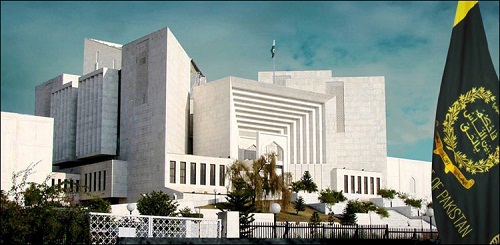
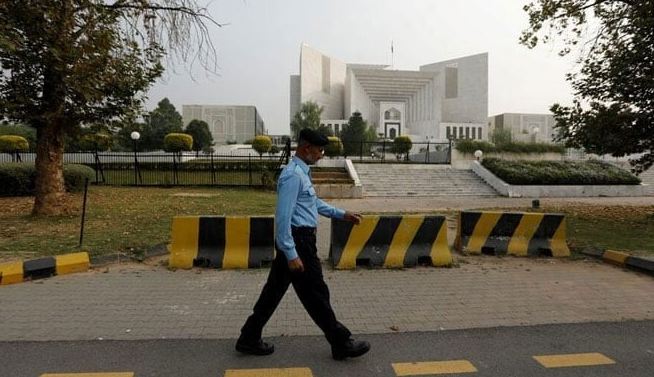
ISLAMABAD: The Supreme Court on Monday ordered Attorney General for Pakistan (AGP) Mansoor Awan to address the concerns of the families of the May 9 suspects who said that they haven’t been able to meet the prisoners.

The order came during the hearing on the intra-court petitions filed against civilians’ trials in military courts who were involved in the May 9 incidents last year.

A seven-member bench, headed by Justice Aminuddin and comprising Justice Jamal Mandokhail, Justice Muhammad Ali Mazhar, Justice Hassan Azhar Rizvi, Justice Shahid Waheed, Justice Musarrat Hilali and Justice Irfan Saadat Khan, presided over the hearing.

“The families have said that they haven’t been meeting with the prisoners. The attorney general should address these complaints,” said the SC order.

The court then adjourned the hearing till July 11. 

The apex court in May had referred the matter to and Procedure Committee for reconstitution of the bench after reservations raised against the six-member bench. 

Petitioner former chief justice Jawad S Khawaja’s lawyer Khawaja Ahmad Hasan had raised an objection on the bench, saying that a larger bench should be constituted in light of Justice Mansoor Ali Shah and Justice Yahya Afridi’s note.

On January 29, Justice Tariq Masood rescued himself from hearing intra-court appeals against civilians’ trial in military court, leading to the dissolution of a six-member larger bench.

In October last year, the Supreme Court declared the trial of civilians in military courts as unconstitutional and held that 103 persons and others, who may be placed concerning the events arising from May 9-10 could be tried by criminal courts, established under the ordinary or special law of the land.

However, the SC, by a 5-1 majority, suspended its October 23 order wherein it declared civilians’ trials in military courts null and void in connection with the May 9 riots.

May 9-10 events refer to the violent protests that broke out in different parts of the country following Pakistan Tehreek-e-Insaf (PTI) founder Imran Khan’s arrest in a corruption case last year with alleged party supporters attacked and ransacked government and military installations, prompting the authorities to try the rioters in military courts.

Civilians’ military trial: SC directs AGP to address families’ concerns over meetings with prisoners

Civilians' military trial: SC directs AGP to address families' concerns over meetings with prisoners

ISLAMABAD, JUL 8: The Supreme Court on Monday ordered Attorney General for Pakistan (AGP) Mansoor Awan to address the concerns of the families of the May 9 suspects who said that they haven’t been able to meet the prisoners.

The order came during the hearing on the intra-court petitions filed against civilians’ trials in military courts who were involved in the May 9 incidents last year.

A seven-member bench, headed by Justice Aminuddin and comprising Justice Jamal Mandokhail, Justice Muhammad Ali Mazhar, Justice Hassan Azhar Rizvi, Justice Shahid Waheed, Justice Musarrat Hilali and Justice Irfan Saadat Khan, presided over the hearing.

“The families have said that they haven’t been meeting with the prisoners. The attorney general should address these complaints,” said the SC order.

The court then adjourned the hearing till July 11.

The apex court in May had referred the matter to and Procedure Committee for reconstitution of the bench after reservations raised against the six-member bench.

Petitioner former chief justice Jawad S Khawaja’s lawyer Khawaja Ahmad Hasan had raised an objection on the bench, saying that a larger bench should be constituted in light of Justice Mansoor Ali Shah and Justice Yahya Afridi’s note.

On January 29, Justice Tariq Masood rescued himself from hearing intra-court appeals against civilians’ trial in military court, leading to the dissolution of a six-member larger bench.

In October last year, the Supreme Court declared the trial of civilians in military courts as unconstitutional and held that 103 persons and others, who may be placed concerning the events arising from May 9-10 could be tried by criminal courts, established under the ordinary or special law of the land.

However, the SC, by a 5-1 majority, suspended its October 23 order wherein it declared civilians’ trials in military courts null and void in connection with the May 9 riots.

May 9-10 events refer to the violent protests that broke out in different parts of the country following Pakistan Tehreek-e-Insaf (PTI) founder Imran Khan’s arrest in a corruption case last year with alleged party supporters attacked and ransacked government and military installations, prompting the authorities to try the rioters in military courts.

NPF clinches surprise victory in second round of French elections

NPF clinches surprise victory in second round of French elections

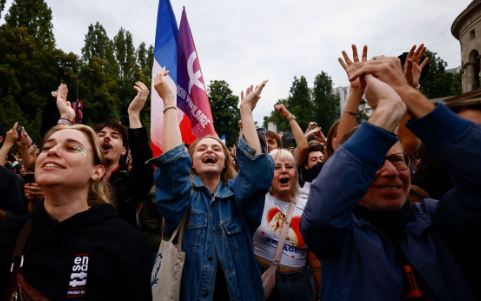
PARIS, JUL 8: /DNA/ – In a dramatic turn of events, the New Popular Front (NPF) alliance has emerged victorious in the second round of voting held on Sunday. This comes after Marine Le Pen and Jordan Bardella’s National Rally (RN), which led in the first round on June 30, fell to third place.

President Macron’s centrist coalition secured the second position. The NPF’s win was largely attributed to a strategic alliance formed with Macron’s centrists between the two rounds, aimed at consolidating the anti-RN vote.

This outcome represents a significant shift from the first-round results and underscores the impact of tactical voting in French elections.

Turnout is high as France votes in election that could force Macron to share power with far right

Turnout is high

PARIS, JUL 7 — Voting was underway in France on Sunday in pivotal runoff elections that could hand a historic victory to Marine Le Pen’s far-right National Rally and its inward-looking, anti-immigrant vision — or produce a hung parliament and political deadlock.

The snap legislative elections in this nuclear-armed nation and major economy will influence the war in Ukraine, global diplomacy and Europe’s economic stability, and they’re almost certain to undercut French President Emmanuel Macron for the remaining three years of his presidency. He took a huge gamble in dissolving parliament and calling for the vote after his centrists were trounced in European elections on June 9.

The first round on June 30 saw the largest gains ever for the nationalist National Rally, which came out on top.

Over 49 million people are registered to vote in the elections, that will determine which party controls the 577-member National Assembly, France’s influential lower house of parliament, and who will be prime minister. If support is further eroded for Macron’s weak centrist majority, he will be forced to share power with parties opposed to most of his pro-business, pro-European Union policies.

ADVERTISEMENT

Voters at a Paris polling station were acutely aware of the the far-reaching consequences for France and beyond.

“The individual freedoms, tolerance and respect for others is what at stake today,” said Thomas Bertrand, a 45-year-old voter who works in advertising.

Over 50 countries go to the polls in 2024

The year will test even the most robust democracies. Read more on what’s to come here.
Take a look at the 25 places where a change in leadership could resonate around the world.
Keep track of the latest AP elections coverage from around the world here.
Racism and antisemitism have marred the electoral campaign, along with Russian disinformation campaigns, and more than 50 candidates reported being physically attacked — highly unusual for France. The government is deploying 30,000 police on voting day.

The heightened tensions come while France is celebrating a very special summer: Paris is about to host exceptionally ambitious Olympic Games, the national soccer team reached the semifinal of the Euro 2024 championship, and the Tour de France is racing around the country alongside the Olympic torch.

Reflecting the high stakes, people turned out in large numbers not normally seen for a legislative election, after decades of deepening voter apathy for such votes and, for a growing number of French people, politics in general. As of 5 p.m. local time, turnout was at 59.7%, according to France’s Interior Ministry, the highest at that time in the voting day since 1981. During the first round, the nearly 67% turnout was the highest since 1997.

The outcome is uncertain
The outcome remains highly uncertain. Polls between the two rounds suggest that the National Rally may win the most seats in the National Assembly but fall short of the 289 seats needed for a majority. That would still make history, if a party with historic links to xenophobia and downplaying the Holocaust, and long seen as a pariah, becomes France’s biggest political force.

If it does win a majority, France would have its first far-right government since World War II, with 28-year-old party leader Jordan Bardella as prime minister.

If no party gets a majority, that would mean a hung parliament. The National Rally could try to form a coalition — though it has no natural partners among centrists and leftists — or Macron could try to pursue one with the center-left or name a technocratic government with no political affiliations.

No matter what happens, Macron’s centrist camp will be forced to share power — including possibly with a prime minister who deeply disagrees with the president’s domestic and foreign policies, in an awkward arrangement known in France as “cohabitation.”

Many candidates from his centrist alliance lost in the first round or withdrew, meaning it doesn’t have enough people running to come anywhere close to the majority he had in 2017 when he was was first elected president, or the plurality he got in the 2022 legislative vote.

Either a far-right victory or a hung parliament would be unprecedented for modern France, and make it more difficult for the European Union’s No. 2 economy to make bold decisions on arming Ukraine, reforming labor laws or reducing its huge deficit. Financial markets have been jittery since Macron surprised even his closest allies by announcing the elections.

Regardless of what happens, Macron said he won’t step down and will stay president until his term ends in 2027.

Pierre Lubin, a 45-year-old business manager, was worried about whether the elections would produce an effective government.

“This is a concern for us,” Lubin said. “Will it be a technical government or a coalition government made up of (various) political forces?”

National Rally connected with voters frustrated with their leaders
Many French voters, especially in small towns and rural areas, are frustrated with low incomes and a Paris political leadership seen as elitist and unconcerned with workers’ day-to-day struggles. National Rally has connected with those voters, often by blaming immigration for France’s problems, and has built up broad and deep support over the past decade.

Le Pen has softened many of the party’s positions — she no longer calls for quitting NATO and the EU — to make it more electable. But the party’s core far-right values remain. It wants a referendum on whether being born in France is enough to merit citizenship, to curb rights of dual citizens, and give police more freedom to use weapons.

On Sunday, Macron cast his ballot in the seaside resort town of La Touquet, along with his wife, Brigitte. Prime Minister Gabriel Attal voted earlier in the Paris suburb of Vanves.

Le Pen is not voting because her district in northern France is not holding a second round after she won the seat outright last week. Across France, 76 candidates secured seats in the first round, including 39 from Le Pen’s National Rally, 32 from the leftist New Popular Front alliance, and two from Macron’s centrist list.

The elections wrap up Sunday at 8 p.m. (1800 GMT). Initial polling projections are expected Sunday night, with early official results expected late Sunday or early Monday.

Sitting in a deck chair along the Canal Saint-Martin in eastern Paris, Fernando Veloso said people are perplexed by the prospect of divided government.

“It’s going to bring confusion,” the 67-year-old retiree said. “Will they be able to govern properly in a cohabitation government, with Macron still in power? It’s tricky.”

“Tensions are running high,” Veloso added. “It’s worrying. Very worrying.”

Crisis at Khyber Pakhtunkhwa Newspapers: APNS urgently tackles unpaid dues

Crisis at Khyber Pakhtunkhwa Newspapers: APNS urgently tackles unpaid dues

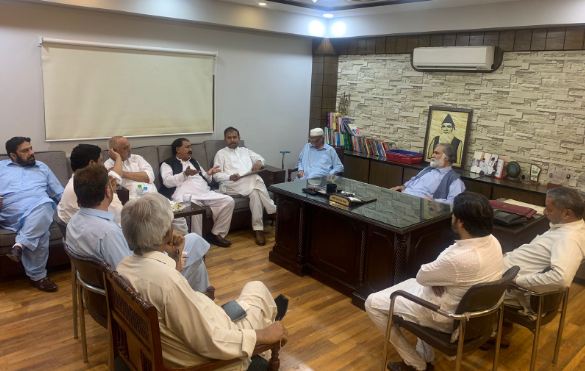
PESHAWAR, JUL 7 /DNA/ – The All Pakistan Newspapers Society (APNS) KP Chapter convened a pivotal meeting at the Daily Wahdat office, chaired by APNS (KP) Chairman Pir Haroon Shah. The gathering provided a platform to tackle significant challenges faced by newspaper publishers across Khyber Pakhtunkhwa.

During the session, particular emphasis was placed on discussing critical issues affecting the industry, notably the outstanding dues owed by newspapers to the Information Department. Chairman Pir Haroon Shah led deliberations focused on identifying sustainable solutions and cultivating an environment conducive to growth within the regional newspaper sector.

Federal Minister for Interior Mohsin Naqvi visits ANF Headquarters

Federal Minister for Interior Mohsin Naqvi visits ANF Headquarters

ISLAMABAD, JUL 7 /DNA/ – Federal Minister for Interior and Narcotics Control Mohsin Naqvi visited the Anti-Narcotics Force (ANF) Headquarters, where he was welcomed by Director General ANF, Major General Abdul Mueed on his arrival. The Interior Minister laid floral wreath at the Martyrs’ Memorial, offered Fateha, and paid tribute to the great sacrifices of the martyrs.

While chairing an important meeting at the ANF Headquarters, Federl Minister for Interior and Anti Narcotics appreciated the performance of ANF against drug traffickers across the country, despite limited resources. He directed to launch a comprehensive crackdown against drug mafia to save the future generations from the scourge of drugs and sought a comprehensive plan in this regard. It was also decided to ensure a robust action against the sale and purchase of drugs, especially ice, in educational institutions, hostels and universities. In this regard, consultations will be held with provinces and they will be taken into confidence. A joint meeting of federal and provincial departments will be held by the end of this month in which all Provincial Ministers for Excise and IGs of police will be invited.

Interior Minister also sought a plan to stop online sales of drugs. In this regard, the ANF was directed to prepare a cyber drug control mechanism. Mohsin Naqvi said that the curse of drugs, especially ice, has destroyed many families and in order to limit this increasing trend of drugs, immediate and multi-faceted measures are needed. He reiterated that we must all work together with full zeal and determination to fight against this menace for the sake of our children. He highlighted that If we are able to contribute in the eradication of this peril, it will be a great deed.

The Federal Minister for Interior and Narcotics Control was also briefed about the ANF’s performance, functions, and operations. Later, the Federal Interior Minister planted a tree in the lawn of the ANF Headquarters. Federal Secretary for Interior Khurram Agha, and high-ranking officials of the ANF were also present on the occasion.

Sri Lankan envoy for economic integration

Sri Lankan envoy for economic integration

Agencies

ISLAMABAD, In the evolving landscape of South Asian diplomacy, Sri Lanka’s High Commissioner to Pakistan, Admiral (R) Ravindra C Wijegunaratne has stressed for collaborative efforts to address regional challenges and foster economic integration.

The envoy offering a compelling vision for the future of Sri Lanka-Pakistan relations, underscored a partnership poised to shape the strategic dynamics of the region. As both nations navigate shared interests in trade, defense, and cultural exchange, their mutual commitment to sustainable development and mutual prosperity stands as a testament to enduring diplomatic camaraderie.

Highlighting Pakistan’s pivotal economic developments linked to CPEC and the operationalization of Gwadar Port, he expressed his country’s commitment to furthering diplomatic, economic and cultural ties with Pakistan.

He also stressed the importance of long-term policies focusing on youth development, agriculture, and water security for sustained growth.He emphasized the necessity for Pakistan to formulate long-term policies that prioritize youth development, agricultural sustainability, and enhanced water security to sustain economic growth effectively.

Regarding bilateral ties, the envoy reiterated Sri Lanka’s commitment to strengthening relations with Pakistan across multiple fronts, including trade, tourism, and defense. He pointed out Sri Lanka’s pivotal role as an international transshipment hub, particularly for mega-container ships like the Triple E-Class, which cannot dock at all ports due to their size. He anticipated that the full operationalization of Gwadar Port would provide Pakistan with significant revenue opportunities, particularly for transit trade to Central Asian Republics (CARs).

Reflecting on the historical camaraderie between the two nations, Admiral Wijegunaratne recalled Sri Lanka’s steadfast support for Pakistan during critical junctures, including providing crucial logistical support during the 1971 war. He praised Pakistan’s assistance in combating insurgency in Sri Lanka, highlighting the provision of military hardware that helped in defeating the Tamil Tigers.

Economically, he noted the bilateral trade volume of approximately one billion dollars annually, with prospects to exceed this mark, emphasizing Pakistan’s exports to Sri Lanka and Sri Lanka’s potential to expand its exports to Pakistan. He also discussed Sri Lanka’s interest in boosting tourism between the two countries, noting challenges in air connectivity that hinder potential growth in this sector.

On educational and cultural exchanges, Admiral Wijegunaratne highlighted initiatives such as the Allama Iqbal Scholarship, which supports Sri Lankan students studying in Pakistan. He mentioned Sri Lanka’s eagerness to collaborate with Pakistan in religious education and praised Pakistan’s hosting of the Gandhara Culture Symposium, emphasizing the cultural ties that could enhance tourism and mutual understanding.

Looking ahead,  Wijegunaratne discussed Sri Lanka’s recovery from economic challenges exacerbated by COVID-19, focusing on revitalizing tourism and improving agricultural productivity. He suggested Pakistan negotiate debt restructuring with international lenders and leverage its diaspora to bolster foreign exchange reserves.

Addressing regional challenges, he highlighted climate change as a potent threat to South Asia, stressing the need for collective action. He praised Pakistan’s efforts in addressing water security issues and emphasized the importance of environmental sustainability.

In conclusion, Admiral Wijegunaratne expressed optimism about the future of Pakistan-Sri Lanka relations, envisioning deeper economic integration and enhanced cooperation in regional and global forums. He emphasized the mutual benefits of strategic partnerships and reaffirmed Sri Lanka’s commitment to furthering diplomatic, economic, and cultural ties with Pakistan.

Sri Lanka, strategically situated in the Indian Ocean, boasts a diverse economy driven by agriculture, tourism, and emerging sectors like IT and finance. Despite historical challenges, the country has achieved stability and is governed as a democratic republic. Known for its rich cultural heritage and biodiversity, Sri Lanka attracts visitors and investors alike, offering a promising outlook in South Asia.

Stay Connected

64FansLike
60FollowersFollow

Latest Reviews

Exchange Rates

USD - United States Dollar
EUR
1.17
GBP
1.35
AUD
0.72
CAD
0.73