Home Blog Page 862

M reiterates Pakistan’s continued support for Kashmiris’ right to self determination

President

ISLAMABAD, Jan 05 (DNA):Caretaker Prime Minister Anwaar-ul-Haq Kakar on Friday reiterated that Pakistan would continue to extend its full political, diplomatic, and moral support to the valiant Kashmiri people in their just struggle for their rights including the inalienable right to self-determination, by the relevant resolutions of the United Nations Security Council (UNSC).

“Today, Kashmiris around the world are observing the 75th anniversary of the Resolution adopted by the United Nations Commission for India and Pakistan (UNCIP), providing that the Jammu and Kashmir dispute will be decided through the democratic method of a free and impartial plebiscite under the UN auspices, the prime minister said in a message on the occasion of Self-Determination Day.

In essence, he said it was a reaffirmation of the inalienable right of Kashmiris to self-determination, which is enshrined in international law and upheld by international human rights instruments.

He regretted that despite more than seven and a half decades, the oppressed people of Indian Illegally Occupied Jammu and Kashmir (IIOJK) have not been able to exercise this fundamental right. India continues to oppress the people of Jammu and Kashmir to break their will.

Since August 5, 2019, the prime minister said India was engaged in a vicious exercise, aimed at altering the demographic structure and political landscape of IIOJK, to turn Kashmiris into a disempowered community in their own land.

The Indian Supreme Court’s recent verdict on the status of IIOJK is yet another step towards the denial of the Kashmiri people’s right to self-determination. The genuine aspirations of the Kashmiris cannot be wished away through domestic legislation and engineered judicial verdicts, he added.

He pointed out the United Nations General Assembly (UNGA) annually adopts a resolution on “Universal Realization of the Right of the People to Self-Determination” that draws international attention towards the plight and rights of people living under situations of forced occupation.

The international community, especially the United Nations, is responsible for ensuring that the people of IIOJK exercise their inalienable right to self-determination, he added.

3 dead, 28 injured in Indonesia train collision: officials

Energy Seminar

Bandung, Indonesia, :Three people were killed and at least 28 injured when two trains collided on Indonesia's main island of Java on Friday, officials said.
              The crash took place at 6:03 am local time (1103 GMT) near rice fields in Cicalengka in West Java province and left numerous train carriages overturned.
              "We have identified one of the victims as the steward for the Turangga train. The rest have not been identified," said Ayen Hanepi, a spokesman for railway operator PT KAI.
              He said the collision involved the Turangga train, an intra-city line that runs from Surabaya in East Java to the city of Bandung, and a local train. 
              The Turangga train carried 287 passengers while 191 people were aboard the local commuter line, he said. 
              All passengers had been evacuated while the injured were taken to a local hospital, said provincial police spokesman Ibrahim Tompo.
              Transport accidents are not uncommon in Indonesia, a vast archipelago nation where buses, trains and even planes are often old and badly maintained.
              In 2015, a collision between a commuter train and a minibus on a level crossing in the capital Jakarta killed 16 people.
              In 2013, seven people were killed and scores more injured when a commuter train collided with a fuel tanker at a level crossing in Jakarta and burst into flames.

Imran Khan decries lack of playing field for PTI

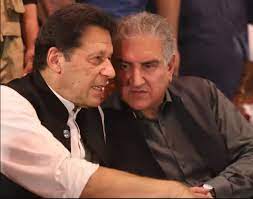
ISLAMABAD: As the country inches closer to a decisive general election next month, former prime minister and Pakistan Tehreek-e-Insaf (PTI) founder Imran Khan has lamented the lack of playing field for his party, alleging that the establishment is not ready to provide one.

He added that the polls conducted in such circumstances would be “farce”.

The former prime minister’s statement was made in an article written for a British publication, The Economist, which he has written amid his incarceration in the Adiala jail.

“The manner in which I and my party have been targeted since a farcical vote of no confidence in April 2022 has made one thing clear: the establishment — the army, security agencies and the civil bureaucracy — is not prepared to provide any playing field at all, let alone a level one, for PTI.”

Alleging that the establishment had “engineered” the removal of his government “under pressure from America”, the former prime minister contends this is because the US was “becoming agitated with my push for an independent foreign policy and my refusal to provide bases for its armed forces.”

Imran has stuck to his cipher narrative in the piece, writing that “I believe that the American official’s message was to the effect of: pull the plug on Khan’s prime ministership through a vote of no confidence, or else.” He adds that “within weeks our government was toppled” and he discovered that former COAS Gen Bajwa had “been working on our allies and parliamentary backbenchers for several months to move against us.”

The Economist has added a disclaimer at the end of the article regarding this assertion, saying that both the Pakistani government and the US State Department “deny Mr Khan’s allegations of American interference in Pakistani politics.”

According to Khan, the caretaker governments at the federal level and provincial levels are “constitutionally illegal”. On the February 8 elections, he is of the view that the people are “sceptical” about the election taking place “having been denied the same in two provinces.”

The article also talks about the popularity amassed by the PTI post-Imran’s ouster: “People flocked onto the streets to protest against this regime change, and in the next few months the PTI won 28 out of 37 by-elections.” Imran writes that this popularity “unnerved” those who had ousted him.

Imran has written that the May 9, 2023 incident was a “false-flag operation” that was “falsely blamed on [the] PTI”, adding that “the speed showed it was pre-planned.”

The article also says that Pakistan Muslim League-Nawaz supremo Nawaz Sharif has “struck a deal with the establishment whereby it will support his acquittal and throw its weight behind him in the upcoming elections.”

Reiterating that the PTI is not being allowed to campaign freely, Khan writes that he remains “incarcerated, in solitary confinement, on absurd charges that include treason. Those few of our party’s leaders who remain free and not underground are not allowed to hold even local worker conventions.”

According to Imran, even if elections were held in such a situation they would be “a disaster and a farce”.

Religious freedom: US again fails to designate India as country of ‘particular concern’

Pakistan Tehreek-e-Insaf (PTI)

WASHINGTON: The United States Commission on International Religious Freedom (USCIRF) has called for a congressional hearing after expressing disappointment over the US Department of State’s continuous failure to designate India as a “Country of Particular Concern (CPC)”.

The commission stated this in response to the State Department’s list of the countries designated as CPCs.

Secretary of State Antony J Blinken, following the core objective of US foreign policy as per the International Religious Freedom Act 1998, has designated Burma, China, Cuba, North Korea, Eritrea, Iran, Nicaragua, Pakistan, Russia, Saudi Arabia, Tajikistan, and Turkmenistan as Countries of Particular Concern “for having engaged in or tolerated particularly severe violations of religious freedom”.

Blinken said he had designated al-Shabab, Boko Haram, Hayat Tahrir al-Sham, the Houthis, ISIS-Sahel, ISIS-West Africa, al-Qa’ida affiliate Jamaat Nasr al-Islam wal-Muslimin, and the Taliban as “Entities of Particular Concern” as well.

USCIRF Chair Abraham Cooper and Vice Chair Frederick A Davie in a joint statement said there was no justification as to why the State Department did not designate India as a Country of Particular Concern, despite its own reporting and statements. 

The USCIRF called on Congress to convene a public hearing on the failure of the State Department to follow their recommendations, they said.

“In India, in addition to perpetrating egregious religious freedom violations within its borders, the government has increased its transnational repression activities targeting religious minorities abroad and those advocating on their behalf,” stated Cooper and Davie.

The USCIRF said since the issuance of its 2023 Annual Report, it had consistently shared its recommendations with the US Department of State and Congress. 

In early December 2023, the USCIRF met with Antony Blinken to reiterate those recommendations. USCIRF released publications on India’s State-Level Anti-Conversion Laws and Religious Freedom.

The top USCIRF officials said, “USCIRF rejects the State Department’s decision to omit India as the CPC.” 

They said they met with the State Department on many occasions to sound the alarm about the country, but not all of their recommendations had been followed. 

“We will not be deterred and will continue our role as a congressionally mandated watchdog to ensure the US government prioritises religious freedom as a key component of its foreign policy.”

The State Department placed Algeria, Azerbaijan, the Central African Republic (CAR), Comoros, and Vietnam on its Special Watch List (SWL). The USCIRF had recommended in its 2023 Annual Report that Algeria, Azerbaijan, and CAR be placed on the SWL, in addition to Egypt, Indonesia, Iraq, Kazakhstan, Malaysia, Sri Lanka, Turkey, and Uzbekistan.

Entire Pakistan is happy over 5-year disqualification law: CJP

Energy Seminar

ISLAMABAD: Chief Justice of Pakistan (CJP) Qazi Faez Isa has observed that the entire Pakistan is happy over the amended Election Act 2017 that limited lawmakers’ disqualification period to five years.

“No one has challenged five-year disqualification law,” the CJP remarked on Friday during a hearing of a case related to the disqualification of lawmakers under Article 62(1)(F) of the Constitution.

A seven-member larger bench — headed by CJP Isa and comprising Justice Syed Mansoor Ali Shah, Justice Yahya Afridi, Justice Aminuddin Khan, Justice Jamal Khan Mandokhel, Justice Muhammad Ali Mazhar, and Justice Musarrat Hilali — conducted the hearing.

The apex court had taken notice of contradictions regarding the duration of disqualification in the Election Act, 2017, and an apex court verdict during a past hearing on a petition filed by former PML-N provincial lawmaker Sardar Meer Badshah Khan Qaisrani last month.

Qaisrani had challenged his lifetime disqualification over a fake degree in 2007.

Proceedings were being broadcast live on SC’s website and YouTube channel. The court has taken a break till Friday prayers. 

In the previous hearing on Thursday, CJP Isa remarked that disqualifying anyone for life from parliament was “against Islam”, adding that the court was seeking “clarity” on whether the disqualification period for a lawmaker was five years — as per the amendment in Election Act 2017 — or a lifetime ban under the aforementioned article which deals with the criteria to contest elections.

CJP Isa said that the solution to this matter is present in Islam.

“The Holy Quran mentions that the status of humans is very high,” the top judge said, referring to a verse from Surah Sajdah which explains that human beings are not bad but their deeds are.

“Disqualifying anyone [for life] is against Islam,” he added.

Today’s hearing

As the proceedings commenced today, CJP Isa said that the top court would not take up individual cases related to elections but would only hear matters related to constitutional interpretation.

Following this, Jahangir Tareen’s lawyer, Advocate Makhdoom Ali Khan, started his arguments.

Justice Shah questioned Khan if according to him, the declaration of disqualification would come from the civil court. To this, Advocate Khan replied in the positive.

Justice Mazhar then asked whether Article 62(1)(f) can be implemented before the elections or even after the polls.

At this, Khan replied, “The candidate is disqualified pre-elections if we read Articles 62 and 62 together”.

After this, the CJP asked, “Why are we limiting ourselves to only one specific part of the Constitution and disregarding the constitutional history and fundamental rights?”

“Do not limit yourself and as a constitutional expert, explain to us in a broader context,” the CJP told the lawyer.

Tareen’s counsel Khan implored the larger bench to overturn the Samiullah Baloch case verdict wherein the top court held that the disqualification period under Article 62(1)(F) will be for life. 

The case

The fate of many politicians, including Pakistan Muslim League-Nawaz (PML-N) supremo Nawaz Sharif and Istehkam-e-Pakistan Party (IPP) founder Jahangir Tareen, depends on the verdict of this case.

Whether the aforementioned politicians can contest the upcoming polls or not will be determined by the outcome of the case.

Pakistan resumes COVID-19 testing of inbound passengers amid new variant fears

National Institute of Health issues advisory for prevention, control of JN.1 sub-variant in Pakistan

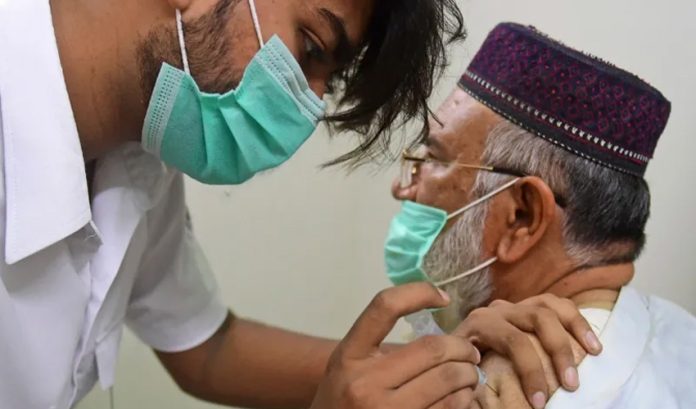
SLAMABAD: Amid growing concerns over new COVID-19 variant spread, the National Command and Operation Centre (NCOC) has decided to resume mandatory testing of 2% of inbound passengers.

The testing will help detect and prevent JN.1 sub-variant of COVID-19.

However, reports regarding the unavailability of testing kits and Personal Protection Equipment (PPE) later emerged, as major airports, including Islamabad and Karachi, lacked the facilities, officials told the publication.

“On the directives of caretaker federal Health Minister Dr Nadeem Jan, surveillance at the country’s points of entry, including airports, has been increased and 2 percent mandatory testing for COVID-19 has been resumed to detect JN.1 variant of SARS-CoV-2 or coronavirus,” the NCOC official told The News on Wednesday.

Ironically, neither the COVID-19 testing kits nor the PPE were available at the many points of entry for the healthcare workers associated with Border Health Services (BHS). Officials said neither the kits nor the PPE were procured after the World Health Organisation (WHO) declared in June this year that COVID-19 was no longer a public health emergency of international concern.

Although the COVID-19 positivity remained extremely low in the country and no case of its JN.1 variant had been detected till Wednesday, the National Institute of Health (NIH) issued an advisory for the prevention and control of JN.1 sub-variant.

Quoting the World Health Organization (WHO), the NIH advisory said that JN.1 sub-variant has been classified as a Variant of Interest (VOI) and is fundamentally an offshoot of BA.2.86 sub-variant of the omicron variant of COVID-19. It was first reported in August 2023 by US-CDC.

In recent weeks, JN.1 has been reported in many countries, and its prevalence is rapidly increasing globally, the National Institutes of Health’s (NIH) advisory said, adding that this rapid growth is being observed across the three WHO regions with consistent sharing of SARS-CoV-2 sequences, i.e. the region of the Americas, the Western Pacific and the European regions, with the largest increase seen in Western Pacific from 1.1% in epidemiological week 44 to 65.6% in epidemiological week 48.

“The objective of this advisory is to alert and facilitate the health authorities and other stakeholders for ensuring timely preventive and control measures encompassing preparedness to deal with increased workload expected in the outpatient and in-patient departments during the next few weeks,” the NIH stated.

The National Institute of Health further stated that although JN.1 is rapidly replacing other sub-variants and its transmissibility is expected to be high, it is unlikely that it can produce a situation like the earlier phase of the pandemic, hence its morbidity and mortality are low as of current statistics.

“Clinical presentation of JN.1 infection is similar to other sub-variants including cough, sore throat, congestion, runny nose, sneezing, fatigue, headache, muscle aches and altered sense of smell. However, symptom presentation depends on an individual’s immunity from vaccination and previous infection. It’s important to know that existing vaccines, tests and treatments still work well against JN.1,” the advisory stated.

Bat symbol: PTI Challenges PHC verdict in Supreme Court

Energy Seminar

Bat symbol: PTI Challenges PHC verdict in Supreme Court

The PTI has prayed to the apex court that the verdict of the Peshawar High Court should be declared null and void.

It may be mentioned here that

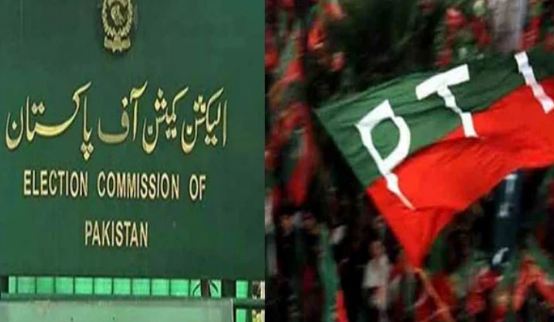
The Peshawar High Court (PHC) on Wednesday revoked the stay order granted by its single-member bench, restoring the ECP decision to declare PTI intra-party polls null and void and stripping it of its election symbol — bat.

A single-member bench comprising Justice Ejaz Khan announced the reserved verdict that the court had reserved earlier in the day.

ECP’s lawyer Sikander Bashir Mohmand and PTI’s legal team comprising Advocates Shah Faisal Uthmankhel and Qazi Anwar appeared in the courtroom.

The electoral body had filed a review petition at the high court against its December 26 decision which had suspended the ECP’s order and restored the party’s ‘bat’ symbol till a final decision on the matter.

The ECP, in its order, had declared PTI’s intra-party polls “illegal” and stripped it of using the ‘bat’ symbol. Following its order, the former ruling party approached the PHC seeking to restore its party symbol ahead of the general elections slated for February 8.

In its petition, the ECP then requested the court to review the PTI’s intra-party elections and its decision related to the election symbol.

A day earlier, the court heard the arguments of the ECP’s counsel and then adjourned the hearing till today (Wednesday).

The hearing
At the outset of the hearing, Advocate Anwar said that he, along with Barrister Gohar Khan, will represent the PTI in this case.

Malaysian Envoy invites businessmen to explore avenues in Malaysia

Ambassador Azhar also shared Malaysian SMEs’ experience during the COVID-19 pandemic in surviving their businesses. Malaysia has encouraged SMEs to transform into digital marketing or online businesses to reduce unnecessary costs. Pakistan has the potential for trade and investment to be expanded and should explore digital marketing concepts

DNA

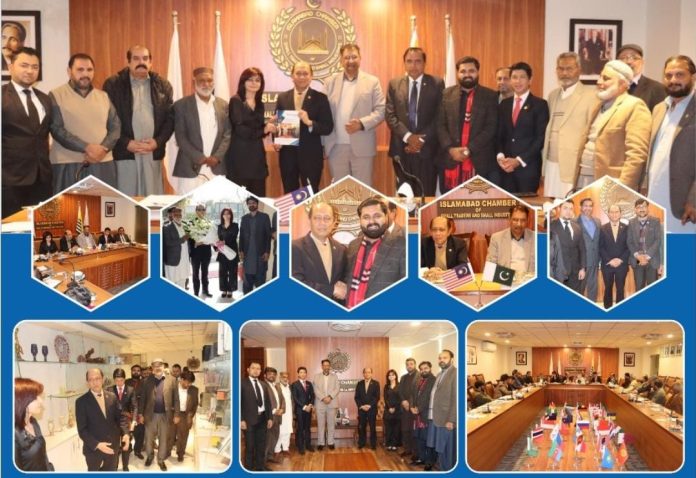
ISLAMABAD:  Ambassador Azhar paid a visit to the Islamabad Chamber of Small Traders and Small Industries (ICSTSI), Islamabad.

 He was accompanied by Mr. Mohd Syafik, Counsellor of the High Commission. On his arrival, he was received by Mr. Sajjad Sarwar, President of ICSTSI, and his executive members.

 The aim of the visit was to enhance bilateral engagement between the High Commission and ICSTSI. The meeting commenced with a recitation of the Holy Quran followed by brief introduction about ICSTSI by Mr. Sajjad.

Thereafter, Ms. Syeda Wajida, Chairperson of Diplomatic Affairs of ICSTSI briefed on the development of small traders and industries in Pakistan. Present were Office Bearers, Executive Members, and members of the ICSTSI. In his remarks, Ambassador Azhar gave an overview of the state of relations between Malaysia and Pakistan.

He mentioned that formal relations were established in 1957. Since then, Malaysia and Pakistan had been enjoying close bilateral relations. Both countries enhanced trade relationships following the signing of the Malaysia-Pakistan Closer Economic Partnership Agreement (MPCEPA) in November 2007.

The bilateral relations were elevated to a strategic partnership on 23 March 2019. Currently, there are 1.2 million small and medium-sized enterprises (SMEs) in Malaysia comprising more than 97% of the nation’s businesses and delivering 38.4% of the gross domestic product (GDP). In Malaysia, SME Corporation is entrusted to assist SMEs and entrepreneurs in expanding their businesses.

Thus, he emphasized that Malaysia and Pakistan need to expend the potential of small and medium trades into bigger opportunities for mutual benefits. Ambassador Azhar also shared Malaysian SMEs’ experience during the COVID-19 pandemic in surviving their businesses. Malaysia has encouraged SMEs to transform into digital marketing or online businesses to reduce unnecessary costs. Pakistan has the potential for trade and investment to be expanded and should explore digital marketing concepts.

The Ambassador welcomed and placed a high hope for stronger cooperation in the field of trade and investment between the two countries. The meeting ended with a question-and-answer session. Ambassador Azhar was later accompanied to the exhibition corner. The visit was held and ended in a cordial and warm atmosphere. At the end of the event, the President of ICSTSI presented the shield to the Ambassador. Ambassador Azhar also invited members of ICSTSI to look at Malaysia and the Association of Southeast Asian Nations (ASEAN) region as their business gateway considering the huge market of the combined 680 million population.

Bilateral relations between Malaysia and Pakistan have been close. Pakistan is Malaysia’s 35th largest trading partner, 28th largest export destination, and 40th largest import source. Among South Asian countries, Pakistan was Malaysia’s 3rd largest trading partner with total bilateral trade amounting to RM7.84 billion (USD1.78 billion) in 2022.

Bangladesh’s political personality cult

Energy Seminar

New Delhi, ):Bangladeshi Prime Minister Sheikh Hasina still grieves the assassination of her father -- the country's founder -- nearly 50 years ago, and her government ensures the nation grieves with her.
              Once sidelined from official history, Sheikh Mujibur Rahman is now the subject of a personality cult that designates him "Father of the Nation".
              Hasina has foregrounded his legacy in what critics say is an effort to entrench her ruling Awami League, which dominates national politics and is set to sweep elections Sunday following an opposition boycott.
              Her government has also enacted stiff punishments for any comments, written work or social media posts that could be construed as defaming his legacy. 
              "She has basically introduced a secular blasphemy law in the country for her father -- the kind we see in one-party states," a senior human rights activist in Bangladesh told AFP, asking for anonymity out of fear of retribution.

Supreme Court resumes hearing lifetime disqualification case

Energy Seminar

The Supreme Court Thursday resumed the hearing on a case related to the lifetime disqualification of lawmakers under Article 62(1)(f) of the Constitution with Chief Justice of Pakistan (CJP) Qazi Faez Isa determined to settle the issue “once and for all”.

The apex court’s decision in the case is expected to significantly impact the country’s political landscape, as Pakistan heads towards a crucial general election, scheduled to take place on February 8.

A seven-member bench — headed by CJP Isa and comprising Justice Syed Mansoor Ali Shah, Justice Yahya Afridi, Justice Aminuddin Khan, Justice Jamal Khan Mandokhel, Justice Muhammad Ali Mazhar and Justice Musarrat Hilali — is conducting hearing on the case.

The proceedings of the case are being broadcast live on SC’s website and YouTube channel.

The fate of many politicians, including Pakistan Muslim League-Nawaz (PML-N) supremo Nawaz Sharif and Istehkam-e-Pakistan Party (IPP) founder Jahangir Tareen, depends on the verdict of this case.

Whether the aforementioned politicians can contest the upcoming polls or not will be determined once the apex court makes a decision.

The SC conducted the last hearing of this case on January 2, during which CJP Isa advised against assuming that a particular party was being favoured.

“This is a constitutional issue, which we are going to settle once and for all, and we will try to conclude it quickly in order to prevent confusion for the returning officers (ROs) while receiving nomination papers for the upcoming elections,” he remarked after hearing the parties.

The apex court took notice of contradictions regarding the duration of disqualification in the Election Act, 2017 and a Supreme Court verdict during the hearing of a petition filed by former PML-N provincial lawmaker Sardar Meer Badshah Khan Qaisrani last month.

Qaisrani had challenged his lifetime disqualification over a fake degree in 2007.

During the hearing on December 11 last year, CJP Faez Isa observed that the Supreme Court’s judgment on lifetime disqualification and the amendments made to the Elections Act 2017 could not exist simultaneously.

ISLAMABAD: Chief Justice of Pakistan (CJP) Qazi Faez Isa Thursday said lifetime disqualification under Article 62(1)(F) was determined according to one’s own perception and not the Constitution.

The top judge’s remark came during the hearing of the case pertaining to the lifetime disqualification of lawmakers under the aforementioned article which deals with the criteria to contest elections.

A seven-member bench — headed by CJP Isa and comprising Justice Syed Mansoor Ali Shah, Justice Yahya Afridi, Justice Aminuddin Khan, Justice Jamal Khan Mandokhel, Justice Muhammad Ali Mazhar and Justice Musarrat Hilali — is hearing the case.

Attorney General for Pakistan (AGP) Mansoor Usman Awan also appeared before the court. Lawyers Reema Omar, Azir Bhandari and Faisal Siddiqui have been appointed as amici curiae.

During the hearing, the chief justice also warned against spreading confusion related to elections, as the polls are being held on February 8. “Filing cases in different courts will create obstacles in the way of elections,” he noted.

Lawyer Khurram Raza who was representing petitioners Fayaz Ahmed Ghori and Sajjadul Hasan faced immense grilling by the seven-member bench — headed by the chief justice — for his defence of lifetime disqualification of parliamentarians.

At one point, CJP Isa observed that the counsel he was siding with “dictators”.

The lawyer argued that the constitutional amendment is needed to end lifelong disqualification.

At this, Justice Jamal Khan Mandokhail asked the lawyer whether the Parliament cannot legislate. “Parliament legislates but the Supreme Court interprets it,” Raza responded.

The case

The fate of many politicians, including Pakistan Muslim League-Nawaz (PML-N) supremo Nawaz Sharif and Istehkam-e-Pakistan Party (IPP) founder Jahangir Tareen, depends on the verdict of this case.

Whether the aforementioned politicians can contest the upcoming polls or not will be determined by the outcome of the case.

The SC conducted the last hearing of this case on January 2, during which CJP Isa advised against assuming that a particular party was being favoured.

After hearing all parties in the case during the last hearing, the CJP said: “This is a constitutional issue, which we are going to settle once and for all, and we will try to conclude it quickly in order to prevent confusion for the returning officers (ROs) while receiving nomination papers for the upcoming elections,” he remarked after hearing the parties.

The apex court took notice of contradictions regarding the duration of disqualification in the Election Act, 2017 and a Supreme Court verdict during the hearing of a petition filed by former PML-N provincial lawmaker Sardar Meer Badshah Khan Qaisrani last month.

Qaisrani had challenged his lifetime disqualification over a fake degree in 2007.

During the hearing on December 11 last year, CJP Faez Isa observed that the Supreme Court’s judgment on lifetime disqualification and the amendments made to the Elections Act 2017 could not exist simultaneously.

He had said either the legislation enacted by the parliament to the Elections Act 2017 would prevail or the judgment, delivered by the Supreme Court.

“The issue has to be settled once and for all,” the CJP had remarked and referred the matter to a three-member committee, constituted under Section 2 of the Supreme Court (Practice and Procedure) Act, 2023 that decides fixation of cases before benches of the apex court.

The Supreme Court, in a judgment in 2018, had held that any person disqualified under Article 62(1)(f) of the Constitution would be considered disqualified for lifetime.

Later on, the former coalition government of Pakistan Democratic Movement (PDM) made an amendment to the Elections Act 2017, decreasing the legislators’ disqualification to five years, retrospectively.

Former three-time prime minister Nawaz and IPP chief Tareen are the only two lawmakers who were disqualified for life in June and December 2017, respectively, after they were found to be “dishonest” under Article 62(1)(f) of the Constitution. 

Stay Connected

64FansLike
60FollowersFollow

Latest Reviews

Exchange Rates

USD - United States Dollar
EUR
1.17
GBP
1.35
AUD
0.67
CAD
0.72