Home Blog Page 861

Current cost of electricity and gas barrier to investment

Current cost of electricity and gas barrier to investment

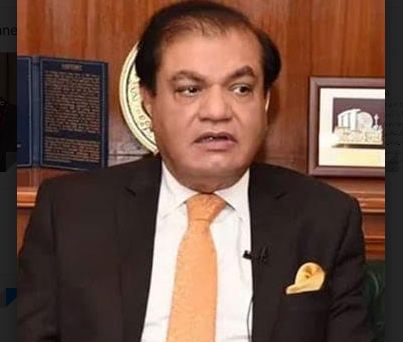
ISLAMABAD, JAN 5: /DNA/ – Chairman of National Business Group Pakistan, President Pakistan Businessmen and Intellectuals Forum, and All Karachi Industrial Alliance, and former provincial minister Mian Zahid Hussain, said on Friday that the expense of gas and electricity is preventing local and foreign investment.

He said that without inexpensive energy, exports and production cannot increase, hence taxes will remain unsatisfactory and unemployment will increase.

Mian Zahid Hussain said that SIFC ought to make an effort to lower gas and energy rates to attract investment.

Speaking to the business community, the veteran business leader said that people and investors are worried due to the ever-increasing prices of electricity, gas, and oil.

Energy prices in Pakistan are the highest compared to other countries in the region, which is hampering exports, he said.

The business leader observed that a reduction in electricity and gas prices is possible provided line losses, theft, and defaults are eliminated. Instead of capacity payments, full utilization of electricity production should be ensured.

He demanded that SIFC take note of this situation and take steps so that investment could be lured, which would also increase employment, income, and revenue.

Pakistan’s hands are tied due to the IMF’s deal, and apparently it is difficult to give relief to the people and the business community, but some way should be found for it; otherwise, investors will prefer neighboring countries instead of Pakistan.

Why would investors prefer Pakistan over neighboring countries where energy is cheaper and overall conditions are much better? he questioned.

Mian Zahid Hussain further said that electricity rates in India, Bangladesh, and Vietnam are almost half of those in Pakistan, due to which it has become difficult for our exporters to compete with these countries in the global market.

He further said that the industrial sector is already drowning in the mire of problems, but it is forced to pay Rs 300 billion extra in power bills so that the masses can be subsidized.

Mian Zahid Hussain further said that due to the high cost of electricity, its usage is decreasing, which is a bad omen for the economy, while the theft of electricity is increasing, which has to be borne by honest consumers.

By making electricity cheaper for the industrial sector, production, exports, and employment will increase, while increasing its use will also reduce the circular credit, but the current policy is the opposite, he observed.

The textile industry can export two billion dollars per month, but the energy sector is blocking its way and is constantly weakening it, which should be taken into immediate notice and necessary steps should be taken, he demanded.
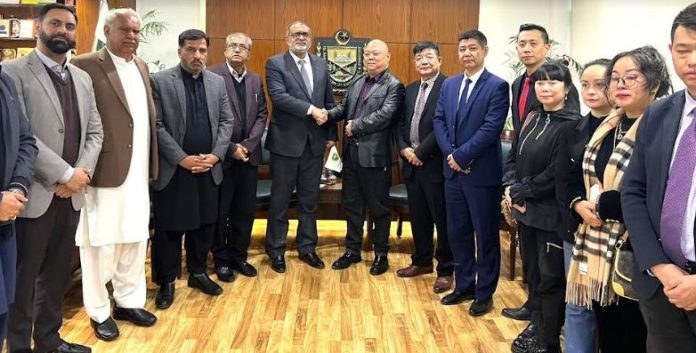
Chinese delegation visits ICCI to explore JVs and investment prospects in Pakistan

Chinese delegation visits ICCI

Islamabad, JAN 5 /DNA/ – A Chinese business delegation led by Zhang Yang, Chairman, Chang Jiang Industrial Company (Pakistan) Co., Ltd, and Director Chongqing Federation of Industry and Commerce visited the Islamabad Chamber of Commerce and Industry (ICCI) and explored the possibilities of joint ventures and investment in Pakistan. The representatives of Li Ting International China and Yihai Culture Communication Co., Ltd of China were also in the delegation.

Addressing the delegation, Engr. Azhar ul Islam Zafar, Acting President, Islamabad Chamber of Commerce & Industry briefed the Chinese delegation about the potential investment opportunities in various sectors of Pakistan’s economy. He said that Pakistan offers a liberal investment regime with attractive incentives to foreign investors and emphasized that Chinese companies should bring technology and set up manufacturing units in Pakistan to earn lucrative returns. He highlighted the key focus areas for Chinese companies, which have good potential for future business collaboration between Pakistan and China. He assured the Chinese business delegation that ICCI would extend them all possible cooperation in connecting them with the right partners.

Speaking on the occasion, Zhang Yang, Chairman, Chang Jiang Industrial Company (Pakistan) Co., Ltd, and Director of Chongqing Federation of Industry and Commerce said that they are in Pakistan to explore business and investment opportunities. He said that the delegation members have found Pakistan a promising investment destination and would like to contribute to its economic development. Both sides discussed various options to strengthen collaboration between the private sectors of Pakistan and China to further improve bilateral trade and economic relations between the two countries.Ch. Javed Iqbal, Ch. Muhammad Ali, Muhammad Shabbir, Dr. Muhammad Usman, Faseeh ullah Khan, Hamayun Kabir and others also shared useful ideas to further improve bilateral business and investment relations between Pakistan and China. 

India navy says responding to Arabian Sea vessel hijack

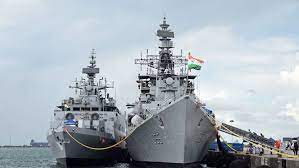
New Delhi, :India's navy said Friday it was monitoring a Liberian-flagged vessel in the Arabian Sea that had issued a hijacking distress call and was sending a destroyer to render assistance.
              A statement said the navy had "responded swiftly to a maritime incident in Arabian Sea involving a hijacking attempt" of a bulk carrier ship.
              Five or six "unknown armed personnel" had boarded the vessel on Thursday evening, it added. 
              The navy did not specify whether the vessel had been successfully taken over but said an overhead patrol flight had ascertained the safety of the crew on Friday morning. 
              INS Chennai, a navy destroyer, was closing in on the vessel's location to offer assistance, it added.
              Around 15 Indian crew members were aboard the ship, local media reported.
              The navy said it "remains committed to ensuring (the) safety of merchant shipping in the region along with international partners and friendly foreign countries".

Ruin and rescue dogs in quake-ravaged Wajima

Energy Seminar

Wajima, Japan, ):Joining soldiers and firefighters in the desperate search for survivors after a huge earthquake in central Japan was rescue dog Elsa, described by her trainer as "the best of the best".
              Nimbly crossing loose roof tiles and splintered wooden beams, she sniffed through the wreckage of a destroyed wooden house in Wajima, one of the cities worst hit by the 7.5-magnitude earthquake on New Year's Day.
              Along with rescuers including Japanese troops, the large black dog with pointed ears was searching for an elderly woman possibly buried under the rubble of her home.
              "Please Elsa, please find her," came a voice from a crowd of neighbours and other relief workers watching their efforts, three days after the disaster struck.
              The dog was brought to the coastal city by Yasuhiro Morita from his rescue dog training centre around 500 kilometres (300 miles) away in western Tottori region.
              "She reacts to dead bodies when searching the rubble -- she is trained to always bark when she finds a body," Morita told AFP.
              "But today, she just wandered off towards the bystanders instead, which likely means there was no body inside," he said.
              Morita described Elsa as "the best of the best in western Japan", but she wasn't the only mutt on the job -- the defence minister announced Thursday that a rescue dog named Jennifer had found an elderly woman under the rubble who was pulled out and saved.
              The ravaged house was just one of the devastating scenes in Wajima and other parts of Ishikawa on the Sea of Japan coast.
              Strong aftershocks have shaken the region since Monday's terrifying main tremor, which triggered landslides, a major fire and a tsunami more than a metre high.
              As of Friday, 92 people had been confirmed dead in the disaster, with 242 others reported missing.
              Wajima resident Hiroyuki Hamatani, 53, had been relaxing with his relatives when the quake struck.
              "Things fell over and walls crumbled, and the entrance door also collapsed. The house itself is standing, but it's far from liveable now," he told AFP.
              Water and food are scarce, as "supplies have hardly arrived yet, but I guess they're on their way now", he said.
              "I don't have the space in my mind to think about the future. Things are all scattered inside my house. More aftershocks could make it collapse, so I can't go back just yet."
              On the approach to Wajima -- a city of around 23,000 residents, known for its artisan lacquerware -- tunnels were partially blocked by fallen boulders, and mountain surfaces had been left barren by landslides.
              Flattened houses lined the route, with debris and snow dotting the sides of the road.

M reiterates Pakistan’s continued support for Kashmiris’ right to self determination

President

ISLAMABAD, Jan 05 (DNA):Caretaker Prime Minister Anwaar-ul-Haq Kakar on Friday reiterated that Pakistan would continue to extend its full political, diplomatic, and moral support to the valiant Kashmiri people in their just struggle for their rights including the inalienable right to self-determination, by the relevant resolutions of the United Nations Security Council (UNSC).

“Today, Kashmiris around the world are observing the 75th anniversary of the Resolution adopted by the United Nations Commission for India and Pakistan (UNCIP), providing that the Jammu and Kashmir dispute will be decided through the democratic method of a free and impartial plebiscite under the UN auspices, the prime minister said in a message on the occasion of Self-Determination Day.

In essence, he said it was a reaffirmation of the inalienable right of Kashmiris to self-determination, which is enshrined in international law and upheld by international human rights instruments.

He regretted that despite more than seven and a half decades, the oppressed people of Indian Illegally Occupied Jammu and Kashmir (IIOJK) have not been able to exercise this fundamental right. India continues to oppress the people of Jammu and Kashmir to break their will.

Since August 5, 2019, the prime minister said India was engaged in a vicious exercise, aimed at altering the demographic structure and political landscape of IIOJK, to turn Kashmiris into a disempowered community in their own land.

The Indian Supreme Court’s recent verdict on the status of IIOJK is yet another step towards the denial of the Kashmiri people’s right to self-determination. The genuine aspirations of the Kashmiris cannot be wished away through domestic legislation and engineered judicial verdicts, he added.

He pointed out the United Nations General Assembly (UNGA) annually adopts a resolution on “Universal Realization of the Right of the People to Self-Determination” that draws international attention towards the plight and rights of people living under situations of forced occupation.

The international community, especially the United Nations, is responsible for ensuring that the people of IIOJK exercise their inalienable right to self-determination, he added.

3 dead, 28 injured in Indonesia train collision: officials

Energy Seminar

Bandung, Indonesia, :Three people were killed and at least 28 injured when two trains collided on Indonesia's main island of Java on Friday, officials said.
              The crash took place at 6:03 am local time (1103 GMT) near rice fields in Cicalengka in West Java province and left numerous train carriages overturned.
              "We have identified one of the victims as the steward for the Turangga train. The rest have not been identified," said Ayen Hanepi, a spokesman for railway operator PT KAI.
              He said the collision involved the Turangga train, an intra-city line that runs from Surabaya in East Java to the city of Bandung, and a local train. 
              The Turangga train carried 287 passengers while 191 people were aboard the local commuter line, he said. 
              All passengers had been evacuated while the injured were taken to a local hospital, said provincial police spokesman Ibrahim Tompo.
              Transport accidents are not uncommon in Indonesia, a vast archipelago nation where buses, trains and even planes are often old and badly maintained.
              In 2015, a collision between a commuter train and a minibus on a level crossing in the capital Jakarta killed 16 people.
              In 2013, seven people were killed and scores more injured when a commuter train collided with a fuel tanker at a level crossing in Jakarta and burst into flames.

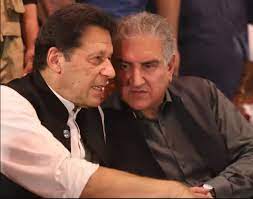
Imran Khan decries lack of playing field for PTI

ISLAMABAD: As the country inches closer to a decisive general election next month, former prime minister and Pakistan Tehreek-e-Insaf (PTI) founder Imran Khan has lamented the lack of playing field for his party, alleging that the establishment is not ready to provide one.

He added that the polls conducted in such circumstances would be “farce”.

The former prime minister’s statement was made in an article written for a British publication, The Economist, which he has written amid his incarceration in the Adiala jail.

“The manner in which I and my party have been targeted since a farcical vote of no confidence in April 2022 has made one thing clear: the establishment — the army, security agencies and the civil bureaucracy — is not prepared to provide any playing field at all, let alone a level one, for PTI.”

Alleging that the establishment had “engineered” the removal of his government “under pressure from America”, the former prime minister contends this is because the US was “becoming agitated with my push for an independent foreign policy and my refusal to provide bases for its armed forces.”

Imran has stuck to his cipher narrative in the piece, writing that “I believe that the American official’s message was to the effect of: pull the plug on Khan’s prime ministership through a vote of no confidence, or else.” He adds that “within weeks our government was toppled” and he discovered that former COAS Gen Bajwa had “been working on our allies and parliamentary backbenchers for several months to move against us.”

The Economist has added a disclaimer at the end of the article regarding this assertion, saying that both the Pakistani government and the US State Department “deny Mr Khan’s allegations of American interference in Pakistani politics.”

According to Khan, the caretaker governments at the federal level and provincial levels are “constitutionally illegal”. On the February 8 elections, he is of the view that the people are “sceptical” about the election taking place “having been denied the same in two provinces.”

The article also talks about the popularity amassed by the PTI post-Imran’s ouster: “People flocked onto the streets to protest against this regime change, and in the next few months the PTI won 28 out of 37 by-elections.” Imran writes that this popularity “unnerved” those who had ousted him.

Imran has written that the May 9, 2023 incident was a “false-flag operation” that was “falsely blamed on [the] PTI”, adding that “the speed showed it was pre-planned.”

The article also says that Pakistan Muslim League-Nawaz supremo Nawaz Sharif has “struck a deal with the establishment whereby it will support his acquittal and throw its weight behind him in the upcoming elections.”

Reiterating that the PTI is not being allowed to campaign freely, Khan writes that he remains “incarcerated, in solitary confinement, on absurd charges that include treason. Those few of our party’s leaders who remain free and not underground are not allowed to hold even local worker conventions.”

According to Imran, even if elections were held in such a situation they would be “a disaster and a farce”.

Religious freedom: US again fails to designate India as country of ‘particular concern’

Pakistan Tehreek-e-Insaf (PTI)

WASHINGTON: The United States Commission on International Religious Freedom (USCIRF) has called for a congressional hearing after expressing disappointment over the US Department of State’s continuous failure to designate India as a “Country of Particular Concern (CPC)”.

The commission stated this in response to the State Department’s list of the countries designated as CPCs.

Secretary of State Antony J Blinken, following the core objective of US foreign policy as per the International Religious Freedom Act 1998, has designated Burma, China, Cuba, North Korea, Eritrea, Iran, Nicaragua, Pakistan, Russia, Saudi Arabia, Tajikistan, and Turkmenistan as Countries of Particular Concern “for having engaged in or tolerated particularly severe violations of religious freedom”.

Blinken said he had designated al-Shabab, Boko Haram, Hayat Tahrir al-Sham, the Houthis, ISIS-Sahel, ISIS-West Africa, al-Qa’ida affiliate Jamaat Nasr al-Islam wal-Muslimin, and the Taliban as “Entities of Particular Concern” as well.

USCIRF Chair Abraham Cooper and Vice Chair Frederick A Davie in a joint statement said there was no justification as to why the State Department did not designate India as a Country of Particular Concern, despite its own reporting and statements. 

The USCIRF called on Congress to convene a public hearing on the failure of the State Department to follow their recommendations, they said.

“In India, in addition to perpetrating egregious religious freedom violations within its borders, the government has increased its transnational repression activities targeting religious minorities abroad and those advocating on their behalf,” stated Cooper and Davie.

The USCIRF said since the issuance of its 2023 Annual Report, it had consistently shared its recommendations with the US Department of State and Congress. 

In early December 2023, the USCIRF met with Antony Blinken to reiterate those recommendations. USCIRF released publications on India’s State-Level Anti-Conversion Laws and Religious Freedom.

The top USCIRF officials said, “USCIRF rejects the State Department’s decision to omit India as the CPC.” 

They said they met with the State Department on many occasions to sound the alarm about the country, but not all of their recommendations had been followed. 

“We will not be deterred and will continue our role as a congressionally mandated watchdog to ensure the US government prioritises religious freedom as a key component of its foreign policy.”

The State Department placed Algeria, Azerbaijan, the Central African Republic (CAR), Comoros, and Vietnam on its Special Watch List (SWL). The USCIRF had recommended in its 2023 Annual Report that Algeria, Azerbaijan, and CAR be placed on the SWL, in addition to Egypt, Indonesia, Iraq, Kazakhstan, Malaysia, Sri Lanka, Turkey, and Uzbekistan.

Entire Pakistan is happy over 5-year disqualification law: CJP

Energy Seminar

ISLAMABAD: Chief Justice of Pakistan (CJP) Qazi Faez Isa has observed that the entire Pakistan is happy over the amended Election Act 2017 that limited lawmakers’ disqualification period to five years.

“No one has challenged five-year disqualification law,” the CJP remarked on Friday during a hearing of a case related to the disqualification of lawmakers under Article 62(1)(F) of the Constitution.

A seven-member larger bench — headed by CJP Isa and comprising Justice Syed Mansoor Ali Shah, Justice Yahya Afridi, Justice Aminuddin Khan, Justice Jamal Khan Mandokhel, Justice Muhammad Ali Mazhar, and Justice Musarrat Hilali — conducted the hearing.

The apex court had taken notice of contradictions regarding the duration of disqualification in the Election Act, 2017, and an apex court verdict during a past hearing on a petition filed by former PML-N provincial lawmaker Sardar Meer Badshah Khan Qaisrani last month.

Qaisrani had challenged his lifetime disqualification over a fake degree in 2007.

Proceedings were being broadcast live on SC’s website and YouTube channel. The court has taken a break till Friday prayers. 

In the previous hearing on Thursday, CJP Isa remarked that disqualifying anyone for life from parliament was “against Islam”, adding that the court was seeking “clarity” on whether the disqualification period for a lawmaker was five years — as per the amendment in Election Act 2017 — or a lifetime ban under the aforementioned article which deals with the criteria to contest elections.

CJP Isa said that the solution to this matter is present in Islam.

“The Holy Quran mentions that the status of humans is very high,” the top judge said, referring to a verse from Surah Sajdah which explains that human beings are not bad but their deeds are.

“Disqualifying anyone [for life] is against Islam,” he added.

Today’s hearing

As the proceedings commenced today, CJP Isa said that the top court would not take up individual cases related to elections but would only hear matters related to constitutional interpretation.

Following this, Jahangir Tareen’s lawyer, Advocate Makhdoom Ali Khan, started his arguments.

Justice Shah questioned Khan if according to him, the declaration of disqualification would come from the civil court. To this, Advocate Khan replied in the positive.

Justice Mazhar then asked whether Article 62(1)(f) can be implemented before the elections or even after the polls.

At this, Khan replied, “The candidate is disqualified pre-elections if we read Articles 62 and 62 together”.

After this, the CJP asked, “Why are we limiting ourselves to only one specific part of the Constitution and disregarding the constitutional history and fundamental rights?”

“Do not limit yourself and as a constitutional expert, explain to us in a broader context,” the CJP told the lawyer.

Tareen’s counsel Khan implored the larger bench to overturn the Samiullah Baloch case verdict wherein the top court held that the disqualification period under Article 62(1)(F) will be for life. 

The case

The fate of many politicians, including Pakistan Muslim League-Nawaz (PML-N) supremo Nawaz Sharif and Istehkam-e-Pakistan Party (IPP) founder Jahangir Tareen, depends on the verdict of this case.

Whether the aforementioned politicians can contest the upcoming polls or not will be determined by the outcome of the case.

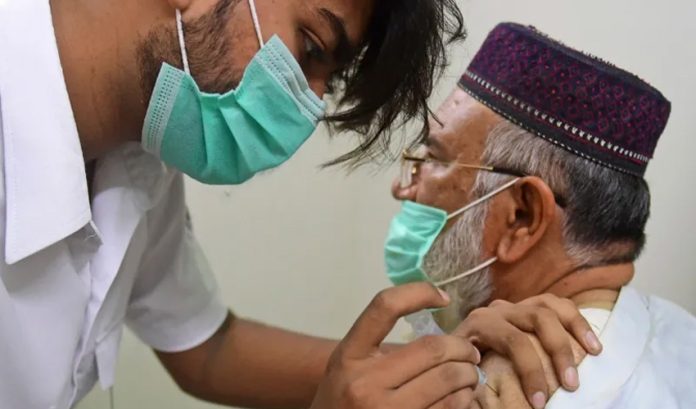
Pakistan resumes COVID-19 testing of inbound passengers amid new variant fears

National Institute of Health issues advisory for prevention, control of JN.1 sub-variant in Pakistan

SLAMABAD: Amid growing concerns over new COVID-19 variant spread, the National Command and Operation Centre (NCOC) has decided to resume mandatory testing of 2% of inbound passengers.

The testing will help detect and prevent JN.1 sub-variant of COVID-19.

However, reports regarding the unavailability of testing kits and Personal Protection Equipment (PPE) later emerged, as major airports, including Islamabad and Karachi, lacked the facilities, officials told the publication.

“On the directives of caretaker federal Health Minister Dr Nadeem Jan, surveillance at the country’s points of entry, including airports, has been increased and 2 percent mandatory testing for COVID-19 has been resumed to detect JN.1 variant of SARS-CoV-2 or coronavirus,” the NCOC official told The News on Wednesday.

Ironically, neither the COVID-19 testing kits nor the PPE were available at the many points of entry for the healthcare workers associated with Border Health Services (BHS). Officials said neither the kits nor the PPE were procured after the World Health Organisation (WHO) declared in June this year that COVID-19 was no longer a public health emergency of international concern.

Although the COVID-19 positivity remained extremely low in the country and no case of its JN.1 variant had been detected till Wednesday, the National Institute of Health (NIH) issued an advisory for the prevention and control of JN.1 sub-variant.

Quoting the World Health Organization (WHO), the NIH advisory said that JN.1 sub-variant has been classified as a Variant of Interest (VOI) and is fundamentally an offshoot of BA.2.86 sub-variant of the omicron variant of COVID-19. It was first reported in August 2023 by US-CDC.

In recent weeks, JN.1 has been reported in many countries, and its prevalence is rapidly increasing globally, the National Institutes of Health’s (NIH) advisory said, adding that this rapid growth is being observed across the three WHO regions with consistent sharing of SARS-CoV-2 sequences, i.e. the region of the Americas, the Western Pacific and the European regions, with the largest increase seen in Western Pacific from 1.1% in epidemiological week 44 to 65.6% in epidemiological week 48.

“The objective of this advisory is to alert and facilitate the health authorities and other stakeholders for ensuring timely preventive and control measures encompassing preparedness to deal with increased workload expected in the outpatient and in-patient departments during the next few weeks,” the NIH stated.

The National Institute of Health further stated that although JN.1 is rapidly replacing other sub-variants and its transmissibility is expected to be high, it is unlikely that it can produce a situation like the earlier phase of the pandemic, hence its morbidity and mortality are low as of current statistics.

“Clinical presentation of JN.1 infection is similar to other sub-variants including cough, sore throat, congestion, runny nose, sneezing, fatigue, headache, muscle aches and altered sense of smell. However, symptom presentation depends on an individual’s immunity from vaccination and previous infection. It’s important to know that existing vaccines, tests and treatments still work well against JN.1,” the advisory stated.

Stay Connected

64FansLike
60FollowersFollow

Latest Reviews

Exchange Rates

USD - United States Dollar
EUR
1.17
GBP
1.35
AUD
0.67
CAD
0.72