Home Blog Page 855

Commission submits ‘revealing’ report on missing persons

Commission submits 'revealing' report on missing persons

In its report, the inquiry commission said that Khyber Pakhtunkhwa reported 3,485 cases of missing persons, making it the highest number in the country

Faisal Sheikh

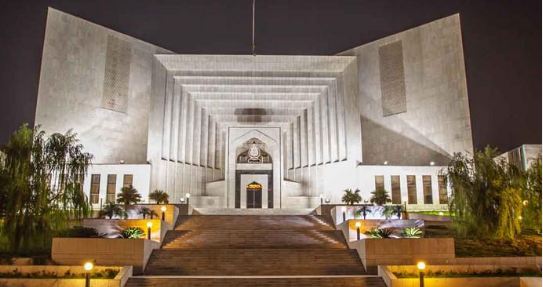
ISLAMABAD: In compliance with the Supreme Court’s order, the Commission of Inquiry on Enforced Disappearances on Tuesday handed over its “comprehensive report” on missing persons to the attorney general.

Last week, the top court sought a report from the commission along with details about orders issued to law enforcement agencies (LEAs) for the production of missing persons. The apex court had also asked the federal government to give in writing that there would be no more enforced disappearances in the country.

The development came as a three-member bench led by Chief Justice of Pakistan (CJP) Qazi Faez Isa and comprising Justice Muhammad Ali Mazhar and Justice Musarrat Hilali, heard the petitions of Barrister Aitzaz Ahsan and others on the unlawful practice of enforced disappearances, praying for declaring it as violative of various articles of the Constitution.

In its report, the inquiry commission said that Khyber Pakhtunkhwa reported 3,485 cases of missing persons, making it the highest number in the country. Causalities in drone attacks and the spike in militancy were the key reasons behind the disappearances, read the report.

In Balochistan, 2,752 cases related to enforced disappearance were lodged, the commission said, adding that besides other reasons, fleeing abroad without informing their families, due to the prevailing situation in the province, was among the causes of these cases.

“In exercise of the aforementioned powers, the commission has issued 744 production orders out of which 52 have been implemented by the addresses, while the remaining 692 production orders are yet to the executed by the quarters concerned.”

The commission also received 182 petitions from the quarters concerned requesting for review of the production orders in these cases, the report added.

PM meets a group of envoys from African and Asian countries

PM meets a group of envoys from African and Asian countries

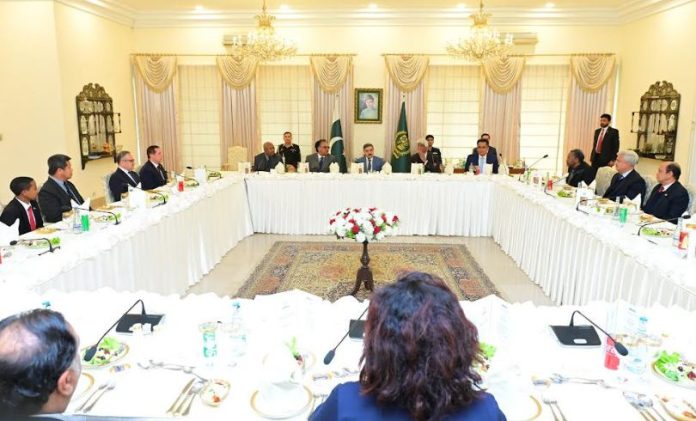
ISLAMABAD: /DNA/ – Caretaker Prime Minister Anwaar-ul-Haq Kakar met a group of resident envoys representing African countries as well as select Asian countries over lunch today.

The meeting was attended by the Ambassadors of Algeria and Sudan as well as High Commissioners of Bangladesh, Brunei, Malaysia, Mauritius, and South Africa. Other participants included the Charge d’ Affaires of Ethiopia, Indonesia, Kenya, Nigeria, Somalia, Tunisia, and Zimbabwe. The Foreign Minister, Secretary to the Prime Minister and Foreign Secretary also attended.

The Prime Minister highlighted the importance Pakistan attached to Africa. He expressed the desire to strengthen ties with African countries, at the bilateral as well as regional level. While acknowledging that Pakistan and Africa had enjoyed excellent political relations over the years, the Prime Minister stressed the need to enhance trade and economic linkages which had yet to realize their full potential. He mentioned that the 4th Pakistan-Africa Trade Conference was under way in Cairo, Egypt from 9-11 January, 2024 where Pakistan was represented by a large business delegation led by the Commerce Minister.

The Prime Minister also expressed deep appreciation for Pakistan’s historic ties with South East Asian countries, particularly Brunei, Indonesia and Malaysia. He said Pakistan was keen to expand bilateral trade ties with these key countries and sought their assistance in strengthening Pakistan’s engagement with ASEAN.

Referring to the ongoing situation in Gaza, the Prime Minister stressed the need for dialogue among nations and for intensifying collective efforts to end the violence and bring lasting peace in Palestine.

The Prime Minister praised the diplomatic envoys for their efforts to build stronger ties with Pakistan and their respective countries. The diplomats thanked the Prime Minister for sparing time to interact with them and said they would continue to work closely with Pakistan to enhance bilateral relations.

DG PHA visits city parks to review beautification work

PHA

RAWALPINDI, JAN 09 (DNA) — Director General (DG), Parks and Horticulture Authority (PHA) Rawalpindi, Ahmad Hassan Ranjha here on Tuesday visited different city parks and reviewed the ongoing beautification work.

The DG directed the authorities concerned to complete the beautification work as soon as possible. Ahmed Hassan Ranjha also inspected cleanliness arrangements and instructed the officials concerned to provide all basic facilities in the parks.

He informed that the authority was utilizing all available resources to make the city clean and green and uplift the parks.  The authorities concerned had been directed to complete ongoing renovation and beautification work of all the parks within the shortest possible time frame, he said adding, that efforts were also being made to repair faulty lights, swings and walking tracks besides improving the security of the parks.

The PHA officers had also been instructed to utilize all available resources to ensure the provision of the best recreational facilities to the public in all the parks of the town, he added.  The PHA was planting maximum saplings and enhancing greenery, particularly in parks and green belts of the city, he added.  During the visit, the officers concerned of PHA were also present. — DNA

ECC approves RS. 250 million for intelligence bureau’s anti-terror measures

ECC approves RS. 250 million

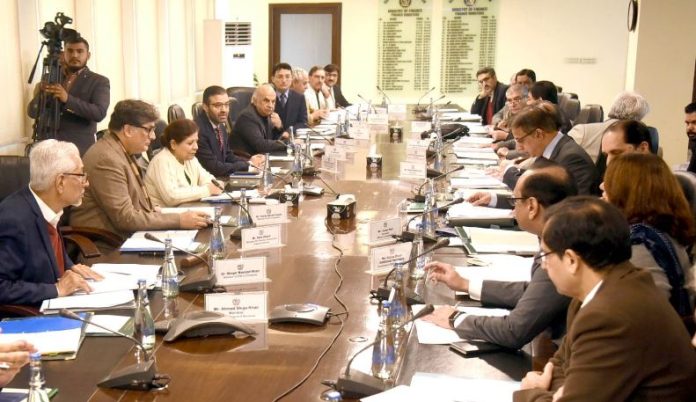
ISLAMABAD, JAN 9 /DNA/ – The Federal Minister for Finance, Revenue, and Economic Affairs, Dr. Shamshad Akhtar presided over a meeting of the Economic Coordination Committee (ECC) of the Cabinet, today. The meeting was attended by the Minister for Privatization and Inter Provincial Coordination Mr. Fawad Hasan Fawad, Minister of Planning, Development and Special Initiatives Mr. Sami Saeed, Deputy Chairman Planning Commission Dr. Muhammad Jehanzaeb Khan, Minister for Law and Justice, Water Resources and Climate Change Mr. Ahmed Irfan Aslam, Advisor to PM on Finance Dr. Waqar Masood, Federal Secretaries, and other senior government officers of the relevant ministries.

ECC was presented with five agenda an item of which first summary was from Intelligence Bureau for provision of additional funds of Rs. 250 Million during the current financial year 2023-24. The Intelligence Bureau briefed the committee about recent surge of terrorism which needed effective counter measures to thwart nefarious designs of terrorists. The Economic Coordination Committee approved the funds as Technical Supplementary Grant (TSG) for up gradation, technical enhancement and field activities of Intelligence Bureau with releases on need basis.

The summary of Ministry of Industries and Production for approval of mechanism for sale of imported urea at a basket price along with locally manufactured urea was discussed at length. The ECC approved the mechanism for weighted average price with the direction to NFML for ensuring reasonable price for urea and Ministry of Industries & Production to provide oversight to the whole process.

The Economic Coordination committee considered and approved the summary of National Health Services Regulation and Coordination for provision of Technical Supplementary Grant (TSG) amounting to Rs. 3,568.719 Million in favour of Federal Directorate of Immunization (FDI), and urged the provinces to clear their pending liabilities.

ECC also considered the summary of Finance Division for signing the addendum to the Subsidiary Grant Agreement (SGA) regarding financial inclusion & infrastructure project and exemption from relending policy of release of funds to State Bank of Pakistan and accorded its approval.

A summary from Ministry of Inter Provincial Coordination was also tabled for approval of release of grant for participation of Pakistan’s Hockey team in international events and other sports promotion activities. This grant, ECC was told would also be utilised for Davis Cup (Tennis) with India and other mind games like scrabble and chess. The Committee approved provision of additional funds amounting Rs. 100 Million as Technical Supplementary Grant (TSG) for FY 2023-24.

Frenchman arrested in Azerbaijan for ‘espionage’: Ambassador in Paris

Azerbaijan

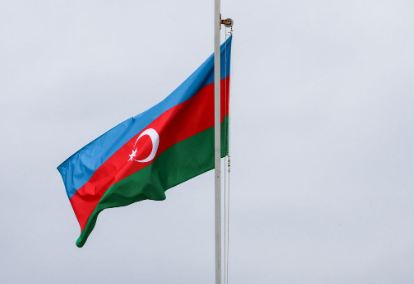
PARIS, Jan 9 (AFP/APP/DNA): Azerbaijan authorities arrested a Frenchman on espionage charges in December, the Azerbaijani Ambassador to France told AFP on Tuesday, amid rising tensions and tit-for-tat expulsions of diplomats.

Baku has accused France of supporting Azerbaijan’s arch-enemy Armenia, both diplomatically and militarily, and of seeking to fuel tensions in the South Caucasus.

   “Suspected of having committed acts of espionage, Martin Ryan, a French national, was arrested on December 4, 2023,” said Azerbaijan’s ambassador Leyla Abdullayeva.

   She said judicial authorities had ordered that he be detained for four months. The French embassy in Baku was notified, she added.

   Ryan’s father Richard said the family had spoken to him.”We spoke to him four times, each time for two minutes,” he told AFP. “He says he’s being treated well and is getting on well with his lawyer.”

 According to his father, Ryan believes his detention is linked to the tensions between the two countries.

   “Once he told me: ‘They wanted to use me as a pawn’,” Richard Ryan said.

                  On Tuesday, the Frenchman’s court-appointed lawyer, Nizami Aliyev, told AFP that Ryan could face up to 15 years in prison, if convicted.

                  He said he could not share any information and stressed it was “risky to talk about the case.”

                  Aliyev also claimed that Ryan had been in contact with French people who he later learned were “agents” of French intelligence.

                  “Martin is not an agent, he is a citizen,” the lawyer said.

                  The French embassy in Azerbaijan and the French foreign ministry did not immediately comment.

                  Diplomatic tensions between Paris and Baku escalated at the end of December, when Azerbaijan ordered two French diplomats to leave the country.

                  France declared two Azerbaijani diplomats “persona non grata” as a reciprocal measure.

                  In November, Azerbaijani President Ilham Aliyev accused France of inciting conflict in the Caucasus by arming Armenia.

                  Azerbaijan and Armenia have in the last three decades fought three wars over the Azerbaijani region of Nagorno-Karabakh, which was seized by Armenian forces when the Soviet Union fell apart.

                  In the latest war, Azerbaijan took total control of Karabakh in a surprise offensive last year.

                  The move sparked some international condemnation, including from France, but also hope of a settlement to end years of conflict between Baku and Yerevan.

                  Paris has also linked Azerbaijani figures to a disinformation campaign aimed at tarnishing France’s reputation as host of the 2024 Olympic Games, according to a report seen by AFP in November. France is home to a large Armenian diaspora.

For and against the SC verdict in lifetime disqualification case

Nawaz

This incongruity raises pertinent questions about the prerequisites for those entrusted with the responsibility of making laws. Should not the guardians of legislation be held to at least the same standard of integrity as individuals seeking far less influential positions within the system?

Ansar M Bhatti

Islamabad: The recent Supreme Court verdict, which abolishes lifetime disqualification, has elicited a varied response from the general public and the legal community. While some express approval, others harbor concerns, particularly among legal experts. There is a prevailing sentiment that this decision might set a precedent, potentially leading to a series of revisitations by future chief justices.

Experts argue that the possibility of a nine-member bench overturning this verdict raises questions about the stability and consistency of judicial decisions. This apprehension prompts reflection on the potential for a cycle of reversals, undermining the perceived sanctity of legal decisions.

Legal scholars contend that the Supreme Court could have opted for a different approach, considering the precedent set by the five-member bench in the Samiullah Baloch case. They suggest that, instead of overturning Samiullah Baloch, the court could have recommended leaving the matter to the new parliament for resolution through a constitutional amendment to Article 62 F, requiring a two-thirds majority.

This alternative course of action would ensure a more stable and democratic process, allowing elected representatives to deliberate and decide on issues of constitutional significance. It emphasizes the importance of all-inclusive parliamentary involvement in shaping and amending fundamental laws, maintaining the balance between the judiciary and the legislative branches.

It remains uncertain whether the comprehensive judgment will address these questions. However, one certainty is that the court might articulate in its detailed decision that amending Article 62 F requires a two-thirds majority.

During the court proceedings, some judges correctly noted that the government had a significant opportunity to modify this article through the 18th Amendment, yet they consciously avoided addressing this matter. The Chief Justice’s comments on this issue strongly suggest that parliamentarians might have refrained from amending the article due to concerns about potential backlash from the clergy.

As we delve into the provisions of Article 62 F, which specifically addresses the conduct of parliamentarians, a noteworthy discrepancy emerges. The stipulation dictates that individuals aspiring to hold parliamentary positions must embody qualities such as fairness, righteousness, honesty, and truthfulness.

In a striking contrast, individuals vying for even modest roles like a peon or an attendant in Pakistan are required to furnish a police character certificate, affirming their clean record and lack of involvement in any malpractices. This certificate explicitly attests that no legal cases have been lodged against them in any court of law.

This incongruity raises pertinent questions about the prerequisites for those entrusted with the responsibility of making laws. Should not the guardians of legislation be held to at least the same standard of integrity as individuals seeking far less influential positions within the system? Addressing this disparity could foster a more equitable and transparent approach to the selection and conduct of parliamentarians, aligning with the principles of fairness and accountability that are foundational to a robust democratic framework.

Boycotting products from Israel; will it help

Boycotting products from Israel; will it help

SAMAR KAINAAT

Have you ever heard about boycotting products from ISRAEL?

Boycotts are a form of protest where individuals or groups choose not to buy or support products or services from a particular country or company. The reasons for boycotting can vary, and in the case of Israel, it’s often related to political conflicts in the region. In the case of boycotting products from Israel, some people choose not to buy things made in Israel to express their concerns about the situation between Israel and Palestine.

The main reason people boycott products from Israel is because they want to bring attention to the conflict between Israel and Palestine. They hope that by not buying Israeli products, they can make a difference and encourage the Israeli government to change its policies. Boycotting can be complicated. It’s not always easy to know where products come from because many things are made with materials from different countries. It can also be hard to measure how effective a boycott is and if it will really make a difference. As being a supporter of humanity the ongoing situation in Palestine is not bearable at all especially when it comes to the loss of innocent lives, including children.

The ongoing conflict has resulted in tragic consequences for both Israelis and Palestinians. It’s heartbreaking to witness the suffering and violence that affects the lives of so many people, especially children. It’s crucial that we continue to raise awareness, support humanitarian efforts, and promote dialogue to bring about a just and lasting solution. It’s important to note that the decision to participate in a boycott is a personal one, and individuals should educate themselves about the issues at hand and make informed choices based on their own values and beliefs. Boycotting can bring attention to important issues and raise public awareness. I hope that boycotting products create a positive impact in the world and create a peaceful resolution between Israel-Palestine conflict.

The writer is the student of FAZAIA BIQUIS COLLEGE  BS-ENGLISH

The Threat to Pakistan’s Economic and Social Fabric

The Threat to Pakistan's Economic and Social Fabric

Tayyaba Ishaq

Pakistan, renowned for its rich cultural heritage, confronts numerous challenges on its path to becoming a developed nation. One of the most pervasive and entrenched issues the country grapples with is corruption. Corruption in Pakistan has escalated to a point where it not only hampers the nation’s economic growth but also erodes the social and political fabric.

Corruption, broadly defined as the misuse of power or position for personal gain, manifests in various forms, including bribery, embezzlement, nepotism, and fraud. In Pakistan, corruption has infiltrated all societal levels, becoming so prevalent that it is now considered a norm. The government institutions in Pakistan lack the strength to curb corruption, characterized by a deficiency in accountability and transparency, allowing corrupt officials to operate with impunity.

The historical backdrop of political instability in Pakistan has further fueled widespread corruption. When political leaders prioritize retaining power over combating corruption, the latter tends to thrive. Poverty and income inequality also contribute to corruption, as individuals, struggling to make ends meet, may resort to corrupt activities for additional income.

The weak rule of law in Pakistan exacerbates the corruption problem. In the absence of stringent enforcement and an accountable justice system, corruption finds fertile ground to flourish. The consequences of corruption in Pakistan extend far and wide.

Corruption significantly impacts the country’s economy, undermining investment and creating an unfriendly business environment. This result in lower economic growth, reduced job creation, and diminished prosperity for the people. Moreover, corruption erodes public trust in government institutions, paving the way for extremist ideologies. It diverts resources from essential areas, hindering the development of schools, hospitals, and public services. Corruption also discourages foreign investment, depriving the country of potential economic benefits.

Addressing corruption requires decisive action from the government, involving the strengthening of institutions, increased accountability, and transparency. Anti-corruption measures, such as establishing independent watchdog agencies and improving transparency in government operations, are crucial. Additionally, efforts to enhance the rule of law, enforce anti-corruption laws, protect whistleblowers, and prosecute corrupt practices are essential.

Civil society can contribute by raising awareness, advocating for reforms, and monitoring government activities. The private sector can promote ethics and integrity, supporting anti-corruption initiatives. Educational initiatives, awareness campaigns, and fostering civic responsibility are vital for achieving a cultural shift towards accountability and ethical behavior.

International cooperation is indispensable in combating corruption on a global scale. Collaborative efforts with other countries, international organizations, and non-governmental entities can enhance the effectiveness of anti-corruption initiatives, particularly in addressing cross-border corruption and money laundering.One crucial strategy for preventing corruption is to provide better salaries for government jobs. Many government employees currently receive low salaries, leading some to resort to bribery to cover their expenses. By offering higher salaries, the motivation and inclination to engage in bribery would decrease.

Another effective approach to curb corruption is to increase the number of workers in government offices. Many offices face a high workload, creating opportunities for employees to slow down work and engage in bribery for faster service. Bringing in more employees would reduce this temptation and help eliminate such corrupt practices.

Strict laws play a vital role in combating corruption. It is essential to impose severe punishments on individuals found guilty, coupled with efficient and swift implementation of these strict laws.Implementing surveillance cameras in workplaces is an excellent method to deter corruption. The fear of being caught would discourage many individuals from engaging in corrupt activities that they might have otherwise considered.

The government should prioritize keeping inflation low to address the issue of corruption. Rising prices often lead people to perceive their incomes as insufficient, fostering corruption among the masses. Businessmen may exploit this situation by increasing prices, with support from politicians seeking personal gains.

The corruption is a significant societal issue that requires prompt elimination. It has become a pervasive problem affecting the minds of many individuals. With consistent political and social efforts, we can strive to eradicate corruption and create a more transparent and accountable society.I thank full to Sir Dr. Muhammad Akram Zaheer for his invaluable assistance in helping me to write an article. His expertise, guidance and unwavering support throughout the entire process have been instrumental in shaping the article into its final form.

Global Warming is devastating Pakistan

Global Warming is devastating Pakistan

Dr. Muhammad Ikram Zaheer

Summer flood killed more than 1,500 people in Pakistan. Since June rain swept away buildings, flooded homes and destroyed roads. One third of the country was under water. Scientists still can’t say exactly how climate change contributed to the disaster, but they do know that global warming is dramatically increasing the likelihood of extreme rains in South Asia, a quarter of humanity’s area. This global warming has made the monsoon season worse this year for the region particularly Pakistan.

 Pakistan is a country that has done little to combat global warming and now it is being worsen much due to Global Warming and the Monsoon. The South Asian summer monsoon is part of the regional climate pattern. Mainly from June to September, winds blow from the south-west. This terrestrial wind brings the rainy season. In general, this is usually a good thing for the agricultural activities.  Farmers across the region depend on monsoon rains for their crops. But this is not a normal time anymore. Due to global warming, the water in the oceans is evaporating very fast. And warmer environments can hold more moisture. Hence, heavy rains can occur during monsoon. It will take time for researchers to examine the attribution to determine what happened this summer, but Steven Clemens, professor of Earth, Atmospheric and Planetary Sciences at Brown University, said Pakistan’s plains have caused significant flooding. . The country’s disaster management agency says that rains have been three times higher this monsoon season in Pakistan. Sindh province, which borders the Arabian Sea to the south, receives five times the average rainfall. The ongoing political instability in Pakistan complicates the task of preparing for heavy rains. In Pakistan, no prime minister has completed his term. Former Prime Minister Imran Khan was also forced to resign in April. He was indicted this month under anti-terrorism laws amid a power struggle with incumbent leaders. The country’s difficult economic situation also means that there are not enough resources for adaptation projects. At one point this month, the annual inflation rate was 42.3 percent. Madiha Afzal, an analyst at the Brookings Institution in Washington, says the heavy rains damaged much due to late response by the government that was already facing economic and political crisis in the country. He further said that the government did not pay attention and not took it serious. “So things that should happen in a disaster, like the message to evacuate people from flood areas, didn’t happen.” Economic difficulties are also affecting the government’s ability to help the house displaced people and rebuild damaged properties, he added. There is a risk of damage to agriculture as well. According to the World Bank, more than 40 percent of Pakistanis are employed in agricultural sector. The United States this month announced almost 1 million dollars for Pakistan to deal with natural disasters. And in September, the country has secured a $1.3 billion loan from the International Monetary Fund to avoid default. But government officials in Pakistan believe that the damage was caused by a natural disaster that is the result of public sins.

Humanitarian Catastrophe in Gaza: 1.3 Million Citizens Left Homeless

Humanitarian Catastrophe in Gaza: 1.3 Million Citizens Left Homeless

GAZA, JAN 9: Foreign and expatriates, The true essence of changing the image of the war of extermination and its misleading nature is its continuation The Israeli government continues its attempts to mislead world public opinion and international officials by promoting a change in the character and shape of the genocide war with a goal Absorbing global resentment and the escalating pressure on the occupying power to stop its massacres and target Palestinian civilians.

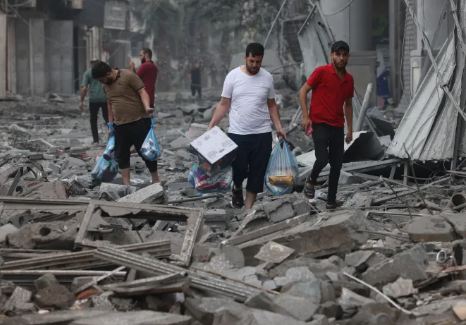
The forced displacement committed by the occupation in the northern Gaza Strip, in the center and south, which means deepening the humanitarian catastrophe in the areas that have become more densely populated in the world after the forced exodus, as nearly 1.3 million citizens are currently alone. They are homeless.

The ministry asserts that Israel’s attempts to give the impression of alleviating the war do not include the minimum demand by the countries of the world to protect civilians, especially with the continued bombing of homes and facilities over the heads of its residents, and Netanyahu’s refusal of the return of the displaced to the northern Gaza Strip and the transfer of aid incomes. The issue of extortion, barter and preventing the basic humanitarian needs of the residents of the Gaza Strip, in light of the escalation in the mass massacres committed by the occupation forces in the central and southern regions of the Gaza Strip, which constantly cause more civilian casualties.

 Rather, they boast about the prolonged war on our people and their continuation during the year 2024, and sometimes mislead the world with alleged conversations about the day after the war, but to move to another stage of war less severe at other times, knowing that Netanyahu and his coalition They are trying to sustain the cycle of wars and violence to achieve the goal of staying in power and restoring their popularity, and the result is that more than 2 million Palestinians are a constant victim, all of which are still living in a whirlpool of certain death and displacement in various forms.

The ministry reaffirms that the immediate ceasefire is the only way to protect civilians and secure their basic humanitarian needs, and that any other side conversations, situations and issues that do not serve the goal of stopping the war are rejected and are nothing more than ashes in El-Ayoun.

Stay Connected

64FansLike
60FollowersFollow

Latest Reviews

Exchange Rates

USD - United States Dollar
EUR
1.17
GBP
1.35
AUD
0.67
CAD
0.72