Home Blog Page 854

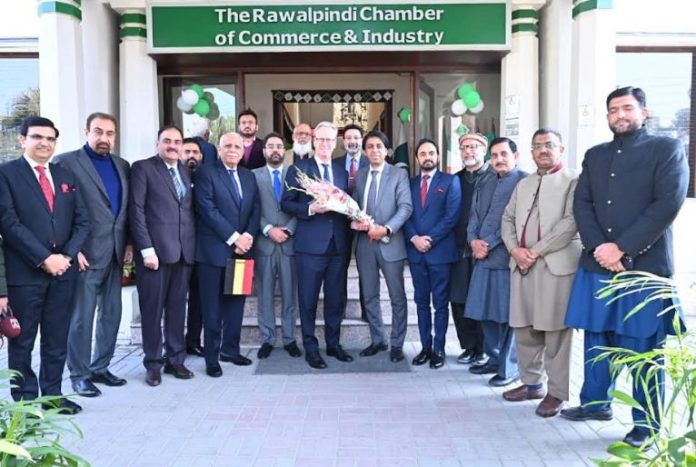
RCCI organizes Belgian business contact day and catalogue exhibition

RCCI

DNA

RAWALPINDI: The Rawalpindi Chamber of Commerce and Industry (RCCI) organized the Belgian Business Contact Day and Catalogue Exhibition at the chamber house here on Wednesday.

Books, magazines and trade directories were part of the catalogue exhibition providing an opportunity for visitors to get information about key sectors including tourism, education, services, agro-food processing, chemicals, surgical instruments, paper and paperboard, dairy and renewable energy.

Ambassador of Belgium H.E Charles Delogne who was the chief guest on the occasion, inaugurated the Belgian Business Contact Day and Catalogue Exhibition. President RCCI Saqib Rafiq in his welcome remarks gave a short summary of RCCI current activities and upcoming programs. He briefed the Belgium Ambassador about the potential opportunities for joint ventures and investment opportunities in Pakistan. He said that Belgium was one of Pakistan’s important trading partners within the European Union. He assured that RCCI will work closely with the Belgium Embassy to further strengthen connectivity between private sectors of both countries.

Charles Delogne, Ambassador of Belgium, said that current Generalised System of Preferences (GSP) for another four years, until 2027 and it’s a great opportunity for Pakistan to implement GSP Plus conventions, especially labor rights, human rights and environmental protection which would help Pakistan to further improve its trade with EU countries.

Belgium has excellent relations with Pakistan and added that Belgium is the 5th largest trading partner of Pakistan in the EU and it is interested to further enhance cooperation with Pakistan in various sectors including trade, scientific research, renewable energy, and education sectors.

Senior Vice President Muhammad Hamza Sarosh , Vice President Faisal Shahzad and Executive Committee Members, Trade Commissioner Abid Husain, Commercial officer Shaukat Niazi and members of the RCCI were also present on the occasion.

PIPD celebrates cultural day of Romania in Islamabad

Pakistan

ISLAMABAD, JAN 10 /DNA/ – Pakistan and Romania enjoy great cordial and friendly relations based upon mutual trust and close cooperation.

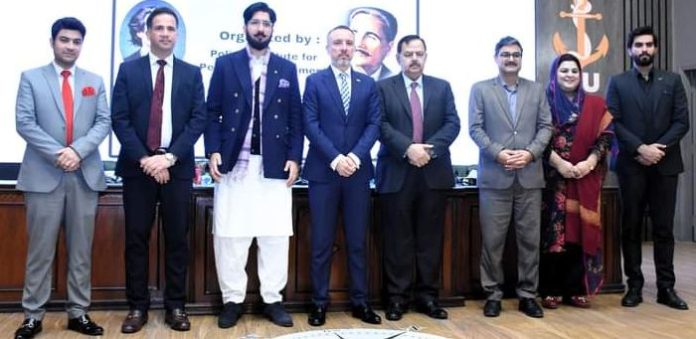
In an effort to further strengthen the cultural and literary bond between the two nations, Policy institute for peace and development in collaboration with the Embassy of Romania and Bahria University organized a conference aiming the cultural diplomacy among the two countries under the topic “Allama Iqbal & Mihai Eminescu-cultural linkages between Pakistan and Romania” 

The aim of the conference was to pay tribute to the national poets of Pakistan and Romania and to highlight the uniqueness and the similarities among them, the conference was specifically organized to mark the cultural day of Romania which is the Birthday the Great Mihai Eminescu.

On the occasion Eduard-Robert Preda (Charge d’Affairs, Embassy of Romania) Thanked PIPD and Bahria University for organizing an event and paid tribute to Mihai Eminescu (The National poet of Romania), who was born on January 15, 1850.

He further said that every year on January 15, Romania celebrates cultural day on the Birthday of the Great Mihai Eminescu and highlighted its significance and emphasized that this day serves to promote Romanian culture both within the country and abroad.

H.E Eduard Robert Preda further added an overview of the legacy of the poet, and how positively he transformed the Romanian poetry, creating a distinct school of poetry that resonated strongly in the west, he also recited a poem of Eminescu in Romanian language in an effort to convey it in the proper intellect and Rhythm, offering a glimpse into the rich cultural tapestry of Romania, which was highly appreciated and liked by the audience.

On this occasion, President Policy Institute for Peace & Development Ms.Wadana Gul in her speech stressed upon the crucial role of cultural diplomacy and people to people contact in bringing the nations closer.

She expressed the dire need for cross-cultural collaboration between Pakistan and Romania both at the government and the public level to further enhance the ties and faster the already strong diplomatic relations.

Maj Gen (Rtd) Khalid Amir Jaffery further delved into the rich history of Romania, noting its resilience through various empires, including the Roman Empire, the Austro-Hungarian Empire, and the Ottoman Empire. He shared the lesser known historical anecdote, Recounting how soldiers from the British Indian Army, Mainly from Punjab and Khyber Pakhtunkhwa, fought alongside the Romanian Army in World War 1.

Highlighting the diplomatic relations established in 1964, Maj.Gen Jaffery applauded the strong support Romania provided to Pakistan, particularly in matters such as the GSP plus issue, resulting in a significant 30% increase in Pakistan’s exports to Europe and further emphasized the vast potential for export and import between the two countries.

Stressing on the importance of people to people contact, Maj.Gen Jaffery also highlighted the significance of cultural understanding. He complimented Romania’s management of its multicultural society and advised for increased interactions and collaborations among the two nations.

Adding to the knowledgeable and the fruitful event, Mr Sahibzada Sultan Ahmed, Chairman Muslim Institute, highly appreciated PIPD for holding the conference and further nurtured the audience with the philosophy of Allama Iqbal. 

He further paid tribute to Allama Iqbal and explained the legacy of the national poet. 

Dean Department of social sciences Dr. Adam Saud Presented a scholarly point of view about the historical and the current Perspective of relations between Romania and Pakistan while exploring the new domains of cooperation and strengthening of bilateral ties.

He said that there exist a number of areas in which Romania and Pakistan can work jointly and mutually collaborate aiming to further strengthen the bilateral relation.

The students of Bahria University showed great interest and actively participated in the conference by translating the poems of Mihai Eminescu from English to Urdu language and recited them on the stage which was highly appreciated by Charge d’affairs H.E Eduard Preda and further motivated the students by distributing certificates among them.

Blinken meets Palestinian leader after urging Israel to spare Gaza civilians

Gaza

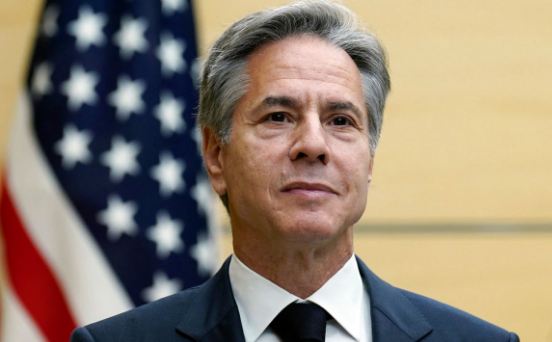
Ramallah, Palestinian Territories, Jan 10 (AFP/APP/DNA): Israel kept bombing Gaza on Wednesday as US top diplomat Antony Blinken met the head of the Palestinian Authority, which Washington hopes could govern the coastal territory after the war ends.

As the US secretary of state arrived under tight security in Ramallah in the occupied West Bank, protesters held up signs that read “Stop the genocide”, “Free Palestine” and “Blinken out”.

Blinken then met Palestinian President Mahmud Abbas, who was later set to discuss a “push for an immediate ceasefire” in talks with Jordan’s King Abdullah II and Egyptian President Abdel Fattah al-Sisi in the Red Sea port city of Aqaba.

The bloodiest ever Gaza war started by the October 7 attack on southern Israel has raged on for more than three months and killed over 23,000 people in the Strip.

Global concern has flared over the spiralling humanitarian crisis, and Blinken — while voicing continued US political and military support for top regional ally Israel — has urged steps to reduce the surging civilian death toll.

Dire shortages brought by an Israeli siege mean the “daily toll on civilians in Gaza, particularly children, is far too high,” Blinken said on Tuesday at a joint press conference with Prime Minister Benjamin Netanyahu.

PM for establishing global fund to ensure worldwide health security

PM for establishing global fund

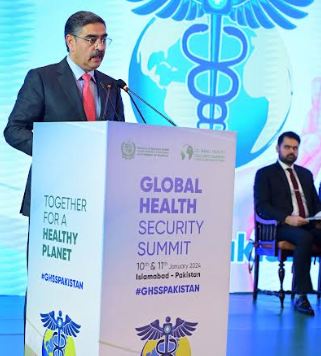
ISLAMABAD, JAN 10: /DNA/ – Caretaker Prime Minister Anwaar-ul-Haq Kakar on Wednesday stressed the need to explore mechanisms for global funding that could support nations in need, ensuring that no one was left behind, in the global pursuit of health security.

“The call for a sufficiently funded, widely supported country medium-term road-map, as highlighted in the International Health Regulations Core Capacities evaluation, resonates globally. We must invest in open, transparent, and multi-sectoral processes to strengthen buy-in and commitment at all levels,” the prime minister said while addressing the inaugural session of the first-ever two-day Global Health Security Summit 2024.

Highlighting the importance of enhancing coordination in the health sector beyond borders, Prime Minister Kakar said “One Health” approach, recognized the interconnectedness of human, animal, and environmental health. “Our commitment should extend to establishing global frameworks that facilitate information sharing, joint research, and collaborative strategies for an effective response during emergencies.”

He stressed the need for a strong, visible, active surveillance and tiered public health laboratory system that was integral to early detection, response, and mitigation.

He also called for collaboratively working towards establishing international standards for food safety, harmonizing regulations to ensure the highest level of protection for populations worldwide.

“A cross-sectoral approach to managing antimicrobial resistance requires international collaboration,” he said adding “We need a unified front against antimicrobial resistance, with coordinated efforts to develop and enforce global standards for the responsible use of antibiotics and infection prevention,” he remarked.

Highlighting the need of collective response to address external and internal health challenge, he said no state in the world could meet the health challenges all alone. Likewise, he said the internal challenges posed by population growth, rapid urbanization and climate change could not be dealt with by a country alone.

“New diseases, like COVID-19 and climate-induced incidents such as the historic floods of 2022 in Pakistan, are disrupting our citizens’ health and causing social and economic impacts. While the developed world has systems in place to timely respond to such health emergencies, a similar ideal system is lacking in the developing world as health systems are relatively weak,” he added.

The prime minister said the COVID-19 pandemic had taught us invaluable lessons about the importance of collaboration, preparedness, and a unified response. “It is in this spirit that we convene today, not merely as representatives of our respective countries, but as overseers of global health security.”

He called for establishing a shared vision of the world where health security was not a privilege but a universal right and where the strength of a nation’s health systems was measured not only by its capacity to respond to crises but also by its ability to prevent, detect, and mitigate health threats.

“In pursuit of this vision, we must recognize that health security extends beyond the realm of traditional healthcare. It encompasses multi-spectral collaboration, as highlighted in the “Joint External Evaluation of International Health Regulations Core Capacities,” where the interplay of health, environment, agriculture, and security is crucial. Our collective vision is not just about reacting to crises but forging a proactive, precipitated and interconnected global health ecosystem.”

As regards the challenge of climate change, the prime minister said the global Climate Risk Index identifies Pakistan as the eighth most vulnerable country to the impacts of climate change. “As echoed in the “Framework for Climate Resilient Health Systems Pakistan”, we must integrate climate resilience into our health policies and systems. This is not a challenge confined to borders; it is a shared responsibility that necessitates a collective response,” he added.

He said the cost of climate injustice in Pakistan was 33 million affected population, 17,000 deaths, and economic loss of more than 30 billion USD.

The prime minister hoped that the Summit would mark a huge moment in the journey of global progress towards a healthier world besides ensuring a future where health is truly a global asset.

He also appreciated Minister for National Health Services Dr. Nadeem Jan and his ministry for tireless efforts to organize the event successfully.

Caretaker Foreign Minister Jalil Abbas Jilani said the summit was a timely initiative which would help ensure a safer and healthier world for future generations.

He said the COVID-19 pandemic that incurred loss of 3.5 million lives and US$ 12.5 trillion across the globe, ruthlessly exposed the vulnerability of global health security.

He said Pakistan continued to collaborate with the World Health Organization (WHO) and other international entities in shaping global health policies.

He said international cooperation was required to make the health sector more resilient.

Health Minister Dr Nadeem Jan said the summit, aimed at collaborating with global leaders to ensure equity-based pandemic preparedness financing for low and middle-income countries and mutual exchange of knowledge and rich experience with member states and experts around summit thematic areas which focuses on vaccine equity, patent deregulation and transfer of technology.

He said the ongoing global health challenges had highlighted the significance of working together, exchanging information, and taking united action. He said this summit provided a forum to combine our knowledge, exchange perspectives, and establish the partnership that go beyond international boundaries.

Ambassador of the United States to Pakistan Donald Bloom said the US was helping the developing nations to improve their health systems and enabled them effectively responding to future outbreaks.

Deputy Health Minister of Saudi Arabia, Dr Hani Jokhdar said his country believed in importance of the global health security. Besides, he also acknowledged the significance of pandemic fund.

Afghanistan Minister for Public Health Dr Qalandar Ebad said the developing nations needed the international cooperation in health sector as they were not able to tackle the infectious diseases such as Malaria, TB, and HIV Aids alone.

He said both Pakistan and Afghanistan were facing the challenge of the polio disease. He said these infectious diseases could challenge global health security.

Heads of delegations from Turkiye, Kyrgyzstan and Tajikistan also spoke on the occasion.

PTI Chairman Gohar Ali Khan hails PHC verdict as ‘historic’

PTI Chairman Gohar Ali Khan

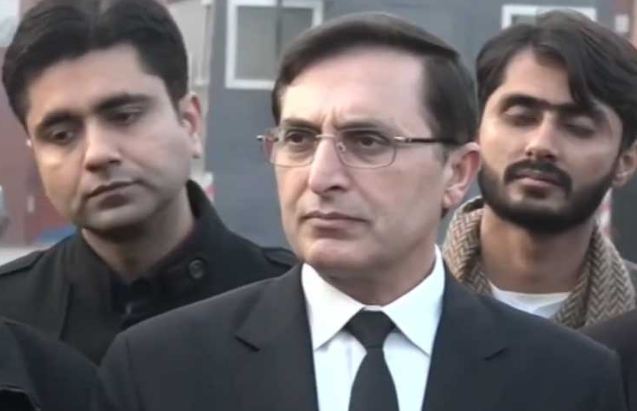
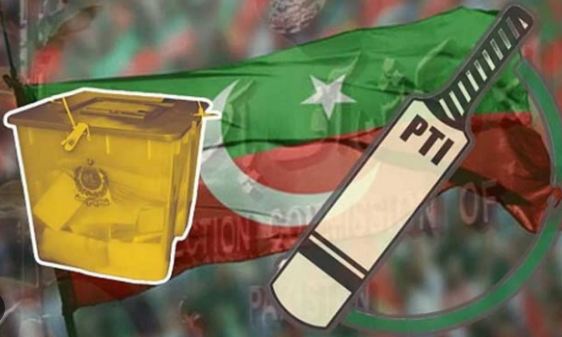
Peshawar: The Peshawar High Court (PHC) PTI Chairman Gohar Ali Khan made a historic decision and the bat symbol has been restored.

“This symbol is the symbol of the representative of the people of Pakistan,” Barrister Gohar. The Election Commission of Pakistan (ECP) had tried to fail on the every front and illegally withheld the mark.

“227 seats would have gone if the mark was not restored, Barrister Gohar added.

“Candidates of about 860 general seats would also be held on independent symbols. There is no such scope in any law to take election symbols from any party. 175 parties have never conducted such an intra-party election like the way PTI did it,” he said.

“Tomorrow we will announce the names of our candidates,” he said.

PTI gets back iconic ‘bat’ symbol as PHC annuls ECP decision

PHC

ISLAMABAD/PESHAWAR: In a major turn of events, the Peshawar High Court (PHC) Wednesday restored the “bat” symbol for Pakistan Tehreek-e-Insaf (PTI) paving the way for the party to head to polls with its iconic symbol on February 8 polls.

The decision was announced following the hearing of PTI’s petition challenging the Election Commission of Pakistan’s (ECP) decision declaring the intra-party election as null and void and revoking their electoral symbol “bat”. The court heard all parties in the case.

In its verdict, the court termed the ECP’s decision “incorrect”.

Following the verdict, the court ordered the electoral watchdog to issue a certificate to the PTI and suspended the decision that stripped the party of its symbol.

“PTI is a political party entitled to an election symbol,” the court said.

A two-member PHC bench comprising Justice Ijaz Anwar and Justice Arshad Ali announced the verdict today.

A day earlier, the court heard the arguments by the counsels of ECP and the PTI.

In today’s hearing, the court heard other parties in the case.

‘No one can stop PTI now’
Speaking to the media outside the PHC after the announcement of the verdict, PTI counsel Barrister Ali Zafar said: “Now, no one can stop PTI from winning these elections.”

Hailing the decision, the PTI senator said PHC kept its tradition of announcing decisions as per law.

“Court has ordered to restore PTI’s bat symbol and upload intra-party polls results on its website immediately,” he added.

The court has annulled the decision to take away PTI’s electoral symbol. “It was a conspiracy against the PTI to deprive it of bat symbol,” said Barrister Zafar.

Hearing
At the outset of the hearing, one of the petitioner’s lawyer Advocate Qazi Jawwad said that his client sought information from the PTI’s head office regarding intra-party polls, but did not get any response.

However, he said he learned about the PTI’s polls through media.

“My client wanted to participate in the elections but was not given the opportunity,” the counsel said adding that his client requested that the polls be declared “null and void”.

Justice Anwar remarked: “You did not say that the intra-party elections should be held again. If the Election Commission annulled the intra-party elections, you should have called for re-elections.”

The judger further told the lawyer that his client should have objected to withdrawal of the party symbol if he belonged to the party, but he didn’t do so.

The lawyer also objected to the PHC hearing the case citing its provincial jurisdiction as a limitation, as PTI’s intra-party elections were conducted for the whole country and not just Peshawar.

Justice Arshad questioned the lawyer how can a case not be filed in Peshawar, if the polls were held in the city.

Justice Ijaz remarked that the PTI’s intra-party polls were held in Peshawar, which were annulled by the ECP. “The jurisdiction of the high court has been determined in various decisions of the courts. PTI also went to the Lahore High Court, where their petition was rejected,” the lawyer replied.

“The Lahore High Court said that let the Peshawar High Court decide,” Justice Ijaz remarked.

Commenting on the matter of the electoral symbol, Justice Arshad asked: “Can a political party contest election without electoral symbol?”

The lawyer responded that a similar instance happened in 1985.

“At that time there was martial law,” Justice Arshad remarked, responding to which the lawyer said everything was done in a legal framework.

Lawyer Tariq Afridi, who was representing one of the parties’ in the case, argued about the jurisdiction of the court.

But the court told him he could argue on that if he has any other points to raise, as the lawyer before him also argued on the same matter.

The counsel then began arguing on the bat symbol and said that it was not the party’s symbol before its formation.

He also spoke about the party being a “favourite” since its launch and continue to be one till date.

He added that a level playing field should be given to party workers too. The lawyer also argued that his client believes symbols being changed is not a big deal.

Addressing one of the petitioners, Justice Arshad asked under which section has the ECP taken action against the PTI.

The lawyer responded saying that the proceedings are carried under Section 215 of the Election Act.

The court remarked that the election result is submitted within seven days.

“The Election Commission should have observed that intra-party elections were held under Section 208,” the lawyer said.

PTI lawyer Barrister Ali Zafar, in response, submitted that the petitioner’s complaint is based on bad faith.

“The complainant wants to end the party, not re-election,” he said.

The lawyer also argued on the jurisdiction of the petition and said that the ECP’s decision can challenged anywhere.

Meanwhile during his concluding argument, the ECP counsel Sikandar Bashir Mohmand said PTI wants the symbol after conducting illegal intra-party elections.

Justice Arshad remarked that intra-party elections are held under Section 208 of the Election Act and questioned the ECP lawyer about how the party symbol was withdrawn under subsection 209 of the Election Act, 2015.

The counsel, in response to the judge, said: “Under Section 209, it is the job of the Election Commission to not only look at the intra-party election Form 65, but to be satisfied.”

“The PTI considers the Election Commission as a record keeper. It is a regulatory body that can oversee intra-party elections,” he added.

The ECP counsel further argued that Section 209 states that the party chairman’s Form 65 is an affidavit stating that the party elections were held under the party’s constitution. “The electoral symbol is held by the party only at the time of the election. For four years after the election, this sign is then held by the Election Commission.”

He added that the parties only ask for the symbol again after the release of the election schedule, after which the symbols are allotted.

“Electoral symbols will be allotted tomorrow and the day after,” the ECP lawyer told the court.

After which, he added, the political party has nothing to do with the symbol.

The court asked him about the procedure for when a new party is registered.

PTI ‘hopeful’ for favourable PHC verdict
Earlier today, PTI’s Gohar said the party has withdrawn its petition to secure the “bat” symbol from the Supreme Court with hopes of receiving a favourable verdict from the Peshawar High Court (PHC) on the matter.

“Today, our petition was fixed at the Supreme Court, but we have withdrawn it,” he said, adding that the decision from PHC will be issued in the party’s favour.

The PTI leader’s comments came during his conversation with journalists outside the apex court in Islamabad.

Gohar said that the PHC verdict is expected to be announced anytime today and hoped that the decision will be in his party’s favour.

The SC, too, dismissed the PTI’s plea on grounds of withdrawal. PTI lawyer Gohar Khan appeared at the court to inform the Chief Justice of Pakistan Qazi Faez Isa about withdrawing the petition.

“PTI is withdrawing its request,” he said, addressing CJP Isa.

The chief justice, however, enquired him about Hamid Khan, a senior lawyer and leader of the Imran Khan-founded party.

“Our case is currently in Peshawar High Court,” Hamid said and told the court that he is not the party’s lawyer in the case.

The court while dismissing the petition stated that none of PTI’s lawyers have objected to the withdrawal of the petition.

In a major blow to the PTI, the electoral watchdog had last month stripped it of its iconic electoral symbol and declared its intra-party elections unlawful in the decision over a former PTI member, Akbar S Babar’s petition, claiming that the party did not stage the elections in line with the rules.

The party challenged the decision and subsequently acquired a stay against the ECP order, in a major relief that saw restoration of the party’s bat symbol — till a final decision on the petition.

The court served ECP a notice and directed the body to upload certificates containing PTI intra-party elections on its website, while scheduling the hearing of the petition by double bench for today (January 9).

However, the election watchdog on December 30 filed a review petition in the high court, upon which the court restored the ECP’s December 22 order and withdrew the interim relief granted to the PTI.

This prompted the party to move the Supreme Court against the restoration of the ECP ruling, the plea that the party withdrew today.

Supreme Court upholds Pervez Musharraf’s death sentence in treason case

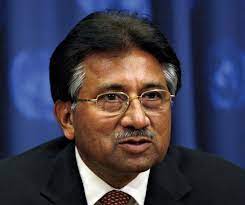
ISLAMABAD: The Supreme Court on Wednesday upheld former president General (retd) Pervez Musharraf’s death sentence awarded to him by a special court in 2019 in a “high treason case”.

A four-member bench headed by Chief Justice of Pakistan (CJP) Qazi Faez Isa and comprising Justice Mansoor Ali Shah, Justice Aminuddin Khan and Justice Athar Minallah conducted the hearing. 

On December 17, 2019, a special court awarded the death sentence to the former ruler under Article 6 of the Constitution after a case of high treason was filed against him during Pakistan Muslim League-Nawaz’s (PML-N) tenure for his “unconstitutional” decision to impose an emergency in November 2007.

In the previous hearing on November 29, 2023, the top court observed that all those, including the judges, who validated the martial law imposed by Musharraf on October 12, 1999, should be held accountable.

Justice Athar had also remarked that the judges who validated the imposition of martial law by Musharraf in 1999 should also be tried.

The chief justice had observed that “we should learn from our history” adding that “even if someone was not punished for abrogating the Constitution, at least one should admit that what was done in the past was wrong.”

The chief justice further observed that the primary aspect was recognition of the wrongdoing and everyone should at least accept that a wrong had been done in the past.

Justice Athar had remarked that one should speak the truth and the truth was that the judges who validated the martial law should also be tried and given a fair trial

EU keen to enhance cooperation with Pakistan: Ambassador

EU keen to enhance cooperation

with Pakistan: Ambassador

      Answering a question about educational cooperation, she said our institutional partnerships between universities of EU and Pakistan in the field of science and technology and higher education are seeking more potential for better outcomes, adding, that EU application for 2024 scholarships is open for Pakistani students, they can apply for different study fields through EU program and enjoy their higher full funded studies in European countries

DNA

                ISLAMABAD, Ambassador of the European Union H.E Dr. Riina Kionka, Wednesday said that the EU is keen on enhancing cooperation with Pakistan and focusing on exploring more avenues of trade, and investments in multiple sectors like information technology, surgical instruments, sports business, women entrepreneurs, education and textile industry.

      In an exclusive interview with a private news channel said that the EU was continuing support to Pakistan’s economic development, adding, that the bonds between the two nations are much older which is cementing with each passing day.

      Answering a question about educational cooperation, she said our institutional partnerships between universities of EU and Pakistan in the field of science and technology and higher education are seeking more potential for better outcomes, adding, that EU application for 2024 scholarships is open for Pakistani students, they can apply for different study fields through EU program and enjoy their higher full funded studies in European countries.

     She said that highest highest-ever number of Pakistani students have been receiving scholarships to study in European universities under the EU’s flagship program this year.

    To another question, she said that the European Union was the largest destination for Pakistani exports where the business community diversifies their exports to the EU to take maximum advantage of the EU’s GSP Plus scheme for Pakistan which has recently been rolled.

    Kionka also termed GSP Plus as tremendously important for Pakistan’s economy as it was beneficial not only for textile producers but also through the trickle-down effect of all those people who work in textile factories.

 She also identified Gems and Jewelry, Tourism, Handcrafts and Auto Parts etc. as potential sectors under GSP Plus, the EU Envoy noted that 28 percent of Pakistan’s exports come to the European single market which was a good number but it could further be enhanced.

  Talking about current political activities in Pakistan, she commented that the top EU diplomat in Pakistan has scheduled a series of meetings with political bigwigs to urge “timely, inclusive and peaceful elections”, The EU was sending a handful of top observance in Pakistan to share their expertise and for providing meaningful suggestions.

   The ambassador said it was the EU priority of his mission to enhance parliamentary diplomacy, people-to-people exchanges, business opportunities, information, and renewable technologies, besides cooperation in the economic sector with Pakistan.

 The EU-Pakistan Business Forum for Small and Medium Enterprises (SME) is also providing opportunities for both EU and Pakistani businesses to work together to become engines of development and partnership and contribute to enhancing bilateral trade, she mentioned.

Israeli shift in military tactics threatens to be a double-edged sword

LFK released annual report

James Dorsey

US pressure on Israel to switch gears and focus on targetted precision strikes and killings, rather than indiscriminate bombing of the Gaza Strip, potentially heightens the risk of the war escalating into a regional bust-up and expanding beyond the Middle East.

The heightened risk suggests US efforts to allow Israel to continue attempting to destroy Hamas while minimising civilian Palestinian casualties could backfire. This would further underline that the only way of preventing an escalation, protecting innocent lives, and securing the release of Hamas-held hostages, is a ceasefire.

Even so, US Secretary of State Antony Blinken, on his fifth visit to Tel Aviv since the war began, reaffirmed in talks with Israeli Prime Minister Binyamin Netanyahu, “Israel’s right to prevent another October 7 from occurring” but “stressed the importance of avoiding civilian harm, protecting civilian infrastructure, and ensuring the distribution of humanitarian assistance throughout Gaza.”

Antony Blinken arrives in Tel Aviv during his week-long trip aimed at calming tensions across the Middle East. Photograph: Evelyn Hockstein/Reuters

Mr. Blinken was referring to Hamas’ October 7 attack on Israel that sparked the Israeli assault on Gaza. His reference to infrastructure constituted the United States’ first public criticism of Israeli attacks on Gazan hospitals, schools, and other civilian infrastructure.

Signalling differences with Mr. Blinken, Mr. Netanyahu’s office did not issue a readout after the meeting.

Even so, US reluctance to go beyond verbal pressure by threatening consequences if Israel fails to heed US advice may stem from a belief that America’s leverage on Israel has diminished over time in economic and political terms.

US financial support amounted in 1981 to ten per cent of Israel’s GDP. The US’ annual US$4 billion allocation was in 2021 only good for one per cent of GDP. Moreover, Israel today produces many of its most essential weapons domestically, making it less dependent on US arms sales.

In addition, Israel concluded in 1991 that it could no longer blindly rely on US protection after the United States did not come to its aid when Iraq fired Scud missiles at the Jewish state during the Gulf war.

Despite remaining dependent on US vetoes in the United Nations Security Council and military cooperation, Israel worked to increase its margin of autonomy, much like Gulf states did three decades later after the United States failed to respond to Iranian-inspired attacks on their critical infrastructure in 2019 and. 2020.

Nevertheless, acting on seemingly accurate and up-to-the-minute detailed intelligence, Israel appears to have responded to US pressure by carrying out a series of targeted killings in the past week, including six operatives of Hezbollah, the Iranian-backed Lebanese Shiite militia, an Iranian Revolutionary Guard commander in Syria, and a top Hamas official in Beirut.

On Tuesday, Israeli forces targeted a car in southern Lebanon carrying three Hezbollah operatives north of the narrow band along the 120-kilometre Lebanese-Israeli border to which hostilities with the Lebanese group have so far been contained.

A minibus passes the attacked car that was used by the senior Hezbollah commander Wissam Tawil, who was killed on Monday, in Kherbet Selem village, south Lebanon, Tuesday, Jan. 9, 2024. Photo: AP/Hussein Malla

The attack, the second in 24 hours, occurred as Mr. Blinken discussed Israeli military strategy with Mr. Netanyahu and members of his war cabinet.

Israel targeted a second car, hours after the attack, close to the home of Wassim Al-Tawil, a senior Hezbollah commander killed together with another of the group’s fighters in a drone attack on Monday, as they travelled by car north of the band. The car was targeted as Mr. Al-Tawil was laid to rest.

“We’re targeting Hezbollah operatives, infrastructure, and systems they’ve set up to deter Israel,” said newly appointed Israeli Foreign Minister Israel Katz.

The United States has been pushing Israel to scale back its bombing of Gaza that has killed more than 23,000 people, a majority innocent Palestinian civilians, withdraw troops from the Strip, and focus on militant Palestinian targets.

The killings of senior Hezbollah, Hamas, and Iranian commanders threaten to push Iranian-supported forces to retaliate in ways that could escalate hostilities beyond Gaza and the so far narrow Israel-Lebanese border band.

In an indication of how hostilities could escalate, Hezbollah attacked an Israeli air traffic control base south of the band on Monday in retaliation for last week’s assassination in Beirut of a senior Hamas official, Salah al Arouri, and Israeli strikes in response.

The fact that a majority of Israel’s targeted killings have been Hezbollah operatives likely has much to do with US, French, and German efforts to prevent an escalation of exchanges between Israel and the Lebanese group and negotiate a definitive demarcation of the two countries’ borders.

Hezbollah has rejected Israeli demands to withdraw to a line 30 kilometres north of the border beyond the Litani River. Hezbollah has also said it would agree to Lebanese government border demarcation talks only after Israel halts its assault on Gaza and accepts a permanent ceasefire.

Israel has threatened to militarily push Hezbollah back to the Litani if diplomatic efforts fail. On a visit this week to Israeli troops on the Lebanese border, Israeli Prime Minister Binyamin Netanyahu warned, “If Hezbollah chooses to start an all-out war then it will…turn Beirut and southern Lebanon, not far from here, into Gaza and Khan Younis.”

The Israeli attacks on Hezbollah appear designed to force the group to choose between withdrawing and sparking an all-out war that bankrupt Lebanon cannot afford and many Lebanese do not want.

Hezbollah leader Hasan Nasrallah has indicated that he does not seek an escalation of hostilities but that his group was prepared if Israel opted for a full-fledged conflagration.

Israel’s apparent focus on Hezbollah operatives may also be because of its inability so far to take out Hamas’ most senior Gaza leaders, including Yahya Sinwar, more than three months into the war.

Last week, David Barnea, the head of Mossad, Israel’s foreign intelligence service vowed to hunt down every Hamas member involved in the group’s October 7 attack on Israel, no matter where they are.

Director of Mossad, David Barnea. Photo: Handout/GPO/Amos Ben Gershom/Anadolu Agency via Getty Image

Mr. Barnea compared the manhunt to Israel’s pursuit of Palestinian Black September after it attacked the Israeli team at the 1972 Munich Olympics and killed 11 athletes.

Last month, Ronen Bar, chief of Shin Bet, Israel’s domestic security agency, said Israel would hunt down Hamas in Lebanon, Turkey, and Qatar even if it took years.

Ronen Bar, head of the Shin Bet security agency. Photo: Avshalom Sassoni/Flash90

“This is our Munich. We will do this everywhere, in Gaza, in the West Bank, in Lebanon, in Turkey, in Qatar. It will take a few years, but we will be there to do it,” Mr. Bar said.

While Hamas has yet to retaliate for Mr. Al-Arouri’s killing, a senior official warned that it may expand the war beyond Israel and Palestine if the United States continued to support Israel.

“The West in general, and the US government in particular, need to reconsider their position because this will have consequences… If the U.S. insists on its position, our entire nation will view it, and treat it, as an enemy… This conflict could go beyond Palestine’s borders, and expand in scope,” said Hamas official Sami Abu Zuhri.

Mr. Abu Zuhri’s warning coincided with a call by the Islamic State for lone-wolf attacks on civilian targets in Europe and the United States, including churches and synagogues.

Gunmen burst into Ecuador TV studio live on air

Energy Seminar

                Quito, Armed men wearing balaclavas burst into the studio of a public television station on Tuesday in Ecuador’s drug violence-torn port city of Guayaquil, taking hostage several journalists and staff members, live footage showed.

                  “Don’t shoot, please don’t shoot,” one women shouted as gunshots rang out while the attackers, carrying rifles and grenades, forced terrified crew of the TC broadcaster onto the ground.

                  “National Police units in Quito and Guayaquil have been alerted about this criminal act and are already on the scene,” police said in a brief statement to journalists.

                  The live broadcast continued uninterrupted, although lights went off on set. About 30 minutes after the gunmen appeared, police could be seen entering.

                  “Police, police,” called out one man in uniform. “We have a wounded colleague,” a man replied.

                  “Please, they came in to kill us. God don’t let this happen. The criminals are on air,” one of the journalists told AFP in a WhatsApp message.

                  The incident came as Ecuador’s new president, 36-year-old Daniel Noboa, grappled with a security nightmare after the escape from prison of one of the country’s most high profile gangsters, Jose Adolfo Macias, known as “Fito.”

                  Noboa declared a 60-day countrywide state of emergency Monday, including in Ecuador’s notoriously violent prisons, and imposed a nighttime curfew.

                  In response, gangsters took several police officers hostage, and released a chilling video in which one of them was forced to read out a message addressed to Noboa.

                  “You declared war, you will get war,” the clearly terrified officer reads. “You declared a state of emergency. We declare police, civilians and soldiers to be the spoils of war.”

                  Noboa was elected in October on a pledge to fight rampant drug-related crime and violence in the South American country — once considered a bastion of peace, but now a key stop on the US- and Europe-bound cocaine trade.

Stay Connected

64FansLike
60FollowersFollow

Latest Reviews

Exchange Rates

USD - United States Dollar
EUR
1.17
GBP
1.35
AUD
0.67
CAD
0.72