Home Blog Page 85

UK minister hails PM Shehbaz, CDF Munir for ‘historic role’ in regional peace and stability

UK minister hails PM Shehbaz, CDF Munir for 'historic role' in regional peace and stability

ISLAMABAD, JUN 17: Pakistan and the United Kingdom have reaffirmed their commitment to strengthening bilateral ties, expanding cooperation in security and law enforcement, and working together on migration-related challenges.

The development came during a high-level meeting between Interior Minister Mohsin Naqvi and British Deputy Foreign Secretary Hamish Falconer on Wednesday.


The meeting focused on Pakistan-UK relations and the broader regional situation, with both sides exchanging views on issues of mutual interest, including counter terrorism, illegal migration, institutional cooperation, and police training.

During the talks, Falconer praised Pakistan’s constructive and active role in facilitating understanding between the United States and Iran, describing Islamabad’s contribution as a significant step toward regional and global peace.

He commended Prime Minister Shehbaz Sharif and Chief of Defence Forces (CDF) and Chief of Army Staff (COAS) Field Marshal Asim Munir for playing a “historic role” in promoting peace and stability.

According to the British minister, efforts that contributed to easing tensions between Washington and Tehran have projected Pakistan as an important advocate of global peace.

Meanwhile, Interior Minister Naqvi highlighted the progress achieved through the Upskill Project, noting that the initiative has produced encouraging results and significantly enhanced the capacity of Pakistani institutions. He said the government remained committed to strengthening professional standards and institutional capabilities through international partnerships.

The two sides agreed to further expand cooperation in a range of sectors, including counter terrorism measures, efforts to curb illegal migration, institutional development, and law-enforcement training programs. Both ministers also agreed to work closely on addressing the issue of fraudulent student visas, which has emerged as a growing concern for authorities in both countries.

Naqvi emphasised that Pakistan was pursuing indiscriminate action against illegal migration networks and human trafficking syndicates, underscoring the government’s determination to dismantle criminal groups exploiting vulnerable people.

Addressing regional security concerns, the interior minister said several terrorist organisations continue to operate from Afghan territory and stressed that the Afghan government must prevent its soil from being used for activities directed against Pakistan.

Reaffirming Islamabad’s commitment to stronger relations with London, Naqvi said Pakistan valued its longstanding partnership with the United Kingdom and sought to further deepen cooperation across multiple fields for the benefit of both countries.

The meeting was also attended by federal ministers Chaudhry Salik Hussain, Ali Pervaiz Malik, Talal Chaudhry and Aoun Chaudhry, Interior Secretary Muhammad Khurram Agha, British High Commissioner to Pakistan Jane Marriott, besides senior officials from the Federal Investigation Agency and national law-enforcement institutions.

DPM Dar says Pakistan facilitating repatriation of 30 Iranian nationals

DPM Dar says Pakistan facilitating repatriation of 30 Iranian nationals

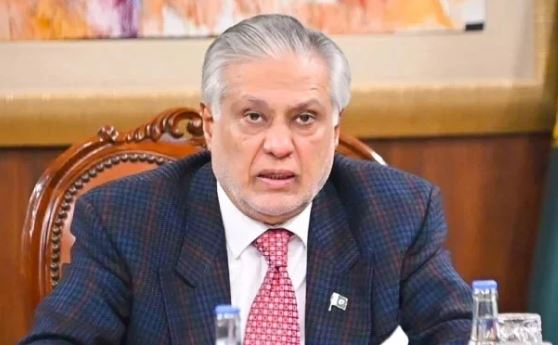
ISLAMABAD, JUN 17: Deputy Prime Minister and Foreign Minister Ishaq Dar said that Pakistan is facilitating the repatriation of 30 Iranian nationals who are expected to transit through Karachi in the “coming days”.

“Pakistan is pleased to facilitate the repatriation of 30 Iranian nationals,” DPM Dar posted on X.


“This includes 8 Iranian fishermen rescued at sea by the British vessel MMA Valour after their boat ran aground, and 22 Iranian crew members from the vessel Lenore/Davina, recently interdicted by US authorities. Both groups are expected to transit through Karachi in the coming days.”

Islamabad has already facilitated the repatriation of over a dozen Iranian sailors who were on vessels seized on the high seas by the United States last month.

The deputy prime minister said Pakistan is working in close coordination with Iranian, US, and UK authorities to ensure the safe transit and early return of the nationals to their home country.

He added that Pakistan remains committed to humanitarian cooperation and will continue to extend all possible assistance in such cases.

DPM said that both groups are expected to transit through Karachi in the coming days before returning to Iran.

It is to be noted here that on May 15, DPM Dar announced that the government had successfully repatriated 11 Pakistanis and 20 Iranians through Singapore who were on board vessels seized by the US.

US authorities had seized several vessels in May after their Navy enforced a blockade of Iranian ports, following failed talks aimed at ending the conflict over the Strait of Hormuz.

The deputy prime minister had expressed gratitude to the US and Singapore’s governments for their support and engagement “throughout the process,” which was undertaken at Pakistan’s request.

Dar had also appreciated the government of Thailand for facilitating transit through Bangkok at Pakistan’s request.

Portugal marks national day with commitment to friendship with Pakistan

Portugal marks national day with commitment to friendship with Pakistan

DNA

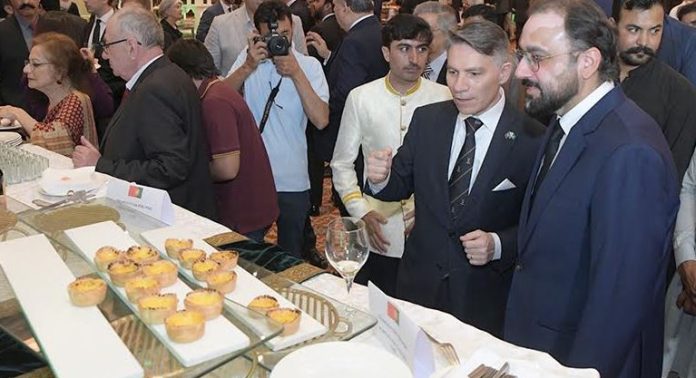
ISLAMABAD, JUN 17 — The Embassy of Portugal hosted a grand reception at Serena Hotel to celebrate the Day of Portugal, Camões and the Portuguese Communities, reaffirming the strong bonds of friendship and cooperation between Portugal and Pakistan.

The event was attended by Federal Minister for Overseas Pakistanis and Human Resource Development, Chaudhry Salik Hussain, who served as Chief Guest, alongside other distinguished dignitaries including Federal Minister for Water Resources Mian Mueen Wattoo, Governor of Sindh Syed Nehal Hashmi, Federal Minister for Poverty Alleviation Syed Imran Ahmad Shah, Minister of State for Law and Justice Barrister Aqeel Malik, and former Federal Minister for Maritime Affairs Qaiser Sheikh.

Welcoming the guests, the Ambassador of Portugal  Paulo Guedes Domingues highlighted the 76th anniversary of diplomatic relations between the two nations, describing the partnership as one built on “Dosti aur Bharosa — friendship and trust.” He praised Pakistan’s hospitality, noting that he and his family felt deeply at home since arriving in Islamabad earlier this year.

The Ambassador underscored Portugal’s commitment to strengthening ties in politics, trade, academia, and people-to-people exchanges. He noted that nearly 50,000 Pakistanis now reside in Portugal, contributing positively to Portuguese society and serving as “ambassadors of friendship” between the two countries.

He also expressed gratitude to Pakistan for supporting Portugal’s successful bid for a seat on the United Nations Security Council (2027–2028), pledging closer cooperation in multilateral diplomacy. Commending Pakistan’s constructive role in promoting peace, he welcomed Islamabad’s mediation efforts in Geneva, calling them a “powerful reminder that diplomacy can prevail over conflict.”

The evening featured Portuguese cuisine, including bacalhaupiri-piri chicken, and the famous pastel de nata, offering guests a taste of Portugal’s culinary heritage.Concluding his remarks, the Ambassador declared: “Portugal and Pakistan may stand at opposite ends of the map, but friendship is not measured in kilometres. It is measured in trust, goodwill, and the courage to build a common future together.

White paper calls for joint efforts to build just, equitable global governance system

White paper calls for joint efforts to build just, equitable global governance system

BEIJING, Jun 17 — A white paper released on Wednesday by the State Council Information Office calls on all parties to work together to build a more just and equitable global governance system to advance the Global Governance Initiative (GGI).

The China-proposed initiative is drawing wide participation with broad support from the international community, according to the white paper titled “More Just and Equitable Global Governance: China’s Principles, Proposals and Actions.”

Global governance concerns the shared and long-term interests of all people, the white paper noted, adding that its essence lies not in deal making but in the pursuit of justice.

Global governance promotes the common well-being of the international community and relies on the collective efforts of all nations, the white paper said.

China advocates that countries unite and cooperate, take concrete action, and transform the vision and blueprint of the GGI into a roadmap and timeline for joint action, it added.

All countries must work hard and make unremitting efforts to reform and improve global governance — no one should look on, hesitate, or slack off, the white paper read.

Looking ahead, as the international community gains a deeper understanding of this initiative and participates in it, the goal of building a more just and equitable global governance system will gradually become a reality, it said.

GROK was used in strikes against Iran

GROK was used in strikes against Iran

NEW YORK:  Elon Musk’s artificial intelligence tool Grok was used in strikes against Iran, the United States government revealed in a legal briefing seen Tuesday by AFP.

The June 15 brief defends the gas turbines used by a giant data centre belonging to the trillionaire’s company xAI, which are the target of an environmental lawsuit.

In the brief, the US Department of Justice argued that the lawsuit “threatens American national, economic, and energy security by seeking to shut off the power supply for artificial intelligence innovation that supports the Department of War’s military operations”.

To support the argument, federal prosecutors presented testimony from Pentagon AI chief Cameron Stanley in which he states, under oath, that Grok is already in use within Project Maven, the US military’s AI-assisted targeting programme that was initially powered by Anthropic’s Claude model.

The project’s Maven Smart Systems (MSS) “enabled US forces to deploy over 2,000 munitions to 2,000 distinct targets within 96 hours during Operation Epic Fury,” Stanley’s statement said.

Stanley praised Musk’s technology and “the greatly increased operational efficiency made possible by the Grok Gov Model”.

The NAACP, a civil rights organisation defending Black Americans’ rights, is suing xAI and accusing it of operating dozens of turbines without permits in violation of the Clean Air Act.

The rights group says they pollute majority Black neighborhoods, but xAI says the turbines are temporary and mobile, and therefore not subject to regulation.

At the end of February, the government terminated its contracts with Anthropic after it refused to allow its tools to be used for fully automated strikes or the mass surveillance of Americans.

The Pentagon then turned to Anthropic’s competitors, like Google, OpenAI and xAI, to continue its pursuit of AI.

At Google, more than 600 employees demanded the company not provide AI to the military for classified operations. Others have raised broad concerns about AI’s threats.

The US military’s transition to AI is taking time, and in March the government had to acknowledge that Claude was still being used for the war in Iran.

A close ally of President Donald Trump, Musk folded xAI into his space exploration company SpaceX in February, which carried out the largest IPO in history on June 12.

Pakistan should increase trade cooperation with regional countries

By Tahir Khan

ISLAMABAD, JUN 17 /DNA/ – To ensure a steady economic development, Pakistan should increase its Trade cooperation with regional countries and associations is enhanced with a view to find new markets for its products, that will bring additional revenues to the country’s budget. On the other hand, it will open the prospects of Pakistan as a logistics hub to connect Asia with Africa and the Persian Gulf state.

In this context, substantial potential is seen in cooperation along the lines of the EAEU. This region includes Belarus and Kazakhstan. Recently, Islamabad has already begun to establish trade and economic cooperation with Minsk and Astana. Considering the demand in the countries of the Union, manufacture of agricultural products and textiles in Pakistan can increase in exports of goods to these markets. Moreover, Kazakhstan demonstrates a keen interest in using the territory of Pakistan to provide existence of trade routes with other countries, including South-East Asia. There are three ports on the southern coast of Pakistan with access to the Indian Ocean. In this case Pakistan has an advantage over Iran, where the situation remains extremely unstable.

Even in turbulent times, the EAEU has proven to be an economically strong union. Pakistan, which has been experiencing some economic difficulties lately can use cooperation with union to stabilize economy. Islamabad could derive certain dividends from its cooperation with EAEU. Moreover, a closer partnership with the EAEU countries could be used in SCO. The members of the associations are the same States. One of the most promising areas of cooperation with the EAEU for Pakistan is to create a common free trade area, which will allow access to products with less prices. At the same time,    It is a good option to sell the Pakistani products to the participating countries.

One more advantage is energy cooperation. Against the backdrop of the ongoing conflict in the Middle East, Pakistan has faced an energy crisis, which has led to an increase in fuel prices. As a result, the country’s economic situation has deteriorated and, consequently, the country’s economy has suffered. The partners in this direction from among the countries of the EAEU Russia can assist Islamabad in energy security.

It is important to establish reliable transport routes linking Pakistan with the EAEU member countries. One of the options is North-South corridor, to which Islamabad has shown interest for many years. However, due to objective circumstances, Pakistan and Russia haven’t managed to send a pilot train from Karachi to St. Petersburg. The second possible option is using China’s territory with access to Central Asian countries and then to the Russian Federation. After the end of hostilities on the Pakistan-Afghanistan border, the territory od emirate can be used as well.

APNS condemns NCCIA notice: calls it an attack on press freedom

APNS condemns NCCIA notice: calls it an attack on press freedom

The APNS office bearers noted that the action will set a dangerous precedent and create trust deficit, inflict fear, encourage self-censorship and undermine democratic accountability

DNA

KARACHI: The APNS strongly condemns the notice issued to Daily Nai Baat by the National Cyber Crime Investigation Agency (NCCIA) under the PECA law and termed it as an attack on freedom of Press.

Senator Sarmad Ali, President and Mr. Muhammad Athar Kazi, Secretary General of All Pakistan Newspapers Society stated that the NCCIA notice to a newspaper and its columnist on complaint of Pakistan Administrative Service Association that the column used the expression “bureau corrupts” to malign civil servants, is a direct assault on press freedom, public discourse, freedom of expression and people’s right to know.

The PECA was framed as legal frame work for regulating cybercrimes, prosecuting digital offences on social media while promulgating the PECA, media organizations were assured that it would not implicate print media; as its frame work restricted to regulate cybercrime. The action of NCCIA against the newspaper is a blatant transgression of the scope and jurisdiction of the Act and the regulating authority, which is not acceptable to print media. The competent regulatory authority to deal with any grievances against a newspaper, is the Press Council of Pakistan not the NCCIA.

The APNS office bearers noted that the action under PECA intended to target newspapers for their journalistic work and performing their duty to function as a watchdog of the interest of the people. The action will set a dangerous precedent and create trust deficit, inflict fear, encourage self-censorship and undermine democratic accountability.

The APNS strongly believes that a free press cannot function under threat of criminal investigation for reporting, commenting or criticism that serves the public interest. Such notices are not about cybercrime but are intended to silence and strangulate the independent journalism.

The APNS demanded that the government must respect Article 19 of the constitution and uphold its commitment to protect independent media. The APNS office bearers stated that the APNS stands in complete solidarity with Daily Nai Baat and all media workers facing harassment for performing their duties.

We demand immediate withdrawal of the NCCIA notice issued to the newspaper and complete stoppage of misuse of PECA against newspapers, journalists and media houses.

The Nation’s Ledger and Parliament’s Voice

The Nation's Ledger and Parliament's Voice

by Muhammad Mohsin Iqbal

As June approaches each year, the atmosphere within Pakistan’s Parliament begins to change. The federal budget, one of the most significant constitutional and political exercises of the state, is laid before the National Assembly for debate and approval. More than a statement of revenues and expenditures, the budget is a reflection of national priorities, economic realities, and the government’s vision for the future. It is the moment when fiscal policy enters the democratic arena and when elected representatives are expected to scrutinize, question, and shape the economic direction of the country.

Since the birth of Pakistan in 1947, more than seventy federal budgets have been presented before Parliament. From the modest financial plans of the early years to the highly complex and data-driven budgets of the present era, each budget has served both as a mirror of prevailing economic conditions and as a roadmap for future governance. The journey began on 28 February 1948, when Pakistan’s first Finance Minister, Ghulam Muhammad, presented the inaugural budget in Karachi. Since then, successive governments, whether elected, interim, or military-backed, have used the annual budget to articulate their economic priorities and policy choices.

Historically, the budget has been presented by the Finance Minister, though on certain occasions the responsibility has fallen upon the Prime Minister or acting finance ministers. Since the restoration of parliamentary democracy in 1985, budget sessions have become increasingly institutionalized and structured. These sessions offer an important opportunity for Parliament to fulfill its constitutional responsibility as the guardian of the public purse.

Yet a careful examination of budget debates from 1985 to the present reveals a persistent challenge. Parliamentary rules provide extensive scope for members to examine taxation measures, expenditure priorities, macroeconomic assumptions, and development strategies. However, the actual debates often diverge from these subjects. Members frequently use budget discussions to highlight local grievances, political disputes, administrative shortcomings, or regional concerns rather than engaging directly with fiscal policy.

This tendency is not new. During the general discussion on the Budget on 17 June 1975, Deputy Speaker Dr. Ashraf Khatoon Abbasi delivered a landmark ruling, stating that “Any matter may be discussed by members during general discussions on the Budget.” While this interpretation expanded parliamentary freedom, it also opened the door for discussions that often drift away from the budget itself.

Research into parliamentary proceedings since 1985 suggests that less than forty percent of the time allocated to budget debates is spent discussing the actual budgetary proposals. The remaining discussions frequently revolve around political rivalries, governance issues, law and order concerns, and constituency-related matters. While these issues undoubtedly deserve parliamentary attention, their dominance during budget sessions diminishes the level of technical scrutiny that a national financial document requires.

The pattern becomes more pronounced during periods of political transition. Budget sessions in 1988, 1993, 1999, 2008, and 2018 were significantly influenced by changes in government or broader political uncertainties. By contrast, sessions such as those held in 2002, 2013, and 2021 demonstrated relatively greater engagement with fiscal issues, aided by stronger committee involvement and more substantive participation by opposition members.

The quality of debate has also depended heavily upon parliamentary leadership. Speakers who enforced procedural discipline and finance ministers who remained present to answer questions generally contributed to more focused discussions. Conversely, weak enforcement of rules often resulted in debates becoming excessively political. Another structural limitation has been the lack of technical and analytical support available to many legislators. Modern budget documents contain highly complex economic projections and fiscal assumptions that require specialized expertise for meaningful evaluation.

The Budget 2026-27 itself presents both encouraging features and legitimate concerns. On the positive side, the government has sought to maintain fiscal discipline, reduce the budget deficit, continue social protection programmes, and achieve macroeconomic stability. The projected primary surplus and the effort to keep inflation under control reflect a commitment to restoring investor confidence and sustaining economic recovery. The continuation of support for lower-income groups through social safety nets and the government’s emphasis on economic growth targets are also notable strengths.

At the same time, the budget faces criticism on several fronts. The ambitious tax collection target raises questions about implementation capacity, particularly given past revenue shortfalls. Development expenditure remains constrained compared to the country’s vast infrastructure, education, health, and climate-related needs. Businesses and salaried taxpayers continue to express concerns regarding the burden of taxation, while economists argue that a broader tax base remains essential for sustainable fiscal management. The dominance of debt servicing expenditures leaves relatively limited fiscal space for development initiatives and public welfare programmes.

Despite these challenges, the budget debate remains one of the most important events on Pakistan’s legislative calendar. It provides the opposition with an opportunity to offer alternative economic visions and hold the government accountable. It enables treasury members to defend government policies and explain fiscal choices. Most importantly, it allows Parliament to communicate directly with citizens on issues that affect their daily lives, including taxation, subsidies, public investment, employment, and economic reform.

As Pakistan confronts the continuing challenges of public debt, fiscal sustainability, economic competitiveness, and social development, the need for informed and evidence-based budget discussions becomes increasingly urgent. Parliamentarians must be equipped with stronger research support, analytical tools, and institutional resources to engage effectively with budget documents. Budget sessions should evolve from platforms of political theatre into forums of rigorous financial oversight.

The history of budget debates since 1985 reveals a Parliament that has steadily evolved, though not without setbacks and diversions. The Federal Budget 2026-27 once again presents an opportunity for the National Assembly to rise above partisan considerations and focus on the economic future of the nation. The rules already provide ample room for meaningful deliberation. The greater challenge lies in the preparedness, commitment, and seriousness of those entrusted to speak on behalf of the people.

If Parliament can reclaim the budget session as a forum for informed economic debate, it will not only strengthen democratic accountability but also contribute to the development of a national consensus on the economic direction Pakistan must pursue in the years ahead.

Al-Shifa Trust starts construction of South Asia’s largest eye hospital

Al-Shifa Trust starts construction of South Asia’s largest eye hospital

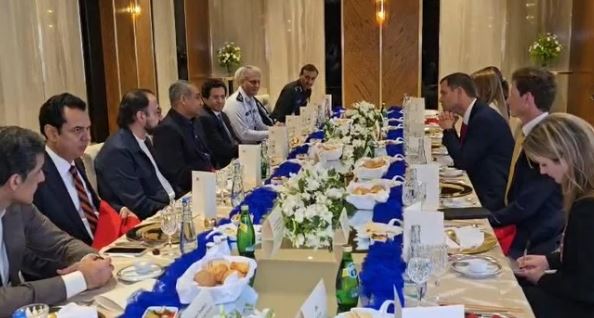
RAWALPINDI, JUN 17: /DNA/ – Al-Shifa Trust Eye Hospital has formally started construction of its new Lahore facility, planned as Asia’s most modern eye hospital, marking a major expansion of its efforts to provide specialized eye care to millions of people.

President Al-Shifa Trust Maj. Gen. (Retd) Rehmat Khan described the project as a significant milestone in the Trust’s mission to expand access to quality eye care and reduce preventable blindness across Pakistan.

The Trust has awarded the construction contract to a Lahore-based firm, with the agreement requiring completion of the grey structure within 13 months, with provisions to discourage delays.

A commencement ceremony was held at the project site, where Al-Shifa Trust officials, engineers, consultants, and construction staff prayed for the successful completion of the hospital.

Maj. Gen. (Retd) Rehmat Khan informed that the hospital is being built on 70 kanals of land provided by the Punjab government on the Ring Road, Raiwind. The state-of-the-art facility will feature 20 modern operation theatres and will provide advanced treatment for a wide range of eye diseases.

Once operational, the hospital is expected to serve around 20 million people and treat more than 600,000 patients annually. Free treatment will be available for deserving and underprivileged patients, continuing the Trust’s policy of ensuring access to quality eye care regardless of a patient’s ability to pay.

The project comes at a time when vision impairment remains a major public health challenge in Pakistan. More than 26 million people live with blindness or partial vision impairment, placing the country sixth globally in terms of vision-loss burden. Cataract accounts for more than half of all blindness cases, while the vast majority of cases are considered avoidable, and Central Punjab has the highest prevalence of blindness in the country.

Over the past 35 years, Al-Shifa Trust has grown from treating just 25 patients a day to more than 5,000 patients daily. It operates seven eye hospitals in Rawalpindi, Sukkur, Kohat, Muzaffarabad, Chakwal, Gilgit, and Haveli Lakha. It has also conducted more than 15,000 free screening and surgical camps in remote and underserved areas, bringing eye care to communities with limited access to medical facilities.

Between 80 and 90 percent of patients receive treatment free of charge. The Lahore hospital is expected to further strengthen efforts to reduce avoidable blindness and improve access to modern eye care services.

The trust also organized a fundraising event featuring performances by Rahat Fateh Ali Khan and Ustad Noor Buksh, where philanthropists contributed one hundred million rupees to the project.

US envoy falls in love with Pakistani chai, hospitality and wedding traditions

US envoy falls in love with Pakistani chai, hospitality and wedding traditions

ISLAMABAD, JUN 16: US Charge d’Affaires Natalie A Baker has shared her favourite aspects of life in Pakistan, praising the country’s hospitality, cuisine, cricket culture and vibrant wedding traditions, saying Pakistanis make visitors feel “like family”.

In an interview posted on the US Embassy Islamabad’s Instagram account, Baker said she enjoys spending her free time with friends and travelling to different parts of Pakistan to explore new places and experiences.

The American diplomat also revealed that she has developed a strong interest in cricket since arriving in Pakistan, although she admitted she is still learning the sport’s rules and finer details.

Describing cricket as “a little complicated”, Baker said she nevertheless tries to visit stadiums whenever she can and enjoys cheering for Pakistan’s national cricket team during matches.

When asked which aspect of Pakistani culture Americans should understand more, she said the warmth and hospitality of the Pakistani people would top her list.

She said Pakistanis are exceptionally welcoming and inviting towards visitors, adding that people arriving in the country are often made to feel at home and treated like members of the family.

Speaking about Pakistani cuisine, Baker said palak paneer is among her favourite dishes and added that she also enjoys dal, describing both foods as particularly delicious.

The US diplomat also praised popular snacks and beverages, saying chai and pakoras are delicious, while Pakistani desserts have left a strong impression on her and are “amazing”.

When asked which American food she would recommend to Pakistanis, Baker said breakfast tacos from San Antonio, Texas — her hometown — would be her first choice.

She also encouraged people to try Texas barbecue, describing it as another American favourite that Pakistanis should experience alongside the breakfast tacos she recommended.

Discussing Pakistani traditions, Baker said weddings are her favourite cultural events in the country, describing the celebrations as a magical series of occasions from mehndi to barat and valima.

The diplomat said she has been fortunate enough to receive invitations to several Pakistani weddings during her stay, adding that the brides look like princesses and the celebrations are filled with happiness and vibrant energy.

Stay Connected

64FansLike
60FollowersFollow

Latest Reviews

Exchange Rates

USD - United States Dollar
EUR
1.15
GBP
1.35
AUD
0.70
CAD
0.71