Home Blog Page 846

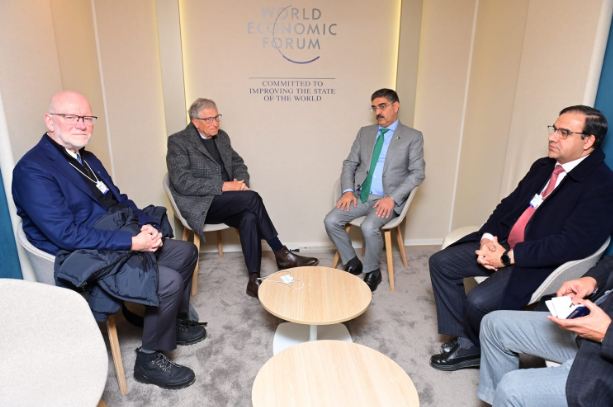
Caretaker Prime Minister meets Bill Gates in Davos

Caretaker Prime Minister meets Bill Gates in Davos

Davos, JAN 17 /DNA/ – Caretaker Prime Minister Anwaar-ul-Haq Kakar met Mr. Bill Gates, co-chair of the Bill & Melinda Gates Foundation, in Davos today on the sidelines of the 54th annual meeting of the World Economic Forum.

Prime Minister Anwaar-ul-Haq Kakar appreciated the Bill & Melinda Gates Foundation’s ongoing collaboration with Pakistan, especially its critical support across such sectors as public health, social initiatives, and financial inclusion, as well as during the COVID-19 pandemic and the floods of 2022.

The Prime Minister and Mr. Gates discussed a range of social support initiatives being undertaken in Pakistan,emphasizing the need to further consolidate the gains while scaling up efforts throughout the country.

The Prime Minister also outlined the Government’s collaborative efforts to combat poverty and malnutrition.

Chinese Ambassador calls on Chairman Senate Sadiq Sanjrani

Chinese Ambassador calls on Chairman Senate Sadiq Sanjrani

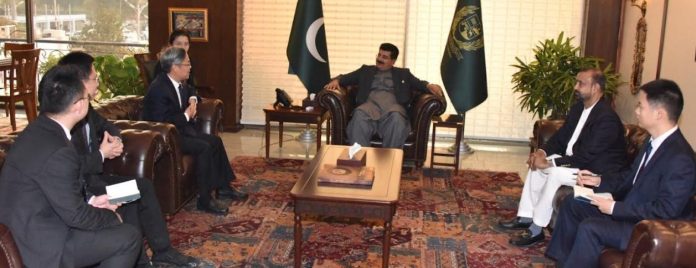
Islamabad, 17 Jan /DNA/ – Today, Jiang Zaidong, the Chinese Ambassador to Pakistan called on Chairman Senate, Muhammad Sadiq Sanjrani, at Parliament House.

During the meeting, Chairman Senate emphasized the robust, historic, and multifaceted nature of the Pakistan-China relationship. The Chairman highlighted Pakistan’s Clear and principled stance regarding Taiwan question. He reaffirmed Pakistan’s unwavering commitment to the One China Principle as cornerstone of Pakistan’s foreign policy and the principles outlined in the UN Charter, opposing any form of “Taiwan independence” and other countries’ interference in China’s internal affairs.

The Chairman Senate of Pakistan expressed support for China’s territorial integrity, particularly in recognizing Taiwan as an inalienable and integral part of China and its efforts for national reunification.

He further said that Pakistan rejects farce elections in Taiwan, where the vast majority of the population’s voices went unheard as a result of widespread non-participation in the electoral process.

The meeting underscored the strategic partnership between China and Pakistan, with Chairman Senate expressing the nation’s high regard for this relationship. The enduring support of China during challenging times was acknowledged, demonstrating the depth of the bilateral ties.

Progress on vital projects, including the China-Pakistan Economic Corridor (CPEC) and the Gwadar Port was discussed in detail. The Chinese Ambassador lauded Pakistan’s contributions to regional peace, emphasizing the importance of collaborative efforts in achieving development objectives.

Chinese ambassador affirmed continued support for Pakistan’s development goals, reinforcing the commitment to further enhance bilateral relations.

Iran attack didn’t target Pakistani nationals: FM

Iran attack didn't target Pakistani nationals: FM

DNA

DAVOS, JAN 17: Iran’s foreign minister has said that the country’s Tuesday missile attack on areas in Pakistan adjacent to Iranian borders was directed at the so-called Jaish al-Adl terrorist group and no Pakistani national was targeted.

Speaking on the sidelines of the World Economic Forum in Davos on Wednesday, Hossein Amir-Abdollahian said members of the terrorist group are Iranians who have taken shelters in Pakistan and that Tehran had repeatedly warned Islamabad to prevent their anti-Iran cross-border operations.

“None of the nationals of the friendly and brotherly country of Pakistan were targeted by Iranian missiles and drones,” he said.

“The so-called Jaish al-Adl group, which is an Iranian terrorist group, was targeted,” he said, adding that this was a response to the recent attacks on Iran by the group, which he said is linked to Israel.

The minister also touched on Iran’s attack into Iraq’s Kurdistan region, saying they were retaliation for recent anti-Iran attacks staged by Israel’s Mossad.

The Iranian minister said Tehran has shared intelligence with Iraq about Mossad activities in Iraq’s Kurdistan, adding that Israel is an enemy of both Iraq and Iran.

He cited a 2023 security pact between Iran and Iraq, saying it obliges Iraqi officials not to allow Iran’s security to be threatened from their soil.

The top Iranian diplomat said Iran respected the sovereignty and territorial integrity of Pakistan and Iraq but would strongly react to any attack on its national security.

“We respect the sovereignty and territorial integrity of Pakistan and Iraq, but we do not allow our national security to be compromised, and we have no compunction about [dealing with] terrorist parties inside Pakistan and Israeli movements in the Kurdistan region of Iraq.”

He said the attacks were aimed at protecting the security of Iran, its neighbors, and also the wider region.

“What we did was aimed at boosting the security of Iran, Pakistan, Iraq, and the region. We consider the security of Iraq and Pakistan to be that of the Islamic Republic of Iran,” he said.

Waseela Foundation Flags Ongoing Health Hazards in Uncontrolled Nicotine Pouch Sales

Waseela Foundation Flags Ongoing Health Hazards in Uncontrolled Nicotine Pouch Sales

Islamabad. JAN 17 /DNA/ – The sale of nicotine pouches by the tobacco industry in Pakistan is highly hazardous for the public health, rights activists stressed on Friday.

Waseela Foundation raised an alarm on the aggressive promotion and marketing of VELO, ZYN, and other local or international brands that carry these nicotine-addictive products.

The Foundation urged the Ministry of National Health Services, Regulations, and Coordination to immediately pay attention to this issue.

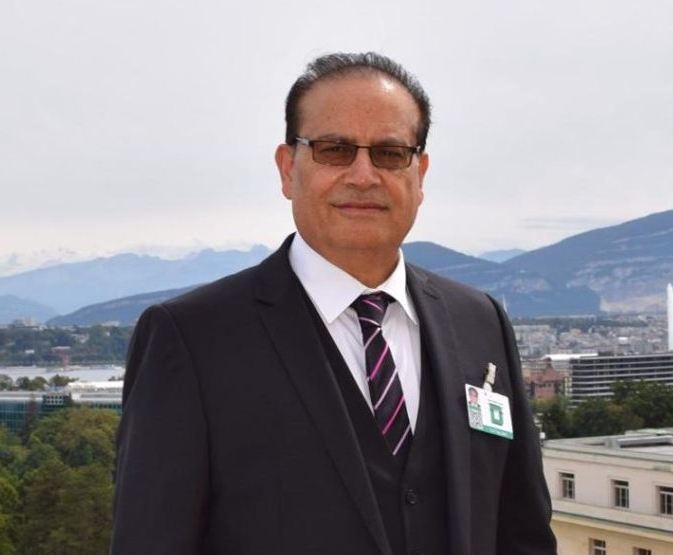
“We feel that the sale of nicotine should be instantly controlled,” said Dr. Ziauddin Islam, Former Technical and Focal Person of the Government of Pakistan to World Health Organizations Framework Convention on Tobacco Control (FCTC) and Technical Advisor, Waseela Foundation.

He said if nicotine pouches are to be sold, then they should only be sold under the prescription of a registered medical doctor. This would make sure that consumers become familiar with dangers associated with the use of nicotine in general.

The uncontrolled and ongoing promotion, marketing, and sale of highly addictive nicotine pouches by the tobacco industry in Pakistan is highly hazardous and

These pouches contain an extremely addictive drug called nicotine. Nicotine use is known to cause severe health problems such as heart disease, stroke, and lung diseases, among others. Despite all these risks, nicotine pouches are being marketed and sold freely; this can lead to addiction and widespread health problems.

Waseela Foundation asked the Ministry of National Health Services, Regulations and Coordination, to take immediate notice of this issue. As the concerned agency, the Drug Regulatory Authority is responsible for taking necessary action and controlling nicotine’s free marketing and promotion in order not only to protect people’s health but also their well-being.

Joint Efforts: Pakistan Ulema Council and Hajj Organization Punjab Collaborate for Pilgrim Training

Pakistan Ulema Council

“Tahzeem-e-Harmain Al-Sharifain Conference”

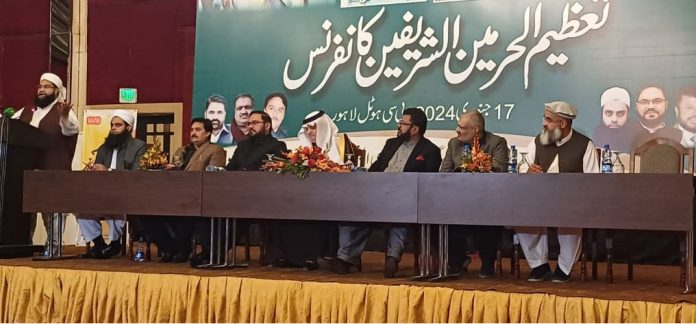
LAHORE, JAN 17 /DNA/ – The speakers and representatives of Hajj Organization Punjab said that the governments of Saudi Arabia and Pakistan are knotted in eternal and everlasting brotherhood relations.

While addressing Tahzeem-e-Harmain Al Sharifain Conference held in the aegis of Hajj Organizers Punjab, the speakers said that the governments of Saudi Arabia and Pakistan are making every possible effort to facilitate the Hajj and Umrah pilgrims.

The Tahzeem-e-Harmain Al-Sharifain Conference was chaired by Chairman Pakistan Ulema Council, Special Representative to Prime Minister on Inter-Religious Harmony and Middle East Hafiz Muhammad Tahir Mahmood Ashrafi and Saudi Arabia’s Ambassador to Pakistan Nawaf Saeed Al-Maliki graced the event as Chief Guest.

The speakers said that Pakistan fully support and endorse the decisions taken at the conference held in the aegis of Ministry of Hajj and Umrah of Saudi Arabia to facilitate the pilgrims of Hajj and Umrah in 2024.

The speakers also noted that the efforts taken in the patronage of Khadim-e-Harmain Al Sharifain Shah Salman bin Abdul Aziz and Crown Prince Muhammad bin Salman’s Vision 2030 will create more facilities for pilgrims of Hajj and Umrah

Road to Makkah program is a great facility for Hajj pilgrims, said speakers while eaddressing the Tahzeem-e-Harmain Al-Sharifin Conference organized by Hajj Organizers Punjab.

 Nawaf Saeed Al-Maliki, Ambassador of Saudi Arabia in Pakistan, said in his address that the security and stability of Pakistan is very dear to the people and government of Saudi Arabia.

The leadership of Saudi Arabia considers it an honor to serve the Islamic and the Muslim world.

He said that Shah Salman bin Abdul Aziz and Crown Prince Muhammad bin Salman have clear instructions for the services of Hajj and Umrah pilgrims.

Saudi Arabia is trying to create best a available facilities for Hajj and Umrah pilgrims, he said.

 Chairman of Pakistan Ulema Council and Special Representative of Prime Minister of Pakistan Hafiz Muhammad Tahir Mahmood Ashrafi said that Pakistan and Saudi Arabia have relations of faith and belief. 

Under the supervision of Crown Prince Muhammad bin Salman and the leadership of Hajj Minister Dr. Tawfiq al-Rabiah, we fully support the decisions taken for Hajj 2024.  Better and the best measures are being taken day and night, no one will be allowed to do corruption in the name of Hajj adding that all the companies should also fulfill promises made with the pilgrims.

Hafiz Muhammad Tahir Mahmood Ashrafi said that Pakistan and Saudi Arabia are friends in difficult situations. Saudi Arabia has never left Pakistan alone in any difficult situations. He said that Hajj Organization Punjab and Pakistan Ulema Council will train pilgrims together and services will also be taken by Saudi Arabia’s Hajj and Umrah Ministry for the training purposes of the pilgrims.

The conference was also addressed by Sanaullah, Imtiaz Chaudhary, Saeed Malik, Hafiz Tariq and other officials.

Walk held against use of plastic shopping bags

Walk held against use of plastic shopping bags

ISLAMABAD, JAN 17 (DNA) — A walk was organized here in the Cantonment area against the use of plastic shopping bags and to create awareness about the cleanliness of the city.

Cantonment Executive Officer of the Cantonment Board Azra Bakht was leading the walk, which was also attended by President of Anjuman Tajraan Cantt Bazar Chaudhry Jameel Ahmad, General Secretary Muhammad Zeeshan, Incharge Cleanliness Staff of the Bazar Syed Riaz Hussain Shah, and a number of traders.

The participants of the walk were carrying placards inscribed with environment-friendly slogans, including ‘Cleanliness is half faith, ‘Plastic bags are enemies of the environment, and ‘Put the trash in dustbins’, etc.

Speaking on the occasion, President of Anjuman Tajran Cantt Bazaar Area Chaudhry Jameel Ahmed said the ban on the use of plastic bags by the Cantonment Board and the walk to create awareness about cleanliness in the Cantt Board area were a good initiative, adding that the traders were standing shoulder-to-shoulder with the Cantonment Board to make this campaign successful.

The traders would extend all possible support for the purpose, he assured. Azra Bakht, while addressing the participants, said the cantonment board was fulfilling its responsibilities for cleanliness, and the cleanliness situation would be further improved in the area.

This walk was aimed at creating awareness among the masses and traders about the hazardous effects of plastic bags on the environment so that they should also fulfill their responsibilities for keeping the environment clean. She said the plastic bags also cause blockage of drains, and their use must be stopped. — DNA

CIA meeting held to review performance

CIA meeting held to review performance

RAWALPINDI, JAN 17 (DNA) — A meeting of the Crime Investigations Agency (CIA) was held here on Wednesday under the chair of Superintendent Police (SP), CIA, Beenish Fatima to review performance.

The officers including DSPs of the Organized Crime Cell of the agency attended the meeting, according to a press release issued. The SP directed to take measures against anti-social activities in society. — DNA

UNICEF and JICA Applaud Japan’s $3.62 Million Contribution to Polio-Free Future in Pakistan

UNICEF and JICA Applaud Japan's $3.62 Million Contribution to Polio-Free Future in Pakistan

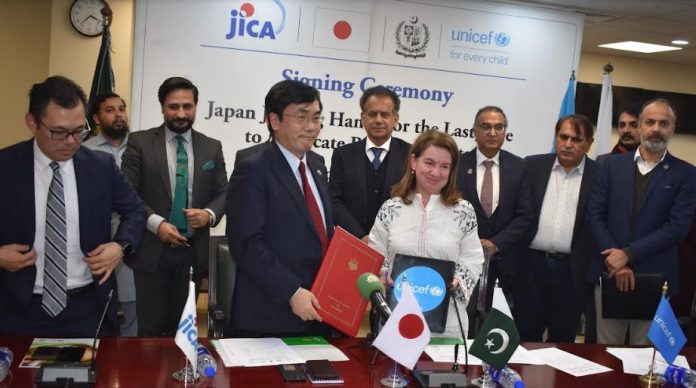
ISLAMABAD, JAN 17 /DNA/ – The Government of Japan has announced a new US$ 3.62 million grant to procure essential oral polio vaccines as part of its continued support to polio eradication efforts in Pakistan. Pakistan Polio Programme will use these funds to procure more than 21 million doses of vaccines to support polio campaigns in 2024.

Pakistan is one of only two countries globally that has yet to stop polio. In 2023, Pakistan reported a total of 6 cases of polio. With polio cases cornered to only a few locations in the country, the Government of Pakistan and partners are preparing to launch an aggressive plan of activities in 2024 to stop this life altering disease for children. Each national immunization drive targets over 44 million children under the age of five, with more than 370,000 frontline workers, predominantly women, playing a crucial role to ensure the Polio Programme’s outreach.

“Despite the challenges, Pakistan will remain relentless in our drive to put an end to polio in the next year,” said Dr. Nadeem Jan, Federal Health Minister, Government of Pakistan. “As we prepare to launch polio campaigns in 2024, together with our partners we will maintain an emergency focus towards resolving the remaining challenges that stand in our way to reach all children. “

“The unwavering support of the Government of Japan has been instrumental in helping us get closer to reaching zero cases. We are thankful to the Government and people of Japan for their continued support towards polio eradication in Pakistan,” Dr. Nadeem Jan added.

Mr. ITO Takeshi, Charge d’ Affaires ad interim of Japan to Pakistan, appreciated the significant gains made last year in controlling the spread of poliovirus. “I would like to express my sincere respect to polio workers and law enforcement agencies for their dedicated mission for humanity”, said Mr. ITO. Noting the importance of a clear and strong commitment by the Pakistani leadership to end polio, he said, “Japan would like to renew its commitment to continuing its efforts toward the ultimate goal of polio eradication by promoting routine immunization.”

The new funding is part of the continuous support from the Government of Japan to the Polio Eradication programme since 1996. To date, the grant and loan contribution from the Government of Japan has amounted to approx. US$ 242.16 million dollars to support the Polio programme in Pakistan through UNICEF.
2 / 2
“We appreciate the government’s commitment to making all-out efforts to ensure all children receive the essential vaccine. We believe that vaccines, the most effective way to strengthen children’s immunity, will be used effectively with the understanding of parents and communities and the efforts of frontline workers. We sincerely hope that all the polio campaigns of this year will be conducted successfully toward zero polio cases”, said Mr. Tsuyoshi Hara, Senior Representative, JICA Pakistan Office.

“With fewer cases reported in 2023 compared to 2022, we find ourselves at the crossroads between progress and regression. Six cases are far too many, meaning six children affected permanently by polio,” said Melissa Corkum, UNICEF Chief of Polio in Pakistan. “Today with this generous pledge from the Government and people of Japan, we renew our commitment to ensuring a polio-free world. One step forward, no steps back towards reaching all children with life-saving vaccines.”

Iran’s Missile Attack in Pakistan: Complexities and Concerns

Qamar Bashir

Qamar Bashir

In a surprising and highly unusual move, Iran conducted a series of aggressive actions by launching six bomb-carrying drones and rockets into Pakistan’s Balochistan province on Tuesday night (16.01.2024). The targets of these attacks, according to Iran, were homes purportedly housing the families of Jaish al-Adl fighters. Shockingly, the assault resulted in the tragic death of two children, with two women and a teenage girl sustaining injuries. The nature of these strikes raises questions about their proportionality and justification, as they were seemingly directed at non-combatants.

These unprovoked attacks within Pakistan’s territory were ostensibly aimed at bases affiliated with Jaish al-Adl, a militant group seeking an independent Baluchistan that has expanded its presence across Afghanistan, Iran, and Pakistan.

What makes these assaults particularly egregious is that they occurred despite existing communication channels between Iran and Pakistan, established for the purpose of enforcing border control, exchanging information and intelligence, and fostering cross-country cooperation in addressing terrorist movements and plans. The blatant disregard for diplomatic norms and cooperative mechanisms underscores the severity and unpredictability of Iran’s actions, adding a layer of complexity to the already sensitive regional dynamics.

Iran’s recent attacks on Pakistan flagrantly violated the longstanding friendly, brotherly, and fraternal ties between the two nations, which share common borders, religion, customs, and a shared history.

The reckless response is believed to be fueled by Iran’s anger over the twin bombings in the city of Kerman on January 5, 2024, where 89 people lost their lives and 280 were wounded during a memorial for the top Iranian General Qassem Soleimani. Iranian President Ebrahim Raisi had vowed retaliation, stating that Iranian forces would choose the place and time for action.

Pakistan wasn’t the sole target of Iran’s ire; a day before the attacks in Balochistan, Iran launched ballistic missiles in Iraq’s Kurdish region, targeting sites allegedly linked to ISIS. Simultaneously, Iran hit locations in northern Syria, claiming it was defending its security and countering terrorism. These actions reflect Iran’s broader strategy of responding aggressively to perceived threats, marking a significant escalation in the region and complicating diplomatic relations.

The cross-border attack by Iran on Jaish-e-Adl hideouts inside Pakistan, given the considerable distance from Kerman, seems illogical and disconnected from the alleged retaliation motive for the bombings in Iran. This raises questions about the justification and strategic sense of such a move, especially when it risks straining historic religious and fraternal relations with Pakistan.

Iran’s simultaneous targeting of both ISIS and Jaish-al-Adl reflects a broader belief that these groups are tools manipulated by the United States, Saudi Arabia, and Israel. The intention is perceived as instigating hatred between the Sunni and Shia sects within Islam, aiming to undermine Iran’s religious revolution, threaten its social and religious fabric, and weaken the state of Iran. This aligns with Iran’s perspective that it stands as a bulwark against the hegemonic designs of the USA, the West, and Israel in the region.

Iran holds the belief that the Islamic State of Iraq and Syria (ISIS), also known as Daesh, emerged in the early 2000s and gained prominence around 2014 as a Sunni extremist organization. According to Iran, it is considered an offshoot of Al-Qaeda and was created by the USA, the West, and Israel. The core ideological motivation of ISIS, as perceived by Iran, revolves around establishing a caliphate governed by its interpretation of Islamic law, predominantly based on Sunni thoughts and practices.

Iran emphasizes that being a predominantly Shia Muslim country, it is viewed as a direct adversary by ISIS due to the profound ideological differences between Sunni and Shia Islam. This animosity is deeply rooted in sectarian tensions, with ISIS considering Shia-majority regions, including Iran, as opponents to its extremist Sunni ideology. Iran also points to complex geopolitical factors and power struggles in the Middle East as contributing dynamics that lead to ISIS’s attacks on Iran.

Iran asserts that Jaish al-Adl, a Sunni militant organization formed in 2012 in Iran’s Sistan and Baluchestan province after the dissolution of Jundallah, is supported and aided by the USA, the West, and Israel, according to Iran’s perspective. Comprising ethnic Baloch Sunni militants, Jaish al-Adl’s activities are driven by grievances related to ethnic, religious, and economic disparities. The group claims to champion the rights of Sunni Muslims in Iran, particularly in Baloch-majority areas, aiming for autonomy and addressing perceived discrimination by the Iranian government.

Iran argues that its military actions inside Pakistan’s Balochistan province were a necessary response to safeguard its sovereignty and citizens from perceived threats posed by Jaish al-Adl. They contend that the presence of Jaish al-Adl militants in the Iran-Pakistan border region posed a direct and imminent danger, justifying preemptive self-defense measures. Additionally, Iran frames these actions as part of a broader counterterrorism strategy, emphasizing the need to address the militant threat originating from Pakistani territory for the sake of regional security.

Pakistan contends that Iran’s incursion into its territory were unacceptable, violates the principle of sovereignty and constitutes a breach of international law. Pakistan argues that diplomatic channels and engagement should have been pursued by Iran to address concerns related to Jaish al-Adl. The unilateral military actions are viewed by Pakistan as not only risking escalation but also undermining potential diplomatic resolutions. Pakistan emphasizes that such actions have the potential to harm regional stability, as they could strain diplomatic relations, involve other regional actors, and exacerbate tensions in an already volatile area.

As a victim of external unprovoked missile and drone attacks, Pakistan retains the right to consider military, economic, and diplomatic responses. Each option comes with its own set of merits and demerits.

Pakistan, viewing the breach as a grave violation of sovereignty, is likely to respond by fortifying border defenses and deploying additional troops. While the immediate focus would be on averting a full-fledged military conflict through engagement with Iranian forces, the regional military dynamics may shift based on responses from neighboring countries. Afghanistan and India expressing concerns about the potential escalation adds another layer of complexity to the situation.

Heightened tensions between Iran and Pakistan hold significant economic ramifications, impacting trade and investment. The cautious approach of investors may lead to a decline in foreign direct investment for both countries. The economic disruption could extend beyond their borders, affecting global energy markets given the significance of both nations in the energy sector. As the possibility of economic sanctions looms, the need for stability and resolution becomes increasingly urgent.

On the diplomatic front, international condemnation of Iran’s actions and calls for an immediate ceasefire would be anticipated. To de-escalate tensions, diplomatic initiatives, possibly through the United Nations and regional organizations, become paramount. Seeking mediation from neutral third parties could facilitate dialogue and pave the way for a peaceful resolution. Pakistan’s active engagement with the global community and involvement in international forums would be crucial to garner diplomatic support. The potential economic and diplomatic fallout underscores the urgency for constructive dialogue and international cooperation to address the crisis.

An ideal response from Pakistan would center on diplomatic engagement, international mediation, economic stabilization measures, and military restraint. Prioritizing dialogue through diplomatic channels and seeking mediation from neutral parties, Pakistan can underscore its commitment to a peaceful resolution. Stabilizing the economy and reassuring investors through collaborative efforts with international financial institutions will be crucial. Simultaneously, maintaining a robust defense posture while exercising restraint is imperative for regional stability. Actively engaging with the global community to garner diplomatic support and presenting evidence of Iran’s violation of sovereignty will contribute to building a case for international understanding and intervention.

China calls for restraint

China calls for restraint

Beijing calls on both sides to avoid actions that would lead to an escalation of tension

DNA

BEIJING: China has called upon Pakistan and Iran to exercise “restraint” after Tehran carried out an air strike on its territory that killed two children and injured three girls.

“We call on both sides to exercise restraint, avoid actions that would lead to an escalation of tension and work together to maintain peace and stability,” foreign ministry spokesperson Mao Ning told a regular briefing on Wednesday.

“We consider both Iran and Pakistan as close neighbours and major Islamic countries,” she said.

Pakistan has strongly condemned the unprovoked violation of its airspace by Iran, warning that violation of Pakistan’s sovereignty is completely unacceptable and can have serious consequences

“It is even more concerning that this illegal act has taken place despite the existence of several channels of communication between Pakistan and Iran. Pakistan’s strong protest has already been lodged with the concerned senior official in the Iranian Ministry of Foreign Affairs in Tehran,” Pakistan’s Foreign Office added.

Both Iran and Pakistan are close partners of Beijing and members of the Shanghai Cooperation Organisation.

Iran offered no immediate official comment but its state-run Nour News agency said the attack destroyed the headquarters of the militant group Jaish al-Adl (Army of Justice).

Earlier today, caretaker Balochistan Information Minister Jan Achakzai said the violation of Pakistani sovereignty by Iran “damages relations” between Tehran and Islamabad.

“The enemy forces are trying to intervene externally in Pakistan, especially in Balochistan. The enemies will never succeed in their plans,” the minister added.

Formed in 2012, Jaish al-Adl is blacklisted by Iran as a terrorist group and has carried out several attacks on Iranian soil in recent years.

The strike came after Iran launched missile attacks on “spy headquarters” and “terrorist” targets in Syria, and in Iraq’s autonomous Kurdistan region.

The Iranian strikes add to multiple crises across the Middle East, with Israel waging a war against Hamas in Gaza and pro-Palestinian Houthi rebels in Yemen attacking commercial vessels in the Red Sea.

Stay Connected

64FansLike
60FollowersFollow

Latest Reviews

Exchange Rates

USD - United States Dollar
EUR
1.17
GBP
1.35
AUD
0.67
CAD
0.72