Home Blog Page 841

Operation Marg Bar Sarmachar: future of Pak-Iran relations

Operation Marg Bar Sarmachar: future of Pak-Iran relations

Waheed Hussain

It takes years to turn an enemy into a friend, but a single wrong act takes seconds to make close friend a foe. This is what the Iran has done against a neighbour-Muslim country Pakistan. How Iran could conceive an idea of attacking Pakistan? From where the advice came? Why Irani leadership failed to analyze and judge the worst consequences of that illegal action? Why Indian Foreign Minister Subrahmanyam Jaishankar was in Tehran, just a day before the attack?

What was the objective of that immature and heinous crime? Iran has failed to achieve anything except attracting the international media and audience for wrong reasons.

Terrorism! Well, Pakistan has paid a huge price due to terrorism for decades and still paying every second day. Beside innocent citizens young officers and soldiers of law enforcement agencies embrace martyrdom in various violence acts being launched by the Baluchistan Liberation Army, Baluchistan Liberation Front and other banned organizations in Baluchistan province. The sacrifices rendered by people and security forces of Pakistan are incomparable to any other nation including Iran.

It’s better that the Iranian leadership has immediately realized the severity of their ill-calculated action and accepted Pakistan’s offer to address such complicated issues through a peaceful-comprehensive dialogue. The willingness was expressed by the Iranian Foreign Minister Hossein Amir Abdollahian, during a telephonic conversation with his Pakistan counter-part the care taker Foreign Minister Jalil Abbas Jilani on 19 Jan, 2024. The two sides also agreed to restore the diplomatic relations and send back their Ambassadors to Tehran and Islamabad.

Apparently, Iran is seemed to be frustrated due to its inability to respond to Israeli aggression in Middle East. The American-British along with other allied forces air strikes against Houthis in Yemen in response to their (Houthis) attack on the cargo ships in red sea also disturbed Iranian government.

Attacking on Pakistan, Syria and Iraq shows the Iran’s political, diplomatic and security limitations in countering Israel and western antagonists. The time when I was writing these lines the international media broke a story of attack on senior officers of Iran Revolutionary Guards Crop (IRGC) in Damascus, Syria on Saturday 20th of January 2024. Internal conflict among the Muslim countries in the Middle East is the main reason of Israeli aggression and ongoing violence against the innocent Palestinians.

Historically, Pakistan and Iran always enjoyed great friendly and brotherly relations. They always stood with each other in the difficult times. So, keeping in mind the close brotherly relations between the two Muslim nations, Pakistan and its people could not even think that Iran would cross international border with hostile intentions killing the innocent citizens.

Unfortunately, after Iranian aggression against Pakistan the perception has changed. It may take some time to restore the confidence of the masses.

The time when the Iranian were attacking Pakistan on 16 Jan, 2024, a-day early, the Indian highest diplomat, External Affairs Minister, Jaishankar was in Iran. Was he on a honey-moon trip? Whatever was the purpose but Iranian action indicated that India might had some kind of poisonous role in the aggression against Pakistan. Indian Naval Commander Kulbhushan Jadhav arrested from Baluchistan in 2016, was carrying Iran’s passport and entered into Pakistan from Iran. So, Pakistan concerns about Indian rough activities in Baluchistan are genuine and of serious nature. Indian involvement in terrorism in Baluchistan is well established. It has been hosting the Baloch terrorists and providing training, financial and logistic support for years to destabilize Pakistan. Pakistan had submitted evidence of Indian involvement in Baluchistan through a dossier to the UN in November, 2020.

The Iran soil has been used by India and its terrorists’ associate against Pakistan. But Pakistan has never contemplated of attacking Iran, the way it did!

As Pakistan is a responsible nation of the international community and wants to address such tricky issues through peaceful dialogue. Just for a reference to terrorism issue, India used Afghanistan during Hamid Karzai and Dr Ashraf Ghani’s governments. Even today, Pakistan is bleeding due to TTP and other violent groups operating from Afghanistan. But Pakistan always demonstrated patience and asked the Afghan interim government (Afghan Taliban) to address the issue of TTP.

Iran and Pakistan have great economic and trade potential. The two countries have been working to enhance the bilateral economic cooperation. They are part of ECO and other regional and international forums. However, they can only benefit when the two states enjoy complete trust and confidence on each other. Aggressive postures will harm the future cooperation.  

During Pakistan-Iran standoff, some anti-Pakistan individuals launched a negative propaganda against the armed forces of Pakistan. They were posting scandalous image of the security forces, army leadership, particularly the Chief of Army Staff General Asim Munir. In such a situation enemy of Pakistan like India do take advantage. Try to malign Pakistan Army, to create wedge between the armed forces and masses. The best way to counter propaganda, is to be pro-active on all media platforms and other forums presenting and promoting the true picture of the issue.

Meanwhile some trends on the ‘X’ former ‘tweeter’ platform were launched by the political workers and Vloggers supporting a particular party in the country. Most of those so-called media Aristotle and Socrates regularly post fake stories to mislead the masses just to please few sick-minded individuals.

In politics, no problem if someone disagree with a political ideology or opinion. However, when the matter is of national security, sovereignty and defense of the country, the nation needs to be united—standing behind the armed forces of Pakistan instead of spreading rumors. Pakistan armed forces bravely responded to the Iranian aggression and send a load and clear message to everyone including Iran, that, Pakistan is a peace-loving state, it wants a friendly relation with all countries including its neighbors. Yet, it will not compromise on its security and sovereignty, which in fact is a red line.

Iran attacked three countries, Syria, Iraq and Pakistan. It was only Pakistan which demonstrated the courage and bravery to respond back in stronger manner. The India crossed the LoC dropped weapons in Balakot KPK province in February 2019, Pakistan Air Force responded with courage, captured IAF pilot Abhinandan. All it was because of our strong defense. If someone try to weaken security forces— its tantamount to weaken Pakistan. Politics and defense should be treated separately.
Climate Challenges in the Gulf Arab States

Climate Challenges in the Gulf Arab States

Dr. Muhammad Akram Zaheer

The world is getting hotter because of human activities and it is causing problems like heat waves, floods and droughts. The United Nations says we need to cut the pollution that causes this by half in the next 10 years and completely stop it by around 2050. Many countries, including five in the Gulf Arab region, have promised to do this, but there is still a big gap between what needs to be done and what’s happening now. To reach these goals, we need to use more clean energy, like solar and wind power, and produce things like hydrogen in a cleaner way.It will cost a lot of money about $2-4 trillion each year for the next decade to make these changes. The Gulf Arab countries, even though they produce a lot of oil and gas, can help by using their resources for clean energy.Different organizations have made plans to reach these goals, like using more clean energy and reducing the use of fossil fuels. Even though we need to use less oil, gas and coal, these sources will still be part of our energy use but in smaller amounts. The world needs to act quickly and it depends on factors like political support, available resources and technical abilities. The Gulf Arab states have the potential to make a big difference if they overcome challenges and work towards cleaner energy. The Gulf Arab states currently have a lot of oil and gas that can last for 20 to 100 years. Even though we expect to keep using these fuels, we want to reduce the pollution they create. We can do this by using technologies like carbon capture, turning fuels into hydrogen or ammonia which don’t produce harmful emissions.

The Gulf States are trying to invest in cleaner energy, but there is still a big gap between what they’re doing now and what they want to achieve in a pollution-free future. Right now, they have a few facilities that capture carbon dioxide (CO2) but it’s not enough. By 2030, they plan to capture more CO2, produce hydrogen and ammonia and generate cleaner energy. However, they need a lot more renewable energy about 60 times what they have now to reach these goals.The Gulf States have started to work on reducing the impact of climate change by launching various initiatives and programs even before committing to a pollution-free future. Only Oman and the UAE have made plans for their entire economy to reach net-zero emissions. These plans set goals for each part of their economy to reduce carbon emissions by the middle of the century. However, these plans lack detailed information on how to achieve this in terms of finances, technology and institutions. Other Gulf countries are expected to announce similar plans soon. These plans need to be in line with their economic development and budgets so that economic growth and net-zero goals are not treated as separate issues. This alignment will also help avoid unintended social and economic problems that might come from different climate policies, like carbon pricing.

Currently, most climate projects are funded on a case-by-case basis. For example, Saudi Arabia announced a huge investment in cleaner energy and the UAE committed a significant amount of money to achieve its clean energy target. Most of these funds come from selling oil and gas. Except for the UAE, none of the Gulf Cooperation Council (GCC) states have established a specific framework for climate finance. In 2015, the UAE created the Green Finance and Investment Support Scheme and in 2021, it released the Sustainable Finance Framework (2021-2031) to encourage private sector involvement in sustainable finance. Financial institutions in the UAE are increasingly supporting sustainable and climate-friendly projects. Oman and the UAE’s national banks have initiated green finance projects, including supporting solar panel installations. Sovereign wealth funds in the regio like Saudi Arabia is Public Investment Fund (PIF) are also actively involved. In 2022, the PIF issued green bonds to raise money for climate and environmental projects. This is part of Saudi Arabia is efforts to achieve its green goals. As the Gulf countries look towards a future with less reliance on oil, they should start developing and diversifying climate finance instruments to address climate goals. Nature-based solutions (NBS) are ways of protecting, restoring or managing natural areas like ecosystems, forests and urban spaces. These methods can help with issues such as food and water security, climate change, disasters and human health. It is believed that by 2050, these NBS could contribute around 30% of the efforts needed to meet the goals of the Paris Agreement and limit global warming.

In the Gulf region, efforts are being made to pursue NBS such as conserving mangrove ecosystems and planting trees. Saudi Arabia for example, introduced two initiatives in March 2021 the Saudi Arabia Green Initiative and the Middle East Green Initiative. These aim to plant a large number of trees in Saudi Arabia and across the Middle East, with the goal of significantly increasing tree-covered areas and reducing carbon emissions. However, because the Gulf region faces water scarcity issues, planting trees might not be the best solution to offset carbon. The suggestion is to explore other options that align better with the natural environment. One such option is carbon capture and mineralization, a process that permanently stores carbon dioxide in specific rock formations called peridotite. This method is cost-effective and suits the arid environment of the Gulf region, which has abundant peridotite rock formations.

Five Gulf Arab states – Bahrain, Kuwait, Oman, Saudi Arabia, and the UAE have committed to achieving net-zero emissions by mid-century. Despite their efforts, this paper suggests that reaching these goals could be challenging without timely and innovative interventions. Without consistent efforts to bridge the gap between current efforts and what is needed for a net-zero future, the region might struggle to realize its ambitions. Implementing climate policies that support net-zero goals will be crucial for economic diversification and to deal with the potential impacts of global climate policies on the region’s oil wealth.

Pakistan’s National Statement at the 19th NAM Summit in Kampala, Uganda

Pakistan’s National Statement at the 19th NAM Summit in Kampala

ISLAMABAD, JAN 21: Additional Foreign Secretary (United Nations) Ambassador Syed Haider Shah delivered Pakistan’s national statement at the 19th NAM Summit in Kampala, Uganda. He outlined Pakistan’s firm commitment to the Non-aligned Movement and its founding principles and its continued support to the Movement’s efforts towards peace, equality, cooperation and well-being for all.

Ambassador Haider Shah underlined that the current multi-dimensional global challenges can only be overcome through effective international collaboration. He called for urgent action to reform the systems of finance, trade, and technology to ensure balanced and sustained socio-economic growth, particularly in the developing countries.

Additional Foreign Secretary also called for an early resolution of the Jammu and Kashmir dispute in accordance with the resolutions of the United Nations Security Council and aspirations of the Kashmiri people.

Ambassador Haider Shah is leading the Pakistan delegation to the NAM Summit after Foreign Minister Jalil Abbas Jilani had to cut short his official visit in view of recent developments

MBS and Saudi-Iran Détente

MBS and Saudi-Iran Détente

Since the Iranian Revolution of 1979, Iran and Saudi Arabia have been at odds. Following the Saudi authorities’ execution of a Shia cleric and the Iranian protests in which demonstrators set fire to the Saudi Embassy in Tehran, tensions between Tehran and Riyadh increased even further in 2016. Both nations subsequently discontinued missions and severed diplomatic ties.

A détente agreement between Iran and the Kingdom of Saudi Arabia was mediated by China on March 10, 2023. Within two months, both states committed to resuming diplomatic ties and reopening their embassies. However, prior to that agreement, in 2021, diplomats from Iraq and Oman had been discreetly working behind the scenes to mediate a diplomatic settlement between Saudi Arabia and Iran, longtime rivals. Ultimately, though, there was no indication of an impending breakthrough. However, China has emerged as an international mediator increasing its area of influence in the Middle Eastern Region.

The leadership of Crown Prince Muhammad Bin Salman

Crown Prince Muhammad bin Salman’s leadership is significantly changing the Middle East’s dynamics. Over the past ten years, Riyadh has used coercion to deal with its rivals. Riyadh’s engagement in the Syrian crisis in 2013, airstrikes against the Houthis in Yemen in 2015, the suspension of diplomatic ties with Iran in 2016, the blockade of Qatar in 2017, and other incidents illustrated the confronting stance of Saudi foreign policy. However, in 2021, the embargo on Qatar was lifted as a new decade began. Iran and Riyadh restore diplomatic ties in March 2023, with China serving as a mediator. After twelve years, Bashar Al-Assad received an invitation to the Arab League summit in Riyadh in May 2023. These incidents serve as an indication to the international community that Saudi Arabia, led by Muhammad Bin Salman, is reevaluating its foreign policy, particularly about Iran.

Furthermore, he is involved in transforming the socio-economic and religious fabric of Saudi society. He is playing an important role both on the domestic and international front in modernizing Saudi Arabia and emerging as a reformer. He is picking allies and establishing alliances based on the national interest of Riyadh when it comes to systemic stimuli and altering the dynamics of Saudi society domestically to strengthen its regime have implications on the foreign policy of Saudi Arabia.

Vision 2030

Prioritizing economic concerns for states is domestically driven. Domestically, Saudi Arabia is facing economic challenges and trying to diversify its economy to reduce its dependence on oil revenues. For that matter, Saudi Arabia is promoting Vision 2030, which Crown Prince Muhammad Bin Salman presented in 2016. It aims to open multiple different avenues to generate economic activity which in turn will reduce their reliance on oil income. Saudi Arabia is heavily investing in projects like NEOM – a multi-billion-dollar project. To ensure a conducive environment for foreign investment and secure the infrastructure Riyadh was compelled to normalize its relations with Iran averting any unwanted incidents such as in 2019, two oil facilities of Aramco in Saudi Arabia were targeted by the Houthi rebels. The success of Vision 2030 lies in the stability and peace in the Kingdom as well as in the entire Middle East. That is why, Vision 2030 – a domestic endeavor – has implications for the Saudi foreign policy and it eventually ended up in Tehran-Riyadh détente hoping to end the hostile situation in the entire Middle East.

Nature of Regime

A theocratic monarchy is ruling Saudi Arabia.The Saudi monarchy draws its legitimacy from Wahabism – a strict interpretation of Islam. For centuries, the House of Sauds has made deals with ultra-conservatives as a mean of survival. But today for Muhammad Bin Salman, to strengthen the regime, it is necessary to diversify its economy and move toward moderate Islam in order to avoid any Arab Spring situation or economic turmoil in the future. Interestingly, in the Arab Spring, a mostly young population of states overthrew the unelected rulers. Coincidently, about 63 percent of the Saudi population is under 30 years old. Oil being a limited natural resource would be unable to meet the requirements of the Saudi nation in the near future. To address this issue, he launched an ambitious package of socio-economic reform – Vision 2030. To change the perception of Islamic ideology followed by Riyadh and socio-economic reforms for Saudi society is essential to deepen the roots of the regime further and it comes only with stability and peace in the Kingdom as well as in the region. A domestic factor – the strengthening of the regime – is reflected in the foreign policy response of Saudi Arabia when Iran and Saudi Arabi restored their relations. 

US-China Rivalry

US-China rivalry has both external (international) and internal (domestic for both states) aspects contributing to the peace deal. Internationally, China and the US are engaged in an ongoing struggle to influence world politics. It has been demonstrated that the US is incapable of mediating a settlement that would offer the Gulf region stability, harmony, and peace. In the process of mediating the Iran-Saudi Arabia deal, China has filled the void and established itself as a global peacemaker.

Both Iran and Saudi Arabia are benefiting from US-China rivalry in their own ways. Iran and Saudi Arabia are both experiencing economic difficulties at home. Because of the US sanctions, the former’s economy is severely damaged, while the latter is diversifying. Despite US sanctions on both countries, Iran and China signed a 25-year strategic partnership agreement in March 2021. Along with military cooperation, it includes Chinese investments in important Iranian sectors like energy, telecommunications, infrastructure, and information technology. Following its unilateral exit from the 2015 nuclear agreement, the Trump administration imposed harsh sanctions that blacklisted Iran’s entire financial system. China is now among the main importers of Iranian oil, even in spite of the sanctions. While Saudi Arabia is addressing its economic challenges by unveiling Vision 2030.

However, Riyadh is also broadening the range of its allies it has in terms of trade and security.  Because Joe Biden criticized the Kingdom of Saudi Arabia during his presidential election campaign. Joe Biden’s strong stance against Riyadh was primarily motivated by the brutal killing of Jamal Khashoggi and other human rights violations in the Kingdom. There was no warming of relations between the US and Saudi Arabia after Biden took the oath of President Office. Joe Biden visited Saudi Arabia, but he received a muted reception. As a result, the Saudi leadership wants to diversify its security partners, including China, and has voiced resentment over their bilateral ties. It might be seen in the UN vote against US policy regarding the Russia-Ukraine crisis. Furthermore, China is pursuing the Belt and Road Initiative, while Saudi Arabia is promoting Vision 2030, which Crown Prince Muhammad Bin Salman unveiled in 2016. Tourism is one of the main tenets of Vision 2030. By the end of this decade, Riyadh hopes to bring in $46 billion in tourism revenue. Given that Chinese consumers spent $250 billion on tourism outside of their country in 2019, China may be able to make a contribution in this area. In addition, the Kingdom was China’s main oil supplier in 2022.

They will both share in a better future that brings prosperity and development if China and Saudi Arabia cooperate and make real efforts to advance the Belt and Road Initiative (BRI) and Vision 2030, replace the monopoly held by the United States, and foster harmony and peace in the region.

Conclusion

The normalization of diplomatic relations between Saudi Arabia and Iran has been finalized after secret meetings held in China’s good offices. This historic agreement has the potential to change the Middle East. Both parties would benefit from direct communication and political dialogue to resolve disagreements peacefully. Domestic factors including leaders’ perspectives, economic challenges and the nature of the regime are the driving forces behind the Kingdom of Saudi Arabia to reach a peace deal with its rival – Iran. The US-China rivalry has two aspects international and domestic for both Tehran and Riyadh.  China emerged to grasp the status of peacemaker and mediator between long-time rivals as it comes with prestige, an important characteristic of a great power. China being the emerging power competes with the US to influence international political affairs and it is successful in doing so in the Middle Eastern region. Saudi Arabia would rely less on the US and other Western nations to ensure its security as a result of the peace accord.  As it was struggling to diversify is security and trade partners. For Iran, China has proven to be the economic lifeline after the sanctions imposed by the Trump administration in 2018 hurting its economy badly. Concludingly, the foreign policy response or shift of the Kingdom of Saudi Arabia to the Iran-Saudi Rapprochement is more domestically driven counting on the leadership of Muhammad Bin Salman, economic challenges and the nature of the regime in Riyadh with the interplay of external factors such as US-China rivalry.

Pak-China Institute hosts dialogue on “outlook on South Asia Security”

Pak-China Institute hosts dialogue on

Iran crisis resolution ‘model of crisis management’, Non-state actors are threat to regional security, national security now linked to regional geopolitics, says Mushahid

Mahnoor Ansar/DNA

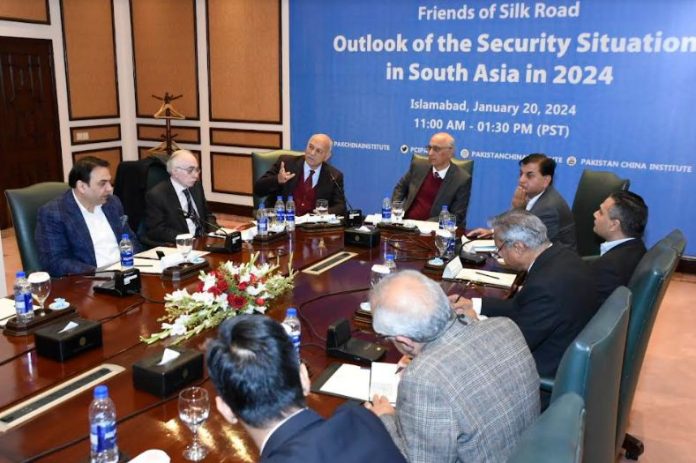
ISLAMABAD, 21: Pakistan-China Institute, under Friends of Silk Road (FOSR) Initiative? organized a dialogue on “Outlook of Security Situation in South Asia in 2024.” The event took place simultaneously at two venues: Islamabad, and a second venue at Quetta Press Club. The dialogue featured speeches by Senator Mushahid Hussain Sayed, Chairman, Senate Defense Committee Defense & Pakistan-China Institute; Senator Mohammad Abdul Qadir; Lt. General (r) Muhammad Afzal, Former Chairman NDMA & DG FWO; Amir Rana, Director, Pak Institute for Peace Studies (PIPS); Ambassador Sohail Mahmood, Director General of Institute of Strategic Studies, Islamabad (ISSI); Ambassador (r) Masood Khalid, Former Ambassador to China; Sultan M Hali, Security Analyst; Shahzada Zulfiqar, former President, PFUJ, and Mustafa Hyder Sayed, Executive Director, Pakistan China Institute. The dialogue was chaired by Former Pakistan Ambassador to China, Moin ul Haque.

In his opening speech, Senator Mushahid Hussain Sayed highlighted the significance of the current scenario, dominated by turbulence and transformation. In tjis context, he analysed China’s Global Security Initiative (GSI) as a new framework for peaceful resolution of security issues, since GSI focuses on security as being indivisible, based on respect for sovereignty and territorial integrity of states. It seeks also to promote a security governance framework, including A.I., cyber security and related security threats based on accepted international norms of behaviour enshrined in the UN Charter and international law. He strongly condemned the ongoing Genocide and Crimes against Humanity in Palestine by Israel. Delving into security issues, he discussed three new realities: the shattering of the Middle East status quo after October 7, serious challenges posed by Non-State Actors, and the complex security situation between Iran, Pakistan, and Afghanistan which is now inextricably intertwined with regional geopolitics, necessitating dialogue and diplomacy. Senator Mushahid Hussain termed the swift and smooth resolution of the Iran crisis as ‘model of crisis management and crisis resolution’ adding that the two crises, Pulwama 2019 (with India) & Panjgur 2024 (with Iran) had helped Pakistan in establishing certain ‘regional rules of behaviour based on our red lines in our troubled neighbourhood’. He said ‘Iran is not India, but a brotherly Muslim neighbour with which Pakistan has no fundamental conflict of interest’. In this regard, Senator Mushahid Hussain especially praised the Pakistani leadership for their deft handling of the Iran crisis, maintaining a mature and measured, cool and calm approach, while avoiding jingoism. Regarding relations with China, he said ‘we stand with China because China supports Pakistan without reservations at all times on all our core interests, and Pakistan too supports China on all its core interests, actually, our position on China is historically correct and consistent as Pakistan is on the right side of history’. Senator Mushahid Hussain also quoted verses from Allama Iqbal, 90 years ago, predicting the resurgence of Asia and rise of China.

In his speech, Senator Mohammad Abdul Qadir emphasized the urgent need to address the economic challenges facing Balochistan. Highlighting the province’s high poverty rate, unemployment, and wealth disparity despite rich resources, Senator Qadir stressed the importance of responsible resource management and equitable development. He underscored the transformative potential of Gwadar Port, citing Chinese investments in infrastructure that have already fueled economic growth, job creation, and increased trade. He cited tourism as a factor in development and growth.

Lt. General (r) Muhammad Afzal, Former Chairman NDMA & DG FWO, delivered a PowerPoint presentation on “Western Route-CPEC opportunities for development and stability.” The presentation explored the China-Pakistan Economic Corridor (CPEC) and areas of interest for both nations. The analysis highlighted achievements in road infrastructure and power generation under CPEC but emphasised the need for prioritising rail, addressing immediate concerns in water storage and IT infrastructure, and role of privates sector.

Muhammad Amir Rana, Director of Pak Institute for Peace Studies (PIPS), underscored the pivotal role Baluchistan plays in the economic development of the country, given its strategic location on classical routes connecting Asia, East Asia, and Central Asia. In addressing the global North-South divide mirrored in Pakistan, Rana attributes it to inherited administrative systems from British colonial era. Rana emphasised the shared objective of redressing wrongs of the past and upholding rights of the local communities in Balochistan, advocating for a focused resolution to address long standing demands. He regretted that ‘no attempt at reform’ had been made by Pakistan especially in neglected areas like Balochistan and Gilgit-Baltistan.

In his address, Ambassador Sohail Mahmood, Director General of the Institute of Strategic Studies, Islamabad (ISSI), emphasized the paramount importance of Pakistan’s unwavering relationship with China, ‘since China is a trusted friend’. Shedding light on the Belt and Road Initiative (BRI) and CPEC, which  he underscored ‘addressed key deficits in development and energy’. Ambassador Mahmood also highlighted that President Xi Jinping’s GSI was ‘an alternative paradigm promoting peace building in a world becoming more dangerous’.

Ambassador (r) Masood Khalid, former Ambassador to China, highlighted CPEC’s transformative journey for Pakistan. Reflecting on the challenging security situation in 2013 that deterred all foreign investors, he underscored China’s groundbreaking investment through the CPEC as it was then the only country willing to invest in China. Ambassador Khalid’s remarks shed light on how China’s commitment has defied skepticism, reshaping Pakistan’s economic landscape and fostering a new era of collaboration.

Sultan M Hali, renowned Security Analyst and author of seven books on China, dispelled various conspiracy theories surrounding China, the Belt and Road Initiative and CPEC. He referred to a 1976 Survey of mineral and natural resources of Balochistan which could be useful in mining and exploration. Emphasizing that CPEC stands as a guarantor of Pakistan’s prosperity, Hali highlighted the nation’s capability to diligently undertake necessary preparations and leverage opportunities within the framework of CPEC.

In speeches by journalists from the Quetta Press Club, highlighted the critical role of the media in shaping public perceptions of the security situation in Balochistan.  Shahzada Zulfikar, former President of Pakistan Federal Union of Journalists (PFUJ), Nurul Haq Bugti and Daniyal Butt, urged the government to pay special attention to the common people of Balochistan, especially the youth’, ‘hold fair and free elections in Balochistan’, and instead of ‘slogans and promises, government should eliminate bad governance and corrupt practices’ so that a conducive environment be created for successful development of CPEC.

In his closing remarks, Mustafa Hyder Sayed, Executive Director of the Pakistan-China Institute (PCI), expressed gratitude to all speakers. Emphasizing the significance of 2024, especially for Pakistan and CPEC, Mustafa Sayed stressed the need for constructive discussions to improve CPEC outcomes. He announced the forthcoming release of a report by PCI, based on the Seminar, providing insight into the needs of Balochistan’s stakeholders, especially the people of the province, and proposing a way forward in the context of security challenges which would serve as useful input for policymakers.

Around 100+ participants consisting of media, civil society, parliament, and academia participated in the dialogue. The dialogue also featured a candid and insightful Questions & Answers session.

No country gives media access to those involved in serious crimes: Solangi


ISLAMABAD, Jan 20 (dna):Caretaker Minister for Information, Broadcasting and Parliamentary Affairs Murtaza Solangi on Saturday said no country in the world gave media access to those people who were involved in serious crimes.

Speaking to WION News, the minister said the former chairman of the Pakistan Tehreek-e-Insaf (PTI) had been convicted and his conviction was not set aside. “He remains convicted and charged with serious crimes,” he added.

“As we speak, the PTI remains registered political parties and if people bring them in the federal and provincial assemblies the caretaker government has no problem. It’s the people of Pakistan who have to make this decision,” the minister remarked.

To a query, he said all political parties were being treated equally as the state had no favorites. The state media was giving due coverage to all the political parties.

“So far, only constitutional body entrusted with holding free and fair elections is the Election Commission of Pakistan that stands committed to hold the elections on Thursday February 8, 2024,” said Solangi in response to another query.

He said the constitutional caretaker government was committed to supporting the ECP in every possible way for elections and “we will support the election commission in administrative, financial and security matters”.

Every political party was playing role of the victim, he said, adding “if you ask PTI they will say we are not getting level-playing field especially in Punjab and KPK and if you ask Peoples Party they will say we are not getting level-playing field in Punjab.”

“Likewise, if you ask PML-N they will say we are not getting level-playing field in Sindh. If you ask Maulana Fazlu Rehman of JUI they will say we are not getting level playing field in Balochistan and KPK due to security issues,” the minister noted.

He said the caretaker government had no vested interests in any political party. “We are there to provide any kind of support to the election commission which is responsible for holding the elections and creating conducive environment.”

“We should wait for the results after elections conducted on February 8. Once people speak their mind when they go to polls to elect a party or a group of party I am sure we will get political stability,” the minister said in response to another query.

He said it was written in the preamble of the constitution that the country would be run by the people’s representatives through credible elections.

As regards the Pakistan and Afghanistan relation, he said it was squarely depended on the behaviours and actions of the interim government of Afghanistan.

“If they continue harbor terrorists including TTP, I am afraid the future of those relations does not seem to be right,” he remarked.

He ruled out negotiation with any armed group until and unless they laid their arms and recognized the constitution of Pakistan as governing document the supreme law of land.

To another query, he said elections were on the cards both in India and Pakistan and “once we have elected governments in both countries and they got fresh mandates, we can hope that they will discuss the issues including long standing disputes both the countries have since three quarters of a century.”

He said the caretaker government was born out of a constitutional process and would not do anything illegal.

The minister said many countries including western countries had taken extraordinary measures in extraordinary situations during the elections.

The incumbent fully believed in the freedom of press and expression,he said in response to another query.

ArcelorMittal wants ‘amicable’ deal on Italy steelworks

CIA meeting held to review performance

Rome, :ArcelorMittal has offered to sell its stake or become a minority shareholder in an Italian steelworks after Rome moved to put the plant under state supervision, the chief executive said in a letter seen by AFP Saturday.
              Aditya Mittal wrote to Italian Prime Minister Giorgia Meloni to press for an "amicable solution" to the crisis over the struggling ex-Ilva plant, one of Europe's largest steelworks.
              The letter was dated Thursday, the day Meloni's hard right government announced it had taken the first step towards putting the plant under state supervision.
              Talks with ArcelorMittal, which owns a 62-percent stake, had broken down over how to keep production going and secure thousands of jobs at the plant in the southern city of Taranto.
              In the letter, initially reported by the ANSA news agency but then obtained by AFP, Mittal said he was keen to avoid "extreme unilateral actions".
              He says the government appears to want to end its joint venture with ArcelorMittal, the world's largest steelmaker, in which state investment body Invitalia has a 38-percent stake.
              To make a "clean break", ArcelorMittal has "offered to sell our entire stake to Invitalia for a fraction of our cash investment", the chief executive wrote, in English and Italian.
              "Although Invitalia has refused, this offer remains on the table should the government wish to consider it."
              Alternatively, "we are prepared to remain as a minority strategic partner... as the Italian government decides on a permanent solution", Mittal wrote.


              - Debt problems -

              Rome considers the steelworks a strategic asset, but it has long been plagued by financial problems and environmental concerns.
              The operating company, named Acciaierie d'Italia, is no longer able to pay many of its suppliers or utility bills, and the plant is at risk of having its gas shut off.
              Italian Enterprise Minister Adolfo Urso earlier told reporters that "we cannot lose any time".
              "We have activated the procedure that could lead to special administration in a few weeks," he said.
              "On the other hand, if ArcelorMittal makes proposals that are in line with what the government considers absolutely necessary, for the protection of the plant and the relaunch of production, the shareholders can obviously discuss it," he said.
              Special administration would involve appointing commissioners to manage the company and draw up a rescue plan, pending the arrival of a new investor.
              In the meantime, the government said it stood ready to guarantee "current liquidity" at the plant with a bridge loan of 320 million euros ($347 million).
              Mittal said that if it stayed, his company could contribute up to one-third of the state's contribution towards purchase of assets in the joint venture, to avoid any concerns about state aid.
              ArcelorMittal had responded to a call for tenders after the site was last put into extraordinary administration in 2015, taking over the Ilva group and its 10,700 employees -- including 8,200 in Taranto -- at the end of 2018.

Diplomatic Milestone: Pakistan-China friendship enhanced with CPEC Corner unveiling

Pakistan-China friendship enhanced with CPEC Corner unveiling

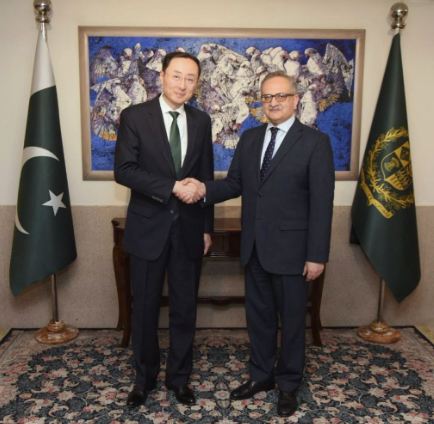
ISLAMABAD, JAN 20 /DNA/ – Foreign Secretary Muhammad Syrus Sajjad Qazi and Chinese Vice Foreign Minister Sun Weidong, who is currently on a visit to Islamabad, today inaugurated the CPEC Corner at the library of the Ministry of Foreign Affairs.

Speaking on the occasion, Chinese Vice Foreign Minister said that as iron brother and trusted friend, China attached special importance to Pakistan in its foreign policy and looked forward to further strengthening strategic ties between the two countries.

Thanking Pakistan’s support to China on its core issues, Vice Foreign Minister Sun reaffirmed China’s support for Pakistan’s sovereignty and territorial integrity and for Pakistan’s economic development, progress and prosperity.

Welcoming Vice Foreign Minister Sun to Pakistan, the Foreign Secretary said that Pakistan-China friendship enjoyed complete political, institutional and public support in Pakistan. Underscoring the salience of bilateral friendship for regional peace and stability, he expressed Pakistan’s readiness to further expand and strengthen bilateral ties in all areas of cooperation.

The Unsettling Reality of Employee Exploitation

The Unsettling Reality of Employee Exploitation

By: Zahra Ali

Employee exploitation, characterized by low salaries and excessive work demands continues to be a pervasive issue that undermines the principles of fair labor practices and human dignity where employees are being subject to meager wages and arduous workloads that compromise their well-being and contribute to a cycle of economic inequality.

One of the primary manifestations of employee exploitation is the prevalence of low salaries. Despite the essential role employees play in driving the success of workplaces, many find themselves earning wages that fall far below what is considered a living wage. This inadequacy often forces employees into precarious financial situations, struggling to meet basic needs such as housing, healthcare, and education for themselves and their families.

Companies engaging in exploitative practices justify low salaries by citing market forces, budget constraints, or the need for competitiveness. However, this argument disregards the ethical responsibility of workplaces to ensure that their employees can lead dignified lives. The consequences of low salaries extend beyond individual hardship, contributing to societal issues such as increased poverty rates and income inequality.

In addition to low salaries, many employees face the burden of excessive work demands, akin to being made to overwork. Long working hours, unrealistic expectations, and limited breaks contribute to a toxic work environment that can have severe physical and mental health repercussions. The demand for heightened productivity often results in burnout, stress-related illnesses, and an overall decline in the well-being of employees.

Companies may rationalize these conditions as necessary for meeting workplace goals or industry standards. However, the exploitation of employees in this manner disregards the importance of a healthy work-life balance and undermines the long-term sustainability of both individuals and the organization. The toll on employee morale and motivation can lead to reduced productivity, high turnover rates, and a negative impact on the company’s reputation.

Several factors contribute to the perpetuation of employee exploitation, including lax labor laws, lack of collective bargaining power, and a culture that prioritizes profit over the well-being of workers. The consequences of this exploitation are far-reaching and impact not only the individuals directly affected but also society at large. Income inequality widens, perpetuating a cycle of poverty, and social cohesion weakens as trust in employers and institutions erodes.

Addressing the issue of employee exploitation requires a concerted effort from governments, businesses, and society as a whole. Implementing and enforcing fair labor laws, promoting ethical business practices, and fostering a culture that prioritizes the well-being of employees are crucial steps in breaking the cycle of exploitation. By acknowledging the dignity of work and the rights of employees, a more just and equitable society can be created where individuals are not treated like “donkeys” but are valued contributors to the success of their workplaces and communities.

Seminar on Enhancing Education Effectiveness held at IoBM

Seminar on Enhancing Education Effectiveness held at IoBM

DNA

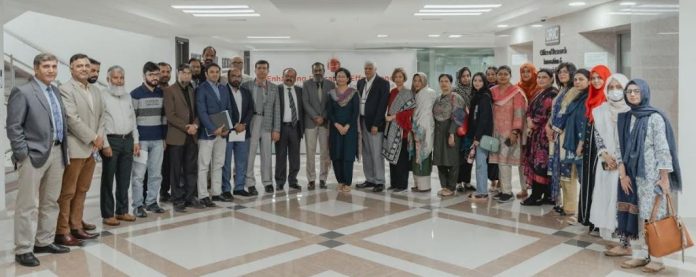
Karachi: The Quality Enhancement Cell (QEC) at the Institute of Business Management (IoBM), Karachi organized a seminar on Enhancing Education Effectiveness on January 18, 2024. Invited as esteemed speakers were Mr. Saleemuddin, Director Quality Assurance, Sindh Higher Education Commission (HEC); Mr. Yousaf Jamil, Director QEC, Iqra University, and Dr. Arshia Samin Naqvi, Director QEC, Sohail University. The speakers discussed the methodology of pursuing QS Ranking by the Higher Education Institutes (HEIs) and what steps can be taken to foster an environment of academic and research learning, faculty development, and uplifting the impact of education. Present on the occasion were IoBM’s Acting Rector, Dr. Tariq Rahim Soomro, Director QEC, Dr. Shahid Amjad, along with the representatives of the QEC of various HEIs of Karachi and the faculty and management of IoBM.

While presenting the opening remarks, Dr. Shahid Amjad elaborated on the accomplishments and activities of IoBM’s QEC. During his presentation, Mr. Muhammad Yousaf Jamil shared the strategies that the HEIs must follow when pursuing to be ranked in the QS Rankings. These include academic reputation, employer reputation, employment outcomes, citations per faculty, faculty-student ratio, international students, and international faculty. He presented in detail how to implement each of these strategies.

While addressing the audience, Dr. Arshia highlighted Institutional Performance Effectiveness. She said rankings are useful for creating a competitive environment among HEIs, helping in improving quality and enabling stability. She added that higher education has been forced into a highly competitive business environment due to globalization, the fourth industrial revolution, high demand for higher education, and increased competition. Mr. Saleemuddin shared the Quality Assurance Initiatives taken by Sindh HEC including training, SDG-focused activities, strategic plans for higher education institutions, formulation of KPIs for senior positions of HEIs, and certified reviewers’ training. While presenting the vote of thanks, Dr. Tariq Rahim Soomro said that through collaboration and cooperation, the HEIs can work to enhance Pakistan’s education landscape. The event was organized by IoBM’s QEC team including Atif Shahab Butt, Manager QA, along with Maria Asad, and Dania Raheel.

Stay Connected

64FansLike
60FollowersFollow

Latest Reviews

Exchange Rates

USD - United States Dollar
EUR
1.17
GBP
1.35
AUD
0.67
CAD
0.72