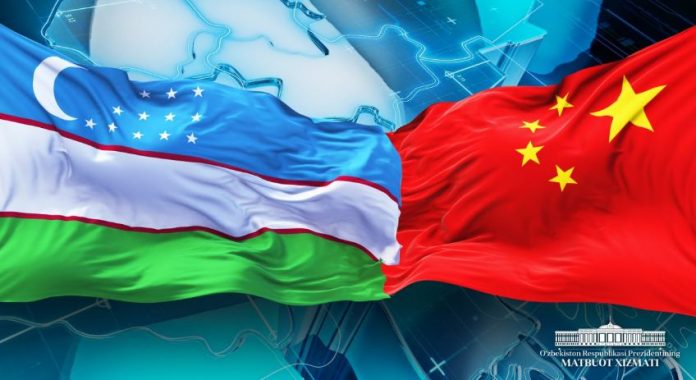
Tashkent: 23-25 On January 23-25 of this year, President of the Republic of Uzbekistan Shavkat Mirziyoyev will pay a state visit to the People’s Republic of China, which, will undoubtedly be of high significance and will give a new impetus to the expansion and deepening of Uzbek-Chinese cooperation.
At present, despite geopolitical tensions and growing instability centers in the world, the relations between Uzbekistan and China are experiencing the best stage in their development, demonstrating an excellent model of bilateral interaction.
Promotion of Comprehensive Political Dialogue
For more than 30 years, Uzbekistan and China have been continuously strengthening political mutual trust and developing bilateral relations based on the principles of equality, friendship, good-neighborliness, mutual support, mutual benefit, respect and consideration of each other’s interests.
With the election of Shavkat Mirziyoyev as President of Uzbekistan, Uzbek-Chinese interaction has entered a trajectory of more dynamic development. This is facilitated by both regular political dialogue at the highest level and the existing friendly and trusting relations between the leaders of the two countries.
Thanks to the political will and efforts of the heads of state,in September 2022, bilateral relations were raised to the level of “comprehensive strategic partnership in a new era,” which reflects the similarity of their views and geopolitical priorities, the mutual desire to take cooperation to a higher level and fill it with new content.
Since 2017, 3 telephone conversations and 8 meetings have taken place. Chinese President Xi Jinping paid a state visit to Uzbekistan in 2022. In turn, the leader of Uzbekistan visited China 5 times (in 2017, 2019, 2022, 2023).
As a result of mutual state visits over the past two years, about 60 documents have been signed, agreements have been reached on the implementation of trade contracts and investment agreements worth more than 40 billion dollars.
Active dialogue supported at the intergovernmental, interparliamentary, and interdepartmental levels also plays a key role in deepening multifaceted interaction.
Since 2011, meetings of the Uzbek-Chinese Intergovernmental Cooperation Committee, which includes 7 specialized subcommittees, have been held. An agreement has been reached in 2022 on the creation of a subcommittee on poverty reduction.
Since 2017, the Inter-Parliamentary Group on Cooperation between the Oliy Majlis of the Republic of Uzbekistan and the National People’s Congress has been operating, which helps to intensify mutual visits of parliamentary delegations and conduct joint events to exchange experience in the field of rule-making. In addition, political consultations are held on a regular basis at the level of the Ministries of Foreign Affairs of the two countries.
In November 2023, the first Strategic Dialogue between the foreign ministers of the two countries was launched in Beijing, which became a new mechanism for the implementation of agreements reached at the highest level.
At the same time, interregional exchanges have been noticeably intensified. Last year, delegations from Xinjiang Uygur Autonomous Region, Shaanxi, Shandong, Jiangsu and Jiangxi provinces visited Uzbekistan. As a result of the visits, more than 100 investment contracts and agreements worth a total of $3.5 billion were signed. A number of agreements on establishing partnership relations between cities and regions of Uzbekistan and cities and provinces of China have also been signed.
Over the years of cooperation, a solid legal framework of over 285 documents has been created, covering virtually all areas of interstate relations. To date, the Program for the Development of Comprehensive Strategic Partnership in a New Era for 2023-2027, as well as the Program for the Development of Trade, Economic and Investment Cooperation between China and Uzbekistan for 2022-2026 are being implemented.
In addition to the bilateral agenda, China and Uzbekistan have significantly enhanced coordination within regional and international organizations such as the UN, SCO, CICA, BRICS Plus and others. The two sides provide each other with mutual support, demonstrating proximity and similarity of positions on the most pressing global and regional issues.
Beijing has supported a number of resolutions initiated by Uzbekistan at the UN in recent years. Tashkent, in turn, highly appreciates and supports the initiatives promoted by China on global development, global security and global civilization, which are of key importance for the implementation of the UN Sustainable Development Goals, ensuring peace and security, and strengthening inter-civilizational dialogue.
To date, the Central Asia-China format at the level of heads of state has become a new platform for China’s interaction with Central Asian countries. As a result of the first face-to-face summit of the heads of state of Central Asia and China, held in May 2023, the Xi’an Declaration was signed, which established the institutional basis for deepening cooperation in the new format.
The interaction of the parties within the framework of China’s flagship project “Belt and Road” is of no small importance for the intensification of bilateral cooperation. The leader of our state has already participated three times in the work of the international “Belt and Road” forums held in 2017, 2019 and 2023.
As rightly characterized by our President, speaking at the jubilee third forum dedicated to the 10th anniversary of the initiative: “over the years, the ambitious idea to revitalize the Great Silk Road has gained many supporters and turned into a sought-after, inclusive and open platform of interaction”.
At the same time, Uzbekistan’s priority areas of cooperation within the framework of this initiative are:
1) implementation of transport and logistics projects that increase transit potential and can provide our state with the shortest possible access to world markets;
2) realization of investment projects in the sphere of high technologies, providing for the creation of integrated industrial technoparks, scientific and innovation clusters, free and special economic zones for the production of competitive and knowledge-intensive products;
3) adaptation to climate change and intensification of cooperation within the framework of the “Green Silk Road”, providing for the development of renewable energy sources, water-saving technologies, “smart” agriculture, etc.;
4) development of cultural and humanitarian ties by using the huge tourism potential of our republic, as well as strengthening cooperation in education, science, culture and health care.
Expansion of mutually beneficial economic and investment cooperation
The central place in bilateral relations is given to trade, economic and investment cooperation, which in recent years has demonstrated positive dynamics and stable growth.
China has become a leading trade partner and a major investor in Uzbekistan’s economy. According to the results of 2022, the volume of mutual trade amounted to about 9 billion dollars (increased by 20% compared to 2021) and increased almost two times compared to the indicator of 2017.
In January-November 2023, bilateral trade turnover increased by 34% and exceeded 12 billion dollars. In the total volume of Uzbekistan’s foreign trade turnover, the share of China amounted to about 20%. At the same time, there is every reason to bring the trade turnover to 20 billion dollars in the next five years.
The basis of Uzbek exports to China are mineral fuels, petroleum products, copper and copper products, cotton yarn and silk, and plastics. The basis of Uzbek imports from China are machinery and equipment, vehicles, plastics, rubber, and metals. At the same time, most of the imports account for the purchase of high-tech equipment, machine tools and machines necessary to modernize the industrial sector of our country’s economy.
It is pleasant to note that with the signing of a package of protocols on phytosanitary requirements in 2018, the nomenclature and volumes of agricultural and food products exported by Uzbekistan to PRC have significantly increased.
Today, Uzbekistan has received permission to export 21 types of such products (mash, dried grapes, cherries, melon, peanuts, pomegranate, sesame, apricots, honey, dried prunes, lemon, beans, dried melon, chicken feet, etc.).
For example, exports of mash and dried grapes have increased significantly in recent years. Uzbekistan’s share in the total volume of Chinese imports of mash has reached 37%, and in the import of dried grapes – 50%.
Since the launch of large-scale reforms and an open foreign economic policy, Chinese investors have demonstrated a steady interest in Uzbekistan, investing heavily in the oil and gas, chemical, telecommunications, hydropower, agriculture, light industry, pharmaceuticals, automotive, and construction materials sectors.
The total volume of Chinese investments in Uzbekistan for 2017-2022 has increased five times, reaching almost 11 billion dollars. Today, we have 2,125 enterprises with Chinese capital participation, which is 15% of the total number of enterprises established with the participation of foreign capital.
A number of large projects have already been implemented with Chinese partners, such as the Kungrad soda plant, the Dehkanabad potash fertilizer plant, the Huaxin Cement Jizzakh and Farg’ona Yasin QurilishMollari cement plants, the Navoiazot joint-stock company complex for the production of polyvinyl chloride, caustic soda and methanol. In 2023, the largest cement plant with a capacity of 3 million tonnes per year was opened in the Samarkand region in partnership with Energy China, and a truck production plant was established in the Andijan region in partnership with the Chinese automobile company FAW.
It is important to note that Chinese investors are actively participating in the creation of joint high-tech industrial parks in our country. A successful example in this direction is the park “Peng Sheng”, which was established in 2009 in free economic zone “Jizzak”.
In this park, together with the Chinese company “ZTE” was built a line for the production of smartphones, were opened factories for the production of fittings, ceramic tiles, sanitary ware and footwear products based on domestic raw materials. Their activity has brought 40-50% of the region’s income in foreign currency and created jobs for about 2,000 local people.
In the near future, it is planned to create an Uzbek-Chinese agro-industrial park, an agro-innovation park, and an Uzbek-Chinese biotechnological cluster, which will also contribute to the deepening of bilateral cooperation in the production of high-tech products and the creation of new jobs.
At the same time, the countries are deepening cooperation in the production of new-generation cars based on electric and hybrid engines. In 2023, relevant agreements were signed with the chinese companies EXEED and BYD Auto Industry.
In addition, agreements have also been signed on the joint development of technologies and the installation of chargers for electric vehicles. According to the plans, by 2033 70 centralized and 50 thousand decentralized electric filling stations will be built in all regions of our country.
In the context of the global trend towards a transition to “green” development, the implementation of joint projects on the widespread introduction of renewable energy sources (solar, wind and hydroelectric power plants) is an important area of Uzbek-Chinese cooperation.
China is the undisputed global leader in the introduction of renewable energy sources (RES). By the end of 2023, the total installed capacity of green energy in the country’s energy balance reached 49.6%. Chinese manufacturers of solar panels, wind turbines, and batteries hold about 70% of the global market share.
Strengthening Uzbek-Chinese interaction in the field of RES implementation will undoubtedly contribute to improving energy security and environmental sustainability of our republic. It will also contribute to a more effective implementation of the “Program on Transition to a Green Economy and Ensuring Green Growth in the Republic of Uzbekistan until 2030”, according to which it is planned to increase the RES capacity in the total energy balance of the country up to 30%.
Chinese companies are already implementing a number of projects for the construction of solar and wind power plants in the Kashkadarya, Bukhara and Andijan regions. Moreover, in May 2023, new agreements were reached on the construction of 11 solar and wind power plants with a total capacity of 4.8 GW at a cost of 4.4 billion dollars. In addition, the Chinese side is actively involved in the preparation of feasibility studies for hydropower construction projects in the Namangan and Tashkent regions.
Another promising area of Uzbek-Chinese partnership is digital development. In the last decade, China has made a great leap in the field of digital innovations, taking the lead in the development of 5G, blockchain, big data, artificial intelligence and e-commerce technologies.
Thanks to the development of e-commerce platforms such as Alibaba, Taobao, AliExpress, China has become a global leader in e-commerce with a total transaction volume of 2 trillion dollars.
Given China’s rich experience and success in this area, Uzbekistan is interested in technology transfer and attracting Chinese investments in the development of electronic commerce, digital platforms, creation of centers for processing and storage of big data, and others.
In recent years, the interaction between the two countries in the sphere of e-commerce development has entered a new stage of development. Thus, In September 2022, a permanent national pavilion of Uzbekistan was launched on the Alibaba platform, where more than 100 items of textile, agricultural and food products were placed. In the future, it is planned to open new industry sections and increase the number of product names to 300.
Strengthening cultural and humanitarian ties
Uzbekistan and China pay special attention to the expansion of cultural and humanitarian ties, which contribute to the full rapprochement, deepening mutual understanding and mutual enrichment of the cultures of the two peoples.
Chinese President Xi Jinping, in his author’s article published on the eve of his state visit to Uzbekistan in September 2022, focused on the fact that the Great Silk Road testifies to friendly contacts between our peoples for more than 2000 years. The countries still keep a good memory of such pioneers and envoys of Sino-Uzbek friendship as Zhang Qian, Xuan Zang, Wu Zhu, SeyidAjal Shamsuddin and others. Such centuries-old Chinese-Uzbek friendship, passed down from generation to generation, still serves as a solid foundation for further strengthening multifaceted cooperation.
The Uzbekistan-China Friendship Society, the China- Central Asia Friendship Society, as well as the Chinese National Cultural Center in Tashkent make a worthy contribution to strengthening mutual understanding between the two peoples.
Cooperation in the fields of education, science, tourism, healthcare, sports, and archaeology is actively developing every year, and exchanges between educational and academic institutions, youth organizations, and the media are strengthening. This is facilitated by regularly held joint conferences, symposiums, exhibitions, tourist fairs, cultural and film days, concerts and festivals.
The year 2023 was busy in terms of holding various joint cultural events. For example, in October, an exhibition of Uzbek historical heritage was organized at the Archaeological Cooperation Exhibition within the framework of the Belt and Road Initiative at the Gugun Palace Museum in Beijing. In addition, Chinese Culture Days were held in Uzbekistan.
It is also necessary to emphasize the growing interest among the youth of the two countries in mutual language learning. For example, two Chinese universities have opened departments for the study of the Uzbek language, and a Center for Uzbek Language and Culture has been established. In Uzbekistan, Chinese is taught in six universities of the country.
At the same time, the basic university specializing in the training of Sinologists is the Tashkent State University of Oriental Studies, where a separate faculty of Chinese Studies has been opened in the following three areas: “Chinese Language and Literature”, “Politics, History and International Relations of the People’s Republic of China” and “Chinese Economy”. The entire teaching staff of the faculty is trained and regularly improves their qualifications at prestigious universities in China.
The activities of the Confucius Institutes opened in Tashkent and Samarkand make a great contribution to the study of the Chinese language and the popularization of Chinese culture. It is important to note that China signed the first agreement on the opening of the Confucius Institute in Central Asia with Uzbekistan in 2004.
As we know, this year marks the 20th anniversary of the opening of the first Confucius institutes in the world. In this regard, the academic circles of Uzbekistan and China could consider the possibility of holding a joint scientific and practical conference in Tashkent dedicated to the legacy of Confucius.
Cooperation between the countries in the field of tourism is also developing steadily. Uzbeks and Chinese are interested in the common history of the two ancient Eastern civilizations, which were connected by Great Silk Road, rich historical and cultural heritage and unique ancient architectural monuments located on the territory of the states, which serves as the basis for the intensification of tourist exchanges.
Since 2010, Uzbekistan has been granted the status of a tourist country for group travel of Chinese citizens, and since 2021, a 10-day visa-free regime has been in effect for residents of the People’s Republic of China.
In addition, a lot of work is being done to popularize the Uzbek tourism brand in the territory of the People’s Republic of China. In particular, study tours to Uzbekistan have been organized for popular Chinese media and journalists, and videos about Uzbekistan are being broadcast on Chinese channels.
Thanks to the measures taken, the flow of Chinese tourists to Uzbekistan has significantly increased in recent years. At the end of last year, their number exceeded 40 thousand people.
Thanks to the measures taken, the flow of Chinese tourists to Uzbekistan has increased significantly in recent years. By the end of last year, their number exceeded 40 thousand people.
In addition, the number of flights between the countries is increasing. Currently, three airlines “Uzbekistan Airways”, “China Southern Airlines” and “Loong Air” carry out 11 flights per week between the cities of Uzbekistan and China (Urumqi, Beijing, Guangzhou, Xi’an, Chengdu).
In general, the high dynamics of development of the entire spectrum of Uzbek-Chinese relations observed today gives a clear reason to assert that this trend will grow and gain new momentum. However, despite the successes achieved, bilateral cooperation has a great untapped potential that needs to be explored and used for the benefit of the peoples of the two States.
The countries need to continue searching for new “points of growth” in bilateral interaction by intensifying cooperation in the following areas:
First, strengthening political dialog. Against the background of ongoing geopolitical turbulence and growing instability in the world, strengthening strategic mutual trust and dialog between the countries, both at the bilateral level and within the framework of regional and global structures, will contribute to strengthening common positions and promoting the interests of the two countries in the international arena;
Second, expansion of trade, economic and investment interaction. In particular, by strengthening industrial cooperation, balanced growth of trade turnover, attracting Chinese investments in high-tech sectors of Uzbekistan’s economy for the production of high value-added products, as well as creating joint production facilities for the cultivation and processing of agricultural products;
Third, strengthening cooperation in the development of transport and logistics interconnectivity. Under current conditions, it is important for the countries to strengthen cooperation in building a multivariate system of transportation and logistics routes that will facilitate access to new export markets.
In this context, the implementation of China-Kyrgyzstan-Uzbekistan, Termez-Mazari-Sharif-Kabul-Peshawar railways and other alternative routes is of particular importance;
Fourth, the intensification of cooperation on the transition to “green” development. Further exchange of experience and attraction of Chinese investments in the field of alternative energy development, introduction of modern resource-saving, energy-efficient and environmentally friendly technologies in Uzbekistan will play an important role in this direction;
Fifth, deepening cultural and humanitarian ties. In particular, by expanding interaction in the spheres of culture, science, education and tourism. For example, in order to increase mutual tourist exchanges, the countries need to work out issues related to the reduction of visa restrictions, and to expand cooperation in education, it is important to accelerate the launch of double degree programs between leading universities of China and Uzbekistan.
In conclusion, I would like to emphasize that the upcoming high-level contacts will undoubtedly contribute to bringing the bilateral interaction to a higher level, strengthen the bonds of traditional friendship and good-neighborliness, as well as identify new promising areas of multifaceted strategic partnership.
Madina Aripova,
Chief Research Fellow at the Institute for Strategic and Regional Studies under the President of the Republic of Uzbekistan