Home Blog Page 78

PM Shehbaz, Field Marshal Munir meet US delegation led by VP Vance

PM Shehbaz, Field Marshal Munir meet US delegation led by VP Vance

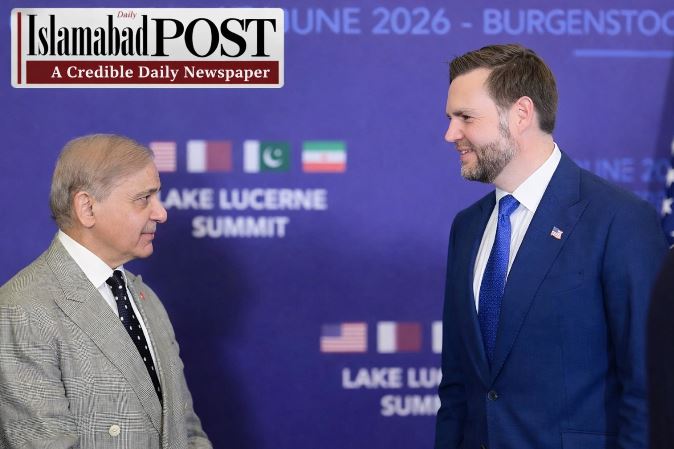
ISLAMABAD, JUN 21: Prime Minister Shehbaz Sharif and Field Marshal Syed Asim Munir met the United States delegation led by Vice President JD Vance ahead of much-anticipated talks between Washington and Tehran.

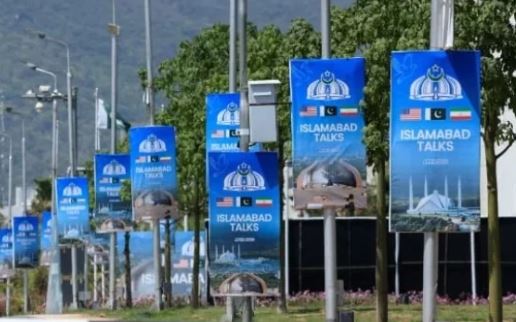
The US-Iran technical-level talks, made possible after both sides signed the Islamabad Memorandum of Understanding (MoU) mediated by Pakistan, have been dubbed the ‘Lake Lucerne Summit’ and will continue for four days.


According to the Prime Minister’s Office, both leaders will take part in discussions scheduled for June 21, being held as a follow-up to the agreement previously signed by Tehran and Washington.

In a subsequent statement, the Foreign Office said high-level delegations from Iran, Qatar and the United States would also participate in the talks, describing them as the first formal engagement since the signing of the Islamabad MoU on June 17.

The FO said Pakistan would continue supporting the understandings reached between Tehran and Washington, adding that its facilitative role reflected a principled, balanced and constructive approach throughout the crisis.

Islamabad’s efforts included hosting earlier rounds of US-Iran talks and maintaining diplomatic contacts that ultimately led to the memorandum.

On the sidelines of the talks, PM Shehbaz is expected to hold bilateral meetings with delegations from Iran, Qatar, Switzerland and the US to reaffirm Pakistan’s commitment to dialogue and lasting regional peace.

The Switzerland meeting comes days after the United States and Iran electronically signed the Islamabad MoU aimed at ending the Middle East conflict.

US President Donald Trump had announced the agreement, saying it included provisions for reopening the Strait of Hormuz and lifting the US blockade on Iranian ports.

Trump and Iranian President Masoud Pezeshkian signed the accord on behalf of their respective countries, while PM Shehbaz later signed the Islamabad MoU as mediator, formally sealing the agreement.

As diplomatic efforts gathered pace, US Vice President JD Vance travelled to Switzerland for talks with Iran, expressing hope for progress on both the nuclear issue and the Lebanon ceasefire.

“Despite the headlines, things are actually getting better there,” Vance told reporters before departure. “It’s going to be something we’re just going to have to continuously manage to ensure that Israel and Lebanon are both safe and secure.”

Meanwhile, Iran’s delegation, named “Minab 168” and led by Parliament Speaker and chief negotiator Mohammad Bagher Ghalibaf, arrived in Zurich, according to Iranian state broadcaster Press TV.

The talks follow renewed tensions that have complicated the fragile US-Iran agreement.

Earlier, Iran announced it was again closing the Strait of Hormuz in response to Israeli strikes in Lebanon, a move that came as negotiators prepared to travel to Switzerland for discussions aimed at preserving momentum in the peace process.

The follow-up talks had originally been scheduled for Friday but were postponed after Israel launched deadly strikes in Lebanon, prompting fresh uncertainty over efforts to end the wider Middle East conflict.

Tunisia crash out of World Cup after devastating defeat to Japan

Tunisia crash out of World Cup after devastating defeat to Japan

RIYADH: The 1,000th match in FIFA World Cup history — at Estadio BBVA in Guadalupe, Monterrey — brought Tunisia and Japan together in a meeting that carried major consequences for both teams.

Japan needed a convincing victory to keep pace with the Netherlands, who had thrashed Sweden 5-1 earlier in the day. For Tunisia, defeat would bring their hopes of reaching the Round of 32 to an end.

Unfortunately for the Eagles of Carthage, Japan cruised to a 4-0 victory behind a starring display from striker Ayase Ueda, who scored twice and created another goal. Tunisia, meanwhile, bowed out of knockout-stage contention in disappointing fashion, managing just two shots during the 90 minutes.

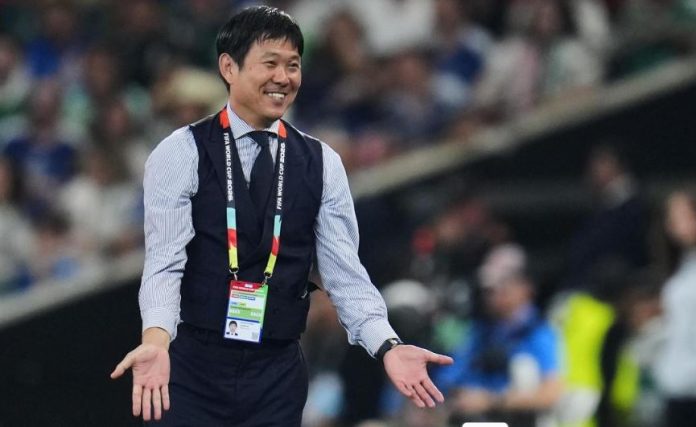
This was Tunisia’s first match under Herve Renard, who was swiftly brought in to replace Sabri Lamouchi after their 5-1 defeat to Sweden in their opening game.

Renard made three changes to the starting line-up. Mouhib Chamakh in goal replaced by Aymen Dahmen after the former’s lackluster showing against Sweden. The other two changes relegated Rani Khedira and Mohamed Amine Ben Hmida relegated to the bench, with Dylan Bronn and Sebastian Tounekti taking their places.

Tunisia’s approach, however, differed only slightly from their previous outing. The back five remained, but Tounekti led the line as a lone striker, while Hannibal Mejbri and Elias Saad occupied the wide positions.

A brave curling effort from Hannibal whistled over the bar set the tone as early as the third minute, but it was Tunisia’s only sight of goal for the remainder of the first half.

Just a minute later, they found themselves behind. A quick Japanese attack found Ao Tanaka between the lines, with the midfielder releasing Keito Nakamura near the byline before a low cross deflected off Daichi Kamada and into the net.

Japan immediately pushed for a second, with Ayase Ueda becoming the focal point of their attacks.

In the eighth minute, he fought off Montassar Talbi to win a long ball before carrying it effortlessly into the penalty area and squaring across goal, but Bronn slid in to put the ball out for a corner.

Japan were, quite literally, millimetres away from doubling their advantage from that corner. Ueda stabbed the ball toward goal and it ricocheted into the path of Dahmen. The goalkeeper clawed it off the line before kicking away the rebound, with goal-line technology later confirming, by the narrowest of margins, that the ball had not crossed.

Ueda would get his goal eventually. Shortly after the hydration break, another of Japan’s trademark line-breaking passes through the centre found the striker just outside Tunisia’s area with only Bronn standing in his way. Ueda assessed his options before firing into the far corner, leaving Dahmen with no chance.

On the touchline, Renard was visibly frustrated. Against Sweden, Tunisia had at least managed to create chances and find the net in the first half. Against the Samurai Blue, however, the Eagles of Carthage were being comprehensively outplayed and elimination was beginning to look inevitable.

The Frenchman responded with a host of changes after the break, introducing Mohamed Amine Ben Hmida and Ismael Gharbi at half-time before bringing on Firas Chaouat shortly after the hour mark.

Aside from a half-chance in the 49th minute, and with Japan noticeably less aggressive than they had been before the interval, the changes still failed to have the desired impact.

Japan effectively sealed the result moments before the second hydration break. Tanaka picked out Ueda between the lines from deep, and the striker produced a perfectly weighted flick into the path of Junya Ito, who held off Ben Hmida before finishing beyond Dahmen to make it 3-0.

Ueda added his second of the night and Japan’s fourth in the 84th minute, rising at the far post to meet a Kaishu Sano cross. Anis Slimane attempted to clear the header off the line, but failed to make contact as the ball drifted into the net.

With this defeat, Tunisia’s hopes of reaching the Round of 32 are officially over. The Eagles of Carthage become the third team to be eliminated from the tournament, after Haiti and Turkiye.

One match remains, when Tunisia face the Netherlands at 2 a.m. KSA time on June 26.

ICCI–NACTA to Host Grand Event “Women as Peace Leaders” 

ICCI–NACTA to Host Grand Event “Women as Peace Leaders” 

ISLAMABAD, JUN 21 /DNA/ – The Islamabad Chamber of Commerce and Industry, in collaboration with the National Counter Terrorism Authority, will host a landmark event titled “Women as Peace Leaders” on Tuesday, June 23, 2026, at the S.M. Muneer Auditorium, ICCI. The event aims to recognize and promote the pivotal role of women in fostering peace, social harmony, economic development, and national resilience.

The ceremony will be graced by Minister of State for Interior, Talal Chaudhry as the Chief Guest, alongside distinguished policymakers, development experts, business leaders, academicians, and prominent women entrepreneurs from across the region. The gathering will provide a dynamic platform to discuss how women’s leadership can contribute to countering extremism, strengthening communities, and advancing sustainable development.

President ICCI, Sardar Tahir Mehmood, will deliver the welcome address and highlight the Chamber’s significant contributions toward women’s empowerment, entrepreneurship development, and industry-academia collaboration. He will showcase ICCI’s initiatives aimed at creating inclusive economic opportunities for women, promoting skills development, encouraging innovation, and facilitating greater participation of women in business and public life.

The event reflects the shared commitment of ICCI and NACTA to building a more peaceful, tolerant, and prosperous society by empowering women as agents of positive change. Through meaningful dialogue and collaboration, the forum will underscore the importance of women’s leadership in promoting social cohesion, preventing violent extremism, and shaping a secure future for coming generations.

Spain defeat Pakistan 4-2 in Pro League clash

Spain defeat Pakistan 4-2 in Pro League clash

Sports Desk

BRUSSELS: Spain outclassed Pakistan with a convincing 4-2 victory in the latest Pro League hockey encounter, as reported by the Daily Islamabad Post. Despite Pakistan taking an early lead, their defense faltered under relentless Spanish pressure, allowing the European side to dominate the match.

Pakistan opened the scoring with a swift counterattack, briefly raising hopes of an upset. However, Spain quickly regrouped, showcasing sharp passing, disciplined midfield control, and clinical finishing. The Spanish forwards repeatedly pierced Pakistan’s defensive line, exposing weaknesses that have plagued the team in recent international fixtures.

By halftime, Spain had overturned the deficit, and in the second half, they extended their lead with two more goals. Pakistan managed to add another to their tally, but it was not enough to shift momentum. The final whistle confirmed Spain’s 4-2 triumph, leaving Pakistan still searching for their first win in the tournament.

Analysts suggest that Pakistan’s struggles in the Pro League may continue, with the team unlikely to secure victories against stronger opponents. However, participation in the league is seen as valuable preparation ahead of the upcoming World Cup, offering players exposure to high-intensity competition and an opportunity to refine strategies.

Adding to Pakistan’s challenges, captain Ammad Butt has not been issued a UK visa, ruling him out of the Pro League’s UK edition. His absence is a significant blow, as Butt’s leadership and experience are crucial for stabilizing the squad during tough matches.

While the defeat underscores Pakistan’s defensive frailties, it also highlights areas for growth. The Pro League, though unforgiving, provides a platform for Pakistan to rebuild confidence, test younger talent, and prepare for the global stage. Fans remain hopeful that these tough lessons will translate into stronger performances when the World Cup arrives.

Chairman Senate lauds role of outgoing Italian envoy

Chairman Senate lauds role of outgoing Italian envoy

Chairman Senate praised the outgoing ambassador’s efforts in promoting bilateral cooperation and friendship between the two countries

ISLAMABAD, JUN 21 /DNA/ – Chairman of Monal Group, Luqman Ali Afzal, hosted a grand farewell dinner in honor of the outgoing Italian Ambassador, bringing together senior government officials, diplomats, and distinguished guests to celebrate the envoy’s successful tenure in Pakistan.

The event was attended by Chairman Senate as the chief guest, while Governor Khyber Pakhtunkhwa Faisal Karim Kundi, Federal Minister for Defence Khawaja Muhammad Asif, Federal Minister for Parliamentary Affairs Dr. Tariq Fazal Chaudhry, Federal Minister for National Food Security Rana Tanveer Hussain, Federal Minister for Defence Production Raza Hayat Hiraj, Minister of State for Law and Justice Barrister Aqeel Malik, and Prime Minister’s Adviser Tauqeer Shah were among the prominent participants.

A large number of ambassadors, high commissioners, and members of the diplomatic community also attended the gathering to bid farewell to their departing colleague and acknowledge her contributions to strengthening Pakistan-Italy relations.

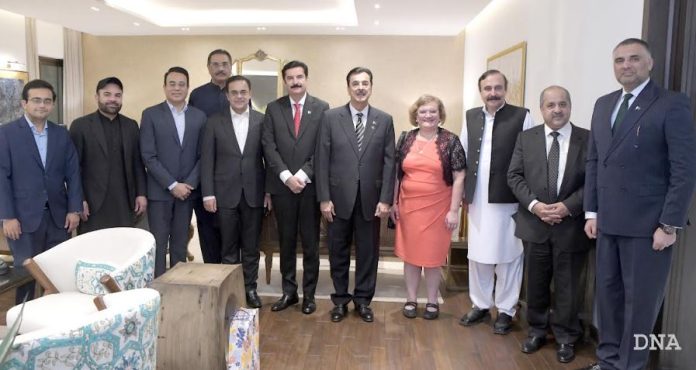
Chairman Senate Syed Yousaf Raza Gilani, Luqman Ali Afzal, and Italian Ambassador at Monal Group farewell dinner in Islamabad

Speaking on the occasion, the Chairman Senate praised the outgoing ambassador’s efforts in promoting bilateral cooperation and friendship between the two countries. He extended his best wishes for her future assignments and expressed confidence that the ties between Pakistan and Italy would continue to grow from strength to strength.

In a conversation with Daily Islamabad POST/CENTRELINE, the Italian Ambassador said she had thoroughly enjoyed her stay in Pakistan and would always cherish the warmth and hospitality extended to her by the Pakistani people. She expressed optimism about the future of Pakistan-Italy relations and hoped that cooperation in trade, culture, education, and people-to-people exchanges would further expand in the years ahead.

The ambassador also thanked Luqman Ali Afzal and the Monal Group for arranging a memorable farewell reception and for their continued support in fostering engagement between the diplomatic community and Pakistani society.

The evening concluded in a warm and cordial atmosphere, with guests enjoying an array of signature Monal dishes that blended traditional Pakistani flavors with continental cuisine, making the farewell dinner a memorable occasion for all attendees.

Detailed coverage in the July issue of Centreline magazine.

Iran says Hormuz Strait closed over Israel attacks on Lebanon

Iran says Hormuz Strait closed over Israel attacks on Lebanon

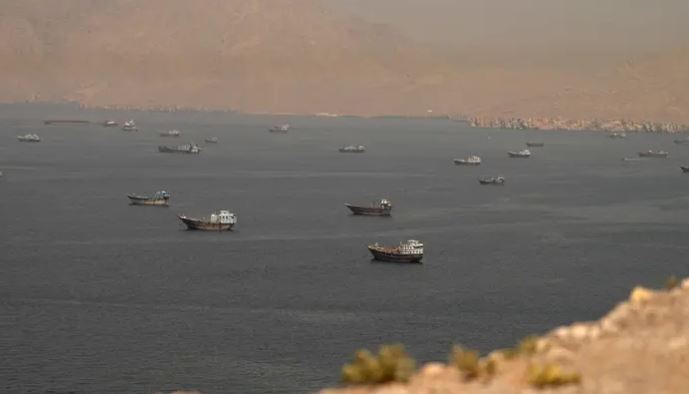
TEHRAN, JUN 20: Iran’s central military command announced on Saturday that it had once again closed the vital Strait of Hormuz over Israel’s attacks on southern Lebanon, describing them as a breach of Tehran’s agreement with the US.

“It is hereby announced that the Strait of Hormuz will be closed to vessel traffic; It is noted that this first step is a response to the enemy’s breach of promise, and if the aggression continues, further steps will be planned and taken to force the enemy to comply with its obligations,” said the Khatam-al Anbiya Central Headquarters in a statement carried by state TV.

Iran warns US deal ‘in trouble’ if not implemented soon: Foreign ministry

Iran warns US deal ‘in trouble’ if not implemented soon: Foreign ministry

TEHRAN, JUN 20: Iran’s foreign ministry said on Saturday that the agreement signed between Iran and the United States to halt the Middle East war will be “in trouble” unless its provisions are implemented soon.

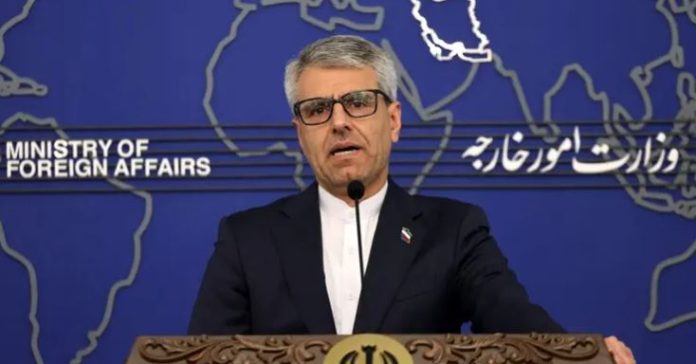
“The other side must take the necessary measures as soon as possible. Otherwise, the entire understanding will be in trouble,” ministry spokesman Esmaeil Baghaei said, according to the official news agency IRNA.

Iran’s foreign ministry said that its negotiating delegation would travel to Switzerland to discuss the implementation of the agreement signed between it and the United States to halt the Mideast war.

Baghaei said the team would “travel to Switzerland to follow up and demand implementation of the other party’s commitments” under the deal, according to the official news agency IRNA.

At the Edge: How Arbitrary Fuel Pricing Threatens Pakistan’s Supply Chain

At the Edge: How Arbitrary Fuel Pricing Threatens Pakistan’s Supply Chain

By Faraz Ahmed

The companies that keep Pakistan supplied are being pushed toward insolvency by overnight changes to how fuel is priced. If they tip over, the disruption will not stay inside the industry. It will reach every pump, and every doorstep.

Pakistan’s downstream petroleum sector is closer to the edge than most people realise. The refineries that process crude and the oil marketing companies (OMCs) that move fuel to every district are being pushed toward insolvency, not by competition or mismanagement, but by a pricing regime that changes without warning and without consultation. The relief motorists feel at the pump is genuine. The mechanism delivering it is quietly hollowing out the businesses that make supply possible. And if those businesses fail, the consequences will not be confined to their balance sheets.

From concern to alarm

For months, the industry’s representations carried the language of concern. They now carry the language of alarm. The most recent communication to the Federal Minister for Energy did not warn of a risk of damage; it described something closer to a certainty: bankruptcy for the weakest participants and the flight of the investors who remain, if the present course holds. That is an extraordinary thing to say about a sector that, only weeks earlier, had kept the country supplied through a regional conflict, a scare over the Strait of Hormuz, and some of the most violent price swings in living memory.

The pricing whiplash

At the root of the crisis is arbitrary pricing. Pakistan’s fuel prices are set through a regulated formula administered by OGRA and notified by the government. Since April 2026, that formula has been changed again and again, and without consultation: a switch between five-day and fortnightly averages, the suspension of cost recovery, and a move to calendar year-to-date averages for premiums and duties. Each change is presented as a technical adjustment. Together they are anything but. One recent revision alone stripped roughly Rs. 23.83 per litre from the ex-refinery benchmark, and an estimated Rs. 104 billion was wiped from the value of fuel already sitting in industry tanks. Because cargoes are committed weeks in advance against the prevailing formula, a formula that no longer tracks the cost of importing fuel guarantees that importers recover less than they paid. This is not a market risk the industry signed up for. It is a policy risk imposed on it.

A balance sheet running on empty

The damage is cumulative. Around Rs. 66 billion in Price Differential Claims, the money the State owes the industry for selling below cost on its instruction, remains unpaid; only about Rs. 54 billion has been released, in tranches, against documentation demands that have stretched a two-day settlement promise into a months-long ordeal. The OMC margin has not been revised since September 2023, even as two years of double-digit inflation and rising costs eroded it. Since petroleum products were made sales-tax-exempt in 2024, more than Rs. 86 billion of unadjustable input tax has piled up, at a financing cost of roughly Rs. 7 billion a year. And demand for legitimate, taxed fuel is collapsing under a flood of smuggled product sold far below the notified price, with diesel sales in May 2026 falling to their lowest level in nearly three decades. Each pressure on its own might be survivable. Together, and with no relief in sight, they are not. Companies are now financing the government’s price relief with borrowed money at an 11.5 percent policy rate, while they wait to be paid for fuel they have already delivered.

The import lifeline, and how it snaps

This is where the danger stops being financial and becomes national. Pakistan does not produce most of the fuel it consumes. The bulk of its crude and refined product is imported, procured from international suppliers and global trading houses that extend the industry credit, term contracts and open lines on the expectation of being paid on time. That expectation is the single thread the entire supply chain hangs from. An industry stripped of liquidity cannot open or retire its letters of credit, cannot meet its payment deadlines, and cannot honour its term commitments. When a buyer defaults, international suppliers do not wait and they do not absorb the loss. They withdraw credit terms, demand cash in advance, suspend deliveries, and invoke the force majeure and default protections written into their contracts. With close to 70 percent of the country’s petrol, and a large share of its diesel and crude, arriving by sea, even a short interruption in that flow does not stay on a spreadsheet. It reaches the forecourt, and it reaches it fast.

Through the recent crisis, the industry did not look away. Refineries capped the diesel margin, held kerosene at pre-war prices for the armed forces, supplied jet fuel for Hajj operations at pre-war rates, and voluntarily contributed over Rs. 7 billion towards reducing the PDC, while OMCs sustained nationwide supply and carried mandatory twenty-day strategic stocks under intensifying financial strain. That goodwill is real, but it is not limitless. It cannot stand in indefinitely for the cash the system needs to keep importing.

A crisis that will not stay in the boardroom

It is tempting to file all of this under corporate complaint. That would be a mistake. Fuel is the one shortage a population notices within hours, not weeks. A breakdown in supply would not be read by the public as a business failure; it would be read as a failure of the State to keep the country running. And it would arrive at the most sensitive possible moment. Pakistan’s civil and military leadership have jointly staked their credibility on economic stabilisation and on attracting fresh investment, not least through the Special Investment Facilitation Council. Foreign investors heading for the exit, and citizens queuing at dry pumps, are precisely the images that would erode the public confidence that effort depends on. Energy security is national security, and a supply shock would land squarely on those who govern, not on the companies that warned of it.

None of this requires the government to choose against consumers, and the remedy is far cheaper than the failure. A transparent, consultative pricing framework in place of overnight formula changes; timely and predictable settlement of PDCs; an automatic annual margin review; recognition of legitimate, verified costs; and protection of strategic inventories from arbitrary destruction would steady the sector almost immediately. Beyond that lies the durable answer the industry has urged for years: a phased, transparent move to a market-based, deregulated pricing regime that aligns the consumer’s interest with a supply chain that can actually survive.

The companies sounding the alarm are the same ones that kept fuel moving through war and volatility without a single day’s disruption. They are not threatening to stop. They are warning that, on the present path, the decision may soon be taken out of their hands by suppliers an ocean away. The window to act is narrowing, and unlike an inventory loss, a broken supply chain cannot simply be written back.

Pakistan-mediated US-Iran technical talks to be held tomorrow in Bürgenstock: FO

Pakistan-mediated US-Iran technical talks to be held tomorrow in Bürgenstock: FO

ISLAMABAD, JUN 20: Pakistan on Saturday announced that technical-level talks between the US and Iran will be held tomorrow (Sunday) in Bürgenstock, Switzerland, as Islamabad stepped up diplomacy to keep the peace process on track.

“Representatives of the United States and Iran, along with mediators from Pakistan and Qatar, will participate in the discussions,” the Foreign Office said in a statement.


According to the Foreign Office, Pakistan will continue to “facilitate the process in its role as mediator” to advance the understandings reached between Tehran and Washington under the Islamabad memorandum of understanding.

The statement comes days after the United States and Iran electronically signed the MoU aimed at ending the conflict in the Middle East.

US President Donald Trump announced the signing on June 15, saying the agreement included provisions on the reopening of the Strait of Hormuz and the lifting of the US blockade on Iranian ports.

Trump and Iranian President Masoud Pezeshkian signed the agreement on behalf of their respective countries, while Prime Minister Shehbaz Sharif later signed the Islamabad MoU as mediator, formally sealing the deal.

Meanwhile, Iranian state media reported that Tehran’s negotiating team left for Switzerland for discussions on the implementation of the agreement signed with the US to halt the Mideast war.

“Iranian negotiators have left for Switzerland,” state news agency Irna reported, after quoting foreign ministry spokesman Esmaeil Baqaei as warning that the deal was “in trouble”.

“The other side must take the necessary measures as soon as possible. Otherwise, the entire understanding will be in trouble,” Baqaei said.

On Washington’s part, Vice President JD Vance said he expected to go to Switzerland soon for talks with Iran, even as Tehran’s high command was reported as saying it would shut the Strait of Hormuz due to what it called US and Israeli truce violations.

Iran’s top joint military command, Khatam al-Anbiya Central ‌Headquarters, said the waterway — vital to global oil shipments — would be closed to vessel traffic, citing alleged violations of a ceasefire agreement by the US and Israel, Iran’s Mehr state news agency reported.

It said that the closure was the “first step” in response to what it described as breaches of commitments and warned that further measures would be taken if “aggression” continued.

The Mehr report emerged as Vance told Fox News in an interview that he was confident the ceasefire agreed in Washington’s 14-point deal with Tehran would hold, and that he saw no evidence that Hormuz was closed.

A day earlier, American media outlets reported that US envoy Steve Witkoff was headed to Switzerland for talks after scheduled US-Iran negotiations due to take place there on Friday were postponed.

Witkoff was on his way to the alpine nation on Friday, Axios said, citing an unnamed US official.

Trump’s envoy Jared Kushner was also expected to be in Switzerland for talks, CNN said, citing a US official. Axios said he was already there.

Naqvi in Tehran as Pakistan seeks to keep Iran-US talks on track

Naqvi in Tehran as Pakistan seeks to keep Iran-US talks on track

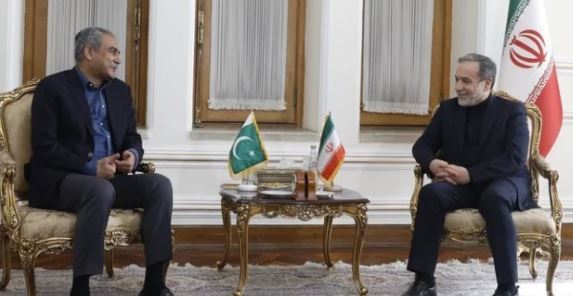
TEHRAN, JUN 20: Interior Minister Mohsin Naqvi held talks with Iranian Foreign Minister Abbas Araghchi in Tehran on Saturday as Islamabad stepped up diplomatic efforts to help advance US-Iran negotiations.

The interior minister travelled to the Iranian capital after landing in Mashhad earlier today, where he later met FM Araghchi, Iranian media reported.


Iran’s Foreign ministry spokesperson Esmaeil Baqaei had earlier told Isna news agency that “Pakistan’s interior minister will arrive in Iran at noon today, Saturday, as part of Pakistan’s efforts regarding the Iran-US negotiations.”

Naqvi is also expected to meet his Iranian counterpart Eskandar Momeni for talks during the visit, according to Baqaei.

Islamabad, which has been acting as a key mediator between the US and Iran, achieved a historic diplomatic victory on June 15 when US President Donald Trump announced that Washington has signed an MoU with Iran for peace in the region.

Later, Prime Minister Shehbaz Sharif signed the Islamabad MoU as mediator, formally sealing the historic peace agreement.

According to a statement issued by the Prime Minister Office on June 18, the premier signed the Islamabad MoU as mediator, while US President Donald Trump and Iranian President Masoud Pezeshkian signed the document on behalf of their respective countries.

The two sides were due to hold further talks at Switzerland’s Bürgenstock resort on Friday. However, the Swiss foreign ministry announced their postponement, while reaffirming Switzerland’s readiness to facilitate future negotiations.

The announcement came after a White House spokesperson said that US Vice President JD Vance had pulled out of his planned trip to Switzerland.

The talks were expected to start a 60-day phase of negotiations to implement the preliminary agreement struck between Tehran and Washington.

Before Vance’s announcement, Iran’s semi-official Tasnim ​news agency said Iranian negotiators needed to see signs of the US implementing the interim deal.

Following the postponement of the talks, the Iranian foreign ministry said there was “no urgency” to meet US negotiators in Switzerland.

“Given that the signing of the text of the MoU was done digitally on June 18, there is no urgency to hold the said meeting in Switzerland, but we are planning to hold a meeting in the coming days,” the spokesperson for the Iranian foreign ministry said.

Meanwhile, the Swiss foreign ministry said that it continues to provide a “discreet and reliable setting” at Bürgenstock to facilitate discussions on implementing the US-Iran MoU.

It added in a statement that no further details would be disclosed about participants and the content of the talks, citing confidentiality.

Stay Connected

64FansLike
60FollowersFollow

Latest Reviews

Exchange Rates

USD - United States Dollar
EUR
1.15
GBP
1.35
AUD
0.70
CAD
0.71