Home Blog Page 773

Pakistan condemns Israel’s military aggression against Rafah City in Gaza

Pakistan condemns Israel’s military aggression against Rafah City in Gaza

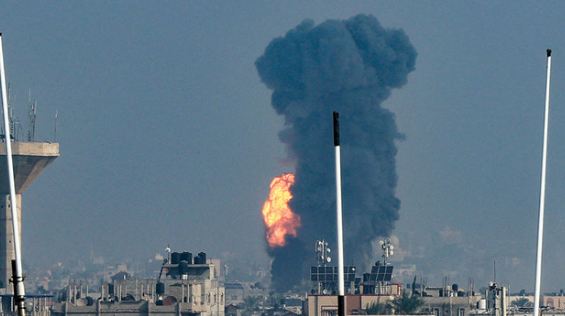
ISLAMABAD, FEB 12: (DNA) – Pakistan strongly condemns Israel’s military aggression against Rafah city in Gaza and the resulting destruction and massacre of the Palestinian people.

Israel’s offensive in Rafah violates the provisional measures indicated by the International Court of Justice to protect the people of Gaza from genocide. It will further aggravate the humanitarian disaster witnessed in Gaza over the last 4 months and jeopardize the ongoing efforts for a potential ceasefire.

We urge the international community, especially the UN Security Council, to take urgent measures to bring an immediate end to Israeli aggression and its incessant crimes against humanity.

PSL 9: Quetta Gladiators remove Sarfaraz Ahmed as captain

PSL 9: Quetta Gladiators remove Sarfaraz Ahmed as captain

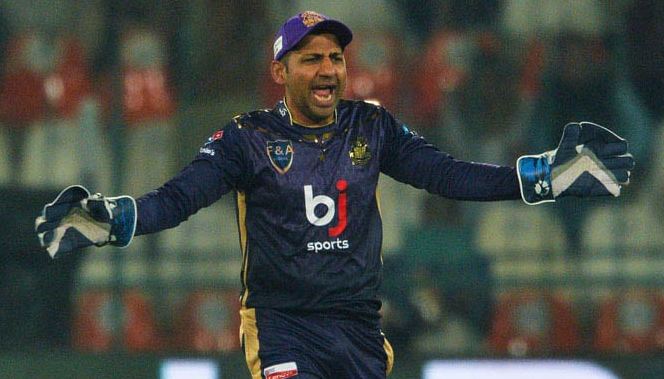
KARACHI: Quetta Gladiators have decided to remove Sarfaraz Ahmed as captain ahead of the Pakistan Super League (PSL) season nine, owner Nadeem Omer confirmed to Geo News.

“Sarfaraz wants to take a break from captaincy with new head coach Shane Watson set to decide who will lead the side after consulting with the team management,” Nadeem said.

Reportedly, South Africa’s Rilee Rossouw and Pakistan’s middle-order batter Saud Shakeel are the two contenders to replace Sarfaraz. The official announcement will be made in the upcoming days.

It is worth mentioning that Quetta played three finals under Sarfaraz’s leadership and also clinched the title in 2019.

Meanwhile, Nadeem is happy to see Watson coming back to Gladiators as a coach and wishes to bring Kevin Pietersen too.

“The old family of Quetta Gladiators has started coming together again. Pietersen should also come with Quetta Gladiators in some role,” he said.

Quetta Gladiators’ PSL 9 squad
Rilee Rossouw (Platinum), Mohammad Wasim, Jason Roy, Wanindu Hasaranga (all Diamond), Sarfaraz Ahmed (Brand Ambassador) Abrar Ahmed, Mohammad Hasnain (all Gold), Mohammad Amir, Will Smeed (Silver) Saud Shakeel, Sajjad Ali, Usman Qadir, Adil Naz, Khawaja Nafay, Akeal Hosein, Sohail Khan, Omair Yousuf, Sherfane Rutherford, Bismillah Khan (partial replacement for Wanindu Hasaranga), Sufiyan Muqeem

It must be noted that PSL 9 will be held in four cities — Karachi, Lahore, Multan and Rawalpindi — with the final of the event taking place at the National Bank Stadium in Karachi on March 18.

Like the previous edition, the PSL 9 will take place in two legs with Multan Cricket Stadium and Lahore’s Gaddafi Stadium hosting 14 matches between them from February 17 to 27. The action then moves to Rawalpindi’s Pindi Cricket Stadium and Karachi’s National Bank Stadium, where 16 matches will be held from February 28 to March 12. The event will then move to Karachi in its entirety for the playoffs.

Jaffar Hussain

PTI delegation meets President Alvi

PTI delegation meets President Alvi

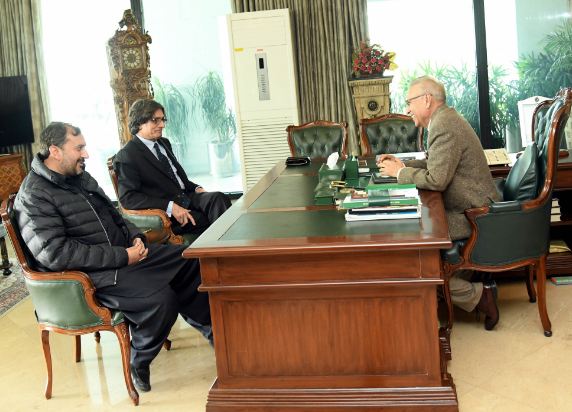
ISLAMABAD, FEB 12: (DNA) – A delegation of Pakistan Tehreek-e-Insaf, comprising of Mr Rauf Hassan and Mr Umair Niazi, called on President Dr. Arif Alvi, at Aiwan-e-Sadr, today.

The Pakistan Tehreek-e-Insaf delegation informed the President about the alleged rigging in the General Elections.

The delegation also apprised the President of the party’s position regarding the alleged irregularities in the election process.

They opined that Form-45s issued in different constituencies reflected the actual facts of the election results.

“Despite the suppression of the party, confiscation of the election symbol and arrests, the Party has achieved success in the elections”, the delegation added.

It was highlighted that despite the excesses, the people of Pakistan had expressed confidence in the party’s candidates in the General Elections.

Concerns over rigging in elections: US, UK, EU have no right to interfere in internal matters

Concerns over rigging in elections: US, UK, EU have no right to interfere in internal matters

Says next government to take charge in 8-10 days; avoids question about his future plans; admits PTI enjoys sizeable support

Ansar Mahmood Bhatti

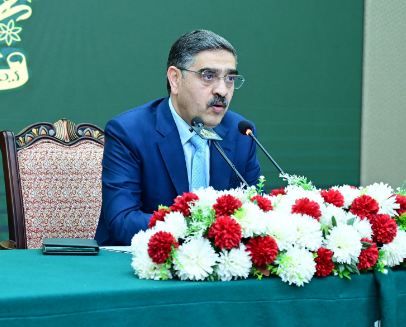
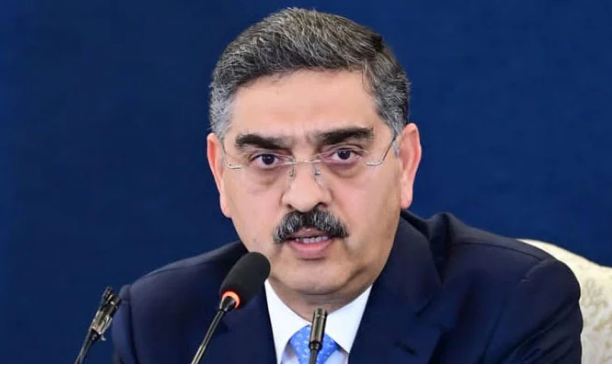
ISLAMABAD: Caretaker Prime Minister Anwaar-ul-Haq Kakar said Monday defended the delay in election results, noting that mobile services were disrupted — which hampered the gathering of votes — due to security threats.

He further said that US, UK, EU or any other country had no right to interfere in Pakistan’s internal matters. The PM said this in reply to a question about the concerns of these countries about the manner in which 2024 general elections were held.

The prime minister expressed these views while addressing a press conference at the PM House, on Monday.

“We could afford delay, but terrorist attacks, we could not delay does not mean rigging,” Kakar, whose government was appointed to oversee the country through elections until an elected set-up takes charge, said during a post-election press conference.

Moving on to the allegations of foreign governments, who deplored the disruption in connectivity and the events that transpired in the lead-up to electrons, Kakar said they would be probed if need be.

“These friendly countries, unfortunately, frame their initial assessment on the fabricated and fractured information available on social media and the digital space.”

“A responsible government should take time and then have a position; that would have been better. If we have to investigate, we will not do it on the demand of the United States, United Kingdom, or the EU.”

He added, the next government may be formed in next 8 to 10 days depending on the outcome of the negotiations currently in progress among various political parties. To a question about his future plans he simply said ‘no comments’.

He said there was no doubt that the PTI enjoys public support. He hoped the PTI leadership would act in a responsible manner and play its role in the nation building.

Political parties — including the Pakistan Tehreek-e-Insaf (PTI), whose candidates contested as independents, the Jamaat-e-Islami (JI), and the Jamiat Ulema-e-Islam (JUI-F) — had deplored the delay in the results of the election, claiming that it was tantamount to rigging.

The complete election results — despite the passing of more than three days — are still awaited as the total vote count from 264 constituencies is in, but one seat remains. Amid the delay, PTI, JI, and JUI-F held countrywide elections, with the former two warning of more demonstrations.

Kakar, recalling instances of election results’ delays in Sweden and Indonesia, wondered whether their polls were “rigged”. “We are a country of 240 million with 92,000 polling stations […] this entire process had to consume some time, which should and can be explained.”

The prime minister informed the journalists that in 2018, the entire result-gathering process took 66 hours; however, in 2024, it was completed in 36 hours — however, the official Election Commission of Pakistan (ECP) deadline was around nine hours.

Kakar noted that Pakistan has its law and will deal with it accordingly. “We did not ask a judicial inquiry on Capitol Hill riots. It is not for us to demand it and it is not for them. For me, the demand of a PTI individual than the US, UK, and EU combined.”

The premier noted that these nations have their own issues in elections, but that’s not for Pakistan to comment on, and neither should these countries issue statements on Islamabad’s domestic affairs.

Election 2024: Navigating Political Turbulence

Qamar Bashir

By: Qamar Bashir

Pakistan’s economic and financial turmoil persisted, despite stabilization efforts of the post-PTI government. The 2024 elections, instead of heralding stability, resulted in a split mandate, leaving no party capable of forming a strong government. This division has plunged the political landscape into chaos, surpassing current leadership’s ability to manage. Consequently, it’s been decided to temporarily take control to stabilize the nation economically and financially. Post-achievement of these goals, new elections will be called, offering the people another chance to elect a decisive government. This could be the text of the speech of the new martial law administrator, if we had some ambitious chief of army staff in the country.

But nonetheless, the establishment, blaming civilian bureaucracy inefficient, sluggish and lacking discipline and innovation have taken control of important institutions of the country directly and indirectly. This is general perception, irrespective of right or wrong, that the establishment’s influence extends to significant civilian roles and decision-making processes, indicating a hybrid governance system where the lines between military and civilian domains are blurred.

The overwhelming victory of PTI in the 2024 elections, as interpreted by a prominent anchor, was seen not merely as a win for PTI or a loss for its competitors, but as a significant statement against the establishment. This perspective stems from the alleged hardships faced by PTI leaders, supporters, and the broader voter base, including attempts to undermine the party’s former Chairman, his close allies, and the extensive network of its supporters. The anchor’s comments highlight a public sentiment seeking accountability and change, reflecting a collective pushback against perceived injustices and the desire for a more equitable political landscape.

The anchor’s analysis suggests that the establishment’s efforts to suppress PTI not only failed but also backfired, exacerbating the situation rather than resolving it. This persistence in employing the same failed strategies to overturn the people’s mandate for PTI underscores a lack of adaptability and learning from past mistakes. He invoked a well-known adage to emphasize his point: when power fails to resolve an issue, the establishment’s instinct is often to double down and apply even more force, leading to more significant failures. This cycle of using power ineffectively, rather than seeking alternative solutions or reevaluating strategies, highlights a critical flaw in handling crises and challenges, ultimately resulting in greater setbacks.

The anchor posited that the ongoing conflict transcends a mere confrontation between the establishment and PTI or its leadership; it has escalated into a direct clash between the establishment and the Pakistani populace. This scenario is particularly alarming given historical precedents of unrest, such as the turmoil in Sindh following the assassination of Benazir Bhutto, the enduring insurgency in Balochistan, and the sense of alienation in KP. Punjab, traditionally seen as aligned with the establishment, has also been alienated.

The anchorperson highlighted the gravity of the situation, urging the establishment to reconsider its involvement in political matters and allow for a return to normalcy by stepping back from political interference. This call for a hands-off approach emphasizes the need for the political process to unfold naturally, without external manipulation. The critique extends to the harsh treatment of PTI leaders, including the incarceration of Imran Khan in multiple cases, which, according to PML(N) Punjab President Rana Sanaullah, played a significant role in PTI’s surprising electoral success. This scenario underscores a critical moment for the country’s governance, advocating for a reevaluation of the establishment’s role in politics to foster a more democratic and unimpeded political environment.

Political analysts are speculating that the same aggressive measures previously employed to coerce key figures and allies of Imran Khan into leaving PTI—prompting some to exit politics or join the newly established IPP—are now being applied to pressure elected candidates associated with PTI, despite their unique election symbols, to switch allegiance to PML(N). This strategy aims to consolidate PML(N)’s strength, ensuring it secures the majority needed to form governments both at the center and in Punjab, thereby reshaping the political landscape to its advantage.

Analysts are highlighting instances where Independents, once affiliated with PTI, are now aligning with PML(N), exemplified by Wasim Qadir’s recent shift. This move has been notably endorsed by Maryam Nawaz given her previous condemnations of political defections and horse trading, underscoring a complex political landscape where allegiances are fluid and often contradict previous stances against such practices.

Sardar Latif Khosa vehemently criticized Wasim Qadir’s switch to PML(N) as “shameless, heinous, and disgusting,” cautioning him about potential severe legal repercussions and voter backlash. Khosa underscored that Qadir’s election victory stemmed not from his own credentials but from his association with Imran Khan, implying that voters’ loyalty was to the party and its leadership rather than to individual candidates.

Sardar Latif Khosa highlighted significant risks, both political and economic, if PTI, which, according to Form-45, holds a majority in the national and Punjab assemblies, is barred from forming a government. He emphasized that any loss of faith in the electoral process could drive the populace to seek alternative means of expressing their discontent, frustration, and distress.

Sardar Latif Khosa made it clear that if the state continues to obstruct PTI from forming the government, PTI would opt to be the opposition rather than exiting the assemblies. He affirmed that PTI intends to vigorously pursue its agenda from this position while simultaneously employing every constitutional, legal, and political avenue available to reclaim the seats it alleges were unjustly taken.

Should PTI be denied its rightful representation, the nation could plunge into severe political turmoil, further exacerbating the fragile economic situation. In such a scenario, forming a government might only be feasible through a PML(N) and PPP alliance. However, this coalition could lead the country into another predicament due to the stark differences in their ideologies, visions, and governance approaches. Such an alliance, with each party pulling in different directions, could result in a weak and ineffective government, unable to implement the necessary and tough decisions required to steer the country back on a path of stability and growth.

A coalition between PML(N) and PPP, reminiscent of their brief alliance in 2009, may face inherent instability due to their contrasting political ideologies and governance styles. Such an arrangement, potentially more tenable under Shahbaz Sharif’s leadership, could still falter quickly, especially if Nawaz Sharif takes the helm.

This precarious political landscape does not bode well for the parties involved, the nation, or its citizens. Instead, it could inadvertently serve the interests of the establishment, enabling it to further entrench its influence over critical state institutions. This dominance allows for easier manipulation of the state’s foundational pillars and the indirect imposition of its agenda, maintaining control while appearing to remain in the background.

The evolving political narrative of Pakistan post-Election 2024 underscores a pivotal moment in its democratic journey. Amidst the turmoil, a stark reminder emerges: the essence of democracy lies in the will of its people and the integrity of its institutions. The current impasse, marked by allegations of manipulation, defections, and the establishment’s overreach, not only tests the resilience of Pakistan’s political fabric but also presents an opportunity for introspection and reform. For a nation to thrive, it must foster an environment where political discourse is driven by policy, not power plays; where governance is inclusive, not coerced; and where the voices of its citizens shape its destiny. As Pakistan stands at this crossroads, the path it chooses will not only define its democratic credentials but also its legacy in the annals of history.

By: Qamar Bashir

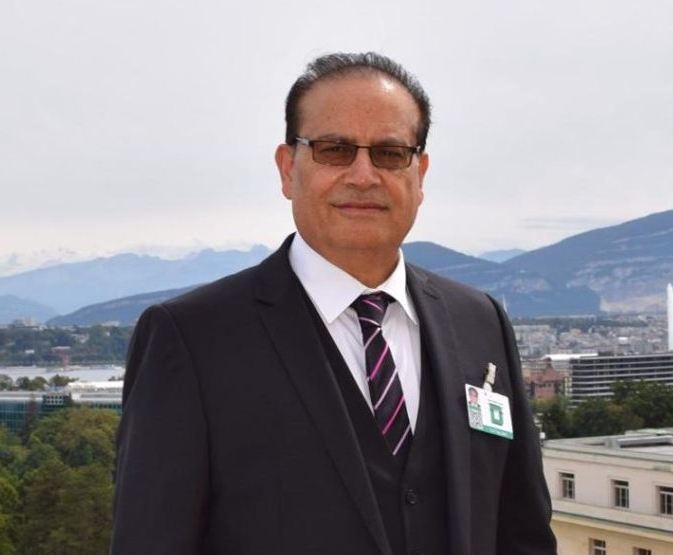
Press Secretary to the President(Rtd), Former Press Minister at Embassy of Pakistan to France, Former MD, SRBC

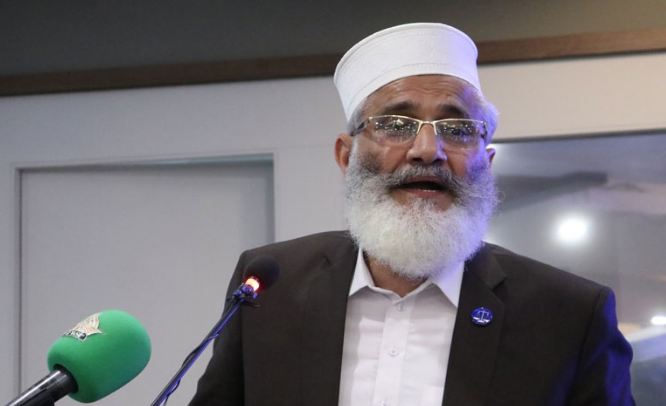
Siraj-ul-Haq steps down as Jamaat-e-Islami Amir

Siraj-ul-Haq steps down as Jamaat-e-Islami Amir

KARACHI: Siraj-ul-Haq stepped down as Jamaat-e-Islami Amir on Monday following the defeat and worst performance of JI in the Elections 2024.

JI secured no seats in the National Assembly and got only two seats in the Khyber Pakhtunkhwa (KP) Assembly.

Who is Sirajul Haq?
In 2014, Khyber Pakhtunkhwa’s senior minister and leader of the Jamaat-i-Islami (JI) Sirajul Haq, was elected as the new ameer of the party.

Sirajul Haq replaced the then-outgoing chief Syed Munawar Hassan. The elections were at JI Headquarters Mansoora. Out of 31,311 office-bearers of the party, 25,533 people voted which Sirajul Haq managed to secure a majority of votes in 2014.

Siraj ul Haq remained party chief for a tenure of five years and he was re-elected in 2019. Now after serving the JI for 10 years, Siraj ul Haq resigned from his post.

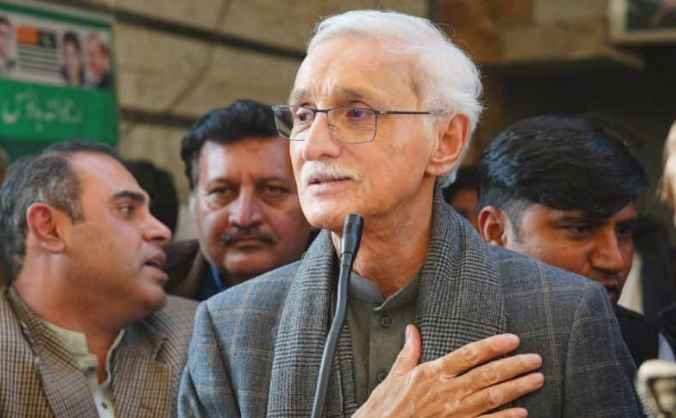
Jahangir Tareen quits politics

Jahangir Tareen quits politics

ISLAMABAD, FEB 12: Istehkam-e-Pakistan Party Patron-in-Chief Jahangir Khan Tareen has decided to quit politics and also step down from the party office.

Tareen announced his decision in a post on X while thanking everyone for their support during the recent election and felicitating his opponents.

“I have immense respect for the will of the people of Pakistan. Therefore, I have decided to resign from my position as Chairman IPP and step away from politics altogether,” Tareen posted.

He expressed his gratitude to all the members of the party and wished them the best. “By the Grace of Allah, I will continue to serve my country to the best of my ability in a private capacity,” the post added further.

The IPP leader had contested the recent general election from NA-149 Multan, where he was defeated by independent candidate Amir Dogar, as well as NA-155 Lodhran, where he lost to PML-N candidate Siddique Khan Baloch.

Reacting to this announcement, IPP President Abdul Aleem Khan expressed sadness, saying Tareen will always be the patron-in-chief for the IPP and all of them. He further said that Tareen’s presence in any government was an honour for that government.

“As a younger brother and IPP president, I pay tribute to him and his philanthropic activities. May Allah bless them with health, safety and success. Amen,” he added in a post on X.

Aleem Khan had emerged victorious in both NA-117 and Lahore’s provincial assembly constituency PP-149, securing a significant mandate from the electorate.

According to the official tally, in NA-117, Aleem Khan secured a resounding victory with 72,519 votes, establishing a clear lead over his competitor, Ali Ejaz Buttar, who garnered 31,586 votes.

Similarly, in PP-149, the IPP president clinched victory with 51,756 votes. His rival, independent candidate Hafiz Zeeshan Rasheed, closely followed with 47,998 votes.

No one will be allowed to create anarchy, warns PM Kakar

Situation at borders won’t impact elections: PM Kakar

ISLAMABAD, FEB 12: Caretaker Prime Minister Anwaa-ul-Haq Kakar on Monday warned against creating anarchy in the country as several political parties staged protests in different parts of the country over alleged rigging in the polls.

“Despite challenges, the continuation of democratic process is welcome development. The elections were held peacefully despite security challenges,” he said while addressing a press conference in connection with the February 8 polls.

He said security agencies played a key role in maintaining law and order in the country.

“We will not let anyone to spread anarchy in the country,” the caretaker PM vowed.

Irate Hafiz Naeem forfeits Sindh Assembly seat over alleged rigging

Irate Hafiz Naeem forfeits Sindh Assembly seat over alleged rigging

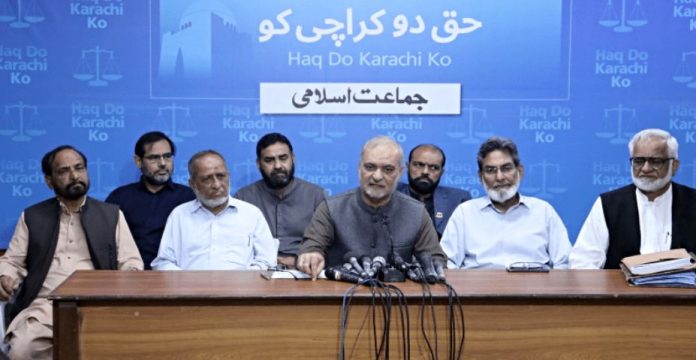
Karachi: Jamaat-i-Islami Karachi chief Hafiz Naeemur Rehman on Monday forfeited a Sindh Assembly seat he had won after the February 8 elections over alleged rigging.

According to the provisional results released by the Election Commission of Pakistan for the February 8 general elections, Naeem had won from the PS-129 constituency (Karachi Central VIII) with 26,296 votes.

Muttahida Qaumi Movement-Pakistan’s (MQM-P) Muaz Muqaddam was the runner-up with 20,296 votes.

The development comes a day after the party staged sit-ins at eight different key points in Karachi against alleged rigging in the polls.

Hafiz Naeem had earlier stated that his party’s and independent candidates had secured the majority of votes in Karachi’s national and provincial assemblies constituencies but the MQM-P was being imposed on the city.

The JI had also protested outside the office of the Sindh election commission on Saturday, where it was joined by supporters of the PTI and Tehreek-i-Labbaik Pakistan.

Addressing a press conference in Karachi today, an irate Hafiz Naeem said, “A PTI-backed independent candidate has won and I will not avail this seat.”

“When I estimated that there was a difference of a few hundred votes, I asked my team for each and every Form [45]. When we checked, we found out that the ECP had shown fewer votes for us but as I did not succeed, I forfeit this seat,” he said.

He went on to claim that PTI-backed independent candidate Saif Bari had won according to his team’s calculations, stating that his votes were “reduced to 11,000 from 31,000”.

According to the ECP, Bari had gathered 11,357 votes.

In a separate post on social media platform X, he said, “Therefore, according to my conscience and the moral traditions of my party, I vacate my provincial assembly seat and demand that all seats we won be returned to us.”

In his media talk, Hafiz Naeem alleged that the votes cast for the Muttahida Qaumi Movement-Pakistan (MQM-P) from PS-129 were inflated from 6,000 to 20,000.

“I also say to the workers of MQM-P that if God has shown you the right path and your conscience speaks, then come before the nation and announce that ‘we have not won’.”

“They faced the worst defeat — all of them including Mustafa Kamal,” he said, vowing to bring forth “each and every vote to show the fraud that has been committed with the nation”.

The JI leader stated, “I am forfeiting my seat and the seat which is ours should be given to us. We will challenge [the results of] the seats [where we know] we have won. We will not claim what we have lost”.

Recalling his vow to the public of not wanting “even a single additional vote”, Hafiz Naeem said: “People have voted for us and accepted our idea [sic]. The city of Karachi is with JI, and with me and my team which I consider an honour.

“[…] this seat of mine is a slap on the election commission’s face. We do not want this seat in charity. Give us our right,” he said.

In an apparent reference to the MQM-P, Naeem said that candidates who garnered “3,000 to 4,000 votes were being imposed” on the nation.

Acknowledging that some may not consider his decision to be the right one, he said, “Even if they have erased us, they can’t erase us from people’s hearts. We will fight for the people, democratically [and] hold peaceful demonstrations.”

The JI leader further said that the nation “knew everything” due to social media and a “fake mandate” could not be imposed on the people.

He called for annulling the election results in Karachi and for holding the exercise afresh. Calling on Chief Justice of Pakistan Qazi Faez Isa to take notice of the rigging allegations, he asked, “Chief justice sahib, where should the people go?”

PTI lauds Rehman’s decision
Reacting to Rehman’s decision, the PTI lauded him, saying that it expected “similar honesty” from other candidates.

“There is no existence of democracy without transparency,” it said in a post on X.

PTI leader Taimur Khan Jhagra, who was a candidate for a provincial assembly seat from Khyber Pakhtunkhwa, said, “All we need is people like this for the country to progress. Well done!”

He further wrote: “The more people like deputy commissioner Afaq Wazir dig their heels to cover their illegalities in changing the results on eight Peshawar seats, the more they are criminally implicating themselves.”

Explosion injures 7 in Karachi hospital

Explosion injures 7 in Karachi hospital

Refrigerator’s compressor exploded in store room of emergency department, says BDS

Bureau Report

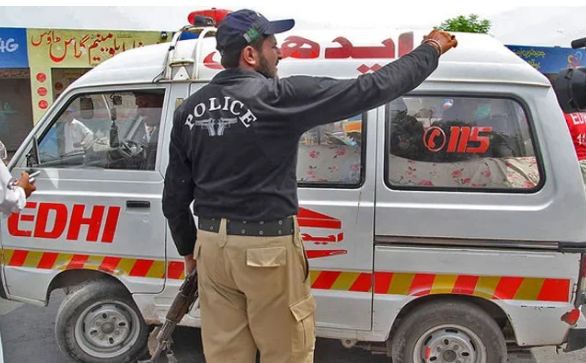
KARACHI: According to the rescue officials, the incident occurred inside the emergency ward of Sindh Government Hospital in the city’s Liaquatabad area.

“Soon after the blast, fire engulfed the entire ward [within no time],” the officials said.

The hospital administrator also confirmed that at least seven people, including a two-year-old child, were injured in the explosion.

After being informed, rescue teams rushed to the hospital and extinguished the fire.

Dr Attique, the hospital’s Medical Superintendent (MS), said that an emergency had been imposed in the hospital, adding that the medical staff and the patients were being moved to another location.

Meanwhile, Sindh Governor Kamran Tessori sought a detailed report from the MS about the explosion. He also prayed for the early recovery of the injured.

Caretaker Sindh Health Minister Dr Khalid Niaz also sought a report about the incident and directed the concerned authorities to provide the best medical facilities to the injured.

As per the bomb disposable squad, a refrigerator’s compressor exploded due to a short circuit in the store room of the emergency department.

The explosion injured “few people” and caused “minor damage”, the report added.

Stay Connected

64FansLike
60FollowersFollow

Latest Reviews

Exchange Rates

USD - United States Dollar
EUR
1.17
GBP
1.34
AUD
0.67
CAD
0.73