Home Blog Page 772

Indigenization, tech sovereignty key to Pakistan’s defence evolution

tech sovereignty key to Pakistan’s defence evolution

DNA

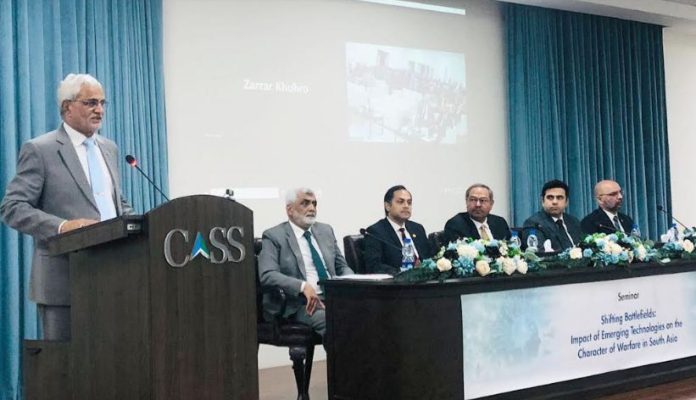
ISLAMABAD: The Centre for Aerospace & Security Studies (CASS), Islamabad, successfully hosted a seminar titled ‘Shifting Battlefields: Impact of Emerging Technologies on the Character of Warfare in South Asia’. This event convened distinguished experts from the defence, technology, and academic sectors to discuss the transformative role of emerging technologies in modern warfare, with a particular focus on South Asia.

Air Marshal Farooq Habib (Retd), Senior Director at CASS, opened the seminar by stressing the complexity and unpredictability of technological evolution in military contexts. He emphasised the necessity for Pakistan’s defence sector to adapt and evolve in response to these advancements to maintain strategic and tactical superiority.

Lieutenant General Aamer Riaz (Retd), former President of the National Defense University, in his Keynote Address, underscored the profound influence of technological advancements on the character of warfare. He predicted a technological upheaval, highlighting the need for strategic adaptation to innovations in space, cyber, AI, and more. General Riaz called for a revision of traditional warfare strategies to include emerging technologies that are redefining conflict dynamics.

Mr Fawad Zahir, a Defence and Strategic Studies Expert, focused on the importance of airpower, enhanced by big data analysis, quantum computing, and Machine Learning. He urged for robust civilian-military collaboration to harness technological advancements for defence purposes. Mr Zahir also strongly advocated strategic investment in technologies that align with Pakistan’s core defence needs, given the country’s budgetary constraints.

Prof. Dr Yasar Ayaz, Chairman/CPD of the National Centre of Artificial Intelligence (NCAI), highlighted AI’s potential to revolutionise warfare, marking it the third major evolution after gunpowder and nuclear power. He stressed the importance of indigenous development of AI technologies to ensure strategic autonomy and technological sovereignty, highlighting the need for a balance between innovation and regulatory oversight.

Mr Khawaja Mohammad Ali, a Cyber Security, Data Privacy, and Digital Forensics Expert, delineated the critical role of cyber operations in modern conflict, advocating for the establishment of a national cybersecurity authority; extensive training and awareness programmes; cyber diplomacy; and indigenous development in cybersecurity solutions.

Senior Journalist and Columnist, Mr Zarar Khurro, focused on the strategic importance of narrative building in the context of advanced technological warfare. He discussed the long-term process of narrative construction facilitated by technology,

pointing to the need for authenticity and the significant impact of social media on public opinion. President CASS-Islamabad, Air Marshal Farhat Hussain Khan (Retd), in his Concluding Remarks, reiterated the critical importance of first-shot capability in modern warfare, driven by advancements in sensors and detection technologies. He called for an indigenisation strategy that supports the development of homegrown technologies, ensuring that Pakistan’s defence sector remains competitive and innovative.

The seminar underscored the urgent need for Pakistan to embrace indigenisation and support homegrown technologies for enhanced national security and defence autonomy. As emerging technologies continue to reshape the landscape of modern warfare, strategic, policy-oriented approaches are essential for Pakistan to deal with the challenges and opportunities presented by this new era of conflict.

The presentations were followed by active participation from a diverse audience, including retired military officers, scholars, journalists, and students, who engaged in an interactive Question and Answer session, further enriching the discourse on this critical subject.
Umrah facilities spotlighted by Nusuk.com in Dubai exhibition

Umrah facilities spotlighted by Nusuk.com in Dubai exhibition

ISLAMABAD, Feb 16 (APP/DNA): Umrah performers, including those from the UAE and expatriates, discovered at an exhibition facility provided for them in Saudi Arabia through the digital platform Nusuk.com, developed by the Saudi Ministry of Hajj and Umrah and the Saudi Tourism Authority.

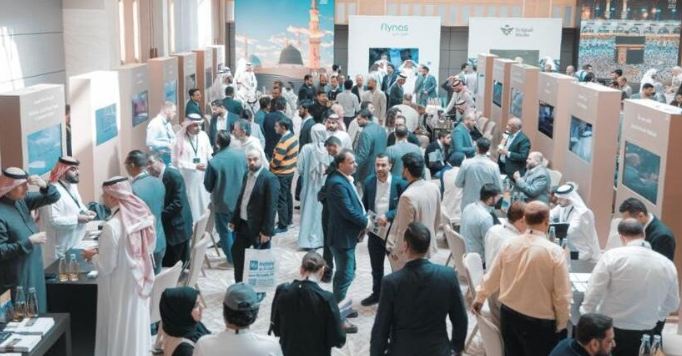
Continuing until February 17, the ongoing exhibition at Dubai’s Festival City Mall attracted over 400 partners from the travel industry, along with Hajj and Umrah agencies. Its goal is to acquaint visitors and tourists from diverse nationalities with Virtual Reality (VR) technology, said a message received here.

Additionally, as part of the exhibition, a pavilion has been established in the UAE market by one of Nusuk’s authorized companies, offering Umrah packages to fortunate individuals eager to embark on the pilgrimage.

The Nusuk app and website offer many packages, with more than 200 partners worldwide. Pilgrims can easily book everything they need for their trip, like hotels, transportation, and visas, using Nusuk. Also, Umrah companies offer their services through the app.

Representatives from various Umrah and travel service companies in the UAE responded positively to the exhibition, expressing that it would bolster the strategic partnership between them and their Saudi counterparts.
This initiative is poised to facilitate further promotion, to enhance services for pilgrims, including UAE nationals and residents. The main aim is to elevate the experience of Umrah pilgrims, aligning with the objectives of Saudi Vision 2030 to increase their numbers.

Economy was destroyed by the bad decisions

Economy was destroyed by the bad decisions

ISLAMABAD/DNA: Chairman of National Business Group Pakistan, President Pakistan Businessmen and Intellectuals Forum, and All Karachi Industrial Alliance, and former provincial minister Mian Zahid Hussain said on Friday that the wrong decisions of economic managers have never allowed financial stability in the country.

He said that merit has always been ignored for the benefit of a small group, and the direction of the economy was deliberately kept wrong, which bankrupted the country.

Mian Zahid Hussain said that Pakistan is currently surviving because of IMF loans and support from some countries that are fed up with providing continued help.

Talking to the business community, the veteran business leader said that the new government should hand over the economy to serious people instead of illusionists to improve matters.

The business leader said that Pakistan’s economy can no longer bear the burden of power theft, line losses, and capacity charges.

The only options for running the country are immediately selling failed government agencies, expanding the tax base, and observing merit.

Mian Zahid Hussain said the economic steps taken for the short-lived benefits resulted in applause and headlines. Still, they also shake the foundations of the economy, which the masses must brave.

He said the incoming government should choose serious people to manage the economy instead of magicians seeking cheap popularity.

Failed politicians consider it necessary to cheat the masses. Sometimes, the public is told that people from the United States and other rich nations will come here for jobs, and occasionally, such benefits are doled out, which many rich countries cannot afford.

We don’t need rulers tackling circular debt and other problems through borrowing. Instead of ensuring economic development, some rulers try to increase GDP to cheat the public by increasing imports.

A former prime minister set a record of $72 billion in imports to boost GDP, shaking the country’s foundations but managing to fool the people.

He questioned how someone could reduce the dollar’s value and increase the value of the local currency without increasing exports when the economy is on the verge.

A performer recently jumped into the economic arena, damaged the economy by his policies, and ruined a deal with the IMG before leaving the country.

Mian Zahid Hussain further said that the new government should avoid such people, avoid quick actions to give an impression of development, and ensure merit in decision-making; otherwise, it will pay a cost in the shape of failure.

Diplomatic Diversity Takes Center Stage: Female envoys gather at Bulgarian embassy in Islamabad

Bulgarian embassy

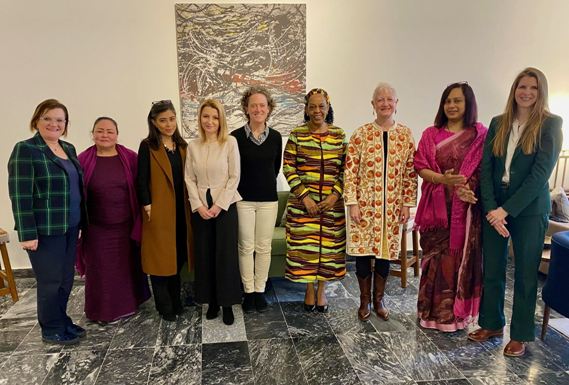
ISLAMABAD, Feb 16 /DNA/ – Ambassador of Bulgaria to Pakistan hosted female heads of various missions in Islamabad. Seen in the picture are Ambassador of Italy, Ambassador of Philippines, High Commissioners of Canada and Kenya, Ambassador of the European Union, Charge d Affaires of India and High Commissioner of United Kingdom. -DNA

EU to organize family-focused festival ‘EuroVillage’

      ISLAMABAD, Feb 15 (DNA):The European Union and its Member States will organize the popular, family-focused festival ‘EuroVillage’ on February 17 at Jinnah Convention Center, Islamabad.

“The doors of the family event will open at 2 pm to welcome the Pakistani public to get a taste of European food, culture, music, and sustainable actions,” said a news release issued here on Thursday.

The EU and Member States are centering this year’s celebration around the theme of co-creating a sustainable future.

Titled “Stronger Together – Sustainable Forever,” the event aims to showcase the 60+ years of a strong connection between the EU and Pakistan.

This celebration underscores the collaborative partnership in development, economics, culture, research and education, and political engagement, demonstrating how the EU and Pakistan are stronger together.

EuroVillage is co-organized by the diplomatic missions of the European Union and of Austria, Belgium, Bulgaria, the Czech Republic, Denmark, Finland, France, Germany, Greece, Hungary, Italy, the Netherlands, Poland, Romania, and Spain.

It will include information and activity booths for both adults and children with interactive games, selfie corners, food, and an opportunity to meet the diplomatic teams and learn about areas of our evolving partnership.

The event will feature live performances by European performers and Pakistani artists including Farhan Saeed and

Qurat-ul-ain Baloch.

A Paradigm Shift in Pakistani Politics

Elections are the Battle of Hearts and Minds

Dr. Muhammad AkramZaheer

Last week in Pakistan, something surprising happened in the big national election. Imran Khan’s party, Pakistan Tehreek-e-Insaf (PTI), won more votes than anyone expected. This unexpected win has made many people worried about what might happen next in the country. People are concerned that this could lead to more confusion and problems in the government. Imran Khan has been a well-known figure in Pakistani politics for a long time. He leads PTI and has promised to bring in a new and better way of running the country, with transparency, accountability, and economic growth. However, the election results have made people doubtful and anxious. Many are questioning whether the election process itself can be trusted. The national election had been delayed for a long time, creating uncertainty and suspicion among the people. Delays in elections often make people not trust the process, and the long wait had made many wonder why it was postponed in the first place. The sudden turn of events in favor of PTI has only added to these doubts, creating an atmosphere of political uncertainty that might harm the stability of the nation. One major worry about PTI’s unexpected win is that it might lead to more political problems. A sudden change in who holds power can make the country’s political institutions shaky, which could affect how the government works and puts policies into action. Without a clear decision from the voters, existing challenges could become even more difficult to handle, leaving the country in a state of political uncertainty.The surprising outcome has also raised questions about the health of Pakistan’s democracy. Democracy relies on openness, fair play, and accepting the results of elections. PTI’s unexpected victory has led to claims of irregularities and manipulation from other parties, making people doubt if the results are legitimate. Such accusations can make people lose trust in the democratic process, making them doubt the power of their vote to bring about real change.

Before the election, people thought that no party would get the most seats in the National Assembly. Many expected Nawaz Sharif’s party, Pakistan Muslim League-Nawaz (PML-N), to get the most seats and easily make a government with the help of other parties. On the other hand, Imran Khan’s PTI faced challenges from the military, which affected its chances. Surprisingly, independent candidates linked to PTI won the most seats, giving them the chance to create a new government. This unexpected result has created uncertainty and might cause more political issues in Pakistan. The voter turnout was about 47%, which is higher than usual for Pakistan but lower than the previous election in 2018. The National Assembly has 336 seats, and the election was for 266 seats. PTI got the most seats with 92, followed by PML-N with 77, Pakistan People’s Party (PPP) with 54, and MuttahidaQomi Movement Pakistan (MQM-P) with 17. PTI, officially banned, is expected to join forces with an approved party to combine their votes. The election results have divided political forces into two camps. PTI, claiming election manipulation, plans to appeal to the courts and protest peacefully. PML-N, the other camp, is negotiating with other parties to create a coalition government. PML-N seems to have a clearer path to getting the majority needed to govern.

The military seems to be the biggest loser in the election. The results show that the public is angry at the military’s involvement in the election process. The military, which hasn’t faced such criticism since 1970, is now on the defensive. Despite strong arguments between PTI’s leader and the military, some repairing of relations might be needed for PTI’s leader to regain freedom and office. However, it is likely that Pakistan will end up with a weak and unstable coalition government. This government may struggle to address the significant economic, social, and environmental issues facing the country. Both PTI and PML-N, whether in government or opposition, may spend much of their time questioning the legitimacy of the government and demanding new elections, making the 2024 national election another challenge for Pakistan’s democracy.

CJP comes down hard on army over its businesses

CJP comes down hard on army over its businesses

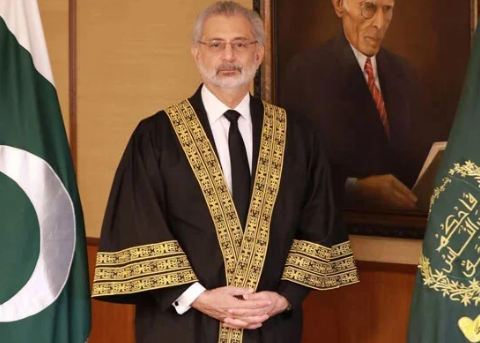
Army should do its work and courts will do their job, remarks CJP Qazi Faez Isa

Court Reporter

ISLAMABAD: Chief Justice of Pakistan (CJP) Qazi Faez Isa has sought assurance from the attorney general that the army would only work on defence-related matters and not run any business.

The assurance was sought from CJP Isa during a hearing of a petition filed against commercial activity being done on military land.

During the hearing, CJP Isa remarked that the army was conducting business and had set up marriage halls on military lands. He then sought assurance from the attorney general that the army would remain the “protector” and not do any business.

“Can you get this assurance?” CJP Isa asked the attorney general. He also added that everyone should work as per their mandate.

“The army should do its own work and courts will do their job,” said CJP Isa.

In response, AGP Mansoor Usman Awan stated that as per principle, everyone should do their job.

However, CJP Isa insisted that if the AGP had the directives then he should give the assurance to the court.

On this point lawyer for the Evacuee Trust Property Board (ETPB) intervened and told the court that the building from which the dispute started belonged to his client. He added that the allottees sold the land based on fake documents and now a five-story building sits there.

At this, Justice Muhammad Ali Mazhar remarked that the ETPB was a bystander when the five-story building was being constructed.

However, CJP Isa observed that it would not have been possible without the involvement of the Sindh Building Control Authority (SBCA). He then further remarked that the assets of officers above the rank of inspector at the SBCA should be checked.

“The Karachi sub registry’s assets should also be audited by the FBR. The residents of demolished buildings should receive money from all assets beyond means,” said the CJP. He also added that the Sindh government would never do an inquiry on this.

On this point, the director general of the SCBA appeared in court and the CJP inquired how many inspectors and officers were part of the department.

The DG informed the court that currently there are 1,400 employees with the SCBA out of which 600 are building inspectors and 300 are senior inspectors.

LHC grants bail to Elahi

LHC grants bail to Elahi

Abid Raza

Lahore: The Lahore High Court (LHC) on Wednesday granted PTI President Parvez Elahi bail in a case pertaining to an alleged illegal appointment made in the Punjab Assembly during his recent stint as the chief minister.

Initially taken into custody on June 1 last year, the former Punjab CM has faced a series of releases and re-arrests, and has remained in detention ever since. The legal challenges coincided with the state’s crackdown on the PTI that followed the violent May 9 protests that saw important government and military installations vandalised.

The case at hand pertains to the alleged illegal appointment of Muhammad Khan Bhatti as the principal secretary to the chief minister during Elahi’s tenure as the Punjab CM.

However, Elahi is not expected to be released as he is still under arrest in other cases.

Today, Justice Shehram Sarwar Chaudhary presided over the hearing while Advocate Amir Saeed Rawn and Farman Munis appeared as Elahi’s counsels.

During the hearing, Rawn informed the court that a judicial magistrate had discharged Bhatti from the case.

He argued that the notification for Bhatti’s appointment as the principal secretary had been issued by the Punjab chief secretary before Elahi assumed the role of the CM.

Rawn said that the provincial chief secretary had not been made a respondent in the case, adding that the case was filed on a “political basis”.

Subsequently, the court granted Elahi bail against surety bonds worth Rs100,000.

Kashmir Dispute Spotlighted: Ambassador Khan addresses human rights concerns at Belarus university event

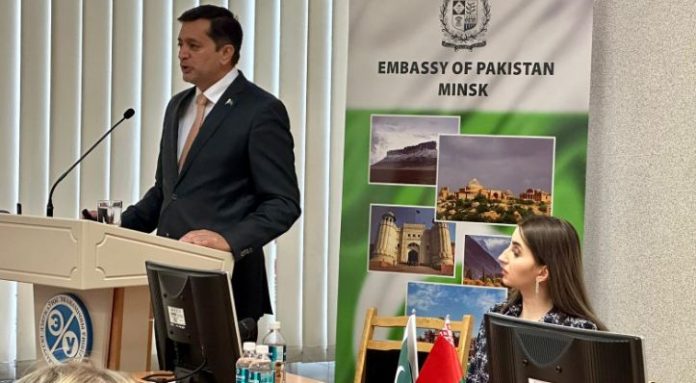
Ambassador Sajjad Haider addresses human rights concerns at Belarus University event

Minsk, 14 FEB (DNA) – Ambassador Sajjad Haider Khan held an interaction with the faculty and students of the Belarus State Economic University on 13 February 2024. The two and half hour long event was attended by over 120 students and ten faculty members. 

The theme of the discourse “Challenges to Peace & Security and Economic Development in South Asia”, also included an introduction to Pakistan & its Foreign Policy as well as Pakistan-Belarus relations. The genesis of Kashmir Dispute & the ongoing human rights violations in the Indian Illegally Occupied Jammu & Kashmir was particularly highlighted. A short documentary on Pakistan was also shown to the students. The students were also served with a few Pakistani delicacies.

Prior to the lecture, The Ambassador also held a meeting with the First Vice-Rector of the University, and discussed possibilities of forging institutional collaborations with the Pakistani institutions. The two sides also agreed to hold similar interactions in the future as well.

Stay Connected

64FansLike
60FollowersFollow

Latest Reviews

Exchange Rates

USD - United States Dollar
EUR
1.17
GBP
1.34
AUD
0.67
CAD
0.73