Home Blog Page 710

Ambassador of Jordan calls on President Zardari

Ambassador of Jordan calls on President Zardari

ISLAMABAD, JUN 5: /DNA/ – Maen Khreasat, Ambassador of Jordan to Pakistan, met with President Asif Ali Zardari at Aiwan-e-Sadr today. The meeting underscored the strong bilateral relations between Jordan and Pakistan.

During the meeting, President Zardari and Ambassador Khreasat exchanged views on various regional and international issues of common concern. They reaffirmed their commitment to further strengthening the longstanding ties between the two nations.

Kamal, Vawda suo motu: Supreme Court refuses to accept MQM-P leader’s apology

Supreme Court

ISLAMABAD: The Supreme Court Wednesday rejected Muttahida Qaumi Movement-Pakistan (MQM-P) Deputy Convener Mustafa Kamal’s plea seeking an instant acceptance of his apology in a contempt suo motu case.

The development came as a three-member CJP Isa-led bench comprising Justice Naeem Akhtar Afghan and Justice Irfan Saadat Khan heard the contempt of court case against Kamal and independent Senator Faisal Vawda.

Both politicians had done hard-hitting press conferences against the judiciary in Islamabad in May, with Vawda saying that no allegations could be levelled without evidence and Kamal sought to establish ethical standards for the judges as justice could “only be bought”.

Their statements had come after six Islamabad High Court (IHC) judges wrote a letter to Supreme Judicial Council (SJC) members, pointing out the intelligence agency’s meddling in judicial affairs. The politicos also pointed out the dual citizenship of an IHC judge.

Shortly after their tirade, the SC on Thurs­day swung into action against the leaders and took suo motu notice. Following a hearing on May 17, the court issued show-cause notices to the lawmakers.

In their responses, Kamal sought an unconditional apology and said he held “all the judges, in particular, the judges of the superior courts of Pakistan in the highest respect and esteem”.

Meanwhile, Senator Vawda refused to issue an unconditional apology to the Supreme Court and sought an end to the matter, saying that several others had issued remarks similar to his.

Today’s hearing
During the hearing today, Kamal’s lawyer Barrister Farogh Naseem requested the court to accept his client’s one-page unconditional apology.

The lawyer stressed that his client had in fact talked about pending Riba (usury) cases. “Aren’t those cases [filed] before the Federal Shariat Court?” CJP Isa questioned.

Elaborating on the decision to take suo motu over the speeches, CJP said that nobody was subjected to abuse as he was.

“Is such abusive language used in any country?” CJP Isa questioned while lamenting the use of obscene language.

“I didn’t take [suo motu] notice [regarding the criticism] on me but on the fact that you talked about the judiciary,” he added.

In response to the request of Moiz Ahmed, Vawda’s lawyer, that his client wanted to speak about Pemra, the top judge said: “We have to listen to you [as] you are the counsel.”

“What did your client say? We will have to see whether there is contempt of court or not,” the chief justice noted.

Responding to Ahmed’s request that he wanted to read out the questions and answers of Vawda’s press conference, Justice Saadat said: “In response to a journalist’s question, you [your client] clearly said that he had come to speak against Justice Babar Sattar and Justice Athar Minallah.

Lamenting the media’s role in streaming the speeches, CJP Isa said: “The television channels promote obscene language the most […] these speeches were streamed for 34 minutes [so] shall we now issue notices to them as well?”

“The Pakistan Electronic Media Regulatory Authority (Pemra) has enforced an absurd law prohibiting court reporting […] This is unfair, why can’t court proceedings be reported?” he added.

“We saved all the journalists,” the chief justice said while stressing that people get paid in dollars for telling lies.

“If someone wants to criticise my decisions, read them first,” he said.

The court then issued notices to all the TV channels for broadcasting derogatory speeches directing them to submit their responses within two weeks.

Furthermore, the apex court has also sought Pemra’s response regarding the ban on reporting court proceedings.

The case has been adjourned till June 28 with the apex court giving Vawda one week’s time to submit his response to the suo motu.

Will accept SC decision: Vawda
In a press conference after the hearing, Vawda, who did not get a chance to speak during the hearing, said he would accept whatever decision the court arrives at, but clearly stated that he would not apologise as he had done nothing wrong.

“I’ve always respected the chief justice and his bench. The court heard Mustafa Kamal’s case in detail, my turn is yet to come,” the independent senator said.

Kamal, while speaking to reporters outside the apex court, said if his statements were in contempt of the court, then he seeks an unconditional apology.

The Electric Vehicles (EVs) & Public Policy of Pakistan

The Electric Vehicles (EVs) & Public Policy of Pakistan

Khalid Mahmood

The concept of electric vehicles (EVs) has been around for a long time, with early experiments and prototypes dating back to the 19th century.

In the early 19th century, inventors like Robert Anderson and Thomas Davenport created some of the earliest electric vehicles. These were usually small-scale models or prototypes.

In the late 19th and early 20th centuries, electric cars actually enjoyed a period of popularity, particularly among urban dwellers. They were quiet, clean, and easy to operate compared to early internal combustion engine vehicles. Companies like Baker, Detroit Electric, and Columbia produced electric cars during this time.

Interest in electric vehicles began to revive in the late 20th century due to concerns about pollution and dependence on fossil fuels. Companies like General Motors and Toyota introduced modern electric cars in the 1990s, such as the GM EV1 and the Toyota RAV4 EV.

The real breakthrough came with the founding of Tesla Motors by Elon Musk, Martin Eberhard, and others in 2003. Tesla’s Roadster, introduced in 2008, demonstrated that electric cars could be sleek, high-performance vehicles with significant range. Since then, Tesla has become synonymous with electric cars and has spurred other automakers to invest heavily in electric vehicle technology.

The Governments of European, American and Chinese incentives, stricter emissions regulations, and growing environmental awareness have also played significant roles in the rise of electric vehicles. Many countries now offer subsidies or tax incentives to encourage the adoption of EVs, while others have announced plans to ban the sale of new gasoline and diesel cars in the coming years.

In short, the origin of electric vehicles is a story of innovation, competition, and evolving societal priorities, with early experiments paving the way for the modern electric car revolution.

The future of electric vehicles (EVs) holds significant promise, with several potential effects on human life such as: Environmental Impact, Energy Independence: Health Benefits:Technological Advancements: Economic Opportunities and Urban Planning and Mobility:

In summary, the importance of electric vehicles in modern times cannot be overstated. They represent a sustainable, efficient, and technologically advanced solution to address pressing environmental, energy, and transportation challenges facing society today. By embracing EVs, individuals, businesses, and governments can contribute to a cleaner, healthier, and more sustainable future for all.

Different countries like Norway, China, Germany, United States and Netherlands took different initiatives to promote Electrical Vehicles in the present time. A few initiatives taken by these government are as under: Exempt from import duties, exempted one-time registration tax, Reduced or waived tolls on many roads and bridges.

Granted the privilege of using bus lanes, allowing them to bypass traffic in congested areas. Many public charging stations in Norway offer free electricity, encouraging the use of electric vehicles.

Free or discounted parking in city centers, Credit system for automakers, where they earn credits based on the production and sales of new energy vehicles, Imposed sales quotas for NEVs on automakers. These quotas mandate that a certain percentage of an automaker’s total annual vehicle sales must be new energy vehicles, introduced regulations related to the recycling of batteries used in electric vehicles. These regulations aim to address environmental concerns associated with battery disposal and promote sustainable practices in the electric vehicle industry., Chinese authorities have established product certification and safety standards for electric vehicles to ensure their reliability, safety, and compliance with technical specifications, China has extended its tax exemption policy for new energy vehicles (NEVs) until 2027, Reduced or waived vehicle taxes, Some cities government in Germany announced financial incentives, Access to carpool lanes, and preferential parking for electric vehicles, Partnerships between the government, private sector, and local authorities for EV charging infrastructures, The German government has allocated funds to support the deployment of charging infrastructure. Financial incentives and grants are provided to businesses, municipalities, and organizations to install public charging stations.

The German Government is committed to have 1 million public charging points across the country by 2030.In different European countries, the tax credit ranges from $2,500 to $7,500 per vehicle at Federal Level. Some states in Europe provide their own tax credits for electric vehicle purchases, which can be applied in addition to the federal tax credit. The states also offer special license plates for electric vehicles, often providing additional benefits such as free parking or reduced tolls. Educational programs to raise awareness about the benefits of electric vehicles. These programs may include outreach events, workshops, and informational resources for consumers.

Public & private collaborations to install public charging stations in strategic locations such as urban areas, shopping centers, parking lots, and along highways.

The U.S. Customs and Border Protection (CBP) announced rates of Auto: 2.5%, Trucks: 25%, Motorcycles: 2.4% including exempt from the BPM (import tax) & Registration.

The Pakistani government started offering various incentives a few years ago in an effort to encourage the use of electric vehicles in the country. Without a doubt, these actions will boost the nation’s economy and generate new employment opportunities. Nevertheless, Pakistan’s government hasn’t taken the necessary action to encourage more electric vehicles, unlike those in Europe and East Asia. Promoting electrical vehicles in the nation is hampered greatly by the established automakers in the nation.

In the upcoming budget for Fiscal Year 2024–2025, the government ought to take into account and declare the following practical measures to encourage electrical vehicles.

To import CBUs units: Sale tax (18%), Income tax (12%), additional custom duty (7%) be exempted for at least 2 years. Such measures will help to decrease import of gasoline products and save the foreign currency.

Engineering Development Board – Provincial Assembling / OEM-SKD/CKD certificate be issued under a specific time framework. No lead acid batteries are allowed to be used in any category of EVs. (Lithium iron phosphate battery (LiFePO4) be used).

The vendors must give specific guaranty of batteries. (for 2 & 3 Wheelers minimum 2 years and for 4 Wheelers Upto 5 Years or 120,000KM) Special incentives and grants are given for R&D to different universities/ organizations to develop new EVs projects.

Grants are provided to different educational institutions to train human resources development for local and international markets including Scholarship to deserving students.

Only certified human resource should allow to work with industry.

The Higher Education Commission should prepare a curriculum for BS & MS level including the needs of future technology, vehicle design and soft skills.

EV/ Battery & Motor Quality Standards: According to Pakistani culture and requirement quality & safety standards be adopted.

Standards required for the construction and operation of charging stations, as well as technical specifications for charging connectors.

Special Financial loans policy is required from States Bank, incentives from city governments for charging stations network.

All new filling stations must have EV charging facilities. All present oil marketing companies are directed to provide the EV charging facilities on priority basis (PSO, Shell, Total, etc.) NEPRA should announce a special discounted rate for EV charging companies. Special Green plates are provided to all EVs to promote the EVs industry.

The writer is the CEO, Pak-China Huazi Green Energy (Private) Limited

https://www.linkedin.com/in/khalid-mahmood-46056a195

ILO appreciates Pakistan efforts for eliminating, forced, child and bonded labor

ILO appreciates Pakistan's efforts for eliminating

ISLAMABAD, JUN 4 /DNA/ – The Government of Pakistan is very welcoming and always open to discussions with the International Labour Organization. The country relies heavily export of textiles and no country would buy from Pakistan if there is forced labor, child labor, bonded labor, etc. in the supply chain, said Geir T. Tonstol, Country Director of ILO while having a formal interaction with the journalists here in Islamabad on Tuesday.

Pakistan is one of the very few countries that benefits from the GSP+ preferential trade agreement with the EU. There are 27 labor, human rights, and environmental standards that need to be followed to maintain that status, Mr. Tonstol further added.

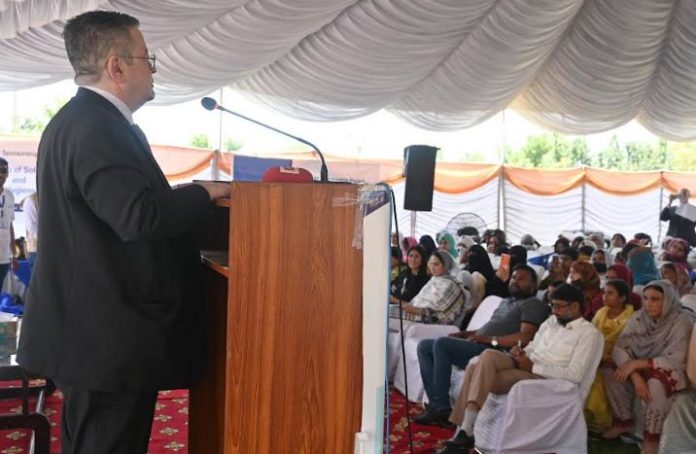
Geir T. Tonstol had an interactive session with the journalists on the first day of the 2-day workshop held at the ILO office under USDOL funded BRIDGE project in Islamabad on Tuesday for effective Reporting on Forced Labour and Fair Recruitment in Pakistan. He said Pakistan has been a member of the ILO since the country gained independence in 1947 and the ILO opened an office in Pakistan in 1970.

Mr. Tonstol said that as a country head of ILO there’s always interaction with the world of work and I’ve been traveling a lot, including interacting with railway unionists while traveling from Lahore to Islamabad by train and to visit mines in Balochistan and factories in Sialkot.

He said ILO plays a supportive role in fostering dialogue between employers, government, and workers unions to promote decent working conditions, social justice, and fair recruitment. “It has been reported that there may be as many as 3.4 million individuals in conditions of bonded labour,” he further said, most of the stories go unnoticed in mainstream media, and the purpose of the workshop is to help develop journalists techniques to address labour issues and hope the outcome will be improved reporting which could be a catalyst for positive change in workers’ rights to contribute in the formation of better policies.

Mr. Tonstol also briefed the journalists regarding the four goals of ILO in Pakistan which are employment for youth since 20 million youth are unemployed in Pakistan with limited access to training and education, social protection which includes social security benefits, international labour standards since Pakistan has only ratified in 36 out of 190 ILO labor standards and occupational safety and health, he said.

Mr. Tonstol emphasized on encouragement of trade unions in Pakistan and said we welcome the trade unions which represent workers. He said that Pakistan Workers’ Federation is one of our partners in Pakistan, meanwhile the Employers Federation of Pakistan, based in Karachi is also our biggest member representing the employers. He said we’re working with the governments of Sindh and Punjab to consolidate labor laws.

When asked by if it’s challenging to deal with provinces regarding labour laws post-18th Amendment, Mr. Tonstol said, I admit it’s challenging since there’s no specific Ministry of Labour at Federal level but it’s also good that responsibility is divided to the provinces so they can make better laws for the province.

Eid ul Adha in Pakistan: Zil Hajj moon likely to be sighted on June 7

Eid ul Adha in Pakistan: Zil Hajj moon likely to be sighted on June 7

KARACHI, JUN 4: With Pakistanis getting ready for Eid ul Adha by buying sacrificial animals, an official said on Tuesday that the Zil Hajj moon would be born on June 6.

Chief Meteorologist Sardar Sarfaraz told that the new moon, which will mark the beginning of the new Islamic month, would be born at exactly 5:38pm.

“There are strong chances of the moon being sighted on June 7 as by then, it will be of more than 26 hours,” he added.

The Islamic lunar calendar ends with Zil Hajj, the month when Muslims travel to Saudi Arabia to perform Hajj.

The Muslims across the globe also celebrate Eid ul Adha by sacrificing cattle in their respective countries.

Cattle markets
With Eid ul Adha just around the corner, cattle markets have been set up in different areas for the people to purchase cows, goats, sheep, or camels for sacrifice.

The management of the cattle market in Karachi has set up a facility in Taiser Town at Northern Bypass.

ATMs and temporary branches of major banks have also been set up so that people can easily withdraw money if they purchase an animal for sacrifice.

The notification for the establishment of cattle market stated that facilities for traders were being increased including free supply of 30 litres of water per person along with free provision of land for cattle sheds.

Meanwhile, to ensure that the sacrificial animals remain healthy, they will be inspected. A certificate from the Veterinary Department has also been made mandatory to confirm the animals are healthy.

Health advocates applaud SIFC, IMF for boosting Pakistan’s economy through tobacco tax hike

Health advocates applaud SIFC

ISLAMABAD, JUN 4 /DNA/ – Society for the Protection of the Rights of the Child (SPARC), appreciated Special Investment Facilitation Council’s (SIFC) previous work on investing in better economic decisions. Tobacco tops the list when it comes to increasing taxes on non-essential items for boosting economy. Health activists are hopeful that SIFU will advocate for an increase in cigarettes taxes by 26% in upcoming budget of year 2024-25.

This will be a Win -Win situation for both the economy and public health as it will generate  PKR 17 Billion in revenue and after this tax increase, there is huge potential for long-term savings in health cost recovery by 19.8%.

Malik Imran Ahmad country head Campaign for Tobacco-Free Kids (CTFK) said that, higher taxes on tobacco products can lead to increased revenue for the government. Pakistan currently holds the highest proportion of young people, as 64% of the total population of Pakistan is below the age of 30. While 29% is between the ages of 15 and 29 years. Approximately, 1200 children initiate smoking every day in Pakistan. This number is growing rapidly every year and as responsible citizens and stakeholders we must all take action to protect our future generations from addiction and death.

Revenue from this proposed tax increase will generate billions of rupees for the national exchequer and can then be allocated to various sectors like healthcare, education or infrastructure, which can indirectly contribute to economic growth.

Tobacco is deadly and tobacco-related illnesses are a significant burden on healthcare systems, annually taking lives of around 166,000 people in Pakistan. So reducing tobacco consumption can alleviate some of this burden, freeing up resources for other areas of healthcare.

Dr. Khalil Ahmad program manager SPARC, expressed his gratitude towards the SIFU, mentioning the urgent need to make sustainable decisions right now for strengthening economy in the long run and saving Pakistani children. Which is possible if the proposed 26% tax increase on cigarettes secures a place in the upcoming federal budget 2024-25.

Increasing the price of tobacco products through taxation is the ultimate form of keeping children and young people away from smoking. Higher prices make tobacco products less affordable and less attractive to youth, who are often more sensitive to price increases. This measure can deter youth from initiating tobacco use and encourage current users to quit.

PFL will play key role for football development in Pakistan, Farhan Junejo

PFL will play key role for football development in Pakistan

AFZAL JAVED

ISLAMABAD: Pakistan Football League (PFL) UK Chairman Farhan Ahmed Junejo has said that PFL will play a key role in the development of football in the country, the visit of a large number of foreign footballers and officials will be an important milestone for the development of Pakistan football.

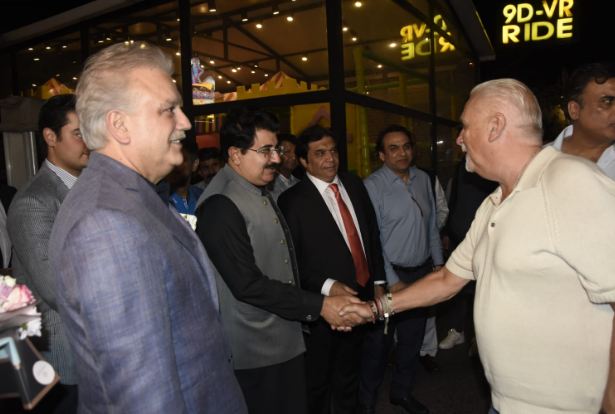
He expressed these views while talking to the media on the occasion of an event held in Islamabad in the honour of foreign football diginities. Former Chairman Senate Sadiq Sanjrani, PML-N leader Hanif Abbasi, Senator Abdul Qadir, Senior journalist and Analyst Mohsin Jamil Baig and other personalities also attended the event.

Farhan Junejo said that the Portuguese professional football club Benfiqa will train hundred Pakistani children every year adding that there is a lot of football talent in Pakistan, who need long-term planning to improve the football standard so football can flourish with the heights of success in Pakistan.

He said that there is a need to provide professional coaching to produce world-class players which needs the right policy to be adopted; the future of this sport will be bright in Pakistan as so many foreign football clubs were never visited before in the history of Pakistan.

“ We will work with government to create a bright future where every child will have the opportunity to fulfill their dreams in the field of football”, adding that we will get a boost while the best talent will also get an opportunity to come forward through the Pakistan Football League as soccer city will be built in Karachi according to FIFA standards.

He said that Pakistan has huge potential in sports and such opportunities would help explore hidden talent, bringing youth into the game of football, adding that we will explore talent and provide opportunities for youth to come forward and show their potential.

I am very much hopeful to see football gaining momentum in the country and anticipated a bright future for this wonderful sport in Pakistan, Farhan Junejo concluded.

It is pertinent to mention that the Pakistan football League UK delegation also met with Chairman Senate Syed Yousaf Raza Gilani and Advisor to the Prime Minister on Inter Provincial Coordination (IPC) Rana Sanaullah and discussed the way forwards for the promotion and development of the game of football in Pakistan.

SIF hosts World Environment Day event focused on land restoration and sustainable practices

SIF hosts World Environment Day event focused on land restoration and sustainable practices

ISLAMABAD, JUN 4 /DNA/ – Secours Islamique France Pakistan Mission (SIF) Celebrated World Environment Day with French Ambassador along with SIF orphan children and their families.

French Ambassador said, ‘as an individual we all have to protect the environment and we have to make the wise choices to conserve our planet and we have only one planet, there is no planet B’

Islamabad, 4 June 2024 – Secours Islamique France Pakistan Mission (SIF) hosted a vibrant World Environment Day celebration, themed as “land restoration, desertification, and drought resilience,” on 4 June 2024. The event brought together community members, dignitaries, and stakeholders to advocate for sustainable practices and environmental awareness.

H.E. French Ambassador Nicolas Galey and his wife participated in the event alongside SIF orphan children and their families. They distributed solar lamps and health and hygiene kits, enjoyed children’s performances, and interacted with the community. Other notable attendees included Dr. Sadia Kamal, Vice President of the Press Club, Roomi Hayat, CEO of IRM, and officials from the Social Welfare Department, Child Protection Bureau, and others.

The celebration emphasized individual and collective actions in safeguarding the planet for future generations. Educational sessions and activities focused on land restoration, desertification, and drought resilience. Participants received Health & Hygiene Kits and solar lamps to promote sustainable living practices.

The event featured captivating performances, including a thought-provoking skit and a moving poem, “Yeh sab ka geet hai” (It’s everyone’s song), centered around the theme of World Environment Day 2024. Guests also explored locally crafted handicrafts and delicious food products, showcasing the community’s rich diversity.

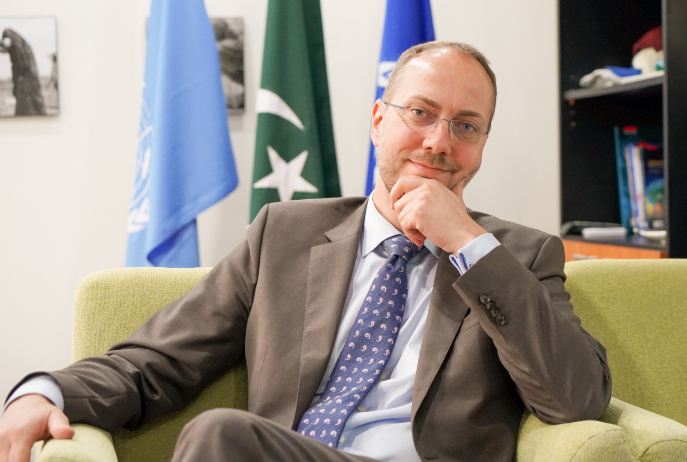
H.E. French Ambassador Nicolas Galey emphasized the international significance of environmental conservation and global collaboration in tackling environmental challenges. Dr. Altaf Abro, Head of Mission, Secours Islamique France, expressed his delight at the successful celebration and reiterated SIF’s commitment to environmental stewardship and sustainable development.

Secours Islamique France Pakistan Mission continues to work towards a greener and healthier planet, promoting sustainable development and empowering individuals. For media inquiries, please contact Nasir Malik, Communication and Advocacy Officer, at 03310161101.

About Secours Islamique France (SIF) Pakistan Mission:

Secours Islamique France (SIF) is an International Non-Governmental Organization operating in Pakistan through its Mission. SIF provides humanitarian aid and development assistance to vulnerable communities, focusing on sustainable development, poverty alleviation, food security, education, and social cohesion.

Judges versus Judges: The SIC Reserve Seats Controversy

Qamar Bashir

By: Qamar Bashir

The entire proceeding of the Supreme Court on the Sunni Ittehad Council’s petition seeking the allocation of reserved seats for women and minorities in the National and Provincial Assemblies seemed like a clash between the Chief Justice and the rest of the bench. The Chief Justice used the strength and power of his argument to assert that PTI’s failure to conduct intra-party elections was the root cause of their predicament. Consequently, all actions taken by the Election Commission and the subsequent Supreme Court decision to deprive PTI of the BAT election symbol were seen as the party’s own fault. The Chief Justice argued that PTI should accept the repercussions of their mistakes.

During the hearing, a stage was reached where the Chief Justice seemed completely cornered by his fellow judges. The brother judges negated the Chief Justice’s interpretation of his own judgment. The Chief Justice maintained that even when PTI was deprived of the BAT symbol, individual candidates could have demanded it as their election symbol.

The majority of the judges argued that if BAT were allocated to any party or independent candidate, it would have resulted in a contempt of court case. Justice Munib was particularly incisive, categorically stating that, according to the Supreme Court judgment and contrary to what the Chief Justice was now arguing, the BAT symbol was off the list for this general election.

An interesting scenario was painted by a brother judge: the Election Commission, knowing that the SIC did not contest the elections and recognizing that all independents who joined the SIC belonged to PTI, implicitly recognized the existence of PTI. Therefore, the EC should have allocated the reserved seats to PTI, effectively removing the SIC from the picture.

A recurring question was whether the SIC contested the elections, to which the answer was a resounding no. This led to heated arguments about how a party that did not contest the elections could claim reserved seats. Without giving the lawyers a chance to address this question, one of the brother judges provided a prompt answer saying that according to a notification from the Election Commission, the SIC was accepted as a registered political and parliamentary party on February 22, 2024, having won 82 seats. Therefore, as per the constitution and the Election Act, the independents who had joined the SIC within three days under Article 51 of the constitution were entitled to claim reserved seats for women and minorities in the National and provincial assemblies.

The lady lordship raised another pertinent question: if independent candidates, other than those of the SIC, have joined parties other than PTI, then why have the independents of PTI who joined the SIC not been accepted so far? Another brother judge raised an equally important question, noting that the ECP first declared the SIC a parliamentary party and asked PTI’s independents to join, which they did within three days, the ECP turned around and stated that since the SIC does not qualify as a political party, it cannot be granted the reserved seats.

The question of proportional representation was raised repeatedly. One argument was that, under the constitution, the allocation of reserved seats must be based on the seats won and secured in the national and provincial assemblies. Thus, they can only be allocated based on seats won, and independent candidates must join a political party within three days of the election to claim reserved seats. However, this argument was deeply contested by the Chief Justice, who believed that, as per the constitution, the National Assembly would only be considered complete when all reserved seats are allocated to political parties. According to him, independent candidates, regardless of their number, cannot claim reserved seats. The Chief Justice argued that candidates contest elections based on their party’s manifesto, and if they join another party with a different manifesto, it disrespects the people’s mandate. However, the brother judges refuted this, arguing that it would be a greater crime to disrespect the people’s mandate by failing to distribute reserved seats proportionally based on seats won or secured.

Justice Athar Minullah interjected with a broader philosophical view, stating that the biggest stakeholders in this case are the public and the voters, who cannot be disenfranchised. He emphasized that it was the duty of the Election Commission to ensure this right under Article 70 and that the EC should have rectified its mistake by itself, instead of depriving the people of their rights.

He further argued that instead of protecting their rights to vote, these very voters were intimidated and harassed, and one political party was singled out. The state’s brute power was employed to crush the party and its leadership, depriving it of a free hand and level playing field to contest the elections. It was argued that since voters have the fundamental right to cast their vote according to their conscience, and political parties have the right to contest elections in a fear-free environment, both of these rights were violated. Therefore, the Supreme Court, as the guardian of fundamental rights, should play its role in rectifying the wrong done to both the voters and the political party. However, this line of argument was brushed aside by the Chief Justice, who interjected that the bench had to confine itself within constitutional limits and should not indulge in endless discussion.

One stark reality that emerged from the two days of highly contested hearings was the Supreme Court’s misconstrued judgment, authored by the Chief Justice, which deprived PTI of its election symbol. This forced PTI candidates to contest elections as independents, causing the party to lose significant political capital. It made it difficult for candidates to launch effective election campaigns and created confusion among voters trying to identify PTI candidates. Furthermore, the process of allocation of reserved seats was seen by almost all the brother judges to be full of errors, omissions, and faulty conclusions. One of the judges even stated that the Supreme Court should not rubber-stamp the cascade of errors and omissions made by the Election Commission. However, the Chief Justice countered by asserting that everything could have fallen into place if PTI had conducted intra-party elections.

After diligently and carefully observing both sides, one can predict the upcoming judgment. The court may decide to allocate the share of the reserved seats in both the National and Provincial Assemblies to the SIC after taking them back from other political parties. Another likely scenario is a split verdict from the full bench, which may restore PTI as a party in the National and Provincial Assemblies and allocate the reserved seats to it. A third, extremely unlikely scenario would be to uphold the decision of the Election Commission and maintain the status quo.

By: Qamar Bashir

Former Press Secretary to the President

Former Press Minister to the Embassy of Pakistan to France

Former MD, SRBC

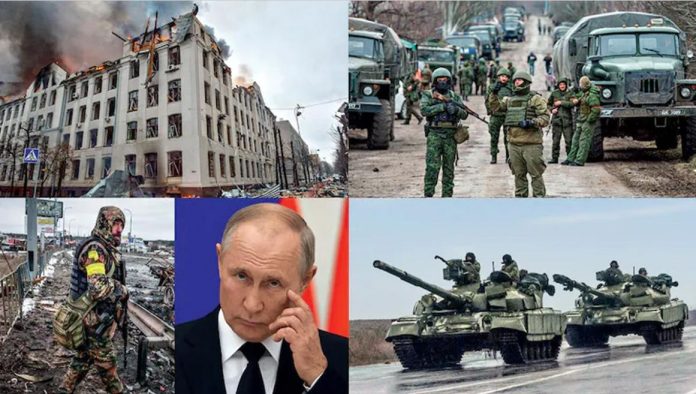
Unraveling the Layers: Understanding the Russia-Ukraine Conflict

Unraveling the Layers: Understanding the Russia-Ukraine Conflict

By: Bisma Farukh

Russia and Ukraine’s conflict is a complex tale with roots in geopolitics, history, and the struggle for national sovereignty. A complex web of past grievances, ethnic tensions, and geopolitical ambitions lies beneath the surface of military exercises and diplomatic negotiations. It is necessary to examine the political, cultural, and historical aspects of the Russia-Ukraine war in order to fully understand it.

Historical Context: Russia and Ukraine have had centuries-long relations characterized by alliances, wars, and dominance. Because of its valuable trade routes, access to the Black Sea, and lush land, Ukraine has long been a strategically important region sought after by other regional powers. The relationship is further complicated by the legacy of Soviet rule, as Ukraine gained independence after the Soviet Union collapsed in 1991 but retained close political and economic ties to Russia.

Crimean Annexation and Eastern Ukraine Conflict: The conflict’s contemporary phase began in 2014 when Russia annexed Crimea. Following the Euromaidan protests in Ukraine, which resulted in the removal of pro-Russian President Viktor Yanukovych, this action was taken.

International criticism of the annexation was voiced, but Russia defended its actions by citing the need to protect ethnic Russians and its strategic interests in Crimea, which is home to an important naval base.

In the Donetsk and Luhansk regions of eastern Ukraine, pro-Russian separatists simultaneously proclaimed their independence, setting off a bloody conflict with Ukrainian government forces.

Tensions increased after accusations that Russia was providing military assistance to the separatists. This resulted in a long-lasting conflict that cost a great deal in terms of both lives lost and money.

Geopolitical Chessboard: Rivals between the West and Russia for influence in Eastern Europe are reflected in the conflict as well as larger geopolitical rivalries. As perceived by Moscow as an intrusion on its sphere of influence, Ukraine’s ambition for stronger connections with the European Union and NATO has been a source of conflict. Russia was viewed as demonstrating its strength when it annexed Crimea and was cautioning the West not to expand too much.

As a test of the West’s dedication to democratic and territorial integrity ideals, backing Ukraine has taken on a life of its own. The international community has condemned aggression and the violation of sovereignty, and this is demonstrated by the sanctions placed on Russia in response to its actions in Ukraine.

Ethnic and Cultural Dynamics: Disparities in ethnicity within Ukraine, specifically between speakers of Russian and Ukrainian, have also exacerbated tensions. In terms of language and culture, some areas are more closely aligned with Russia, while others strongly identify as Ukrainian. Exacerbating societal fractures and impeding efforts at reconciliation, this divide has been used by both internal and external actors to further their agendas.

Humanitarian Toll: It is critical to remember the suffering caused by the conflict despite the geopolitical gamesmanship and diplomatic bluster. Communities have been uprooted, families have been shattered, and thousands of people have died. A peaceful solution is desperately needed, as evidenced by the infrastructure damage and economic hardship that have exacerbated the humanitarian crisis in eastern Ukraine.

Pathways to Peace: There are still ways to resolve the conflict between Russia and Ukraine, despite its complexity and difficulties. De-escalation and negotiation frameworks are provided by diplomatic initiatives like the Minsk agreements. But for them to be implemented successfully, there needs to be sincere political will and dedication on the part of all parties.

Communities that are divided can also benefit from grassroots dialogue and reconciliation efforts that promote mutual understanding and healing. People-to-people interactions, cultural exchanges, and civil society initiatives can unite disparate groups and encourage tolerance and cohabitation.

In the end, a peaceful coexistence commitment, respect for international law, and acknowledgement of each other’s legitimate interests are necessary for resolving the RussiaUkraine conflict. A more stable and prosperous future for both Russia and Ukraine can only be realized via communication, compromise, and concerted efforts to heal the wounds of the past.

Conclusion: The conflict between Russia and Ukraine is a multifaceted and intricate phenomenon that has historical roots, geopolitical implications, and humanitarian ramifications.

Issues of sovereignty, territorial integrity, and geopolitical rivalry have gained prominence as a result of the annexation of Crimea and the ongoing conflict in eastern Ukraine. Nevertheless, despite the chaos, there are hints of hope for a calm conclusion.

Cooperation between grassroots and diplomatic efforts is necessary to achieve peace. A sincere commitment and cooperation from all parties involved are necessary for diplomatic initiatives like the Minsk agreements to provide frameworks for negotiation and de-escalation. A more peaceful future can be established by encouraging communication and harmony amongst divided communities, which can aid in bridging racial and cultural gaps.

The Russia-Ukraine conflict is ultimately a human tragedy with far-reaching consequences rather than just a geopolitical chess match. The welfare and goals of those caught in the crossfire must be given top priority in the pursuit of peace, giving them the opportunity to start over and rebuild their communities and lives. The only way to mend the scars of the past and ensure a better future for Russia and Ukraine is via communication, cooperation, and joint efforts.

By: Bisma Farukh

Department: International Relations

Muslim Youth University, Islamabad.

Stay Connected

64FansLike
60FollowersFollow

Latest Reviews

Exchange Rates

USD - United States Dollar
EUR
1.17
GBP
1.35
AUD
0.67
CAD
0.72