Home Blog Page 709

New Gwadar airport nears completion

New Gwadar airport nears completion

Gwadar, JUN 7: The New Gwadar International Airport, a flagship project under the China Pakistan Economic Corridor (CPEC), is now in its final stages of construction. Set to be a modern marvel, the airport spans across 4,300 acres of land, boasting a runway capable of accommodating the Airbus A380, the world’s largest aircraft.

With a sleek terminal building covering 14,000 square meters, the airport aims to elevate Gwadar’s infrastructure and pave the way for future development. The project, estimated at $246 million, is on track for completion in 2024.

Recently, a significant milestone was achieved as the Civil Aviation Authority of Pakistan (CAA) successfully conducted a five-day flight test operation, supported by China, starting from Tuesday, June 4, 2024. The inaugural test flight was greeted with a traditional salute upon touchdown.

The objective behind this crucial test phase was to assess the performance, quality, and safety of various navigation facilities, flight procedures, and landing strips. With these tests completed, the project is now poised to enter its final phase.

Upon its completion and handover to local authorities later this year, the New Gwadar International Airport promises to stand as a beacon of modernity in Gwadar. It holds the potential to significantly enhance the city’s infrastructure and bolster its position as a key player in regional development.

“President Ilham Aliyev’s Address: “Combating Landmine Threats for a Safe and Green Future””

President of Azerbaijan Ilham Aliyev addressed the participants of the Conference themed “Mitigating Environmental Impact of Landmines: Resource Mobilization for Safe and Green Future,” Azernews reports.

The address reads:

“Dear Conference participants,

I welcome you on the occasion of the opening of the International Conference themed “Mitigating Environmental Impact of Landmines: Resource Mobilization for Safe and Green Future”.

Today, mines and unexploded ordnance continue to remain an acute problem posing a threat to people’s security across many countries. Along with jeopardizing human life, the mines seriously challenge socioeconomic development, damage the environment and cultural heritage, hinder post-war recovery and development initiatives, and ultimately impede the Sustainable Development Goals, even decades after wars have ended.

While mine explosions pose a threat to people’s lives and put their very right to live into question, they also significantly damage the environment. Plastic waste resulting from an explosion entails environmental consequences by negatively impacting soil structure. Mines that remain unearthed for a long time can lead to hazardous chemical reactions. The soil not in use due to the threat of mines is subjected to erosion and abrasion. Therefore, it is particularly significant that today’s conference is organized in the run-up to the 29th Session of the Conference of the Parties to the UN Framework Convention on Climate Change – COP29, which Azerbaijan will host.

Azerbaijan is bearing the brunt of a 30-year-long conflict and occupation of its lands by Armenia, suffering from a mine pollution problem, and stands among the most mine-polluted countries of the world. According to initial estimates, roughly 12 percent of the country’s territory is polluted by 1.5 million mines and an unknown number of unexploded ordnances.

Since the end of the war in 2020, 361 of our citizens, mostly civilians, have fallen victim to mine explosions, resulting in 68 deaths and 293 severe injuries. Overall, since the beginning of Armenia’s aggression against Azerbaijan, over 3400 of our citizens have suffered from mines, including 358 children and 38 women. The steady increase in the number of mine victims is associated with Armenia’s refusal to provide accurate maps of the mines it planted across Azerbaijan’s territory, and with placing booby traps along the roads, cemeteries, and other civilian facilities located behind the former line of contact. From 2020 to 2023, new mine zones were created stretching up to 500 kilometers, new mines had been planted in Azerbaijan. Responsibility for that rests with Armenia.

Challenges we face on demining also hamper our development and recovery efforts, creating serious obstacles for the return of 800 thousand formerly displaced persons.

Humanitarian demining is among the top priorities of Azerbaijan’s state policies, and the foundation of that was laid by the National Leader of the Azerbaijani people – Heydar Aliyev. Today, the primary body in charge of humanitarian demining in Azerbaijan is the Mine Action Agency of the Republic of Azerbaijan – ANAMA.

So far, some 140 thousand hectares have been cleared of 119,946 mines and unexploded ordnances. Yet, mined areas stretch far beyond that. Mines are easy to plant but mine clearance is a much more difficult and complex process. In a short span of time, Azerbaijan has mobilized all its strength and is using the most advanced and cutting-edge technologies available worldwide. We are implementing measures to enhance efficiency in mine clearance, and our capabilities have significantly improved compared to previous years. All-women demining teams have also been deployed since last year.

Our country is implementing humanitarian demining at its own expense. Adequate political and practical support from the international community for mitigating the humanitarian consequences of mines and demining the affected areas are of utmost significance.

While addressing its mine problem, Azerbaijan has simultaneously launched multiple initiatives to rivet the international community’s attention to this matter. As you may know, last year our country has officially declared humanitarian demining as the 18th National Sustainable Development Goal, and we are working to ensure the recognition of this issue as the UN’s Global 18th SDG. In the meantime, Azerbaijan has launched an initiative to establish a Special Contact Group on Humanitarian Demining within the Non-Aligned Movement. The Contact Group has begun operating since last September.

At the 15th meeting of the states-parties to the “1954 Hague Convention for the Protection of Cultural Property in the Event of Armed Conflict,” held in 2023, a resolution titled “The Impact of Mines on Cultural Heritage” was adopted upon Azerbaijan’s initiative. As a follow-up to this momentous resolution, Azerbaijan hosted a special conference in Aghdam this May, themed “The Impact of Mines and Unexploded Ordnance on Cultural Property.”

In the past three years, our country has hosted a number of international conferences, in collaboration with the UN, dedicated to the subject of mines. Along with being leading platforms for the discussion of mine action matters, these events draw greater attention to this significant problem that troubles humanity in the modern era. Presently, Azerbaijan is working with the UN to establish the “Center of Excellence” to provide education on the mine action. A letter of intent is due to be signed between the ANAMA and the UN Development Programme on the sidelines of this Conference. This notable development will allow Azerbaijan to share its expertise with countries that face similar problems.

Today’s event demonstrates Azerbaijan’s determination to tackle the mine issue, one of the challenges of modern times. I believe that this conference will contribute to addressing the problem of mines and their consequences, including the environmental impact, as well as to the exchange of advanced experience in the area of the mine action.

I extend my best wishes to you and wish the conference every success.

Ilham Aliyev

President of the Republic of Azerbaijan

Baku, 29 May 2024″

Tunisian ambassador to Pakistan Borhene El Kamel passes away

DNA

ISLAMABAD: Borhene El Kamel, the Tunisian ambassador to Pakistan, has passed away after a prolonged battle with a serious illness. The announcement of his death was made by his son, who shared the sad news with the diplomatic community in Islamabad. He stated, “It is with great sorrow that I announce that my father, Borhene El Kamel, Tunisian Ambassador to Pakistan, has passed away this morning in his hometown of Nabeul, Tunisia.”

Ambassador El Kamel had been struggling with health issues since his arrival in Pakistan, necessitating frequent trips to Tunisia for medical checkups.

The diplomatic community has expressed deep grief and shock over his passing, offering prayers for his soul and extending their condolences to the bereaved family. They hope for Almighty’s peace upon his soul and strength for his family to endure this irreparable loss.

Pakistan lose to France in Nations Cup hockey

National Cup hockey

DNA

WARSAW, JUN 5: Pakistan lost to France by 6-5 in the National Cup hockey tournament. Pakistan was down in the first two quarters however in the 3rd and 4th quarter they staged a comeback.

At one time the score was 5-5 equal but then France took lead when it scored a goal on penalty corner.

Pakistan played poorly in the first two quarters and conceded unnecessary penalty corners. The forward line performed poor also thus putting extra burden on the defence line.

Star players Rana Waheed and Shahid unfortunately could not perform well.

The Pakistan goalkeeper Abdullah put up a dismal performance as usual. He conceded straight goals. During the entire game he remained absent thus providing the French attackers with ample chances of goal scoring.

Pakistan qualifies for the semi-final on the basis of a better score average.

IND vs IRE: Rohit Sharma stars as India outclass Ireland in New York

IND vs IRE: Rohit Sharma stars as India outclass Ireland in New York

India defeated Ireland by eight wickets in second Group A match of the ICC Men’s T20 World Cup 2024 at New York’s Nassau County International Cricket Stadium.

Indian skipper Rohit Sharma starred with 52 off 37 with the help of seven boundaries.

Meanwhile, Rishabh Pant scored 36* off 26 balls as the Men in Blue chased down 97-run target in 12.2 overs

Earlier, India bowlers rattled Ireland for 96. Paul Stirling and his men failed to put up a show with the bat as Indian bowlers delivered exceptional performance collectively.

Gareth Delany was the best batter for Ireland, scoring crucial 26 runs.

Meanwhile, Josh Little (14), Lorcan Tucker (10), Curtis Campher (12) were the only Irish batters reaching in the double figures

Hardik Pandya starred with figures of 3/27 while Jasprit Bumrah took 2/6. Arshdeep Singh also contributed with 2/35. Axar Patel and Mohammed Siraj shared a wicket each.

Earlier, India won the toss and put Ireland into bat first. Rohit said that after featuring in a warm-up game at the same pitch, they know how the pitch will play.

Playing XIs
India: Rohit Sharma (c), Virat Kohli, Rishabh Pant (wk), Suryakumar Yadav, Shivam Dube, Hardik Pandya, Ravindra Jadeja, Axar Patel, Jasprit Bumrah, Arshdeep Singh, Mohammed Siraj.

Ireland: Paul Stirling (c), Andy Balbirnie, Lorcan Tucker (wk), Harry Tector, Curtis Campher, George Dockrell, Gareth Delany, Mark Adair, Barry McCarthy, Josh Little, Ben White.

Pakistan witnesses significant dip in cigarette consumption due to high prices

Pakistan witnesses significant dip in cigarette consumption due to high prices

ISLAMABAD, JUN (DNA): Pakistan has witnessed a significant dip in cigarette consumption due to high prices, and a survey by the Centre for Research and Dialogue (CRD) has validated that taxation is the lynchpin for controlling and curbing cigarette consumption.

“Cigarette consumption has come down by more than 11 billion sticks following the introduction of higher Federal Excise Duty (FED),” said Maryam Gul Tahir, Director of CRD.

“By adopting these measures, Pakistan can follow a tried and tested approach to decreasing cigarette consumption, improving public health outcomes, and simultaneously boosting government revenue through increased taxation on tobacco products,” she said.

According to WHO, “increasing tobacco taxes by 10% generally decreases tobacco consumption by 4% in high-income countries and by about 8% in low- and middle-income countries.”

She said that embracing high cigarette taxes as a deterrent can significantly reduce tobacco consumption and the associated health costs.

Pakistan is grappling with a major health problem as more than 31 million adults (ages 15 and above) are estimated tobacco users (in various forms), this number translates to nearly one-fifth of the adults (ages 15 and above) of the country.

Pakistan has a two-tier FED structure and its share in retail prices is 48% and 68% respectively for low and high tiers. A multitude of research studies and surveys have validated that increased taxation helps reduce cigarette consumption.

A recent survey by the CRD has highlighted a significant shift in smoking habits, revealing that 18% of respondents quit smoking due to increased cigarette prices.

The survey results indicate a robust correlation between cigarette prices and tobacco consumption. A notable 63% of respondents believe that higher tobacco prices reduce smoking rates.

Additionally, around 15% of smokers reported cutting down their cigarette intake due to the increased costs. The total reduction in consumption is estimated to be approximately 20 billion cigarettes per year.

In 2022, Pakistan’s total cigarette consumption ranged between 72 to 80 billion sticks, encompassing officially declared production, smuggled cigarettes, counterfeit products, and cigarettes for which duties have not been paid. These figures highlight the extensive reach of tobacco use in the country and the potential impact of rigorous taxation policies.

Earlier this year, the International Monetary Fund (IMF) recommended authorities to adopt a single-tier tax structure and simplify the taxation.

Meanwhile, the World Bank pointed out that applying the current premium cigarette tax rate (Rs. 16.50 per cigarette) to all cigarette categories could generate an additional 0.4 percent of GDP, amounting to PKR 505.26 billion.

AIIB, Pakistan discuss strategic partnership

AIIB, Pakistan discuss strategic partnership

ISLAMABAD, JUN 05 (DNA) — Vice President and Corporate Secretary of the Asian Infrastructure Investment Bank (AIIB) Ludger Schuknecht on Wednesday met with the Federal Minister for Economic Affairs Ahad Khan Cheema and discussed strategic partnership and future development plans.

The Secretary and Special Secretary of the Ministry of Economic Affairs were also present attended the meeting.The minister expressed gratitude for the valuable support and assistance provided to the people of Pakistan. He commended AIIB’s crucial role in delivering assistance to Pakistan, especially during the 2022 floods, and briefed him on the country’s improving economic outlook.

The Vice President of AIIB expressed his gratitude to the Minister for the strong partnership and collaboration on development issues such as poverty reduction, climate change, financing instruments, and the advancement of SDGs. He agreed to enhance cooperation between the Government of Pakistan and AIIB in the aforementioned areas.

The minister appreciated AIIB’s favorable consideration of new project proposals from Pakistan in the infrastructure sector and expressed hope for continued collaboration in funding and implementing vital projects.

The minister also lauded AIIB’s policy initiatives for new financing efforts related to the Bank’s Climate Action Plan, assuring that Pakistan will support such initiatives, given its status as one of the most climate-vulnerable countries. — DNA

Election Amendment Ordinance 2024: Protecting the Vested Interests

Qamar Bashir

By: Qamar Bashir

The elections in Pakistan held on 8th February 2024 were conducted in a tightly controlled environment and were marred by allegations of rigging, malpractices, and altering of election results through manipulation of Form 47, which is crucial for declaring candidates’ outcomes. The Election Amendment Act 2023 provides a remedy for aggrieved parties to seek redress from election tribunals constituted under Section 140 of the Election Act 2023. However, when the Lahore High Court provided judges to head the tribunals, the Election Commission initially employed delaying tactics and later introduced the Election Amendment Ordinance 2024. This ordinance empowered the Election Commission to appoint retired judges as presiding officers of the election tribunals, raising significant concerns.

The original Election Amendment Act 2023 stipulated that election tribunals should include sitting judges appointed in consultation with the Chief Justice of the High Court. This process ensured judicial oversight and impartiality in handling election disputes. By bypassing this consultation, the Election Commission’s appointment of retired judges may compromise the tribunals’ impartiality and undermine public confidence in the election dispute resolution process.This could result in decisions that are biased towards the status quo, thereby legitimizing fraudulent election practices and denying justice to aggrieved parties.

The mover of this ordinance most likely could be the election commission itself  which may also be a defendant in election rigging allegations. By controlling the appointment of presiding officers to the election tribunals, the Election Commission can exert undue influence over the tribunal’s outcomes. This undermines the fairness of the adjudication process and erodes public confidence in the electoral system.

This Ordinance also reflects the perceived conflicts of interest among its key stakeholders. Allegedly, those involved in drafting and approving the ordinance, including the Ministry of Law and Justice, the Cabinet, the Prime Minister, and the Acting President, may also be the beneficiaries of the rigged elections.

This presents a clear conflict of interest, as these individuals and entities may be directly implicated in election irregularities. Allegedly, they are the ones who stand to gain from the ordinance, which compromises the integrity of the electoral process and the principle of natural justice. For instance, candidates from the PTI, who claim their mandate was stolen, may file complaints against these very Public servants. The ordinance appears to shield these stakeholders from scrutiny by empowering the Election Commission to appoint retired judges to election tribunals without judicial consultation, potentially influencing the tribunal’s decisions in their favor.

This Ordinance also seemed to have violated the principle of natural justice, which demands impartiality and fairness in legal proceedings. The conflict of interest inherent in the involvement of those accused of benefiting from electoral fraud in the drafting and approval of the ordinance contravenes fundamental legal principles. Natural justice requires that no one should be a judge in their own cause (nemo judex in causa sua) and that everyone should have the right to a fair hearing (audi alteram partem).

In a hypothetical scenario, if impartial presiding officers were appointed to the Election Tribunals, they would deliver verdicts without any fear or favor. This could potentially result in many complaints being decided in favor of appellants or complainants, thereby fundamentally altering the composition of the National Assembly, as well as the Provincial Assemblies of Punjab, Sindh, and Balochistan. This scenario would necessitate the formation of new governments, effectively dismantling the current power structures and representing a significant blow to those accused of masterminding the election manipulations.

This led to visualization of another hypothetical scenario, if PTI were to form the government alone or in coalition with other parties at the center and in Punjab, it could lead to significant political shifts. In such a scenario, cases against PTI’s founder, leadership, and workers might be quashed. The narrative surrounding the events of May 9 could shift to the opposite direction, effectively resetting the political chessboard with most power pieces in PTI’s control. 

The prospect of such a shift would undoubtedly lead to renewed political and economic instability. The current ruling coalition, facing the risk of losing power, might employ various tactics to maintain control, including further manipulation or delaying tactics. The opposition, empowered by favorable tribunal decisions, would push for immediate changes, creating a volatile political environment. Such an outcome would be highly unacceptable to the entrenched power structures, as it would signify a dramatic loss of influence and control. Consequently, the stakes for controlling the decisions of the election tribunals become even higher, making it imperative for those in power to ensure that tribunal outcomes are favorable to them.

However, the argument’s strength relies heavily on the assumption that independent tribunals would universally rule in favor of the complainants. While this is plausible given the allegations, it’s not guaranteed. Additionally, the consequences of such rulings, while significant, are speculative and contingent on many variables, including the reactions of various political actors and the public.

The ordinance has already been challenged in the Lahore High Court on the grounds that appointing retired judges of the High Court and District Courts undermines the independence of the judiciary and attempts to control tribunal outcomes in favor of candidates who benefited from manipulated election results.

By compromising the integrity of election tribunals, the ordinance potentially deprives candidates and voters of the opportunity to seek genuine redress for electoral grievances. This situation calls for serious judicial review and possible legislative action to restore the original provisions of the Election Amendment Act 2023, thereby upholding the principles of judicial independence and democratic governance.

By: Qamar Bashir

Former Press Secretary to the President

Former Press Minister to the Embassy of Pakistan to France

Former MD, SRBC

New documentary ‘When the Floods Come’ premieres on World Environment Day

New documentary ‘When the Floods Come’ premieres on World Environment Day

Ministry of Climate Change, Aga Khan Foundation and United Nations mark World Environment Day

Event raises awareness on the need to work collectively on mitigating the effectsof climate change and protect the environment in Pakistan.

ISLAMABAD, JUN 5 /DNA/ – Today the United Nations, the Aga Khan Foundation and the Ministry of Climate Change & Environmental Coordination celebrated World Environment Day in Islamabad withan event raising awareness on how climate change, biodiversity loss and pollution are affecting Pakistan, and how people are taking action.

“Pakistan is among the countries most adversely impacted by climate change, but it is leading the way with its climate diplomacy,” said Ms. Romina Khurshid Alam, Coordinator to the Prime Minister on Climate Change. “We are educating our youthon this crucial subject. We will leave no stone unturned to slow environmental degradation down and increase our ability to deal with the fallout of global warming and its impacts on clean water, health, agriculture, food systems, and energy.”

During the ceremony, Pakistan’s ‘Living Indus’ initiative officially received the World Restoration Flagship award which the UN Environment Programme (UNEP) announced in March; UNEP supports Pakistan’s National Adaptation Plan for building resilience to climate change. Living Indus is a Government-led initiative, which the UN supports, to restore the ecological health of the Indus River Basin. Moreover, the event paid tribute to 30 ‘Climate Heroes’ — women and men who take action against the climate crisis across the country.

“Just last week,temperatures in Pakistan crossed 52 degree Celsius. We cannot turn back time, but we can take collective action to adapt to this new age of global warming,”said Mr. Mohamed Yahya, the UN Resident Coordinator in Pakistan.“Across the country, communities are already trying to cope with the impact of climate change; they combat pollution, deforestation, rapid glacial melt, floods, droughts and heatwaves. By supporting ‘Living Indus’ and a range of innovative programmes, UNagencies aim to help them protect and restorenature, biodiversity, water sources, as well as their lives and livelihoods.”

The event marked the premiere of ‘When the floods come’, a new documentary by Nyal Mueenuddin. This young Pakistani filmmakerwent on a 3000km odyssey down the Indus River to capture the most intimate stories of how people’slives are inextricably bound to climate change.The film will be screened again during apublic event at PNCA this Friday.

“Communities have been experiencing firsthand the impacts of climate change and environmental degradation. It is already transforming landscapes, habitats, livelihoods, and local aspirations, saidMr. Akhtar Iqbal, CEO, Aga Khan Foundation. “That said, we have witnessed how our collective actions can make a difference. We, at the Aga Khan Foundation and agencies of the Aga Khan Development Network, have been fully committed to doing our part for over 55 years and we will continue to support Pakistan to cope with the challenges ahead. We want to ensure that communities are empowered to be more resilient, have access to clean energy, adopt more sustainable natural resources management practices and contribute to large reforestation efforts. We also want to place women and young people at the centre of climate leadership and invest in their future through boosting green businesses and jobs.”

In Pakistan and all over the world, ecosystems are threatened. From forests and drylands to farmlands and lakes, natural spaces on which humanity’s existence depends are reaching a tipping point. This year, World Environment Day focuses on land restoration, halting desertification and building drought resilience under the slogan “Our land. Our future. We are #GenerationRestoration.” 

Led by the UNEP, and heldannually since 1973, World Environment Day has grown to be the largest global platform for environmental outreach. It is celebrated by millions of people across the world.

Prime Minister Shehbaz Sharif arrives in Beijing for high-level bilateral talks

Prime Minister Shehbaz Sharif arrives in Beijing for high-level bilateral talks

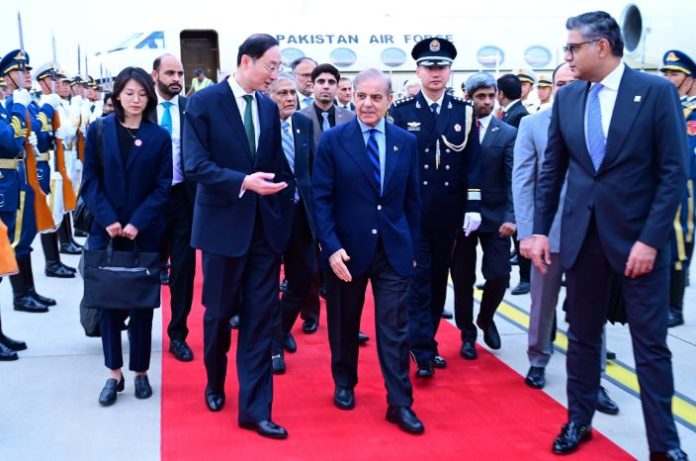
BEIJING, JUN 5: /DNA/ – Prime Minister Muhammad Shehbaz Sharif arrived in Beijing in the second segment of his 5 day visit to China. He was recieved by Chinese Vice Foreign Minister Sun Weidong at the airport.

The Prime Minister is accompanied by a high-level delegation comprising the Deputy Prime Minister and Foreign Minister and other members of the cabinet and senior officials.

The Prime Minister has an extensive programme in Beijing reflecting depth and breadth of Pakistan-China ties. He will meet the President, the Premier and the Chairman of the Standing Committee of the National People’s Congress. He will also attend a Pakistan-China Friendship and Business event and have meetings with the CEOs of leading Chinese companies working on CPEC projects. A number of MoUs between the two countries on cooperation in various fields are likely to be signed.

Stay Connected

64FansLike
60FollowersFollow

Latest Reviews

Exchange Rates

USD - United States Dollar
EUR
1.17
GBP
1.35
AUD
0.67
CAD
0.72