Home Blog Page 696

VC, AIOU terms role of religious scholars as vital for reforming society

AIOU to launch BS, M.Phil programs on Seerat -un –Nabi

ISLAMABAD, JAN 26 (DNA) —  Vice-Chancellor, Allama Iqbal Open University (AIOU), Professor Dr. Nasir Mahmood, emphasized the importance of translations in promoting Islamic values, traditions, and culture.

He stated that translation is the most effective means of intellectual progress and serves as a window to understanding other languages and civilizations. Therefore, the process of translations in Pakistan needs to be expanded, and scholars and the religious community can play an exemplary role in this noble cause.

Prof. Dr. Nasir Mahmood expressed these views while addressing the closing ceremony of a five-day training workshop titled “Translation as a Science,” held yesterday at the university.  He further stated that the promotion of Islamic values and traditions has, unfortunately, remained a distant dream, which now needs to be realized.

The Vice-Chancellor highlighted the elevated status of religious scholars in society, noting that their words carry weight, and people trust and believe what they say.  He urged religious scholars to take the lead in promoting Islamic values and contributing to societal reform.

Dr. Nasir Mahmood thanked Dr. Ghulam Ali, Director of the Center for Languages and Translation Studies, and Fakhruddin Akhunzada, Executive Director of the Forum for Language Initiatives, for organizing the workshop and congratulated them on its success.

The workshop was organized by the university’s Center for Languages and Translation Studies in collaboration with the Forum for Language Initiatives. It provided translation training to participants from 12 different languages. Participants expressed their views, describing the training as highly beneficial.

They shared that they had learned the principles and techniques of translation within a short period. They also requested that such training workshops continue in the future. Dr. Ghulam Ali, Director of the Center for Languages and Translation Studies, Fakhruddin Akhunzada, Executive Director of the Forum for Language Initiatives, faculty member Dr. Lubna Umar, and others also spoke at the event.

They emphasized the use of technological tools in translations and the importance of maintaining neutrality in the translation process.Dr. Ghulam Ali mentioned that the Vice-Chancellor’s support was instrumental in the success of the workshop.

Fakhruddin Akhunzada stated that this was their second collaborative event with Allama Iqbal Open University, which had been highly successful. He expressed a commitment to continuing such events and training workshops in the future.

The closing ceremony of the five-day workshop was attended by the University’s Registrar, Raja Umar Younis along with all principal officers and faculty members. —DNA

Shab-e-Miraj: A Divine Journey and Its Impact on Us

Shab-e-Miraj: A Divine Journey and Its Impact on Us

by Muhammad Mohsin Iqbal

Shab-e-Miraj, or the Night of Ascension, is one of the most profound and miraculous events in Islamic history. It marks the extraordinary journey of the Holy Prophet Muhammad (peace be upon him) from Masjid al-Haram in Makkah to Masjid al-Aqsa in Jerusalem and then through the seven heavens to the divine presence of Allah. This night is not merely a testament to the greatness of the Prophet (peace be upon him) but also a source of immense guidance and inspiration for Muslims worldwide.

One of the most remarkable aspects of Shab-e-Miraj is the suspension of time during the journey. This extraordinary event defied the natural laws of physics and human understanding. Although the journey encompassed vast distances—earthly and celestial—it all occurred in a fraction of a night. When the Prophet (peace be upon him) returned, his bed was still warm, and the water he had used for ablution had not yet spilled. This suspension of time illustrates the infinite power of Allah and His ability to transcend the limitations of human perception.

During this miraculous journey, the Prophet Muhammad (peace be upon him) was shown numerous signs of Allah’s greatness and was given glimpses into the realities of the Hereafter. He saw the rewards awaiting the righteous and the punishments for sinners, providing clear reminders of the consequences of our actions in this life. Among the remarkable sights, he witnessed rivers of milk, honey, and wine in Paradise, which symbolize the eternal blessings for those who remain steadfast in their faith. He also saw the torments of Hell, where individuals were being punished for sins such as dishonesty, arrogance, and neglect of Salah, emphasizing the importance of leading a righteous and God-conscious life.

As the Prophet (peace be upon him) ascended through the seven heavens, he met several prophets and noble personalities. At each level, he was welcomed with greetings of peace and brotherhood. In the first heaven, he met Prophet Adam (peace be upon him), the father of humanity. In the second heaven, he encountered Prophet Yahya and Prophet Isa (peace be upon them). The third heaven brought him face-to-face with Prophet Yusuf (peace be upon him), renowned for his unparalleled beauty. In the fourth heaven, he met Prophet Idris (peace be upon him), and on the fifth, Prophet Harun (peace be upon him). The sixth heaven was where he encountered Prophet Musa (peace be upon him), and on the seventh, he met Prophet Ibrahim (Abraham, peace be upon him), who was leaning against the Al-Bayt Al-Ma’mur, a celestial house of worship where angels continuously perform Tawaf.

These meetings with the prophets signify the continuity of the divine message and the unity of the prophetic mission. They also highlight the unique status of the Prophet Muhammad (peace be upon him) as the Seal of the Prophets and the mercy for all creation.

At the pinnacle of this journey, the Prophet Muhammad (peace be upon him) reached Sidrat al-Muntaha, the Lote Tree of the utmost boundary, beyond which no creation has ever ventured. Here, he was granted the unparalleled honor of being in the divine presence of Allah. It was at this moment that the obligatory five daily prayers (Salah) were ordained for the Muslim Ummah. Initially, fifty prayers were prescribed, but upon the Prophet’s (peace be upon him) repeated requests—guided by Prophet Musa’s (peace be upon him) advice—Allah, in His infinite mercy, reduced the number to five while retaining the reward of fifty. This signifies the immense importance of Salah as the cornerstone of a believer’s life and a direct link between the Creator and His creation.

The lessons of Shab-e-Miraj are profound and far-reaching. The journey demonstrates the limitless power of Allah, the importance of steadfastness in faith, and the necessity of fulfilling our spiritual obligations. Salah, as the key commandment of this night, is not just a ritual but a means of achieving spiritual elevation, discipline, and moral clarity. It strengthens our connection with Allah, reminding us of our purpose and the transient nature of worldly pursuits.

This sacred event also inspires us to reflect on our lives and the changes we need to make to align ourselves with the teachings of Islam. Shab-e-Miraj teaches us humility, gratitude, and the importance of prioritizing our spiritual well-being over material concerns. It serves as a reminder that faith, sincerity, and devotion can elevate us to unimaginable heights.

For Pakistan, the lessons of Shab-e-Miraj hold great relevance. The miraculous journey underscores the values of unity, justice, and adherence to divine principles. To overcome challenges such as corruption, intolerance, and social inequality, we must draw upon the teachings of this night and implement them in our collective lives. If leaders and citizens alike embody the virtues of honesty, fairness, and accountability, Pakistan can move toward a brighter and more prosperous future.

In conclusion, Shab-e-Miraj is not merely a historical event but a timeless source of guidance, inspiration, and hope. It reminds us of the boundless power of Allah, the profound responsibilities of faith, and the transformative potential of sincere worship. By internalizing the lessons of this miraculous journey and incorporating them into our lives, we can bring about positive change both individually and collectively. For Pakistan, embracing these lessons can provide a path to overcome its challenges and achieve its aspirations as a nation rooted in the principles of Islam. Let this blessed night inspire us to strengthen our faith, lead righteous lives, and work together for a better tomorrow.

KCEU holds protest in front of Indian Embassy in Brussels on Republic Day

KCEU holds protest in front of Indian Embassy in Brussels on Republic Day

BRUSSELS, JAN 26 /DNA/ – Under the auspices of Kashmir Council Europe (KCEU), a peaceful protest was held in front of the Indian Embassy in Brussels on the occasion of India’s Republic Day (Black Day) today, January 26, Sunday.

The protest demonstration led by Chairman of Kashmir Council EU Ali Raza Sayed, was participated by a number of Kashmiris and their sympathizers. The protest was also supported by other political and social organizations. The protesters carried Kashmiri flags and banners inscribed with slogans in favor of Kashmiris and against Indian atrocities in Indian illegally occupied Kashmir. They demanded that India should stop atrocities against Kashmiris and fulfil its promises for granting Kashmiris with their right to self-determination.

Speaking at the gathering, Chairman Kashmir Council EU Ali Raza Syed asked that human rights violations should be stopped in Occupied Kashmir and Kashmiris should be provided their rights, so that the Kashmir problem can be solved peacefully and fairly.

It is to be remembered that Indian Republic Day is being celebrated every year as a black day by people of Occupied Kashmir and Azad Kashmir and Kashmiris based in other parts of the world.

Ali Raza Syed said that Kashmiris should get their rights and injustices against them should be ended and the Kashmir issue should be resolved peacefully without any further delay. So that Kashmiris can live a peaceful and prosperous life.

In his address, Ali Raza Syed mentioned important political, social and journalistic Kashmiri personalities who are imprisoned without any reason and said that India is involved in serious crimes against Kashmiris. A large number of Kashmiris are imprisoned without any crime as baseless cases have been created against them under the Indian black laws.

Chairman Kashmir Council EU Ali Reza Syed said that the Kashmiri nation will never give up its right to self-determination and will never bargain on its rights.

Other speakers on the occasion said that the purpose of the protest on the Republic Day of India is that we want to send a message to the whole world that Indian authorities illegally occupy a large part of Jammu and Kashmir for a long time by violating the democratic and human rights of Kashmiris. Targeted and extrajudicial killings and torture and desecration of women continue on a daily basis. The participants of the demonstration demanded the international community to prevent the atrocities in Occupied Kashmir and play its role for a peaceful and just solution to the Kashmir issue.

Sehat Sahulat Program Needs Focused Efforts to Improve its Service Delivery: PIDE

Sehat Sahulat Program Needs Focused Efforts to Improve its Service Delivery: PIDE

ISLAMABAD, JAN 26 /DNA/ – The Pakistan Institute of Development Economics (PIDE) has unveiled an in-depth study on the Grievance Redressal (GR) system of the Sehat Sahulat Program (SSP). This landmark program, which provides health insurance to over 7.9 million families across 68 districts in Pakistan, has emerged as a crucial lifeline for Pakistan’s marginalized communities. Supported by the Alliance for Health Policy and Systems Research, World Health Organization (WHO), the study highlights the program’s successes, critical insights into strengthening grievance mechanisms to ensure its sustainability and greater efficiency.

Authored by Dr. Shujaat Farooq, Director Research PIDE, and Nabila Kunwal, Research Fellow PIDE, the report commends SSP’s efforts in ensuring access to healthcare for marginalized populations and highlights its role in reducing the burden of catastrophic health expenditures. It acknowledges the program’s strong foundation but notes that as it evolves, the grievance redressal system (GRS) must also adapt to meet the growing needs of beneficiaries.

According to the Press Release issued from PIDE, the study underscores the importance of establishing a comprehensive and structured grievance redressal system to address challenges in service delivery and ensure timely resolution of complaints. Key observations include the need for a standardized framework to tackle issues such as enrolment difficulties, denial of services, and limited empanel hospitals.

Currently, there are limited options for a citizen to register a complaint or acquire information about program. The sole source to register the complaint is the call center, and it requires consistent upgradation and adequate staffing. The program requires a centralized complaint management system (ICMS) to efficiently handle the complaints.

At the design level, the SSP needs to improve various areas, i.e., build a national consensus on the federal-provincial role and promote competition in service delivery as there is a single vendor right now (State Life Insurance Corporation). The government has to opt a principal decision on financing inpatient financing to public hospitals as both the insurance and financing is not viable simultaneously. Ideally the public hospitals  should compete with the private hospitals to finance their inpatient expenses. The program should not pay the premium for all citizens and opt some  co-payment formulas to optimize public resources, i.e., the government should pay the premium of only poor households.

Currently, a limited number of hospitals are onboard for inpatient services, and many of them opt for a ‘pick and choose behavior’. To incentivize, the treatment packages must be market-based, so every hospital feels an incentive to participate. Additionally, the provincial regulatory framework must ensure that every private and public hospital with inpatient health facilities is part of scheme.

The report also highlights the need to expand the program’s regional presence. Establishing local offices and enhancing public awareness campaigns will improve engagement and accessibility for beneficiaries. An integrated and automated grievance system, equipped with dashboards for real-time monitoring, is recommended to streamline complaint handling and enhance transparency. Linking this system with health management information systems (HMIS) will enable more effective service delivery.

Policy-level interventions are essential to address systemic gaps, including increasing hospital availability, streamlining enrollment processes, and implementing live data updates in collaboration with NADRA. These steps will help resolve recurring challenges and enhance the program’s overall performance.

Pakistan Navy all set to host 9th AMAN exercise and maiden AMAN dialogue

Pakistan Navy all set to host 9th AMAN exercise and maiden AMAN dialogue

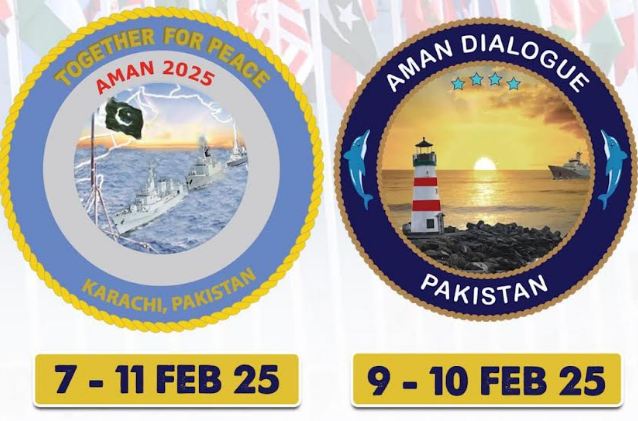
ISLAMABAD, JAN 26: /DNA/ – Pakistan Navy is set to host AMAN-25; the ninth edition of multinational AMAN exercise from February 7 to 11. A key feature of this year’s exercise will be the AMAN Dialogue, where Chiefs of Naval Forces, heads of Coast Guards, and senior leaders from around the world will convene to discuss regional maritime security and devise joint strategies to counter evolving maritime threats.

Around 60 countries will participate in AMAN-25, contributing with ships, aircraft, Special Operations Forces (SOF), Explosives Ordnance Disposal (EOD) teams, Marines, and observers. Delegations from across the globe will also attend the inaugural International AMAN Dialogue, which will take place alongside the exercise.

AMAN exercise consists of harbour and sea phases. During the harbour phase, activities such as seminars, operational discussions, counter-terrorism demonstrations, and pre-sail planning of evolutions at sea will be held. The sea phase would include tactical maneuvers, exercises related to maritime security such as anti-piracy and counter terrorism, search and rescue, gunnery firings and air defence exercises. Highlight of the sea phase will be the International Fleet Review, which will be witnessed by national and foreign dignitaries.

Wedding bells ring! Kubra Khan, Gohar Rasheed make it official

Wedding bells ring! Kubra Khan, Gohar Rasheed make it official

Actors Kubra Khan and Gohar Rasheed have confirmed they are getting married, putting an end to weeks of speculation surrounding their relationship.

The exciting news was revealed through an Instagram post featuring a playful video. The clip included prominent celebrities like Humayun Saeed, Asim Azhar, and Azaan Sami Khan, all humorously speculating about a mystery wedding.

The video ends with Kubra and Gohar standing together, smiling, and subtly dropping hints about their upcoming nuptials. The caption of the video said, ‘Aapke Pyar aur Duaon ke saath … Bismillah.’

The star-studded announcement has sparked a wave of excitement across social media. Fans and fellow celebrities flooded the post with congratulatory messages, celebrating one of the most anticipated unions in Pakistani entertainment.

Kubra and Gohar’s chemistry, both on and off-screen, has long been admired by fans, making this revelation a special moment for many.

Although the couple has yet to disclose specific details about their wedding date, the announcement has already set the stage for one of the most talked-about celebrity weddings of the year.

Pakistani survivors of Dakhla maritime incident to be repatriated

Pakistani survivors of Dakhla maritime incident to be repatriated

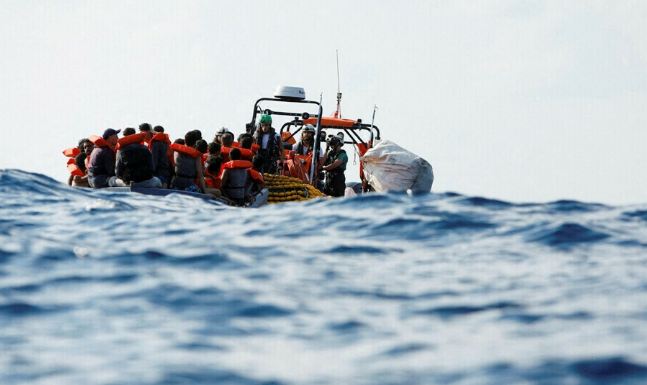
ISLAMABAD, JAN 25 /DNA/ – The Ministry of Foreign Affairs is coordinating the repatriation of 22 Pakistani survivors of the recent maritime incident near the Dakhla port in Morocco. Following thorough investigations and careful coordination with Moroccan authorities, these individuals will be returned to Pakistan in batches.

The Pakistan Embassy in Rabat has been working closely with Moroccan authorities to oversee the relief efforts and finalize the complex repatriation procedure. The Embassy’s consular team in Dakhla has been instrumental in planning the return of the survivors.

The Foreign Ministry’s Crisis Management Unit (CMU) has been actively engaged in monitoring the situation, providing necessary support to the affected individuals, and maintaining active communication with their families.

National identity verification remained a critical component of this process which was completed expeditiously in coordination with the Interior Ministry and the relevant departments.

Separately, the Foreign Ministry is also facilitating the return of 11 Pakistani nationals from Mauritania. These individuals have voluntarily chosen to return home and will be part of a separate repatriation process.

The welfare of Pakistani nationals abroad remains an important priority of the government and it will continue to work to extend all possible facilitation in this regard.

Further updates will be shared as the repatriation efforts moves forward.

ECC approves upward revision in gas tariff for industry, rejects hike for domestic sector

ECC approves upward revision in gas tariff for industry, rejects hike for domestic sector

ISLAMABAD, JAN 25 /DNA/ – The Economic Coordination Committee (ECC) of the Cabinet met today to discuss a summary submitted by Petroleum Division for an upward revision of the indigenous gas tariff for industry (captive power) as well as non-protected domestic slabs.

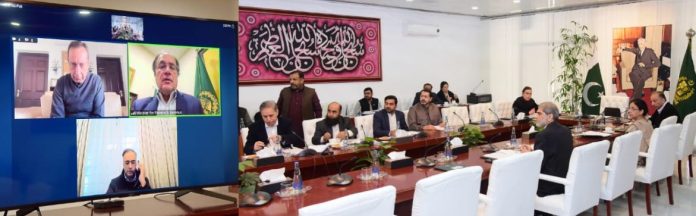
The meeting was chaired by Federal Minister for Finance Senator Muhammad Aurangzeb with Federal Minister for Petroleum Mr. Musadik Masood Malik, Minister for Power Sardar Awais Ahmed Khan Leghari, Minister of State for Finance and Revenue Mr. Ali Parvez Malik, Chairman OGRA, Chairman SECP, Federal Secretaries, and senior officers from the relevant divisions in attendance.

The ECC following a through discussion decided to approve upward revision in gas tariff for captive power plants from Rs 3000 per mmbtu to Rs 3500 per mmbtu to ensure required revenue for the gas sector during FY 2024-25, but it did not agree to increase the tariff for domestic consumers with a view to protecting the domestic consumers from additional burden. The ECC, however, instructed the Petroleum Division to take necessary measures for the imposition of a grid transition levy on the captive power plants to enhance the energy sector efficiency.

Hundreds of employees lose jobs after Monal restaurant closure

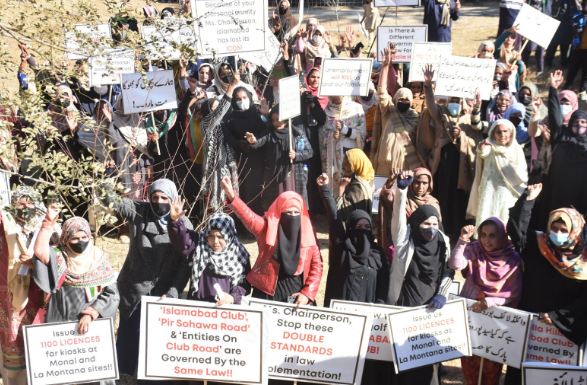
1100 employees lose jobs following restaurant closures at Pir Sohawa Road

ISLAMABAD, JAN 25 /DNA/ – At the behest of chairperson Islamabad Wildlife Board, La Montana and Monal were not only closed, but the buildings of these restaurants built with government money were also demolished.

Margalla National Park has a law and boundary, Margalla Hills, and Pir Sohawa Road have neither any legal status nor any separate law. If the Chairperson Wildlife Board has discovered such a law, then the general public should also be informed about it.

The wildlife law applies equally to Islamabad Club, Riding Club, Polo Club, Gun Club and more than 100 restaurants and commercial centers located in The Margalla Hills National Park. Shah-Allah Ditta, Shakarparian, Club Road and all the commercial centers in Saidpur are still doing their business.

Chairperson Wildlife Board, Our question is about the double standards of the ordinance, why do officers have separate laws for their children and separate for public spaces?

At the behest of the Chairperson Wildlife Board, demolishing only two restaurants out of 113 commercial centers in the national park is not personal enmity, then what else is? Our only demand to the Chairperson Wildlife Board is that all the restaurants used by officers and their children in Margalla National Park should also be brought under the preview of the National Park Law.

 What could be a greater example of the excesses of the Chairperson Wildlife Board than the fact that after the demolition of Monal and La Montana, a huge restaurant in Daman Koh was licensed to do business within the limits of Margalla Park.

But the Chairperson Wildlife Board refused to meet the 1,100 employees who were rendered unemployed.

These actions of the Chairperson Wildlife Board made us unemployed on the one hand and on the other hand, the entire area was made a hub of criminal activities. In the last four months, three murders and several robberies have taken place on Pir Sohawa Road, the record of which is available at Kohsar police station. Not only this, Pir Sohawa Road is also completely damaged at this time and garbage and dirt are seen everywhere. Why don’t the so-called environmental pollution authorities see all this now?

With the closure of the 4 acres restaurants in the 31,000-acre Margalla National Park, which were located in the name of chowki in the Master Plan of Islamabad and have been providing entertainment to the general public, has the wildlife in Margalla National Park been relieved of all the problems faced by them? and Due to the demolition of both the restaurants, has the wildlife started using Pir Sohawa Road? not at all, it is a blatant joke and lie.

We demand from the Chairperson Wildlife Board that all unemployed employees should be given licenses to open kiosks on the land adjacent to Monal and La Montana and if our legitimate demand is not met, our next step will be a sit-in in front of the Islamabad Club and will continue till the law of the Wildlife Board is equally implemented on Islamabad Club. Hope It doesn’t happen.

USA to Form Digital NATO Against China

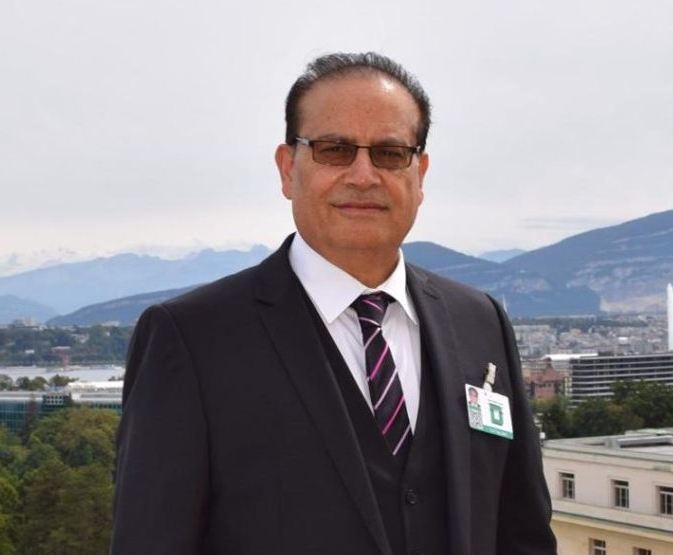
Qamar Bashir

USA to Form Digital NATO Against China

Trump’s Strategy to Contain China (Part-V)

By: Qamar Bashir

Macomb, Detroit, Michigan

Witnessing the U.S. Senate Committees on Finance, Defense, and Treasury confirmation hearings was an eye-opening experience. The hearings provided a unique insight into the mindset of U.S. lawmakers. It became evident that the U.S. considers itself entitled to maintain global dominance, and any perceived threat—whether real or fictitious—is met with the full force of its military and economic power to sustain its hegemony. Often, this is justified by creating largely unfounded reasons to designate a nation as an adversary and using all means to undermine it. 

These hearings reflected a stark reality: the U.S. has now declared China its ultimate adversary and is prepared to use all available means to obstruct China’s progress and development. During the discussions, senators explicitly acknowledged China’s expanding dominance in digital infrastructure, cybersecurity, artificial intelligence (AI), blockchain, and cloud computing. While citing reports—albeit without tangible or logical evidence—the committee raised concerns, framing China’s investments in these technologies as serious threats to U.S. national security, economic stability, and global technological leadership. 

A notable aspect of the discussion was the committee’s acknowledgment of China’s alleged ability to infiltrate various U.S. government agencies, financial institutions, and corporate databases. They cited the December 8th cyberattack on the U.S. Treasury Department as an example, claiming it highlighted Beijing’s capacity to breach critical infrastructure. However, no conclusive evidence was presented to prove that China or any of its companies were responsible for the attack. Investigations did not rule out the possibility that U.S. companies, Russia, or even a European entity could have been involved. Moreover, given that China’s exports to the U.S. are already at an all-time high, there would be little incentive for China to resort to illegal cyber activities, making such accusations appear politically motivated rather than factually substantiated.

The committee also admitted and acknowledged the dependence of the U.S. and its allies on Chinese cloud computing and artificial intelligence infrastructure, particularly recognizing the dominance of Chinese tech giants such as Huawei, Alibaba, and Tencent over a significant portion of global cloud services.

The hearing also highlighted China’s aggressive investments in artificial intelligence, quantum computing, and blockchain technology, aimed at positioning China as a global leader in digital innovation. The committee specifically noted China’s advancements in AI systems, particularly in facial recognition and predictive analytics, acknowledging their exceptional capabilities.

Furthermore, the committee acknowledged China’s dominance in 5G infrastructure, particularly praising the expertise of Chinese firms like Huawei and ZTE in mastering cost-effective and high-standard 5G technology. Additionally, lawmakers addressed the potential for these platforms to exercise digital censorship and manipulation to influence global digital platforms, suppress political discourse, and spread disinformation. While expressing admiration for their technological advancements, the committee also voiced concerns that data stored on these corporations’ controlled systems could potentially be used for surveillance, espionage, data theft, and digital manipulation. 

‘‘Finally, the committee discussed the formation of a “Digital NATO,” involving collaboration with European, Japanese, and Australian partners to create secure data-sharing agreements, strengthen cyber defenses, and forge a coalition with like-minded nations. The goal would be to establish international standards for cybersecurity and prevent the expansion of Chinese-controlled digital networks.

If these arguments are accepted, then the same logic would also apply to American and European companies, which have been providing similar technological solutions to many countries worldwide. Committee members were well aware that any technology developed anywhere in the world inherently possesses dual-use potential. However, this does not mean that, based on such unfounded fears, technology-providing countries should retreat into isolation and cease sharing technological advancements with the rest of the world. 

The reality is that the U.S.-based GPS, internet, communication, and social media platforms have penetrated nearly every corner of the globe and also possess dual-use capabilities. At any given time, these technologies could be leveraged to undermine the security and sovereignty of other nations. Therefore, singling out China’s technological infrastructure while ignoring the broader global context appears to be a selective and politically motivated stance rather than one rooted in objective security concerns.

Though the members of the committee expressed strong hostility toward China’s unprecedented rise, many of the fears they articulated lacked logical reasoning and were based on unfounded concerns. They overestimated China’s capabilities, as well as its aims and objectives. In reality, China’s track record presents a starkly different picture. 

China’s rise in economic, financial, technological, and innovation sectors has been driven primarily by the goal of improving the living standards of its people and those of its partner countries. It has focused on providing cost-effective technological solutions to its own citizens and the rest of the world. Historically, Chinese leadership has demonstrated no intent or compulsion to undermine any other country—particularly the United States, which remains China’s most significant and valuable economic partner. 

China’s engagement with the global community is rooted in a vision of mutual benefit, aiming to create win-win outcomes for itself and its partners without questioning their intent or objectives. China’s strength does not lie in forming alliances against other nations but rather in fostering cooperative relationships that drive the best possible outcomes for all parties involved. Unlike NATO or the European Union, where strict membership conditions apply, China’s platforms remain open and inclusive, welcoming any country willing to collaborate without imposing rigid prerequisites. 

Perhaps China’s only “crime” is that it has developed a level of industrial, economic, and technological strength that was previously assumed to be the exclusive domain of the United States and its European allies. It may be time for the U.S. to reconsider its approach of creating adversaries—especially when other nations have no inherent desire to be positioned as enemies. The U.S. has often forced nations into adversarial roles by artificially constructing conflicts, leaving them with no choice but to engage in rivalries they did not seek. While such confrontations may provide momentum to the U.S. system—which thrives in opposition—it has historically been counterproductive to both America and the countries it designates as threats. The U.S. should consider dissolving NATO, which has historically played a significant role in waging wars that could have been avoided, rather than creating a “Digital NATO.”

 By: Qamar Bashir

Press Secretary to the President (Rtd)

Former Press Minister at Embassy of Pakistan to France

Former MD, SRBC

Stay Connected

64FansLike
60FollowersFollow

Latest Reviews

Exchange Rates

USD - United States Dollar
EUR
1.17
GBP
1.35
AUD
0.72
CAD
0.73