Home Blog Page 692

Pakistan coach Gary Kirsten submits ‘confidential’ report to PCB on team’s performance

Pakistan coach Gary Kirsten submits 'confidential' report to PCB on team's performance

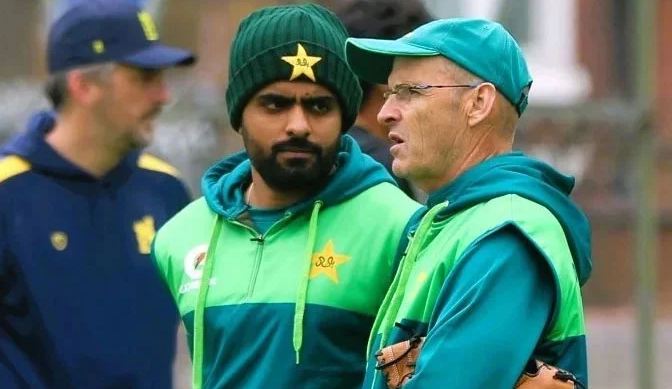
LAHORE, JUL 3: Pakistan’s white-ball coach Gary Kirsten has submitted a “confidential” assessment report on the national side’s disastrous performance in the recently concluded T20 World Cup 2024 to the Pakistan Cricket Board (PCB), sources told on Wednesday.

The report, the sources added, has been sent to PCB Chairman Mohsin Naqvi who will review the document highlighting players’ fitness, discipline and game awareness among other things that led to the team’s early exit from the mega event.

The development comes as the Green Shirts failed to even make it to the Super Eight stage of the World Cup after suffering an upset loss against the minnows United States followed by a defeat against arch-rivals India.

The Babar Azam-led side only managed to win matches against Canada and Ireland which were insufficient to propel the team to the next stage of the tournament.

The below-par performance by the national side resulted in scathing criticism from fans and former cricketers alike prompting the PCB chief to announce a “major surgery” in the squad.

However, the board decided to wait for Kirsten and senior manager Wahab Riaz’s report to make any decision with regard to the team’s future.

After going through the report, the PCB chief will also consult other board officials and former cricketers before taking a decision on the way forward.

Earlier, Geo News while citing sources had reported that Kirsten had expressed concerns over the players’ fitness levels, stating they are not up to the mark.

In a discussion with the team after their elimination from the World Cup, the coach pointed out that the team’s skill level is significantly lagging compared to the rest of the world.

“Despite playing so much cricket, no one knows which shot to play and when,” he said, adding that only players who value unity, focus on fitness, and improve their skill set will be part of the team moving forward.

The team’s poor performance has also been acknowledged by wicket-keeper batter Mohammad Rizwan who, while talking to the media in Peshawar on Tuesday, said that the criticism faced by the Men in Green was justified.

“The criticism the team is facing is justified and we deserve this since we didn’t perform in accordance with expectations. Players who can’t face criticism won’t be able to succeed.

“We are disappointed with our performance in the T20 World Cup. There are multiple reasons behind our losses. When a team loses, one can’t say that bowling and batting is doing well,” Rizwan said.

It must be noted that India won the T20 World Cup 2024 by beating South Africa in the final by seven runs on Saturday in Barbados.

India joined England and the West Indies to win the T20 World Cup title two times as they won their first in 2007 by beating Pakistan in the final.

The next edition of the T20 World Cup will be held in 2026 in India and Sri Lanka for which Pakistan have already qualified owing to their seventh place on the ICC T20I rankings.

Pakistan’s agriculture industry: Challenges and a way forward

Pakistan’s agriculture industry: Challenges and a way forward

Shayan Qureshi

Introduction:

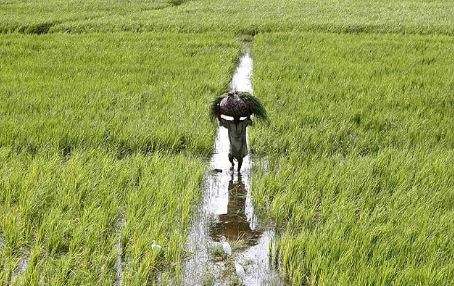
Pakistan’s agriculture industry, a cornerstone of the nation’s economy, has long been a vital source of livelihood for millions. With its vast arable land and diverse climatic conditions, the country holds immense potential for agricultural prosperity. However, this sector faces numerous challenges that hinder its growth and sustainability. From outdated farming techniques and water scarcity to the impacts of climate change and limited access to modern technology, the hurdles are significant. Despite these obstacles, there are also promising opportunities for transformation and improvement. This article delves into the problems plaguing Pakistan’s agriculture industry and explores the prospects that could lead to a more robust and resilient future for this critical sector.

Challenges:

Pakistan’s agriculture industry plays a vital role in developing the Pakistani economy. It is the hub of employment in the entire country, but still, this industry is countered by factors that decrease its potential to flourish. Some of these hurdles are mentioned below:

1. One of the significant potholes in this industry is the need for more water resources. Even though Pakistan has one of the most extensive irrigation systems in the world, we still face extensive challenges due to malpractices adopted decades ago. Farmers tend to have an over-reliance on canal water, which is considered an old-school method in the global agricultural system; this method is expensive and time-consuming, making it more difficult for the farmer to grow crops and effectively makes the prices of these crops higher. Furthermore, climate change has also manipulated the rain scenario in Pakistan.

Rain in the country is primarily unpredictable; there are points when rain doesn’t take place for months, and at other points, floods occur due to extensive monsoons. The timing of rain is also unpredictable, making the farmer unable to rely on rain at any cost.

2. Another letdown in the agriculture industry is that farmers tend to use old-school methods for growing crops; such procedures are labor-intensive but not high-yield producing; methods like vertical farming, Aquaponics and hydroponics are yet to be discovered by our local farmers. Due to financial constraints, the farmers need access to tubewells, tractors and quality, which are the bases of quality farming, making the crops hard to grow and lacking quality to a certain extent. The farmers need to be educated

better about the science behind crop growth and are still working on the old-school family traditions. In contrast, new methodologies are made much more productive and efficient.

3. The non-availability of adequate infrastructure is also a significant challenge faced by the farmers’ community. The lack of planned and gravel roads makes traveling hard in less time. Storage facilities are also few and owned mainly by private landlords, and the small-scale farmer cannot afford these high-tech facilities, resulting in a loss of harvest.

Way forward:

1. Firstly, The farmers should be taught and educated about the latest water techniques, including drip irrigation and sprinkler systems, which produce high yields and reduce water wastage, making them quite productive. Still, the government should be working to create new canals for crops like Rice that cannot work on low water systems and need extensive water flowing. New reservoirs to store water should be built for the convenience of farmers, and the old ones should be renovated, making them work to their full potential. The government could allow farmers to buy solar technology at sustainable rates, enabling them to install tube well systems for efficient water flow without any unwanted disruption.

2. Modernizing farming techniques is also essentially important. Providing farmers with modern seeds and technology would allow them to produce much higher yields, thus decreasing the overall rate of crops in the country and bringing a ripple chain effect of positivity. Government and private sector associations can allow the introduction of meaningful strategies for the education of farmers on these new technologies and new structures.

3. Developing road networks in rural areas is also significant as it allows the efficient transportation of crops from rural to urban areas in a short amount of time. The government should also set prices to such standards that would benefit the farmer community and keep them motivated to grow food for the entire country!

Conclusion:

Indeed, the government should understand the importance of the agriculture industry and should work forward to improving its overall state, making this industry one of its kind and preparing Pakistan to first complete its own food-related needs and then also export cropto makeng a stable economic profit!

In meeting with Putin, PM Shehbaz says Pak-Russia relations stand ‘on own strength’

In meeting with Putin, PM Shehbaz says Pak-Russia relations stand 'on own strength'

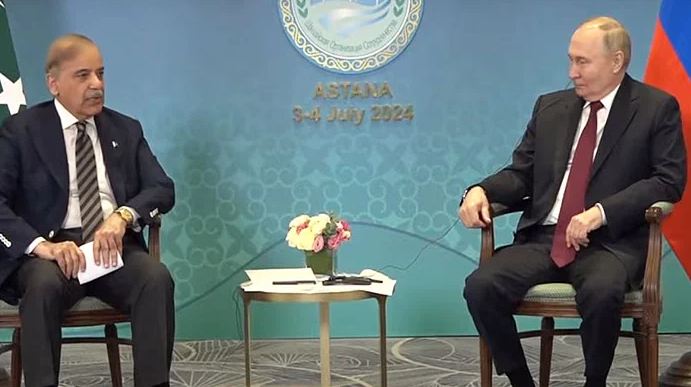
ASTANA, JUL 3: Prime Minister Shehbaz Sharif Wednesday told Russian President Vladimir Putin that Islamabad and Moscow’s relationship stood on its own, stressing the need to further boost bilateral cooperation.

“Our relations stand on our own strength, neither our relations are driven by any geopolitical contingency nor are these impacted by our relations with other countries,” the prime minister said.

The premier is currently in Kazakhstan’s capital of Astana to attend the twin Summits of Shanghai Cooperation Organisation (SCO) Council of Heads of State and SCO plus.

PM Shehbaz emphasised the need to overcome financial and other banking issues to expand barter trade between Pakistan and Russia.

In his exclusive meeting with the Russian president today, he said Pakistan has long business relations with Russia. He recalled that Pakistan used to import a lot of machinery and goods from erstwhile Soviet Russia and export textile and leather goods under barter.

The premier further said the two countries can certainly enhance trade, which is at the moment, touching one billion dollars, Radio Pakistan reported.

He also commended the Russian top leader for promoting cooperation in the field of energy on his request. He added Pakistan has received a shipment of oil from Russia and there is a need to further move in this direction.

As regards bilateral relations between both countries, PM Shehbaz said these ties have been on a positive trajectory over the last many years and this is a matter of great comfort for the two countries.

The prime minister, on the occasion, also expressed the desire to work closely with President Putin to further cement bilateral relations.

Fazl-ur-Rehman to Pakistan Authorities: You Cover Up Your Failures

Fazl-ur-Rehman to Pakistan Authorities: You Cover Up Your Failures

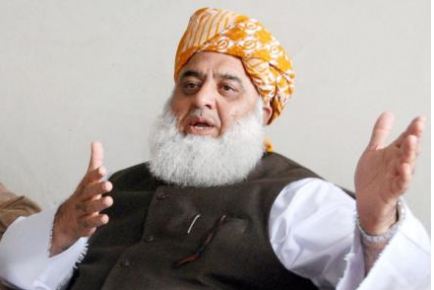
KABUL, JUL 3: Maulana Fazl-ur-Rehman, the leader of Pakistan’s Jamiat Ulema-e-Islam party, said that the remarks of officials over Pakistani military operations on Afghan soil are based on the failures of Islamabad.

According to Maulana Fazl-ur-Rehman, in the last twenty years, Pakistan provided its airbases to the US to carry out airstrikes on parts of Afghanistan.
He said: “Twenty years, planes took off from your military bases in Pakistan and bombed Afghanistan. Where have you eliminated terrorism inside Pakistan now that you are targeting terrorism outside Pakistan, in Afghanistan? You cover up your failures.”

Maulana Fazl-ur-Rehman tried many times to improve the relations between Kabul and Islamabad, and the purpose of his visit to Kabul was to discuss the common interests between both.

Shams Rahman Ahmadzai, a political analyst, said: “Maulana Fazl-ul-Rahman is one of the strongest leaders of Pakistan who lives in Pakistan. His talks or words about the relations with Afghanistan in the political and economic sectors can be improved because he is a strong and influential leader.

“Fazl-ur-Rehman is a strong leader among the leaders of Pakistan, but some of the things he did, the popularity he had in the past, is not the case now, but he is still a strong leader compared to other parties and can play a role in the relations between the two countries,” said Sayed Akbar Sial Wardak, a political analyst.

Earlier, the leader of Jamiat Ulema Islam Pakistan criticized the policy of Islamabad and said that Pakistan had given its airspace to America in the past twenty years to attack the border areas of Afghanistan.

These words from the leader of Jamiat Ulema Islam Pakistan following the recent statement of the Minister of Defense of Pakistan about the existence of shelters of the Pakistani Taliban and the possibility of Pakistan launching military operations against their hideouts in Afghanistan.

Pakistan-US Joint Counter Terrorism Exercise kicks off at Pabbi

Pakistan-US Joint Counter Terrorism Exercise kicks off at Pabbi

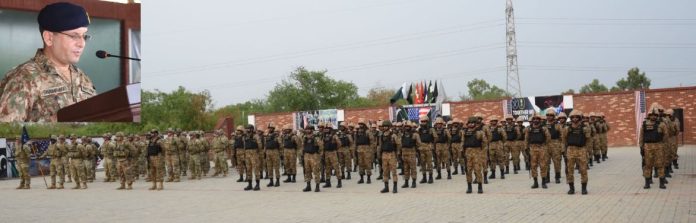
ISLAMABAD, JUL 3 /DNA/ – Pakistan-United States Infantry Rifle Company Exchange Exercise-2024  is a bilateral joint exercise in Counter Terrorism domain to exchange tactical skills at combating menace of terrorism at sub unit level.

 Two weeks long exercise commenced on 29 Jun 2024 at National Counter Terrorism Centre, Pabbi with participation of Infantry companies from both sides.

The exercise is aimed at sharing Counter Terrorism experiences besides refining drills procedures vital for Counter Terrorism operations.

 The scope of Exercise envisages attaining marksmanship skills during urban warfare by understanding best practices adopted at sub unit level.

The inaugural event was witnessed by General Officer Commanding Kharian Garrison.

Gender policy in Uzbekistan – an important criterion for ensuring human rights

Gender policy in Uzbekistan – an important criterion for ensuring human rights

Dilfuza Makhkamova

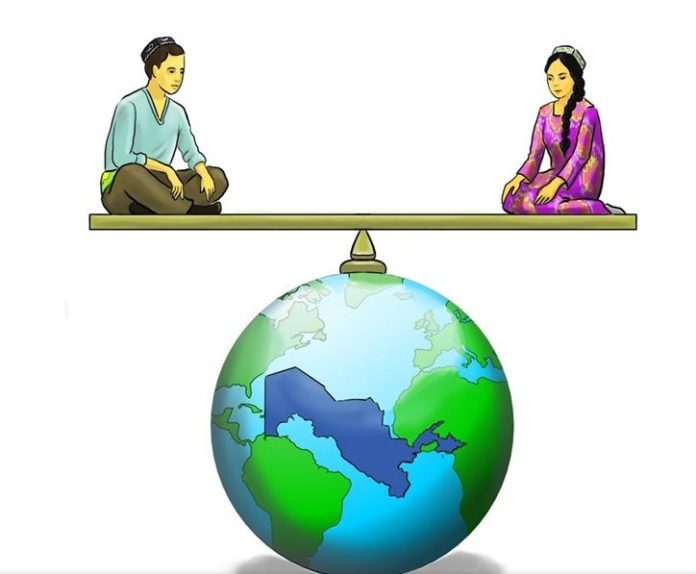
The main feature of a democratic society is the protection of human rights and the provision of equal opportunities for all in public life and administration. Gender equality is an essential component of this, as it ensures equal protection of rights and freedoms for individuals.

The Constitution of Uzbekistan states that all citizens enjoy equal rights and freedoms, regardless of gender, race, nationality, language, religion, beliefs, social origin or social status. Article 58 states that men and women have equal rights, and the state provides equal opportunities for both genders in managing society and state affairs.

These principles of equality and social justice are reflected in all laws and regulations, ensuring that everyone has equal access to opportunities and rights. This includes gender equality, which is essential for a fair and just society.

It should be noted that, in recent years, more than 40 legislative documents and important conceptual programs have been adopted within the framework of which efforts have been made to create equal rights and opportunities for women and men, strengthen the role of women in government and community leadership, provide necessary conditions for education, vocational training, employment, and create decent working conditions. These efforts also aim to increase women’s participation in economic life and protect them against various forms of harassment and violence.

In particular, the law “On guarantees of equal rights and opportunities for women and men” provides for the prevention of gender discrimination and the provision of equal participation for all in public administration. The Law on Protection of Women from Harassment and Violence establishes mechanisms to end various forms of violence against women and to provide protection and assistance to victims.

The “Strategy for achieving gender equality in Uzbekistan until 2030” approved by the decision of the Senate of the Oliy Majlis of the Republic of Uzbekistan on May 28, 2021, envisages a comprehensive approach to the implementation of the principle of equality between women and men in all spheres and levels of decision-making and implementation. Also, the strategy serves to ensure the promotion of gender equality in economic, political, and social life in order to create conditions for the realization of equal rights and opportunities for men and women and to observe fundamental human rights.

Due to this, gender policy in our country has become an important factor in society and state development. Concepts such as “gender equality”, “gender and development”, “gender balance”, and “the role of women in social and political life” are expressed in the development of program documents and all normative legal documents in our country.

In practice, the results are even more significant. In particular, the reason for the gender policy is that in the last seven years, the share of women in public administration in Uzbekistan has increased from 27% to 35%. In his speech at the 78th session of the United Nations General Assembly, the President of the Republic of Uzbekistan, Shavkat Mirziyoyev, summarized the systematic efforts to achieve gender equality in our country and noted that the share of women in public administration reached 35% for the first time.

Moreover, in our country, 32% of the deputies in the Legislative Chamber of the Oliy Majlis and 25% of the members of the Senate are women. The number of women entrepreneurs has doubled, and the number of women who have started their own business has exceeded 205 thousand. Hundreds of thousands of women were trained in trades and entrepreneurship. Among the population employed in health care and education, the share of women is 77 percent, in the economy and industry, it is 46 percent. The number of girls studying in higher education institutions has increased by six times; more than half of the students are women.

Uzbekistan has ratified the main international human rights treaties and conventions related to gender equality. Our country joined the Convention on the Elimination of All Forms of Discrimination against Women (CEDAW) in 1995 and undertook to eliminate discrimination and ensure the full development and well-being of women. Uzbekistan has also ratified the Beijing Declaration and the Platform for Action, which set strategic goals for achieving gender equality, and has been effectively fulfilling the relevant obligations.

Therefore, the systematic measures taken in this regard are duly recognized by the international community. In particular, in the World Bank index, Uzbekistan was listed among the 5 fastest developing countries in the world in the field of gender equality.

In addition, Uzbekistan ranked 18th out of 195 countries with a score of

69.7 in the “Open Data Watch” organization’s Open Gender Data Index, and was ranked among the “Top-20”.

In the policy of ensuring gender equality in the public service, increasing the weight of women in public administration, in particular, issues of forming a team of potential female leaders are of priority.

It should be noted that after the introduction of open competitions by the Public Service Development Agency, practically the same requirements were set for everyone. The human factor between the employer, personnel department representatives, and candidates was limited. Equal opportunities are guaranteed for all.

This, of course, further expanded the opportunities for women to enter the civil service. If we base our opinion on the numbers, earlier women made up

5-8 percent of those who entered the civil service, now women make up about

34 percent of the winners of the competition.

To be more specific, 2.1 million applications have been received in open competitions to date, of which 20% are women. 56,500 of our citizens won these contests, and 19,670 of them (35 percent) were women.

The first direction of ensuring gender equality in the personnel policy is to attract the most potential women to the civil service, to increase the attractiveness of the civil service for them, and the second major direction is to hire highly skilled people in the management of the civil service – “HiPo”(High potential) is to systematically prepare female personnel for leadership positions and to form a corps of “Women leaders”.

According to many sociologists, a professional leader is a person who has certain characteristics for successful management, regardless of gender. For effective management, it is not the role of the leader in gender relations, but the presence of professional competences such as the ability to correctly set priorities in solving the problem, to direct the team, and to fully achieve the goals based on the rational distribution of resources, is considered important.

However, due to the problem of vertical segregation, the low proportion of women in high-ranking positions, and the problem of the “glass ceiling”—invisible barriers to advancement our women have to work in more middle and senior management positions. As a reason for such a situation, we can point out the high responsibility of leadership, and for this reason, the professional qualifications, knowledge, and potential of women are not in accordance with the relevant leadership position.

In order to form specialists into good leaders, it is necessary to develop the necessary soft skills in effective work with personnel and making optimal decisions in management, development of human resources, innovation, critical and systematic thinking, and leadership competencies.

Therefore, our agency, in cooperation with the Family and Women’s Committee and the Academy of Public Administration, launched the “Women’s School of Leaders” educational program aimed at preparing the most potential women working in state bodies for leadership.

Until now, on the basis of this program, he has a high professional potential, is active in the implementation of reforms, and is active in various fields of public administration. The qualification of 145 women was improved.

At this point, it should be noted that by the Decree of the President of the Republic of Uzbekistan No. PF-81 dated March 1, 2022, the position of women activists was introduced in every neighborhood in all cities, towns, villages, and towns. In turn, through this, the President created a practical school for the formation of women leaders. Currently, there are about 9,400 women activists at the lower level, and 207 women are working as deputy governors, heads of family, and women’s departments at the middle level.

Those who have achieved the highest results according to the KPI system by the State Service Development Agency are included in the National Personnel Reserve and are purposefully prepared for senior leadership positions.

As a result of the above-summarized measures implemented on the basis of today’s gender equality policy, a unique national model of preparing women for leadership is being formed in our country.

In conclusion, a strong legal basis for gender equality policy has been formed in our country, and as a result of the full and correct implementation of these norms in life, we are making progress recognized by the international community. On this basis, it can be noted that gender policy in Uzbekistan serves as an important criterion for ensuring human rights.

Dilfuza Makhkamova,

Head of the Department of the Agency for the Development of Public Service under the President of the Republic of Uzbekistan Farangiz Avazbekova,

Chief Inspector of the Agency for the Development of Public Service  under the President of the Republic of Uzbekistan; Doctor of Philosophy (PhD) in Law

US Independence Day reception celebrates continued partnership with Pakistan 

U.S. Embassy

DNA

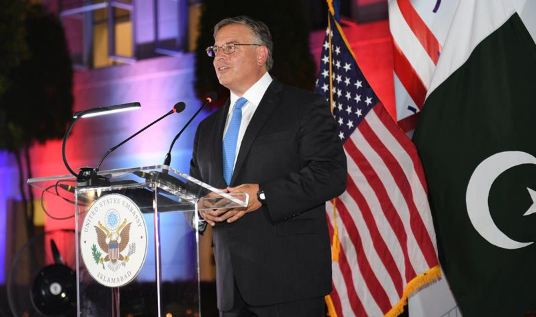
ISLAMABAD – The U.S. Embassy in Islamabad hosted a festive reception to celebrate the 248th anniversary of the independence of the United States of America.  Held under the theme of ‘Made in the USA,’ the event was an opportunity to underscore the enduring partnership between the United States and Pakistan and reaffirm the two nations’ commitment to build a more prosperous future for their citizens. Mr. Ahsan Iqbal, Minister for Planning Development and Special Initiatives, graced the event as the chief guest.  

The evening brought together distinguished guests from Pakistan’s government, corporate sector, academia, civil society, and diplomatic community to commemorate the shared values of freedom, democracy, and economic prosperity between the United States and Pakistan.    

The event was a vibrant occasion filled with American cultural elements, including music, food, and traditions that reflect the rich diversity of the United States. A dazzling display of fireworks further enhanced the celebratory mood.  

The United States and Pakistan share a long history of partnership spanning multiple areas of cooperation.  In the infrastructure and energy sectors, this collaboration is exemplified by several major dams constructed in Pakistan with U.S. support. In the private sector, dozens of U.S. companies employ hundreds of thousands of Pakistanis and provide critical research and development assets. Pakistan’s education and health sectors are also strengthened through U.S. assistance.  The United States is proud to be Pakistan’s largest export market; Pakistanis benefit tremendously from this trade relationship by supplying billions of dollars worth of exports to the U.S. market annually.  Meanwhile, the U.S.-Pakistan “Green Alliance” Framework is a transformative initiative to strengthen Pakistan’s climate resilience and support its efforts for clean energy transformation.

In his remarks, U.S. Ambassador Donald Blome noted the promising trajectory of the bilateral relationship, saying: “While at times we have had to tackle great challenges – such as floods, war, a pandemic, economic setbacks – those of us who have worked together to strengthen this relationship have always recognized the partnership is, and has always been, part of a longer journey toward increased prosperity and security for our two nations, and that each step of this journey has been important.”  

The reception underscored the strength of the U.S.-Pakistan bilateral relationship, highlighting the shared commitment to deepening economic ties, promoting cultural exchange, and fostering collaboration in areas of mutual interest. As the United States celebrates its independence, the two countries pledged to continue working together to address shared challenges and seize opportunities for a brighter future.  

###

 Remarks by U.S. Ambassador Blome at the U.S. Independence Day Celebration

U.S. Embassy, Islamabad

AMBASSADOR BLOME:  Good evening.  I would like to warmly welcome all of you to this celebration of the 248th anniversary of the United States’ independence.  I am especially pleased to welcome our Chief Guest, Mr. Ahsan Iqbal Minister of Planning, Development and Special Initiatives for being here today.

Ladies and Gentlemen, one of the characteristics of the moment we are passing through is global re-ordering, where entities and organizations that had not reached their potential are emerging to stake their rightful claim, and demand their place on the world stage.  And I think you guessed, I am talking about cricket.  I won’t dwell on what I saw in Dallas, but I am a true convert to the excitement of the T20 game! 

And I will tell you this — I travel a lot in Pakistan, through the length and breadth of this beautiful country.  And when I see every patch of open ground on a weekend crowded with cricket bats and wickets, I know Pakistan will always be well represented in those big moments.  

Today, we gather to celebrate the Fourth of July.  I know today is July 2nd, but what not everybody knows is that the Continental Congress actually voted for independence on July 2nd, and the text of the Declaration of Independence adopted two days later on July 4.  So, we have an argument for having it today.  What they voted for over those two days, what the Declaration called the “truths” that all men are created equal, and that they are endowed with certain “unalienable rights,” are what we celebrate as our national ideals.  The 248 years that have followed have been the story of our struggle to realize them in full.

Pakistan is a country that, like the United States, emerged from its own hard-won struggle for independence, and like the United States, is still writing its own story.   And one characteristic that our countries share is an obsession among our thinkers and leaders with discussing the very purpose of our societies and politics.  This idealism is healthy and it provides the basis for renewal and growth.

And it also provides a basis for shared understanding and partnership.  It has become commonplace to observe that the United States and Pakistan have sometimes struggled to understand each other.  But that observation can obscure the long history of partnership and cooperation between our two countries.  In Urdu you say: “Humaray safer ka her eik qadam ahmiet rakhta hay,” “each step of the journey is important.”

While at times we have had to tackle great challenges – such as floods, war, a pandemic and economic setbacks – those of us who have worked together to strengthen this relationship have always recognized that the partnership is, and has always been, part of a longer journey toward increased prosperity and security for our two nations, and that each step on this journey is important.

American businesses have played a leading role in Pakistan since independence, and not as foreign entities implanted on Pakistani soil.  U.S. firms overwhelmingly employ Pakistanis from top to bottom, training them to the highest technical and management levels, and these employees go on in turn to found and run their own global firms.  They bring American values of openness, transparency, and community citizenship to the private sector here and they provide hundreds of thousands of jobs, and critical research and development assets. 

Or consider U.S. assistance.  You can start with infrastructure:  Mangla, Tarbela, Gomal Zam, Satpara, and Golen Gol.  These dams provide clean, affordable energy to millions of homes, prevent water shortages, and mitigate the damaging effects of flooding. Today we are upgrading Mangla and Tarbela with new GE turbines.  The originals lasted for 50 years, and the new versions will last another 50 years – a 100 year investment in Pakistan funded directly, not through loans.  That’s what we mean by commitment.   

At the same time, Pakistanis are benefiting tremendously from our trade relationship, supplying billions of dollars worth of exports to the U.S. market annually.  The U.S. is proud to be Pakistan’s largest export market globally.

We are also proud of the U.S.-Pakistan “Green Alliance,” a transformative initiative committed to support Pakistan as it strengthens climate resilience, pursues energy transformation, and fosters inclusive growth.

We have contributed $1 billion to the Green Climate Fund and have unlocked millions of these dollars in climate mitigation and adaptation projects to enhance Pakistan’s resilience to climate change.  This summer, we will launch a new climate-smart agriculture program to help farming families adapt to the climate challenge and prepare the agriculture sector for a new era of sustainability.

And the United States is a steadfast supporter of Pakistan’s healthcare system.  In May 2024, the U.S. and Sindh government launched a groundbreaking initiative with an investment of $9 million, aimed at addressing tuberculosis.  The U.S. provides more than $85 million in funding to address malnutrition in Pakistan, including $12 million to treat acutely malnourished children.  In education, our programs have constructed hundreds of new schools and rehabilitated thousands more.

The U.S. Mission proudly sends more than 500 Pakistanis to the United States each year on educational, professional, and cultural exchanges. We also support the exchange of U.S. and Pakistani artists, musicians, and experts on topics such as climate change and entrepreneurship.

The United States has continued our commitment to the preservation of Pakistan’s rich cultural heritage, supporting 35 cultural preservation projects over the past 20 years.  Through the Ambassadors Fund for Cultural Preservation and other grants, the United States has supported the conservation of Gandhara archaeological treasures, Mughal architectural heritage such as the Wazir Khan Mosque, the restoration of Sufi shrines and Hindu monuments such as Hazrat Shah Shams Tabraiz and Varun Dev, and supported the preservation of Buddhist monasteries such as Takht-i-Bahi.

In sum, I want to stress the strength and durability of the U.S.-Pakistan partnership and as we celebrate Independence Day, we also celebrate the steps we have taken together.

As I said earlier, “Humaray safer ka her eik qadam ahimiet rakhta hay,” “each step of the journey is important.”

Thank you all for joining us this evening.  Shukria, and please help us celebrate a happy Independence Day!

Aagha Hamid Moosvi’s code of Azzadari will be followed in Moharram ul Haram; Agha Ali Moosavi

Agha Syed Hamid Ali Shah Moosavi

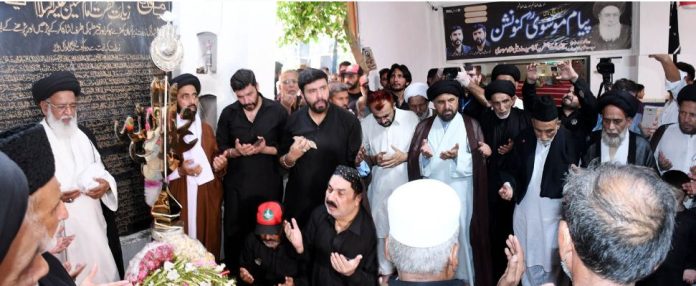
ISLAMABAD/RAWALPINDI /DNA/ – The second anniversary of Agha Syed Hamid Ali Shah Moosavi, the spiritual leader of the Shiite world, the patron-in-chief of the Supreme Shia Ulema Board and the head of Tehreek Nifaz Fiqh Jafaria, was observed with devotion and respect across the country.

Scholars, senior leaders of TNFJ draped a veil over the shrine of the leader, while the  Mukhtar Force and Ibrahim Scouts saluted their leader.  The main gathering of the anniversary, ‘Pyam Aqaye Moosavi Convention’, was held at the shrine of Quaid Jamia Al-Murtaza, Islamabad, in which scholars, preachers and poets from all over the country addressed and paid tribute to the leader for his unforgettable services to the country and the nation.

On this occasion, under the leadership of the sons of Quaid Agha Muhammad Murtaza Moosavi Advocate and Agha Ali Rooh Al Abbas Moosavi, a renewed commitment was made to ensure the protection of the unity of the Ummah and the ideology of Pakistan while remaining closed to the mission-e-willa o azza established by Quaid Millat Jafaria Agha Moosavi.

The participants also expressed their determination that the code of mourning of Agha Moosavi will be fully implemented and unity among Muslims will be promoted in month of Muharram.

The Payam Moosavi convention was attended by the elders of the nation from the four provinces, Azad Kashmir and Gilgit-Baltistan, the followers of Agha Moosvi and the provincial officials of Tehreek Nifaz Fiqh Jafaria.

Jordanian ambassador’s courtesy call to Pakistani minister focuses on collaboration

Ambassador of Jordan

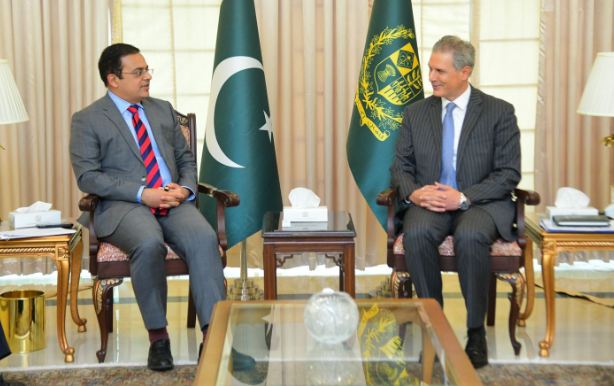
ISLAMABAD, JUL 2 /DNA/ – Ambassador of Jordan made an official courtesy call on Senator Ahad Khan Cheema, Minister of Economic Affairs and Establishment.

During the meeting, both dignitaries discussed matters of mutual interest and explored avenues for strengthening bilateral cooperation between Jordan and Pakistan.

The engagement reflects the commitment of both nations to enhance their economic and diplomatic ties.

After UN body’s report on Imran Khan, US asks Pakistan to respect people’s basic rights

After UN body's report on Imran Khan

WASHINGTON, JUL 2: After a United Nations body decried Pakistan Tehreek-e-Insaf (PTI) founder Imran Khan’s detention in “politically motivated” cases, the US State Department has asked Pakistan to respect people’s fundamental human rights.

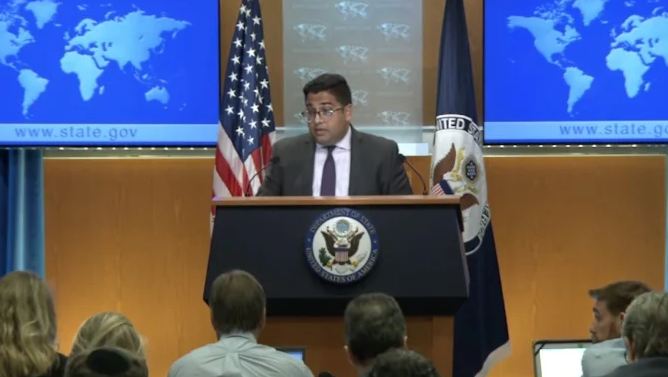
Addressing a press briefing on Monday, Principal Deputy Spokesperson Vedant Patel said the US officials, whether that be Department of State Secretary Antony Blinken, Assistant Secretary Donald Lu or Ambassador Donald Blome, have consistently and privately and publicly urged Pakistan to respect the rights of its people in line with its constitution and international commitments.

He said this in response to a question about the resolution passed by the US House of Representatives seeking an investigation into the Feb 8 elections. The official refused to speak on the pending congressional legislation, however, he stressed upon respecting human rights.

“We urge the Government of Pakistan to respect human rights and fundamental freedoms, including the freedom of expression, freedom of association, peaceful assembly, and the freedom of religion as well,” he said.

The comments from the State Department came after the Geneva-based UN Working Group on Arbitrary Detention declared the PTI founder’s detention arbitrary and in violation of international law.

“…appropriate remedy would be to release Mr. Khan immediately and accord him an enforceable right to compensation and other reparations, in accordance with international law,” the group said.

The UN body said Khan’s legal woes were part of a “much larger campaign of repression” against him and his political party. It remarked that during the 2024 elections, members of PTI were arrested, tortured and their rallies were disrupted.

It also alleged “widespread fraud on election day, stealing dozens of parliamentary seats.”

Imran Khan’s detention ‘internal matter’
On the other hand, the State Department reiterated that Imran Khan’s detention was an internal matter of the country.

“…in the case of Khan, you’ve heard us say this before: This is an internal matter for Pakistan,” said the spokesperson.

To a question about the credibility of Pakistani elections and allegations of massive rigging, Patel said Pakistani elections continued to be an area of focus for the US.

“This is something that we have continued to raise with our partners in Pakistan, yes. That continues to be an area of focus of ours.”

Stay Connected

64FansLike
60FollowersFollow

Latest Reviews

Exchange Rates

USD - United States Dollar
EUR
1.17
GBP
1.35
AUD
0.67
CAD
0.72