Home Blog Page 690

Federal Minister for Interior Mohsin Naqvi visits ANF Headquarters

Federal Minister for Interior Mohsin Naqvi visits ANF Headquarters

ISLAMABAD, JUL 7 /DNA/ – Federal Minister for Interior and Narcotics Control Mohsin Naqvi visited the Anti-Narcotics Force (ANF) Headquarters, where he was welcomed by Director General ANF, Major General Abdul Mueed on his arrival. The Interior Minister laid floral wreath at the Martyrs’ Memorial, offered Fateha, and paid tribute to the great sacrifices of the martyrs.

While chairing an important meeting at the ANF Headquarters, Federl Minister for Interior and Anti Narcotics appreciated the performance of ANF against drug traffickers across the country, despite limited resources. He directed to launch a comprehensive crackdown against drug mafia to save the future generations from the scourge of drugs and sought a comprehensive plan in this regard. It was also decided to ensure a robust action against the sale and purchase of drugs, especially ice, in educational institutions, hostels and universities. In this regard, consultations will be held with provinces and they will be taken into confidence. A joint meeting of federal and provincial departments will be held by the end of this month in which all Provincial Ministers for Excise and IGs of police will be invited.

Interior Minister also sought a plan to stop online sales of drugs. In this regard, the ANF was directed to prepare a cyber drug control mechanism. Mohsin Naqvi said that the curse of drugs, especially ice, has destroyed many families and in order to limit this increasing trend of drugs, immediate and multi-faceted measures are needed. He reiterated that we must all work together with full zeal and determination to fight against this menace for the sake of our children. He highlighted that If we are able to contribute in the eradication of this peril, it will be a great deed.

The Federal Minister for Interior and Narcotics Control was also briefed about the ANF’s performance, functions, and operations. Later, the Federal Interior Minister planted a tree in the lawn of the ANF Headquarters. Federal Secretary for Interior Khurram Agha, and high-ranking officials of the ANF were also present on the occasion.

Sri Lankan envoy for economic integration

Sri Lankan envoy for economic integration

Agencies

ISLAMABAD, In the evolving landscape of South Asian diplomacy, Sri Lanka’s High Commissioner to Pakistan, Admiral (R) Ravindra C Wijegunaratne has stressed for collaborative efforts to address regional challenges and foster economic integration.

The envoy offering a compelling vision for the future of Sri Lanka-Pakistan relations, underscored a partnership poised to shape the strategic dynamics of the region. As both nations navigate shared interests in trade, defense, and cultural exchange, their mutual commitment to sustainable development and mutual prosperity stands as a testament to enduring diplomatic camaraderie.

Highlighting Pakistan’s pivotal economic developments linked to CPEC and the operationalization of Gwadar Port, he expressed his country’s commitment to furthering diplomatic, economic and cultural ties with Pakistan.

He also stressed the importance of long-term policies focusing on youth development, agriculture, and water security for sustained growth.He emphasized the necessity for Pakistan to formulate long-term policies that prioritize youth development, agricultural sustainability, and enhanced water security to sustain economic growth effectively.

Regarding bilateral ties, the envoy reiterated Sri Lanka’s commitment to strengthening relations with Pakistan across multiple fronts, including trade, tourism, and defense. He pointed out Sri Lanka’s pivotal role as an international transshipment hub, particularly for mega-container ships like the Triple E-Class, which cannot dock at all ports due to their size. He anticipated that the full operationalization of Gwadar Port would provide Pakistan with significant revenue opportunities, particularly for transit trade to Central Asian Republics (CARs).

Reflecting on the historical camaraderie between the two nations, Admiral Wijegunaratne recalled Sri Lanka’s steadfast support for Pakistan during critical junctures, including providing crucial logistical support during the 1971 war. He praised Pakistan’s assistance in combating insurgency in Sri Lanka, highlighting the provision of military hardware that helped in defeating the Tamil Tigers.

Economically, he noted the bilateral trade volume of approximately one billion dollars annually, with prospects to exceed this mark, emphasizing Pakistan’s exports to Sri Lanka and Sri Lanka’s potential to expand its exports to Pakistan. He also discussed Sri Lanka’s interest in boosting tourism between the two countries, noting challenges in air connectivity that hinder potential growth in this sector.

On educational and cultural exchanges, Admiral Wijegunaratne highlighted initiatives such as the Allama Iqbal Scholarship, which supports Sri Lankan students studying in Pakistan. He mentioned Sri Lanka’s eagerness to collaborate with Pakistan in religious education and praised Pakistan’s hosting of the Gandhara Culture Symposium, emphasizing the cultural ties that could enhance tourism and mutual understanding.

Looking ahead,  Wijegunaratne discussed Sri Lanka’s recovery from economic challenges exacerbated by COVID-19, focusing on revitalizing tourism and improving agricultural productivity. He suggested Pakistan negotiate debt restructuring with international lenders and leverage its diaspora to bolster foreign exchange reserves.

Addressing regional challenges, he highlighted climate change as a potent threat to South Asia, stressing the need for collective action. He praised Pakistan’s efforts in addressing water security issues and emphasized the importance of environmental sustainability.

In conclusion, Admiral Wijegunaratne expressed optimism about the future of Pakistan-Sri Lanka relations, envisioning deeper economic integration and enhanced cooperation in regional and global forums. He emphasized the mutual benefits of strategic partnerships and reaffirmed Sri Lanka’s commitment to furthering diplomatic, economic, and cultural ties with Pakistan.

Sri Lanka, strategically situated in the Indian Ocean, boasts a diverse economy driven by agriculture, tourism, and emerging sectors like IT and finance. Despite historical challenges, the country has achieved stability and is governed as a democratic republic. Known for its rich cultural heritage and biodiversity, Sri Lanka attracts visitors and investors alike, offering a promising outlook in South Asia.

FBISE to announce SSC result on July 12

FBISE to announce SSC result on July 12

ISLAMABAD, Jul 7 (APP): Federal Board of Intermediate and Secondary Education (FBISE) will announce the result of Secondary School Certificate (Part I and II) 1st Annual Examinations, 2024 on July 12 (Friday).

According to the notification issued by FBISE, the exams of SSC were held in the months of March/April 2024.

The result status will be conveyed through SMS to all the candidates, who have provided their cell phone numbers in their admission forms.

The said results will be available on FBISE website www.fbise.edu.pk and will also be available through SMS unified code 5050.

The candidates will be required to send SMS in the format: FB[roll number].

Structural Adjustment Programs: Impact on Pakistan’s Economy

Structural Adjustment Programs: Impact on Pakistan’s Economy

By: Muhtasim Afridi

The International Monetary Fund (IMF) serves as the backbone for underdeveloped economies around the globe. In times of recession, the international lender provides financial support in the form of loans or bailout packages to help countries stand on their feet. However, when any state seeks an IMF loan, it must adhere to given reforms called structural adjustment programs. Similarly, when the government of Pakistan visits the IMF for a loan, the ruling party has to agree on certain conditions to get it approved. But in that way Pakistan (just like other states receiving loans from the organization) let the IMF decide its foreign policy.

Pakistan and the IMF always had a rocky relationship throughout history, characterized by many ups and downs. Very rarely, the country is found to meet the IMF deadline successfully, in most cases it fails to do so – given the poor economic activity. The condition of Pakistan’s economy can be well understood by the fact that whenever a new party holds power, its first plan is to get an IMF loan – “first things first”. In return for a loan, the top leadership has to sacrifice its key decisions. To put it, “the sovereignty of any nation is compromised the moment it lets others make its decisions.”

The newly formed government, Pakistan Muslim League (PML-N), seeks to negotiate the Extended Fund Facility (EFF) with the IMF in a move to avert default, which may consist of at least $6 billion US dollars. While its approval remains unclear, this bailout package from the international lender will mark the 24th term for the country, leading to further burdening of debt. While it might bring some optimism into the air, it is quite hard to predict a bright future for Pakistan’s economy – given the impact of IMF’s structural adjustment programs on the country’s domestic and foreign policies.

In past regimes, the set of reforms suggested by the IMF under structural adjustment programs has brought little improvement in terms of tax revenue; nevertheless, it did not serve the interest of Pakistan at large – given that the country has needs and problems other than the Western nations. Pakistan is in dire need of introducing technical equipment in industries, such as heavy machinery used for boosting processes; however, high taxes on such imports, as suggested by the IMF, slow the development of the technical sector. It ultimately limits Pakistan’s relations with the developed states (China, Italy, Germany) that produce machinery – heavy tariffs on imports directly affect the trade volume.

Contrary to that, the government of Pakistan provides subsidies to the agricultural sector, which might help in ensuring food security but it adds little to the economy because food products are cheap in the international market, hence they do not generate revenue comparably higher than the technological goods. In contemporary times, everything is based on technology – the developed states are thriving because they have machinery and produce electronic or digital products that are high in demand and price. Pakistan needs a strong technological base to generate revenue and increase trade with other states.

Moreover, high tariffs on vehicles greatly impact Pakistan’s trade relations. The country imports cars from Japan, China, Indonesia, Thailand, and South Korea. Each household, including the elite class and the middle-class families in particular, demands a vehicle. Now, increased taxes on such imports surge the final cost for the citizens, ultimately testing their buying power. The wealthy class in Pakistan has the purchasing power to buy vehicles; however, for the middle class, it becomes difficult to meet the sky-high prices. Therefore, they go for alternative means rather than buying expensive cars, which eventually decreases Pakistan’s trade volume and consequently weakens foreign policy towards other states.

Another major setback for Pakistan’s economy is the long-delayed Iran-Pakistan gas pipeline project, which otherwise would have fulfilled the energy needs of the country at a very low cost and would have further contributed to increased trade volume between the two neighbours. Both Muslim majorities observe peaceful relations in terms of trade; however, the project is stalled due to the cloud of embargoes on Iran. Despite US sanctions on Iran, the country is all set to commence the project and the ball is now in the court of Pakistan. The US, being the greatest contributor to the IMF, would never allow Pakistan to proceed with the project. However, if Pakistan does that, it might not receive further bailout packages from the international lender, which would bring Pakistan to the brink of default.

Pakistan does make independent choices on certain occasions; however, the country does not enjoy full authority over its key decisions – given its huge dependence on international lender. In such a globalized world, states are trying to attract Foreign Direct Investments (FDI), such as investment by Multi-National Corporations (MNCs) – they serve as a means to strengthen foreign policy, but due to high taxes imposed on corporations by the government, they do not operate in Pakistan. In essence, the structural adjustment programs revolve around taxes as a means to generate revenue; however, this is not a sustainable economic model, the country needs to have policies of its own, and it must know its priorities to get out of the vicious cycle of loans.

The writer is an editorial intern at the Center for Law and Security, TMUC, he can be reached at: [email protected]

Ambassador Blome celebrates US, Pakistan partnership in Punjab

Ambassador Blome celebrates US, Pakistan partnership in Punjab

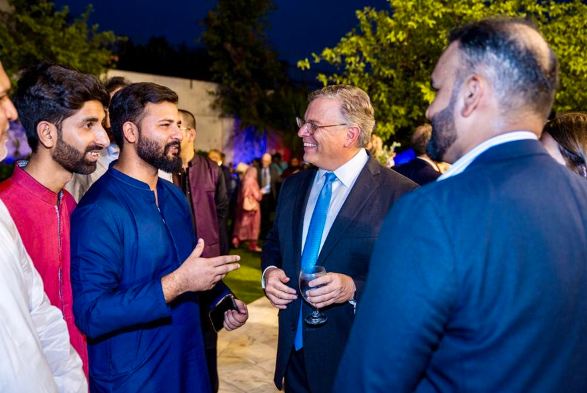
Lahore, JUL 7: U.S. Ambassador Donald A. Blome, accompanied by U.S. Consul General Lahore Kristin K. Hawkins, celebrated the 248th anniversary of U.S. independence during his visit to Lahore.  The July 5 event, attended by a wide range of government, business, and civil society representatives, highlighted key areas of partnership between the United States and Pakistan, including a robust trade and investment relationship, innovative collaboration through the U.S.-Pakistan “Green Alliance” framework on climate challenges, extensive people-to-people ties, and more.   

In his remarks, Ambassador Blome noted, “The United States will remain a committed partner of the people of Pakistan in strengthening fundamental freedoms and democratic institutions, as well as in expanding economic opportunities for the people of Pakistan.”   

Ambassador Blome also commended U.S. business representatives in attendance for their work in creating high-quality jobs for Pakistanis, fostering women’s inclusion in the workforce, introducing innovative business practices, and supporting local communities through their corporate social responsibility efforts. 

During his trip to Lahore, Ambassador Blome also met with Ahmadi representatives and visited the Cathedral Church of the Resurrection.  The Ambassador reaffirmed the principle that every individual should have the freedom to live and worship peacefully, without fear of violence or harassment.   

Heartache and pride as Swiss Euros dream dies

Heartache and pride as Swiss Euros dream dies

GENEVA, (AFP/APP): Switzerland’s President Viola Amherd voiced pride in the country’s football team after they were agonisingly knocked out of Euro 2024 on penalties in the quarter-finals by England on Saturday.

It was the second time in a row that Switzerland had gone out on penalties in the last eight — the furthest they have ever gone in the tournament — having succumbed to Spain from the penalty spot in Euro 2020.

This time they drew 1-1 with England, having taken the lead in the 75th minute only to be pegged back five minutes later — before losing 5-3 on penalties after extra time in Dusseldorf.

“I congratulate the Swiss team on a great, passionate and outstanding tournament performance! It was a pleasure to watch the team in the stadium. You made us proud,” Amherd, also the sports minister, said on the social media platform X.

“Congratulations to the English team,” she added.

Switzerland made the World Cup quarter-finals in 1934, 1938 and 1954, and some thought this year was their chance to go one better in a major tournament, having knocked out Euro 2020 defending champions Italy in the round of 16.

Supporters headed to fan zones around the country despite some torrential downpours.

A few thousand fans braved the heavy rain to watch the match in the fan zone on the Plainpalais square in Geneva.

Gathered under umbrellas under leaden skies, Swiss fans hugged at the end before trudging off to find shelter, while a few pockets of England supporters bounced around chanting “Football’s coming home”.

The Tages-Anzeiger newspaper said there was “gloom” on Zurich’s lively Langstrasse, known for its nightlife.

Instead, “where a win would have seen a huge party, the rain mixes with the tears of supporters”, the broadsheet said.

“The weather in Zurich matches the gloomy mood after the game. Collective disappointment that can also be seen and felt on Langstrasse,” said the daily.

“There, where the city would have celebrated all night long if they had won.

“But the flags are not being waved; they are dragging on the ground. People are not hugging each other; many are going home straight away. At most, they toast each other wordlessly, to their frustration.”

Other newspapers raked over the result.

“Switzerland fails again in the penalty shoot-out,” lamented the Neue Zurcher Zeitung.

“It is a poor reward for a brave performance.”

Blick said: “England destroys our European Championship dream. Brutal knockout for the Nati. This can’t be true.”

“Awesome but defeated,” said the Tribune de Geneve.

“Between the 75th and 80th minutes on Saturday, the Nati were virtually qualified for the semi-finals. This page of history will have to wait.”

Meanwhile Le Temps put it simply: “A dream has passed”.

Flight cancellations; fragile ecology eclipsing beauty of Gilgit-Baltistan

Flight cancellations; fragile ecology eclipsing beauty of Gilgit-Baltistan

Australian High Commissioner to Pakistan Neil Hawkins called for the development of budget-friendly accommodations in the area

Ansar M Bhatti

ISLAMABAD: Australian High Commissioner to Pakistan Neil Hawkins highlighted that uninterrupted flights to Gilgit-Baltistan could significantly boost tourism in the region. He noted that Gilgit-Baltistan is blessed with natural beauty, making it a must-visit destination for both local and international tourists.

Hawkins made these remarks during the launch event of “Reverie of Highlands” by Gaynor Shaw at the Islamabad Serena Hotel. Gaynor Shaw, wife of former Australian High Commissioner to Pakistan Geoffrey Shaw, traveled from Australia to attend the event.

The High Commissioner emphasized the importance of cultural exchanges and the role of such works in fostering understanding and appreciation between nations. He also urged the government of Pakistan to address the frequent cancellations of flights to Gilgit, which force tourists to travel by road—a challenging option, especially for older visitors.

Hawkins acknowledged the fragile ecology of the region, noting that while tourism brings economic benefits, it also comes with environmental costs. He called for the development of budget-friendly accommodations, as not everyone can afford to stay in five-star hotels. Additionally, he stressed the need for efforts to maintain the pristine environment, highlighting that rubbish and waste in some areas detract from the region’s natural beauty.

In conclusion, Hawkins expressed that with a little attention and effort, Gilgit-Baltistan could become a world-class tourist destination, particularly appealing to international visitors.

Aziz Boolani, CEO of Serena Hotels, underscored the hotel’s commitment to supporting cultural and literary initiatives, marking the formal launch of this remarkable publication.

Serena Hotels, under the banner of Cultural Diplomacy, hosted the book launch of “Reverie of Highlands” by Gaynor Shaw at the Islamabad Serena Hotel. The event celebrated Shaw’s journey through the northern regions of Pakistan, capturing the enchanting landscapes, vibrant culture, and resilient people through her lens as an artist and photographer. The book launch was attended by diplomats, cultural patrons, tourism enthusiasts, and members of the literary community, making it a significant cultural event.

Gaynor Shaw, the wife of former Australian High Commissioner to Pakistan Dr. Geoffrey Shaw, has artfully documented her experiences and insights in this compelling book.

“Reverie of Highlands” is a tribute to the beauty and diversity of Pakistan’s northern areas, reflecting her deep connection and appreciation for the region.

Former Pakistani diplomat Aizaz Ahmad Chaudhry shared his impressions of the book, highlighting its significance in promoting Pakistan’s cultural heritage, followed by an inspiring speech from Shaw herself, offering insights into her journey and the creation of her book.

Hamas accepts US proposal on peace talks regarding Israel hostages

Hamas accepts US proposal on peace talks regarding Israel hostages

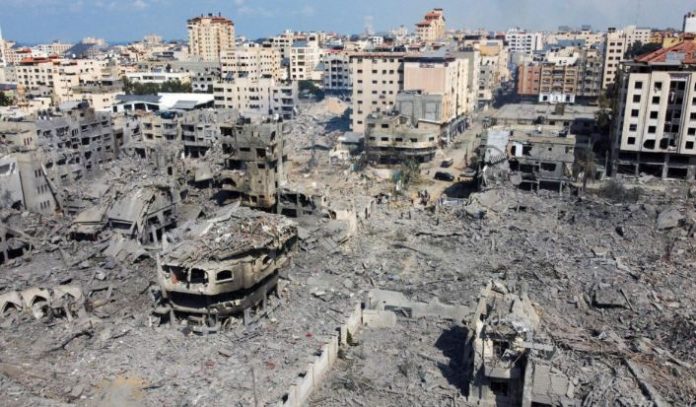
GAZA, JUL 6: A senior Hamas source told Reuters on Saturday that Hamas has accepted a US request to start negotiations on releasing Israeli hostages, including men and soldiers, 16 days after the first round of an agreement meant to put an end to the Gaza war.

According to a source who spoke to Reuters under the condition of anonymity because the discussions are private, the militant Islamist group has abandoned its demand that Israel first commit to an ongoing truce before signing the accord and would enable negotiations to accomplish that over the six-week first phase.

The idea, if accepted by Israel, could result in a framework deal and put an end to the nine-month-old conflict between Israel and Hamas in Gaza, according to a Palestinian official close to the internationally mediated peace negotiations.

Speaking under anonymity, an Israeli negotiator source stated on Friday that there was now a genuine possibility of reaching a deal.

In the nine-month-old Gaza conflict, Israel had previously said that the conditions Hamas had placed were intolerable. This was a sharp contrast to previous incidents.

When contacted for comment on Saturday, the Jewish Sabbath, an official for Israeli Prime Minister Benjamin Netanyahu did not immediately reply. The negotiations will resume next week, his office stated on Friday, while highlighting the gaps that still exist between the parties.

Since Hamas launched an offensive on southern Israeli communities on October 7, more than 38,000 Palestinians have died in the battle, according to Gaza health officials. An estimated 250 Palestinians are being held captive.

Muharram moon not sighted in Pakistan, Ashura on July 17

Muharram moon not sighted in Pakistan

ISLAMABAD, JUL 6: The crescent moon for Muharram has not been sighted in Pakistan and the first day of the month will fall on Monday (July 8), Central Ruet-e-Hilal Committee Chairman Maulana Abdul Khabir Azad announced on Saturday.

Accordingly, Ashura — the 10th day of Muharram will fall on July 17.

The announcement was made after the Central Ruet-e-Hilal Committee met in Quetta to sight the crescent of Muharramul Haram 1446 Hijri.

Chairman of the moon-sighting body Maulana Abdul Khabir presided over the meeting to sight the moon of the first month of the Islamic calendar.

The meetings of zonal and district bodies of the Ruet-e-Hilal Committee will also simultaneously be held at their respective headquarters.

The Pakistan Meteorological Department (PMD) had predicted unlikelyness of Muharram moon sighting today due to partly cloudy or cloudy weather in most parts of the country as the moon-sighting body gets busy.

The Met Office had said that the new moon would be born on the crossing conjunction point at 03:57 PST on July 6.

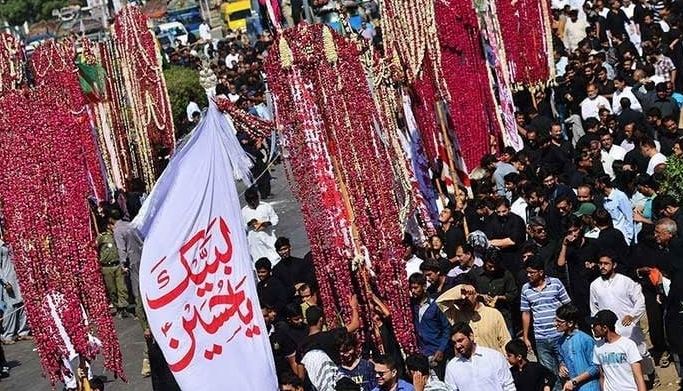
Muharram is regarded as one of the four sacred Islamic months. Ashura falls on its 10th day when grandson of the Holy Prophet Mohammad (PBUH), Hazrat Imam Hussain (RA) along with his family members were martyred in the battle of Karbala.

Faithful hold processions and majalis across the country in Muharram, while religious scholars address huge gatherings amid tight security, with thousands of law enforcers deployed to ensure security.

To curb the spread of hate material on the internet, the provincial governments have sought the suspension of six social media applications for about a week during Muharram so that security is not compromised.

Moreover, Sindh government has banned 143 ulema and zakireen for 60 days as part of security measures during the month of Muharram, while Punjab government has requisitioned the services of the Pakistan Army and Pakistan Rangers while announcing a ban on pillion riding across the province.

However, the federal government has not yet taken any decision to suspend internet services during Muharram, a spokesperson for the Ministry of Interior Friday said.

“PASKAL” Highlights Malaysian Patriotism at ASEAN Movie Nights Grand Finale

High Commission of Malaysia

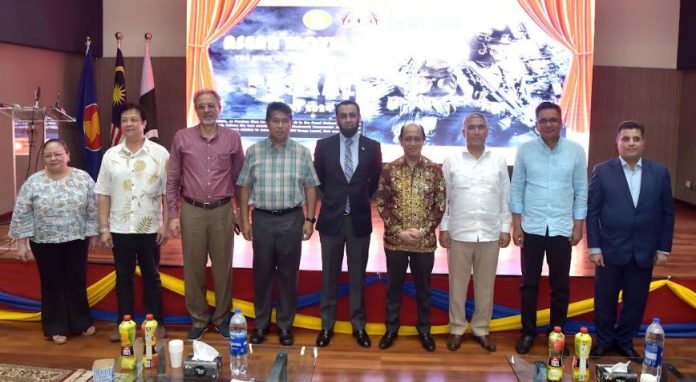
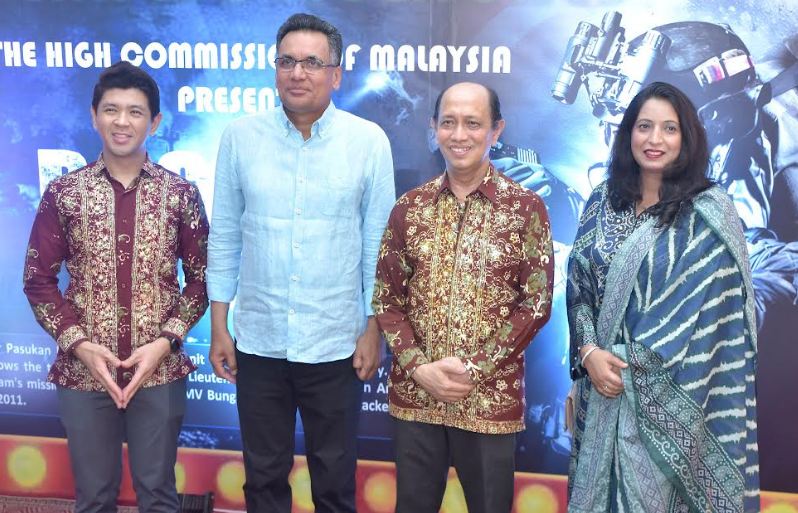
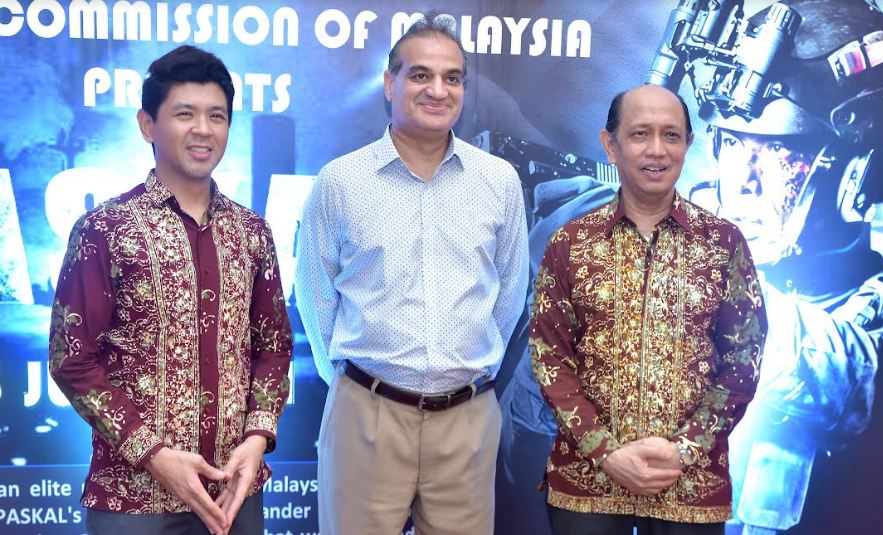
ISLAMABAD – (DNA) – On Friday, 5 July 2024, the High Commission of Malaysia in Islamabad held the grand finale of the ASEAN Movie Nights programme. This programme was initiated under the ASEAN Committee in Islamabad (ACI) aimed at promoting the rich film and culture heritage of ASEAN member countries in Islamabad. The final series showcased Malaysia’s action-packed film “PASKAL.” Based on the true story of the Malaysian Armed Forces’ heroic efforts in rescuing the merchant ship MV Bunga Laurel from pirate attack in 2011, the film captivated the audience with its gripping narrative and action-packed performance.

Officiating the event, the High Commissioner of Malaysia, Ambassador Dato’ Mohammad Azhar Mazlan, underlined the key message of the film, stating, “PASKAL is not just an action movie; it is a testament to Malaysia’s patriotism, sense of belonging, the exceptional capabilities and professionalism of our military, and the sophisticated quality of our film industry.”

The Hon. Attaullah Tarar, Federal Minister for Information and Broadcasting graced the event as chief guest. The Minister noted with great satisfaction over the excellent state of relations between Pakistan and Malaysia. He shared the similarities between Malaysia and Pakistan in nation building and patriotism. He lauded the High Commissioner of Malaysia and ACI for the Movie Nights programme, adding that both Malaysia and Pakistan should collaborate in future project/programme, especially in cultural exchange and film industry.

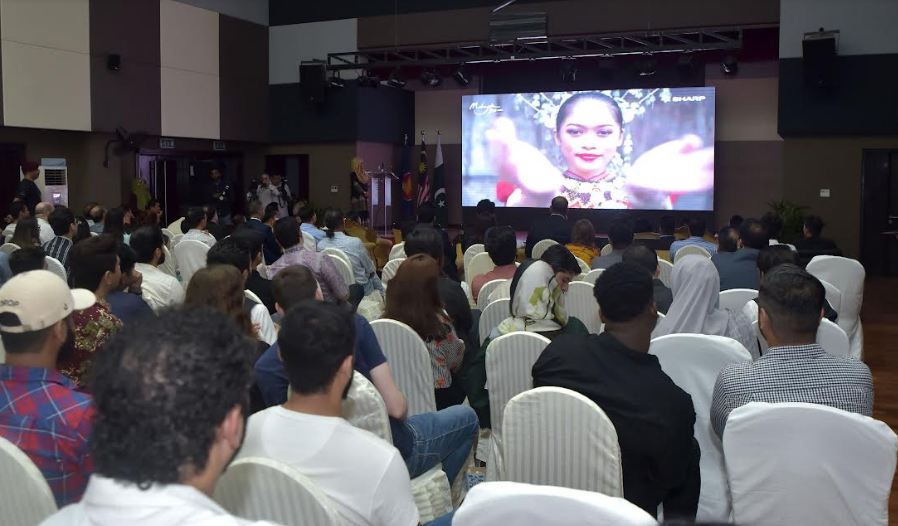
The event drew a huge audience of over 200 guests from a cross-section of the society ranging from the Dean and Ambassadors of the Diplomatic Corps, ASEAN Heads of Mission, senior government officials, university students and friends of the media, reflecting the strong interest and support for Malaysia’s and ASEAN’s cultural and cinematic exchange. During the event, the guests enjoyed Malaysian traditional cuisine and snacks including fried rice, fried beehon, classic boiled and spicy chickpeas, fried banana balls, and Ice Cream Malaysia, among others.

The ASEAN-Malaysia Movie Night programme was a resounding success, bringing together diverse communities and fostering a deeper understanding and appreciation to each of ASEAN countries’ unique cultures and stories through the cinematic experience. In his concluding remarks, the High Commissioner of Malaysia suggested that this programme should be held annually for a much wider cultural engagement and understanding between ASEAN and Pakistan.

Stay Connected

64FansLike
60FollowersFollow

Latest Reviews

Exchange Rates

USD - United States Dollar
EUR
1.17
GBP
1.35
AUD
0.67
CAD
0.72