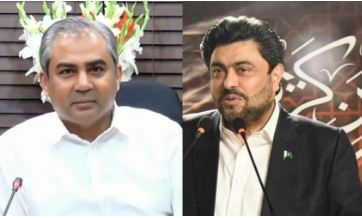
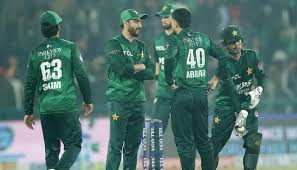
KARACHI, FEB 12 /DNA/ – Federal Interior Minister Mohsin Naqvi met with Governor Sindh Kamran Khan Tesori in Karachi. During the meeting, Both leaders discussed various matters of mutual interest, including the establishment of peace in the province, promotion of cricket, and the Pakistan Super League.
Governor Sindh praised the role of law enforcement agencies in maintaining peace and order, saying their efforts are commendable. He also praised the renovation of the National Stadium in short time and said that it will promote cricket. He emphasized that new cricket talent will emerge from the platform of Pakistan Super League.
Mohsin Naqvi appreciated the initiatives taken by Governor Sindh, saying they are worth emulating. He emphasized that modern IT courses will brighten the future of youth. During his visit, Interior Minister also planted a sapling at the Governor House as part of a tree-plantation campaign.
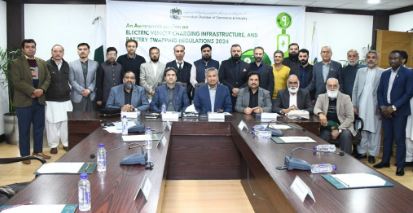
ISLAMABAD, FEB 12 /DNA/ – The Islamabad Chamber of Commerce and Industry (ICCI) in collaboration with the National Energy Efficiency and Conservation Authority (NEECA) hosted a key awareness session titled ‘Electric Vehicle Charging Infrastructure and Battery Swapping Regulations 2024’ at the Chamber House. The event saw a strong turnout from members of the business community, emphasizing the growing interest in the future of electric vehicles (EVs) and sustainable energy solutions in Pakistan.
During the welcome address, Nasir Mansoor Qureshi, President of ICCI, underscored the Chamber’s dedication to fostering a business-friendly environment that promotes entrepreneurship and economic growth. He also highlighted ICCI’s role in bridging the gap between industry and academia, encouraging fresh graduates to take an entrepreneurial path rather than merely seeking jobs. He stressed the need for Pakistan to embrace modern, sustainable practices in alignment with global trends, noting that effective collaboration between policymakers, industry leaders, and stakeholders is crucial for the successful implementation of EV infrastructure regulations.
The collaboration between ICCI and NEECA marks a significant step towards fostering the development of electric vehicle infrastructure in Pakistan, paving the way for a more sustainable and eco-friendly future, he concluded.
Dr. Sardar Mohazzam, Managing Director of NEECA, delivered the keynote address, explaining the newly introduced regulations aimed at promoting the establishment of Electric Vehicle Charging Stations and Battery Swapping Stations nationwide. These regulations are designed to accelerate the adoption of EVs in Pakistan by creating a streamlined, supportive ecosystem. Key features of the initiative include a one-window operation for ease of business, cost-effective electricity tariffs for EV charging, and the encouragement of public-private partnerships to expand the EV network. Dr. Mohazzam also highlighted the importance of ensuring grid readiness, supporting small-scale enterprises, and contributing to Pakistan’s emission reduction efforts.
Syed Ahsan Abbas, Director of Electrical NEECA, presented a detailed overview of the registration process, operational guidelines, and enforcement mechanisms related to the EV infrastructure. His presentation addressed the attendees’ concerns, providing clarity on the regulations and how they will benefit investors and the broader business community.
In his remarks, Naeem Siddiqui, Special Advisor to the ICCI President, emphasized the need to build trust and confidence among potential investors, urging the relevant agencies to focus on addressing concerns and ensuring transparency.
The session concluded with an interactive question-and-answer segment, where organizers responded to queries from potential investors, ensuring a clear understanding of the new regulations and opportunities in the EV sector.
Abdul Rehman Siddiqui, Senior Vice President of ICCI, delivered the vote of thanks, expressing his optimism that the session would prove invaluable to investors and contribute to the growth of the EV ecosystem in Pakistan.
The session was also attended by ICCI Vice President Nasir Mehmood Chaudhry, Executive Members Waseem Chaudhry, Irfan Chaudhry, Malik Aqeel, Chaudhry Nadeem Ahmed, and other distinguished members of the Chamber.
Policing is a redoubtable and challenging profession. The police officer has to confront multiple tasks to uphold peace and order in society. Given the prevailing socio-economic environment, the predicaments are galore. The drivers of surging crime are obvious. The interplay between unemployment, poverty, injustice, political upheavals and impunity culture has fostered an environment where crime invariably thrives. With a high youth bulge and scarce job opportunities, young people are drawn towards illegal criminal activities such as street crime and organized crime including drug peddling and migrant smuggling. The usage of narcotics is another critical issue in the rising of crime and deviant behviour in society. Rapid urbanization and sprawling of slum areas have contributed massively to provide enabling environment to crime to flourish. Soaring digitalization is another weapon in the hands of unemployed youth to exploit for the purpose of alternate income sources through phishing, identity theft, online scams and cybercrime activites. The nature and spectrum of crime has changed on a gigantic level. Now, society has become more vulnerable to violence and felony than before.
Of late, organized crime has become growing concern for Police hierarchy and Punjab Government. Organized crime means the occurrence of planned and deliberated series of crime of heinous nature. It has a hierarchy with designated head. There would be a division of labour for the execution of crime. Therefore, in order to control the organized crime, the organized crime unit has been recalibrated into Organized crime control unit. The posting of DIG Sohail Zafar Chatha as Addl IG Organized Crime Control Unit is commendable step that reflects serious political will to curb the organized crime to the hilt.
Organized Crime Control Unit would have operational and intelligence wings. The OCCU will have task to bust the notorious criminal gangs, hard core outlaws and heinous crimes. Further, it would have mandate of registering the FIR, investigate, apprehend and challan the case. At provincial level, two DIGs will be appointed to head operational and Intelligence wings, SPs in big districts and DSP would be appointed in C category and less threatening Districts. The establishment of Organized Crime Control unit would be boon and elixir of major socio-political values. It will help in reducing the crime against property in particular.
Police officers are vulnerable to harbour temptations such as lavish houses to live in comforts, hefty bribes in contested cases, expensive gifts, foreign travels and invitation in voluptuous orgy parties. Here comes the test of character and integrity. The officers who surrender self-respect and honour to their venal desires, they become weak and coward in their decisions. The community and public gazes the character of officers in command. Policing is inviolable trust and it’s a sustained community service. Policing is neither meant for serving political masters nor currying favour for the lucrative postings.
Police leadership has more responsibilities than the officers serving in subordination position. Fighting against the evils of society and rising crime has never been an individual crusade; it demands a dedicated team and financial resources. The Police command walks on a tight rope in fighting against giants of crime who are in cohort with so-called pressure groups. The leadership often found themselves in catch 22 situations.
Tapping the available resources in a befitting manner reflects the profession acumen of Police command. This is true when we witness the key performance indicators of certain police officers who are commanding huge divisions and independent units. Rana Abdul Jabbar IGP AJK, Dr Muhammad Abid Khan, DIG Headquarters CPO Lahore, Ahsan Younas MD Punjab Safe City Authorities, Zeeshan Asghar RPO Faisalabad, Rana Ayaz Saleem CPO Gujranwala to my knowledge are the best Police officers who are truly embodiment of integrity, courage, firmness, impartiality, justice, goodness and fairness.
Talking about the operational and administrative potential of DIG Dr Muhammad Abid Khan, it can be fairly said that he displayed unprecedented caliber and professional perspicacity in combating crime of all nature and elimination of corrupt elements during his awe inspiring posting tenure. He did gigantic efforts to provide justice to the victims of murder, rape, sodomy, kidnapping for ransom, dacoity with murder and fostered an environment of fair, even handed justice. More so, his judicious supervision of the cases of murder, property dispute, land grabbing and gang rape ensured fair, just investigation and conviction of hard-core criminals. Under his visionary supervision, first ever domestic “Champions League One- Day Cricket Cup 2024” in Faisalabad was successfully accomplished with wide acclaim and humongous achievement. The landmark completion of “Punjab Safe City Authority” Faisalabad in just 45 days is another brighter feather in his cap.
Being RPO Faisalabad, Dr Muhammad Abid Khan weathered my crisis but did not falter at any point. He bravely defused the Jaranwala incident, arrested all accused and facilitators. Moreover, he did not let it spill over to other cities of Punjab. He shunned the societal and political pressure and emphasized upon the field officers to serve the community without vested and financial interests. He earned the public trust, goodwill and respect through taking stern actions against the corrupt and inefficient police officers. He has the courage to say “NO” to the illegal and unprofessional demands.
It is undoubted fact that the remedy of all ills in terms of rickety law and order is the hard earned vision to depoliticize the police, giving it leverage to act operationally and every police officer is highly accountable to his misdeeds. The intelligence led policing focusing on identifying and arresting the nefarious elements and busting the criminal gangs is the silver bullet solution of organized crime. More so, better community engagement and traditional “Thikri Pehra” Vigilantism has the potential to reduce crime in society. Moreover, crack down on dacoits gangs, drug peddlers and Proclaimed offenders will definitely help in mitigating the crime intensity in the society.
The competent, trustworthy, honest, visionary and empathetic police officers are need of the hour. Policing is tough phenomenon. It requires resilience, vigilance, prompt action and professional prudence in making decisions, implementing the policies and culmination of rigorous tasks for the maintenance of law and order, betterment of community and engendering the sense of justice and peace in society.
Dr Muhammad Rizwan Bhatti is Ph.D in Political Science from Govt College University Faisalabad. His research is on “Post 9/11 De-radicalization and counter violent Extremism in Pakistan”. He can be reached at [email protected]
Shab-e-Barat, the illustrious 14th night of Sha’ban, holds profound significance in Islamic tradition. This sacred night, enveloped in divine mercy and celestial blessings, is venerated as an occasion when destinies are inscribed, sins are effaced, and prayers ascend to the heavens. It is a night of spiritual rejuvenation, where believers immerse themselves in supplication, penitence, and profound introspection, seeking absolution and divine favor. The grandeur of Shab-e-Barat is subtly alluded to in the Holy Quran, particularly in Surah Ad-Dukhan (44:3-4), wherein Allah proclaims: “Indeed, We sent it [the Quran] down during a blessed night. Indeed, We were to warn [mankind]. Therein [on that night] is made distinct every precise matter.” Though scholars diverge in their interpretation of whether this verse pertains to Laylat-ul-Qadr or Shab-e-Barat, many opine that this night is a momentous juncture wherein the divine decree for the forthcoming year is ordained, encompassing matters of life, sustenance, and fortune.
The Hadith literature further illuminates the sublime stature of this night. The Prophet Muhammad (PBUH) eloquently expounded upon its sanctity, affirming that on the 15th night of Sha’ban, Allah’s mercy descends upon His creation, and He forgives all except those ensnared in idolatry, enmity, or transgression against their brethren. In another exalted narration, it is conveyed that the Prophet (PBUH) spent this night in fervent prayer, his supplications imbued with humility and devotion, beseeching Allah for the forgiveness of his Ummah. These traditions underscore the magnitude of this night, urging believers to seize its bounteous blessings through piety, penitence, and devout supplication.
Shab-e-Barat serves as an epitome of self-reckoning, compelling individuals to scrutinize their deeds, seek atonement for past transgressions, and realign their moral compass. It embodies the quintessence of divine clemency, reminding mankind of the boundless mercy of Allah, who readily absolves those who turn to Him with sincerity. Spending this night in prayer and worship is a means of drawing closer to the Almighty. Offering voluntary (Nafl) prayers, reciting the Quran, and making heartfelt supplications can bring spiritual peace and strengthen faith. The Prophet (PBUH) himself would engage in prolonged prayers on this night, setting an example for his followers. The remembrance of Allah through Dhikr—reciting SubhanAllah, Alhamdulillah, Allahu Akbar, and La ilahaillallah—fills the heart with tranquility and enhances one’s spiritual consciousness.
Another significant aspect of Shab-e-Barat is the emphasis on forgiveness—not only seeking it from Allah but also extending it to fellow human beings. It is a night to let go of grudges, mend strained relationships, and purify the heart from resentment. Islam teaches that a believer’s faith is incomplete if they do not forgive others and reconcile differences. Strengthening family ties, making amends with those who have been wronged, and ensuring that one’s heart is free from ill will align with the teachings of this sacred night. The practice of visiting the graves of loved ones and offering prayers for their souls is also observed on this occasion. Remembering those who have passed away instills a sense of accountability and reminds believers of the fleeting nature of worldly life. It serves as a call to lead a righteous life, mindful of the ultimate return to Allah. Engaging in acts of charity on this night further magnifies its blessings, as kindness towards the less fortunate purifies wealth and attracts divine favor.
Shab-e-Barat also serves as a spiritual prelude to Ramadan, offering an opportunity for self-reflection and renewal of faith. By dedicating time to prayer, repentance, and good deeds, one can cleanse the soul and prepare for the month of fasting with sincerity and devotion. Developing a habit of prayer, seeking forgiveness, and practicing generosity on this night can lead to long-term spiritual benefits, reinforcing discipline and righteousness in everyday life. In an era where material pursuits often eclipse spiritual consciousness, Shab-e-Barat emerges as a beacon of divine wisdom, urging mankind to recalibrate their priorities. Devotees spend this night in solemn devotion, offering supererogatory prayers, reciting the Quran, and seeking divine favor through earnest supplications. A prevalent tradition involves visiting the resting places of departed souls, offering prayers for their salvation, and contemplating the ephemeral nature of existence. Such practices reinforce the solemn truth that life is but a transient sojourn, and ultimate felicity lies in seeking divine proximity.
The lessons derived from this sacred night transcend its temporal bounds, inspiring believers to embody compassion, humility, and mindfulness in their actions. It elucidates the power of dua (supplication), reminding believers that divine decree is subject to Allah’s infinite mercy and that sincere prayers can alter the trajectory of one’s fate. The night’s emphasis on forgiveness fosters a culture of magnanimity and forbearance, eradicating discord and nurturing an ethos of harmony and unity. Furthermore, the realization that every deed is inscribed in celestial annals should inspire individuals to embody righteousness, eschew malevolence, and strive for moral and spiritual refinement.
As the crescent moon heralds the advent of Ramadan, Shab-e-Barat serves as a spiritual prelude, a night of purification that prepares the soul for the sanctity of the fasting month. It is a divine invitation to cleanse one’s heart, fortify one’s faith, and embrace the path of righteousness with renewed vigor. By imbibing the virtues of this hallowed night—devotion, penitence, and altruism—believers can transform not just a solitary night but their entire existence into a testament of piety and virtue. Shab-e-Barat is not merely a night of worship but a profound reminder of life’s ultimate purpose. It beckons us to transcend the ephemeral allurements of the material world and strive for spiritual elevation. It is a night that magnifies the infinite mercy of the Almighty, offering mankind an opportunity to secure divine clemency and eternal felicity. By internalizing the ethos of this exalted night, one can cultivate a life of mindfulness, gratitude, and unwavering devotion, drawing ever closer to the Creator and securing His boundless grace in both this world and the Hereafter.
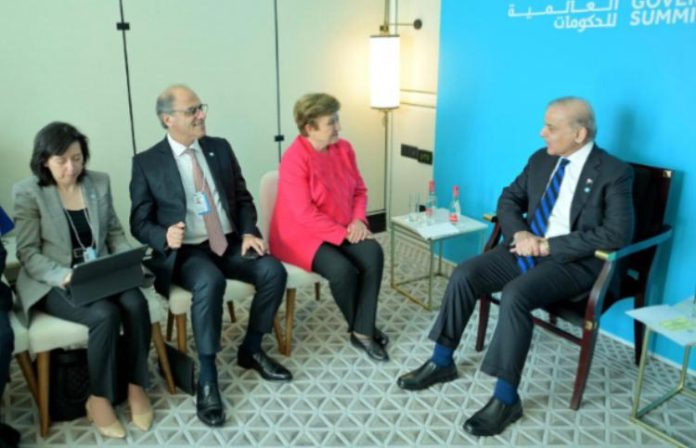
ISLAMABAD, FEB 12 (DNA): Prime Minister Muhammad Shehbaz Sharif held a meeting with Managing Director of the International Monetary Fund (IMF) Kristalina Georgieva wherein both sides discussed Pakistan’s ongoing IMF program and the macroeconomic stability achieved through the government’s comprehensive reform agenda.
The meeting held on the sidelines of the World Governments Summit (WGS) 2025 in Dubai, highlighted Pakistan’s commitment to implementing structural reforms and maintaining fiscal discipline, which had been instrumental in restoring economic stability and would be critical in driving sustainable growth, according to a PM Office press release issued Wednesday.
Prime Minister Shehbaz Sharif underscored the progress made under the IMF’s Extended Fund Facility (EFF), which has played a key role in stabilizing Pakistan’s economy; setting it on the path of long-term recovery.
He reaffirmed the government’s resolve to sustain the reform momentum, particularly in critical areas such as tax reform, energy sector efficiency, and private sector development.
He assured the IMF chief of Pakistan’s commitment to economic prudence, efficiency, and sustainability as essential pillars for achieving inclusive and sustained growth.
Kristalina Georgieva commended Pakistan’s efforts in effectively implementing the IMF-supported program, highlighting the country’s improving economic performance with rising growth and declining inflation. She recognized that Pakistan is on the path to growth and has undergone economic recovery.
The IMF Managing Director also acknowledged Prime Minister Shehbaz Sharif’s leadership and personal commitment to driving the country’s reform agenda, which has been critical in achieving economic stability and progress.
She reiterated the IMF’s continued support for Pakistan’s reform agenda, emphasizing the importance of sustained fiscal discipline, structural reforms, and good governance to ensure long-term economic stability and growth.
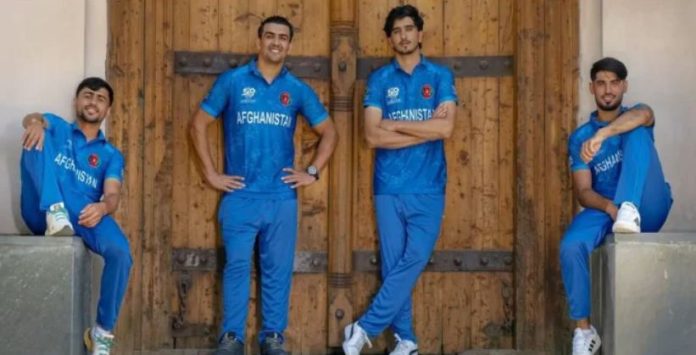
LAHORE, FEB 12 (DNA): The Afghanistan cricket team on Wednesday reached Lahore to participate in the ICC Men’s Champions Trophy 2025 in Pakistan and UAE from February 19 to March 9.
Led by Hashmatullah Shahidi, it is Afghanistan Men’s maiden participation in the eight-team ICC marquee event. The other teams include England, Australia, New Zealand, South Africa, Bangladesh, India and hosts Pakistan.
Afghanistan cricket team will play its first match of the CT25 against South Africa at National Cricket stadium, Karachi on February 21 while the other two matches will be played against England and Australia at Lahore’s iconic Gaddafi stadium.
Meanwhile, Afghanistan team also swapped injured spinner AM Ghazanfar with left-arm spinner Nangyal Kharoti to finalize its squad for the CT 25.
Afghanistan squad:
Hashmatullah Shahidi (c), Ibrahim Zadran, Rahmanullah Gurbaz, Sediqullah Atal, Rahmat Shah, Ikram Alikhil, Gulbadin Naib, Azmatullah Omarzai, Mohammad Nabi, Rashid Khan, Nangyal Kharote, Noor Ahmad, Fazalhaq Farooqi, Farid Malik, Naveed Zadran. Reserves: Darwish Rasooli, Bilal Sami.
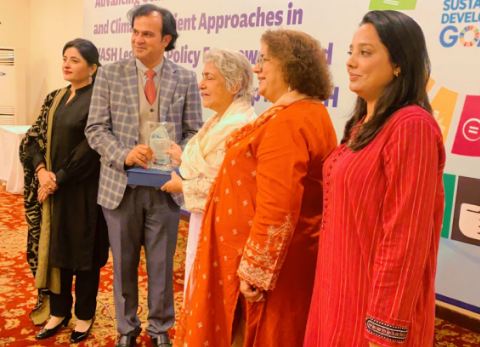
KARACHI, Feb 11: Members of the Sindh Assembly (MPAs), civil society representatives, women’s rights activists, government officials, and water management experts gathered on Tuesday to emphasize the critical need to empower rural women in water resource management.
This workshop was jointly organized by the Potohar Organization for Development Advocacy (PODA) and WaterAid Pakistan at a local hotel.
The focus of the workshop was on advancing gender-responsive, inclusive, and climate-resilient approaches within the legal and policy frameworks of WASH (Water, Sanitation, and Hygiene). The event aimed to bridge existing gaps, promote women’s leadership in WASH, and ensure sustainable access to WASH services for all.
Sindh Minister for Women Development Ms. Shaheen Sher Ali served as the chief guest, and Members of the Sindh Assembly, including Ms. Tanzeela Qamrani, Ms. Nida Khuhro, and Ms. Yasmeen Shah, also attended and shared their insights. The event featured speakers such as Ms. Sameena Naazir, Executive Director of PODA, Mian Muhammad Junaid, Country Director of WaterAid Pakistan, and Ms. Raheema Panhwar from WaterAid Pakistan.
One participant from a rural area of Sindh remarked, “The idea that fetching water and managing household chores is solely a woman’s duty is an outdated belief that must end now,” underscoring the urgency to dismantle traditional gender roles that disproportionately burden women.
The consensus among attendees was clear: actively involving women in decision-making processes related to water management is not just a matter of gender equality but is essential for ensuring sustainable and effective water solutions in rural communities.
Speakers highlighted that the most climate-vulnerable communities, predominantly residing in rural areas, often lack basic facilities. These communities frequently experience extreme weather events such as floods, droughts, and heatwaves, which disrupt lives, damage livelihoods, and undermine critical infrastructure, including WASH services.
They pointed out that women and girls shoulder a disproportionate burden due to inadequate WASH services and poor sanitation, further exacerbated by traditional gender roles. Women are primarily responsible for water collection, hygiene management, and caregiving tasks, duties that become even more challenging during climate-induced disasters. Flooding, contamination of water sources, and damage to sanitation systems worsen health and hygiene issues, particularly for marginalized communities.
The workshop aimed to review existing WASH legal and policy frameworks to identify gaps and limitations in addressing gender issues and climate resilience. It also sought to promote women’s leadership, enhance climate resilience, and build awareness while fostering collaboration among stakeholders from government, civil society, academia, and the private sector to share best practices and innovative solutions.
To understand political ideologies like secularism, liberalism, and the left-right divide is most important and crucial in today’s polarized world. These frameworks shape governments, societal values, and individual freedoms, influencing global trends and local dynamics. This column provides you with the origins, importance, and relevance for a clear understanding. Firstly, I will discuss the ideologies of secularism and liberalism.The term “secular” comes from the Latin phrase meaning “of this world,” emphasizing its focus on temporal matters. A secularist is a person who believesin those principles, while a mundane kingdom separates faith from governance. Secularism is defined as the principle of seeking to conduct human affairs based on naturalistic considerations, uninvolved with religion. It is most commonly thought of as the separation of religion from civil affairs and the state and may be broadened to a similar position seeking to remove or to minimize the role of religion in any public sphere.In political terms, secularism is a movement toward the separation of religion and government, often termed the separation of church and state. This can refer to reducing ties between a government and a state religion, replacing laws based on religion with civil laws, and eliminating discrimination on the basis of religion. Secularism has existed since ancient times. Limited secularism was practiced in societies such as ancient Greece, where religion was not included in governance, but religion was still prevalent in public life. Secularism emerged in early modern Europe. Functional differentiation transformed religion from a dominant lens for interpreting reality to simply another approach to explanation. The first use of the word “secularism” in a modern sense was by the British writer George Holyoake in 1851. He coined a term that would describe a stance advocating for conducting life based on naturalistic (secular) considerations only, but without necessarily rejecting religion, thus enabling cooperation with believers. Many European countries began to undergo societal secularization during the 20th century, with levels of belief and practice declining.Secularism allows freedom for each believer and non-believer, giving people the right to follow or not follow a religion without any interference. It protects spiritual ideals and traditional values while ensuring equality in politics, education, and law. Often misunderstood as atheism, secularism does not reject beliefs in God; rather, it helps the coexistence of all beliefs. Secularism works to create a non-violent society where human beings of all religions or none can live without discrimination. It prohibits the government and institutions from favouring or discriminating against any faith or worldview. Secularism’s essential aims are to separate government decisions from spiritual influence, eliminate religious laws from public governance, and assure freedom of thought and conscience.
Liberalism as ideology defined by Wikipedia, Liberalism is a political and moral philosophy based on the rights of the individual, liberty, consent of the governed, political equality, right to private property and equality before the law. Liberalism emerged as a response to the religious conflicts and authoritarianism that marked Europe in the 16th and 17th centuries. Thomas Hobbes and John Locke are among the philosophers who established it on the principles of social contract and government based on public consent, rather than divine or religious authority. Locke was a strong advocate for the rights to life, liberty and property, which became central to classical liberalism. Enlightenment philosophers like Montesquieu and Voltaire further developed the concepts of separation of powers, freedom of expression, and individual rights. These principles played a crucial role in the revolutionary movements of America and France, where liberalism was closely linked to democracy and the rule of law. Modern liberalism aimed to counteract social inequality by advocating for limited government intervention to ensure public welfare while maintaining individual liberty. It emphasis on balance social welfare with free market. In this form of liberalism, the government was involved in providing services like education and health care to equalize social status without compromising individual freedom.Liberalism has played a significant role in shaping the development of civil rights movements, constitutional laws, and electoral processes globally over time. It stresses the importance of individual liberty, political equality, and the right to private property, which is at the core of many democratic institutions. Conversely, the execution of liberal concepts varies across regions and is affected by various factors such as culture history, economics, and geography. Modern political thought is rooted in liberalism, which has been flexible and adaptable to the changing world.
Now, I discuss the concepts of left-wing and right-wing politics, exploring their principles and their impact on governance and society.During the French Revolution (1789-1799), left-wing and right-wing politics emerged because members of the National Assembly were allocated seats based on their political affiliations. Those who supported revolutionary changes and opposed the hierarchical structures that underpinned modern society, while those defending traditional institutions and hierarchical structures occupied the right occupied the left seats. Over time, these terms came to represent a broader ideological spectrum in politics worldwide.
Left wing political parties support social equality and government intervention in the economy, along with progressive measures to decrease inequality. Socialism and social democracy are among the leftist ideologies that prioritize welfare over personal wealth. In the past, leftist movements like union labour, civil rights campaigns and feminist struggles have been allied with it. Presently, the focus of left-wing policies includes universal healthcare access, free education, labour rights, and environmental sustainability. The left-wing political party in Pakistan is considered to be the Pakistan Peoples Party (PPP), attributed to its socialist policies and pro-worker stances under the vision of its visionary leader, Zulfikar Ali Bhutto. However, critics argue that over time, the Peoples Party’s policies have drifted, reflecting more centrist approaches.Other known left wing socialist political parties is “Mazdoor Kissan party lead by Dr. Tamiur-ur-Reman.”On the other hand, right-wing politics prioritize individual freedom, minimum government intervention, and the preservation of cultural and historical values. Right-wing movements, which are associated with capitalism, nationalism, and conservatism, advocate for free markets in exchange for private property rights, a strong national identity, as well as other liberties. Deregulation, lower taxes, and stricter immigration controls are commonly promoted by right-wing politics in practice. Right-wing ideology are common among mainstream political parties in Pakistan, including the PML-N and PTI. They prioritize market driven economic policies, privatization, national security, and the maintain of their traditional, cultural and religious values, etc. There are also other prominent groups and religious organizations, such as Jamaat-e-Islami and Jamiat Ulema-e-Islam that have a strong focus on policies related to religious nationalism and conservatism.Politically, the line between left and right is blurred in Pakistan’s politics; parties sometimes adopt policies from both sides to attract a different set of voters because, in such a dynamic, the challenges of society and economy intersect with those of ideology in addressing different cultural and political segments of the nation.
KARACHI: The newly-renovated National Bank Stadium of Karachi was inaugurated on Tuesday in a spectacular event in the run-up to the venue hosting the ongoing Tri-Nation Series and the much-awaited ICC Men’s Champions Trophy 2025.
Sindh Governor Kamran Tessori and Chief Minister Syed Murad Ali Shah jointly inaugurated the newly upgraded National Bank Stadium, which has been enhanced in preparation for the ICC Champions Trophy 2025.
The event was also attended by Pakistan Cricket Board (PCB) Chairman Naqvi, Federal Minister for Science and Technology Khalid Maqbool Siddiqui, Karachi Mayor Murtaza Wahab, national team, former cricketers and several other dignitaries.
CM Murad praised the PCB for completing the renovations in record time. He reaffirmed his government’s commitment to promoting sports in the port city, saying, “The Sindh government is dedicated to providing top-notch facilities for sports activities in the city.”
He recalled previous efforts by the Sindh government, noting the upgrade of the National Stadium in 2018 to ensure it was fully equipped for Pakistan Super League (PSL) matches.
He emphasised Karachi’s passion for cricket and assured that his government would continue to support the sport at all levels.
An aerial view ahead of the inauguration ceremony of the newly renovated National Bank Stadium in Karachi. — Facebook/@PakistanCricketBoard An aerial view ahead of the inauguration ceremony of the newly renovated National Bank Stadium in Karachi. — Facebook/@PakistanCricketBoard “We will leave no stone unturned in reviving sports activities in Karachi,” he emphasised. Looking forward to the Champions Trophy, the chief minister expressed confidence in the Pakistan cricket team, stating: “We hope our Shaheens deliver an outstanding performance.”
He concluded by saying: “Winning and losing are part of the game, but we should always aim for a fighting spirit on the field.”
The inauguration ceremony of the port city’s cricket stadium features fireworks, a dazzling light show, and live performances by renowned singers Ali Zafar, Sahir Ali Bagga and Shafqat Amanat Ali.
Fireworks during inauguration of newly revamped National Bank Stadium of Karachi on February 11, 2025. — PCB Fireworks during inauguration of newly revamped National Bank Stadium of Karachi on February 11, 2025. — PCB A new pavilion — the University Road End — was also officially opened. The Pakistan Cricket Board (PCB) stated that the “state-of-the-art facility marks a significant milestone in the stadium’s history, reinforcing PCB’s commitment to enhancing cricket infrastructure in Pakistan”.
The newly constructed pavilion features world-class dressing rooms for players and match officials, complemented by high-quality hospitality rooms.
“Developed in a record time of around four months, the facility underscores the dedication and efficiency behind the stadium’s rapid transformation,” the board said in an official statement.
A view of newly-constructed pavilion at National Bank Stadium in Karachi. — PCB A view of newly-constructed pavilion at National Bank Stadium in Karachi. — PCB In addition to the new pavilion, several major upgrades have been completed at the National Bank Stadium to enhance both the playing and viewing experience.
These include the installation of 350 LED lights to improve broadcast quality, the fixing of two digital replay screens and the addition of over 5,000 new chairs to enhance spectator comfort.
PCB Chairman Mohsin Naqvi made multiple visits to the stadium to ensure the timely completion of the work.
Nearly 5,000 dedicated workers contributed tirelessly to transforming the stadium, ensuring its full operational readiness for the tri-series and the ICC Champions Trophy 2025.
Naqvi said the upgrade was a testament to the board’s vision of elevating Pakistan’s cricketing venues to international standards.
“The National Bank Stadium, which last saw a major overhaul during the 1996 World Cup, now stands as a modern, world-class facility that will not only host domestic and international matches but also provide players and fans with a top-tier experience.
To honour their commitment, Naqvi will host a reception for the workers at 5:30pm today at the stadium.
The stadium has a proud history of producing thrilling matches, while the city of Karachi has given Pakistan some of its finest cricketers. With this enhanced, spectator-friendly venue, the hope is that more young talent will emerge and go on to represent Pakistan on the international stage.
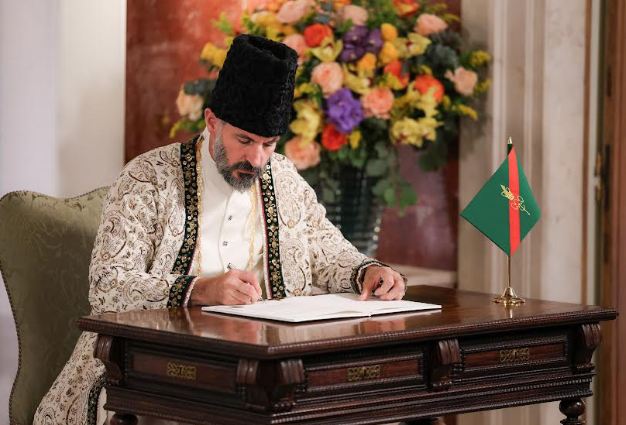
LISBON, PORTUGAL, 11th Feb: Prince Rahim Aga Khan V, accompanied by his family, received global leaders of the Shia Ismaili Muslim community at his Accession Ceremony today, 11th February 2025. The event took place at The Diwan of the Ismaili Imamat in Lisbon, Portugal.
Leaders of the Ismaili community pledged spiritual allegiance to the 50th hereditary Imam on behalf of the global Ismaili community. Ismailis around the world observed the ceremony via livestream in their Jamatkhanas (places of gathering) in more than 35 countries.
In his address, The Aga Khan paid tribute to his late father, Prince Karim Aga Khan IV, and thanked his family for their presence and support. He also thanked the governments of Portugal and Egypt for the way in which they had acknowledged his father’s contributions and facilitated the dignified arrangements for his funeral and burial.
This was the first occasion on which Aga Khan V was speaking to the international Ismaili community. In his inaugural address, he pledged to dedicate his life to care for the spiritual and material well-being of the Ismaili Jamat.
He spoke of the principles of the Ismaili Muslim faith, the importance of keeping a balance between worldly and spiritual matters and the regular practice of the faith. His message focused on universal concepts of peace, tolerance, inclusion and support for those in need. He said that he wanted his community to be loyal and active citizens of the countries in which they live and urged the Ismaili community to lead by example in matters related to climate change.
Deeply involved with the work of the Aga Khan Development Network for several decades, His Highness Prince Rahim Aga Khan committed to balance continuity and stability with a measured pace of change going forward. He also pledged to sustain friendly and constructive relations with governments and partners, and to work closely with them, as did his father, for peace, stability and opportunity.
The Accession Ceremony marks the formal assumption by the Shia Ismaili Imam, of his role, following the passing of his predecessor. The ceremony consists of religious recitations, the presentation and donning of insignia of office, and the pledging of spiritual allegiance by leaders of the Ismaili community on behalf of all Ismailis around the world. It is customary for the Imam to make an address to his community on this occasion. The ceremony affirms the Imam’s authority as the present, living, spiritual leader of the worldwide Shia Ismaili Muslim community.