Home Blog Page 666

‘US ready for first Black woman president’

‘US ready for first Black woman president’

If Harris manages to beat Trump, she will become first woman and the second Black person to run America

Foreign Desk

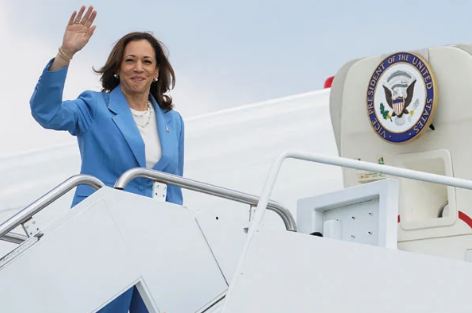
WASHINGTON: US Vice-President Kamala Harris, the Democratic presidential nominee, has claimed that America is ready to elect its first Black woman president.

“In my entire career, I’ve heard people say when I ran… people aren’t ready, it’s not your time, nobody like you has done that before,” the Democrat, who will be officially confirmed as presidential nominee in Chicago next week, said in 2019 when she ran against Joe Biden in the primary presidential campaign.

“I haven’t listened and I would suggest that nobody should listen to that kind of conversation.”

But Harris’s campaign never took off and she left the primaries race before Biden picked her as his running mate.

If Harris, 59, manages to beat Donald Trump in November, she will become the first woman and the second Black person, after Barack Obama, to run the world’s leading power.

In so many ways, Harris already is a trailblazer. Born to an Indian mother and a Jamaican father, she was the first woman attorney general ever elected in California, on top of being the first African American and Asian American to hold that post. She then became the first vice president in US history in those same categories.

The Success of the Army Chief’s Afghan Policy

Qamar Bashir

By Qamar Bashir

The tone and tenor of the recent interview conducted by the BBC with Zabihullah Mujahid was markedly different from previous engagements. Unlike a few months ago, where his statements were filled with aggression, threats, and blame towards Pakistan for its failure to control terrorist activities within its borders, this interview took a more conciliatory approach. Mujahid extended an olive branch by highlighting shared cultural, religious, and social values, overlapping economic interests, and common borders. He offered the interim Afghan government’s willing assistance to help address Pakistan’s concerns regarding cross-border terrorism.

This shift in the Afghan Taliban’s stance did not occur in a vacuum. It was the result of sustained and persistent pressure applied by Pakistan, particularly by its military leadership. After recognizing that its previous appeasement policies were ineffective, Pakistan adopted a multi-pronged aggressive strategy with a singular objective: to make the Afghan Taliban understand that they must either rein in the Pakistani Taliban (TTP) and stop them from launching cross-border attacks, or Pakistan would be forced to take matters into its own hands to counter this threat decisively.

This aggressive policy included measures such as curbing cross-border trade, enforcing stricter border controls with formal visa protocols, shutting down traditional smuggling routes that have been financially sustaining the Afghan government, and expelling over 400,000 Afghan nationals residing illegally in Pakistan. Additionally, Pakistan conducted intelligence-based operations within Afghanistan, targeting and eliminating high-profile TTP operatives, further escalating the pressure on the Afghan government.

General Asim Munir, Pakistan’s Army Chief, has been actively pursuing a public relations campaign to garner domestic and international support for Pakistan’s aggressive stance towards Afghanistan. This campaign has included delivering numerous speeches at significant events, where he has consistently emphasized the necessity of eradicating the TTP and its networks, both within Pakistan and across the border. In a recent address to cadets at the prestigious Pakistan Military Academy in Kakul, General Munir invoked religious verses, denounced the TTP as Khawarij (a term historically used to describe extremist rebels), and urged the Afghan government to reciprocate Pakistan’s decades-long support by assisting in the elimination of the cross-border terrorism threat.

In his high-profile speeches, the army chief categorically ruled out any other options—political, economic, or diplomatic—for resolving the issue of the virulent and dangerous TTP. Instead, he has asserted that the only viable solution is to kinetically eliminate the TTP threat.

Against this backdrop, the recent interview with Zabihullah Mujahid holds immense significance. Mujahid presented several concrete proposals aimed at easing the frustration and anger of Pakistan’s leadership, particularly the military, which has been deeply affected by the ongoing sacrifices of its officers and soldiers. With patience and forbearance wearing thin, these proposals could be seen as an attempt to open a dialogue and potentially ease tensions between the two countries.

He has offered mediation between the Pakistan government and the TTP. However, Pakistan has  already been engaged in several such mediated talks, which have often proven more detrimental than beneficial to its interests. Pakistan’s principal stance is that these notorious and dangerous elements have committed heinous crimes against the people and the state of Pakistan. The Afghan government, which has provided them refuge, equipped them with modern weapons, and offered them safe havens, is equally culpable in the conflict with the TTP, seemingly using them as strategic assets against Pakistan.

Therefore, Pakistan’s demands are twofold: first, that the Afghan government must cease harboring these militants, and second, that they must hand them over to the Pakistani authorities to be subjected to the legal and judicial processes and held accountable according to the laws of the land. Given these firm demands, the option of mediation is almost a non-starter for Pakistan.

Mr. Zabihullah Mujahid’s assertion that the issue is an internal matter for Pakistan carries little weight or substance, given that the Afghan government is knowingly and willingly harboring a declared terrorist group of over 6,000 heavily armed militants within its territory. By providing these terrorists with hospitality, financial resources, and the means to survive, Afghanistan has made itself an active party to the conflict. Therefore, it cannot, by any stretch of the imagination, declare itself uninvolved.

It is an internationally recognized norm that responsibility for acts of terrorism extends not only to the terrorists themselves but also to the entities or countries that harbor them and provide them with safe havens. This principle is enshrined in various international legal frameworks, including United Nations Security Council Resolutions, which emphasize the accountability of states that support or tolerate terrorist activities. Consequently, the claim made by Zabihullah Mujahid that the TTP issue is merely an internal matter for Pakistan is both illogical and lacking in reasonable basis.

His emphasis on the Afghan government’s commitment to ensuring that Afghan soil is not used for attacks against Pakistan is as hollow as his other assertions. The Afghan government is, in fact, harboring Pakistani nationals who have committed heinous crimes against the people and the state of Pakistan. They are fully aware that these individuals are involved in cross-border terrorism, masterminding and controlling operations within Pakistan to launch fatal attacks on the country’s vital interests.

Despite having the capability to rein in these violent groups and assist Pakistan in putting an end to their activities, the Afghan government, for reasons known only to them, not only harbors these militants but also seemingly encourages them to target Pakistan where it hurts most. This behavior calls into question the sincerity of their stated commitment to non-interference and suggests a deliberate complicity in the ongoing violence against Pakistan.

However, his last suggestion that Pakistan and Afghanistan should hold formal talks and negotiations to address any concerns carries significant merit, especially given the current context. By engaging in direct communication, Pakistan can clearly present its demands and concerns, compelling the Afghan government to take concrete and decisive steps in addressing the TTP issue comprehensively. Should these talks fail, Pakistan would gain further legitimacy and international acceptability for its kinetic operations aimed at exterminating the TTP menace.

By Qamar Bashir

Former Press Secretary to the President

Former Press Minister to the Embassy of Pakistan to France

Former MD, SRBC, CEO, ATV

HR abuses in Afghanistan; double standards of the Int’l community

Pakistan: A Pivotal Bridge Aligning Economic Interests Between China and the Middle East

Their ignorance or reluctance towards an inclusive government would definitely enable no other than IS-K militants who are already engaged in waging of proxies. It is the time for Taliban leaders to get rid of abroad patronage and let the representative leadership to decide destiny of war affected and war scattered people.

Shamim Shahid

Amidst continuous role on the part of international community, especially UN gun-toting Taliban militants have celebrated what they called “victorious return” into power corridors of war Afghanistan couple of days back. Giving a deaf ear response to international community’s appeals of “honouring and respecting HR,” Taliban rulers on that particular occasion also demonstrated its inhuman and immoral acts of punishing and victmising innocent civilians especially those who remained part of previous regimes or believe in other religious faith.

Instead of listening to cries of war affected Afghans who are passing through miserable conditions throughout the world and HR defenders, one of Taliban office holder has defended, “denial of education rights to women” by saying, “similar is the situation in Israel where civilians are subjected to worst kind of violence.” On that particular day, instead of answering to stock of queries regarding women and children rights, the Taliban leader Zabih Ullah Mujahid through X page massage “has stressed on the implementation of justice in Afghanistan and warned if justice not implemented the regime will be collapsed.” Such remarks on the part of Zabih Ullah Mujahid also confirm that Afghan Taliban duly fear threats to their regime, imposed on Afghans through guns and bullets.

No one can deny the fact, that since long the UN and other international organs are helpless before US lead allies who giving preference to its own purposes and interests in war like situations especially prolonged Afghan Conflict, Ukraine and others. Instead building up pressure against Taliban regime as it did against former USSR backed regimes from December 1979 till April 1992, the US has admitted releasing a huge amount of 239 million US dollars to Kabul authorities. Amidst this confession, senior most Pakistani politician Afrasiab Khattak is known for his words, “in according to Doha Qatar agreement, US making payment to Kabul on weekly basis.”  

According to UN statement, “the Taliban’s deliberate subjugation of women and girls is widespread and systematic, amounting to crimes against humanity, including the crime of gender persecution. The situation is so severe that many Afghans, especially women, say the situation can be best described as ‘gender apartheid.’ Despite this, Taliban officials have insisted the situation of women and girls is an ‘internal’ matter.

Whatever are the claims and stances on the part of Taliban and their “visible and invisible” patrons but the fact is that they converted Afghanistan into a “BIG PRISON” where the inmates are safe but their lives are at mercy of rulers. Despite adopting or following patience and restrain policies, even the regional countries are reluctant in having friendly and cordial relations with Afghanistan due to UN pressures. In last three years, over 0.7 million have made good their flee towards western and European world. Millions of others not only those waiting for chances in neighbouring South and Central Asian states but also in Arab world are in hunt of flee to western world for their survival.

Compare to 90’s, the internal situation of Afghanistan is hostile for those who either remained part of US backed Afghan War or Western-world supported democratic process. One can disagree but the fact is this that the US lead allies through Doha Accord achieved what they didn’t through 2001 War on Terror and 1988 Geneva Accord. Prior to Taliban entrance in Kabul, Pakistan had also played an important role in remaining very honest and sincere inheritance to British Colonial rulers’ famous strategic policies of “divide and rule.” Earlier in 90’s almost non Pushtoon Afghans didn’t leave the country and remain on forefront of armed resistance against Pakistan patronized Taliban. But this time healthy wealthy like Dostam and co already settled in Turkey and almost successors and followers of late Prof Rabbani and Ahmad Shah Mehsud airlifted to Pakistan little before entrance of Taliban into Kabul.

Major failure on the part of Taliban could be considered its growing unfriendly or even foes like relations with Pakistan. Such relations are only multiplying miseries of common people but it also paving the ways for strengthening or consolidating positions of Islamic States Khurasan.

Intelligence cooperation between the Taliban and regional powers, particularly Iran and Russia, led to targeted operations against ISKP, resulting in a reduction in attacks compared to 2022. – 2024: ISKP bolstered its cells by intensifying recruitment and propaganda efforts.”

Security and economic hardships of South and Central Asian region couldn’t afford war like situation any more. Keeping in mind increasing miseries of wars, terror and poverty hit people of this particular region, gun totting and turban wearing Taliban leaders must review its internal and external policies.

Their ignorance or reluctance towards an inclusive government would definitely enable no other than IS-K militants who are already engaged in waging of proxies. It is the time for Taliban leaders to get rid of abroad patronage and let the representative leadership to decide destiny of war affected and war scattered people.

Indonesian Expo 2024 Shines at Centaurus Mall

https://islamabadpost.com.pk/indonesian-expo-2024-shines-at-centaurus-mall/

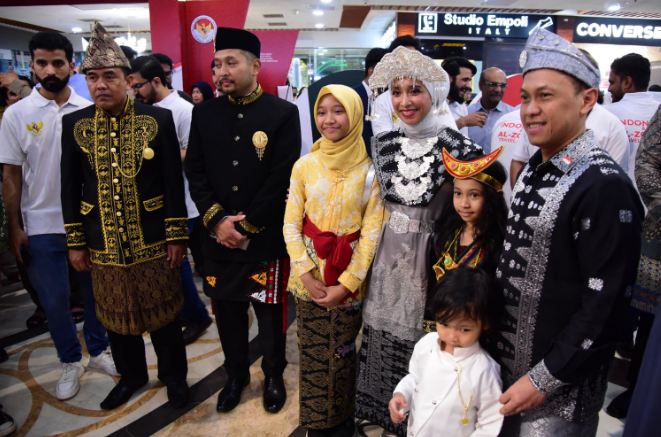
ISLAMABAD, AUG 18 (DNA) – The Embassy of the Republic of Indonesia in Islamabad has been successfully attracting more public attention through the Indonesian Expo 2024 at the Centaurus Mall, 16-18 August 2024. The Expo is the first of its kind ever held in the iconic shopping center in Islamabad, as part of a series of events to commemorate the 79th Anniversary of the Indonesian Independence Day.  

The Indonesian Expo aims to provide a vibrant cultural backdrop to the business-oriented events as well as programs related to people-to-people contact. Among schedules on the stage are traditional and cultural shows including Indonesian martial arts called Pencak Silat, creative and religious performances by Indonesian students in Pakistan, and theme-based discussions on crucial issues to bring Indonesia and Pakistan closer in trade, tourism, and investment as well as education and religious moderation.  

Many options are available during the Expo to elevate public awareness about Indonesia. Thousands of enthusiastic visitors look enjoyed the Expo atmosphere by visiting photo booths designed in an iconic Indonesian heritage background such as Rumah Gadang from West Sumatera Province and the Embassy’s vehicle in Pakistan’s truck art with Indonesian motifs. Moreover, the curious visitors also seem interested in reading the Indonesian short history through a miniature museum and historical display.

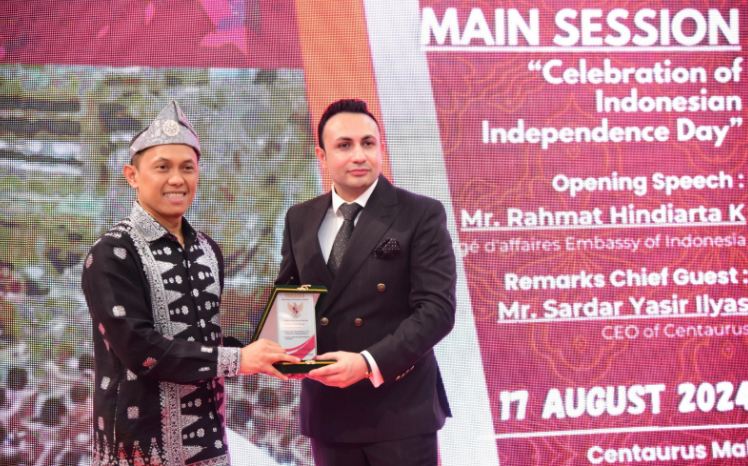
During the main session of the Indonesian Independence Day celebration on 17 August 2024, the Indonesian Chargé d’Affaires (CDA) Mr. Rahmat Hindiarta Kusuma highlighted the Embassy’s two priority areas of diplomacy in Pakistan; stronger economic relations and closer people-to-people contact. The Expo is designed as a fusion of commerce and culture to portray Indonesia’s dynamic economic growth and cultural diversity.

“We have cordial political and diplomatic relations. In turn, we need to translate it into more concrete works. Indonesia has huge potentials and opportunities in many sectors that the Pakistani counterparts can further explore. The Centaurus as our option for current Expo aims to bring peoples of the two brotherly countries closer,” he said in front of Mr. Sardar Yasir Ilyas, CEO Centaurus as the Expo’s Chief Guest, and hundreds of visitors in the biggest Mall in Islamabad.   

In his remarks, Mr. Sardar Yasir Ilyas expressed his appreciation to the Indonesian Embassy in Islamabad for selecting the Centaurus Mall as the venue for the Indonesian Expo 2024. “Everyone should learn from the Embassy of Indonesia for very active diplomacy in bringing peoples of the two brotherly countries even closer. We make the Centaurus Mall as a perfect place for other foreign missions in promoting their respective countries in Pakistan. So it is expected that all Pakistani people can learn from other countries such as Indonesia in successfully reaching its great achievement,” he said both in English and Urdu to transfer as more insights as possible to the audience.  

Furthermore, both sides proceeded to the “Tumpeng Cutting Ceremony”. Tumpeng is an Indonesian cone-shaped rice dish symbolizing gratitude to Allah and honor all creatures. The main session was concluded by the handover of “token of optimism” from the two sides. The CEO handed over the memorabilia of ongoing optimistic development and expansion of the Islamabad iconic Centaurus complex, while the Indonesian CDA gave plague of Pancasila as the Indonesian state of ideology which has successfully bolstered unity which subsequently lead the Country to the political stability and economic prosperity.    

“The expo is a fantastic opportunity to learn about Indonesia. The blend of business and culture made it a truly memorable experience for me,” said Haseeb from Lahore. “High appreciation to the Embassy’s initiatives. More and more Pakistanis are discovering the beauty and diversity in Indonesia,” expressed Tahir Mughal from Islamabad.

Imran Khan ‘decides’ to hold PTI powershow in Islamabad on Aug 22

Imran Khan 'decides' to hold PTI powershow in Islamabad on Aug 22

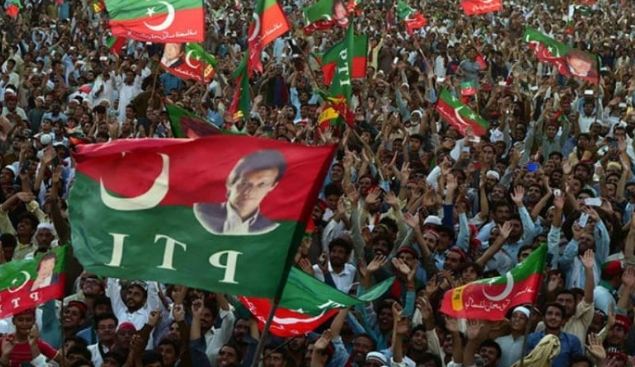
ISLAMABAD, AUG 18: Adviser to Khyber Pakhtunkhwa chief minister on Information Barrister Muhammad Ali Saif on Sunday revealed that incarcerated Pakistan Tehreek-e-Insaf (PTI) founder Imran Khan has “decided” to hold a public rally in Islamabad on August 22.

“We guarantee that there will be no law and order issue,” Saif said during a press conference in Islamabad, adding that the party will try to avoid any violation of law on their part.

The PTI leader’s remarks come against the backdrop of its months-long struggle to hold a public gathering in the federal capital wherein authorities have time again denied it the permission to hold a rally citing security concerns.

In June, Islamabad High Court’s Justice Babar Sattar, while hearing a petition filed by the Imran Khan-founded party seeking permission to hold a rally, had directed the party and the city’s administration to amicably sort out the issue after which the deputy commissioner allowed the PTI to hold a public gathering.

However, Islamabad Chief Commissioner Muhammad Ali Randhawa later suspended the no objection certificate (NOC) citing the beginning of the month of Muharram and security concerns along with complaints lodged by the local people.

Subsequently, the party moved the IHC seeking contempt of court proceedings against those responsible for the suspension of the NOC.

After the PTI’s plea was disposed of by the court, the party then once again sought the district administration’s permission for a public meeting on August 13 in the federal capital.

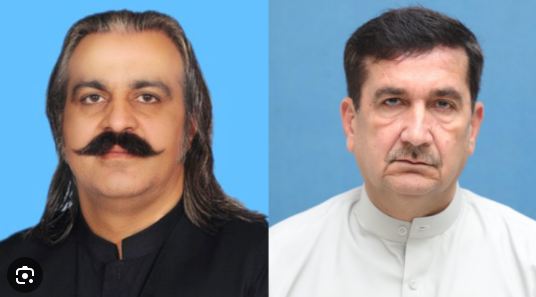
The former ruling party, for months, has been striving to hold a public rally and Barrister Saif’s announcement comes after his boss and KP CM Ali Amin Gandapur’s statement, made earlier this month, regarding a public gathering in Islamabad.

“No one can stop us from [staging a rally],” Gandapur had said while addressing the PTI public gathering held in KP’s Swabi to mark the one-year imprisonment of party founder Khan.

Elaborating on the party’s rally today, the CM’s adviser said that the public gathering will be attended by a large number of people from KP.

Noting that the PTI founder made it clear that the party was to approach the administration and the courts, Saif remarked that the country was facing a difficult situation.

“Don’t create more bitterness by putting barriers,” he said.

Finance minister attends BYD Brand launching

Finance minister attends BYD Brand launching

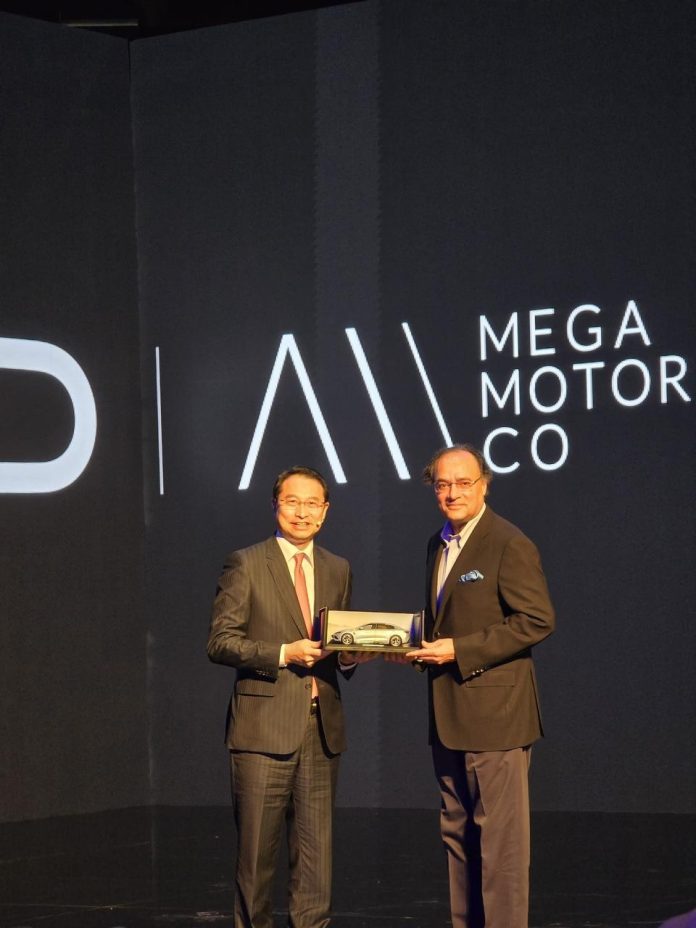
ISLAMABAD, AUG 17 /DNA/ – Federal Minister for Finance and Revenue Senator Muhammad Aurangzeb attended the BYD Brand Launching in Pakistan today and delivered a keynote address at the event.

— BYD, a global frontrunner in electric vehicles and renewable energy solutions, made a significant entry into the Pakistani market today, promising a new era of eco-friendly transportation. The event, held in Islamabad, was graced by Federal Minister for Finance and Revenue Senator Muhammad Aurangzeb, who delivered a keynote address underscoring the importance of sustainable innovation for Pakistan’s future.

Senator Aurangzeb welcomed BYD’s arrival, highlighting the company’s commitment to cutting-edge technology and environmental stewardship. “BYD’s entry into our market is not just about introducing new vehicles; it’s about embracing a sustainable future and aligning with Pakistan’s environmental goals, of achieving energy efficiency” Aurangzeb said. He further emphasized that the government is committed to support such initiatives that will not only advance green technology but will also provide a significant boost to the local economy by creating new job opportunities and fostering technological advancements in the automotive sector. Additionally, he added that the presence of a major global player like BYD could enhance Pakistan’s export potential in the burgeoning electric vehicle market, aligning with national strategies to increase high-tech exports and reduce trade imbalances.

The Minister also asserted that the government and the industry stakeholders shall work together towards introducing such innovations that can contribute to the country’s sustainability goals and economic stability in the coming years.

Flag Hoisting Ceremony Solemnly Held at the Indonesian Embassy to Celebrate 79th Independence Day

Flag Hoisting Ceremony Solemnly Held at the Indonesian Embassy to Celebrate 79th Independence Day

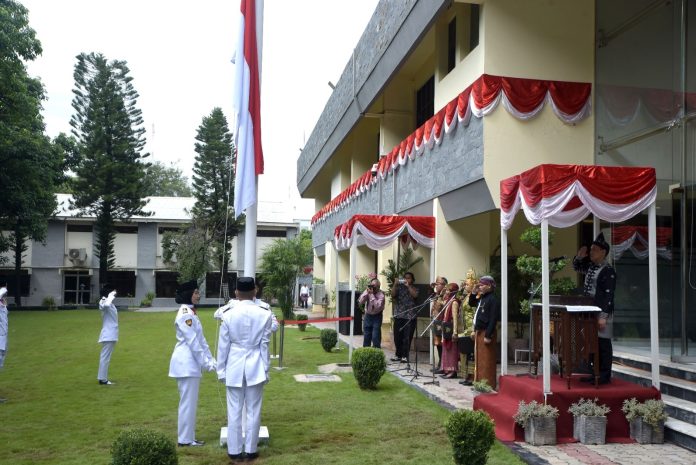
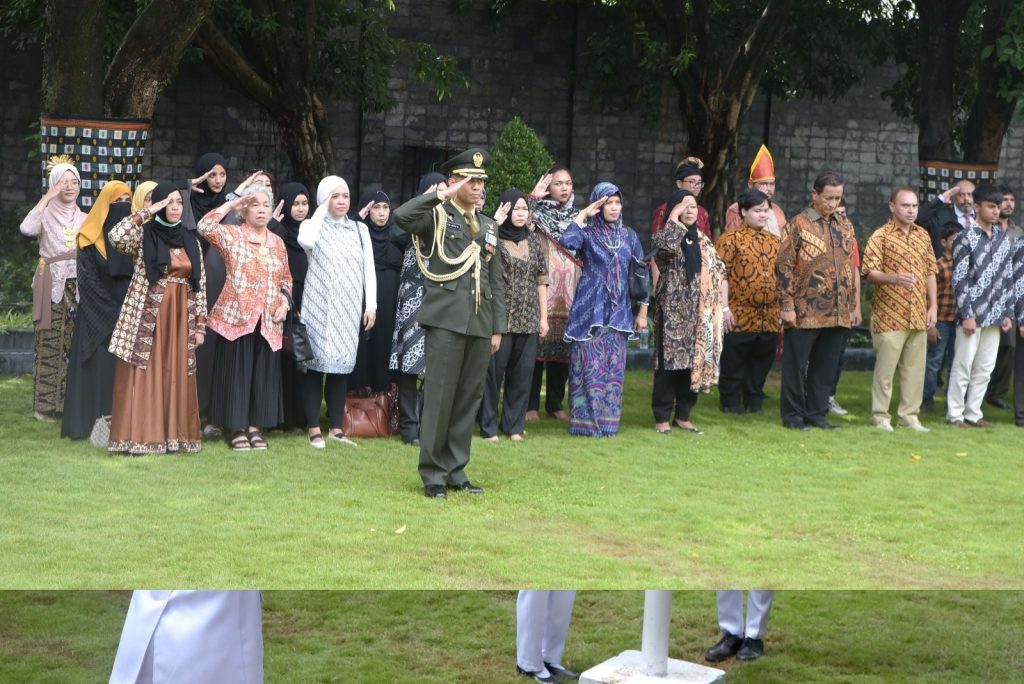
ISLAMABAD, AUG 17 /DNA/ – The Embassy of the Republic of Indonesia held the Flag Hoisting Ceremony to celebrate Indonesia’s 79th Independence Day this morning at the Embassy’s premises, led by the Chargé d’Affaires, Mr. Rahmat Hindiarta Kusuma. It was the culmination of a series of pre-events in welcoming the auspicious day to keep maintained unity and mutual respect among Indonesians, as well as strengthened patriotism to the Homeland.

Embassy’s officials along with their families and hundreds of Indonesian Diaspora based in different cities of Pakistan, attended the ceremony in Indonesian traditional fervor. Besides, guests of honor from prominent religious leaders, journalists and experts from reputable think tanks, and representatives of the dynamic business community were also present on the special occasion.

A moment of silence was observed to pay tribute to the national heroes, followed by the reading of the text of proclamation of Independence. The ceremony concluded with the special prayers for the Country and renewed commitment to avidly make Indonesia prosperous, harmonious, advanced, and invincible.

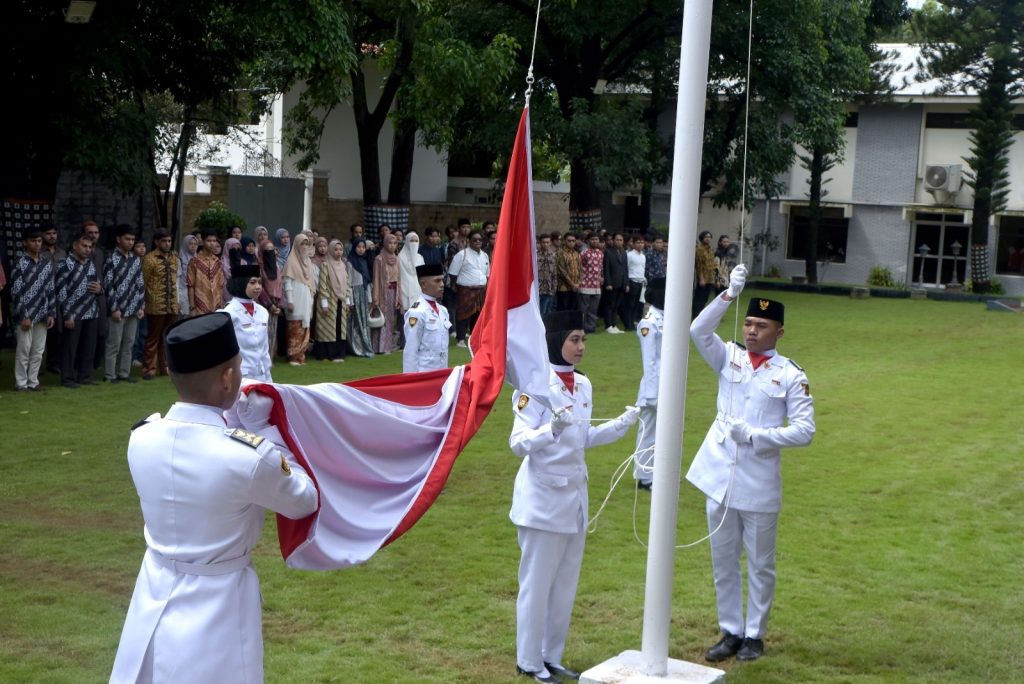
At the Flag Hoisting Ceremony called in Indonesian language by “Upacara Bendera”, the Embassy’s Flag Hoisting Team which consists of a smartly turned-out group of Indonesian students had the honor to receive the Indonesian flag from the Chargé d’Affaires as an Inspector of the Ceremony. The Team subsequently raised the red-white flag solemnly with the playing of the Indonesian National Anthem, “Great Indonesia,” or “Indonesia Raya”.

Right after the Ceremony, the Indonesian Chargé d’Affaires escorted all guests of honor to the Embassy’s Hall for small and simple reception by serving Tumpeng, the cone-shaped rice dish as an inseparable part of celebrations and other important events in Indonesia. “On behalf of the Indonesian Embassy, I express my sincere gratitude and high appreciation to all of you for joining us at the very special moment of Indonesian Independence Day. Indonesia and Pakistan, the two largest Muslim countries in the world, dosti zindahbad!”, he said in the spirits of freedom and friendship between the two brotherly countries.

“Looking forward in Indonesian Expo 2024 in the Centaurus Mall which will officially be opened today’s afternoon. See you in Jakarta, Surabaya, Yogyakarta, Bandung, and anywhere in Indonesia,” he concluded his remarks by inviting all those present to be closer to Indonesia.

Moreover, as appreciation on their great achievement, the Chargé d’Affaires honored a group of Indonesian students in Pakistan with the certificate of appreciation for pursuing their higher level academic programs with distinction.

Mr. Tariq Ullah Sufi, CEO Hamza Veg, Oil Refinery, & Ghee Mills (Pvt.) Limited. “I appreciate the way you organize this special event. My prayers are always on you and the Embassy,” said H.E. Sahibzada Sultan Ahmed Ali, Chairman Muslim Institute. “Thank you for inviting all of us. Always miss this event. Proud of you!,” said Mia, an Indonesian national from Gujrat.

Federal, Punjab Govts committed to public relief agenda: Attaullah

Federal, Punjab Govts committed to public relief agenda: Attaullah

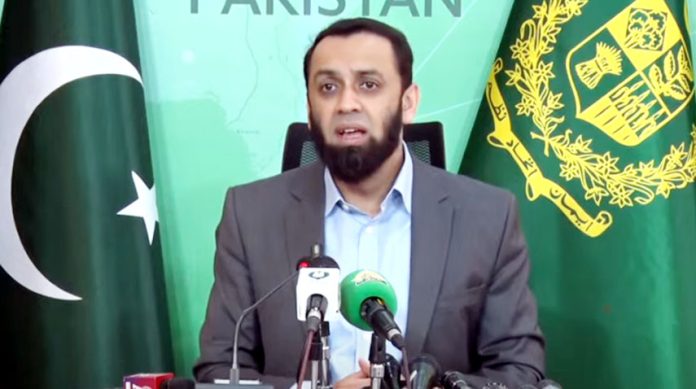
ISLAMABAD, AUG 17: Minister for Information and Broadcasting Attaullah Tarar has said federal and Punjab governments are committed to public relief agenda.

Addressing a news conference in Islamabad today, he said the Punjab government’s decision to reduce electricity prices by fourteen rupees per unit for consumers using up to five hundred units is an unprecedented step.

He said this reflects that the PML-N leadership is sensitive to the difficulties of the masses. He said this relief of forty-five billion rupees will bring ease in the lives of the consumers for the months of summer.

The Information Minister recalled that the Prime Minister had earlier provided a subsidy of fifty billion rupees to the consumers using up to two hundred units for three months. He said reductions in electricity prices as well as the recent one in petrol are major steps towards provision of relief to the masses.

Attaullah Tarar pointed out that solarization of twenty-eight thousand tubewells in Balochistan would provide relief to the farmers of the province.

The Information Minister said inflation has come down to eleven percent and international financial institutions are predicting more decline in it.

He said Mian Muhammad Nawaz has always believed in the politics of public service.

The Information Minister said the government is also working to find a durable solution to reduce electricity prices. He said efforts are being made to reduce line losses and check power pilferage.

Alluding to the arrest of retired Lieutenant General Faiz Hameed, the Information Minister was appreciative of Pakistan Army’s internal accountability system.

Shakeel Khan’s corruption allegations undermine PTI’s good governance claims

Shakeel Khan's corruption allegations undermine PTI's good governance claims

PESHAWAR, AUG 17 (DNA): The credibility of the Pakistan Tehreek-e-Insaf (PTI)’s claims of good governance in Khyber Pakhtunkhwa has been exposed following serious allegations of corruption and maladministration levied by Shakeel Khan, the party’s former Provincial Minister for Communications and Works Department.

Shakeel Khan in his resignation has described as, “systemic corruption” within the PTI-led government, challenging the party’s previous assertions of effective and transparent governance in KP.

In the resignation letter addressed to the Chief Minister KP, the close aide of PTI from Batkhela constituency of Malakand district in the provincial assembly contended that PTI deviated significantly from its commitment to bring reforms in socio-economic sectors and provide relief to the underprivileged.

Shakeel asserted that he would provide a detailed account of the issues behind his resignation in the Khyber Pakhtunkhwa Assembly.

Adviser to the Chief Minister for Information, confirmed that Shakeel Khan’s resignation followed a summary submitted to the KP Governor to denotify him as provincial minister.

Saif stated that the decision was based on the recommendations from a good governance committee, which had accused Shakeel of misuse of authority, financial irregularities, and negligence.

Ikhtiar Wali Khan, Pakistan Muslim League-N’s Information Secretary, criticized PTI’s corruption and poor governance allegations.

Ikhtiar Khan pointed out that Shakeel Khan’s dismissal is part of a broader pattern within the PTI, referencing previous instances where ministers were expelled after exposing corruption, such as former Minister Ziaullah Afridi and MPA Javeed Nasim during the Pervez Khattak Government.

Wali Khan argued that the PTI’s promises of transformative change had fallen short, with the province now struggling under significant loan debt and facing challenges in essential sectors like health and education.

He said after the 18th constitutional amendment, it was the responsibility of KP government to maintain its writ and law and order in the province.

He pointed out that PTI government failed to fulfill its constitutional responsibilities in maintaining its writ, especially in southern districts of KP, where incidents of terrorism had surged.=DNA

Pakistan: A Pivotal Bridge Aligning Economic Interests Between China and the Middle East

Pakistan: A Pivotal Bridge Aligning Economic Interests Between China and the Middle East

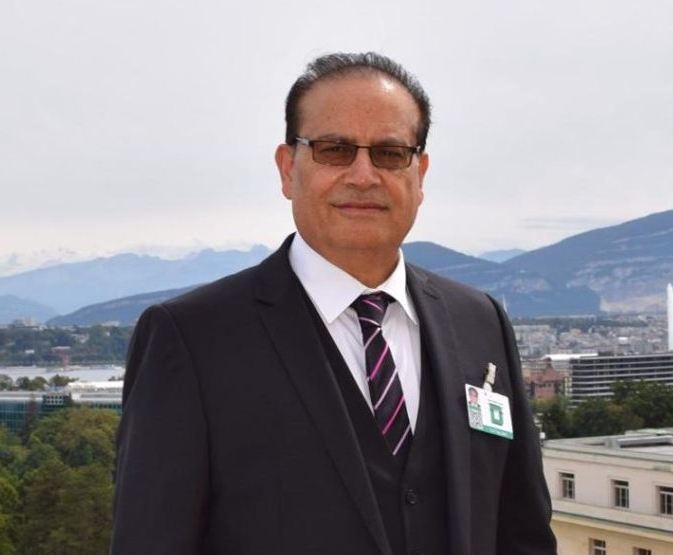
China possesses technology and economic strength, while the Middle East is rich in capital but lacks technology. These interests can be aligned through Pakistan, which can act as a bridge by utilizing its good offices, cheap labour, and deep cultural understanding of both regions, Prof. Azhar Ahmad.

ISLAMABAD, AUG 17: Speakers deliberated on the synergy between the needs and interests of China, Middle Eastern states and Pakistan. The speakers expressed their respective views while participating in an event titled “China, Middle East, and the Role of Pakistan” organized by the Institute of Regional Studies (IRS). Ms. Nabila Jaffer, Research Analyst, leading China program at the IRS in her introductory remarks highlighted the changing regional economic and security dynamics due to China’s relations with the Middle East beyond energy sources.

The session discussed and explored the growing engagement of China in the Middle East, backed by aligning interests and values. This was complemented by how Pakistan can facilitate integration, collaboration and cooperation by leveraging pivotal location. The key speakers included Prof. Azhar Ahmad, senior professor of IR, an author and commentator; Mr. Shakeel Ahmed Ramay, CEO of Asian Institute of Eco-civilization, Research, and Development (AIERD); and Dr. Munawar Hussain, faculty member at Quaid-i-Azam University.  The event was attended by diplomats, researchers, academics, journalists and students.

Speaking on the occasion, Prof. Azhar Ahmad began by emphasizing the historical and anti-imperialistic foundations of China’s foreign policy, he highlighted that China’s role as a mediator for the Global South. He highlighted remarkable examples such as its mediation efforts for Saudi-Iran rapprochement in 2023 and recent initiative to unite 14 Palestinian factions for bringing peace and stability. Prof. Ahmad noted that China’s trade with the Middle East has seen significant growth, surpassing that of the United States. He proposed that Pakistan, with its strategic importance, could help elevate the China-Pakistan Economic Corridor (CPEC) into a broader regional initiative linking China with the Middle East, Africa and beyond. According to Prof. Ahmad, Pakistan, with its cheap labour and understanding of both Chinese and Middle Eastern cultures, can help align these interests effectively.

Dr. Munawar Hussain provided an in-depth analysis of China as a key international actor, elaborating on its Middle East policy and exploring the potential role that Pakistan can play in this context. He portrayed China as an ‘old wise man’ highlighting its patience in foreign policy, its history of avoiding colonialization, adhering to a non-interventionist policy since the era of Mao Zedong, and its primary foreign policy aspiration of achieving economic wellbeing. Dr. Hussain discussed China’s foreign policy shift from socialism to neoliberalism, aimed at fostering a multipolar world. He also noted China’s consistent pro-Palestinian stance and its position as the largest oil importer from the Middle East. Dr. Hussain stressed Pakistan’s pivotal geostrategic role in connecting Asia, the Middle East, and Africa, suggesting that Pakistan could enhance its diplomatic influence and contribute to regional stability by extending trade and infrastructure investments. However, he also acknowledged the challenges Pakistan faces, including navigating US-China rivalry, potential Indo-US ties, threats to strategic autonomy, and increased risk of terrorism sponsored by Indian agencies.

Mr. Shakeel Ahmed Ramay emphasized the shared values and common interests between China and the Middle East, while also underscoring the importance of Pakistan defining its identity and role on the global stage independently, rather than being viewed solely in relation to other states. The Middle East is inclined toward fostering friendship with China, largely due to the absence of historical conflicts or regional proxy engagements, and the alignment of societal and moral values between the two regions. Pakistan, although no longer an economic powerhouse, can still facilitate these relations. The nation must shift its foreign policy focus from balancing US and China relations to prioritizing its interests, recognizing that its strategic location is relative. Pakistan can seize opportunities from Saudi Arabia’s Vision 2030 to support domestic security needs and developing trilateral trade relationships like with China and Iran by leveraging its cultural understanding and arable land. By contributing to the agricultural sector, Pakistan could become the Middle East’s breadbasket. Mr. Ramay concluded that Pakistan should reassess its strategic significance and prioritize its interests to capitalize on these emerging opportunities.

In his concluding remarks, Dr. Rizwan Naseer, Senior Research Fellow at the IRS emphasized that 2023 marks very significant for China’s diplomacy in the Middle East, achieving objectives in the energy security, strategic partnership through BRI, new markets for its technology and balancing the US influence in Middle East. The Arab-China Business Conference in 2023 underscored the expanding economic ties between China and the Middle East, culminating in a significant investment of $10 billion. The growing synergy of Middle East with China is also witnessed in Shanghai Cooperation Organization (SCO) where Iran became full member and Saudi Arabia along with other Arab states like UAE, Bahrain, Kuwait was included as a dialogue partner in 2023. Pakistan, with its strategic geolocation and CPEC has the potential to serve as a vital hub for regional connectivity. The extent to which Pakistan can capitalize on these opportunities will depend on how effectively it leverages its strategic assets. He concluded with a famous Chinese saying, “A harmonious family leads to prosperity in everything”.

Stay Connected

64FansLike
60FollowersFollow

Latest Reviews

Exchange Rates

USD - United States Dollar
EUR
1.17
GBP
1.35
AUD
0.67
CAD
0.72