Home Blog Page 650

Pakistan Navy: The Pragmatic First Responder

Pakistan Navy: The Pragmatic First Responder

Sohail A. Azmie

On 9 May 2024, PNS Yarmook, while on a routine maritime security patrol in the North Arabian Sea heard a distress call from a vessel. The ship searched and tracked the boat in crisis and responded promptly. When Yarmook reached the scene of the incident, a boat was found engulfed in flames while the embattled crew was all overboard. It was an Iranian fishing vessel with nine people, who had the unfortunate accident nearly consuming the lives of all hands. Yarmook rescued the crew, extinguished the fire and brought them to safety. In February 2024, in another rescue operation, nine Indian seamen aboard a stranded ocean tug at 167 nautical miles southeast of Karachi, were rescued. There have been, and probably, will be countless such operations necessitating the Pakistan Navy’s, what I call the pragmatic first responder capability to bring into action.

The navies, in fact are natural first responders, as these operate in a medium, that inherently is international in character affording maritime operations under the UN Convention on Law of the Sea, 1982. The sea provides reach, flexibility and ability to remain poised to the naval forces, without legal complexities and violation of sovereignty of other states. Air and land may be restricted for the passage of men and material, but the sea remains open even in a contested environment. This allows the navies to respond to domestic and international crises with speed and effectiveness. When it comes to ‘sea-land binary,’ we know that the activities at sea are too tightly connected with what happens over land as the situation in Palestine and Yemen signifies to this fact. This is exactly what Julian Corbett posited in 1910s that at the core of a maritime strategy was to ‘influence events at land’ by acting at or from the sea.

When it comes to our part of the world, the Arabian Sea is of an immense geostrategic significance. Today it, arguably, has the largest presence of international navies and is surrounded by regions replete with conflicts and crises of diverse nature. The Arabian Sea has been witnessing an enhanced international footprint post-9/11, where the concerns of terrorism, piracy, narco-smuggling and gun running are feared high. Coupled with these sub-conventional threats and challenges in the Arabian Sea, the non-traditional threats have also been becoming conspicuous, which include but are not limited to humanitarian assistance and disaster relief, non-combatant evacuation and ensuring maritime security. Under such an operating environment, the navies have to play roles beyond traditional warfighting and defence of maritime frontiers.

Pakistan Navy, as part of its ‘military operations other than war’ construct has articulate response mechanics for non-traditional and sub-conventional threats. This requires the Navy’s capacity to smoothly perform its roles from benign to constabulary roles. It is always in a ‘ready mode’ to transition across the roles, which means the gear, the human resource and the doctrinal clarity are always there empowering it to be the pragmatic first responder, irrespective of the task, the time and the locale at sea. The Navy was one of the first in the region to reach Mersin, Turkiye and Latakia, Syria to assist devastating earthquake victims in March 2023. PN ships Moawin and Nasr were ready to sail carrying massive relief goods within days of issuing instructions from the Government.

In the catastrophic Tsunami of 2004, PNS Tariq was among the first naval ships to reach the Maldives and assist in rescue operations. Tariq was able to save 377 tourists within a short time. Later on, PN ships Moawin and Khaibar sailed from Karachi with substantial relief goods and field hospital equipment for humanitarian assistance operations in Sri Lanka and Indonesia. The Navy remains the frontline responder in domestic crises as well. Its role in Cyclone Yemyin, 2007; Cyclone Phet and Super Floods, 2010; and Floods, 2022, was particularly noteworthy. The Navy rescued thousands of people, provided medical relief and built shelters for the children and the homeless.

In June 2011, PN ships Babur and Zulfiquar, in a joint operation rescued MV Suez from the Somali pirates and brought the entire crew back home to safety. Though MV Suez sank because of the number of safety-related incidents human lives were saved. In April 2015, PN ships Zulfiqar and Aslat were deployed to rescue civilians from the war-ravaged zones of Yemen. The ships, acting with exceptional professional acumen and operational brilliance, were able to pull hundreds of people of various nationalities including eleven Indians. This had a positive impact on Pakistan-India relations.

From 2019 to 2022, Pakistan Navy undertook three distinct missions to circumvent Africa, with an objective to deliver relief goods to various African nations suffering from famine and natural disasters. PN ships Moawin, Nasr and Alamgir were tasked to sail from the Suez Canal to go around Africa and assist the African people in whatever way possible. PNS Nasr, in particular carried well over 1000 tons’ food items to Benin and Niger in 2020 when these countries have had severe shortage of basic essentials to sustain human life. This unique feat hasn’t been done before and Pakistan Navy can rightly claim the title of being the ‘first responder’ beyond its traditional operational space, the Arabian Sea.

Apart from rendering humanitarian assistance, Pakistan Navy has the core job of ‘preserving freedom of seas,’ which is its guiding doctrinal creed. The Navy believes in working in a ‘cooperative continuum,’ where on one hand it ensures stable order in its on its own, and on the other it works in collaborative constructs so that our seas remain safe and secure for maritime activities. Domestically, Pakistan Navy and Pakistan Maritime Security Agency work through a joint collaborative mechanism that seeks to keeping the North Arabian Sea crime-free. On several occasions, drug smugglers, human traffickers and poachers have been captured or their attempts thwarted, thereby preserving good order at sea.

Cumulatively, the humanitarian work and maritime security operations indicate that Pakistan Navy is the primary force to arrive at the scene of maritime emergencies or crises, not just in the Arabian Sea but at other locations in the Indian Ocean and beyond. As a Pragmatic First Responder, Pakistan Navy has provided and will continue to provide swift assistance, rescue and relief operations to protect lives, secure vessels and ensure the safety of life at sea, often before the arrival of other national or international support. This spirit truly makes Pakistan Navy not just a capable player in the Indian Ocean but, as Ken Booth asserts a true torch bearer of Pakistan’s foreign policy.

(The writer is an Islamabad-based researcher. His areas of interest include: Maritime Security, Climate Change and astropolitics).
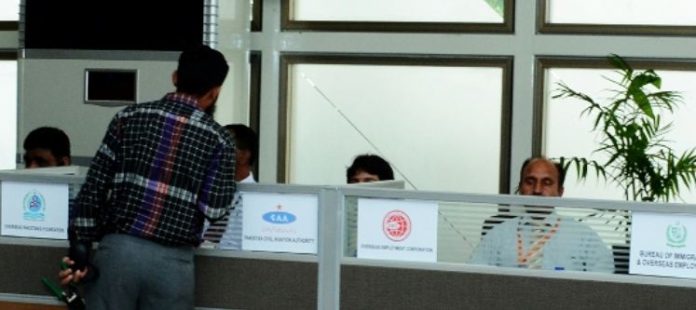

OWFDs providing services 24/7 at all Airports to Overseas Pakistanis

OWFDs providing services 24/7 at all Airports to Overseas Pakistanis

ISLAMABAD, SEP 04 (DNA) — Overseas Pakistanis Foundation (OPF) had established One Window Facilitation Desks (OWFDs) at all International Airports of the country and providing the services to Overseas Pakistanis. An official source told media here on Wednesday, that OWFDs are located at each terminal (International arrival/departure) for the assistance of overseas Pakistani passenger’s round the clock.

Courteous and trained officials deputed at OWFDs to ensure provision of high quality of facilitation and assistance to overseas Pakistanis. Existing infrastructure at OWFDs has been upgraded. Besides additional facilities, the service delivery at facilitation counters at various airports has also been improved with added staff/services.

To a questioned he said that OWFDs providing various services including necessary assistance to the overseas Pakistanis at the time of arrival and departure. Coordination among the various agencies/departments functioning at the airport to ensure smooth arrival and departure of overseas Pakistani passengers. Special assistance to overseas Pakistanis who are physically challenged, senior citizen and passengers not maintaining good health.

Assistance in lost and found baggage and for improvement in services/complaints at airports, these counters are contacted. Necessary guidance is also provided to overseas Pakistanis for their connecting flights and travel advisory for their destinations within Pakistan. He said that information material about OPF and its projects/schemes at all international arrival/departure lounges.

OPF also extends all possible help and provides facility of ambulance service, free of cost, from airport to deceased/ disabled OPs native town/ village. OPF staff deputed at airports facilitates deceased’s family in clearance of human remains and coordinates with ambulance for its timely transportation. OPF Airport Facilitation counters remain vigilant to any repatriation of overseas Pakistanis from abroad and extends every possible assistance for their onward journey to their home towns. —DNA

Serena Hotels hosts panel on advancing disability rights, inclusion

Serena Hotels hosts panel on advancing disability rights, inclusion

ISLAMABAD, SEPT 4 /DNA/ – Serena Hotels, as part of its public diplomacy initiative Raabta, has organised a significant panel discussion titled “Building an Inclusive Society: Advancing Disability Rights and Inclusion.” The event, curated by Sidra Iqbal, has brought together leading experts and advocates in the field of disability rights to explore strategies and best practices for creating a more inclusive society. This discussion has aimed to raise awareness about the challenges faced by people with disabilities, share successful initiatives, promote collaboration among various stakeholders, and inspire concrete actions towards advancing disability inclusion.

The panel has featured a diverse group of speakers, including Sabeen Bilal, a Special Education Expert, who has provided valuable insights into educational strategies that support the inclusion of children with disabilities in mainstream education. Azima Dhanjee, Founder of ConnectHear, has highlighted the importance of technology in advancing accessible communication for the deaf community. Fahmina Puri, an Inclusion Expert and Disability Advocate, has shared her extensive experience in mainstreaming disability across development projects. Sana Khurshid, a Lawyer and Disability Activist, has been instrumental in advocating for disability-inclusive policies, drawing on her own experiences as a quadriplegic wheelchair user. Haseeb Abbasi, a former Sargent Shriver Global Messenger for Special Olympics, has shared his inspiring journey of overcoming challenges and his advocacy for the rights of people with intellectual disabilities.

Aziz Boolani, CEO of Serena Hotels, shared his thoughts on the occasion, “At Serena Hotels, we believe in fostering an environment where everyone is included and valued. We have ConnectHear app deployed at our reception and restaurants to assist our guests with their communication needs. Serena Hotels is an equal opportunity employer and we have multiple associates who identify as persons with disabilities and some of them are here to attend this event. By bringing together experts and advocates, we hope to inspire action and collaboration that will lead to a more inclusive future for all.”

TheRaabta initiative by Serena Hotels continues to support and facilitate meaningful dialogues that drive positive social change and promote equity across all sectors. Through events like this, Serena Hotels is reinforcing its dedication to creating platforms for important conversations that contribute to the betterment of society.

Interior Minister, Ruet-e-Hilal Chairman discuss national unity

Interior Minister, Ruet-e-Hilal Chairman discuss national unity

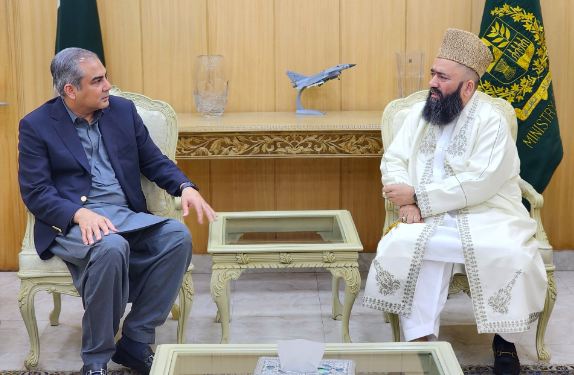
Federal Interior Minister Mohsin Naqvi meets Chairman Central Ruet-e-Hilal Committee Maulana Syed Muhammad Abdul Khabeer Azad

ISLAMABAD, SEPT 4 /DNA/ – Federal Interior Minister Mohsin Naqvi met with Chairman Central Ruet-e-Hilal Committee Pakistan Maulana Syed Muhammad Abdul Khabeer Azad. During the meeting measures to establish peace and eliminate terrorism and sectarianism were discussed. In addition, matters related to Religious harmony, tolerance, and inter-sect unity were also discussed.

Interior Minister said that terrorists have no religion, adding that scholars have always guided the nation in the fight against terrorism and still there is dire need for it. He stated that in order to develop an effective narrative against the terrorism, a national campaign to consult scholars of all sects will be started soon. He underscored that the war against terrorism is the war for survival of Pakistan. He stressed that scholars need to again play their role in order to eliminate the menace of terrorism. He pointed out that the enemy wants to harm national unity by creating unrest but we will defeat the nefarious designs of the enemy through our unity.

Maulana Abdul Khabeer Azad said that the “Paigham-e- Pakistan” is a great narrative that has declared terrorism, extremism, and sectarianism as haram. He added that everyone needs to play their role in promoting inter-sect and interfaith harmony and national unity in the current situation. He praised the efforts and services of Federal Interior Minister towards establishing peace in the country. He said that the entire nation stands united with the valiant armed forces and security agencies to eliminate scourge of terrorism and extremism.

Federal Interior Minister Mohsin Naqvi appreciated Maulana Abdul Khabeer Azad’s services for religious harmony, national unity and solidarity.

Non-bailable arrest warrant issued for Ali Amin Gandapur

ISLAMABAD, SEPT 4: The District and Sessions Court of Islamabad has issued a non-bailable arrest warrant for Khyber Pakhtunkhwa Chief Minister Ali Amin Gandapur in connection with an arms and liquor recovery case.

The warrant was issued after Gandapur’s application for exemption from attendance on medical grounds was rejected by the court.

Civil Judge Shaista Khan Kundi, who presided over the case, ordered the Bhara Kahu station house officer (SHO) to arrest and produce Gandapur in court by tomorrow.

“Where is the accused? The case has been called thrice since the morning, but he did not appear,” Judge Kundi asked.
Assistant lawyer Fatehullah Barki told the court there is a flood situation in Peshawar. Gandapur’s lawyer Zahoorul Hasan said the CM’s medical report will be submitted, as he is unwell.

“One lawyer is saying there is a flood, the other is saying that the health is not good. You were given relief last time as well,” the judge remarked.

She further remarked that according to a decision of the Supreme Court, if a case is in the final stages, it should not go towards acquittal. “A statement is not being recorded for the eighth time, and then they say there was no fair trial,” she stated.

The lawyer argued this was injustice, as the suspect was a chief minister and his counsel was present in court, yet strict orders are being given. “If there is nothing in the case, then be brave and face the court,” Judge Kundi remarked.

The judge expelled the media representatives from court, and the hearing was adjourned till tomorrow.

In October 2016, the Islamabad police claimed to have recovered five Kalashnikov assault rifles, a pistol, six magazines, a bulletproof vest, alcohol and tear gas from the vehicle of the Pakistan Tehreek-e-Insaf leader outside Bani Gala.

The PTI leader had rejected the police’s allegations, and maintained that he was traveling with two licensed Kalashnikov rifles, and that the arms license was in the vehicle.

In a related development, the Anti-Terrorism Court (ATC) in Islamabad also held a hearing regarding Gandapur’s pre-arrest bail application. Special Court Judge Tahir Abbas Sipra presided over the session, where a medical certificate was submitted on behalf of Gandapur, citing illness as the reason for his absence.

During the hearing, Judge Tahir Abbas questioned why Gandapur did not appear in court despite having previously requested time for his appearance. In response, Gandapur’s lawyer, Raja Zahoorul Hasan, explained that the chief minister is currently unwell.

He explained that Gandapur had been on a provincial visit during which he slipped and injured his leg, leading to pain and a doctor’s recommendation for a week of rest.

The ATC adjourned the hearing of Gandapur’s pre-arrest bail application until September 21, providing temporary relief.

Govt says no electricity loadshedding being carried out in country

Govt says no electricity loadshedding being carried out in country

ISLAMABAD, SEPT 4 – Amid heightened scrutiny and ambiguity surrounding the independent power producers (IPPs) the federal government has claimed that no loadshedding is being carried out in the country due to generation shortfall.

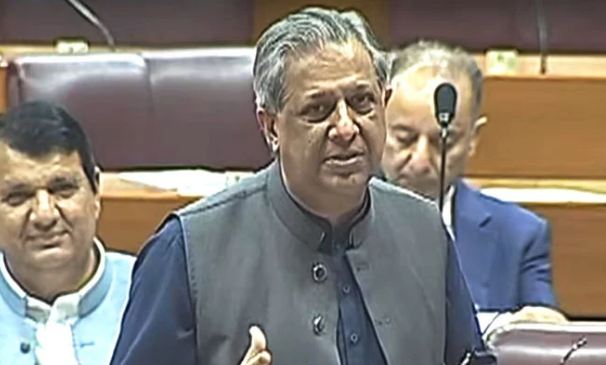
Speaking on the National Assembly floor on Wednesday, Federal Law Minister Azam Nazeer Tarar said that distribution companies (Discos) are carrying out load management in areas based on losses in corresponding feeders.

The minister’s remarks come as the incumbent government faced much scrutiny owing to exorbitant electricity bills and hours-long power outages across the country — especially during this year’s summer.

Ever since coming to power in February earlier this year, Prime Minister Shehbaz Sharif’s administration has faced challenges on multiple fronts with power sector being one of them.

The Centre faced country-wide protests over prolonged loadshedding and sky-high bills throughout the summer.

The incumbent rulers have also faced flak on the IPP issue with calls to review the government agreements with them as the government has admitted that the country has the highest electricity tariffs in the region.

However, Energy Minister Awais Leghari has said that the nation would receive “good news” regarding the IPPs soon.

Speaking in the lower house of parliament today, Tarar also underscored that feeders with up to 20% losses are exempted from loadshedding.

The minister also said that in the first phase, smart meters will be installed on transformers to keep a check on electricity theft.

Informing the House that Private Power and Infrastructure Board was working on promotion and development of Alternative and Renewable Energy technologies for power generation in line with the government’s vision to diversify the energy generation, the lawmaker accentuated that as many as 58 alternative and renewable energy based projects were operational which were producing 3,837 megawatts of electricity cumulatively

Out of these, winds projects amounted to 1,845 megawatts, he added.

Meanwhile, expressing his view on the parliament floor, Minister for Petroleum Musadik Malik lamented the depletion of indigenous gas reserves and said that the incumbent administration was awarding new blocks for oil and gas exploration along with the import of liquefied natural gas (LNG).

Legal expert weighs in on rumours about postponement of JCP meeting by CJP Isa

Legal expert weighs in on rumours about postponement of JCP meeting by CJP Isa

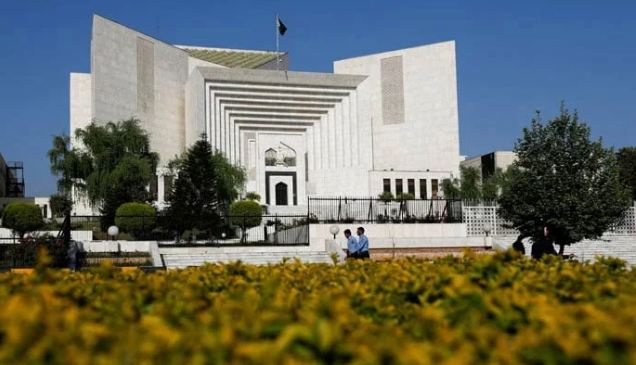
ISLAMABAD: For several days, widespread rumours claiming that Chief Justice of Pakistan (CJP) Qazi Faez Isa postponed the Judicial Commission of Pakistan (JCP) meeting in May to “facilitate the government’s judicial package”, which also provisions increasing judges’ retirement age to give “extension” to the top Supreme Court judge.

The reality, however, might differ from the speculations making the rounds on various digital media platforms as argued by Reema Omer, a legal expert and lawyer, who has debunked the alleged reports in light of the minutes of the JCP’s meeting as well as a letter penned by the top judge.

It is to be noted that the federal government, on multiple occasions, has refuted any plans to give an extension to the chief justice who is set to retire next month (October).

Taking to social media account X, formerly Twitter, Omer referred to the minutes of the JCP meeting that revealed about the session’s postponement on the request of the federal law minister, who had requested the forum to defer it as the government was considering “amending Article 175A of the Constitution” as the “constitution of the Commission may be changed.”

Furthermore, according to the lawyer, the record stated that Justice Yahya Afridi had then suggested that the discussion on the agenda should be deferred and the meeting should be postponed in light of the incumbent government’s intention to propose amendments to the Constitution — a suggestion agreed upon by all members.

Apart from the JCP meeting’s record, the legal expert also expands on the letter penned by CJP Isa on August 28 — to the chief justices of the four high courts — wherein the top judge said that he had in fact wanted the JCP’s meeting to proceed but it was “postponed in deference to the wishes of the majority”.

“The rules of the Judicial Commission of Pakistan were enacted in 2010, and heeding to the persistent demand of bar councils and bar associations to make the process of nomination transparent and democratic, I constituted a committee to propose amendments to the said rules.

“The said committee submitted its report, and a meeting was called on May 3, 2024, for the consideration of its recommendations. I wanted the meeting to proceed, however, the meeting was postponed in deference to the wishes of the majority. To consider the recommendations of the committee, a meeting has again been called,” said the chief justice.

In his letter, the top judge went on to request the high court CJs to commence their search for potential candidates to be nominated as additional judges of their respective courts.

Henceforth, it seems that the rumours about the reason behind the postponement of the JCP meeting are in direct contrast with the facts as reflected via the meeting’s record coupled with the CJP’s letter which discloses that the meeting was deferred on the law minister’s request and Justice Afridi’s suggestion.

It should be noted that the extension rumours were further exacerbated after a bill seeking an amendment to the Supreme Court (Number of Judges) Act, 1997, was tabled in the Senate on Monday to increase the number of judges in the Supreme Court to 20 — other than the chief justice — to “address the rising number of pending cases”.

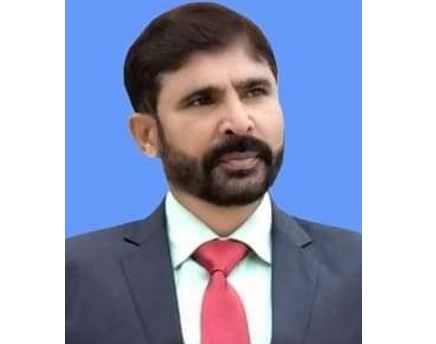
The bill titled “Supreme Court (Number of Judges) (Amendment) Act”, 2024, was presented by an independent senator from Balochistan, Mohammad Abdul Qadir seeking the increase in the number of top court judges from 17 to 21.

A day earlier, Pakistan Muslim League-Nawaz (PML-N) parliamentarian Daniyal Chaudhry tabled a similar bill in the National Assembly called for increasing the number of judges to 23 — a proposition staunchly opposed by the Pakistan Tehreek-e-Insaf (PTI).

The bill was eventually deferred in the Lower House after the speaker — following the argument by PTI Chairman Barrister Gohar Khan that such a bill could not be introduced as a private member’s bill as involving expenditures from the Federal Consolidated Fund could only be introduced by the government under Articles 74 and 81 of the Constitution — Law Minister Tarar to do so, The News reported on Wednesday.

Speaking at an event in Islamabad on Monday, Federal Law Minister Azam Nazeer Tarar noted that the CJP has “clearly told me and the attorney general that he doesn’t want an extension”.

Ukraine Strikes Back

Ukraine Strikes Back

Dr. Muhammad Akram zaheer

In 2022, Russia launched a military invasion of Ukraine, primarily driven by its concern over what it perceived as a growing threat from NATO. Moscow feared that Ukraine’s increasing closeness with NATO could lead to a scenario where NATO forces might use Ukraine as a base to launch attacks against Russia. To preempt this perceived threat, Russia decided to act quickly and aggressively. The Russian government believed that Ukraine was weak and internally divided. They assumed that a swift invasion would quickly overpower Ukrainian defenses, leading to the collapse of the Ukrainian government and the subsequent occupation of the country by Russian forces. Moscow expected that this operation would be over in a matter of days or weeks, allowing Russia to assert the United States or NATO could mount control over Ukraine before any significant response. Time was a critical factor in Russia’s strategy. The longer the conflict continued, the greater the risk that Western powers might intervene, either directly or indirectly, to support Ukraine. This would complicate Russia’s military objectives and potentially turn the invasion into a much larger and more dangerous confrontation with NATO. Therefore, the Russian government planned for a short, decisive campaign, anticipating that a quick victory would minimize the chances of Western intervention. However, Russia severely underestimated the resilience and determination of the Ukrainian forces and the Ukrainian people. Instead of folding quickly under pressure, Ukraine mounted a strong and effective defense, stalling the Russian advance and turning the conflict into a prolonged and costly war. The initial assumptions made by Moscow about Ukraine’s weakness proved to be incorrect and the Russian military found itself bogged down in a drawn-out conflict that it had not planned for. This miscalculation has had significant consequences for Russia. The war has dragged on much longer than anticipated, leading to heavy losses in both manpower and resources. The Russian government has been forced to deal with the economic and political fallout of a war that has become increasingly unpopular at home. Moreover, the extended conflict has given the United States and NATO more time to provide military aid and support to Ukraine, further complicating Russia’s military objectives. Despite these challenges, Russia believed it still held one critical advantage on the battlefield. While it may have struggled to achieve its strategic goals, Moscow maintained that it could still dominate the tactical aspects of the war. In other words, even if Russia could not dictate the overall direction of the conflict, it could still control the day-to-day fighting. By doing so, Russia aimed to keep Ukrainian forces on the defensive, preventing them from launching successful counterattacks. This strategy seemed to work for some time, but the situation changed dramatically when Ukrainian forces launched a significant offensive last week in Russia’s Kursk Oblast. This move by Ukraine indicates a shift in the dynamics of the conflict, showing that Ukrainian forces are not only capable of defending their territory but also taking the fight into Russian territory. This development marks a significant escalation in the conflict and suggests that the war may enter a new, potentially more dangerous phase.

          Ukraine’s ability to invade Russian territory remains somewhat mysterious. In military operations, certain actions are often deemed impossible, leading to complacency. Russia may have fallen into this pattern, particularly given its history of intelligence failures. When Russia initially launched its invasion of Ukraine, it relied on flawed intelligence and a similar oversight could explain how Ukraine managed to carry out its own offensive. Russias recent reliance on North Korea and Iran for additional weaponry further indicates potential vulnerabilities. Ukraine might have recognized this dependence as a moment of weakness, understanding the risks of relying on unstable foreign supply chains and admitting to a shortage of weapons. The exact reasons behind Ukraine’s invasion are less critical than the fact that it successfully executed such an operation. What is particularly noteworthy is how the world learned about this event. The invasion likely occurred on August 6, yet Ukraine maintained operational secrecy for several days until President VolodymyrZelenskyy publicly addressed it on August 10. During this period, the Ukrainian military remained silent, even as they were actively moving. This level of operational discipline is impressive, especially for an army often regarded as brave but not always highly effective. The success of this operation will undoubtedly boost the morale of both Ukrainian soldiers and civilians, reinforcing their resilience in the face of adversity. On the other side, it is puzzling why Moscow chose to announce the attack on its territory, given that for the past two years, Russia has intentionally cultivated an atmosphere of confusion regarding the war. One plausible explanation is that the Russian government recognized the public’s growing fatigue with the conflict and increasing skepticism towards government narratives. In light of these concerns, the Kremlin might have decided that transparent reporting could better manage public perception. Public opinion is a critical factor in any conflict, but it holds particular importance in this war, where Russia’s citizens appear uncertain about the war’s justification and execution.

Ukraine’s successful invasion of Russian territory highlights significant intelligence and strategic missteps by Russia. Ukraine’s ability to keep the operation under wraps for several days demonstrates its growing military discipline and strategic acumen. The impact on morale in Ukraine is likely to be profound, while Russia faces the challenge of maintaining public support for a war that seems increasingly questionable to its citizens. The unfolding dynamics of this conflict will continue to shape the region’s future, with both military actions and public perception playing crucial roles in the outcome.

Two Secrets to China’s Rise

Qamar Bashir

Qamar Bashir

Twelve years ago, I visited China as a participant in a Seminar on Press and Publication for Developing Countries, alongside participants from over twenty nations. During our month-long training and informative visit, we toured many leading organizations, departments, and industrial undertakings. At that time, China was still grappling with the challenge of opening up to the world while maintaining its one-party structure and socialist ideals, all while striving for nationwide progress and development.

In the industrial sector, we observed strict government control. Although industrial and manufacturing processes had begun to improve, the focus was still largely on quantity rather than quality. However, it was evident that the leadership recognized the need to adopt modern management and administrative methods. These practices were just starting to take root in the industrial sector but had not yet reached the desired level of effectiveness.

To accelerate progress and create a highly skilled workforce capable of transforming the industrial and manufacturing sectors, the government established numerous institutes across the country to teach English at the school level. Additionally, they began sending hundreds of thousands of students to universities in the US and Europe to acquire critical knowledge, skills, and leadership abilities necessary for modernizing Chinese enterprises.

At that time, the organizations we visited used conventional methods to present their performance, focusing primarily on numbers without emphasizing customer satisfaction, quality control, employee value, or creating an enabling environment for optimal employee performance. There was little emphasis on streamlining industrial and manufacturing processes to achieve high quality and product durability.

After twelve years, upon returning to China, we observed two significant changes. The most important was the government’s recognition of the critical need to develop high-quality human resources, starting from the grassroots level. The government rightly understood that all state resources should be directed toward empowering and educating the people. Their goal was to ensure that the populace was happy, confident, knowledgeable, and highly skilled. This approach would not only enhance the quality, style, and dignity of work processes but also enable each skilled individual to create more wealth and contribute higher taxes, ultimately enriching the state.

With increased financial resources, the state would gain the financial space necessary to further invest in human resource development. As the state becomes wealthier and more prosperous, it would earn respect, dignity, and value in the international community. This financial space could then be used to secure raw materials from around the world and invest in research and development, fostering a culture of innovation that would allow China to compete globally by producing high-quality products that rival those of other nations.

Over the past decade, China has significantly increased its investment in developing high-quality human capital, aiming to make its people happier and more prosperous. In education, spending rose from USD 349 billion in 2013 (4% of GDP) to USD 870 billion in 2023 (5.3% of GDP), with a strong emphasis on vocational training, digital literacy, and STEM education to create a more skilled and adaptable workforce. Healthcare investment similarly grew from USD 357 billion (5.5% of GDP) to USD 1.1 trillion (7% of GDP), focusing on improving access to modern healthcare services, addressing public health challenges, and ensuring better overall well-being. Additionally, the widespread adoption of WeChat has revolutionized how people meet their obligations toward the government and manage everyday tasks, from making purchases to accessing public services, further enhancing convenience and efficiency in daily life. China’s per capita income also saw a substantial increase, rising from approximately USD 7,000 in 2013 to over USD 12,000 in 2023, reflecting the overall improvements in living standards and economic prosperity driven by these investments.

The second major transformation in China over the past decade has been the adoption of ultramodern management, administration, and marketing practices across all companies, corporations, and bodies, whether in the government or private sector. Ten years ago, many Chinese companies were primarily focused on manufacturing and cost efficiency, often lagging behind in advanced management practices and innovation. However, by 2023, these companies have evolved into world-class entities, rivaling top-notch global competitors.

In 2013, China’s corporate sector was still emerging on the global stage, with many companies struggling to adopt best practices in customer focus, quality assurance, and innovation. The emphasis was largely on scale and production capacity rather than high-quality management. Research and development (R&D) spending by Chinese companies was around 2% of GDP, with most of it concentrated in state-owned enterprises (SOEs).

By 2023, China’s corporate sector has undergone a dramatic transformation. Companies across the board have embraced best management practices, such as customer-centric strategies, rigorous quality assurance, aggressive marketing, and extensive automation. The corporate R&D spending has surged to 2.5% of GDP, with private companies playing a significant role. This shift has resulted in Chinese companies rising to the ranks of world-class firms, competing fiercely in global markets.

For example, in 2013, China had only two companies in the top 100 of the Fortune Global 500 list. By 2023, this number had grown to 14, with many more companies gaining international recognition for their innovation, quality, and customer focus. Additionally, the adoption of cutting-edge technologies like AI, big data, and automation has further propelled Chinese companies to the forefront of global competition.

This transformation is evident in sectors such as technology, where companies like Huawei and Alibaba have become global leaders, and in automotive, where Chinese electric vehicle manufacturers are challenging traditional automakers worldwide.

Pakistan can draw valuable lessons from China’s transformation into a highly efficient, innovation-driven economy. Firstly, shifting focus from an export-led growth model to a more balanced, high-value economy is crucial. This requires upgrading industries to compete globally by adopting best practices in management, quality assurance, and innovation. Government-led initiatives, similar to China’s “Made in China 2025,” can play a pivotal role in guiding this transformation, supported by increased funding for research and development and incentives for private sector growth. Embracing technological advancements, particularly in digital transformation and automation, is essential to enhancing efficiency and global competitiveness. Investing in education, especially in STEM fields, will help create a skilled workforce capable of driving innovation. Additionally, addressing urbanization challenges and meeting rising domestic demand for quality goods can fuel further innovation. Finally, adopting sustainable practices and complying with environmental regulations can give Pakistan a competitive edge in both domestic and international markets. These lessons can help Pakistan build a more resilient, prosperous, and innovation-led economy.

Qamar Bashir

Former Press Secretary to the President

Former Press Minister to the Embassy of Pakistan to France

Former MD, SRBC, CEO, ATV

SECP Issues warning against fraudulent social media groups

ISLAMABAD, SEP 03 (DNA) — The Securities and Exchange Commission of Pakistan (SECP) has issued a public alert regarding the increasing number of fraudulent social media and WhatsApp groups that are operating under the guise of investment training courses.

A press release issued by the SECP said that these groups are impersonating well-known local and international business personalities or reputable international financial companies to deceive the public. The operators/handlers of these groups are charging fees from individuals to grant them membership, promising exclusive access to insider tips and training on investments.

SECP warns the public that these activities are fraudulent and are aimed at looting innocent people. SECP urges the public to exercise extreme caution and verify the authenticity of any investment-related offers or groups before engaging or making any payments. SECP advises not to share any personal or financial information with these unverified sources, as it could lead to significant financial loss.

Public is advised that if they encounter any such fraudulent activity, report it immediately to SECP via the official contact channels. Protect yourself and others by spreading awareness about this scam. —DNA

Stay Connected

64FansLike
60FollowersFollow

Latest Reviews

Exchange Rates

USD - United States Dollar
EUR
1.17
GBP
1.35
AUD
0.67
CAD
0.72