Home Blog Page 649

ISSI commemorates Defence Day

ISSI commemorates Defence Day

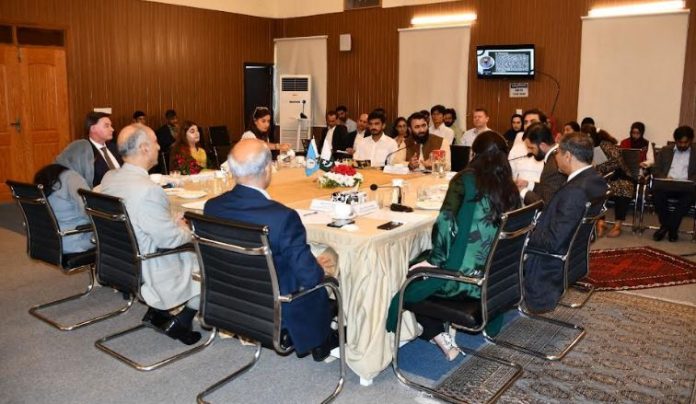
ISLAMABAD, SEPT 6 /DNA/ – The Arms Control and Disarmament Centre (ACDC) at the Institute of Strategic Studies Islamabad (ISSI) organized a ceremony to commemorate Pakistan Defence Day. The thematic focus of the event was on “Pakistan Strategic Defence: A Journey to Ensure Credible Deterrence.” Commenceing with the national anthem, the proceedings were attended by the ISSI Research Faculty, interns and students.

DG ISSI Ambassador Sohail Mahmood, in his remarks on the occasion, paid rich tributes to the Pakistan Armed Forces and paid homage to the martyrs who made the ultimate sacrifice while defending the country. He stated that Pakistan, by virtue of its geography, has always faced complex security challenges. It was a region where the pursuit of peace and security demanded constant vigilance and readiness. He added that over the past 77 years, Pakistan had navigated through turbulent waters, adapting to evolving threats and challenges. He underscored that Pakistan’s journey in strategic defence had been one of perseverance, innovation, and determination. Further, the spirit of the nation was never dampened, no matter what the odds. The nation had abiding faith in what Quaid-e-Azam Muhammad Ali Jinnah had said: “There is no power on earth that can undo Pakistan.” Over the decades, Pakistan has built a credible deterrence capability, ensuring that no one can threaten its existence. From strengthening our conventional forces to developing a robust nuclear deterrent, our defence strategy evolved to meet the changing dynamics of regional and global security. He stressed the importance of renewing the commitment to ensure that Pakistan remains strong, secure, prosperous, and on-track to realize the Quaid’s vision. He concluded by underscoring that with unity, faith and discipline, we will continue to build on the legacy of our founding fathers, honour the sacrifices of our martyrs, and bequeath a better Pakistan to our succeeding generations.

Earlier, Malik Qasim Mustafa, Director ACDC, stated that the nation commemorates this national day as one of the proudest moments in Pakistan’s history when Pakistani soldiers sacrificed their lives to safeguard our freedom and protect the homeland.

Sardar Jahanzaib, Research Associate ACDC, gave a presentation on the event’s theme. He outlined the key security challenges faced by Pakistan since its inception. He emphasized Pakistan’s adoption of “Credible Minimum Deterrence” following India’s nuclear tests and elaborated on the evolution of Pakistan’s nuclear doctrine in response to the Indian Nuclear Doctrine of 2003, India’s Cold Start Doctrine of 2004, and the development of India’s second-strike capability with nuclear submarines. He detailed Pakistan’s “Full Spectrum Deterrence” to ensure comprehensive security at tactical, operational, and strategic levels.

Participants appreciated the sacrifices of the Pakistan armed forces and added that there was no compromise on territorial integrity and sovereignty. They also highlighted the importance of national unity, social cohesion, economic strength, and the sacrifices of ordinary Pakistanis. Participants also discussed the ideological aggression Pakistan faces from the adversary as part of hybrif warfar, which needs to be countered.

In his remarks, Ambassador Khalid Mahmood, Chairman BoG ISSI, stated that today security is an all-embracing concept encompassing territorial integrity, safeguarding ideological frontiers, and achieving economic security. As a nation, we have the responsibility to meet these challenges.

The event concluded with dua for the shuhada.
Are Solar Panels Contributing to Circular Debt?

Qamar Bashir

Qamar Bashir

China has a robust, well-regulated solar energy policy driven by long-term vision and comprehensive planning, unlike Pakistan, where policies are often short-sighted and poorly implemented. During a recent visit to three provinces and five cities in China, we observed that rooftops in residential and commercial areas lacked solar panels, in contrast to Pakistan, where rooftop solar installations are common but often give a cluttered appearance to homes and neighborhoods.

China’s focus is on large-scale solar farms and industrial applications, with most of its renewable energy capacity coming from centralized installations rather than individual households. Both state and local governments prioritize energy-efficient infrastructure and centralized solar energy feeding into the national grid, rather than encouraging decentralized rooftop solar production.

In contrast, Pakistan’s telemetry policy promotes household solar panel installations, allowing households to sell excess electricity to the national grid while using WAPDA-supplied power for their own needs. Although this provides short-term electricity cost relief for households, it has unintended consequences. The policy has not accounted for its impact on the national energy system, contributing to circular debt in the electricity sector. This happens because reduced household demand forces Independent Power Producers (IPPs) to shut down production, but they still receive capacity payments despite not generating electricity, creating financial strain on the government.

The high initial cost of solar panels has made them inaccessible to poorer households, exacerbating inequality. While wealthier households can install solar systems to avoid rising electricity costs, lower-income segments are left to bear the burden of increasing tariffs, worsening the financial strain on the energy sector.

Additionally, China’s solar panel overcapacity, exacerbated by international sanctions, has led to a significant drop in the price of Chinese-made solar panels. As a result, Chinese manufacturers have flooded markets like Pakistan with cheaper panels, further incentivizing households and businesses to adopt solar energy to escape rising electricity costs.

Compounding the issue, political parties such as PML(N), PPP, and PTI have promoted the distribution of portable solar panels to households as a means of gaining voter support. This has led provincial governments to launch large-scale subsidy programs for solar energy installations, driven more by political motives than long-term energy planning. These interventions, while providing short-term relief, have intensified the challenges faced by Pakistan’s formal energy sectors, such as coal, oil, gas, hydel, and nuclear power, and contributed to rising electricity costs.

These policy interventions and the political promotion of widespread solar panel adoption have ultimately increased the cost of electricity produced by the formal sector. Any potential savings households may have gained from installing solar panels have, in reality, been offset by the growing circular debt, which will eventually be paid by the Pakistani consumer. As a result, the net financial impact of mass solar panel installations has turned into a loss at the national level.

Based on an estimated total power generating capacity of 43,000 MW versus an actual demand of 14,000 MW, and with the cost of electricity to the consumer set at Rs. 72 per unit, the nation is suffering a projected annual loss of Rs. 8.83 trillion due to the reduced demand faced by Independent Power Producers (IPPs) following the shift to solar panels.

While this figure might seem exaggerated—factors such as taxes, levies, line losses, and electricity theft are not fully accounted for—even if the loss were reduced by half to Rs. 4.42 trillion, it would still represent a significant cost. This burden, whether absorbed by the federal government or passed on to consumers, constitutes an accrued liability that ultimately affects the people of Pakistan.

If we compare Chinese and Pakistan policy initiatives we might reach the conclusion that China focuses on large-scale solar farms and centralized solar energy production integrated into the national grid. This ensures controlled energy management, reduces grid instability, and avoids the complications of decentralized solar power generation by households. It also ensures uniformity in policy implementation and reduces the risk of creating energy imbalances that could impact the overall energy sector.

Whereas, Pakistan’s telemetry policy, allowing households to produce and sell electricity, creates an unregulated surge in household-level solar panel installations. While this policy has benefits, particularly for individual household savings, it also introduces challenges like grid instability, capacity payment obligations to IPPs, and increased circular debt.

Pakistan’s solar energy policy requires a shift from its current decentralized, short-sighted approach to a more balanced and long-term strategy. Unlike China, which focuses on large-scale solar farms and centralized energy integration, Pakistan’s telemetry policy encourages household solar installations, leading to grid instability, increased circular debt, and financial strain due to capacity payments to Independent Power Producers (IPPs). To resolve these issues, Pakistan should prioritize large-scale solar projects, reform the IPP payment model, and implement grid modernization with smart technologies. Additionally, equitable access to solar energy for lower-income households and reform of the net metering system are essential to prevent the financial burden from falling on the poorer segments of society. Rural areas should adopt localized solar systems to reduce dependence on the national grid, while energy efficiency measures and public awareness campaigns can ensure responsible adoption of solar power. By focusing on a centralized, well-regulated solar strategy, Pakistan can stabilize its energy sector and mitigate the economic challenges it currently faces.

Qamar Bashir

Former Press Secretary to the President

Former Press Minister to the Embassy of Pakistan to France

Former MD, SRBC, CEO, ATV

Terrorist Safe Havens in Afghanistan Pose Global Threat

Terrorist Safe Havens in Afghanistan Pose Global Threat

ISLAMABAD, SEPT 6: /DNA/ – Prominent experts at a roundtable discussion organized by the Institute of Regional Studies (IRS) expressed concern over the growing nexus between various jihadist organizations operating out of Afghanistan.

They highlighted the growing collaboration not only between various jihadist terrorist organizations such as the Tehrik-i-Taliban Pakistan (TTP), and the Islamic State Khorasan Province (ISKP), but also between the jihadist terrorist organizations and Baloch separatist groups.

The experts were not optimistic about the Afghan interim administration taking meaningful action against the terrorist groups based in Afghanistan under its watch. The speakers maintained that Afghan Taliban could not be expected to act against their former partners in resistance against foreign troops in Afghanistan unless they get convinced that it is essential for the regime’s survival. It was also felt that the Afghan interim administration fears that taking serious action against terrorist groups such as the TTP might create dissension within the Taliban ranks, which could be exploited by the ISKP, an adversary of the Afghan Taliban.

The speakers called for a long-term policy approach towards the Afghan interim administration on the subject of TTP presence in Afghanistan noting that jihad had a long history in Afghanistan, which had led to creation of durable and interlinked jihadist networks. The experts were of the opinion that understanding of sociocultural and religious nuances of Afghanistan was essential for a long-term strategy for dealing with terrorism emanating from the country. Such an understanding, according to the panellists, needed to take into consideration dichotomies within the Afghan interim administration and the multiple influencing factors at play, including regional geopolitics.

The speakers also noted that addressing terrorism in the region would not only require patient diplomatic engagement with the Afghan interim administration, but also strengthening the legal and institutional structure against terrorism in Pakistan.

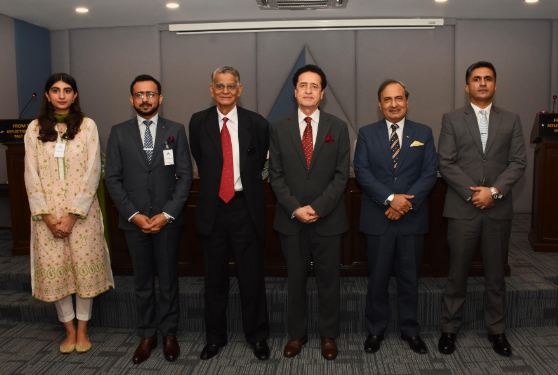
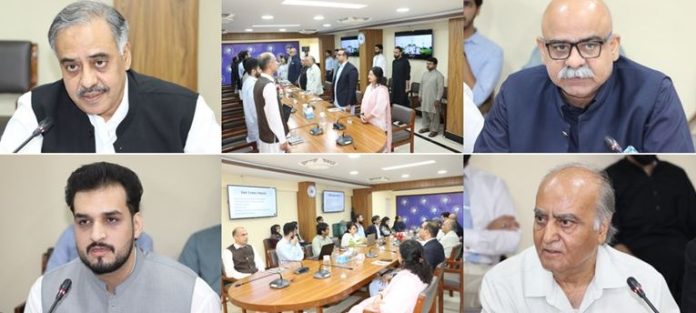
The participants of the roundtable included President IRS, Ambassador Jauhar Saleem, Executive Director Centre for Research and Security Studies (CRSS) Mr Imtiaz Gul, Director Religious Engagement International Research Council on Religious Affairs (IRCRA) Mr Tahmeed Jan, Co-Found of Khorasan Diary Mr Ihsanullah Tipu Mehsud, Pakistan’s former envoy to Afghanistan Ambassador Arif Ayub, and IRS researchers Aarish U. Khan and Aleena Shah. A large audience including diplomats, academics, researchers, opinion-makers, and students witnessed the lively discussion.

CASS Lahore hosts thought-provoking event on PAF’s evolution

CASS Lahore hosts thought-provoking event on PAF’s evolution

LAHORE, SEPT 6 /DNA/ – In celebration of the Pakistan Air Force (PAF) Day, the Centre for Aerospace and Security Studies (CASS), Lahore, hosted an engaging guest lecture titled “From the Cockpit: Reflections from the PAF’s Past for the Future.” The event, held on 5 September 2024, featured Wing Commander Salim Baig Mirza (Retd), a distinguished war veteran and revered fighter pilot, who shared insights into the PAF’s illustrious history as a guide for the future.

The lecture began with a preamble by Air Commodore Khalid Chishti (Retd) on the 1965 and 1971 wars, which also included an introduction of the guest speaker. He praised the remarkable achievements of Wing Commander Salim (Retd) in aerial combat, which included two confirmed kills, highlighting PAF’s motto, “Second to None”.

Wing Commander Salim (Retd) shared his experiences of the 1965 and 1971 wars. While recounting his kills, he addressed the Indian propaganda that misrepresented the true nature of those events. He highlighted the PAF transformation over the decades under its visionary leadership, evolving into a modern and formidable force distinguished by exceptional courage, training, and professionalism. He also noted the PAF’s technological and strategic edge, which offsets India’s numerical superiority. Following his address, an engaging interactive session ensued, where attendees explored the PAF’s history and discussed the current and future challenges it faces.

The event concluded with closing remarks from Air Marshal Asim Suleiman (Retd), President CASS, Lahore, who emphasised the Air Force’s crucial role and status as the leadership’s preferred choice in contemporary warfare. He noted that all modern-day conflicts are employing the air medium for achieving military objectives. He also mentioned PAF’s enduring legacy and steadfast dedication to national security. The President further highlighted the ongoing strategic transformation of the PAF under the leadership of Chief of the Air Staff, Air Chief Marshal Zaheer Ahmad Babar Sidhu. He remarked that the PAF is now prioritising cutting-edge technologies and infrastructure to sustain its combat advantage, especially in light of increased defence spending by neighbouring countries like India.

The guest lecture was well-attended by both serving and retired PAF officers, as well as members of civil society and academia. The attendees appreciated the insights and the opportunity to celebrate the PAF’s rich heritage.

The Complex Web of National Security

The Complex Web of National Security

Dr. Muhammad Akram Zaheer

National security in principle should be a straightforward concept. For a country like the United States, national security concerns arise whenever a transnational threat or an emerging global power directly challenges the nation’s sovereignty, survival, or vital interests. Traditionally, powerful foreign militaries have been viewed as the most apparent threats to national security. However, the scope of what constitutes a threat has expanded significantly in the modern era.

Beyond military might, various other challenges can jeopardize national security. For example, vulnerabilities in critical infrastructure such as ports, energy plants and the broader economic infrastructure pose significant risks. If these key assets are compromised, it could severely disrupt the nation’s economy and overall stability. For instance, an attack on the nation’s energy grid could cripple essential services, leading to widespread chaos and undermining the nation’s ability to defend itself.Moreover, climate change has emerged as a considerable threat to national security. The potential impacts of climate change are vast and multifaceted, with the ability to undermine the economies of major coastal cities like Miami and New York. Rising sea levels, increased frequency of extreme weather events and other environmental shifts could lead to significant economic losses, displacement of populations and increased strain on national resources. These consequences could weaken the United States’ ability to respond to both domestic and international threats, making climate change a critical issue within the realm of national security.Despite these clear examples, not all public policy issues should be conflated with national security. There are certain debates that, while intense and significant in their own right, do not directly pertain to national security. For example, the promotion of transgender rights or the controversy surrounding the teaching of critical race theory in schools, though important social issues do not constitute national security matters. These are domestic policy issues that, while they may influence the social fabric of the nation, do not pose direct threats to the sovereignty or survival of the country.

In practice, Americans have often struggled to maintain a clear and focused understanding of national security. Historically, the concept of national security has sometimes been broadened to include a wide array of issues and diluting its core meaning. This tendency to expand the definition can be traced back to the early days of the United States.George Washington in his first State of the Union address to Congress and provided a foundational perspective on national security. He barely mentioned external threats to the young republic, focusing instead on the importance of preparation and deterrence. Washington emphasized that the United States should be well-prepared to face any potential threats by ensuring that its soldiers, officers and diplomats were adequately paid and equipped with the necessary resources. His famous assertion, “To be prepared for war is one of the most effectual means of preserving peace” encapsulated his belief that a strong defense was the best way to ensure national security and maintain peace.Washington’s approach underscored the importance of readiness and the ability to deter threats before they materialize. By focusing on the essential elements of national security adequate defense, strategic preparedness and the ability to respond to potential threats he laid the groundwork for a national security strategy that would serve the United States well in the years to come.

Washington’s sentiments in this speech resonate with many foreign policy experts, reflecting his deep concern for the nation’s future. However, his second State of the Union address, delivered in 1790, remains relatively obscure compared to his more famous pronouncements. This address is particularly significant because it reveals Washington’s detailed assessment of the challenges facing the young United States at that time. In this message, he outlined a wide range of “aggravated provocations” that threatened the stability and security of the nation. These provocations included the resurgence of violence by Native American tribes on the western frontiers, a situation that was both a domestic and foreign policy challenge for the fledgling government. The Native American resistance to American expansion was a serious issue, as it threatened the safety of settlers and the government’s ability to extend its control over the frontier territories.In addition to the domestic unrest, Washington highlighted the turbulent situation in Europe, where the balance of power was precarious, particularly among the great maritime powers. The late 18th century was a period of significant geopolitical tension in Europe, with the aftermath of the American Revolution and the early stages of the French Revolution contributing to an unstable international environment. The European powers were deeply entangled in rivalries and conflicts that had the potential to spill over into the New World, affecting the United States interests. Washington was acutely aware of these dangers and his address reflects his concern about how these external pressures could affect the young republic.

Despite these concerns, Washington recognized that the geographical separation of the United States from Europe by the vast Atlantic Ocean offered a degree of protection from the immediate threats posed by these foreign powers. As the United States began to expand westward, eventually reaching the Pacific Ocean, it became even more insulated from the direct influence of European conflicts. The nation’s vast landmass and its distance from other major powers allowed it to develop in relative peace, free from the constant threat of invasion or interference that plagued European nations.This period from 1820 to 1900 was characterized by what scholar Arnold Wolfers described as a time when U.S. policy could afford to focus primarily on the protection of the foreign investments and markets of its nationals. The United States, during this era, was largely concerned with securing its economic interests abroad rather than engaging in the complex and often dangerous power struggles of the European continent. The Monroe Doctrine articulated in 1823 is a prime example of this approach, as it asserted that the United States would oppose any European intervention in the affairs of the Western Hemisphere while also avoiding entanglement in European conflicts.

Washington’s second State of the Union address offers valuable insights into the early foreign policy challenges of the United States. It highlights the dual concerns of domestic instability and international turmoil, while also recognizing the unique advantages afforded by the nation’s geographic isolation. This address underscores the cautious yet forward-looking approach that would come to define American foreign policy in the 19th century, as the country sought to protect its interests while avoiding the pitfalls of European-style power politics.

What If Imran Khan is Tried by a Military Court?

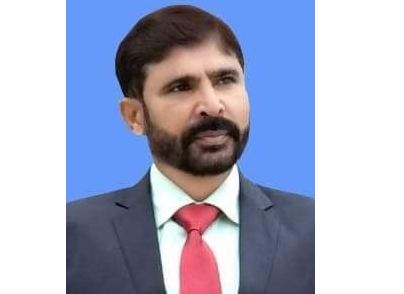
Qamar Bashir

Qamar Bashir

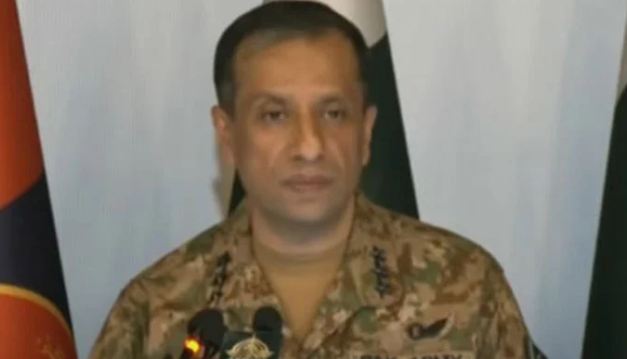
In today’s press conference by DG ISPR, Lt. Gen. Ahmed Sharif Chaudhry, a notable shift was observed compared to previous briefings. For the first time in several press conferences, the focus on the “May 9 riots” previously emphasized with severity, aggression, and strong warnings about consequences—was noticeably subdued. The tone concerning Balochistan was conciliatory, as the DG ISPR referred to the province as the “Shaan, Aan, and Jaan” of Pakistan. He praised the people of Balochistan as among the most intelligent, honorable, and brave in Pakistan, marking a significant departure from earlier rhetoric focused on security concerns.

Additionally, the stance toward Afghanistan was notably softened. While maintaining a firm stance on ensuring no third power disrupts the relationship, the language was more diplomatic, emphasizing the need to preserve the “friendly and brotherly relations” between the two nations.

However, for the media consumption, the most important part of the Press Conference was his reply to question whether the army would take custody of Mr. Imran Khan tried him under the military act in connection with the court-martial proceedings of the former DG ISPR. His reply is going to reverberate in the media for quite some time. He termed the question hypothetical but added that the law would be applied without discrimination if any individual, including those with political influence, were found to have violated it. The DG emphasized in such matters the law would take its own course.

Let us consider a hypothetical scenario that  Mr. Imran Khan is tried under the military act on charges of conspiring to use or influence a former Director General of the ISI (DG ISI) for personal or political gain.  The political implications could be profound for both his personal future and Pakistan’s political landscape.

One possibility is that the trial under the military act may severely damage Imran Khan’s standing, both within Pakistan and internationally. Historically, political leaders facing charges related to military matters or allegations of compromising national security have seen their influence wane. In Imran Khan’s case, if proven guilty of such serious charges, he could be disqualified from holding public office, similar to how leaders in Pakistan’s past, like Nawaz Sharif, have faced legal hurdles that led to political marginalization. This would drastically reduce his capacity to participate in upcoming elections or hold any political office.

Trying a former prime minister under the military act could set a significant legal precedent in Pakistan, highlighting the military’s continued influence in political matters. This could lead to heightened tensions between political forces and the military, as well as sparking debates over civil-military relations. Additionally, such a move might further polarize the political environment, rallying Imran Khan’s supporters to protest perceived injustices while his opponents capitalize on the situation.

If Imran Khan were convicted, this would set  a dangerous precedent on one hand and on the other hand it would impact PTI, his political party. His leadership is central to the party’s identity, and his removal from the political scene would create a power vacuum within PTI, possibly fracturing the party. Without Khan’s charismatic leadership, PTI could struggle to maintain its voter base, opening the door for rival parties like the PML-N and PPP to consolidate their positions.

Imran Khan’s trial could also fuel public sympathy or resistance. If his supporters perceive the charges as politically motivated or part of a larger effort to suppress dissent, it could lead to increased public unrest and protests, exacerbating political instability. Conversely, if the charges are viewed as legitimate and linked to national security, it could weaken his popular appeal and erode his support base.

Internationally, such a trial could lead to diplomatic challenges. Western countries and international organizations could scrutinize Pakistan’s legal and political processes, questioning the fairness of the trial. It could also impact Pakistan’s relationships with key allies, especially if the case is perceived as part of internal power struggles.

Over the next decade, this scenario could lead to new political movements filling the void, while the electoral landscape may focus on Khan’s legacy. The trial’s handling will also reflect on Pakistan’s democratic institutions, potentially strengthening or weakening trust in governance depending on its fairness and transparency. It would further enlarge the wedge between the army and the general public comprising national security.

In the worst case scenario, Imran Khan’s arrest would have profound implications across several fronts. It could trigger widespread protests from his supporters, escalating violence and straining the security forces, leading to clashes and disrupting daily life in major cities. The law and order situation could deteriorate further as political polarization increases, with potential for clashes between rival factions. Economically, the unrest could harm investor confidence, cause currency depreciation, and exacerbate inflation. Disruptions in markets and businesses could stall economic activity, further weakening Pakistan’s fragile financial position, especially in ongoing negotiations with international lenders like the IMF. Overall, the arrest would intensify political instability, complicating Pakistan’s internal governance and international standing.

Finally, if the Supreme Court declares an arrest illegal, especially in a high-profile case like that of Imran Khan, it would have far-reaching implications. Legally, it would reaffirm judicial independence and set a precedent for upholding civil liberties, possibly leading to the individual’s release and accountability for those responsible for the unlawful detention. Politically, it could boost the individual’s popularity, presenting them as a victim of injustice and strengthening their position, while weakening the government or authorities that initiated the arrest. This ruling could also strain civil-military relations if military involvement is questioned. In terms of law and order, the decision could either calm or incite public unrest depending on how various groups perceive it. On the international front, it would enhance Pakistan’s image as a country that upholds the rule of law, reassuring investors and foreign governments about the strength of its democratic institutions.

Any action taken by the army against Imran Khan must be weighed carefully, as it could have serious implications for political stability and public order. A hasty or disproportionate response could lead to major setbacks for the country’s internal security, governance, and international standing.

Qamar Bashir

Former Press Secretary to the President

Former Press Minister to the Embassy of Pakistan to France

Former MD, SRBC, CEO, ATV

RDA enforcement squad removes encroachments 

RDA enforcement squad removes encroachments 

RAWALPINDI, SEP 05 (DNA) — The enforcement squad of Rawalpindi Development Authority (RDA) taking action in accordance with the law removed encroachments from Dhamyal, Kalyal Road, and Girja Road.

According to RDA spokesman, RDA had taken solid steps to clear encroachments from city areas on the special directives of the Chief Minister Punjab, Maryam Nawaz Sharif. A special enforcement squad was formed which is conducting raids and removing encroachments in different areas, the spokesperson informed.

He said, the squad removed under-construction building material from Dhamyal, Kalyal Road, and Girja Road. On the special instructions of the Director General, RDA, Kinza Murtaza, the Enforcement Squad members were provided new uniforms, equipment, and machinery.

The DG had directed the authorities concerned to take strict action against encroachments in all city areas including the banks of nullahs.  RDA had urged the citizens to remove encroachments on their own to avoid legal action, he added. —DNA

DG ISPR assures law takes its course in military accountability

DG ISPR assures law takes its course in military accountability

RAWALPINDI, SEPT 5: Director General Inter-Services Public Relations (DG ISPR) Lieutenant General Ahmad Sharif Chaudhry has said the law takes its own course if a person from the Pakistan Army “works for personal gain or promotes a specific agenda”.

He made these comments in light of former Inter-Services Intelligence (ISI) chief Lieutenant General (retd) Faiz Hamid arrest by the army and inquiry over allegations of land grabbing and snatching valuables from the owner of a private housing society.

“A petition was filed against Gen (retd) Faiz in the Top City case and a high-level court inquiry was ordered in April 2024,” the army’s top spokesperson told reporters during a press briefing held at the General Headquarters in Rawalpindi on Thursday.

Lt Gen Chaudhry said action will be taken against whoever is involved no matter what position or status they hold. However, he added that who is court-martialed has the right to present evidence and to appeal.

The ISPR’s director-general also stressed that the military is a national army which has no political agenda, adding that the Pakistan Army believes in the process of self-accountability.

“Pakistan Army is neither against nor in favour of any political party,” highlighted the Lt Gen, stressing there will be no compromise on national security.

He added that the army’s accountability system is comprehensive and transparent and it works on concrete evidence not on allegations.

Security forces carried over 32,000 IBOs
Speaking about the security situation of the country, the military spokesperson said the security forces and law enforcement agencies (LEAs) carried out 32,173 IBOs against terrorists and their facilitators across the country in the first eight months of the ongoing year — of which 4,021 were carried out in the last one month.

Meanwhile, at least 90 Khawarij were sent to hell in the past 30 days in these IBOs, he said, adding that the army and LEAs have cleared an area of ​​46,000 square kilometres from terrorists.

“There is no area where terrorists are active,” he told the reporters.

Underscoring the ongoing efforts against terrorism, Lt Gen Chaudhry said that around 130 IBOs are carried out on a daily basis by the Pakistan Army, intelligence agencies, police and LEAs.

Revealing the number of martyrs, who sacrificed their lives to defend the motherland in the last eight months, DG ISPR said that 193 officers and soldiers embraced martyrdom in the counter-terrorism operations.

Commenting on the recent unrest in Balochistan, the military’s spokesperson recalled the attacks carried out by militants on the night between August 25 and 26 in the province.

“We know that there is a sense of deprivation in Balochistan [….] The perpetrators of terrorism have nothing to do with Islam or Balochistan,” Lt Gen Chaudhry said.

Balochistan unrest
Addressing the militants carrying out terrorist attacks in Balochistan along with those on whose behest they are being carried out, he gave a clear message that they will be dealt with iron hands.

Noting that the war against terrorism was being fought with an integrated strategy, the military’s spokesperson ruled out the presence of any no-go areas in the country.

“There is no area where terrorists are active,” he said.

He also called for strengthening the country’s criminal justice system.

Highlighting the achievements against the militants, he revealed that the army along with the LEAs has cleared an area spanning 46,000 square kilometres from terrorists.

The DG ISPR also addressed the spike in terror incidents since the Afghan Taliban-led administration came to power in Kabul, saying those attempting to create discord between the two brotherly nations are “living in an imaginary world”.

PM Shehbaz attends Army War Game conclusion in Rawalpindi

PM Shehbaz attends Army War Game conclusion in Rawalpindi

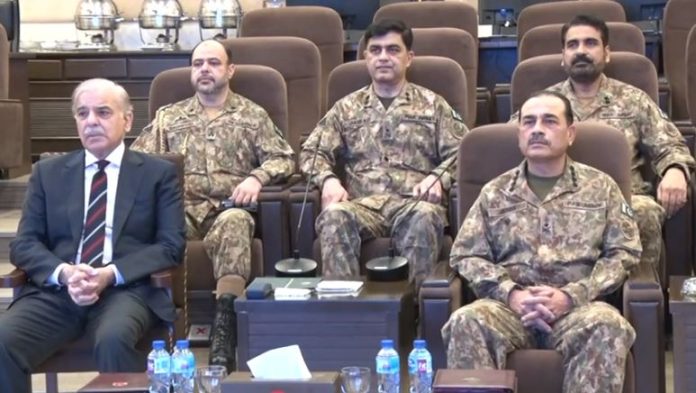
RAWALPINDI, SEPT 5 (DNA) – Prime Minister of Pakistan, Mian Muhammad Shehbaz Sharif attended Concluding Session of Army War Game at Rawalpindi on 5 September 2024. Prime Minister was comprehensively briefed on the recently concluded Wargame and operational readiness of Pakistan Army across the full spectrum of threat. Defence Minister, Finance Minister, Information Minister, Chief of the Army Staff and senior military officials were in attendance.

The Prime Minister expressed his complete satisfaction on the operational preparedness of Pakistan Army, acknowledging the pivotal role of our Armed Forces in maintaining strategic stability in the region and preserving the delicate balance of power essential for peace in nuclearized South Asia.

He commended the innovative employment concepts and structural reforms aimed at enhancing the deterrence regime which will ensure the imposition of retributive cost on any adversary in the event of aggression.

The military leadership reaffirmed their unwavering resolve to safeguard the national sovereignty and territorial integrity at all cost. It was reiterated that Pakistan Army remains fully congnizant of the prevailing security challenges and will continue to enhance its capabilities to thwart any aggressive designs against Pakistan.

Pakistan Air Force – A Bastion of Professionalism and Integrity

Pakistan Air Force - A Bastion of Professionalism and Integrity

By: Izmi Herlani

Since its inception, Pakistan Air Force has been guided by a steadfast commitment to the ethos of professionalism, unwavering devotion to duty and the cultivation of integrity, dedication and sacrifice. As the guardian of the nation’s aerial sovereignty, PAF stands as the sole obstacle in the eyes of Pakistan’s adversaries, deterring any aggression through the expertise of its air and ground crews, led by the charismatic leadership of true heroes.

The celebration of 06 September as Pakistan’s Defence Day, serves as a significant testament to the Men in Blues’ resolute dedication to safeguarding the nation’s aerial integrity at all costs. PAF’s adherence to the highest standards of character, courage and competence has earned it the trust and respect of the nation and the international community alike.

The 1965 Indo-Pakistan War stands as a defining moment in the history of the Pakistan Air Force, showcasing its unwavering commitment to national defence. On that fateful day, our brave pilots soared into the skies, confronting overwhelming odds with unparalleled bravery and executing daring missions that disrupted enemy operations while providing vital support to ground forces. The legendary dogfights of the PAF’s F-86 Sabres and F-104 Starfighters with the IAF’s MiG-21s, Gnats, Mystères, Hunters and Vampires became emblematic of the PAF’s credo, reflecting not only tactical brilliance but also an indomitable will to protect the homeland.

Heroes like Squadron Leader Sarfaraz Ahmed Rafiqui Shaheed, who continued to assist his comrades despite his guns being jammed and Air Commodore Muhammad Mahmood Alam, who achieved an astonishing five kills in just under a minute, have become legends, inspiring generations of pilots to uphold PAF’s proud tradition of excellence. The war was a testament to the PAF’s dedication, with Pakistan Air Force aces dominating the skies. Their bravery, skill and sacrifices continue to resonate in the collective memory of the nation, serving as a source of immense pride and inspiration for the people of Pakistan.

As the nation commemorates Defence Day, Pakistan Air Force reflects on its impressive journey of modernisation and excellence under the astute leadership of Air Chief Marshal Zaheer Ahmed Baber Sidhu. Under his guidance, PAF has made notable advancements in self-reliance, developing indigenous capabilities and enhancing its arsenal by embracing disruptive and niche technologies alongside cutting-edge aircraft. Moreover, PAF has significantly progressed in the realms of space and cyber warfare, demonstrating its adaptability and forward-thinking approach to contemporary military operations. Pakistan Air Force’s Integrated Air Defence System stands as a formidable fortress in the skies, an intricate web of advanced technologies that orchestrates a symphony of aerial dominance.

Unmanned Aerial Vehicles and Unmanned Combat Aerial Vehicles navigate the heavens, wielding cutting-edge precision and stealth, redefining the very nature of modern warfare.

This seamless fusion of man and machine captivates the imagination, heralding a new era of strategic prowess that not only fortifies national integrity but also delivers a resounding message to any adversary bold enough to challenge the skies.

2

Training and development are at the core of PAF’s spirit. The investment in human capital has ensured that PAF personnel are equipped with the skills and knowledge necessary to excel in an ever-evolving environment. Rigorous training programmes have instilled a sense of duty and honour, fostering a culture where courage and sacrifice are deeply respected. Similarly, PAF’s participation in international exercises and the performance of its air and ground crews on the international arena has further exemplified its dedication to collaboration and peacekeeping, showcasing its capabilities on the global stage. In addition to its military responsibilities, Pakistan Air Force has played a vital role in nation-building efforts, providing disaster relief during floods and earthquakes, extinguishing wildfires and conducting emergency medical evacuations. The establishment of the National Aerospace Science and Technology Park has further underscored PAF’s commitment to fostering industry- academia linkages, driving innovation and contributing to the nation’s development. National Aerospace Science & Technology Park (NASTP) is being spearheaded by PAF as the project of strategic national importance that is bringing in highly qualified PAF HR as well as talented youth from across the country in design, research, innovation and development centers being established at the national level in Kamra, Rawalpindi, Karachi and Lahore as well as top ranked universities & institutions across the country. The project has led to the development of an ecosystem for aerospace and niche technology domains thus ensuring an enabling environment for home grown technology and tech enterprises.

Under the visionary guidance of Quaid-i-Azam Mohammad Ali Jinnah, who envisioned the PAF as “an efficient Air Force, Second to None,” the service has consistently upheld its founder’s ideals. Through its commitment to excellence, PAF has proven itself a force to be reckoned with, maintaining a moral and psychological ascendancy over its adversaries in the face of numerical superiority. As Pakistan continues to face external and internal challenges, PAF remains steadfast in its role as a pillar of deterrence and stability, ready to defend the nation’s sovereignty and territorial integrity with unwavering dedication and professionalism.

Stay Connected

64FansLike
60FollowersFollow

Latest Reviews

Exchange Rates

USD - United States Dollar
EUR
1.17
GBP
1.35
AUD
0.67
CAD
0.72