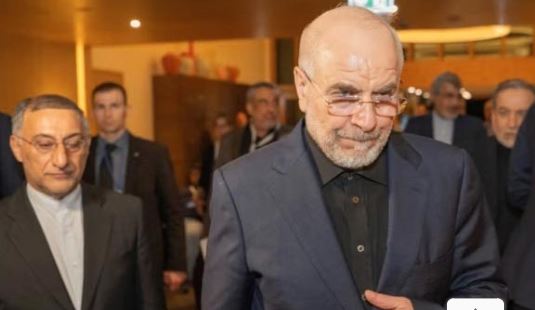
US and Iran negotiators head to Doha, but meeting uncertain
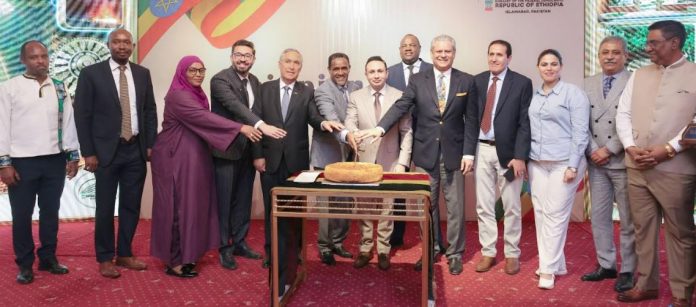
Ethiopian embassy holds tourismpromotion event in Islamabad
Saifullah Ansar
ISLAMABAD: The Ethiopian Embassy Islamabad has hosted a tourism promotion event bringing together diplomats, travel agents, media, and digital influencers to spotlight Ethiopia as a destination and deepen bilateral ties with Pakistan.
H.E. Sardar Yasir Ilyas Khan, Advisor and Coordinator to the Prime Minister of the Islamic Republic of Pakistan on Tourism, attended as a chief guest, alongside guest of honor H.E. Hamid Asghar Khan, Additional Secretary (Africa) of the Ministry of Foreign Affairs.
Welcoming the guests, H.E. Dr. Oumer Hussien Oba, Ambassador Extraordinary and Plenipotentiary of the Federal Democratic Republic of Ethiopia, emphasized on the historic bond between the two nations to ancient “Habesha” which sheltered early Muslims during the First Hijra.
He noted that the historic Al-Nejashi Mosque and the legacy of Hazrat Bilal Habeshi create a lasting bond of brotherhood and spiritual affinity for Pakistanis.
The Ambassador showcased Ethiopia as the Land of Origins and Africa’s fastest-growing tourism destination, pointing to world-class resorts and parks developed under the visionary leadership of Prime Minister H.E. Dr. Abiy Ahmed.
He said the capital city of Ethiopia—Addis Ababa is the third diplomatic hub and home to the African Union, hosting over 150 international summits last year.
The Ambassador highlighted the Ethiopian Airlines’ direct Karachi–Addis Ababa flights as a key advantage for Pakistani travelers.
H.E. Sardar Yasir Ilyas Khan praised the Embassy’s initiative for strengthening people-to-people ties and appreciating the Ethiopian Airlines for closing the connectivity gap between Pakistan and Africa.
Announcing a reciprocal influencer exchange, he announced Pakistani content creators will soon visit Ethiopia, while Ethiopian and African influencers will receive complimentary tourism packages to Pakistan.
H.E. Hamid Asghar Khan thanked Ethiopia for launching direct flight operations in Pakistan, calling them the most critical link between the two countries.
Recalling his visit to Ethiopia, he lauded massive production of energy in Ethiopia, rapid development in its urban areas, wonderful tourism landscapes, and above all the strides it has made in aviation sector.
Terrorism Strikes Again as Pakistan Rises in Global Esteem
by Muhammad Mohsin Iqbal
In the grand ledger of history, it has repeatedly been witnessed that whenever Pakistan, through the boundless mercy of the Almighty, secures a position of respect and dignity among the nations of the world or draws a breath of relief amid its many challenges, the forces of terrorism are swiftly stirred into renewed frenzy within its borders. The brave custodians of law and order, those steadfast officers and soldiers who stand as the first line of defence, have too often become the primary targets of these insidious attacks. India and its foreign patrons, ever watchful for any opening, spare no effort in exploiting such moments to sow seeds of instability and undermine the unity of this sovereign land. A broader nexus has long been evident, linking Indian designs with safe havens in Afghanistan and, alarmingly, with support from Israel, which has been accused of aiding separatist elements to further regional destabilisation.
Divine wisdom recently elevated Pakistan to the honourable role of mediator between the United States of America and the Islamic Republic of Iran. At a time when tensions threatened to engulf the region in further conflict, Pakistan stepped forward as a trusted bridge for dialogue, facilitating understanding and contributing meaningfully to the pursuit of peace. This diplomatic achievement, which enhanced Pakistan’s stature on the global stage, proved intolerable to certain circles in New Delhi. Unable to accept Pakistan’s rising influence, they resorted once more to their familiar tactics, activating a network of proxies that draws strength from Afghan territory and aligns with external agendas, including those attributed to foreign backing of insurgent factions.
Through agents and proxies, they orchestrated yet another cowardly strike against Pakistan’s law enforcement agencies in the commercial heart of the country, Karachi. On the fateful evening of June 27, a band of heavily armed militants launched a spineless assault upon the Sindh Rangers headquarters in Karachi. The attack commenced with a suicide bomber ramming an explosive-laden vehicle into the main gate of the compound, producing a powerful blast that shattered the calm of the night. Immediately thereafter, gunmen attempted to breach the perimeter and storm the facility. In the fierce gun battle that followed, three valiant Rangers embraced martyrdom, while four others sustained injuries as they defended their post with exemplary courage and professionalism. The security forces responded with swift determination, neutralising the majority of the attackers on the spot and foiling what might have become a far more devastating outrage.
Among those apprehended was an injured terrorist whose confession has peeled back the layers of this conspiracy. The suspect, identified as Usman Ali and linked to the banned Jamaat-ul-Ahrar group—a faction widely regarded as an Indian proxy—revealed that he and his accomplices had infiltrated Pakistan from Afghanistan’s Jalalabad region roughly a week prior to the assault. They had undergone specialised training in Afghanistan, including preparation for suicide missions, before crossing the border with weapons reportedly sourced from troubled areas. His companions were eliminated during the operation. This testimony stands as compelling evidence, aligning with previous intelligence that has repeatedly shown how terrorism is nurtured across the Afghan frontier at the instigation of external powers hostile to Pakistan.
This Karachi outrage forms part of a larger pattern. In Balochistan, the Baloch Liberation Army (BLA) and its offshoots have intensified their campaigns, with credible indications of Indian funding, Afghan logistical support, and Israeli provision of intelligence and weaponry to fuel separatism and target Chinese-Pakistani cooperation projects. Similar elements have been activated in Khyber Pakhtunkhwa, where TTP remnants exploit border sanctuaries, as well as in parts of Azad Kashmir, aiming to stir unrest and stretch Pakistan’s security apparatus across multiple fronts. Such coordinated efforts reveal a calculated nexus designed to weaken Pakistan internally while it contributes to regional peace.
Such incidents lay bare a persistent campaign aimed at weakening Pakistan from within. The world community can no longer turn a blind eye to this pattern of cross-border terrorism, training camps, and covert support networks that seek to destabilise a nation striving for progress and peace. Pakistan, as a responsible sovereign state, reserves the unquestionable right to defend itself and to take all necessary measures to safeguard its territory and its people.
Yet in the face of every adversity, the people of Pakistan, along with their valiant Army and dedicated law enforcement agencies, display an unshakeable resolve. United by faith, patriotism, and an indomitable spirit, they remain ever ready to protect every inch of the homeland—from its rugged mountains to its vibrant cities. The blood of martyrs does not weaken the nation; rather, it nourishes the roots of national unity and determination.
As Pakistan continues to expose these nefarious designs before the international forum, it calls upon the global conscience to acknowledge the truth and support efforts to dismantle the infrastructure of terrorism. For ultimately, falsehood and malice cannot prevail against a people armed with truth, courage, and the blessings of the Almighty. Pakistan shall endure and advance, its flag flying high despite the storms unleashed by its adversaries. The sacrifices of today will pave the way for a safer and more prosperous tomorrow for generations yet to come.
Can Afghanistan move toward a new political understanding?
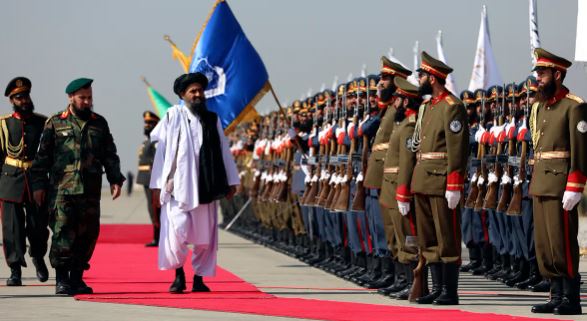
Many critics argue that the Taliban lack both political maturity and a commitment to civic values; The experience of the past four decades demonstrates that neither war nor isolation has solved Afghanistan’s problems or brought lasting stability
By Shamim Shahid
After nearly five years of relative silence, former Afghan President Ashraf Ghani has once again taken a position on Afghanistan’s future that may open a new chapter in the country’s ongoing political debate. His first ever statement, hitting the headlines, issued after Pakistan latest air strikes inside Afghanistan, killing dozens of people and injuring scores of others.
Interestingly, all leading Taliban leaders including Supreme leader Mullah Haibat Ullah, prime minister Mullah Hassan Akhund, interior Minister Siraj Ud Din Haqqani and Defence Minister Mullah Yaqub are tight lipped.
In his recent remarks, deposed President Dr Ashraf Ghani has insisted on creation of an atmosphere aimed at a broad national consensus, restoration of Afghanistan’s international neutrality, and the restoration of relations with the international community as the fundamental path toward resolving the country’s challenges.
Ghani argues that Afghanistan’s foreign policy should be guided solely by national interests because, in his view, as long as the country remains internationally isolated, the voices of Afghans will not reach the world, nor will the international community seriously listen to the suffering of its people.
In his comments, he also indirectly referred to recent security incidents, saying that a situation has emerged in which bombs are falling on Afghan soil almost daily, yet the global response remains weak, while many countries in the region are beginning to regard such incidents as a normal reality.
These remarks come at a time when Afghanistan faces multiple challenges. On one hand, the Taliban government has still not been formally recognized by the international community. On the other hand, economic difficulties, declining humanitarian assistance, restrictions on girls’ education, continuing migration, and recent military tensions between Pakistan and Afghanistan have further complicated the country’s situation.
Ashraf Ghani is among the Afghan politicians who enjoyed international academic and economic recognition before entering politics. After graduating from Kabul University, he pursued higher studies at Columbia University in the United States, taught at leading universities, and later worked for years as a senior economist at the World Bank.
Following 2001, he returned to Afghanistan and, as finance minister, laid the foundations for a new financial system, banking reforms, and revenue modernization. After the disputed 2014 elections, he became president and led Afghanistan until 2021.
During his tenure, significant progress was made in regional connectivity, electricity projects, TAPI, CASA-1000, the Lapis Lazuli Corridor, digital governance, and infrastructure development. However, during the same period, the conflict intensified, corruption remained a major criticism of his administration, and the peace process failed to achieve the expected results.
On August 15, 2021, when the Taliban entered Kabul, Ghani left the country. This decision remains the most controversial chapter of his political career. His opponents consider him primarily responsible for the collapse of the republican system, while Ghani has consistently maintained that he left Kabul to prevent a large-scale civil war and the possible deaths of thousands of people.
Since leaving office, he has maintained a limited political presence. However, over the last two years, he has repeatedly called for national consensus, Afghanistan’s international neutrality, and the normalization of relations with the wider world.
In his latest message, Ghani says he is prepared to contribute to an Afghan national consensus and Afghanistan’s reintegration into the international community without seeking any personal privilege or political gain.
He warns that time does not stand still and that every moment creates new realities. According to him, any delay in achieving national understanding and international engagement could have consequences that may not be easy to reverse, and responsibility for such outcomes would rest with those who obstruct the collective will of the Afghan nation.
Yet an important question remains: are Afghanistan’s current rulers, political leaders, tribal elders, civil society activists, and international stakeholders prepared for such a broad national consensus?
It is also a fact that during Dr. Ashraf Ghani’s second term, his relations with many prominent leaders, including former President Hamid Karzai, were far from cordial. While Hamid Karzai and Dr. Abdullah Abdullah remain inside Afghanistan, their channels of communication with the Taliban exist, although many critics argue that the Taliban lack both political maturity and a commitment to civic values.
At the same time, many influential Afghan leaders are not only outside the country but are also deeply divided among themselves. Until these fragmented leaders can sit together at one table, Afghanistan’s problems are unlikely to be resolved.
As in the past, Afghanistan continues to be an important question for the world. Pakistan’s repeated military strikes are not viewed positively, and many believe Pakistan has lost the trust of the Afghan people. While such attacks may have fostered a sense of unity among Afghans, they have also benefited the Taliban by pushing their internal disagreements into the background.
If Pakistan genuinely seeks a friendly Afghanistan as its neighbor, it should introduce positive changes in its policies and provide Afghan leaders with an opportunity to rebuild their country. Further experimentation in Afghanistan would only deepen existing challenges.
The experience of the past four decades demonstrates that neither war nor isolation has solved Afghanistan’s problems or brought lasting stability. Any political process that lacks broad Afghan participation, national legitimacy, and international engagement is likely to encounter serious difficulties in the long run.
Pakistan can become a global mountaineering hub : Nirmal
Ansar M Bhatti
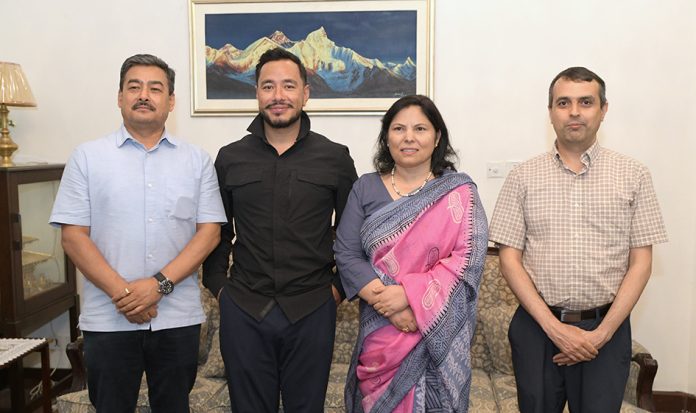
ISLAMABAD: Pakistan has all the ingredients to emerge as one of the world’s leading mountaineering destinations, but it needs greater public awareness, government support and investment in local communities, according to legendary Nepali mountaineer Nirmal “Nims” Purja.
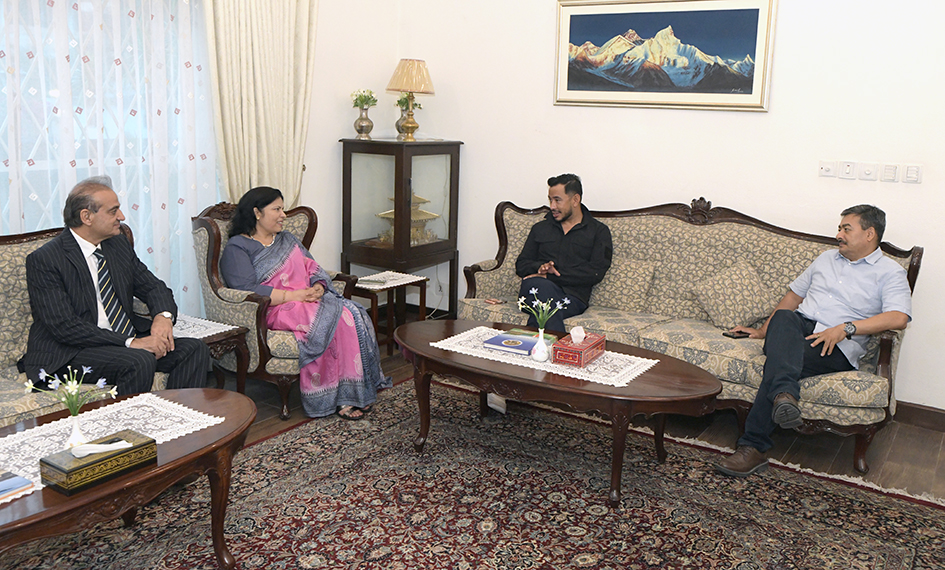
Purja shared his views during an exclusive interaction with Islamabad POST/DNA on the sidelines of a dinner hosted in his honour by Nepal’s Ambassador to Pakistan, Rita Dhital, in Islamabad. Members of the mountaineering community and distinguished guests attended the reception celebrating the close friendship between Nepal and Pakistan through their shared Himalayan heritage.
Widely regarded as one of the greatest high-altitude climbers in history, Purja said Pakistan occupies a special place in his heart.
“I come to Pakistan almost every year,” he said with a smile. “I consider Pakistan my second home. Every visit strengthens my bond with the people, especially the wonderful communities of Gilgit-Baltistan.”
Purja has scaled almost every major mountain in the world, including repeated ascents of Mount Everest and K2, besides conquering all 14 of the world’s peaks above 8,000 metres in record time. His extraordinary achievements have inspired climbers across the globe and were featured in the acclaimed Netflix documentary 14 Peaks: Nothing Is Impossible.
Beyond mountaineering, Purja is also a successful entrepreneur who operates adventure tourism and expedition companies. He believes responsible tourism can transform the lives of mountain communities.
“My goal is not just to climb mountains,” he explained. “I want the people living in these regions to benefit economically. Whenever possible, I hire local guides, porters and support staff because I believe tourism should directly improve the lives of local families.”
He praised the hardworking nature of Pakistanis, particularly those living in the northern mountainous regions.
“The people of Pakistan are industrious, honest and dedicated. They have immense potential. Given the right opportunities, they can become leaders in the global mountaineering industry.”
Purja said Pakistan possesses some of the most spectacular and technically challenging mountains on Earth. Besides K2, the country is home to Nanga Parbat, Broad Peak, Gasherbrum I and II, and several other iconic summits that attract elite climbers from around the world.
He urged the Pakistani government to actively promote mountaineering as both a sport and an economic opportunity.
“I believe Nanga Parbat can become the starting point for encouraging more Pakistanis to take up mountaineering. The government should invest in training programmes, safety standards, rescue infrastructure and youth development. Mountaineering can generate employment while showcasing Pakistan’s breathtaking natural beauty.”
Purja also stressed the importance of preserving the fragile mountain environment, saying sustainable tourism must remain at the heart of future development.
“These mountains are a gift from nature. We have a responsibility to protect them for future generations while allowing local communities to prosper.”
Reflecting on his remarkable journey, Purja said mental resilience is often more important than physical strength.
“The biggest mountain we climb is usually inside our own minds. Once you overcome self-doubt, almost anything becomes possible.”
His inspiring message resonated strongly with the audience, many of whom expressed admiration for his achievements and his deep affection for Pakistan.
As Pakistan continues to promote adventure tourism and improve access to its northern regions, voices like Nirmal Purja’s reinforce the country’s immense potential to become a premier destination for climbers and outdoor enthusiasts from around the world.
More importantly, his emphasis on empowering local communities offers a blueprint for ensuring that the benefits of tourism are shared by those who call these majestic mountains home.
Guinea-Bissau Reaffirms Firm Support for Morocco’s Territorial Integrity & Sovereignty Over Entire Territory, Including Sahara

Guinea-Bissau Reaffirms Firm Support for Morocco’s Territorial Integrity & Sovereignty Over Entire Territory, Including Sahara
Rabat – Minister of Foreign Affairs, International Cooperation, and Communities of the Republic of Guinea-Bissau Fatumata Jau reiterated on Monday in Rabat her country’s steadfast and unwavering position in support of Morocco’s territorial integrity and sovereignty over its entire territory, including the Sahara region.
In a statement to the press following her talks with Minister of Foreign Affairs, African Cooperation, and Moroccan Expatriates Nasser Bourita, Jau also reaffirmed Guinea-Bissau’s full support for the autonomy plan presented by the Kingdom as the only credible and realistic solution to resolving this artificial dispute. In this regard, she emphasized the importance of the Republic of Guinea-Bissau’s opening of a Consulate General in Dakhla (Morocco) in October 2020, a move that confirms the strength of the partnership between the two brotherly countries.
Jau noted that this opening falls in line with the international momentum spearheaded by His Majesty King Mohammed VI in support of the autonomy plan and Morocco’s sovereignty over its Sahara. In the same vein, the Guinean-Bissau foreign minister welcomed the adoption of Security Council Resolution 2797, which establishes the Plan for Autonomy under Moroccan sovereignty as the basis for a just, lasting, and mutually acceptable solution to this dispute.
The US and Iran conflict and the impact on the World
BY: Sadaf Khaliq
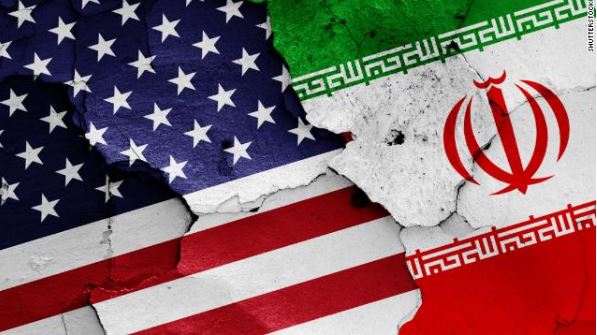
The Iran vs. U.S. rivalry is far from a two-way battle it’s a fault line, and its rumbles echo from the Middle East’s oil markets to South Asia’s grain markets. To understand what this war really is, and how it can be ended, it is important to see beyond the headlines and to recognize the underlying dynamics of these two countries, which keep them locked in war.
A War Unlike Others
War strategy over history has been always the same, to neutralize the strengths of their rivals by innovating and adapting. In World War II, Germany and Japan fought the British and American navies with naval submarines and the kamikaze, which were vastly superior nations will always come to such a point to achieve strategic balance. The US-Iran war is; however, a war played in a different environment, characterized by the global financial system that has been established today. Today, regions from as far apart as the Congo and Kolkata, Dhaka and Detroit, Dubai and Beijing are all linked by supply chains, currency flows, and commodity markets. It is a war that affects every nation, as an international trading partner, good or bad. Let’s think Pakistan, it is not a belligerent nation, it is not responsible for the war directly but it is highly affected by the repercussions of the war. These are the bystander costs that impact the world in upside-down and downside ways when energy costs increase and inflationary pressures grow, especially when there is a risk of food insecurity. US-Iran war is not a bilateral ‘contained’ war in this sense. In its economic aspects it is a global event (Nye, 2012).
Why is peace elusive?
When the risks of continued conflict are clear, why does it still go on? The answer is not that either side is not given to peace, for an end to the hostilities is to their general interest, but in the presence of some structural barriers, with which it is hard for rational actors to cope. The first of these is referred to as the commitment problem. Iran’s de-escalation has the potential of being used by Washington as leverage to push back. Iran must show signs of easing up, which could give Washington some leverage. In the USA, a reduction in pressure could allow Tehran the time to consolidate strategic gains. No one can be sure that they cannot take advantage of the other’s de-escalation, so nobody de-escalates (Fearon, 1995).
The second barrier is a one of domestic acceptability. In both countries the leaders have to face audiences at home, who think surrender (or something similar) is politically risky. In the short term, the concern with seeming weak in the eyes of one’s people is of greater importance than the rational calculation of strategic interest. Third is the security dilemma – the fear that a decrease in aggression by one side will lead the opponent to view it as weakness and make use of it. While each side is in this logic, neither can take the first step toward peace without risk (Jervis, 1978).
Last but not least, there are real material interests. One of the world’s choke points is the Strait of Hormuz, and Iran has the key to it. The abandonment of the influence is a considerable geopolitical loss of lever for the USA in this corridor. The United States itself is a country which employs economic sanctions as one of its most potent instruments of statecraft. The value of lifting sanctions on Iran without sizeable counter concessions in return would be lost (Katzman, 2021). Both sides, however, are holding onto the resources that they need to survive, and sustain conflict ((IEA), World Energy Outlook 2023, 2023).
A Case for a Ceasefire – and Its Complications
The first step that needs to be taken to prevent the conflict from spiraling out of control will be a ceasefire, meaning the active fighting ends. A cease fire is not a peace, however. To achieve a lasting cease-fire, there are three requirements: conditions accepted, sanctions for violations and a credible verification process. This is where a third-party guarantor comes in very handy. A third party, such as one state or a multilateral organization, that has the ability to oversee compliance and to credibly threaten repercussions for failure to comply would be a source of assurance that neither Washington nor Tehran can currently offer each other. A deterrence relationship that is looked at is the India-Pakistan relationship where there is not trust, but both know if they launch a full-fledged war, they will incur a heavy loss. Not an ideal mix, but it has prevented large-scale conflict from the last several decades. A similarly weak deal between the US and Iran could play much the same stabilizing role.
But putting such a ceasefire into practice is fraught with problems. Who initiates it? What is the definition of and standards for the adjudications for violations? What are the penalties and who enforces the penalties? These are not only technical but issues of trust that are central to why the deal is so challenging in the first place. Economic pain is one factor that might lead to agreement. The price both sides pay and the pressure of the world community that will be on them may be more than just a strategic cost as fuel inflation continues, and as the war continues, with serious implications for global food supplies. Negotiation has been and remains a powerful driving force in the economy.
A Graduated Path to Peace
There’s no resolution that’s going to come out of a single, big deal there is no trust there right now to make that happen. A more realistic approach is for confidence-building measures to take place in a step-by-step manner, lowering the likelihood of escalation and maintaining each side’s main interests. The first move that would be considered credible would be to lift the sanctions against Iran to allow it to resume some oil exports, to Europe in particular. In return, Iran pledged to cease to obstruct the Strait of Hormuz and suspend its proxy military operations in the area, under international monitoring. Such a move would not move either side from their basic stance but would establish a small buffer that would allow more room for diplomacy to take place.
At the same time, an internationally managed monitoring system for the Strait of Hormuz (no single country would have control over this) would be able to reduce politicization of access to this vital shipping route. The system would have to ensure the free flow of commerce, with neither party dominating it, and would be a concern of both the United States and Iran. Pakistan has been suggested as a neutral broker, which has the potential to be of great value in facilitating the information flow, communications and understanding of what the other party really needs, and not what they are demanding publicly. This kind of quiet diplomacy has proven to be more fruitful than summits with a low level of trust.
Last, but not least, both countries need to recognize that the war is costly. Conflict costs resources that are otherwise needed in the home country for development, social investment, and economic growth. Eventually, there are indications that may be getting closer the math’s will force a rethinking. The objective of diplomacy is to do this reassessment before the costs in terms of human and material life resources increase further ((IEA), World Energy Outlook 2023, 2023).
Conclusion
The US-Iran conflict is more than just a conflict between two states. It is a crisis that has worldwide consequences, impacting populations that are not involved in its investigation, but have no direct interest in the result. The structural obstacles to peace (commitment problems, legitimacy concerns, security dilemmas, and material interests) exist and are not to be demeaned. They are not insurmountable, though. What’s needed is the desire to take baby steps, not grand ones, and be able to see them first. Trust is not given, but earned, gradually, over time and against a cost, and then reciprocated. Iran and the USA are not natural enemies. Their disagreement is due to historical conditions, history of grievances, and history of incentives conditions that can, in principle, be altered. That change can’t be delayed forever. The repercussions of this conflict go too far, and too much blood has already been spilled.
References
(IEA), I. E. (2023). World Energy Outlook 2023.
(IEA), I. E. (2023). World Energy Outlook 2023.
Fearon, J. D. (1995). Rationalist explanations for war. International Organization, 379–414.
Jervis, R. (1978). Cooperation under the security dilemma. World Politics, 167–214.
Katzman, K. (2021). Iran sanctions.
Nye, R. O. (2012). Power and Interdependence.
Sadaf Khaliq | MS Scholar in Public Policy at the Pakistan Institute of Development Economics (PIDE).
Education Reform Begins with Trust
Dr. Muhammad Akram Zaheer
Public education systems thrive on trust. They depend not only on policies, budgets and infrastructure but also on the confidence that exists between governments, teachers and communities. Once that trust begins to erode, even the most ambitious reform agenda struggles to deliver meaningful results. The latest controversy surrounding Punjab’s Education Minister, Rana Sikandar Hayat, serves as a reminder that words spoken from positions of authority can either strengthen that trust or weaken it.
The controversy erupted after a video clip circulated on social media showing the minister addressing a convocation at Bahauddin Zakariya University, Multan. In the clip, he appeared to suggest that government school teachers remove ceiling fans from schools and take them away when they leave. Whether the remark was intended as humour, frustration or a broader observation has become secondary. The public response indicates that many teachers interpreted it as a sweeping accusation against an entire profession.
The reaction was swift. Teachers, education activists and ordinary citizens questioned the wisdom of making such a generalisation from a public platform. Many pointed out that in several parts of Punjab, school administrations temporarily remove electrical equipment such as fans, bulbs and water pumps during summer vacations or prolonged school closures to protect them from theft or vandalism. Such decisions are often taken administratively rather than individually by teachers. To equate these practices with personal misconduct, critics argued, unfairly damages the reputation of thousands of educators who serve honestly under difficult circumstances. The debate, however, extends far beyond one controversial statement. It has opened a wider discussion about accountability, administrative responsibility and professional respect within Punjab’s education system.
No public institution should be exempt from accountability. Government schools contain public assets purchased through taxpayers’ money and every piece of equipment must be protected. Where negligence, theft or corruption occurs, investigations should be conducted and responsibility determined through established administrative procedures. If any employee is found guilty of misconduct, disciplinary action should follow without hesitation. But accountability must remain evidence-based. It should identify individuals responsible for specific violations rather than cast suspicion over an entire profession. Broad accusations rarely improve governance; instead, they often create resentment among those who are performing their duties with integrity.
Teaching occupies a unique place in society. Teachers are entrusted with shaping future generations, often while working in overcrowded classrooms, limited facilities and financially constrained environments. In rural and underserved areas particularly, government school teachers frequently perform responsibilities that extend well beyond classroom instruction. They assist in election duties, census operations, vaccination campaigns, disaster relief efforts and numerous administrative assignments. Despite these additional burdens, they continue to shoulder the central responsibility of educating millions of children. It is therefore understandable why many educators viewed the minister’s remarks as diminishing their professional dignity. Respect for teachers is not merely a cultural value; it is a practical necessity for educational progress. A workforce that feels publicly humiliated is unlikely to become an enthusiastic partner in reform.
This is not the first occasion on which tensions have surfaced between Punjab’s education authorities and sections of the teaching community. Previous disagreements over teacher training assessments, administrative reforms and public communication have occasionally generated friction. Social media exchanges between officials and teachers have sometimes aggravated rather than eased these disagreements. The current controversy appears to reflect an existing trust deficit rather than an isolated misunderstanding. The challenge facing Punjab’s education sector is far greater than a debate over one sentence. The province continues to grapple with uneven learning outcomes, infrastructure deficiencies, teacher shortages in certain regions, student dropouts and the need to improve literacy and numeracy standards. These structural issues require sustained cooperation between policymakers, administrators and teachers. That cooperation becomes difficult when public discourse shifts from problem-solving to mutual recrimination.
Modern educational reform depends as much on communication as it does on policy. Effective leaders recognise that criticism must be accompanied by encouragement and that reform succeeds when stakeholders feel respected rather than targeted. Strong leadership is not measured by sharp rhetoric but by the ability to build consensus while maintaining accountability. Public officials naturally face the pressure of demonstrating resolve against inefficiency. Citizens rightly expect governments to protect public resources and eliminate corruption wherever it exists. Yet the language chosen to express that determination matters. Precision carries greater credibility than generalisation. Evidence inspires confidence more effectively than anecdote.
Equally, the teaching community should not interpret every criticism as hostility. Professional accountability is an essential element of public service. Teachers, like all public employees, must support transparency, welcome performance evaluation and cooperate with efforts aimed at improving educational standards. Public confidence grows when professional associations themselves advocate ethical conduct and institutional responsibility. Social media has further complicated these debates. Short video clips often detach remarks from their broader context, encouraging emotional reactions before facts are fully established. Public figures therefore carry an even greater responsibility to communicate carefully, knowing that a few seconds of video can shape public perception far more powerfully than lengthy explanations issued afterwards.
Punjab’s education system requires a different conversation. Instead of debating whether teachers remove fans from schools, policymakers should focus on establishing stronger inventory management systems, digital asset registers and clearer administrative protocols for safeguarding government property. Such institutional solutions reduce opportunities for both misconduct and misunderstanding. More importantly, the relationship between the government and teachers must move beyond confrontation. Educational reform cannot be imposed solely through directives issued from administrative offices. It succeeds when teachers become partners in designing and implementing change. Consultation, dialogue and mutual respect remain indispensable components of sustainable reform.
Punjab has introduced several initiatives aimed at improving school governance, teacher development and student outcomes in recent years. These reforms deserve careful implementation and constructive public debate. They should not be overshadowed by controversies that distract attention from the larger mission of improving educational quality. The latest episode should therefore serve as an opportunity rather than merely another political dispute. It offers policymakers an opportunity to refine their public communication, acknowledge legitimate concerns raised by teachers and reaffirm their commitment to respectful engagement. It also offers teachers an opportunity to demonstrate that accountability and professional dignity are complementary rather than competing values.
Education flourishes where trust exists. Governments provide policy, teachers provide learning and communities provide support. None of these pillars can succeed by diminishing the others. If Punjab genuinely seeks lasting educational improvement, reform must be built not only on administrative authority but also on respect, evidence and partnership. That lesson may prove far more valuable than the controversy that brought it into public view.
Dr. Muhammad Akram Zaheer
Assistant Professor Pakistan Studies
Imperial College of business Studies Lahore
Manhunt underway after inmates escape from prison van in Rawalpindi
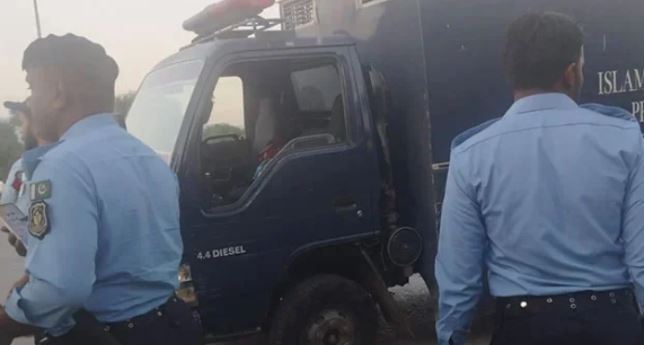
RAWALPINDI, JUN 29: Police launched a search operation after 14 prisoners escaped from a prisoner van in Kahuta, recapturing four inmates, a spokesperson for the Rawalpindi police said on Monday.
According to the spokesperson, senior officers have been asked to submit a report regarding the incident, while an investigation has also been initiated under the supervision of senior officials.
At least four escaped prisoners have been arrested again during the search operation, the spokesperson said, adding that special teams were working to arrest the remaining 10 suspects.
The spokesperson said that initial investigations suggested a severe fight broke out among the prisoners inside the van before the escape took place.
Police sources earlier said that the prisoners were being shifted to Adiala jail after a court appearance when the incident occurred.
The van was reportedly stopped for checking, after which a prisoner threw chilli powder into the eyes of police personnel, they added.
Police sources said that police teams sealed entry and exit points in Kahuta following the prisoners’ escape, adding that a heavy police presence had been deployed for the search operation.
Last year, over 200 inmates escaped from Karachi’s Malir Jail during an earthquake-related evacuation, Jail Superintendent Arshad Shah said.
At least one prisoner was killed and several security personnel were injured during the jailbreak.
Speaking to the media on June 3, the jail superintendent confirmed that over 80 prisoners were recaptured, while a search operation was launched to recapture the remaining fugitives.
14 prisoners escape from prison

DNA
RAWALPINDI: As many as 14 under-trial prisoners escaped from a prisoner van on Monday while being transported from Kahuta to Adiala jail after overpowering security guards, prompting police to launch a search operation, a statement said.
“Following reports of prisoners escaping from a prison van in the Sihala area of Rawalpindi, CPO Hamdani took notice of the incident and directed senior officers to immediately reach the scene, submit a report, and launch an operation,” said a statement by a Rawalpindi Police spokesperson.
However, the police spokesperson added that four of the escaped prisoners had been re-arrested during an operation, while police teams were continuing search operations to apprehend the remaining escapees.
“The escaped individuals are accused in cases currently under trial,” the spokesperson said.
The statement added that the incident occurred within the jurisdiction of Sihala police station in Islamabad district, and coordination with the relevant police authorities was ongoing.
According to the initial investigation, a violent altercation broke out among the prisoners inside the van, following which the incident took place.