BY: Sadaf Khaliq
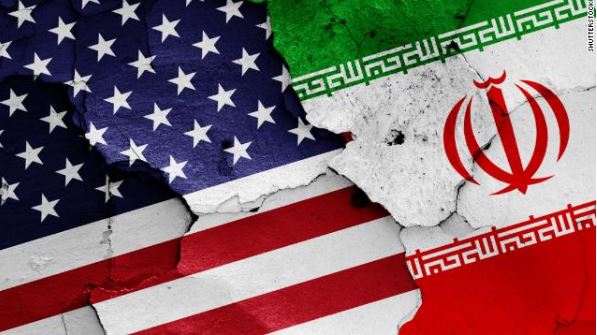
The Iran vs. U.S. rivalry is far from a two-way battle it’s a fault line, and its rumbles echo from the Middle East’s oil markets to South Asia’s grain markets. To understand what this war really is, and how it can be ended, it is important to see beyond the headlines and to recognize the underlying dynamics of these two countries, which keep them locked in war.
A War Unlike Others
War strategy over history has been always the same, to neutralize the strengths of their rivals by innovating and adapting. In World War II, Germany and Japan fought the British and American navies with naval submarines and the kamikaze, which were vastly superior nations will always come to such a point to achieve strategic balance. The US-Iran war is; however, a war played in a different environment, characterized by the global financial system that has been established today. Today, regions from as far apart as the Congo and Kolkata, Dhaka and Detroit, Dubai and Beijing are all linked by supply chains, currency flows, and commodity markets. It is a war that affects every nation, as an international trading partner, good or bad. Let’s think Pakistan, it is not a belligerent nation, it is not responsible for the war directly but it is highly affected by the repercussions of the war. These are the bystander costs that impact the world in upside-down and downside ways when energy costs increase and inflationary pressures grow, especially when there is a risk of food insecurity. US-Iran war is not a bilateral ‘contained’ war in this sense. In its economic aspects it is a global event (Nye, 2012).
Why is peace elusive?
When the risks of continued conflict are clear, why does it still go on? The answer is not that either side is not given to peace, for an end to the hostilities is to their general interest, but in the presence of some structural barriers, with which it is hard for rational actors to cope. The first of these is referred to as the commitment problem. Iran’s de-escalation has the potential of being used by Washington as leverage to push back. Iran must show signs of easing up, which could give Washington some leverage. In the USA, a reduction in pressure could allow Tehran the time to consolidate strategic gains. No one can be sure that they cannot take advantage of the other’s de-escalation, so nobody de-escalates (Fearon, 1995).
The second barrier is a one of domestic acceptability. In both countries the leaders have to face audiences at home, who think surrender (or something similar) is politically risky. In the short term, the concern with seeming weak in the eyes of one’s people is of greater importance than the rational calculation of strategic interest. Third is the security dilemma – the fear that a decrease in aggression by one side will lead the opponent to view it as weakness and make use of it. While each side is in this logic, neither can take the first step toward peace without risk (Jervis, 1978).
Last but not least, there are real material interests. One of the world’s choke points is the Strait of Hormuz, and Iran has the key to it. The abandonment of the influence is a considerable geopolitical loss of lever for the USA in this corridor. The United States itself is a country which employs economic sanctions as one of its most potent instruments of statecraft. The value of lifting sanctions on Iran without sizeable counter concessions in return would be lost (Katzman, 2021). Both sides, however, are holding onto the resources that they need to survive, and sustain conflict ((IEA), World Energy Outlook 2023, 2023).
A Case for a Ceasefire – and Its Complications
The first step that needs to be taken to prevent the conflict from spiraling out of control will be a ceasefire, meaning the active fighting ends. A cease fire is not a peace, however. To achieve a lasting cease-fire, there are three requirements: conditions accepted, sanctions for violations and a credible verification process. This is where a third-party guarantor comes in very handy. A third party, such as one state or a multilateral organization, that has the ability to oversee compliance and to credibly threaten repercussions for failure to comply would be a source of assurance that neither Washington nor Tehran can currently offer each other. A deterrence relationship that is looked at is the India-Pakistan relationship where there is not trust, but both know if they launch a full-fledged war, they will incur a heavy loss. Not an ideal mix, but it has prevented large-scale conflict from the last several decades. A similarly weak deal between the US and Iran could play much the same stabilizing role.
But putting such a ceasefire into practice is fraught with problems. Who initiates it? What is the definition of and standards for the adjudications for violations? What are the penalties and who enforces the penalties? These are not only technical but issues of trust that are central to why the deal is so challenging in the first place. Economic pain is one factor that might lead to agreement. The price both sides pay and the pressure of the world community that will be on them may be more than just a strategic cost as fuel inflation continues, and as the war continues, with serious implications for global food supplies. Negotiation has been and remains a powerful driving force in the economy.
A Graduated Path to Peace
There’s no resolution that’s going to come out of a single, big deal there is no trust there right now to make that happen. A more realistic approach is for confidence-building measures to take place in a step-by-step manner, lowering the likelihood of escalation and maintaining each side’s main interests. The first move that would be considered credible would be to lift the sanctions against Iran to allow it to resume some oil exports, to Europe in particular. In return, Iran pledged to cease to obstruct the Strait of Hormuz and suspend its proxy military operations in the area, under international monitoring. Such a move would not move either side from their basic stance but would establish a small buffer that would allow more room for diplomacy to take place.
At the same time, an internationally managed monitoring system for the Strait of Hormuz (no single country would have control over this) would be able to reduce politicization of access to this vital shipping route. The system would have to ensure the free flow of commerce, with neither party dominating it, and would be a concern of both the United States and Iran. Pakistan has been suggested as a neutral broker, which has the potential to be of great value in facilitating the information flow, communications and understanding of what the other party really needs, and not what they are demanding publicly. This kind of quiet diplomacy has proven to be more fruitful than summits with a low level of trust.
Last, but not least, both countries need to recognize that the war is costly. Conflict costs resources that are otherwise needed in the home country for development, social investment, and economic growth. Eventually, there are indications that may be getting closer the math’s will force a rethinking. The objective of diplomacy is to do this reassessment before the costs in terms of human and material life resources increase further ((IEA), World Energy Outlook 2023, 2023).
Conclusion
The US-Iran conflict is more than just a conflict between two states. It is a crisis that has worldwide consequences, impacting populations that are not involved in its investigation, but have no direct interest in the result. The structural obstacles to peace (commitment problems, legitimacy concerns, security dilemmas, and material interests) exist and are not to be demeaned. They are not insurmountable, though. What’s needed is the desire to take baby steps, not grand ones, and be able to see them first. Trust is not given, but earned, gradually, over time and against a cost, and then reciprocated. Iran and the USA are not natural enemies. Their disagreement is due to historical conditions, history of grievances, and history of incentives conditions that can, in principle, be altered. That change can’t be delayed forever. The repercussions of this conflict go too far, and too much blood has already been spilled.
References
(IEA), I. E. (2023). World Energy Outlook 2023.
(IEA), I. E. (2023). World Energy Outlook 2023.
Fearon, J. D. (1995). Rationalist explanations for war. International Organization, 379–414.
Jervis, R. (1978). Cooperation under the security dilemma. World Politics, 167–214.
Katzman, K. (2021). Iran sanctions.
Nye, R. O. (2012). Power and Interdependence.
Sadaf Khaliq | MS Scholar in Public Policy at the Pakistan Institute of Development Economics (PIDE).