Home Blog Page 614

Pakistan ready for talks with India says PM Shehbaz

Pakistan ready for talks with India says PM Shehbaz
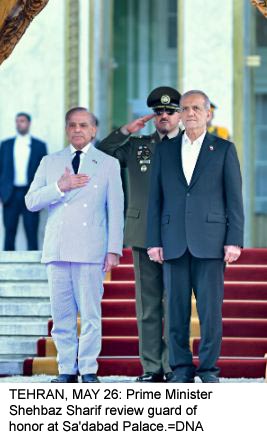
TEHRAN, MAY 26: Prime Minister Shehbaz Sharif review guard of honor at Sa'dabad Palace.=DNA

Addressing joint presser, PM says Pakistan ready to engage in dialogue for resolution of all disputes

DNA

TEHRAN: Prime Minister Shehbaz Sharif on Monday said Pakistan was prepared to hold talks with India for the sake of regional peace, reiterating that the country desired peace and stability in South Asia.

“We want peace… we are ready to engage in dialogue for the resolution of all disputes, including the issue of Kashmir,” the premier said while addressing a joint press conference along with Iranian President Dr Masoud Pezeshkian in Tehran.

Following the conclusion of visit to Turkiye, the premier landed in Tehran as part of his four-nation tour to friendly countries, with aim to express his gratitude for supporting Pakistan during the recent conflict against India.

Upon his arrival, the prime minister was received by Iranian Interior Minister and Iran’s Ambassador to Pakistan. A smartly turned-out contingent of the Iranian armed forces presented a guard of honour at the airport.

The prime minister is accompanied by a high-level delegation, comprising Deputy Prime Minister Ishaq Dar and Field Marshal General Asim Munir. Federal Ministers Mohsin Naqvi, Attaullah Tarar, and Special Assistant to the Prime Minister Tariq Fatemi are also part of the delegation.

Speaking during the joint presser, the premier said that Pakistan is a peaceful country that seeks harmony in the region but warned that any act of aggression would be met with a strong and effective response.

He noted that his country was willing to hold discussions on key regional issues, including water sharing and counter-terrorism.

Commenting on Pakistan’s national security, PM Shehbaz commended the armed forces for their bravery and timely response during the recent conflict with India. “Our armed forces demonstrated exemplary courage,” he noted.

He also expressed gratitude to Iranian President Pezeshkian for his support and solidarity with Pakistan. “I appreciate the sentiments expressed by President Pezeshkian towards the people of Pakistan,” he said, adding that the two countries shared deep-rooted ties based on mutual respect and regional cooperation.

Highlighting Pakistan’s commitment to peace and development, the prime minister also reaffirmed Islamabad’s support for Iran’s peaceful nuclear program.

Moreover, the prime minister and his delegation are scheduled to meet Iran’s Supreme Leader Ayatollah Seyyed Ali Khamenei.

Prior to his visit to Tehran, PM Shehbaz — in an interview with Iranian news agency — said that the bilateral trade between Pakistan and Iran which stood at $3 billion, would be taken to $10 billion volume in the next few years, as there was immense potential of growth.

The prime minister noted that the bilateral trade between the two countries had witnessed a significant increase in the past three to four years.

“We want to take it up to $10 billion in the next few years, but I think the potential is much larger than that as well. We are discussing signing a free trade agreement (FTA). I think in the next ten years, the trade volume between the two countries will expand a great deal,” the Iranian news wire quoted the prime minister as saying.

The premier, to a query, replied that he strongly believed that the economic destiny of both countries was interlinked as they shared a border of about 900 kilometres.

Pakistanis rejoice as Kuwait resumes work and family visas

Pakistanis rejoice as Kuwait resumes work and family visas

ISLAMABAD, MAY 26: Kuwait has ended a 19-year ban on visas for Pakistani citizens. This means Pakistanis can now apply for different types of visas to go to Kuwait, including:

  • Work visas (for jobs)
  • Family visit visas (to meet relatives)
  • Business visas (for work-related trips)
  • Tourist visas (for vacations)

Why is this important?

  1. More job opportunities – Thousands of skilled Pakistani workers can now work in Kuwait and send money back home, which helps Pakistan’s economy.
  2. Stronger relations – This improves ties between Pakistan and Kuwait.
  3. Faster process – Visas will be applied for online, and some may be approved in just 1 minute to 24 hours.
  4. Higher earnings – Since Kuwait’s currency (the Dinar) is very strong, Pakistani workers can earn more and support their families better.

Who made this happen?

The Kuwaiti government and Pakistan’s Ministry of Overseas Pakistanis worked hard to lift the ban.

Final Benefit:

This is great news for Pakistanis who want to work, do business, or visit family in Kuwait—it opens new doors for jobs, trade, and travel!

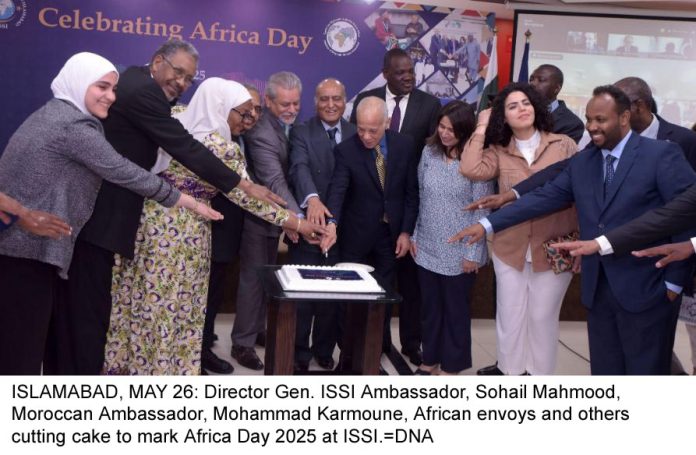
ISSI hosts special event to celebrate “Africa Day 2025”

Africa Day 2025
ISLAMABAD, MAY 26: Director Gen. ISSI Ambassador, Sohail Mahmood, Moroccan Ambassador, Mohammad Karmoune, African envoys and others cutting cake to mark Africa Day 2025 at ISSI.=DNA

ISLAMABAD, MAY 26 /DNA/ – The Centre for Afghanistan, Middle East & Africa (CAMEA) at the Institute of Strategic Studies (ISSI) organized a special event to celebrate “Africa Day 2025.” The speakers included:  Director General ISSI Amb. Sohail Mahmood; Chairman BoG, ISSI, Amb. Khalid Mahmood; Guest of Honour, Additional Foreign Secretary (Africa), Amb. Hamid Asghar Khan; Keynote Speaker, Dean of African Corps/Amb. of Morocco, H.E. Mohammad Karmoune, and Director CAMEA, Ms. Amina Khan. In a video recorded message Amb. Amna Baloch, Foreign Secretary of Pakistan, shared her perspective on Pakistan-Africa relations.

The Heads of African Missions in Pakistan and Heads of Pakistan Missions in Africa also shared their views on the occasion. Stalls exhibiting African products and art work depicting African culture were also set up by African Missions in Islamabad.

In his remarks on the occasion, Director General ISSI Amb. Sohail Mahmood stated that ‘Africa Day’ is a moment to reflect on the continent’s rich history, cultural diversity, and enduring struggles and aspirations of its people for freedom, dignity, and development. He noted that the observance commemorates the founding of the African Union (AU) and symbolizes shared values of resilience, justice, and solidarity. He recalled Pakistan’s strong political, diplomatic and material support to African nations in their liberation struggles and quest for the right to self-determination. He also highlighted Pakistan’s commitment to peace and security in Africa through participation in UN peacekeeping missions since the 1960s. Reflecting on evolving perceptions of Africa, he emphasized its transformation into the “continent of the future,” marked by immense economic potential and strategic significance.

Amb Sohail Mahmood described Pakistan’s 2019 “Engage Africa” policy as a pivotal initiative aimed at expanding Pakistan’s diplomatic footprint in Africa and deepening economic engagement with the continent. He mentioned the opening of five new Pakistani missions, major trade and investment events in African capitals, and growing cooperation in sectors such as agriculture, education, IT, health, and defence. He stressed that Pakistan’s pivot to geo-economics was a key driver of its policy approach towards Africa. Amb. Sohail also welcomed the Senate of Pakistan’s unanimous resolution declaring May 25 as “Pakistan-Africa Friendship Day,” calling it a landmark initiative in further institutionalizing Pakistan-Africa ties. He concluded by highlighting the whole range of ISSI’s activities to further reinforce Pakistan-Africa relations in various domains.

Foreign Secretary Amna Baloch reaffirmed Pakistan’s historic support for African nations’ liberation and its commitment to deepening ties based on mutual trust. She highlighted multilateral cooperation, peacekeeping efforts, and growing trade and defence engagement, calling the Senate’s designation of May 25th as “Pakistan-Africa Friendship Day” as a key milestone.

Amb. Mohammed Karmoune highlighted the African Union’s achievements in unity, development, and its growing global role, including joining the G20. He outlined three priorities for Africa’s progress: investment, AfCFTA, and a stronger voice in global governance. He praised Pakistan’s ‘Look Africa’ and ‘Engage Africa’ policies, expanding diplomatic outreach, and the Pakistan-Africa Special Engagement Fund, calling for deeper collaboration through joint ventures, connectivity, and cultural exchanges.

In his remarks, Amb. Hamid Asghar Khan described Africa as a welcoming, resource-rich continent with vast potential. While acknowledging its progress, he noted ongoing challenges such as hunger and conflict, and stressed the need for stronger multilateral cooperation and deeper South-South ties. He highlighted Pakistan’s tourism and defence sectors as key areas for collaboration, and underscored the importance of regular political engagement, active resident missions, and enhanced cooperation at the UN. He concluded by commending ISSI’s role in promoting Pakistan-Africa relations.

Earlier, Director CAMEA Ms. Amina Khan stated that Africa Day is an occasion to celebrate Africa’s legacy and reaffirm Pakistan’s commitment to deeper ties. She welcomed the Senate’s declaration of May 25 as Pakistan-Africa Friendship Day, highlighted CAMEA’s initiatives, and underscored the significance of the ‘Engage Africa’ policy in strengthening bilateral relations.

An interactive discussion followed, where representatives from the African Missions based in Pakistan shared their views. Representatives from the Pakistani Missions based in Africa also joined virtually and underscored the importance of closer ties with Africa and offered their suggestions. A Special Report on the historical roots and future promise of Pakistan-Africa partnership was launched.

Amb. Khalid Mahmood, Chairman BOG ISSI, in his vote of thanks, highlighted Africa’s growing global significance and recalled Pakistan’s unwavering support to the continent’s liberation movements. He reaffirmed the deep-rooted ties between Pakistan and Africa, built on shared history, solidarity, and mutual respect.

At the end, the guests visited the stalls established by African Missions in Islamabad, displaying African food and other products, which were introduced by the concerned Heads of Missions.

The event was attended by a large number of diplomats, academics, practitioners, students, members of the media, and African diaspora.=DNA

PM Shehbaz begins two-day visit to Iran for bilateral talks

PM Shehbaz begins two-day visit to Iran for bilateral talks

ISLAMABAD, MAY 26: Prime Minister Shehbaz Sharif reached Iran on Monday for a two-day official visit, marking the second leg of his four-nation diplomatic tour after Türkiye aimed at strengthening regional cooperation and bilateral ties.

Upon arrival at Tehran’s Mehrabad Airport, the prime minister was received by Iranian Interior Minister Eskandar Momeni. The welcome ceremony featured a decorated contingent of the Iranian army presenting a guard of honour to the Pakistani premier. Senior diplomats, including the Iranian ambassador to Pakistan and the Pakistani ambassador to Iran, were also present at the airport to receive the visiting delegation.

ss tehran

Prime Minister Shehbaz Sharif is accompanied by a high-level delegation comprising Deputy Prime Minister and Foreign Minister Ishaq Dar, Chief of Army Staff Field Marshal Syed Asim Munir, Interior Minister Mohsin Naqvi, Information Minister Attaullah Tarar, and Special Assistant to the Prime Minister Syed Tariq Fatemi. 

ss tehran 2

Later, the PM travelled to Tehran’s historic Saadabad Palace for a meeting with Iranian President Masoud Pezeshkian. The prime minister and his delegation will hold bilateral talks with the Iranian president and his team. Discussions will focus on enhancing economic, political, and strategic cooperation between Pakistan and Iran, as well as key regional and global issues, including security and peace efforts in South Asia. 

Prime Minister Sharif and Dr Pezeshkian will also address the media after the meeting. Later, the PM is also scheduled to meet Iranian Supreme Leader Ayatollah Seyyed Ali Khamenei and discuss bilateral issues as well as important regional issues.

https://youtube.com/watch?v=eoeW9e3arW4%3Fsi%3DqbpCRSfyjAMeImaB

Prime Minister Shehbaz Sharif is expected to express Pakistan’s gratitude to the Iranian leadership and people for their efforts toward promoting peace during the Indo-Pak conflict. A state dinner hosted by President Pezeshkian in honour of the Pakistani delegation will conclude the day’s formal engagements.

Shehbaz-Erdogan meeting

On Sunday, Prime Minister Sharif and Turkish President Recep Tayyip Erdogan reaffirmed their commitment to strengthen the deep-rooted, historical and brotherly relations between Pakistan and Türkiye.

On Sunday, PM Shehbaz held an important meeting with the Turkish president at the historic Dolmabahce Palace in Istanbul during his two-day official visit to Türkiye. President Erdogan hosted a formal dinner in honour of the visiting delegation.

According to the official statement, both leaders reviewed all aspects of bilateral ties and expressed their resolve to elevate the strategic partnership to new heights.

PM Shehbaz thanked the Turkish leadership and people for their unwavering support during recent regional and global developments. He stated that Türkiye’s principled stance and the goodwill of the Turkish people are a source of comfort and strength for Pakistan. 

PM’s visit to Türkiye

Earlier, PM Sharif reached Türkiye on a two-day official visit, marking the first phase of Pakistan’s diplomatic outreach to friendly nations following its historic victory against India. The PM was received by Turkish President Recep Tayyip Erdogan at the Presidential Palace in Ankara.

The visit marks a significant milestone in reinforcing Pakistan’s deep-rooted ties with Turkey and expressing gratitude for its unwavering support during critical times. The two leaders held a one-on-one meeting followed by delegation-level talks, during which they reaffirmed their mutual commitment to strengthening the strategic partnership between the two brotherly nations.

President Erdogan, in a heartfelt message on social media platform X, said: “Today, I was very pleased to host the Prime Minister of Pakistan, my dear friend Mr. Shahbaz Sharif, and his esteemed delegation in Istanbul. We discussed many critical issues with them, especially economy, trade and security. We confirmed and strengthened our will to strengthen the deep-rooted historical, human and political relations between Türkiye and Pakistan in every field. As my dear brother… stated, we have further strengthened the unbreakable ties, cooperation, solidarity and brotherhood between our countries and peoples. I convey my most heartfelt love to my Pakistani brothers through Mr. Sharif. I would like to thank him and his delegation for their visit. May God make our unity, togetherness and brotherhood permanent.” 

He wrote this message in response to a post on X by PM Sharif, who wrote: “Had the honor of meeting my dear brother President Reccep Tayipp Erdogan in Istanbul this evening. Thanked him for his resolute support to Pakistan in the recent Pakistan India standoff which resulted in Pakistan’s overwhelming victory Alhamdolillah! Conveyed the sentiments of gratitude from the people of Pakistan to their Turkish brothers and sisters. We also reviewed the ongoing progress of our multifaceted bilateral engagements particularly in trade and investment and reaffirmed our resolve to continue working closely to further strengthen these unshakable bonds of brotherhood and cooperation. Long live Pakistan Türkiye Friendship.” 

According to a statement from the Prime Minister’s Office, discussions also covered Pakistan’s recent military success in Marka-e-Haq and Operation Bunyan-un-Marsoos, which President Erdogan hailed as a symbol of the valor and resilience of the Pakistani armed forces and people.

The two sides also explored avenues to expand cooperation in key sectors, including trade, tourism, culture, renewable energy, information technology, infrastructure, and agriculture. Prime Minister Shehbaz emphasized the need to boost bilateral investments and promote long-term economic collaboration for shared prosperity.

As part of the visit, Field Marshal Syed Asim Munir held an important meeting with Turkish Defense Minister Yasir Guler in Istanbul. The meeting was also attended by Turkish Army Commander General Selcuk Bayraktaroglu. Matters of mutual interest and military cooperation were discussed, further reinforcing the defense partnership between the two nations.

FinMin Aurangzeb hints at tax relief for salaried class

FinMin Aurangzeb hints at tax relief for salaried class

ISLAMABAD: Federal Finance Minister Muhammad Aurangzeb has signalled tax relief for the salaried class, saying the upcoming federal budget — set to be presented on June 10 — will include measures to ease the financial burden on salaried individuals.

Speaking at an event in Islamabad on Monday, the finance minister said the government is actively working to reduce the tax burden on salaried persons, adding that their income is taxed as soon as it is credited into their accounts.

He stressed the need for a strategic direction in the budget, not just a statement of income and expenditure. “We are taking bold steps in the upcoming budget to show where the economy stands and where it is headed,” he said.

Aurangzeb said Pakistan’s economic recovery is gaining international recognition, with the speed of improvement surprising observers. He highlighted that digitisation in the Federal Board of Revenue (FBR) is underway and reducing human intervention will increase transparency.

The finance minister further noted that reforms are being introduced in the tax system, energy sector, and other areas. “We have already handed over 24 SOEs to the Privatisation Commission,” he said, adding that the economy is moving towards technological transformation.

The minister shared that during recent meetings with investors in Washington and London, Pakistan received a positive response on its economic outlook. “The world is satisfied with Pakistan’s macroeconomic stability,” he said, reaffirming the government’s commitment to long-term reforms.

He also mentioned the government is working on simplifying the tax filing process for salaried individuals and pushing forward with pension reforms.

Aurangzeb expressed hope that the country’s debt repayment burden will ease and said climate change remains a major challenge, for which necessary reforms are underway. Measures will also be taken next year to improve the debt management system.

He noted that rightsizing efforts are ongoing in federal government departments.

‘Pakistan fulfilled all IMF targets’
Later, speaking to the media, Aurangzeb said the government will support Pakistan’s armed forces to the fullest extent possible, stressing that national defence is a collective need, not just that of the military.

Addressing the International Monetary Fund (IMF) programme, he revealed there were attempts to derail Pakistan’s case by disrupting the board meeting.

“Efforts were made to delay the meeting and exclude Pakistan’s agenda,” he said. However, the case was discussed on merit, and Pakistan fulfilled all IMF targets.

“If we had failed to meet the targets, we would have faced serious difficulty,” he said. He confirmed that implementation of the IMF programme continues, and the IMF mission has already departed after constructive talks. Virtual discussions with the IMF will continue during the current week.

Aurangzeb also clarified that no decision has been made yet regarding adjustments to civil or military salaries.

The Gaza humanitarian crisis

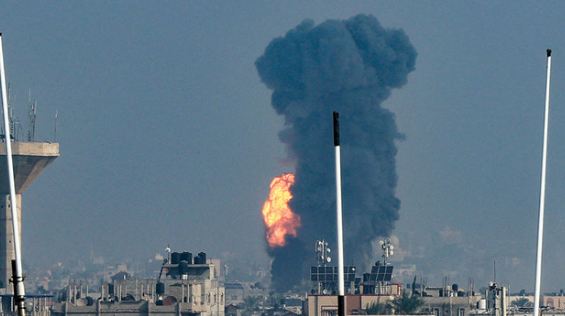
Pakistan condemns Israel’s military aggression against Rafah City in Gaza

The humanitarian crisis in Gaza has reached catastrophic proportions. With thousands of lives lost, basic infrastructure decimated, and an entire population trapped in dire conditions, the world is witnessing one of the most urgent humanitarian emergencies of our time. Yet, the international response, especially from powerful nations like the United States, has been inadequate and, at times, complicit in prolonging the suffering.

The densely populated Gaza Strip, home to over two million people, has long been under siege. But the recent escalation in violence has intensified the suffering to an unprecedented level. Civilians, including children, are paying the heaviest price. Hospitals have run out of medical supplies, clean water is scarce, electricity is sporadic, and food insecurity is growing. Schools, UN shelters, and even ambulances have not been spared from bombardments. The destruction of homes and infrastructure has left hundreds of thousands displaced, with no safe refuge.

This is not just a political or military issue—it is a humanitarian catastrophe. The collective punishment of a civilian population, whether intentional or incidental, is a violation of international humanitarian law. The right to life, shelter, health care, and dignity are fundamental human rights that must be protected, even in times of conflict.

The global response to the crisis has been inconsistent and deeply politicized. While many countries and international organizations have called for ceasefires and humanitarian corridors, the implementation of these measures has been slow and often blocked by political considerations. The United Nations has repeatedly expressed concern, but its resolutions are often stalled or vetoed by powerful member states.

The United States, as one of the most influential global actors and a key ally of Israel, holds a particularly important role. While the U.S. government has occasionally expressed concern over civilian casualties and pledged humanitarian aid, it has continued to provide military and diplomatic support to Israel, without adequate conditions to ensure the protection of civilians. This dual approach undermines its credibility as a proponent of human rights and international law.

If the United States truly wishes to promote peace and stability in the region, it must adopt a more balanced and principled stance. It should use its leverage to demand an immediate and sustained ceasefire, support a robust humanitarian operation, and push for a long-term political solution that guarantees security and dignity for both Palestinians and Israelis. Peace cannot be achieved through force; it requires justice, dialogue, and mutual recognition.

Moreover, the international community must increase pressure for immediate humanitarian access to Gaza. Aid agencies should be allowed to operate freely and safely. Reconstruction efforts must begin, not just to rebuild buildings, but to restore hope, education, and opportunity for a generation scarred by war.

In conclusion, the Gaza humanitarian crisis is a test of global conscience. The suffering of innocent civilians must not be sidelined by geopolitical interests. It is time for the world—and especially powerful nations like the United States—to act with compassion, courage, and commitment to human dignity. History will judge us not by our words, but by our actions.

Climate Change and the crisis facing Pakistan

Climate Change and the crisis facing Pakistan

Climate change is no longer a distant threat—it is a present and intensifying reality, especially for third world countries like Pakistan. While the global community is grappling with the consequences of rising temperatures, it is the economically weaker nations that bear the heaviest burden. These countries, despite contributing the least to global greenhouse gas emissions, are the most vulnerable to the climate crisis due to inadequate infrastructure, limited resources, and socio-political challenges.

Pakistan exemplifies this disparity. Ranked among the top ten countries most affected by climate change, Pakistan experiences frequent and severe natural disasters, such as floods, droughts, and heatwaves. The catastrophic floods of 2022 submerged one-third of the country, affecting over 33 million people and causing damages worth billions of dollars. Crops were destroyed, homes were swept away, and essential infrastructure was crippled. The agricultural sector, which employs a large portion of Pakistan’s population, is increasingly unpredictable due to changing rainfall patterns and extreme weather, threatening food security and rural livelihoods.

Moreover, rising temperatures and glacial melt in the northern regions are endangering Pakistan’s water supply. The country depends heavily on glacier-fed rivers, and as glaciers retreat, the risk of both floods and future water shortages grows. Urban areas also suffer as prolonged heatwaves, combined with power shortages, impact public health and productivity.

The impacts of climate change are not limited to environmental degradation; they exacerbate existing socio-economic inequalities. The poor, who often live in vulnerable areas and lack the means to recover from climate-related disasters, are pushed deeper into poverty. Children miss school during floods, families are displaced, and healthcare systems are overwhelmed. Climate change, in this context, is not just an environmental issue—it is a humanitarian crisis.

So, how can Pakistan and other third world countries cope with this mounting challenge?

First, there must be a renewed focus on climate-resilient infrastructure and disaster preparedness. Building flood defenses, improving drainage systems, and constructing climate-resilient homes can save lives and reduce economic losses. Investment in early warning systems is essential to give communities time to prepare and evacuate if needed.

Second, international support is critical. Wealthier nations have a moral and historical responsibility to assist the Global South through climate finance, technology transfer, and capacity-building. Initiatives like the Loss and Damage Fund established at COP27 must be implemented swiftly and transparently, with developing countries having a seat at the decision-making table.

Third, at the national level, Pakistan must prioritize sustainable development and environmental protection. Transitioning to renewable energy, reforestation, and public awareness campaigns can play significant roles in reducing vulnerability. Strengthening institutions and enforcing environmental regulations is equally crucial.

In conclusion, climate change is an existential threat to Pakistan and many other third world nations. The time for urgent, collective, and sustained action is now. Both domestic reforms and international solidarity are essential if we are to protect millions of lives and secure a livable future for the generations to come.

Guests delight in global flavors at IFWA Charity Bazaar at Serena

Charity Bazaar

Mahnoor Ansar

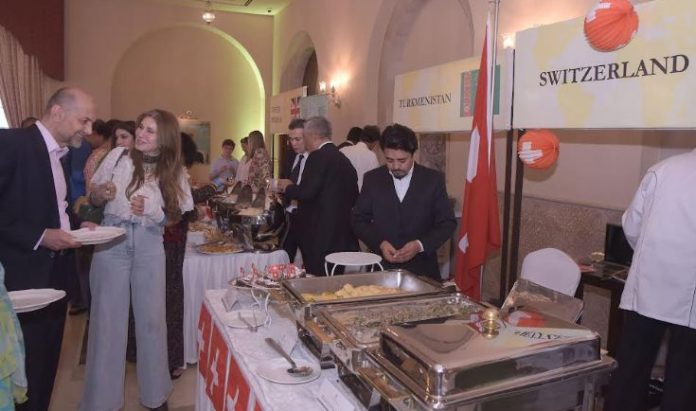
ISLAMABAD: The Islamabad Serena Hotel was abuzz with color, culture, and culinary delights as the International Foreign Women’s Association (IFWA) hosted its much-anticipated annual charity bazaar, drawing a large crowd of diplomats, expatriates, and local guests.

Held in the elegant halls of the Serena, the bazaar featured a vibrant collection of stalls set up by embassies and international communities, showcasing traditional handicrafts, cultural items, and, most notably, an array of authentic delicacies from around the world. Guests eagerly sampled cuisine from Africa, Europe, Asia, and the Americas, turning the event into a global food festival.

From freshly baked pastries and delights to spicy curries and savory Middle Eastern dishes, the bazaar offered something for every palate. Children and adults alike were seen enjoying the food and cultural performances, making it a fun and festive family outing.

The proceeds from the bazaar will be used to support local NGOs working in the fields of education, healthcare, and women’s empowerment.

The IFWA bazaar not only provided an opportunity for cultural exchange but also reaffirmed the spirit of generosity and community support that defines Islamabad’s vibrant diplomatic community.

Experts stress long-term economic planning over annual budget fixation

Experts stress long-term economic planning over annual budget fixation

DNA

ISLAMABAD, MAY 26: It is imperative that provisions of the upcoming Federal Budget 2025-26 align closely with the long-term objectives set out in the Uraan Pakistan five-year plan. The budget must reflect well-considered strategies that ensure inclusive and equitable economic development. Above all, political stability remains essential not only for sustainable economic growth but also for building investor confidence and striving for structural reforms.

Additionally, in light of tensions between Pakistan and India, it is equally critical that budgetary priorities incorporate related measures such as addressing water management challenges, particularly the Indus Waters Treaty issue.

These recommendations were put forward by economic policy and academic experts during a seminar, ‘Federal Budget 2025-26: Strategic Priorities under Uraan Pakistan and the Shadow of Pakistan-India Tensions’ at the Institute of Policy Studies (IPS), Islamabad. The speakers included Dr. Waqar Masood Khan, former federal secretary, Ministry of Finance, Sakib Sherani, former principal economic advisor to the Government of Pakistan, Zafar ul Hassan Almas, former joint chief economist, Ministry of Planning, Development & Special Initiatives, and Khalid Rahman, chairman, IPS.

The speakers noted that Pakistan is currently engaged in its fourteenth IMF program since 1988. While each arrangement has provided temporary economic stability, translating this short-term relief into sustainable, long-term growth is the fundamental challenge. They cautioned that without comprehensive structural reforms, the country will remain trapped in this recurring cycle.

The experts stressed that excessive focus on annual budgets undermines strategic economic planning. Crafting a budget without a 5- to 10-year vision fails to provide a coherent roadmap for development. In the current geopolitical context, particularly heightened tensions with India, the budget will likely be skewed toward immediate needs rather than long-term priorities.

While acknowledging recent improvements in the economic outlook, such as lower inflation, a stable balance of payments, a stronger currency, and a rebound in the stock market, the experts cautioned that these positive indicators stem largely from ad hoc measures rather than structural policy shifts. Key reforms, including pension system overhauls, must be comprehensive, inclusive, and institutionalized.

Speakers agreed that economic stability, rather than high growth, is the immediate priority. However, a 4–5% growth rate remains achievable and desirable, even within the constraints of the ongoing IMF program. To reach this goal, the government must significantly enhance export performance by offering targeted incentives and creating a more business-friendly regulatory environment.

The experts acknowledged Uraan Pakistan as a remarkable strategic initiative on paper but noted that it has yet to show meaningful implementation or visibility in government actions or on the ground. The upcoming budget offers a crucial opportunity to operationalize the plan’s vision. The experts concluded that positioning budgetary decisions with the strategic direction of Uraan Pakistan is essential to boost the export-to-GDP ratio, strengthen the IT sector, promote environmental sustainability and climate resilience, and support a transition to greener energy.

In concluding remarks, Khalid Rahman emphasized that the challenge facing the country is not merely economic but rooted in political economy issues and the lack of stability in policy formulation. He underscored the importance of policy continuity across successive governments to foster a stable and trustworthy business environment. He said recent improvements in economic indicators are commendable. However, short-term economic growth must be translated into long-term development to genuinely address the needs of the broader population. He also highlighted the vital role of the private social sector in contributing to the country’s economic and social well-being.

‘Judges can be transferred from one HC to another’

‘Judges can be transferred from one HC to another’

ISLAMABAD, May 26 (APP/DNA):The Attorney General for Pakistan Mansoor Usman Awan has argued before the Supreme Court that judges can be transferred from one High Court to another, both temporarily and permanently, with the consent of the concerned judges, Chief Justice of the two High Courts and the Chief Justice of Pakistan.

The AGP begin his argument before the Constitutional Bench of the Supreme Court of Pakistan on Monday after Advocate Faisal Siddiqui, Counsel for the complaining judges, concluded his arguments.

The five-member Constitutional Bench, headed by Justice Muhammad Ali Mazhar, heard petitions challenging the transfer and seniority of judges in the IHC.

To a question by Justice Mazhar, Advocate Faisal Siddiqi replied that in India, seniority lists are unified and developed over decades, and transferring judges does not alter their seniority.

Justice Mazhar noted that in Pakistan, a judge’s transfer involves four levels of judicial consultation — the chief justices of both the concerned high courts and the Chief Justice of Pakistan (CJP). If any of them refuses the transfer, it cannot proceed.

Following Siddiqi’s arguments, Attorney General for Pakistan Mansoor Usman Awan began his submissions, stating that under Article 200, judges can be transferred both temporarily and permanently.

He explained that temporary transfers include notifications and entitlements like additional allowances, while permanent transfers provide official accommodation. In time-bound transfers, the judge returns to their original court.

Awan clarified that permanently transferred judges leave a vacancy in their original court. He noted that judges transferred to the IHC were given official housing, but no additional allowances, and they did not need to retake the oath since it was not a fresh appointment.

Justice Mazhar questioned whether the seats of the transferred judges in their original courts had become vacant. Justice Naeem Akhtar Afghan remarked that each high court has its own jurisdiction.

The AGP said the Constitution’s Third Schedule does not prescribe a separate oath for IHC judges, and the oath taken by IHC judges is the same as that taken by judges appointed through transfer. Justice Afghan asked if Article 200 required a new oath on transfer, to which the attorney general replied that no such requirement exists.

Justice Afghan further questioned why the final summary of the judges’ transfer mentioned no need for a new oath. Awan responded that there is already a Supreme Court ruling on the matter of judges’ seniority.

The attorney general also pointed out that out of the five judges who submitted petitions

Stay Connected

64FansLike
60FollowersFollow

Latest Reviews

Exchange Rates

USD - United States Dollar
EUR
1.17
GBP
1.35
AUD
0.72
CAD
0.73