Pakistan is currently the only country globally that does not recognize Armenia as a sovereign state. This stance is rooted in Pakistan’s unwavering support for Azerbaijan in the protracted Nagorno-Karabakh conflict
Ali Furqan
ISLAMABAD, MAY 27: In a significant diplomatic development, Russian Ambassador to Pakistan, Albert P. Khorev, announced on Tuesday that Moscow has extended an offer to facilitate the establishment of formal diplomatic relations between Pakistan and Armenia. This initiative aims to remove a longstanding barrier hindering Pakistan’s potential engagement with the Eurasian Economic Union (EAEU), a Russia-led economic bloc.
During a media briefing in Islamabad, Ambassador Khorev revealed that Russian Deputy Prime Minister Alexey Overchuk had formally discussed this proposal with Pakistani Foreign Minister Ishaq Dar during his visit to Islamabad in 2024. Khorev emphasized that while the decision rests with Pakistan, the absence of diplomatic ties with Armenia remains a significant obstacle to advancing free trade agreements between Pakistan and the EAEU.
Pakistan is currently the only country globally that does not recognize Armenia as a sovereign state. This stance is rooted in Pakistan’s unwavering support for Azerbaijan in the protracted Nagorno-Karabakh conflict. Islamabad has consistently backed Baku’s claims over the disputed region, aligning with Azerbaijan’s position on territorial integrity. In return, Azerbaijan has been a steadfast supporter of Pakistan’s stance on the Kashmir issue, reinforcing a strategic alliance between the two nations .
Prime Minister Shehbaz Sharif is also on its visit to Baku to thank the Azerbaijani people and leadership for their unwavering support for Pakistan during the recent tensions with India.
Addressing questions about recent claims by Pakistani military officials regarding the destruction of Russian-made S-400 air defense systems, Ambassador Khorev stated that he had heard of these reports but lacked confirmation.
Regarding the ongoing conflict in Ukraine, Khorev reiterated Moscow’s commitment to peace negotiations, emphasizing that Russia’s primary objective is to protect Russian-speaking populations in Ukraine. He warned that if diplomatic efforts fail, Russian forces may advance towards Kyiv, asserting, “We don’t need more territories; we need to protect Russian-speaking people in Ukraine.”
TEHRAN, MAY 27: /DNA/ – Field Marshal Syed Asim Munir, NI (M), Chief of Army Staff (COAS) of Pakistan, visited General Staff Headquarters, Tehran, Islamic Republic of Iran.
COAS held meeting with Major General Mohammad Bagheri, Chief of General Staff of the Iranian Armed Forces. The two military leaders engaged in discussions on the evolving regional security landscape, with particular focus on strengthening bilateral defence ties.
Key areas of mutual interest included enhancing military-to-military cooperation, improving security mechanisms along the shared border, and exploring avenues for transforming the border regions into zones of trade and economic connectivity, thereby contributing to regional stability and prosperity.
Field Marshal Syed Asim Munir was accorded a warm welcome upon his arrival, including a ceremonial guard of honour presented by a well-turned-out contingent of the Iranian Armed Forces.
COAS alongside the Prime Minister of Pakistan earlier met with H.E Ayatollah Syed Ali Hosseini Khamenei, Supreme Leader of Iran and H.E Masoud Pezeshkian, President of Iran. COAS is on an official visit to Türkiye, Iran and Azerbaijan along with the Prime Minister’s delegation visiting the three friendly countries.
ISLAMABAD, MAY 27 /DNA/ – Pakistan condemns in the strongest possible terms the latest provocative actions by Israeli occupying power as well as illegal settlers that aim to undermine the religious, historical and legal status of the Al-Aqsa Mosque.
Such actions are unacceptable and constitute a flagrant violation of the international law, and have the potential to further escalate an already volatile situation in the region. Pakistan calls for upholding the sanctity and historical status of the holy sites, and preventing Israel from any further provocations.
Pakistan also strongly deplores the continued targeting of the Palestinian civilians in Gaza by the occupying power. The latest reprehensible attack against a school sheltering displaced families in Gaza is an example of continued Israeli impunity. The harrowing images being witnessed by the world in the aftermath of the attack that resulted in dozens of deaths, many of them children, should be a wake-up call for the international community. These attacks must end forthwith, and Israel must be held accountable for its heinous crimes.
Pakistan reiterates its unwavering support for the Palestinian people’s right to self-determination and calls for the establishment of an independent, viable and contiguous Palestinian state based on pre-1967 borders, with Al-Quds Al-Sharif as its capital.
Traveling to a faraway place can be exciting, but it may require a long-haul flight. To arrive feeling refreshed and ready to explore, you’ll want to sleep on the plane. This can be tricky—even for seasoned travelers. Distractions like noisy neighbors, turbulence, and crying babies are simply out of your control, so focus on what you can do to make your flight more comfortable. As a frequent flier who takes her sleep schedule very seriously, I’ve acquired some tips and tricks that I use on every long-haul flight. Here are my top tips for how to sleep on a plane.
Skip the coffee.
Avoid drinking caffeinated beverages just before the flight, and ask your doctor for advice if you’re thinking about taking any sleeping aids or supplements to help you fall asleep. If certain foods or alcohol make it difficult for you to sleep normally, you’ll want to pass on those before and during your flight, too. And don’t forget to stay hydrated.
Dress for the occasion.
We all want to look like glamorous jet-setters upon arriving at our final destination, but this is one time when you might want to put comfort over style. A comfortable travel outfit is a must, and be sure to wear layers for better sleep. Plane temperatures can range from toasty to downright freezing, so wear a cardigan or sweater to stay warm and cozy during your flight.
Don’t skimp on accessories.
Sure, neck pillows, headphones, and eye masks might take up a little extra room in your carry-on, but you’ll be happy you packed them once the lights go down and you have hours to go before you reach your destination. Invest in a comfortable sleep mask that will block out light and a neck pillow that will support your head. While horseshoe-shaped neck rings are most common, there are tons of innovative options that cater to different needs. And high-quality, noise-canceling headphones will block out loud neighbors and the plane’s white noise.
Splurge on a premium ticket.
The lie-flat seats in first or business class provide ample space and privacy for an optimal mid-flight snooze, although you can still have comfort without going over budget. Compromise with a premium economy seat. You’ll get extra legroom, more space to recline, and (depending on the airline) even wider seats–all for less than the price of a business or first-class ticket
Choose a seat in the main cabin wisely.
If you’d rather save money and stick to the main cabin, choose your seat strategically. Some fliers prefer window seats so they have something to lean against while catching some shut-eye, while other fliers prefer seats located further from the galley or restrooms to avoid the commotion of people passing by throughout the flight. Bulkhead seats mean that nobody can recline their seat into your personal space, but they’re sometimes close to the restrooms and galley, which can be distracting.
Consider the flight’s timing.
If you’re planning for a long-haul flight that crosses multiple time zones, you’ll need to keep a few things in mind. Dedicated travelers might try to adjust their sleep schedules days ahead of the flight to better accommodate their destination’s time zone, but you don’t need to upend your daily life to get some shut-eye on your journey. When choosing a flight, consider the times that best fit your typical sleep schedule. For example, if you’re flying to Europe from the U.S. and have options for overnight flights departing at 7 p.m. or 11 p.m., pick the time closest to when you would normally fall asleep.
Buckle up.
The last thing you need interrupting your sleep? Plane protocol. Whether you use the plane’s blanket or bring your own, be sure to fasten your seatbelt over it, so flight attendants know you’re buckled up and won’t have to disturb you in case of turbulence.
Stick to your sleep routine.
When it’s finally time to wind down, stick to your usual sleep routine. This could include meditation, stretching, or avoiding excess blue light from the in-flight entertainment system or your cell phone. Keep your toothbrush easily accessible, and make one last trip to the lavatory to get ready.
Fly direct whenever possible.
To maximize your time spent sleeping on the plane, choose a direct flight if you can. Two four-hour flights might allow you to sleep for a few hours total, but one eight-hour flight will let you settle in and get cozy for several hours, feeling far more refreshed when you reach your destination. Plus, you won’t have to stress over making any connecting flights when you go direct.
Don’t cross your legs.
It’s more than natural to get restless on a long flight, but keeping your legs crossed for an extended period of time can keep your blood from flowing properly and will be more uncomfortable in the long run. Extend both legs straight out in front of you and keep a slight bend in your knees. If you’ve got long legs, avoid keeping a large personal item under the seat if it will limit how much space you have.
Relax.
Easier said than done, but you’ll need to relax if you hope to catch some Zs on your next flight. Don’t stress if you can’t fall asleep right away—just sit back and try to get as much rest as you can before you land.
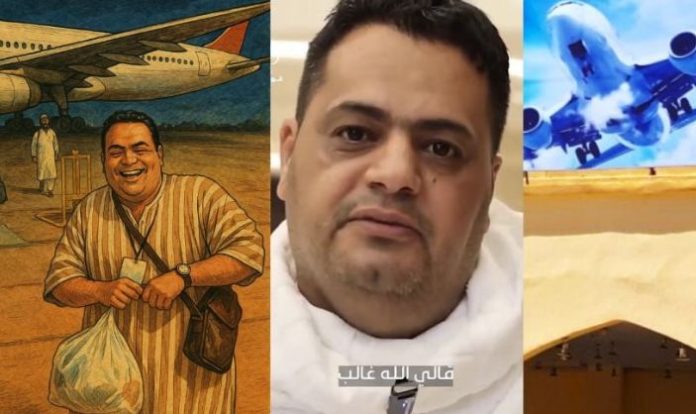
What started as a routine journey to Mecca turned into a remarkable story of faith, determination, and destiny for a Libyan pilgrim who refused to give up on his dream of performing Hajj.
Amer Al Mahdi Mansour Al Gaddafi, a young man from Libya, was all set to fulfill his lifelong spiritual goal of performing Hajj this year. However, his journey faced an unexpected obstacle at the airport when he was held back at immigration due to security concerns linked to his surname — Al Gaddafi — still flagged in some systems more than a decade after Libya’s civil conflict.
While his group boarded the flight, Amer remained detained at the counter. Despite his appeals, the captain reportedly decided to depart without him, citing security uncertainties and schedule constraints.
But fate had other plans.
Shortly after takeoff, the flight experienced a technical malfunction and was forced to return. After a brief repair, it attempted to take off again — only to face another issue, resulting in a second emergency return.
According to passengers and crew, it was after the second landing that the captain declared: “I swear I won’t fly again unless Amer is with us on this plane.”
Following this, authorities swiftly cleared Amer for travel. On the third attempt, with Amer finally on board, the flight took off and reached its destination without incident.
The story quickly went viral on social media, with many calling it a sign of divine intervention and the power of prayer. “I only wanted to go to Hajj,” Amer told local media. “And I believed that if it was written for me, no force could stop it.”
NUSHKI/QUETTA: A police constable providing security to an anti-polio team was martyred while another sustained injuries when unidentified attackers opened fire on them in Nushki, Balochistan, on Tuesday.
The incident prompted authorities to temporarily suspend the ongoing polio vaccination campaign in the district.
The Pakistan Polio Programme officially commenced its third National Immunisation Days (NIDs) campaign on Monday, to make Pakistan a polio-free nation.
The week-long campaign aims to immunise over 45 million children under five years of age. This effort is seen as a decisive step in the country’s final push to stop poliovirus transmission and achieve eradication by the end of 2025.
According to the Balochistan government spokesperson, Shahid Rind, the attack was an attempt to sabotage a vital national campaign and instil fear among the public.
“The anti-polio drive is a national obligation, and any attack on it is intolerable,” he said in a strongly worded statement, calling the assault a conspiracy to derail the campaign and spread panic.
Rind further said that operations against terrorists would be intensified, vowing to bring the culprits to justice swiftly.
President Asif Ali Zardari and Prime Minister Shehbaz Sharif condemned the attack in strong terms and expressed heartfelt condolences to the family of the martyred police official.
President Zardari said that the war against polio was not over and reiterated Pakistan’s commitment to eradicating the disease. “We will not rest until polio is completely eliminated,” he declared.
Prime Minister Shehbaz Sharif said that attacking a team working to safeguard children’s future was absolutely unacceptable. “Those trying to derail the polio campaign will be dealt with firmly,” he warned.
In Pakistan and neighbouring Afghanistan — the only countries where polio remains endemic — militants have for decades targeted vaccination teams and their security escorts.
Over the past decade, hundreds of police officers and health workers have been killed by militants.
Polio, a highly infectious virus mainly affecting children under five, can result in lifelong paralysis but is easily prevented by the oral administration of a few drops of a vaccine.
Pakistan recorded a surge in polio cases last year, with 74 infections reported, compared to just six in 2023. Meanwhile, nine have been reported in 2025 so far.
In April, two Levies personnel were martyred in Mastung’s Kali Teri area in Balochistan when unidentified assailants opened fire on a polio team’s security detail.
In the same month, a policeman also embraced martyrdom while a terrorist was killed in an exchange of fire following an attack on police personnel guarding a polio vaccination team in Khyber Pakhtunkhwa’s South Waziristan district.
LACHIN, MAY 27: Prime Minister Shehbaz Sharif arrived in Lachin, Azerbaijan on Tuesday after concluding his official visit to Iran, where he met the country’s top leadership and discussed bilateral ties and regional security.
Upon arrival in Azerbaijan, the prime minister was received by Azerbaijani Foreign Minister Jeyhun Bayramov. PM Sharif is scheduled to participate in a key trilateral summit involving leaders from Pakistan, Turkey, and Azerbaijan.
The high-level meeting is expected to focus on economic cooperation, regional connectivity, and joint diplomatic efforts.
PM Sharif also expected to hold a significant bilateral meeting with Azerbaijani President Ilham Aliyev. According to officials, he will express Pakistan’s gratitude for Azerbaijan’s unwavering support during periods of heightened tensions with India.
Visit to Iran
Earlier, PM Sharif visited Tehran where he held meetings with Iranian President Masoud Peshmerga and Supreme Leader Ayatollah Ali Khamenei.
During a joint press conference, PM Sharif reiterated Pakistan’s willingness to engage in dialogue with India for regional peace. However, he warned that any provocative actions from New Delhi would be met with a “befitting response”.
“The need of the hour is for the international community to raise its voice for the people of Gaza,” the Prime Minister said, affirming Pakistan’s support for Iran’s right to pursue a peaceful nuclear program for civilian purposes.
The Iranian President lauded the ceasefire between Pakistan and India, noting that joint efforts are required to maintain regional stability. “As members of the OIC, both Iran and Pakistan must continue to stand against atrocities in Gaza,” he stated, thanking the Pakistani delegation for its visit.
Meeting with Ayatollah Khamenei
During his meeting with the Iranian Supreme Leader, PM Sharif briefed him on India’s recent aggressive actions and extended an invitation to visit Pakistan.
Ayatollah Khamenei, in a statement shared on social media platform X, affirmed Pakistan’s central role in the Islamic world and emphasized the need for collective efforts to end Israel’s occupation of Gaza.
The Prime Minister also welcomed Iran’s leadership in resuming nuclear negotiations with the United States, expressing optimism for a constructive agreement that would promote regional peace.
Delegation-level talks
The visit included one-on-one and delegation-level meetings between the Prime Minister and the Iranian President. According to a joint statement, both sides reaffirmed their commitment to resolving the Pak-Iran gas pipeline issue through mutual consultation.
They also discussed developments in Afghanistan, emphasizing that long-term peace and stability in the war-torn country were vital for broader regional prosperity.
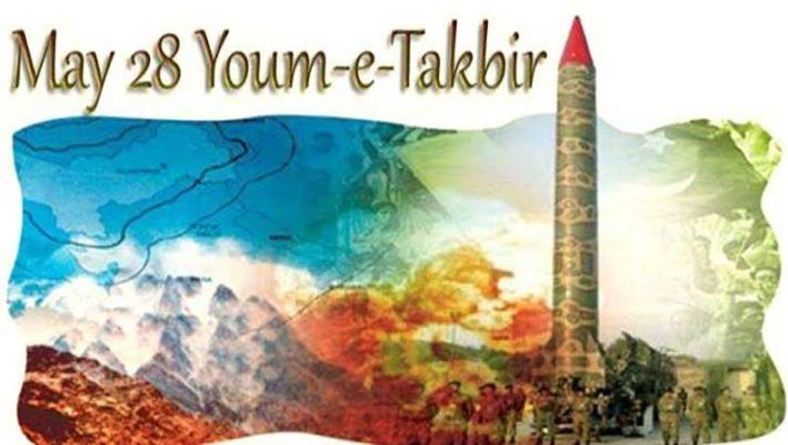
The 28th of May 1998 stands as a solemn yet proud landmark in the annals of Pakistan’s history—a day when the nation, in response to regional provocations and the overt display of aggression by its eastern neighbour, chose to proclaim its sovereign right to self-defence through the demonstration of nuclear capability. Chagai’s hills echoed not merely with the thunder of nuclear tests but with the resolve of a people determined never to be subdued. It was a declaration that Pakistan would maintain strategic balance in South Asia, uphold its territorial integrity, and pursue peace from a position of strength. The world beheld a nation that had been tested time and again, now entering the nuclear club with dignity, under the firm leadership of Prime Minister Nawaz Sharif, and with the undying spirit of Dr. Abdul Qadeer Khan and countless anonymous contributors to its nuclear programme.
India’s five nuclear tests on May 11 and 13, 1998 at Pokhran, in blatant defiance of international expectations, were not only a challenge to regional stability but a direct threat to Pakistan’s existence. This was not an ordinary adversary flexing its might. It was a historical rival that had already waged wars in 1947, 1965, and 1971, and maintained an enduring animosity since Partition. Pakistan, faced with a decision of existential proportions, could either capitulate to global pressure or assert its sovereign right to self-defense. History bears witness that it chose the latter — wisely, bravely, and resolutely.
The Holy Qur’an guides us: “And prepare against them whatever you are able of power and of steeds of war by which you may terrify the enemy of Allah and your enemy…” (Surah Al-Anfal, 8:60). This Divine injunction places upon every Muslim state a sacred duty to maintain deterrence against hostile forces. The leadership of Pakistan fulfilled this responsibility in letter and spirit, acting with wisdom and patience in the face of enormous international pressure.
The road to nuclear capability was not paved overnight. It began decades earlier, most crucially after the 1974 Indian nuclear explosion euphemistically termed a “peaceful nuclear test.” Prime Minister Zulfikar Ali Bhutto’s call to action, famously stating, “We will eat grass, even go hungry, but we will get one of our own,” set the course. Under the guidance of patriotic scientists like Dr. Abdul Qadeer Khan and institutions like the Pakistan Atomic Energy Commission (PAEC), relentless efforts ensued, despite international sanctions and espionage threats.
By 1998, Pakistan had achieved the technological capability to deter any nuclear adventurism. When India dared to test, Pakistan responded with Chagai-I and Chagai-II on May 28 and May 30, respectively. The tests were not acts of aggression, but rather of restraint and responsibility, aimed at restoring strategic balance in South Asia.
Nearly three decades later, on 7 May 2025, Pakistan was once again thrust into a moment of existential assertion. In what has come to be described as a manufactured yet perilous one-day war, the people and the armed forces of Pakistan responded with unity, valour, and an unyielding sense of purpose. Just as the nuclear tests of 1998 had secured Pakistan’s external deterrence, the events of 2025 reaffirmed the nation’s internal cohesion and operational readiness. Though provoked under the shadows of global intrigue, Pakistan emerged with honour, bearing its wounds with pride and saluting its martyrs with reverence. The spirit of Chagai lived on—not in uranium and plutonium alone—but in the hearts of those who defended the motherland with blood and resolve. Thus, the linkage between these two dates is etched in Pakistan’s collective memory as chapters of defiance, sacrifice, and unwavering national dignity.
The importance of strong defense is also emphasized in the sayings of the Holy Prophet (peace be upon him). He said, “Tie your camel and trust in Allah” (Tirmidhi). This Hadith beautifully encapsulates the philosophy that while ultimate trust is placed in Allah, it is also imperative to adopt worldly means for security and survival. Pakistan did precisely that by fortifying its defenses through nuclear deterrence.
Pakistan must also guard against the illusion that nuclear arms are a panacea for all threats. Hybrid warfare, cyber-attacks, economic subversion, and internal discord are new battlefields. As the Holy Qur’an reminds us, “Indeed, Allah will not change the condition of a people until they change what is in themselves.” (Surah Ar-Ra’d, 13:11). A strong missile or a mighty bomb cannot compensate for a divided society or a failing economy.
On the 28th of May each year, we salute our scientists, soldiers, statesmen, and all those silent hands who toiled in secrecy and sacrificed for the motherland. Let this day not just be a celebration of explosions, but of resolve — a reminder that Pakistan, when united and determined, can stand its ground against any global tide.
May Allah protect Pakistan and guide its leaders to act always with justice, wisdom, and fear of Him. “O you who believe, be persistently standing firm in justice, witnesses for Allah…” (Surah An-Nisa, 4:135). Let this resolve shape our future, just as it shaped our past.
The South Asian Association for Regional Cooperation (SAARC) was envisioned as a platform for regional integration, economic collaboration, and diplomatic engagement among South Asian nations. However, its effectiveness has been repeatedly undermined by geopolitical tensions, particularly between India and Pakistan. As the two nuclear-armed neighbors continue to grapple with longstanding disputes, the future of SAARC remains uncertain.
SAARC has been largely inactive for the past decade, with no summit held since 2014. The organization has struggled to function due to deep-rooted political conflicts, particularly between India and Pakistan. The cancellation of the 2016 Islamabad summit following the Uri attack exemplifies how bilateral tensions have paralyzed the regional body1. While other member states have expressed interest in reviving SAARC, the India-Pakistan rivalry remains the primary obstacle.
India has increasingly prioritized alternative regional frameworks such as BIMSTEC (Bay of Bengal Initiative for Multi-Sectoral Technical and Economic Cooperation) over SAARC. New Delhi views SAARC as ineffective due to Pakistan’s involvement, preferring to engage with South Asian nations through bilateral and sub-regional initiatives. This shift has further diminished SAARC’s relevance and raised questions about its future viability.
Despite India’s reluctance, Pakistan continues to advocate for SAARC’s revival, emphasizing its potential for economic cooperation and conflict resolution. Islamabad argues that SAARC remains the only platform that brings together all South Asian nations, making it indispensable for regional stability. However, without India’s participation, SAARC’s ability to function effectively remains doubtful.
The recent escalation in India-Pakistan tensions, particularly following the Pahalgam attack, has further complicated SAARC’s prospects. India has accused Pakistan of harboring terrorist elements, while Pakistan has called for an impartial investigation2. These hostilities make diplomatic engagement within SAARC increasingly difficult, as mutual distrust prevents meaningful cooperation.
For SAARC to regain relevance, both India and Pakistan must recognize the benefits of regional collaboration. Economic integration, trade facilitation, and joint efforts to combat climate change could serve as common ground for engagement. Additionally, backchannel diplomacy and third-party mediation may help ease tensions, creating space for SAARC’s revival.
The future of SAARC remains precarious, largely dependent on the trajectory of India-Pakistan relations. While Pakistan continues to push for its revival, India’s strategic shift away from SAARC suggests that the organization may remain dormant. Unless both nations find a way to reconcile their differences, SAARC risks becoming an obsolete entity, overshadowed by alternative regional alliances.
Once the pride of the nation and a symbol of sporting excellence, Pakistan hockey now stands at the brink of collapse. With a rich legacy that includes three Olympic gold medals and four World Cup titles, the current state of our national sport is nothing short of tragic. The recent performances of the national team have been disappointing, not due to a lack of talent or passion, but due to chronic neglect, outdated systems, and an alarming absence of support.
Unlike cricketers who enjoy star status, generous contracts, and corporate endorsements, our national hockey players are treated like second-class athletes. Most players do not even have full-time jobs or career security, despite representing the country on international platforms. Many live in financial uncertainty, without a stable income or post-retirement plans. The daily allowance provided to them is pitiful, barely enough to cover basic needs. This is not only demoralizing but disgraceful.
The conditions during national training camps further reflect this institutional apathy. Players are housed in below-average accommodations with minimal amenities. There are no proper recovery facilities, no specialized fitness equipment, and shockingly, even clean drinking water is a luxury. Players rely on tap water during training—a basic health risk that should be unacceptable at any level of professional sport.
Adding to the woes is the politicization of hockey’s administrative structure. Infighting, favoritism, and mismanagement have become the norm in the Pakistan Hockey Federation (PHF). Rather than focusing on player development and grassroots promotion, the leadership has been preoccupied with power struggles and self-preservation. Young talent is often overlooked due to lack of connections, while coaching staff and support personnel are rarely appointed on merit.
The Prime Minister of Pakistan, who is also the patron-in-chief of the PHF, must now take notice and act decisively. The time for ceremonial statements is over. Pakistan hockey needs immediate and sweeping reforms. A dedicated task force should be established to assess the shortcomings and present a roadmap for revival—starting with better financial packages for players, proper accommodation, nutrition, modern training facilities, and a merit-based selection process.
Moreover, corporate sponsorships and media support must be encouraged to bring financial stability and visibility to the sport. Hockey academies and school-level competitions must be revived to build a strong pipeline of young talent.
Pakistan’s hockey players still carry the fire and patriotism to restore past glory, but without proper support, their passion alone is not enough. If action is not taken now, we risk losing not just matches—but an entire generation of hockey.