Home Blog Page 612

PTI’s latest offer – a tactical retreat or a bid for political reconciliation?

PTI’s latest offer – a tactical retreat or a bid for political reconciliation?

In a move that has stirred intense debate across Pakistan’s political spectrum, the Pakistan Tehreek-e-Insaf (PTI) has extended what appears to be an open-ended offer to the government and the establishment. The message, delivered through the public statement of Imran Khan’s sister, Aleema Khan, is straightforward yet loaded with implications: “Tell us what PTI should do so that Imran Khan can be freed.” This unusual and striking appeal has raised eyebrows and triggered speculation about PTI’s current strategy and its future direction.

Some critics have interpreted this statement as a sign that PTI has finally bowed before the establishment — a party that once prided itself on resisting “political engineering” is now seemingly seeking accommodation. To its detractors, this is seen as a humiliating U-turn. Yet others term it a well-thought-out tactical maneuver — a temporary retreat to ensure Imran Khan’s release, after which the party will regain its footing and confront its opponents head-on.

Aleema Khan’s message is important not just because of its timing but also because of the shifting political realities. The courts are set to hear appeals regarding Imran Khan’s sentence on June 5. There is strong speculation that if there are any backchannel negotiations already underway — and many observers believe there are — then this court hearing might produce a dramatic outcome, potentially paving the way for Imran Khan’s return to active politics. If his conviction is overturned or his sentence suspended, it would be a political earthquake and a serious boost for PTI’s morale.

Regardless of whether the statement is tactical or conciliatory, one truth is unavoidable: excluding PTI and its leader from the political mainstream has not brought the stability or unity the country so desperately needs. Instead, Pakistan remains mired in polarization, economic uncertainty, and institutional mistrust. To continue down the path of one-sided politics, where major political forces are sidelined or criminalized, is to risk further fragmentation of the democratic order.

PTI’s offer must be seen through the broader lens of national interest. The current power structure — whether political or institutional — must understand that reconciliation, not repression, is the way forward. Imran Khan, whether one supports or opposes him, still commands the loyalty of millions. Ignoring or eliminating such a large political force is not only unjust, it is strategically unwise.

The courts, meanwhile, must uphold justice without being swayed by political pressure. If Imran Khan’s sentence is legally flawed or politically motivated, it should be set aside — not to appease a party, but to uphold the integrity of the judicial system.

Pakistan’s future lies in inclusive politics. No party or leader should be above the law, but neither should they be punished arbitrarily. PTI’s latest offer — whether read as surrender or strategy — provides an opening. It is now up to the establishment and the government to respond wisely. Rebuilding Pakistan’s fractured political landscape begins with allowing all voices, including PTI’s, a fair chance to be heard.

Uzbekistan Embassy hosts business forum to expand trade, investment ties

Uzbekistan Embassy hosts business forum to expand trade, investment ties

The forum was attended by Mr. Atif Ikram Sheikh, President of the Federation of Pakistan Chambers of Commerce and Industry (FPCCI), and Mr. Usman Shaukat, President of Rawalpindi Chamber of Commerce and Industry (RCCI) along with prominent Pakistani entrepreneurs from the pharmaceutical, construction materials, leather and wool processing, textile, and food production industries

Ansar Mahmood Bhatti

ISLAMABAD: The Embassy of the Republic of Uzbekistan in Islamabad organized a high-level business forum aimed at enhancing trade and investment cooperation between Uzbekistan and Pakistan. The event brought together leading representatives of Pakistani business circles and prominent entrepreneurs, including heads of industry associations and executives from key economic sectors.

The forum was attended by Mr. Atif Ikram Sheikh, President of the Federation of Pakistan Chambers of Commerce and Industry (FPCCI), and Mr. Usman Shaukat, President of Rawalpindi Chamber of Commerce and Industry (RCCI) along with prominent Pakistani entrepreneurs from the pharmaceutical, construction materials, leather and wool processing, textile, and food production industries.

Ambassador of Uzbekistan to Pakistan, Mr. Alisher Tukhtaev, delivered opening remarks emphasizing the importance of strengthening economic ties and the strategic potential of enhanced business-to-business cooperation between the two countries. He emphasized the deep-rooted historical, cultural, and spiritual ties between the peoples of Uzbekistan and Pakistan. “This is not just a gathering of business leaders and officials – it is a gathering of hearts and hopes,” Ambassador remarked, setting a warm and visionary tone for the event.

Uzbek Ambassador highlighted Uzbekistan’s ongoing transformation under the leadership of President Shavkat Mirziyoyev, stressing that the country is more open than ever to international cooperation. “We are reforming, transforming, and growing. Most importantly, we are ready for you,” he said, inviting Pakistani businesses to explore new opportunities across Uzbekistan’s emerging sectors.

Ambassador Tukhtaev also emphasized the strategic importance of Pakistan, describing it as a vital partner and a gateway to South Asia. “Uzbekistan sees Pakistan as a true partner. But our current trade turnover of $400 million does not reflect the potential. Together, we can multiply this figure fivefold,” he asserted.

He highlighted several key sectors with strong potential for immediate joint ventures between the two countries. These include agriculture and agro-processing, where Uzbekistan’s expertise in cotton and horticulture can be effectively complemented by Pakistan’s agri-tech and market access. In the textile and leather industries, both countries can benefit from value-added production partnerships, combining Uzbekistan’s raw materials with Pakistan’s manufacturing know-how. The energy sector also offers opportunities for cooperation, particularly in renewable energy and related services. In pharmaceuticals, collaboration in research, development, and the production of affordable medicines was emphasized. Tourism is another promising area, with historical Uzbek cities like Samarkand, Bukhara, and Khiva offering rich opportunities for cultural exchange, especially as air connectivity expands. Finally, logistics and transport infrastructure, covering warehousing, supply chains, and regional connectivity, were identified as essential areas for joint development.

Uzbek Ambassador further announced the upcoming launch of Uzbekistan Airways’ new direct flight from Islamabad to Tashkent starting June 14, in addition to current flights from Lahore, and invited Pakistani airlines to start operations to Uzbekistan to further boost connectivity.

In his address, FPCCI President Mr. Atif Ikram Sheikh reaffirmed Pakistan’s keen interest in deepening trade relations with Uzbekistan and highlighted the untapped potential in bilateral investment opportunities. He emphasized the importance of deepening trade and industrial partnerships with Central Asia and called for enhanced B2B interaction and practical steps to raise bilateral trade volumes significantly.

RCCI President Mr. Usman Shaukat, in his address, emphasized the need to further expand economic relations between Pakistan and Uzbekistan. He highlighted the importance of effectively utilizing the vast potential in Central Asia, increasing bilateral trade volume, and fostering closer cooperation between business communities. Usman Shaukat also called for the establishment of practical mechanisms for continuous dialogue and experience sharing between entrepreneurs of both countries. As a concrete step, he announced plans to visit various regions of Uzbekistan in June-July this year, leading a business delegation from the Chamber.

During the forum, Mr. Bahrom Yusupov, Trade and Economic Counselor at the Embassy, gave a detailed presentation on Uzbekistan’s trade potential and growing industrial base, liberalized trade environment, economic reforms, and opportunities and significant incentives offered to foreign investors in the country’s Free Economic Zones (FEZs). The presentation underscored the favorable business environment, tax incentives, and legal guarantees available to international partners. He showcased sectors such as agriculture, textiles, pharmaceuticals, energy, logistics, and tourism as high-potential areas for collaboration.

The forum concluded with an interactive Q&A session, where attendees posed insightful questions regarding market access, customs procedures, investment protections, financing options, logistics, legal frameworks, business regulations and sector-specific collaboration opportunities. Embassy representatives responded in detail, reaffirming Uzbekistan’s openness to deeper economic engagement with Pakistan.

Participants praised the event as a timely and practical step toward strengthening economic linkages, expanding exports and imports, and exploring joint ventures in strategically important sectors. Several expressed intent to organize follow-up visits to Uzbekistan and explore joint projects.

“This forum must not end with speeches – it must begin a journey,” the Ambassador concluded. “We will support you every step of the way – as a friend, as a partner, as a brother. Let this be the beginning of a new chapter.”

The Enduring Legacy of World War II

The Enduring Legacy of World War II

Dr. Muhammad Akram Zaheer

World War II remains one of the most significant and transformative events in modern history, not merely because of its unprecedented global scope or catastrophic death toll, but due to the complex interplay of ideologies, unfinished business from earlier conflicts and the competing narratives that continue to shape geopolitics. Unlike conflicts with clear beginnings and endings, World War II represents a culmination and continuation of many unresolved tensions from previous decades. It is a vivid demonstration of how history rarely conforms to neat chronological boundaries and how its repercussions echo far beyond the battlefield. To understand the profundity of World War II, one must first consider the argument that it was not an isolated event, but rather part of a broader historical continuum. Numerous historians have contended that the years 1914 to 1945 encompassing both World Wars and the interwar period should be seen as one protracted global conflict. The collapse of four major empires the Austro-Hungarian, Ottoman, Russian andGerman during and after World War I, left behind a vacuum of power, creating fragile new nation-states and intensifying nationalist and ethnic tensions. The peace treaties, especially the Treaty of Versailles, sowed seeds of resentment and revanchism, particularly in Germany, where economic hardship and wounded national pride facilitated the rise of Adolf Hitler and the Nazi regime. Moreover, the ideological dimensions of this extended conflict are vital to consider. Some scholars characterize this period as a global civil war a titanic struggle between capitalism and communism and democracy and dictatorship. These rival ideologies deeply entangled in both the World Wars and continued to manifest in the Cold War that followed. The entwined nature of these conflicts suggests that World War II was not a discrete rupture but a phase in a longer arc of global upheaval and ideological confrontation.

Another critical dimension of World War II’s legacy is the dispute over its starting point a reflection of the clashing narratives adopted by different nations. While the conventional European account begins with the joint Nazi-Soviet invasion of Poland in September 1939, other perspectives complicate this timeline. The United States often regards the attack on Pearl Harbor on December 7, 1941, as the true beginning of the war due to its formal entry into the conflict thereafter. Conversely, the Russian narrative emphasizes the German invasion of the Soviet Union in June 1941, conveniently omitting Soviet complicity in the earlier partitioning of Poland. China, on the other hand, traces its involvement to 1937 with the outbreak of the Second Sino-Japanese War, or even earlier to the Japanese occupation of Manchuria in 1931. The Spanish left may trace the conflicts ideological genesis to the Spanish Civil War in 1936, viewing it as a precursor to the larger clash between fascism and republicanism. These diverging starting points are more than historical disagreements they represent deep-rooted national identities and political ideologies. The way countries remember and interpret World War II is often shaped by internal needs for heroism, victimhood, or justification. This selective memory fuels ongoing international tensions, especially when political leaders weaponize history for contemporary objectives.

Nowhere is the instrumentalization of historical memory more evident than in Russia under Vladimir Putin. The Russian narrative of the “Great Patriotic War” centers on Soviet heroism and sacrifice, consciously ignoring the Stalinist terror that paralleled Hitler’s atrocities. In recent years, Putin has not only rehabilitated Joseph Stalin’s image but also propagated the idea that the Soviet Union could have defeated Nazi Germany without Allied assistance a historically inaccurate but politically convenient claim. This narrative bolsters a form of Russian nationalism that draws on both Soviet pride and tsarist imperialism, advocating for Russian supremacy over Eurasia. Such mythologizing is not merely symbolic. It underpins and legitimizes contemporary Russian aggression, including the invasion of Ukraine in 2014 and the ongoing war that began in 2022. As history is rewritten to suit modern ambitions, selective memory becomes a powerful tool for justifying territorial expansion, authoritarian governance and anti-Western sentiment.

World War II also restructured the balance of global power, particularly between Europe and the United States. The war signaled the end of British global dominance and the beginning of a transatlantic alliance, albeit one marred by tensions and asymmetries. The United Kingdom, while proud of its wartime resilience, found itself increasingly reliant on American military and economic support. The notion of a “special relationship” served as both a diplomatic tool and a psychological balm for British decline. For the United States, the war catalyzed a permanent departure from isolationism. Although U.S. foreign policy has oscillated between interventionism and retrenchment since 1945, the threat posed by the Soviet Union compelled a sustained American presence in Europe and beyond. Yet, this commitment has shown signs of erosion in recent years. Under the Trump administration, the United States appeared to retreat from its role as a global leader, further destabilizing an international order built on the postwar ideals of sovereignty and multilateralism.

The human toll of World War II was staggering—an estimated 85 million people perished, many of them civilians. The ideological fervor that characterized the conflict contributed to this cruelty. Racial supremacy and anti-Semitism drove Nazi Germany’s genocidal policies, most horrifically manifested in the Holocaust. Meanwhile, the Soviet regime under Stalin conducted class-based exterminations, targeting landowners, intellectuals and perceived enemies of the state. The war,s devastation was not confined to direct combat. Civilian populations suffered from famine, disease, mass displacement and systematic atrocities. The deliberate targeting of civilians became normalized, leading to long-term psychological and demographic consequences. Postwar societies had to grapple with the trauma, guilt and moral ambiguities that accompanied survival.

Despite the official end of hostilities in 1945, many of the war,s injustices persisted. Prisoners of war, forced laborers and civilians accused of collaboration were subjected to harsh reprisals, often without due process. The British handover of anti-communist Yugoslavs and Soviet Cossacks to communist regimes led to mass executions. The Soviet Union forcibly repatriated its own soldiers who had fought or surrendered under German command, subjecting them to execution or lifelong labor in gulags. In the postwar years, political and social conflicts continued to fester. In Italy, returning soldiers who criticized the Soviet Union were labeled fascists by the communist press, igniting domestic tensions. In Germany and France, returning men faced unsettling revelations about wartime sexual violence and women,s survival strategies, resulting in reactionary social attitudes that persisted well into the 1950s. As the generations that lived through World War II pass away, the collective memory of the conflict becomes increasingly abstract. The immense scale of suffering, once intimately known, risks being reduced to numerical data. This detachment threatens the moral resolve that has underpinned decades of relative peace among major powers. The disappearance of firsthand witnesses allows for the distortion and politicization of history, undermining efforts to maintain a rules-based international order.

World War II was a crucible in which the modern world was forged. Its causes were rooted in earlier conflicts, its conduct shaped by unprecedented brutality and its aftermath defined by a fragile quest for order. Despite its global nature, the war did not yield a singular, unified memory. Instead, each nation fashioned its own narrative, often shaped more by domestic needs than historical truth. This fragmented remembrance continues to influence global politics. As leaders invoke selectively remembered pasts to justify present ambitions, the wars legacy remains a source of division as much as it is a call for unity. In a time when global stability is once again under threat from autocratic resurgence to geopolitical realignments, understanding the complexities and unresolved tensions of World War II is not only an academic exercise, but also a political necessity. Only by confronting the full scope of this epochal conflict can we hope to preserve the fragile peace it left behind.

PakID App: Apply for CNIC Online Without Visiting NADRA

PakID App: Apply for CNIC Online Without Visiting NADRA

1. What is PakID?

PakID is a new mobile app by NADRA that lets Pakistani citizens apply for or update their identity documents (like CNIC/NICOP) without visiting an office.

2. Key Features:

✔ Apply for New CNIC/NICOP – No need to go to a NADRA center; do it from your phone.
✔ Face Verification – Instead of fingerprints, scan your face for identity checks (helpful for overseas/remote users).
✔ Update Personal Details – Change your name, address, or other info directly in the app.
✔ B-Form to CNIC – Parents can apply for their child’s CNIC if they have a B-Form.
✔ Digital CNIC (Dematerialized ID) – Keep a secure digital copy of your CNIC on your phone instead of carrying a physical card.

3. How to Download?

📲 Scan the QR code on NADRA’s website OR
📲 Download from Google Play Store (Android) or Apple App Store (iPhone).

4. Why is This Helpful?

✅ Saves time – No long queues at NADRA offices.
✅ Easy for Overseas Pakistanis – No need to visit embassies for NICOP updates.
✅ More Secure – Digital ID reduces the risk of losing or damaging your physical card.

Final Thought:

PakID makes identity verification and updates faster, paperless, and more convenient, especially for expats and people in remote areas.

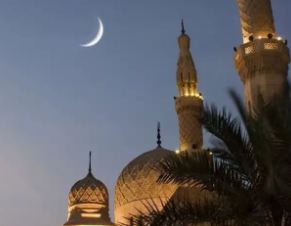
Zil Hajj moon not sighted, Eid ul Adha to be celebrated on June 7

Zil Hajj moon not sighted

Maulana Abdul Khabeer Azad announces decision following Central Ruet-e-Hilal Committee meeting

LAHORE, MAY 27: The Zil Hajj moon has not been sighted and Eid ul Adha will fall on June 7 (Saturday), Central Ruet-e-Hilal Committee Chairman Maulana Muhammad Abdul Khabir Azad announced on Tuesday evening.

According to the announcement, the first day of Zil Hajj will fall on Thursday, May 29, 2025, while Eid ul Adha will be observed on Saturday, June 7.

Addressing a press conference, Azad said that no testimony of sighting the moon of the month was received from any part of Pakistan.

“It was decided with consensus that Zil Hajj 1, 1446 Hijri would be on May 29, Thursday and Eid ul Adha would be observed on June 7, Saturday,” he added.

He noted that the weather remained cloudy in most parts of the country and clear in some.

The meeting of Central Ruet-e-Hilal Committee was held in Islamabad for sighting of the Zil Hajj moon 1446 Hijri.

Moreover, the Zonal Ruet-e-Hilal Committees meetings were also held separately at their respective headquarters to see the Eid ul Adha moon. 

Meanwhile, religious scholar Mufti Ramzan Sialvi confirmed that moon was not sighted in Lahore, adding that the final announcement regarding moon sighting would be made by the Central Ruet-e-Hilal Committee.

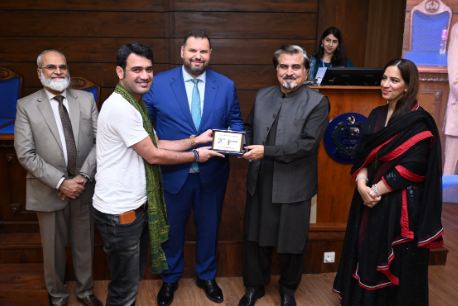
Ambassador Stoenescu highlights art’s role in historic preservation at FUI

Ambassador

ISLAMABAD, MAY 27 /DNA/  -The Department of Arts and Media at Foundation University Islamabad (FUI), incollaborationwiththe Embassy of Romania, proudly hosted the Foundation Film Festival 2025, a dynamic celebration of cinematic arts that featured the acclaimed Romanian documentary The King’s War as acenterpiece.

The festival commenced with the arrival of His Excellency Dr. Dan Stoenescu, Ambassador of Romania to Pakistan. He was received by professor Dr. Qaiser Ali Malik, Director of Foundation University, School of Science and technology, along with Dr. HinaShahid, Head of the Department of Arts and Media. Renowned artist and former Federal Minister for Culture, Mr. Jamal Shah, also attended as a distinguished guest. Furthermore, ZaildarAhsan Shah, chairman of the Romania-Pakistan Friendship Association participated to the opening ceremony as well.

In her welcome address, Dr. HinaShahid emphasized the crucial role of arts and media in promoting narratives of peace during times of conflict. She highlighted the academic achievements and cultural outreach of the Department of Arts and Media, and announced the submission of 92 films across categories including short films, animated movies, and visual art.

The highlight of the day was a special screening of The King’s War a Romanian historical documentary that delves into the pivotal role played by King Michael I of Romania during World War II.

In his keynote address, Ambassador Dr. Dan Stoenescu reflected on Romania’s complex geopolitical position during the war and its lasting impact on global order. He emphasized the importance of film, art, and theater in preserving national history and promoting dialogue

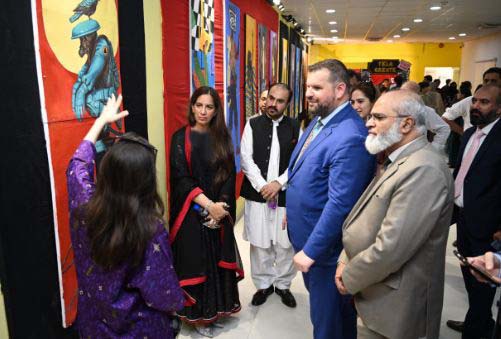
Ambassador Stoenescu also inaugurated a Romanian cultural exhibition, featuring a seriesofcarefullycuratedcollagesofarchivalimagesandartifactsthatportrayed Romania’s artistic legacy. Theexhibitionofferedstudentsand guestsauniquevisual journey through Romanian history and its post-Communist cultural evolution.

Additionally, the ambassador visited the Indigenous Art Gallery, where the rich diversity of Pakistani cinema and fine arts was showcased by Foundation University’s students and curators. Dr. Stoenescu praised the depth and vibrancy of Pakistani artistic expression and acknowledged its role in strengthening cultural bridges between Romania and Pakistan.

ZaildarAhsan Shah, Chairman of the Romania-Pakistan Friendship Association while speaking to media representatives, shared his remarks on the enduring and exceptional relations between Pakistan and Romania. He emphasized that the two countries enjoy a strong and promising bilateral relationship rooted in mutual respect and shared interests.He noted that the Pakistan-Romania Friendship Association has long been committed to promoting and strengthening ties between the two nations across various sectors including culture, tourism, business, education, and media.

Reflecting on a recent collaborative initiative, ZaildarAhsan Shah stated that the primary objective was to introduce the people of Pakistan to the richness and vibrancy of Romanian culture. He expressed his sincere gratitude to the Ambassador of Romania for his gracious presence, which contributed greatly to the success of the event he remains confident that the Pakistan-Romania Friendship Association will continue to serve as a vital bridge working with even greater success to deepen and expand bilateral cooperation in the years ahead.He affirmed that under the Ambassador’s tenure, this partnership is destined to grow stronger, with expanded cooperation in culture, education, tourism, media, and beyond.

The event concluded with an award ceremony, where souvenirs were presented to honored guests and participants in recognition of their contributions to the festival.

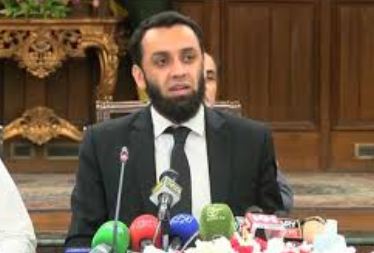
Attaullah Tarar congratulates RISJA Newly Elected Body

Federal Minister for Information and Broadcasting Attaullah Tarar

By our correspondent

ISLAMABAD: Federal Minister for Information, Attaullah Tarar, congratulated RISJA’s newly elected President Abu Bakar bin Talat, General Secretary Syed Arsalan Shirazi, Finance Secretary Nasir Abbas Naqvi, and other office bearers.

He also extended his congratulations to Zulfiqar Baig on being elected Senior Vice President, Aqeel Anjum and Asghar Ali Mubarak as Vice Presidents, and Hafiz Abdul Rehman and Asim Riaz as Joint Secretaries.

“The government firmly believes in free, responsible, and constructive journalism,” said Attaullah Tarar, adding that RISJA is an active and vibrant journalistic organization.

Tarar highlighted that RISJA plays a key role in promoting sports journalism and protecting the rights of journalists.

“The government is well aware of the challenges faced by journalists and is taking serious steps to address them,” stated the Federal Minister.

He conveyed his best wishes to the new RISJA leadership and expressed hope that the new team will fulfill the trust of the journalist community through their professional capabilities.

Federal Interior Minister Mohsin Naqvi’s visits Mashhad, Iran

Federal Interior Minister Mohsin Naqvi’s visits Mashhad

MASHHAD, MAY 27 /DNA/ – Federal Interior Minister Mohsin Naqvi arrived in Mashhad as part of his visit to Iran. He was accorded a warm reception on his arrival at Mashhad International Airport, Governor General of Khorasan, Gholam Hossein Mozaffari welcomed him.

Mohsin Naqvi paid respects at the shrine of Hazrat Imam Reza (A.S.), visited various parts of the shrine, He also offered nawafil and made special prayers. He prayed for peace, security, prosperity, and regional stability. He expressed the gratitude to the Iranian government for their arrangements for Pakistani pilgrims. He highlighted that Pakistan and Iran will sit together in order to ensure further measures to facilities the Zaireen.

RISJA Elects New Office Bearers Amid Unity and Trust

RISJA Elects New Office Bearers Amid Unity and Trust

ANSAR BHATTI

ISLAMABAD: In a unanimous decision, the Rawalpindi Islamabad Sports Journalists Association (RISJA) has elected new office bearers to lead the organization for its next term.

All positions were filled unopposed, reflecting the trust and unity among RISJA’s 59 members. The electoral process was overseen by the Chairman of the Election Committee, Shahryar Khan along with Asim Jilani and Rana Farhan Aslam as members, who officially announced the results.

Abubakar Bin Tallat, an emerging sports journalist, was elected President, while Syed Arslan Shirazi and Nasir Abbas Naqvi were elected as General Secretary and Finance Secretary, respectively.

Other elected office bearers include Zulfiqar Bag (Senior Vice President), Aqeel Anjum and Asgher Ali Mubarik (Vice Presidents), Hafiz Ubaid ur Rehman and Asim Riaz (Joint Secretaries), Nasir Abbas Naqvi (Treasurer). The Executive Body of RISJA (R) was also constituted, comprising Faheem Anwar Khan, Afzal Javed, Zahid Farooq Malik, Nasir Aslam Raja, Zeeshan Qayyum, Sohail Raja, Arfa Feroz Zaki, Kiran Khan, Awais Abbasi, and Farhan Jafri.

Veteran sports journalists Abdul Mohi Shah and Malik Shakeel Awan will serve as Patron and Chairman, respectively.

Speaking on the occasion, President Abubakar Bin Tallat and Secretary Arslan Shirazi thanked members for their confidence and pledged to uphold RISJA’s values. They emphasized the association’s commitment to regular professional activities and advocacy for the rights of genuine sports journalists.

Meanwhile, President of the National Press Club (NPC) Azhar Jatoi, Secretary Shiraz Gerdazi, Finance Secretary Waqar Abbasi, RIUJ President Tariq Virk and others congratulated the newly elected body, expressing hope that it will continue to serve the journalist community with dedication.

Established in 1986, RISJA remains the only registered body in Rawalpindi and Islamabad devoted to the development of sports journalism and the welfare of sports journalists.

Abu Bakar named President as RISJA announces new office bearers

Abu Bakar named President as RISJA announces new office bearers

ISLAMABAD, MAY 27 /DNA/ – The newly-elected members of the Rawalpindi-Islamabad Sports Journalists Association (RISJA) gathered today for a formal group photo session with prominent media figures, marking the successful conclusion of the association’s elections.

The event was attended by President Press Club Azhar JatoiRISJA Founder Abul Mohi ShahChairman Shakil AwanSheharyarNasir Aslam RajaFaheem Anwar, and other dignitaries.

Newly Elected Office Bearers Announced

The following members were elected to lead RISJA for the upcoming term:

  • President: Abu Bakar
  • Secretary General: Arslan Shirazi
  • Senior Vice President: Zulfiqar Baig
  • Finance Secretary: Nasir Naqvi
  • Vice Presidents: Aqeel Anjum, Asghar Mubarak
  • Joint Secretaries: Obaid ur Rehman, Asim Riaz

The newly formed panel received overwhelming support, with 59 members endorsing the leadership team.

Commitment to Sports Journalism

The elected officials pledged to uphold the association’s mission of promoting sports journalism, fostering professional development, and strengthening collaboration among media professionals in the region.

Stay Connected

64FansLike
60FollowersFollow

Latest Reviews

Exchange Rates

USD - United States Dollar
EUR
1.17
GBP
1.35
AUD
0.72
CAD
0.73