By our correspondent
ISLAMABAD: The 12-member Pakistan junior athletics team returned home without any medals after a disappointing performance at the South Asian Junior Athletics Championship (SAAC) held in India.
Pakistan ranked last among South Asian countries, failing to secure a single medal out of the 90 available medals.
Host India dominated the competition, winning the championship with 48 medals, including 21 gold, 22 silver, and 5 bronze. Sri Lanka followed in second place, securing 9 gold, 9 silver, and 17 bronze medals. Bangladesh finished third with three bronze medals, while Maldives and Nepal earned 2 and 1 medals, respectively. Unfortunately, Pakistan’s athletes were unable to reach the podium.
Pakistani athletes struggled across various events, with none advancing to the finals. In the men’s 800-meter race, Muhammad Shahid finished last with a time of 2:10.17. Aiza Ahmed, competing in the women’s high jump, failed to clear the opening height of 1.50 meters, resulting in her early elimination. In the men’s 100-meter heats, Ammar Ibrahim Afridi came in last in his race, clocking 12.69 seconds, while Muhammad Husnain placed fourth in his heat with a time of 11.32 seconds.
Concerns were raised regarding favouritism in the selection process for athletes, coaches, and official staff for the trip to India. Figures like Iqbal Akhtar, Miss Abida and Saif Afridi were appointed as coaches and team officials despite reportedly lacking the necessary qualifications.
Notably, experienced coaches such as Asghar Gul, Rafiq Ahmed, and Seemi Zaidi, who had trained the junior athletes at the Islamabad athletics training camp, were excluded from the team for the championship. The camp was organized with the support of the Pakistan Sports Board (PSB).
Additionally, the PSB allocated a significant budget of Rs. 93 million to the Athletics Federation of Pakistan (AFP) over the past two years. However, PSB officials did not scrutinize the selection criteria for the team and staff, even after implementing new requirements for sports federations seeking NOCs (No Objection Certificates) for international events.
Junior Athletic Team Returns Empty-Handed from SAAC Championship

Transforming Retail: Naveed Visionary Leadership at Punjab Model Bazaars Management Company
An In-Depth Analysis of Innovative Business Models, Self-Sustaining Strategies, and Noteworthy Achievements
DNA
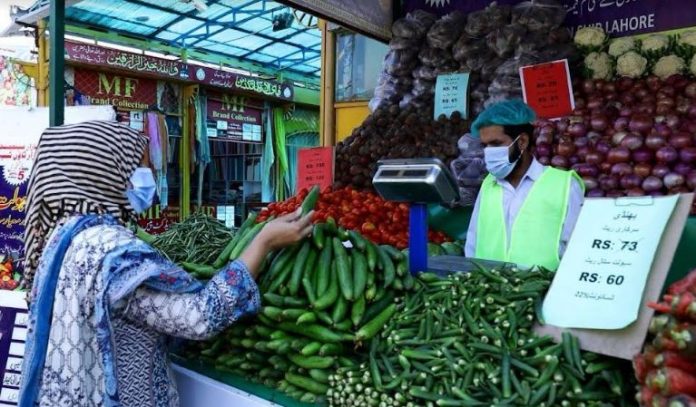
Lahore, Pakistan — Punjab Model Bazaars Management Company (PMBMC) has significantly reshaped the retail landscape under the astute leadership of CEO Naveed Rafaqat Ahmad. Since its establishment in 2016, the company has overcome numerous challenges, emerging as a leading example of innovative thinking and self-sustaining government projects.
Founding Vision and Initial Challenges
PMBMC was created with the objective of providing daily essentials such as fruits, vegetables, groceries, meat, and chicken in a sophisticated, family-friendly environment. Naveed Rafaqat Ahmad, leveraging his 14 years of diverse experience and credentials as a Chartered Accountant from ICAEW and a certified Business Analyst from England and Wales, was appointed as the first CFO. His primary task was to develop a sustainable business and financial model to address the initial operational and administrative challenges with nil dependanece upon Government.
Innovative Business Model: A Pioneering Approach
Naveed introduced a groundbreaking business model, which involved expanding Model Bazaars to 36 locations across Punjab. This model allowed the company to offer essential items at prices below government-notified rates, making it highly accessible to the public. Additionally, Naveed’s approach included diversifying revenue streams by leasing land for attractions such as joylands and food courts, thereby strengthening the financial stability of the company.
Strategies for Self-Sustainability
Under Naveed’s leadership, PMBMC implemented several key strategies to ensure its self-sustainability without relying on government subsidies:
- State Land Allocation: Identified and secured state land for the establishment of Model Bazaars.
- Cost-Free Land Transfer: Facilitated the transfer of state land at no cost.
- Operational Efficiency: Developed and implemented efficient operational systems.
- Revenue Diversification: Introduced various revenue-generating avenues.
Remarkable Achievements
Customer Turnover: With an impressive average annual customer turnover of 60 million, Model Bazaars has become a prominent and trusted retail destination.
Government Recognition In 2021, Model Bazaars was honored as one of the best-performing organizations, reflecting its commitment to excellence and innovation. Naveed Rafaqat Ahmad’s role as CEO was pivotal in achieving this recognition.
Securing Tax Exemption: Naveed Rafaqat Ahmad’s Strategic Achievement in Attaining FBR’s Not-for-Profit Status: Naveed Rafaqat Ahmad demonstrated exceptional performance in securing tax-exempt status for the Punjab Model Bazaars Management Company. Under his leadership as CFO, the company was recognized by the Federal Board of Revenue (FBR) as a not-for-profit organization. This designation was crucial for obtaining a Tax Exemption Certificate. To ensure the company met all necessary criteria, the FBR enlisted the Pakistan Council of Philanthropists (PCP) to conduct a thorough Third-Party Verification (TPV) of the company’s operations and compliance. Naveed’s diligent efforts and strategic oversight during this process were instrumental in achieving a remarkable score of over 80% from the PCP, successfully fulfilling all the requirements for the tax exemption. This accomplishment not only underscores Naveed’s expertise in financial management but also highlights his commitment to enhancing the company’s operational transparency and financial sustainability.
Enhanced Customer Security: The establishment of a 24/7 monitoring room, control room, and CCTV cameras ensures a secure shopping environment for customers.
Quality Control and Hygiene: The company maintains high standards of cleanliness and hygiene, with dedicated staff overseeing quality control and customer satisfaction.
Holistic Shopping Experience: The introduction of joyland operations and a robust customer feedback system underscores the company’s commitment to providing a comprehensive shopping experience.
Transparent Financial Practices: The introduction of banking channel payment modes for shopkeepers streamlines transactions and enhances financial transparency.
Affordable Leasing: Shops are offered at nominal rents—30% to 60% below market rates—along with free electricity, utilities, and round-the-clock security, making Model Bazaars an attractive option for entrepreneurs.
Insights and Future Directions
Our examination of PMBMC’s success highlights several key factors:
- A customer-centric approach, providing a family-friendly environment and a wide range of essential commodities.
- A strong commitment to innovation and self-sustainability.
- Effective collaboration with government departments to secure state land and implement efficient operations.
- A focus on customer security, quality, and satisfaction.
In conclusion, Naveed Rafaqat Ahmad’s visionary leadership has not only transformed Punjab Model Bazaars Management Company into a flagship government project but has also set a high standard for efficiency and sustainability. His innovative strategies and unwavering dedication continue to serve as a model for future government initiatives.
PIDE highlights Pakistan’s governance bottlenecks and proposes modernization blueprint
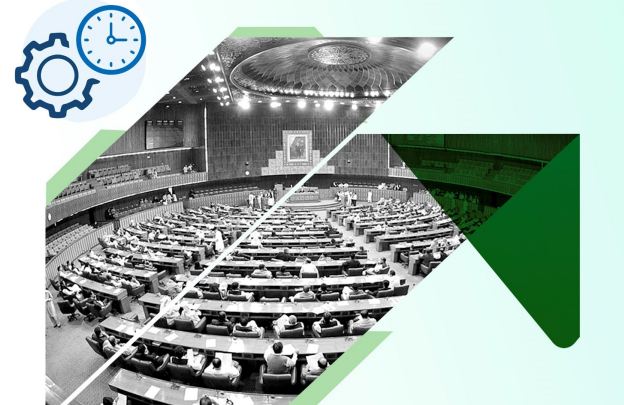
ISLAMABAD, SEPT 15 /DNA/ – A new report titled Modernizing Governance: Challenges and Solutions in Pakistan’s Rules of Business and Secretariat Instructions, authored by Dr. Nadeem Ul Haque, Vice Chancellor of Pakistan Institute of Development Economics (PIDE), Prof. Nadeem Ahmed Khan, Dr. Khurram Ellahi Khan, and Prof. Hassan Rasool, has been released by the Pakistan Institute of Development Economics (PIDE), highlighting key inefficiencies within Pakistan’s government framework. This report comprehensively addresses the challenges and provides actionable solutions aimed at improving governance and modernizing the country’s administrative structures, using best practices from global governance models.
The report reveals that while Pakistan’s Rules of Business 1973 and Secretariat Instructions are the backbone of federal governance, they have not sufficiently evolved to meet modern administrative needs. For instance, over 80% of federal processes still rely on outdated, manual systems, significantly delaying decision-making and policy implementation. Centralized approval mechanisms alone account for up to 60% of these delays, creating bottlenecks across ministries. Furthermore, the report shows that more than 50% of all federal decisions are delayed due to excessive bureaucracy, with less than 10% of officials held accountable for inefficiencies.
The report also highlights inefficiencies in inter-divisional consultation, noting that over 70% of inter-ministerial communications face delays due to centralized control and ineffective processes. These challenges have resulted in a slow and unresponsive governance system that lacks the accountability necessary for effective administration.
In response, the report proposes several reforms aligned with global benchmarks, showing that countries modernizing their public administration have seen efficiency increases of up to 40%. These recommendations include streamlining government systems, with the potential to reduce delays by 50-60%, and organizational restructuring, which could shorten decision-making times by up to 30%. The report also advocates enforcing accountability measures, with penalties for noncompliance potentially improving operational efficiency by at least 20%. Additionally, adopting New Public Management (NPM) and Post-NPM models could align Pakistan’s governance practices with international standards, achieving governance improvements similar to countries that have seen a 40-50% increase in performance after reforms.
The urgency for reform is clear. Without modernization, Pakistan risks continued inefficiencies and a lack of accountability that hinder economic development and erode public trust. The Modernizing Governance: Challenges and Solutions in Pakistan’s Rules of Business and Secretariat Instructions report provides a comprehensive roadmap for reform, aiming to align Pakistan’s governance system with international standards for responsiveness, transparency, and accountability.
This report aims to inform government stakeholders, policymakers, and the public about the critical need for governance reforms in Pakistan’s Rules of Business and Secretariat Instructions to foster a more accountable and efficient public administration system.
Trump to Reverse US Russia-Ukraine Policy
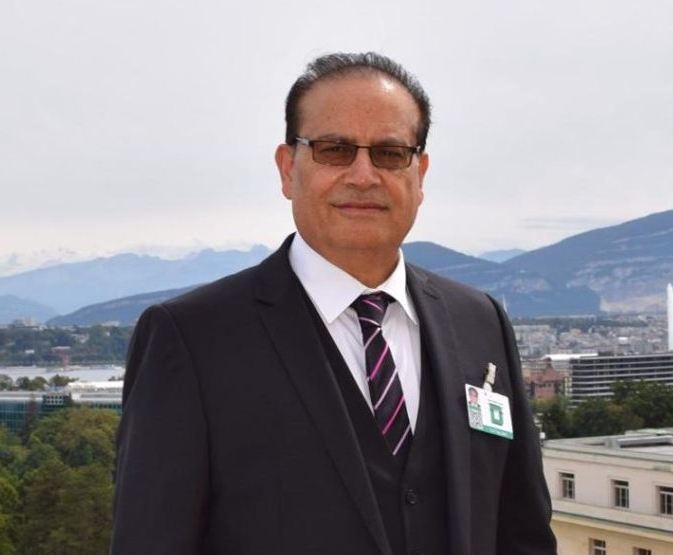
Qamar Bashir
The world is currently grappling with the profound impacts of two high-intensity, high-stakes international conflicts: the Palestine-Israel conflict and the Russia-Ukraine war. These wars have inflicted deep financial, economic, emotional, and psychological wounds, affecting those who still hold human dignity and the value of life in high regard. The resolution of these tragic and inhumane conflicts largely depends on the leadership of the next President of the United States, who holds significant influence over the international diplomatic landscape.
In the last article titled “Trump or Harris: There is No Respite for Palestine,” the central argument was that both U.S. presidential candidates have aligned closely with Israel, leaving little hope for change in the ongoing Israel-Palestine conflict. However, their views diverge significantly on the war between Russia and Ukraine.
Kamala Harris has taken a firm stance in support of Ukraine, emphasizing that the conflict not only threatens Ukraine’s sovereignty but also undermines international norms and global stability. She has reiterated repeatedly that U.S. military and financial support for Ukraine is not only a moral obligation but also in the strategic interest of the U.S. and its allies. Should she become President, it is likely that this support will continue for the foreseeable future, suggesting that the war may persist under her leadership. Her approach aligns with the belligerent stance of the European Union (EU), which, in line with Biden’s policy, has imposed multiple sanctions on Russia, targeting its financial, energy, and military sectors. The EU has also provided extensive military and humanitarian aid to Ukraine to prevent Russia from redrawing borders by force. Most EU countries advocate for Ukraine’s complete victory and caution against any concessions to Russia.
Unlike the Israel-Palestine conflict, which is unlikely to be significantly affected by who becomes the next U.S. president, the Russia-Ukraine war could see a dramatically different approach if Donald Trump wins the presidency. The first action he is likely to take would be to halt military aid to Ukraine and stop funding the defense of the European Union, which heavily depends on the formidable support of the U.S. military. Trump would likely demand that the EU shoulder the full financial burden of the U.S.’s intervention in the Russia-Ukraine conflict.
In 2024 alone, the cost of military intervention to the U.S. amounted to $175 billion in aid to Ukraine, with $107 billion directly allocated to the Ukrainian government for military and economic support. Meanwhile, the EU has provided over $126 billion in financial, military, and humanitarian aid since the war began, with an additional $54 billion committed for Ukraine’s recovery, bringing the total EU contribution to $167 billion.
Under Donald Trump, Russia is likely to have a much easier time navigating the conflict. Unlike Joe Biden, Trump would likely pursue serious negotiations with Russia and use the threat of Russia’s potential use of nuclear arms to pressure the European Union into aligning with his stance. Ukraine could face significant setbacks as U.S. aid may dry up, and EU support could dwindle due to the shift in U.S. policy toward the war under a Trump administration.
Given this scenario, stakeholders are likely developing strategies based on the potential outcomes of the 2024 U.S. presidential election. If Kamala Harris becomes president, the U.S. is expected to maintain its current approach, continuing military and financial support for Ukraine. However, a Donald Trump presidency introduces unpredictability. His maverick behavior, aggressive rhetoric, and belief that he can swiftly end the Russia-Ukraine conflict create a highly uncertain and challenging situation for all involved.
Stakeholders are likely scrambling to find a viable solution to navigate the potential challenges they may face if Donald Trump becomes the next U.S. president. One practical and effective way to avoid a highly volatile and unpredictable situation is to adopt the China-Brazil formula to end the conflict and prevent further loss of life and destruction of civilian and military assets.
The China-Brazil joint peace plan focuses on de-escalation, diplomacy, and humanitarian aid to resolve the Ukraine-Russia conflict. The plan urges all parties to refrain from expanding the battlefield or escalating tensions, emphasizing that dialogue and negotiations are the only sustainable solutions. It proposes an international peace conference with equal participation from all sides. Additionally, the initiative stresses the importance of expanding humanitarian aid, protecting civilians and prisoners of war, and preventing the use of nuclear or other weapons of mass destruction. The proposal also highlights the need for international cooperation on critical issues like energy, food security, and safeguarding key infrastructure to ensure global stability.
The EU, Russia, and Ukraine should proactively pursue this peace formula to achieve key objectives: reducing military confrontations, protecting civilian infrastructure and lives, and entering into serious, objective negotiations as the primary method of resolving the conflict. History shows that even the most devastating wars ultimately end at the negotiation table.
Brazil and China, as the main proponents of this peace formula, should employ all tools of traditional and public diplomacy to foster acceptance of the plan among primary and auxiliary stakeholders. These tools should include high-level diplomatic engagement, such as bilateral and multilateral meetings with the key countries involved or affected by the conflict. Additionally, track-two diplomacy—non-governmental, informal, and unofficial dialogues between influential parties—should be used to build broader consensus and momentum for peace.
In terms of public diplomacy, they should employ strategic media campaigns to shape public opinion and influence key stakeholders, highlighting the humanitarian and geopolitical benefits of the proposal. Additionally, cultural diplomacy, such as leveraging cultural exchanges and showcasing shared values, could foster a favorable environment for dialogue. Brazil and China can also use multilateral platforms, such as the United Nations, BRICS, and G20, to rally broader international support for the initiative. They should also engage civil society organizations and academic think tanks to promote dialogue and develop policy recommendations to further enhance the formula’s acceptability.
This approach would save the stakeholders from the war mongering policies of Kamala Harris and from the unpredictable, illogical and impractical approach of Donald Trump.
Qamar Bashir
Former Press Secretary to the President
Former Press Minister to the Embassy of Pakistan to France
Former MD, SRBC, CEO, ATV
After PTI, BNP-M claims lawmakers under pressure to vote for ‘constitutional package’
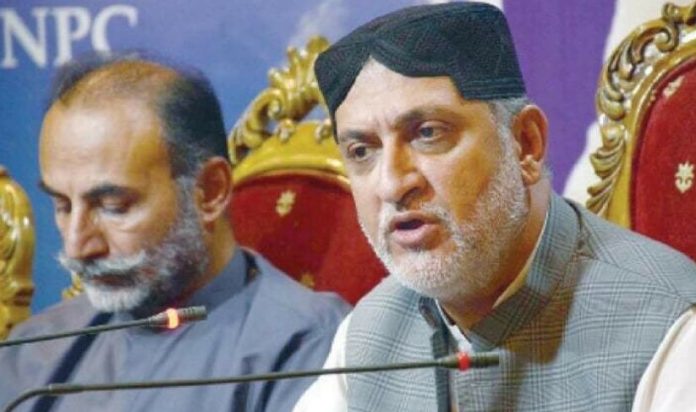
ISLAMABAD, SEPT 14: The chief of the Balochistan National Party-Mengal (BNP-M), Akhtar Mengal, has claimed that two senators of his party were being “pressurised” to vote in favour of a highly anticipated “constitutional package”.
The “constitutional package” is a set of proposed amendments to the Constitution that aims to — among other things — fix the tenure of the chief justice of Pakistan (CJP) at three years.
With sessions of both houses of the parliament summoned this evening (Saturday) with only an hour’s gap, the legislation seems set to be introduced in the parliament today.
A constitutional amendment is passed or rejected through open ballot, in which those who go against their parties’ stance cannot conceal their vote.
While speaking to DawnNewsTV programme Doosra Rukh on Friday, the BNP-M leader said that the houses of two of his party’s senators were being raided.
“There is Senator Muhammad Qasim whose house was raided and even now, in Karachi, intelligence agencies’ cars are patrolling his house,” Mengal alleged.
“Our second senator Nasima Ehsaan has said that her relatives and her husband are being pressurised,” he added.
He said Ehsaan was threatened that her property would be confiscated, adding that the government was only having “this kind of communication” with the party.
“But no formal communication took place,” the BNP-M chief said.
Mengal added that the government wanted to bring about the constitutional amendment by either keeping the people unaware of it or by using force.
Opposition parties — including the PTI, BNP-M and Jamiat Ulema-i-Islam-Fazl (JUI-F) — have warned their members that they could be unseated from parliament if they voted in favour of the proposed constitutional package.
‘This bill is illegal’: PTI chairman Barrister Gohar
Speaking to reporters, PTI Chairman Barrister Gohar Ali Khan stated that since there was no cabinet meeting to approve the constitutional package, it could not legally be presented in the National Assembly.
“According to Rules 16 and 27 of the Rules of Business, the government has to move the bill through the parliament and ministry of law and then present it to the cabinet,” Gohar said. “If the cabinet approves the bill, it has to be approved by the PM and be presented to parliament.”
“However, there was no cabinet meeting to approve the bill, nor was it on the agenda,” he argued. “The bill therefore cannot be moved; it is illegal and contravenes the Rules of Business and the Constitution.”
The PTI chairman lamented that the opposition had “demanded that the government make legislation in the open,” but they were not doing that.
MNAs being ‘coerced’: PTI’s Asad Qaiser
Earlier this week, senior PTI leader Asad Qaiser accused the government of using strong-arm tactics to bully its opponents into supporting the constitutional package, hours before before police took the PTI’s top leadership into custody over a case pertaining to its Sept 8 rally.
Speaking on a point of order in the NA on Monday, Qaiser had said his party’s lawmakers were being “coerced” to support the government’s legislative package and asked deputy speaker Ghulam Mustafa Shah to intervene.
“We have been receiving complaints from our MNAs. They are constantly receiving threats. They are being coerced to support a legislative package which the government is bringing [to the parliament],” said Qaiser, who had served as the NA speaker during the Imran Khan government.
He had also alleged that some opposition members were being lured with different offers.
Number game for votes
While on the face of it, it is still not certain whether the ruling coalition has the numbers required to secure the passage of the constitutional amendment, which requires the assent of at least two-thirds of lawmakers — around 224 votes out of a total of 336 members in the lower house.
But as of now, it appears that the government is short of at least a dozen votes in both houses.
However, if posturing by government spokespersons is anything to go by, the Shehbaz Sharif-led administration seems confident it will be able to secure the required number of votes to have the amendment passed.
Although the officially issued agenda for the NA session does not include any mention of the amendment, experience has shown that such items are usually laid before the house as part of a supplementary agenda.
Despite attempts by opposition parties at enforcing strict discipline among their ranks, it is rumoured that the government had managed to win over some PTI-allied lawmakers who are apparently willing to jump ship to lend their support to the ruling coalition.
The government has also been trying its best to woo JUI-F chief Maulana Fazlur Rehman — a long-time ally of the Sharifs.
If he does indeed lend his support to the “constitutional package”, the government will be in a commanding position in the Senate, but would still be short of around four to five votes in the National Assembly.
SC warns ECP of consequences over non-compliance with reserved seats judgment
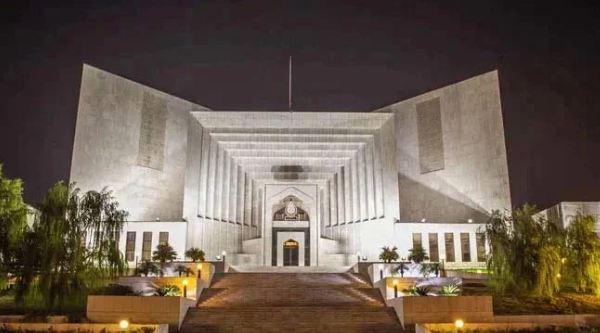
ISLAMABAD, SEPT 14: A majority bench of the Supreme Court of Pakistan on Saturday warned the Election Commission of Pakistan (ECP) that non-implementation of its judgment on reserved seats would result in serious consequences.
The clarification comes after the electoral watchdog and Pakistan Tehreek-e-Insaf (PTI) filed petitions regarding the court’s July 12 decision on the matter.
The eight-member bench, led by Justice Mansoor Ali Shah and comprising Justices Athar Minallah, Ayesha Malik, Muhammad Ali Mazhar, Hasan Azhar Rizvi, Shahid Waheed, and Irfan Saadat Khan, reiterated that there was no ambiguity in the original ruling.
According to the judges, the short order issued on July 12 was clear, and the Election Commission had unnecessarily complicated its interpretation.
“The judgment leaves no room for confusion, and any attempt to obscure the matter is rejected outright,” read the court’s explanatory statement. The statement further emphasized that failure to comply with the court’s ruling would carry “serious consequences.”
Recognition of PTI leadership
In the clarification, the court also acknowledged Barrister Gauhar Ali Khan as the legitimate Chairman of PTI, while Umar Ayub was recognized as the party’s General Secretary. This recognition has important implications for the ongoing political landscape, as it affirms PTI’s current leadership amid internal disputes.
The bench clarified that any seat won in the election would immediately be considered as belonging to the political party to which the candidate was affiliated at the time of the election, and no further action could alter this agreement.
The court emphasized that the Election Commission’s issuance of a list of elected members is an administrative process meant to inform the public and all stakeholders. Failure to fulfil legal obligations, it warned, could lead to severe consequences for the ECP.
Directive for immediate implementation
In a strongly worded statement, the court directed the Election Commissioner to immediately implement the decision. The bench rejected attempts by the ECP to delay or seek further clarification, stating that the deprivation of an election symbol does not strip a political party of its rights. PTI, it reaffirmed, remains a registered political entity and holds seats in both the national and provincial assemblies.
The court’s explanation underscored that the Election Commission’s recognition of Barrister Gauhar as PTI’s Chairman is final, and any attempt to alter this recognition would be considered obstruction of justice.
“The Election Commission must act without delay. Asking for further explanation is tantamount to obstructing the court’s decision,” the judges stated, making clear that PTI’s status as a political party remains intact.
The majority decision was delivered by a bench consisting of Justice Mansoor Ali Shah, Justice Athar Minallah, Justice Ayesha Malik, Justice Muhammad Ali Mazhar, Justice Hasan Azhar Rizvi, Justice Shahid Waheed, and Justice Irfan Saadat Khan.
CJCSC General Mirza delivers powerful talk on regional peace at Beijing
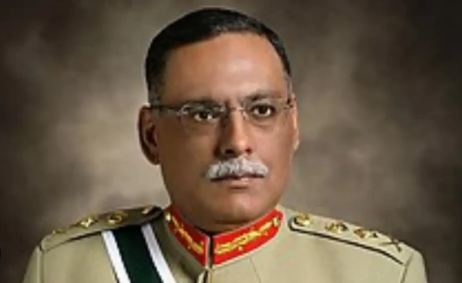
RAWALPINDI, 14 Sept /DNA/ – General Sahir Shamshad Mirza, NI (M), Chairman Joint Chiefs of Staff Committee on an official visit to People’s Republic of China held separate meetings with General He Weidong, Vice Chairman of the Central Military Commission (CMC) and General Liu Zhenli, Chief of CMC Joint Staff Department and delivered a talk in 11th Beijing Xiangshan Forum on the Role of Pakistan towards regional peace and stability.
During meetings, both sides appreciated deep and historic relationship of Pakistan and China in multiple domains and acknowledged assuring progress on the bilateral strategic cooperative partnership and defence cooperation.
The Chinese leadership also reaffirmed their unfettered commitment to support Pakistan on its territorial integrity and sovereignty.
Malaysian HC greets Pakistan’s New Foreign Secretary, eyes stronger bilateral ties
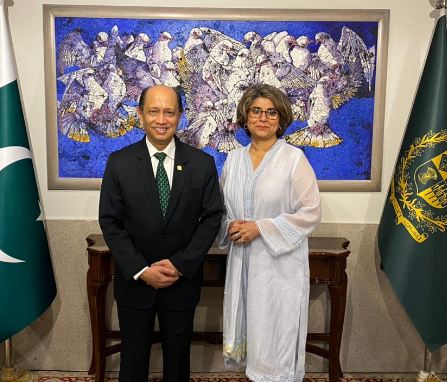
ISLAMABAD, SEPT 14: (DNA) – Ambassador Dato’ Mohammad Azhar Mazlan, High Commissioner of Malaysia to Pakistan, paid a courtesy call on the newly appointed Foreign Secretary of Pakistan, Ambassador Amna Baloch on On 13 September 2024, who officially assumed her post on 11 September 2024.
During the meeting, Ambassador Dato’ Azhar extended his warmest congratulations and heartiest felicitations to Her Excellency Ambassador Amna Baloch on her appointment as Foreign Secretary. Considering her extensive diplomatic experience, including her tenure as High Commissioner of Pakistan to Malaysia from 2019 to 2023, Ambassador Dato’ Azhar expressed his confidence that the excellent bilateral relationship between Malaysia and Pakistan will be elevated to greater heights.
Both sides held extensive constructive discussion aimed at advancing the strategic partnership between the two nations. They explored new collaboration in emerging areas such as automotive industry, blue economy, education, energy production and technical and vocational education and training (TVET) for skilled and semi-skilled workers. Ambassador Dato’ Azhar emphasised that despite the highest bilateral trade recorded at USD1.8 billion previously, there existed immense potential for growth, and that both countries should put efforts to increase the figure through new trade and investment initiatives.
In the regional context, Ambassador Dato’ Azhar highlighted the opportunities presented by ASEAN, particularly Malaysia’s strategic position as a gateway to the ASEAN market, offering immense potential for Pakistan to expand its economic engagement in the region. Malaysia would assume the chairmanship of ASEAN in 2025. Both sides also touched on issues of mutual concern, including the situation in Palestine and Afghanistan.
As both sides were preparing for the upcoming visit by the Honorable Prime Minister of Malaysia to Pakistan, Ambassador Dato’ Azhar acknowledged the importance of the visit in reinvigorating relations between the two nations. Given the last Prime Ministerial visit five years ago, he stressed that the timing was crucial for strengthening ties. The meeting also touched on potential deliverables of the visit, focusing on trade, halal cooperation, air connectivity, and tourism sector.
The meeting marks a renewed step towards further deepening cooperation and cementing the long-standing fraternal ties between Malaysia and Pakistan. Considering that both Foreign Secretary and High Commissioner have had the privilege of working together during the former’s stint in Malaysia and the latter as Undersecretary at the Ministry of Foreign Affairs Malaysia overseeing Malaysia-Pakistan relations, the atmosphere of the meeting was warm and friendly.
Business Forum at ICCI highlights UAE-Pakistan Investment Potential
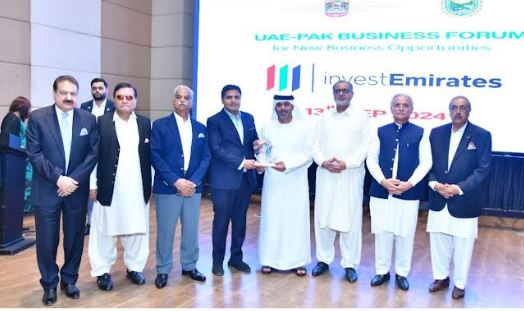
ISLAMABAD, SEPT 14: (DNA) – Ambassador Hamad Obaid Alzaabi of the United Arab Emirates (UAE) highlighted the deep-rooted bilateral relationship between Pakistan and the UAE, built on mutual respect, cultural ties and strong economic cooperation. Addressing the UAE-Pakistan Business Forum, themed “Invest Emirates: An Opportunity for Inbound and Outbound Investments,” he emphasized the growing trust-worthy strategic partnership between the two nations.
Alzaabi showcased multiple investment opportunities in the UAE, encouraging business-to-business collaboration between Pakistani and Emirati entrepreneurs. He praised the Islamabad Chamber of Commerce and Industry (ICCI) for its support in organizing the Forum, which aims to enhance linkages between the business communities of both countries.
ICCI President Ahsan Zafar Bakhtawari acknowledged the UAE as Pakistan’s third largest trading partner and a significant source of remittances, contributing to Pakistan’s economic stability. He highlighted the robust and mutually beneficial relationship between the two countries, encompassing various sectors such as investment, infrastructure development, and regional cooperation.
Bakhtawari described the UAE as the most favorite destination of Pakistani businessmen and invited the UAE business community to explore lucrative investment opportunities in Pakistan, particularly in tourism adding that he himself led a delegation of over 160 businessmen to UAE in the beginning of this year and organized a successful Business Opportunities Conference to explore the investment panoramas in that country.
ICCI President said that the Pakistani diaspora is enthusiastically contributing to the development of the UAE and that its skill development will be a value addition in its performance enabling it to have reasonable wages.
Chairman Founder Group ICCI Khalid Iqbal Malik said that UAE with its robust economy, innovative spirit and global hub for trade and commerce offers immense potential for Pakistani businesses and investors. He went on to say that together we can create a future where both the nations can thrive, grow and prosper.
The Forum featured a presentation on investment opportunities and incentives offered by the UAE government to foreign investors. Head of Economic Division UAE Embassy Mr. Mohammad Alkaitoob also addressed the gathering.
ICCI Vice President Engr. Azhar ul Islam Zafar in his vote of thanks by mentioning the close relationship between the two countries expressed the hope that the Forum will go a long way in further strengthening this relationship.
Earlier ICCI member Ms. Naeema Ansari apprised the attendees about the purpose of the Forum.
Those prominent among the participants included Ambassador of Iraq, Hamid Abbas Lafta DHM Palestine, Nader K. Alturk, United Business Group Secretary General Zafar Bakhtawari, former Presidents ICCI Mian Akram Farid, Mohammad Ejaz Abbasi, Mian Shaukat Masood, business community leaders, ICCI Executives and members.
Asian Hockey: India beat Pakistan 2-1 in a thrilling match

Both teams have already qualified for the semi finals
DNA
CHINA: Asian Hockey Championship: Pakistan lose to India 2-1. Pakistan played extremely well and contained India to just 2 goals. India is No 5 in World ranking while Pakistan is No 16.
Both teams have already qualified for the semi finals.
India was expected to perform well but valiant Pakistani side contained the Indian from scoring more goals. Pakistan team exhibited excellent field play however on penalty corner the green shirts could not per form well.
ALSO READ: 3 key players of Pak national hockey team seek political asylum in Malta
Abu Bakar got a knee injury hence he had to quit the game. The alternate drag flicker Sufian could not convert penalty corners into goals.
Striker Hannan, Zikria played well. Rana Waheed got 10-minute suspension therefore the team played with 10 players in the last 10 minutes of the game.
ALSO READ: PHF slaps lifetime ban on hockey players who sought asylum in Europe
Pakistan also changed goalkeeper after the first quarter and gave chance to Muneed by replacing him with Abdullah. Muneed played well and saved a few goals. India scored all goals two goas on the penalty corner through its captain who happens to be the world NO 1 flicker.