Home Blog Page 608

IHC seeks govt’s clarification on Imran Khan’s possible military trial in May 9 case

Imran Khan Remains in Good Spirits Despite Challenging Conditions

ISLAMABAD: The Islamabad High Court (IHC) on Monday once again sought clarification from the government over Pakistan Tehreek-e-Insaf (PTI) founder Imran Khan’s possible military trial over his alleged involvement in the May 9 riots.

IHC’s Justice Miangul Hassan Aurangzeb presided over the hearing on PTI founder’s petition against the military trials in the May 9 case that witnessed military installations being vandalised following his arrest in a graft case last year.

“There is no clear answer from the government. I am giving you time to bring instructions in this regard,” said Justice Aurangzeb during the hearing today.

The court ordered the Ministry of Defence to give a clear stance on the next hearing after which the ministry sought time. The hearing was adjourned till next Tuesday (September 24).

The former prime minister’s pleas came in the wake of statements by government high-ups including Defence Minister Khawaja Asif and Law Minister Azam Nazeer Tarar that fuelled rumours of his military trial.

It is pertinent to know that in July last year, an anti-terrorism court in Lahore — in a four-page written verdict — said that reasonable grounds existed to connect the PTI founder with the May 9 incidents.

It is to be noted that the Pakistan Democratic Movement (PDM) led government had initiated military trials of those involved in targeting state and military installations in last year’s riots.

The matter ended up in the Supreme Court which declared civilians’ trials in military courts null and void in its October 23, 2023, verdict which was later suspended by the apex court in a 5:1 majority ruling in December.

The majority order was announced on the intra-court appeals filed by the federal and provincial governments and the defence ministry against the top court’s verdict.

The December 13, 2023, verdict stated that military court trials would be conditioned on the apex court’s final verdict on the intra-court pleas.

During the hearing today, Justice Aurangzeb asked the procedure of handing someone in military custody. “The Ministry of Defence has no information of military detention and trial till date,” he remarked, adding that nothing regarding the matter has been brought before the ministry.

The additional attorney general said: “If any request is made, action will still be taken according to the law.”

At this, Justice Aurangzeb said he has nothing to proceed with in this case. The court then sought the procedure of civilians’ trial in military court from the defence ministry.

The defence ministry’s representative said they have a “very clean procedure”.

“If a notice is issued to PTI founder before the military trial, then the case will be wrapped up,” said Justice Aurangzeb, adding that the civil court will first frame the charge, according to the procedure.

If the trial court says that the case is to be sent to the military court, then the notice should be issued first, he added.

Scheme Behind Constitutional Amendments

Qamar Bashir

Qamar Bashir

The government and parliament, working in concert, appear bent on laying landmines for democracy and its institutions—actions that are more likely to backfire on them than harm institutions like the judiciary, the army, or others.

The government and parliament, which have a vested interest in clipping an independent judiciary, have resorted to a three-pronged strategy aimed at curbing judicial independence. First, they seek to prevent Justice Mansoor Ali Shah, the architect of the restoration of the PTI as a political party in parliament and provincial assemblies, from becoming the next Chief Justice. Justice Mansoor is known for being resolute and independent, and his ascension could challenge the government’s interests, particularly in implementing the Supreme Court’s decision to restore PTI and allocate seats to the party. Furthermore, his leadership could accelerate the work of election tribunals, currently stalled by stays granted by Justice Qazi Faez Isa.

Second, the government seeks to almost double the number of Supreme Court judges, likely to increase the presence of judges they have cultivated for political purposes. Lastly, the most serious and unconstitutional attempt involves stripping the superior courts of their independence and bringing them under the control of the executive. These actions not only undermine the judiciary but also threaten the fundamental principles of democracy by eroding the separation of powers.

The government, in its haste to bring the judiciary under its control, seems to have overlooked a fundamental constitutional principle: in parliamentary democracies, the three pillars of the state—the executive, legislature, and judiciary—perform their mandated functions independently of each other. Each branch is equal in status and independence, and none reports to the other in terms of its organizational or executive decisions. All three pillars are accountable only to the President, who serves as the head of state. Even when these branches need to communicate, they do so through the office of the President. For instance, the President administers the oath of office to both the Prime Minister and the Chief Justice, convenes sessions of the National Assembly and Senate, and ultimately gives assent to bills, allowing them to become law.

While the government’s attempt to enlarge the strength of the Supreme Court may carry some logic, its attempt to give the Prime Minister the power to appoint the Chief Justice, restrict the tenure of the Chief Justice to three years, and hold judges of the superior courts accountable for their performance is absurd, outrageous, and contrary to the norms of parliamentary democracy. Such moves violate the principle of separation of powers between the three pillars of the state. Therefore, the best course of action for the government is to halt these shortsighted constitutional amendments, as it is likely to be struck down by the Supreme Court for being in conflict with the general scheme, structure, and intent of the Constitution.

In established democracies, the judiciary operates independently to check the powers of the executive and legislature. In the UK, for instance, judges are appointed through independent bodies like the Judicial Appointments Commission, ensuring merit-based appointments without political interference. Similarly, in India, the Collegium System enables senior judges to appoint their peers, safeguarding the judiciary’s independence. Granting the Prime Minister such appointment powers would seriously erode this balance and compromise the judiciary’s autonomy.

Limiting the Chief Justice’s tenure to three years is equally problematic. In democracies like Australia and Canada, the Chief Justices are appointed until a mandatory retirement age, allowing them to make long-term judicial reforms and ensure continuity in legal governance. A three-year term would allow frequent political interference in judicial appointments, undermining the stability and independence necessary for a well-functioning judiciary. Short-term tenures would make it easier for the executive to influence judicial decisions by frequently appointing new Chief Justices, diminishing the role of the judiciary as an impartial and independent body.

Furthermore, holding judges accountable to the executive or political entities contradicts the norms of judicial accountability, which should remain within the judicial framework itself. In countries like Germany and France, judges are accountable to higher judicial bodies or peer committees, maintaining their independence from the executive. Political oversight of the judiciary would open doors for manipulation, especially in politically sensitive cases, eroding public trust in the courts and turning the judiciary into a tool of the government, as seen in Hungary and Poland where similar reforms led to the weakening of democratic values.

Through these amendments, the government or establishment aims to reduce the judges of the superior judiciary to the level of civil servants, who are at the mercy of the government in terms of their postings to valuable and powerful positions and are vulnerable to punishment if they fail to comply with the legal or illegal demands of the government or establishment. As a result of such manipulative control over civil servants, the entire civil service has been weakened, becoming inefficient, self-serving, and focused on seeking power and influence rather than serving the public and the nation. This leads to a system driven by personal whims, desires, and vested interests, rather than the rule of law. God forbid, if this amendment is passed in its current form, it would spell the end of parliamentary democracy and usher in the worst form of dictatorship.

Ironically, a parliament accused of consisting of members who were selected rather than elected, and who allegedly came to the assemblies based on manipulated and falsified Form 47 results, lacks the moral standing to introduce constitutional amendments until the allegations of election rigging and issues surrounding Form 47 are resolved.

Similarly, the government is composed of ministers who are either unelected, or in the case of those elected, are alleged to have won their seats through manipulation of Form 47. The government is inefficient, with the country facing a severe law and order crisis, a surge in terrorism, rampant smuggling, disastrous financial management, dried-up foreign investment, skyrocketing inflation, and a brand value that ranks just above Afghanistan from the bottom. With these issues, how can the government be expected to bring meaningful reform to the judiciary? If the government had been functioning efficiently and delivering results, it might have some justification for initiating judicial reforms or holding the judiciary accountable for its performance.

In conclusion, these proposals would distort the balance of power in a parliamentary democracy, erode judicial independence, and weaken the separation of powers essential for democratic governance. Public trust in the judiciary and its role as an independent arbiter of the law would be severely compromised if such reforms were implemented, making it crucial to uphold the principles of judicial autonomy and democratic integrity.

Qamar Bashir

Former Press Secretary to the President

Former Press Minister to the Embassy of Pakistan to France

Former MD, SRBC, CEO, ATV

The Baluchistan Crisis

The Baluchistan Crisis

Dr. Muhammad Aram Zahreer

The recent escalation in terrorism within Pakistan has cast significant doubts on the efficacy of the state’s security measures, especially as the country embarks on one of its most costly counter-terrorism initiatives to date, Operation Azm-e-Istekham (Resolve for Stability). This operation is designed to restore stability in regions plagued by insurgency and terrorism. However, recent events in Baluchistan, the most volatile and conflict-ridden region of Pakistan, have starkly highlighted the limitations and challenges of this approach.

Last week, Baluchistan was the epicenter of a series of meticulously coordinated violent attacks that resulted in the deaths of over 70 individuals and caused extensive damage to critical infrastructure. The Baloch Liberation Army (BLA), an ethnic separatist group that has been engaged in a protracted insurgency against the state for over a decade, claimed these attacks.The BLA’s recent actions have not only caused immediate harm but have also sent a powerful message about their growing capability and reach.

The emergence of videos online showing convoys of BLA militants openly brandishing weapons and moving unchallenged through various parts of Baluchistan’s westernmost province, where they were seen celebrating with locals, has further exacerbated concerns about the state’s ability to maintain control. These images, combined with the insurgents’ increasing success in closing roads and extending their influence into urban areas, have created a widespread perception that the state is gradually losing its grip on the province. This perception of declining state control is deeply troubling and raises questions about the future stability of Baluchistan and, by extension, Pakistan.

In response to these developments, the Pakistani government, which has historically employed a heavy-handed approach to managing the Baluchistan issue, swiftly convened an emergency meeting of the top national security committee. During this meeting, the government reiterated its commitment to forcefully suppressing those who threaten the region’s peace and stability. The military has already initiated intelligence-based retaliatory operations, aimed at targeting the insurgents with precision. Additionally, the government has pledged billions of rupees to enhance the counterterrorism capabilities of law enforcement agencies.

These measures, however, are not without their complications. For the first time, the federal government has publicly acknowledged a critical shortage of appointed personnel, which is severely hampering its counterterrorism efforts. In an unexpected and controversial move, the government has decided to depute officials from other provinces, particularly Punjab, to take up posts in Baluchistan. This decision has sparked fierce criticism and is widely viewed as an attempt to marginalize the local Baloch population by denying them the governance and policing of their own province.The federal government’s recent actions have added to the already numerous grievances harbored by the Baloch population against state security agencies.

These agencies have long been accused of engaging in enforced disappearances, extrajudicial killings and other severe violations of basic human rights. The government’s handling of Baluchistan’s natural resources has also been a point of contention. The Baloch population has repeatedly accused the government of exploiting the province’s resources while failing to provide adequate local employment opportunities, particularly in the context of the multibillion-dollar China-Pakistan Economic Corridor (CPEC) project. This project, which is a cornerstone of Pakistan’s economic strategy, has been marred by allegations of corruption and mismanagement, further fueling local discontent.

In a recent escalation of tensions, a Baloch human rights group organized region-wide protests, effectively blocking access to Gwadar city’s Chinese-operated deep-sea port. These protests, which have garnered significant attention, are seen as a direct challenge to the government’s authority and a demand for greater autonomy and rights for the Baloch people. The BLA’s armed attacks appear to be coordinated with these ongoing protests, aiming to pressure the government into addressing the longstanding grievances of the Baloch population. The timing of these attacks and protests is particularly significant as Pakistan prepares to host a crucial Shanghai Cooperation Organization (SCO) summit in October. The civil-military regime has characterized the recent wave of insurgency as an attempt by hostile foreign elements to sabotage the upcoming summit and has described the protesters as proxies for terrorists, labeling them as the political wing of the Baloch separatist militants.

The government’s conflation of non-violent protests with armed militancy has exacerbated the situation and risks further alienating the Baloch population. This lack of distinction between legitimate expressions of dissent and violent insurgency increases the likelihood of escalating violence in the region. The BLA, through its recent attacks, has significantly raised its profile, positioning itself as a formidable rebel movement capable of challenging Pakistani security forces. This, in turn, has bolstered its appeal among the ethnic Baloch population, particularly those who are disillusioned with the state and its policies. The BLA’s ability to exploit the genuine grievances of the Baloch people has helped legitimize its cause and expand its recruitment efforts.

Another critical factor in the strengthening of the BLA is the increasingly active participation of women in their ranks. The recruitment of women as suicide bombers is a stark indication of how deeply the BLA’s cause has permeated the province’s society. This development also reflects the militants’ growing ability to mobilize and radicalize a broader segment of the population, including women and youth. In a province where 65% of the population is under the age of 30, the many frustrated, unemployed Baloch youth are prime recruits for the BLA. The involvement of women in the insurgency marks a significant and troubling evolution in the conflict, suggesting that the BLA’s influence is expanding and becoming more deeply rooted in Baloch society.The government’s reliance on a predominantly military-focused strategy to address the challenges posed by the Baloch uprising is unlikely to succeed in the long term. A more holistic approach is urgently needed—one that incorporates both hard and soft power strategies. This approach should focus on addressing the root causes of unrest, including the implementation of justice reforms, curbing corruption and improving the socioeconomic conditions in Baluchistan. The province’s high poverty and mortality rates, poor literacy levels and insufficient infrastructure and job opportunities are all critical issues that need to be addressed. Failure to do so will likely result in the continued alienation of the Baloch population and play directly into the hands of both internal and external forces seeking to destabilize Pakistan.

The current policies being implemented in Baluchistan are not only unwise but also potentially dangerous. They threaten the integrity of the Pakistani state and are unlikely to bring the desired stability, security and development to the province. If the government continues on its present course, the situation in Baluchistan could deteriorate further, with potentially catastrophic consequences for Pakistan as a whole. The need for a more nuanced and comprehensive approach to the Baluchistan issue cannot be overstated. The stakes are too high for the government to continue relying solely on military solutions. A sustainable peace in Baluchistan can only be achieved through genuine engagement with the Baloch people, addressing their grievances and providing them with a stake in their own governance and future.

Govt announces massive reduction in petrol, diesel prices

Govt announces massive reduction in petrol, diesel prices

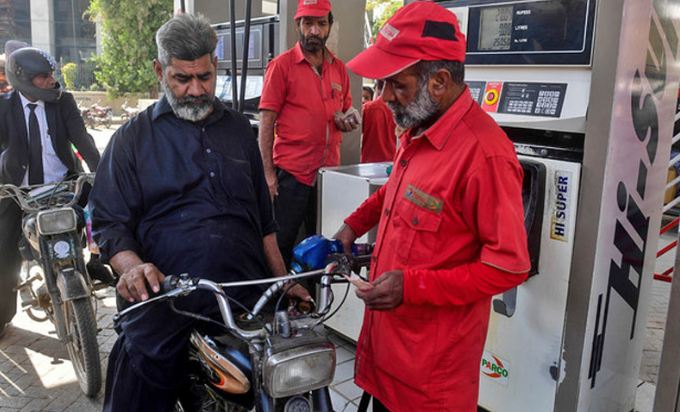
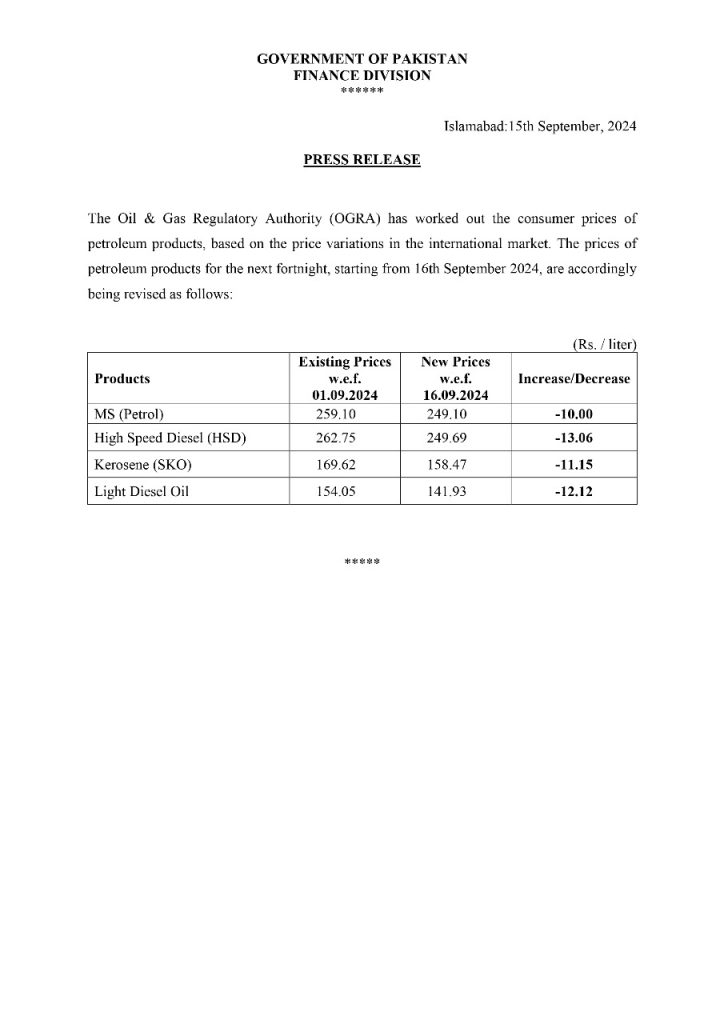
ISLAMABAD, SEPT 15: A sigh of relief for inflation-stricken masses as Prime Minister Shehbaz Sharif-led government on Sunday announced a massive reduction in petrol and diesel prices from September 16 for the next fortnight.

The finance ministry in a notification stated that petrol price has been reduced by Rs10 per litre while diesel price has been slashed by Rs13 per litre.

Finance minister hosts ADB President in Islamabad

Finance minister hosts ADB President in Islamabad

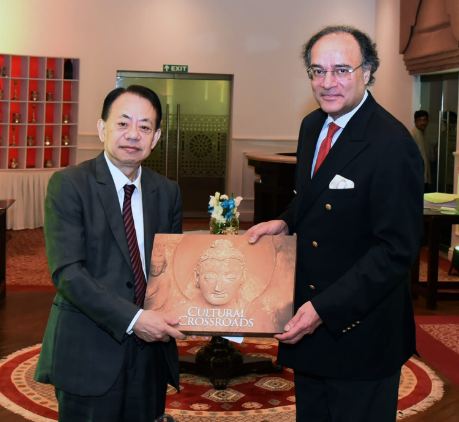
ISLAMABAD, SEPT 15: /DNA/ – Federal Minister for Finance and Revenue Senator Muhammad Aurangzeb hosted a dinner in honor of Masatsugu Asakawa, President of the Asian Development Bank (ADB), and his delegation in Islamabad today.

The event was also attended by Federal Minister for Power Sardar Awais Ahmad Khan Leghari, Federal Minister for Petroleum Mr. Mussadiq Masood Malik, Minister of State for Finance and Revenue Mr. Ali Parvez Malik, Chairman SECP, Deputy Governor SBP, Secretary Finance, Secretary for Petroleum, Special Secretary of the Economic Affairs Division, senior officials from the Ministry of Finance, and representatives of the ADB.

In his welcoming remarks, the Finance Minister highlighted Pakistan’s long-standing partnership with the ADB, underscoring the pivotal role the bank has played in supporting Pakistan’s development agenda. He commended ADB’s continued assistance in key sectors such as infrastructure, energy, education, and social development.

Minister Aurangzeb provided an update on the government’s recent reforms of State-Owned Enterprises (SOEs), aimed at improving governance, efficiency, and financial sustainability. He noted that these reforms are central to Pakistan’s economic revitalization. Mr. Asakawa appreciated the efforts undertaken by Pakistan in this regard, reaffirming ADB’s support for the ongoing SOE reforms and their role in strengthening the country’s fiscal framework.

The Minister also took the opportunity to request ADB to further engage the private sector in Pakistan, emphasizing that the private sector will play a leading role in driving the country’s future growth and development. This, he said, will ensure a dynamic, sustainable, and resilient economy for Pakistan.

In addition, Minister Aurangzeb highlighted Pakistan’s achievements related to the Policy-Based Guarantee and the Reko Diq guarantee, both of which have been made possible through the sovereign window. Mr. Asakawa acknowledged these accomplishments and commended Pakistan’s commitment to ensuring transparency and long-term sustainability in managing key financial obligations.

Mr. Masatsugu Asakawa, in his response, acknowledged the robust relationship between Pakistan and ADB. He reaffirmed the Bank’s commitment to supporting Pakistan’s development goals, focusing on projects that promote inclusive growth, innovation, and climate action. He also appreciated Pakistan’s efforts in implementing reforms that align with ADB’s broader vision for the region.

The dinner provided an opportunity for open and constructive discussions between Pakistani officials and the ADB delegation, paving the way for future collaboration on critical projects.

Fazl holds ‘trump card’ as constitutional amendment still not tabled yet

Fazl holds 'trump card' as constitutional amendment still not tabled yet

ISLAMABAD: Amid the government’s efforts to introduce a ‘constitutional package’ that reportedly gives it greater control over judicial procedures, Jamiat Ulema-i-Islam (JUI-F) chief Maulana Fazlur Rehman has taken centre stage, with both the ruling coalition and the opposition vying for his support in Parliament.

Both sessions of the National Assembly (NA) and the Senate — originally scheduled for earlier in the day — have been delayed multiple times as both the government and the opposition were holding consultations.

The government has been tight-lipped on the proposed amendments to the Constitution, but clarified that the package will not be a person-specific and would give the authorities ingress in the judicial procedure.

The prospects of the said constitutional package come amid speculations revolving around extension in the tenure of Chief Justice of Pakistan (CJP) Qazi Faez Isa — who is set to retire in October this year — after the Pakistan Tehreek-e-Insaf (PTI) sought an early issuance of notification regarding the next top judge last month.

Its key points likely include the setting up of a constitutional court, a merger of the judicial and parliamentary commissions responsible for the selection of judges, as well as amendment to Article 63-A of the constitution of Pakistan, which deals with the issue of disqualification of members of parliament on grounds of defection.

As per a report published in The News, a consensus on increasing the retirement age of superior court judges has not yet been formalised, with the Pakistan Tehreek-e-Insaf (PTI) vowing to launch a countrywide protest if the age limit of Supreme Court and high court judges is revised.

‘Numbers game sorted’
Speaking to Geo News exclusively, Defence Minister Khawaja Asif asserted that they have achieved the magic number in both upper and lower houses of parliament for the passage of the much-touted constitutional amendment.

He said they have completed the numbers game for the constitutional amendment, also claiming the support of JUI-F chief Maulana Fazl Rehman after “his reservations are removed”.

Play Video
“Apart from Maulana Fazl and coalition parties, some other votes will be secured,” the federal minister said without divulging into details. “They are not legally or constitutionally bound to any party.”

He hoped the ‘constitutional package’ would be adopted today, adding that its passage would improve the parliament’s environment.

In response to a question regarding the Supreme Court’s clarification on reserved seats verdict issued a day earlier, the defence czar said: “We will be successful despite the apex court’s statement favouring the opposition.”

He castigated the July 12 reserved seats verdict, terming the apex court’s decision ‘an attempt’ to block the way for the constitutional amendment.

Giving details of the package, Asif said it includes the formation of constitutional court and an increase in the number of judges in superior courts.

Today’s National Assembly (NA) session was initially slated for 11:30am but then changed to 4pm on a Special Parliamentary Committee’s request made to the NA speaker.

However, the session was unable to start even at the revised time and now sources claimed that it will likely to be started at 8pm.

Similarly, the Senate session slated for 4pm was rescheduled to 7pm, according to a notification from the Senate secretariat.

Proposed constitutional amendments
Meanwhile, Geo News has obtained the details of a ‘closely-guarded’ constitutional amendment bill — which sources claimed that it contains more than 20 clauses aiming to introduce major changes in Pakistan’s judicial and parliamentary systems.

The bill proposes amendments to Articles 51, 63, 175, 181 and 187 of the Constitution of Pakistan. It also includes the amendment to increase the representation of the Balochistan Assembly from 65 seats to 81.

It also proposed the formation of a constitutional court — which the draft says will hear the petitions related to Articles 184, 185 and 186. The remaining four judges of the constitutional court will be appointed by the judges, sources added.

Furthermore, inter-provisional transfer of high court judges has also been proposed.

Another important amendment proposed in the bill sought appointment of Chief Justice of Pakistan (CJP) through a five-member panel comprising top court judges.

A merger of the judicial and parliamentary commissions responsible for the selection of judges sought in the amendments.

‘No person specific legislation’
Speaking to journalists at Parliament House, Federal Minister for Information and Broadcasting Attaullah Tarar ruled out any “person specific” legislation, reiterating the government’s commitment to ensure speedy justice for the people of Pakistan.

He attributed the delay in tabling of the constitutional package to ‘ongoing broad political consultation’, saying that JUI-F chief Maulana Fazl was holding consultation with opposition lawmakers on “each clause of the proposed amendments”.

Minister for Information and Broadcasting Attaullah Tarar speaks to journalists at Parliament House, Islamabad, on Septemeber 15, 2024. — Screengrab/Geo News
“It is difficult to proceed until extensive consultation is completed,” he said, noting that efforts were being made to reach a consensus.

Furthermore, Tarar said that it was decided in the Charter of Democracy that speedy justice would be ensured for the people of Pakistan. He also said that efforts were afoot to make progress today.

The minister said that the government does not intend to create misunderstanding regarding the clauses proposed in the amendment bill. “Once amendments are tabled in the parliament, voting will be held on each clause separately,” he added.

Earlier, the minister said that reforms were overdue to give the people of Pakistan access to speedy justice, assuring that any legislation to be done in the collective interest of the nation.

The minister remarked that many decades were passed with several cases awaiting trials and it was imperative to take measures for providing speedy justice to the people.

He said that all coalition parties had representation in the special committee constituted for this purpose.

“The government was positive about the number game”, he said, adding that JUI-F chief was an old ally and partner for the ruling coalition. He asked the media to wait for a short while to get a good news in this regard.

The number crunch
The key aspect of the constitutional amendment is that unlike any other legislation, the government will need to secure a two-thirds majority in the parliament to successfully execute it.

In the lower house, the ruling coalition needs 224 votes to pass the constitutional amendment, whereas in the Senate the number stands at 64.

Currently, treasury benches have 211 members against the opposition’s 101 MNAs meaning that the government needs 13 more votes to pass the said constitutional amendment.

The ruling coalition comprises the PML-N (110); the PPP (68); Muttahida Qaumi Movement-Pakistan (22); Pakistan Muslim League-Quaid (four); Istehkam-e-Pakistan Party (four); Pakistan Muslim League-Zia (one); Awami National Party (one) and Balochistan Awami Party (one).

Meanwhile, the opposition comprises 80 MNAs of the Sunni Ittehad Council (SIC) which are supported by PTI-backed independent lawmakers.

The JUI-F has eight members in the NA, whereas Balochistan National Party, Pashtunkhwa Milli Awami Party (PkMAP) and Majlis-e-Wahdat-Muslimeen (MWM) have one MNA each in the NA.

The ruling benches of the Senate, as per the publication, comprise PPP (24), PML-N (19), BAP(4) and MQM-P(3) in addition to four independent senators.

The total strength of the ruling benches stands at 54 as the government is short of nine votes in the Senate to pass the constitutional amendment.

As for the opposition benches in the Senate, PTI holds 17 seats, JUI-F (5) and ANP (3), while SIC, MWM, BNP, National Party and PML-Q have one seat each.

In addition to this, there is an independent senator as well on the opposition benches with the total number of opposition senators standing at 31.

Petrol prices likely to decrease as international oil prices drop

Petrol prices likely to decrease as international oil prices drop

KARACHI: The masses are set to have some relief in petrol prices as international oil prices have significantly dropped by 8.5%, plummeting from USD 79.39 per barrel on August 30, 2024, to USD 72.67 per barrel. This development marks a notable shift in the global energy markets.

This decline in petrol prices is largely attributed to the Organization of the Petroleum Exporting Countries (OPEC) revising its global oil demand forecast, leading to reduced demand and subsequent price drops, said Tahir Abbas Head of Research AHL.

As an oil-importing country, Pakistan benefits from this decline, with local fuel prices adjusted fortnightly. Over the last three adjustments, petrol and diesel prices have dropped by PKR 16.50 per litre and PKR 20.88 per litre, respectively, he said.

A fourth consecutive decline in petrol prices is expected today, with petrol and diesel prices projected to decline by PKR 13.12 per litre and PKR 14.39 per litre.

Read More: Petroleum minister denies $18bn penalty in Pak-Iran gas pipeline project

However, this decline in international oil prices presents a mixed bag of opportunities and challenges for Pakistan as recent declines in oil sales have reduced the government’s revenue under the head of the Petroleum Development Levy (PDL) collection, said Tahir Abbas.

With a target of PKR 1,281 billion for fiscal year 2025 –PKR 107 billion per month–, the government has only averaged PKR 82 billion per month so far. To address this shortfall, an increase of PKR 5 per litre in PDL –Petrol prices– is likely, which would limit the expected price cuts to PKR 8.12 per litre for petrol and PKR 9.39 per litre for diesel.

So, on the one hand, the country stands to benefit from lower import costs, which can help ease the burden on its foreign exchange reserves and reduce the overall cost of fuel for consumers. The recent trend has been favourable for consumers. However, the decline in oil prices also brings challenges, particularly for the government’s revenue collection.

ICCI honours Bashir Janmohammad  with business role model award

ICCI honours Bashir Janmohammad  with business role model award

Governor Punjab acknowledges business community’s role in country’s economic wellbeing

ISLAMABAD, SEPT 15: /DNA/ – Governor Punjab Sardar Saleem Haider Khan has said that God has gifted all His blessings to this country, it has been created in the Name of Allah and His Prophet Muhammad ( PBUH), therefor no power can inflict harm on it, the only needed thing is hard work and honesty.

Addressing the Islamabad Chamber of Commerce and Industry business role model award ceremony   for renowned business leader Mohammad Bashir Janmohammad here on Sunday he said that business community is playing a pivotal role in the economic well-being of the country and one of the most significant contributions is job creation which in turn, boosts consumer spending, drives economic growth and improves overall living standards.

He termed the political stability vital for the economic stability and paid richest tribute to the business community which despite all the difficulties is determined to continue its businesses in the country.

Talking on IPPs issue he said that the government will have to take necessary initiative not only over  this issue but on the gas issue also and it should focus its attention on the initiation of work on Pak-Iran gas pipeline for the economic wellbeing of the country .

He praised Islamabad Chamber of Commerce President Ahsan Zafar Bakhtawari and his entire team for acknowledging the services of Mohammad Bashir Janmohammad in the field of business, social work and philanthropy by assuring his utmost cooperation for speeding up work on the ICCI  Industrial Estate  at Neela Dulla interchange.

Chancellor Institute of Business Management and Chairman Westbury Group of Companies Mohammad Bashir Janmohmmad while sharing his success story to the attendees expressed gratitude to the ICCI for gracing him with the prestigious role model award. He impressed upon the youth for focusing on education especially on IT and try to become entrepreneurs instead of job seekers in the best interest of the country.

He expressed the hope that sooner or later the IPPs issue will be resolved and the business community as well as the domestic consumers will heave a sigh of relief.

President Federation of Pakistan Chamber of Commerce and Industry Atif Ikram Shaikh assured the business leaders that Federation is tirelessly working for the solution of all the major issues of the community including the IPPs issue and it will soon listen a good news on the subject.

President Islamabad Chamber of Commerce and Industry Ahsan Zafar Bakhtawari in his welcome note by highlighting the services of the awardees especially Mohammad Bashir Janmohammad said that  the business community in Pakistan is confronting multiple difficulties especially the highest power rates, irrational taxes leading to closure of industries and business and culminating to unemployment.

He said that government must tailor its economic policies in consultation with the business leaders if it really wants to pull country out of the existing economic crunch. He also said that for the economic stability of the country  political stability is imperative, therefore the politicians should sit together and formulate a policies for at least next ten years.

He also sought Punjab Government’s assistance with regard to the establishment of an Industrial Estate of the ICCI at Neela Dulla.

Chairman Founder Group Khalid Iqbal Malik narrated the business community problems in detail and impressed upon the Governor Punjab to play his role for their solution in the best interest of the country. He said that Ahsan Zafar Bakhtawari is selflessly serving the community by spending huge amounts from his own pocket.

Secretary General United Business Group Zafar Bakhtawari said that Pakistan has a great future ahead. We must let the economy grow and ensure this journey succeeds through strategic planning and development   He said his slogan is “Pakistan First” and added that the whole business community would leave no stone unturned in achieving the goal.

Former President FPCCI  Zubair Tufail talked about the difficulties of the small traders and businessmen and called for unity in the ranks of the community to overcome these challenges.

Former Senior Vice President FPCCI Hanif Gohar expressed the hope that ICCI and FPCCI along with Mohammad Bashir Jamnmohmmad will be able to obtain the level playing field for the community.

Former  President ICCI Zubair Ahmed Malik called for consistency in government policies for its prosperity and progress.

Nasir Mansoor Qureshi, Council Member ICCI said that that God has blessed our country with all the required resources  and the only needed thing is the positivity and hard work. He called upon the youth to come forward and serve the country for its pride in the comity of the nations.

Group leader Chakwal Chamber Qazi Mohammad Akbar,Group leader Gujrat Chamber   Haji Nasir Mehmood, Group leader Rawalpindi Chamber   Sohail Altaf, Group leader Rawalpindi Chamber of Small Traders and Small Industries  Shahid Ghafoor Paracha also addressed the ceremony.

At the end of the ceremony awards and shields were distributed among the awardees at the hands of Governor Punjab Sardar Saleem Haider Khan.

Usman Shaukat elected uncontested as President in RCCI Elections 2024-26

Usman Shaukat elected uncontested as President in RCCI Elections 2024-26

RAWALPINDI, SEPT 15 /DNA/ – A three member election commission comprising Tariq Mughal, Syed Rizwan Haider Mashadi and Zahoor Ahmed Malik announced the results of Scrutiny of nomination papers for the posts of President, Senior Vice President and Vice President.

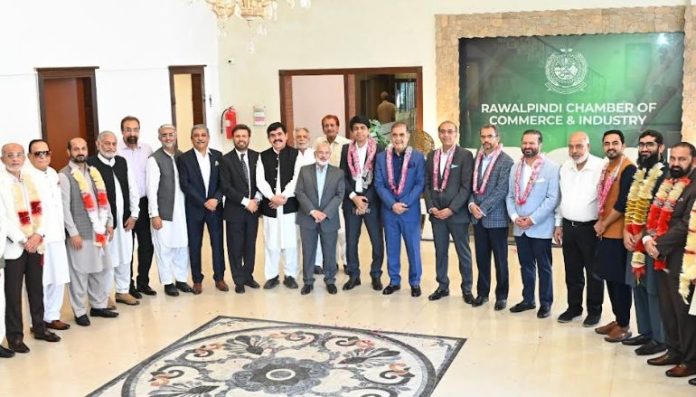
President RCCI Mr. Saqib Rafiq along with Group Leader RCCI Mr. Sohail Altaf, Vice President Mr. Faisal Shahzad, former presidents, EC members and newly elected Executive Committee members, Secretary General Irfan Manan Khan and distinguished RCCI members were also present on the occasion.

As per the results, following candidates Mr. Usman Shaukat (President), Mr. Khalid Farooq Qazi (Senior Vice President) and Mr. Fahad Barlas (Vice President) stood elected “uncontested” in the RCCI Elections 2024-26. Whereas on Reserved Seats for Women Entrepreneurs, Mrs. Falak Anjum and Ms. Naureen was elected uncontested.  Hence polling for the election of President, Senior Vice President, Vice President and reserved seats for Women Entrepreneurs will not be held on 16th September.

The participants congratulated the newly elected officials and vowed that the problems of the business community will be solved with the same passion, dedication and hard work that was shown in the election campaign.

Group leader Sohail Altaf said that Mian Parvez Aslam group got 93% votes in the RCCI election, the propaganda and politics of the opponents have been buried, the opposition was defeated by a huge margin.

 Traders and members have shown their trust in Mian Parvez Aslam Group, we have clean footing, we have not made allegations.

Excellent turnover proved that. Mian Pervaizalam Group deserves the right to true representation of the Rawalpindi Chamber of Commerce, he added.

Renowned climbers take part in Rakaposhi cleanliness drive

Renowned climbers take part in Rakaposhi cleanliness drive

Serena Hotels’ Green Impact Mission at Rakaposhi Basecamp, Promotes Sustainable Tourism

Centreline Report

ISLAMABAD: Serena Hotels successfully concluded the Green Impact Mission: Rakaposhi Basecamp Cleanup Drive. This initiative aimed to address the rising waste issue at one of Gilgit-Baltistan’s most popular tourist destinations, Rakaposhi Basecamp, while reinforcing Serena Hotels’ commitment to sustainable tourism and environmental preservation.

The cleanup drive brought together renowned climbers such as Abdul Joshi, Sultana Naseeb, Mirbaz Ali along with 50 dedicated volunteers and sherpas. The team worked tirelessly to clear litter from the basecamp, ensuring the preservation of its natural beauty. In addition to the waste collection efforts, 10 durable trash cans were installed around the site to promote responsible waste disposal by future visitors.

The drive raised awareness about the importance of sustainable tourism by engaging local communities and volunteers in conservation efforts, Serena Hotels continues to advocate for responsible tourism practices across Gilgit-Baltistan.

The Green Impact Mission at Rakaposhi Basecamp is a testament to Serena Hotels’ ongoing environmental stewardship, setting a precedent for similar initiatives across the region. Serena Hotels remains committed to promoting eco-friendly practices that protect Pakistan’s natural heritage for future generations.

Serena Hotels integrates sustainability into its operations by prioritizing energy conservation, waste reduction, and biodiversity protection, also deeply invested in cultural preservation, supporting local artisans and traditions through various initiatives. Moreover, community engagement lies at the heart of Serena’s philosophy, with projects aimed at empowering local communities and encouraging socio-economic development across the areas it operates in.

Stay Connected

64FansLike
60FollowersFollow

Latest Reviews

Exchange Rates

USD - United States Dollar
EUR
1.17
GBP
1.34
AUD
0.67
CAD
0.73