Home Blog Page 607

Traoré: The Unyielding Voice of Africa’s Awakening

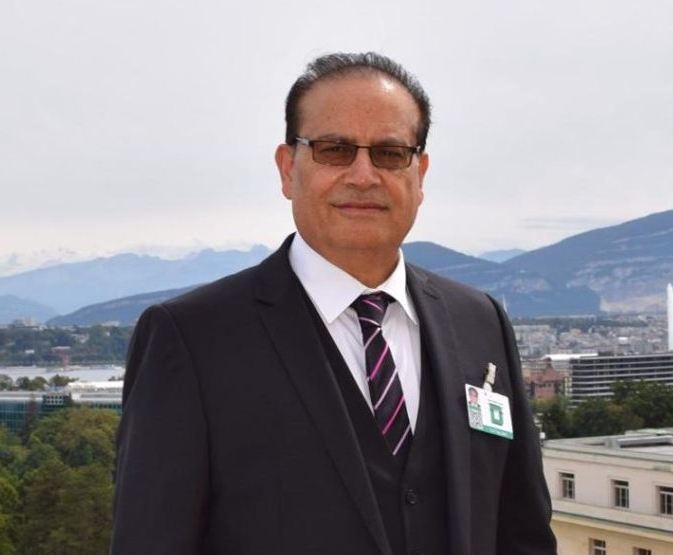
Qamar Bashir

By Qamar Bashir

Burkina Faso, a landlocked nation in West Africa with a population of over 22 million, has long been a battleground for competing global interests. Rich in gold, copper, and other minerals, yet plagued by poverty and conflict, the country has struggled to assert control over its wealth. In September 2022, a bold new leader emerged—Ibrahim Traoré, a 34-year-old army captain—who seized power in a military coup, vowing to reclaim Burkina Faso’s sovereignty from foreign exploitation. Traoré has since become a symbol of resistance, not just for Burkina Faso, but for an entire continent, as he challenges the Western narrative that has long defined Africa’s story.

In a world long manipulated by Western narratives, where the lens of global media has distorted the true image of Africa, a single voice has risen to shatter the illusion—a voice that echoes the suppressed struggles and stolen dreams of an entire continent. That voice belongs to Ibrahim Traoré, the young, fearless leader of Burkina Faso, who is shaking the foundations of global power and calling out the hypocrisy of the so-called saviors of humanity.

It was a fine day when I stumbled upon Traoré’s powerful speech—an unfiltered exposure of the Western media’s stealthy agenda in shaping global perceptions. He spoke not as a polished politician but as a son of Africa, a man who had seen his homeland reduced to a caricature of poverty and despair. Traoré laid bare the ugly truth: for decades, Africa has been portrayed through a narrow, oppressive lens—of starving children with swollen bellies, of violence, corruption, and hopelessness—while the West parades as a benevolent savior, offering aid and charity to uplift the helpless.

But the real story, as Traoré thundered, is one of theft—of minerals, of wealth, of sovereignty. In the name of development, Western corporations and governments have plundered Africa’s rich resources—cobalt, copper, gold, oil—filling their coffers while leaving Africans in abject poverty. He exposed the billion-dollar profits that flow from African soil to Western boardrooms, while African streets remain lined with hunger and neglect. Traoré’s words were not mere rhetoric—they were a battle cry, a call for Africans to reclaim their dignity, to rise as equal partners on the world stage.

His message resonated far beyond Burkina Faso. Traoré has become a symbol of Africa’s collective awakening—a young, enterprising leader who uses every available platform—be it speeches, videos, or direct outreach to global media elites—to amplify the voice of a continent no longer willing to bow to the West. He has called out France, the UK, and the USA for their centuries of exploitation, exposing, in a stunning episode, how the French ambassador to Burkina Faso was caught fleeing with billions in cash, gold, weapons, and detailed maps of the nation’s mineral wealth. The deals struck with Burkina Faso, it turns out, were a sham—showing the government a fraction of the true value, while the real riches were siphoned away in secret.

Traoré also lifted the veil on how foreign journalists, stationed in Africa under the guise of reporting, were in fact spies—embedded agents gathering intelligence for Western corporations and military establishments, ensuring the cycle of plunder and poverty continued uninterrupted. The story of Africa, as dictated by the West, is a lie—a narrative designed to keep the continent weak, dependent, and submissive.

But Traoré is not a man to be silenced. His vision is radical, yet profoundly logical: Africa must control its own resources, build its own industries, and develop its own human capital. He has rejected token gestures of aid—famously turning down an offer from the Saudi king to build 200 mosques in Burkina Faso, saying, “If Gazans can pray without mosques under bombardment, we too can pray without them. What we need are schools, hospitals, laboratories, and technology to feed and empower our people.” His refusal was not an act of defiance against faith, but a statement of priorities: Africa needs tools, not symbols.

Traoré’s stance has made him a target. Western powers are scrambling to understand the implications of his words—how this single voice, carried on the wind across the continent, is stirring a consciousness long suppressed. His message is simple yet revolutionary: Africa will no longer be a playground for foreign interests. It will rise as a dignified, sovereign continent, guided by its own aspirations and led by its own people.

Traoré understands that Africa’s wealth is meaningless without the capacity to harness it. He has called on the African diaspora—doctors, engineers, scientists, entrepreneurs, who have thrived abroad—to return home, to lend their expertise and build the foundations of an independent Africa. He knows that extracting resources requires technology, capital, and skilled human resources—assets that have long been controlled by Western corporations. But he is determined to forge new partnerships—with China, Russia, the Muslim world—based on mutual respect and shared progress, not exploitation.

Burkina Faso, under Traoré’s leadership, is no longer content to be a passive supplier of raw materials. The vision is clear: build the refineries, the factories, the universities, the research centers. Educate the youth, empower the women, and create an economy that serves the people, not foreign shareholders. Traoré’s fight is not just for Burkina Faso—it is for Africa. It is for every nation that has been told its place is at the bottom of the global ladder, for every community robbed of its future, for every family left hungry while their soil enriches others.

In Traoré’s eyes, the future of Africa is not one of handouts and dependency. It is a future of self-reliance, dignity, and justice. He is a man who refuses to be a pawn in the global game—a man who stands tall against the tides of history, declaring that Africa’s time has come, and it will no longer be silenced.

The world may not yet fully grasp the power of Ibrahim Traoré’s vision, but one thing is certain: a storm is brewing in Africa, and it carries the name of a young captain from Burkina Faso who dares to dream of a continent free from chains.

By Qamar Bashir

Press Secretary to the President (Rtd)

Former Press Minister at the Embassy of Pakistan to France

Former MD, SRBC

Macomb, Michigan, USA

In meeting with PM Shehbaz, President Zardari urges relief for common man in budget

PM Shehbaz

ISLAMABAD, JUN 1: In a meeting with Prime Minister Shehbaz Sharif, President Asif Ali Zardari on Sunday urged the government to take practical and impactful steps in the upcoming budget to provide relief to the common man.

He stated this while meeting the premier at Governor’s House Lahore to discuss the prevailing political and security situation of the country.

During the meeting, the top leadership held wide-ranging discussions on national affairs, including the country’s political climate and security challenges.

The participants also reviewed the outcomes of the prime minister’s recent visits to friendly nations and their significance for Pakistan’s foreign relations.

The discussion also touched upon coordination and cooperation among political allies, emphasising the importance of unity in the current political landscape.

Highlighting the importance of public welfare, Zardari said: “The government must take measures in the upcoming budget to provide relief to the common man.”

He further emphasised the need for unity among coalition partners, stating: “Political allies need to move forward together in the national interest.”

The meeting was also attended by Speaker National Assembly Sardar Ayaz Sadiq, Interior Minister Mohsin Naqvi, Punjab Governor Sardar Saleem Haider Khan, and Senator Saleem Mandviwalla.

The federal government is set to roll out fiscal budget on June 10 (Tuesday), immediately after Eid ul Adha holidays.

As Eid ul Adha is set to fall on June 7, sources indicate that the third day of Eid, June 9 (Monday), will have to be declared a working day to accommodate critical economic proceedings.

The schedule includes the meeting of the National Economic Council (NEC) and the release of the Economic Survey 2025 on the same day.

Meanwhile, Federal Finance Secretary Imdadullah Bosal has dismissed the speculations surrounding delay of the budget, saying the federal budget will be presented on June 10 as planned.

Daesh operative arrested in Pak-Turkiye joint operation

Daesh operative arrested in Pak-Turkiye joint operation

Arrested Ozgur Altun accused of directing plots targeting civilian sites in Turkiye, Europe

DNA

ISLAMABAD: A senior Daesh operative was captured during a Pakistan-Turkiye joint intelligence operation conducted at a border area connecting Afghanistan, a Turkish news agency reported citing security sources on Sunday.

The arrested Daesh operative was identified as Ozgur Altun, whose codename is “Abu Yasir Al Turki”.

Altun was wanted to Turkiye for directing plots targeting concert venues and other civilian sites in Turkiye and across Europe, according to the report.

It added that the operative was the highest-ranking Turkish member of Daesh and played a key role in the militant group’s media and logistics networks.

Turkiye’s National Intelligence Organization (MIT) had tracked Altun’s activities and uncovered that he was coordinating the movement of Daesh fighters from Europe and Central Asia to the Afghanistan-Pakistan region.

After sharing the information with Pakistan’s Inter-Services Intelligence, a precision operation jointly conducted by MIT and ISI led to Altun’s capture at the border. He was later deported to Turkiye for further investigation, the report stated.

Pakistan and Turkiye have close and brotherly ties and both sides always showed resolve to deepen multifaceted cooperation.

In a recent engagement between top leadership, Prime Minister Shehbaz Sharif and Turkiye President Recep Tayyip Erdogan pledged to continue working closely for regional peace, sustainable development, and the shared prosperity of their peoples.

The engagement reaffirmed the deep-rooted, historic, and brotherly ties between Pakistan and Turkiye, anchored in shared values, mutual respect, and a common vision for progress and prosperity.

Pakistan has been fighting the terrorism for decades and always cooperated and promoted to eliminate the menace on regional and international levels.

In March, US President Donald Trump, in a rare public gesture of appreciation, thanked Pakistan for assisting the arrest of Daesh-K commander Shareefullah — the person responsible for killing 13 US service members during the withdrawal from Afghanistan in 2021.

The 2021 Abbey Gate bombing killed 13 US service members and approximately 170 Afghan civilians during the chaotic US withdrawal from Afghanistan. The militant Daesh group had claimed responsibility for the killings.

World Bicycle Day celebrated with a rally promoting health and sustainability

World Bicycle Day celebrated with a rally promoting health and sustainability

The event was organized as part of Serena Hotels’ Sports Diplomacy initiative, which uses sports as a bridge to bring communities together and inspire healthy lifestyles.

DNA

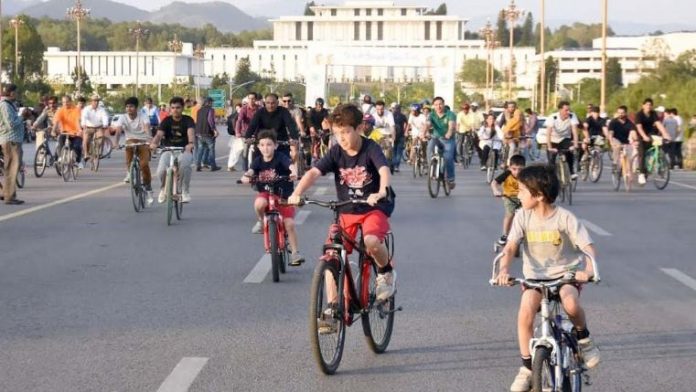
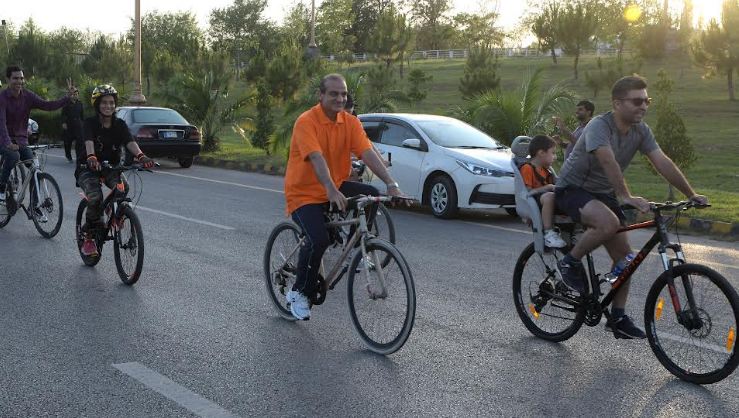
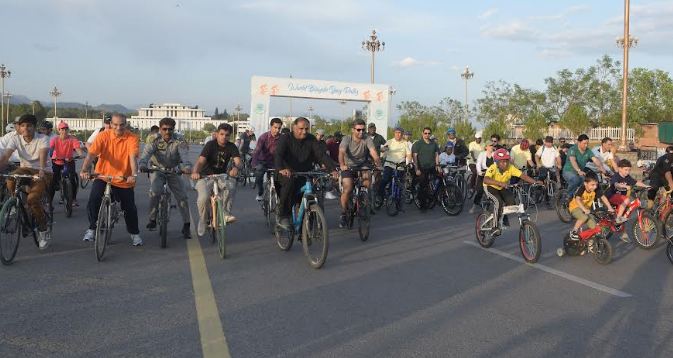
ISLAMABAD, JUN 1: Serena Hotels, in collaboration with the Embassy of Turkmenistan, organized a vibrant and inclusive World Bicycle Day Rally in Islamabad to promote the health benefits of cycling and its positive impact on the environment. This marks the third consecutive year of this collaboration, underscoring a shared commitment to sustainability and community well-being.

Cyclists from all walks of life including diplomats, civil society members, corporate professionals, families, and youth gathered at D-Chowk for an early evening rally and, cycled to Islamabad Serena Hotel embodying the spirit of unity and purpose behind the global observance.

The event was organized as part of Serena Hotels’ Sports Diplomacy initiative, which uses sports as a bridge to bring communities together and inspire healthy lifestyles. Under this platform, Serena Hotels has also championed numerous inclusive programs, including free golf training camps and tennis clinics for young girls, blind cricket, squash, polo, and winter sports.

Speaking on the occasion, Mr. Aziz Boolani, CEO of Serena Hotels, emphasized the significance of cycling in modern urban life:

“Cycling is more than just a mode of transport; it is a path toward personal well-being and a greener planet. Through this rally and many other initiatives under our Sports Diplomacy program, we aim to create inclusive opportunities for people of all backgrounds to engage, grow, and thrive.”

The rally was graced as the chief guest, by Mr. Syed Ali Asad Gillani, Additional Foreign Secretary (Afghanistan & West Asia. His remarks highlighted the value of collaborative diplomacy in promoting regional peace and environmental sustainability.

Also addressing the audience were Mr. Ali Gulfraz, President of the Islamabad Cycling Association highlighted the importance of cycling culture and appreciated the growing support for such initiatives in Pakistan.

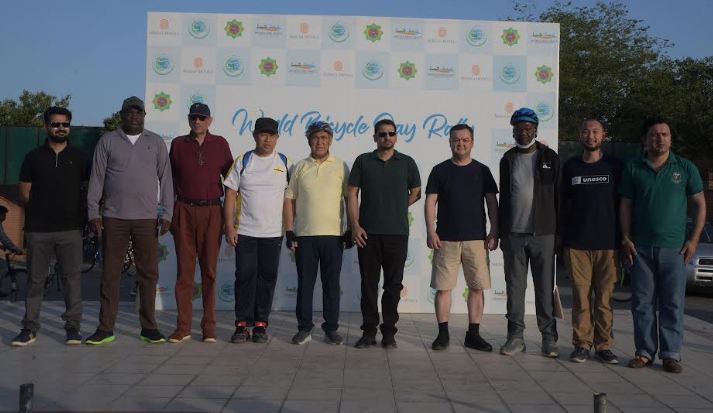
The evening concluded with a group photo and high tea, marking yet another successful edition of a now-anticipated annual tradition.

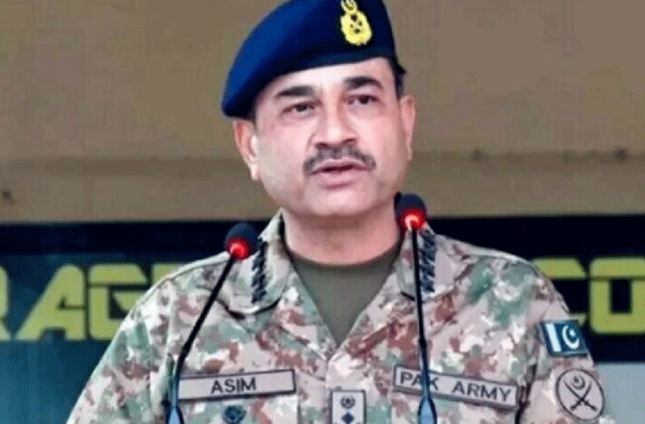
Pakistan won’t compromise on Balochistan’s peace: Field Marshal Asim Munir

Pakistan won’t compromise on Balochistan’s peace: Field Marshal Asim Munir

ISLAMABAD, JUN 1: Field Marshal Asim Munir said that every conspiracy against Pakistan — be it internal or external — will be foiled, while accusing India of fuelling terrorism in Balochistan through its “proxy networks”.

He made these remarks during a joint address with Prime Minister Shehbaz Sharif at a grand jirga held in Quetta, where tribal elders and families of martyrs were in attendance.

“India is behind the terrorist networks operating in Balochistan. It’s proxy war is no longer covert — it has now become open aggression,” said the field marshal as he reaffirmed the resolve of the armed forces to defend the province and safeguard its peace.

Image

“There will be no compromise on peace in Balochistan,” he asserted. “The future of Pakistan is linked to Balochistan. The Pakistan Army is fully prepared to respond to all threats and stand with the people of the province.”

Image

The statement comes at a time of heightened concern over cross-border terrorism and sabotage incidents in the restive region, which has seen intermittent violence in recent months targeting both civilians and security forces.

PM Shehbaz vows state would not allow space for such elements to flourish

PM Shehbaz, who accompanied by Asim Munir, echoed similar sentiments, accusing India of undermining the province’s development efforts.

“India is targeting peace and progress in Balochistan through acts of sabotage,” the prime minister said. “Terrorist groups such as Fitna-ul-Hindustan are trying to mislead the people, but the state, with the support of its citizens, will take the war against terrorism to its logical end.”

He vowed that the state would not allow space for such elements to flourish. “Terrorists will not find a place in our society,” said the premier, stressing the need for accelerated development initiatives.

Image

Mr Sharif announced that major economic packages for Balochistan were in the pipeline and said these must be implemented in a way that their benefits directly reach the common people.

“Balochistan’s youth and tribal elders have played a historic role in promoting national unity,” he said, adding that the government was committed to supporting the families of martyrs and victims of terrorism.

The jirga, held in the provincial capital, aimed to build consensus between state institutions and tribal communities amid ongoing security challenges and the push for long-term stability in the province.

Final T20I: Pakistan win toss, elected to bowl first against Bangladesh

Final T20I: Pakistan win toss, elected to bowl first against Bangladesh

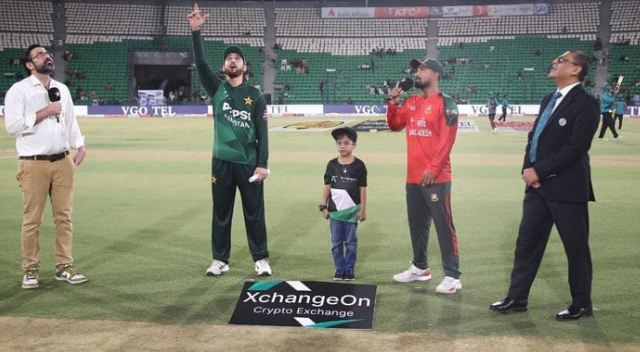
LAHORE, JUN 1: Pakistan won the toss and elected to bowl first against Bangladesh in the third and final T20I match at Lahore’s Gaddafi Stadium on Sunday.

Playing XIs
Pakistan: Sahibzada Farhan, Saim Ayub, Mohammad Haris (wk), Hasan Nawaz, Salman Agha (c), Shadab Khan, Khushdil Shah, Faheem Ashraf, Abbas Afridi, Hasan Ali, Abrar Ahmed

Bangladesh: Tanzid Hasan, Litton Das (c), Najmul Hossain Shanto, Towhid Hridoy, Mehidy Hasan Miraz, Jaker Ali (wk), Shamim Hossain, Rishad Hossain, Tanzim Hasan Sakib, Hasan Mahmud, Khaled Ahmed

HEAD-TO-HEAD
The two teams have come face to face 21 times in the shortest format, with Pakistan holding the upper hand with 18 victories, while Bangladesh could secure three triumphs.

Matches: 21
Pakistan: 18
Bangladesh: 3
Pakistan and Bangladesh enter the upcoming fixture with contrasting momentums as the visitors are on a three-match losing streak, while the hosts turn the tide by following a 4-1 away series defeat against New Zealand with a commanding 57-run victory in the second T20I.

Pakistan: W, W, L, L, W (most recent first)

Bangladesh: L, L, L, L, W

UK backs Morocco’s Sahara Autonomy Plan as “Credible Solution”

UK backs Morocco's Sahara Autonomy Plan as

RABAT, JUN 1: The United Kingdom “considers Morocco’s autonomy proposal, submitted in 2007 as the most credible, viable and pragmatic basis for a lasting resolution of the dispute” over the Moroccan Sahara, and “will continue to act bilaterally, including economically, regionally and internationally in line with this position to support resolution of the conflict”.

This position was expressed in a Joint Communiqué signed, Sunday in Rabat, by the Secretary of State for Foreign, Commonwealth and Development Affairs of the United Kingdom of Great Britain and Northern Ireland, David Lammy, and the Minister of Foreign Affairs, African Cooperation and Moroccan Expatriates, Nasser Bourita.

This document underlines that the UK “follows closely the current positive dynamic on this issue under the leadership of His Majesty King Mohammed VI.” It adds that London “recognises the importance of the question of Western Sahara for the Kingdom of Morocco,” noting that this settling this regional dispute “would strengthen the stability of North Africa and the relaunch of the bilateral dynamic and regional integration.”

The UK affirms, in the Joint Communiqué signed at the Foreign Ministry headquarters, that UK “can consider supporting projects” in the Sahara, notably as part of “the UK Export Finance’s £5bn commitment to support new business across the country.”

It also underlines that the UK “recognises Morocco as a key gateway to Africa’s socio-economic development and reaffirms its commitment to deepening engagement with Morocco as a partner for growth across the continent”.

In this document, “both countries support, and consider vital, the central role of the UN-led process,” reaffirming “their full support for the efforts of the UN Secretary-General’s Personal Envoy, Mr. Staffan de Mistura.” To this end, the UK underlines that it is “ready, willing and committed to lend its active support and engagement to the Personal Envoy and the parties.”

“As a Permanent Member of the UN Security Council, the United Kingdom agrees with Morocco on the urgent need to find a resolution to this long-held dispute, which would be in the interest of the parties”, the document notes, adding that “the time for a resolution and to move this issue forwards is long-overdue, and would strengthen the stability of North Africa and the relaunch of the bilateral dynamic and regional integration,”.

This new position of the United Kingdom, a permanent member of the UN Security Council, aligns with the strong stances expressed by many major powers, notably the United States, France, and Spain.

This new position of the United Kingdom, a permanent member of the UN Security Council, reinforces the growing international momentum driven by His Majesty King Mohammed VI in support of the Autonomy Plan under Moroccan sovereignty. It also confirms the credibility of this initiative and the broad consensus backing it to reach a final resolution to the regional dispute over the Moroccan Sahara.

Pakistan navy conducts anti-terror drills at key ports nationwide

Pakistan navy conducts anti-terror drills at key ports nationwide

ISLAMABAD, JUN 1 /DNA/ – Pakistan Navy successfully conducted a comprehensive two-day exercise focusing on countering sub-conventional and asymmetric threats across all major ports and harbours of Pakistan.

The exercises were aimed at validating and refining Tactics, Techniques and Procedures (TTPs) to ensure robust defence of critical maritime infrastructure against evolving asymmetric threats. The exercise involved coordinated operations by PN Fleet units, Pak Marines, SSG (Navy) and Naval Aviation assets.

The exercises scenarios were designed to simulate a range of sub-conventional threats including sabotage, infiltration and unconventional attacks, enabling participating units to enhance inter-agency coordination, situational awareness and rapid response capabilities.

During the course of exercise Commander Coast Rear Admiral Faisal Amin visited various operational setups at ports and harbours and witnessed live action simulations carried out by participating units. COMCOAST appreciated high level of preparedness and professional conduct demonstrated during the exercises. He emphasized the importance of maritime installations, and added that secure functioning of ports and harbours is directly linked to national economic stability and growth.

Pakistan Navy remains committed to maintain high state of readiness to respond to all forms of threats and continues to strengthen its capacity to defend the maritime frontiers against emerging challenges.

Pharmacy chain expands to Attock, boosts local economy, jobs

Pharmacy chain expands to Attock

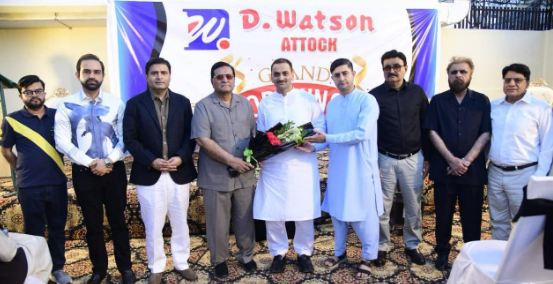
ISLAMABAD, ATTOCK, JUN 1 /DNA/ – President of Attock Chamber of Commerce and Industry, Shahid Zaman has stated that the arrival of a renowned brand like Pharmacy & Superstore in Attock will promote business and create employment opportunities. The business community of Attock warmly welcomes this venture and assures full cooperation.

He expressed these views while addressing a prestigious ceremony held for the inauguration of a new branch of the Pharmacy & Superstore chain in Attock.

Shahid Zaman said that he firmly believes such institutions not only ensure the availability of quality products but also introduce innovation, transparency, and healthy competition into the local business environment. This is a positive step that will not only provide world-class services at people’s doorsteps but also offer job opportunities to the local youth.

He highlighted that the greatest strength of Pharmacy & Superstore is its consistent focus on customer trust. This is the very element that leads any business to success. He paid tribute to the management for turning their vision into reality and choosing a historic city like Attock for their expansion.

He added that this is not just a successful business model, but a beacon of guidance for the next generation — showcasing how principles, quality, and customer care can turn a business into a mission for serving the nation.

On behalf of the Attock Chamber of Commerce, he assured the brand of the business community’s full support. He expressed hope that this branch would not only achieve new milestones of success but also play a pivotal role in strengthening the local economy, generating employment, and improving the commercial environment.

He further hoped that the people of Attock would now have access to high-quality health-related products, medicines, cosmetics, and other daily essentials under one roof at reasonable prices.

Concluding his remarks, he congratulated the management from the bottom of his heart and prayed that Allah blesses this business venture with exponential growth.

Speaking at the ceremony, UBG Secretary General Zafar Bakhtawari said that healthy competition is essential for progress in life. Pharmacy & Superstore is a successful business model and a source of inspiration for the business community. Wherever such brands go, they elevate the standard of business, attract other brands, and even increase real estate value. These are not just businesses — they become part of a city’s identity.

Ahsan Zafar Bakhtawari, Member of the UBG Central Core Committee, stated that although they could expand quickly by opening more branches, they have never compromised on quality. Through this branch alone, 100 families in Attock have gained employment. He emphasized their belief that as the organization grows, so should its workers. Opening 11 branches during the past three economically challenging years proves that they are deeply connected to Pakistan and see their future here.

He encouraged the youth to pursue entrepreneurship instead of jobs, so they can thrive and provide employment to others. Praising Haris Bakhtawari and Salman Bakhtawari, he stated that they truly care for their workers.

Former President of Attock Chamber, Tariq Mahmood, said that the arrival of this brand in Attock is a new and quality facility for citizens, one that will further strengthen the business environment.

Barrister Momin Ali Khan, Punjab Health Advisor Zahid Bakhtawari, Senior Vice President Super Market Haris Bakhtawari, Dr. Hassan Soroush (former President of Rawalpindi Chamber), Hamza Soroush (former Senior Vice President of Rawalpindi Chamber), and Fatima Hassan also spoke at the event, praising the sustainable growth, transparent strategy, and excellent customer service of the brand. They said the inclusion of this enterprise in Attock is a positive change.

They congratulated the management of Pharmacy & Superstore and expressed hope that the brand would not only provide quality products to local citizens but also redefine the commercial landscape of Attock.

Notable attendees included:
Former Chief Commissioner Islamabad Hamid Ali Khan, Abid Bakhtawari, Waqar Bakhtawari, Salman Bakhtawari, Arham Ahsan Bakhtawari, Adnan Siddiqui (President, Chemists Association Attock), Haji Javed Akhtar (Chairman, Chemists Association), Executive Members of Islamabad Chamber of Commerce: Malik Abdul Aziz, Imran Minhas, Faisal Mazmil, Malik Mohsin Khalid, Ishaq Sial, Naveed Satti; former Executive Members: Khalid Chaudhry (former Senior Vice President), Nisar Mirza, Imtiaz Abbasi, Amir Hamza, Faizan Shahzad, Babar Chaudhry, Malik Tahir, Saeed Khan, Qasim Khan (Habib Flour Mills), and others.

The ceremony was hosted by Shehbaz Chauhan.

Trump’s New War Doctrine at Shangri-La 2025

Qamar Bashir

By Qamar Bashir

At the 2025 IISS Shangri-La Dialogue, U.S. Secretary of Defense Pete Hegseth stood before a packed hall and delivered a speech on behalf of Donald Trump that was as much a confession as it was a call to arms. At the outset, Hegseth candidly admitted that the U.S. Army and Defense Forces have lost their luster. Their capability, he declared, is incompatible with the current global security landscape, and the entire system demands a complete overhaul. The U.S. military outlook is bleak, far short of what is required to counter the pressing and growing threats facing the nation. In a stark and unflinching tone, he outlined three imminent threats—not only to the United States, but also to the Indo-Pacific region and all nations allied with the U.S.

After exposing the glaring shortcomings in America’s military readiness, Hegseth pledged to lead the charge in rebuilding U.S. military might—restoring it to a dominant force capable of global projection and, in his words, restoring the “lethal prowness” that once defined American military supremacy. But in doing so, he made it clear that this burden would not fall on the U.S. alone. Hegseth openly called on America’s allies to share the cost of this military buildup. He pointed to Europe, where defense spending has already risen to 5% of GDP in several NATO nations, and called on Indo-Pacific partners to match this commitment—urging them to raise their own military spending to 5% of GDP.

This, however, is not merely about defending collective interests. By constructing a narrative of existential threat—painting China, North Korea, and Iran as the axis of global instability—Hegseth is laying the groundwork for an aggressive American defense-industrial push. His call for increased defense spending is, in effect, a veiled strategy to sell U.S. military hardware, expertise, and services to allies—transforming the American defense sector into an engine of economic growth while pushing allies into deeper military dependence.

Hegseth’s narrative was clear: China is the primary threat, followed by North Korea’s nuclear ambitions and Iran’s pursuit of nuclear capabilities. He made a categorical statement: Iran will never be allowed to develop a nuclear weapon—an assertion that highlights the double standard of a global order where the U.S., Israel, India, and Europe reserve the right to develop any weapons they choose, while others are denied the same sovereignty.

First and foremost, Hegseth emphasized the unprecedented growth of China’s war capabilities, achieved while the U.S. slept at the wheel. China’s advancements in cyber technology, airpower, and shipbuilding have been nothing short of remarkable. The scale and speed of China’s military build-up—measured in hypersonic missile tests, artificial intelligence integration, and a fleet of over 350 naval ships, including aircraft carriers and stealth destroyers—have raised alarm bells across the Indo-Pacific. Hegseth bluntly warned China not to use this military might to intimidate its neighbors—Taiwan, the Philippines, Australia, and others in the region.

Yet, Hegseth’s attempt to portray India as a rising counterweight to China rang hollow. He highlighted the U.S.-India defense cooperation as a model, citing joint military exercises and technology sharing. But the recent humiliating performance of India’s military—against a far smaller, resource-constrained Pakistan, grappling with economic and political crises—drew quiet laughter from the audience. Many delegates questioned how India, unable to stand up to Pakistan, could possibly challenge China. It was a moment that underscored the futility of propping up India as a strategic equal to China; India, as Hegseth’s own narrative inadvertently exposed, is years—if not decades—away from posing any meaningful military challenge to Beijing.

While the U.S. is scrambling to revive its military-industrial complex, China has charted a different course—one rooted not in military aggression, but in strategic patience, economic integration, and a long-term vision for global engagement. Historically, China has never pursued colonization; even the Great Wall was a defensive measure, not a springboard for conquest. Today, China is building a new kind of “Great Wall”—a deterrence strategy based on formidable military capabilities, yes, but also on economic connectivity, infrastructure development, and partnerships that create win-win scenarios globally.

China’s Belt and Road Initiative spans over 150 countries, building ports, roads, railways, and digital infrastructure. While the U.S. urges its allies to cut economic ties with China and instead buy American weapons, China is quietly creating interdependencies that promote peace, stability, and shared prosperity. Chinese projects in Africa, Central Asia, and the Pacific are not merely about profit; they are about creating an environment where countries are economically entangled in a way that makes conflict undesirable.

Hegseth’s call to decouple economically from China is a direct admission of Washington’s fear: that economic interdependence makes military adventurism risky and costly. By urging allies to sever economic ties with China, he hopes to create a geopolitical environment where military options become viable again. But this strategy is inherently flawed. Allies are not blind. They understand that buying American weapons comes at the cost of their own economic growth. It does not create jobs, build ports, or feed their people. It simply arms them for wars they may not want to fight.

Hegseth’s vision, in essence, is a return to the old Cold War playbook—framing China as a “communist threat,” invoking ideological rhetoric that has little resonance in today’s multipolar world. It’s a narrative that ignores the fact that China’s system, while single-party, has lifted over 800 million people out of poverty, created the world’s largest middle class, and is now extending prosperity to partner nations worldwide.

The stark contrast between America’s approach and China’s could not be clearer. While the U.S. builds walls of militarization, China builds bridges of trade. While the U.S. sells fear, China offers infrastructure. While the U.S. warns of threats, China promotes mutual benefit. The U.S. narrative is built on a crumbling foundation of outdated military dominance, while China’s strategy is grounded in economic diplomacy, technological innovation, and a steadfast commitment to non-interference.

Hegseth’s Shangri-La speech may have been a rallying cry for America’s military-industrial complex, but it also laid bare the limitations of the U.S. approach. Until the U.S. pivots from war-mongering to economic cooperation, from selling weapons to building infrastructure, it will struggle to counter China’s rising influence. The world is watching, and the choice is stark: a future of arms races and conflict, or one of shared prosperity and peace. The path forward is clear, but it requires the U.S. to shed its old habits—and that is a lesson yet to be learned.

By Qamar Bashir

Press Secretary to the President (Rtd)

Former Press Minister at the Embassy of Pakistan to France

Former MD, SRBC

Macomb, Michigan, USA

Stay Connected

64FansLike
60FollowersFollow

Latest Reviews

Exchange Rates

USD - United States Dollar
EUR
1.17
GBP
1.35
AUD
0.72
CAD
0.73