Home Blog Page 604

3 key players of Pak national hockey team seek political asylum in Malta

3 key players of Pak national hockey team seek political asylum in Malta

The team’s goalkeeper, Akmal, declined to be part of the squad selected for the 2024 Azlan Shah Hockey Cup, opting instead to play in an Australian league; Another key player, drag-flicker Abu Bakar, is also playing in an Australian league and did not attend the training camp; Alternate drag flicker Arbaz has declined to join the team, despite attending the camp; team’s physio goes missing in Poland


Exclusive

DNA

ISLAMABAD: In a troubling turn of events for Pakistan’s national hockey team, three key players have reportedly sought political asylum in Malta, while the team’s physio has allegedly gone missing in Poland. Adding to the team’s difficulties, two other prominent players—goalkeeper Akmal and drag flicker Arbaz—have refused to continue playing for Pakistan.

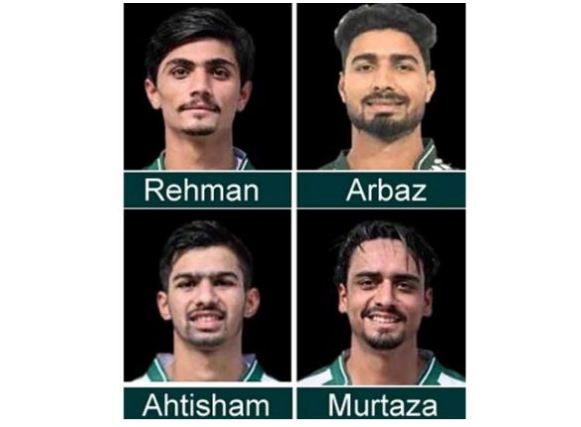
According to sources familiar with the situation, the three players—Murtaza Yaqoob, Abdur Rehman junior, and Ahtisham Aslam—were part of the national squad that recently competed in the Nationals Cup in Poland. Upon returning from the tournament, these players retrieved their passports from the Federation, returned to Poland, and subsequently traveled to Malta, where they are believed to have applied for political asylum. Sources claim these players never shared their intentions with the PHF officials when getting the passports back.

Similarly, the team’s physio, Waqas, who accompanied the squad to Poland for the Nations Cup, chose not to return with them. As a result, the Pakistan hockey team had to hire a new physio.

The team’s goalkeeper, Akmal, declined to be part of the squad selected for the 2024 Azlan Shah Hockey Cup, opting instead to play in an Australian league. He remains in Australia and will therefore be unavailable for the upcoming Asian Championship, which starts on September 8 in China.

Another key player, drag-flicker and vice-captain of the team Abu Bakar, is also playing in an Australian league and did not attend the training camp for the China tour. Sources indicate that he might join the team in China, but his participation is uncertain. Even if he does join, it will be challenging for him to integrate with the team, as he hasn’t spent time with the new players during the camp.

Alternate drag flicker Arbaz has declined to join the team, despite attending the camp regularly. Sources reveal that on the final day of the camp, Arbaz informed the management that he would not be participating as a form of protest, claiming he was deliberately overlooked for the Azlan Shah and National Cup tournaments. Some sources believe Arbaz is not going with the team because he also is heading abroad to play in league.

Olympian Tahir Zaman, who has coached the Egyptian and Omani hockey teams, during a recent interview highlighted the immense talent of Pakistani players. He praised their innate ability to learn quickly but lamented the lack of quality coaches in the country, emphasizing that skilled teachers are essential for producing talented players.

Tahir also brought attention to another pressing issue: the lack of player empowerment. He noted that, in the past, players had job security through departmental jobs, but today, many lack this stability. As a result, players are increasingly turning to leagues that offer better compensation. He also criticized the Pakistan Hockey Federation (PHF) for the current state of hockey in the country and urged for immediate reforms.

Tahir suggested that the PHF should be restructured along the lines of the Cricket Board. He recommended establishing a panel of experts within the federation to provide guidance on modern hockey techniques and strategies.

The Indian hockey team once faced significant challenges, but their remarkable comeback has been nothing short of incredible. Following their impressive performance in the Paris Olympics, they have now climbed to No. 5 in the world hockey rankings. Unfortunately, Pakistan currently ranks at No. 16, which is the lowest position among the major hockey-playing nations.

The government must take a serious approach to addressing the issues surrounding hockey. While the Pakistan Hockey Federation (PHF) has its internal challenges, it also has legitimate concerns that need to be acknowledged. A significant issue is the lack of sufficient funds to promote hockey at the grassroots level. In the past, when funds were available, they were reportedly mismanaged by previous PHF officials. Therefore, it is crucial to establish a robust system of checks and balances to ensure that future funds are properly utilized for their intended purpose.
ISSI launches its latest book on‘ The Return of the Taliban: Int’l and Regional Perspectives’

ISSI Launches its latest book on‘ The Return of the Taliban: Int'l and Regional Perspectives’

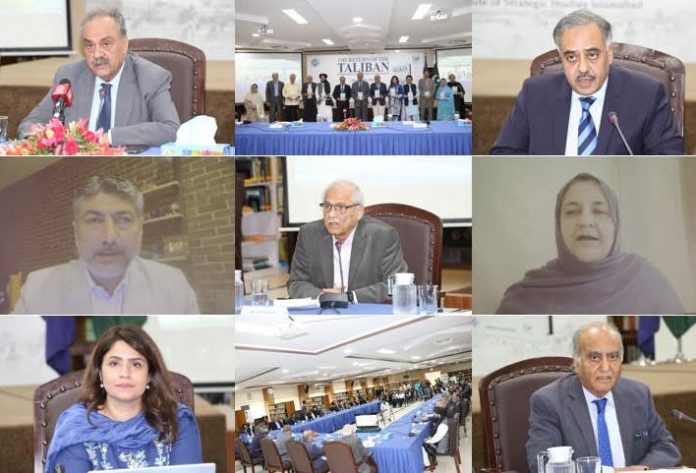
ISLAMABAD, AUG 28 /DNA/ – The Centre for Afghanistan, Middle East and Africa (CAMEA) at the Institute of Strategic Studies, Islamabad (ISSI) organised the launch its latest book, ‘The Return of the Taliban: International and Regional Perspectives,’ edited by Director Amina Khan. The Chief Guest for the event was Ambassador Asif Durrani, Pakistan’s Special Representative on Afghanistan. Distinguished discussants included Mr. Zahid Hussain, Journalist and Analyst; Ambassador Omar Samad, Non-resident Senior Fellow at the Atlantic Council’s South Asia Centre, Washington; and Ms. Rangina Hamidi, Former Minister of Education, Afghanistan. Ambassador Sohail Mahmood, Director General, ISSI; Ambassador Khalid Mahmood, Chairman BOG, ISSI; and Ms. Amina Khan, Director CAMEA also spoke on the occasion.

Ambassador Asif Durrani, in his address, appreciated ISSI for the launch of the book, underlining that individual contributions of scholars on Afghanistan and the region offer a better insight into the governance aspects of the country since the takeover by the Afghan Interim Government in 2021. On terrorism, he said that valuable insights by the authors should help policymakers and security community to take a serious note and tailor their responses. Talking about the Pakistan-Afghanistan relationship, he said that the two countries are bound in a symbiotic relationship and have suffered together in the last four decades. It was important for Afghanistan to address the issues relating to cross-border terrorism. He concluded by saying that given the neglect that Afghanistan faces, the book is a breath of fresh air for scholars searching for intellectual inputs about Afghanistan.

Ambassador Sohail Mahmood, while expressing his views, stated that the volume comes out at an important time, just as the Taliban rule marks completion of three years. He further said that August 2021 indeed marked another crucial turning point in the history of Afghanistan, as the Taliban regained power. This was a development fraught with wide implications for the region and the world. The concomitant completion of withdrawal of U.S. forces further enhanced the salience of that moment. Ever since, the international community’s attention has been focused on questions relating to governance, security, and human rights issues as well as regional and international diplomacy. He also said that Pakistan has long stressed that a peaceful, stable and prosperous Afghanistan is in its vital interest. Similarly, regional economic integration and connectivity; including through initiatives like the China-Pakistan Economic Corridor (CPEC), would greatly benefit Afghanistan, Pakistan and the broader region. For this to materialise, however, sustainable peace remains indispensable requirement. The interim government in Kabul needs to abide by the pledges they made in Doha, relating to inclusivity, respect for the rights of all Afghans, and above all, not allowing its territory to be used against any country. The Afghan side must address Pakistan’s specific concerns relating to terrorism, in an effective, credible and sustainable manner. With meaningful forward movement on this account, he underlined, the two countries should be able to work together to realise the full potential of Pakistan-Afghanistan relations in all dimensions.  

Ms. Amina Khan, while introducing the book said that CAMEA’s 4th edited book comes out at a very important juncture in Afghanistan’s history, as the ‘Islamic Emirate of Afghanistan’  completes three years in power as the de facto, though not de jure, political authority in Afghanistan. She added that over the past 3 years, the Taliban’s governing structure has evolved and taken shape, into what can be defined as an authoritarian yet selectively pragmatic governing style. The IEA have managed to establish a fair degree of stability and security throughout the country. They have increased their diplomatic outreach and enhanced trade with neighboring and regional countries. She concluded by saying that achieving durable peace necessitates a comprehensive approach on the part of the international community but more so the Islamic Emirate, who must fulfill their responsibilities by ensuring governance is inclusive, responsible, accountable and one that serves the Afghan people.

Ms. Rangina Hamidi, while expressing her views, appreciated the diverse perspectives in the book and stated that in her opinion, the Taliban movement is not strictly Pashtun movement, although the movement mainly comprises of Pashtuns. She further said that the Pashtun people have suffered on both sides of the border. She spoke of the importance of education for both boys and girls and lamented the restrictions on girl’s education and women’s rights. She concluded by saying that while the Taliban have not changed, the international community must promote engagement as there was no alternative and no military solution.

Ambassador Omar Samad, in his remarks, said that Afghanistan is a complex country and this comes across in many of the chapters in this book, not only as a pre and post-colonial nation state in the region with shifting allegiances and emerging power centers. He also said that the country is also a multi-ethnic society, a geostrategic linchpin, a resilient and unconquerable land, a proxy battlefield, and as a crossroad for trade and movement of people and ideas over the centuries. He concluded by saying that it is incumbent on the Islamic Emirate leadership to seek stability and prosperity.

Mr. Zahid Hussain, in his remarks, stated that the book’s timing is ideal, given the Taliban’s unexpected return to power after twenty years of war. While legitimate concerns exist regarding women’s education and human rights, the Taliban now fully control Afghanistan and are not isolated despite lacking formal recognition. He stressed the need for Afghanistan and Pakistan to work together, particularly on issues like the TTP, and emphasized resolving other issues. Ultimately, he argued that the Taliban must evolve internally to gain international recognition.

Ambassador Khalid Mahmood, in his concluding remarks, was of the view that the book gives several perspectives, giving a holistic picture of Afghanistan and is a valuable addition to the current discourse. 

The book includes individual chapters form scholars, experts and practitioners from Pakistan, China, Russia, Iran, Central Asian Republics, Gulf States, Japan, Europe, U.S. and Afghanistan. The event was attended by a cross-section of people including academics, practitioners, foreign diplomats, and members of civil society and the media.

Pakistan-China Institute unites 8 political parties in support of CPEC

Pakistan-China Institute unites 8 political parties in support of CPEC

Pakistan-China Institute’s All Parties Moot reaffirms unwavering support to CPEC, Mushahid terms ties with China central to Pakistan’s Future


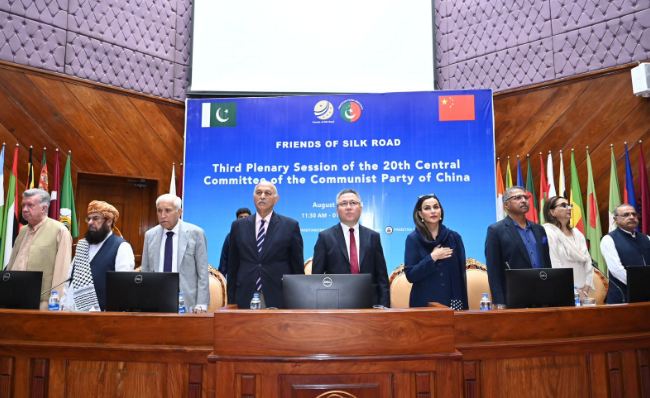
ISLAMABAD, AUG 28 /DNA/ – Pakistan-China Institute (PCI), headed by Senator Mushahid Hussain Sayed, successfully organised a unique event under its ‘Friends of Silk Road’ series, which brought together leaders of 8 political parties on one platform to reaffirm support for CPEC. Leaders belonging to parties from Government and Opposition, PML-N, PPP, PTI, MQM, BAP, NP, NDM and JUI-F, from all provinces, were represented. They also discussed the results of the recently-concluded 3rd Plenum of the Communist Party of China (CPC) and its impact on China and its foreign relations.

Senator Mushahid Hussain Sayed , Chairman Pakistan-China Institute, emphasised the pivotal role of the CPC in China’s ongoing journey of reform and modernization, adding CPC is the world’s biggest political party with 100 million members and longest-serving political party, which has transformed China. Citing figures of China’s phenomenal progress since the 1979 Reform & Opening Up, he said then China had per capita income of $ 157 while now it’s $ 12,000, then China’s GDP was $ 150 billion, now it’s $ 18 trillion. And Fortune 500 now counts China with 142, largest number of companies. Senator Mushahid Hussain listed 5 reasons for the China Success Story in such a short time: Quality of Leadership, Ability to do Course Correction, Continuity of Policy, Learning from others, and Peaceful Foreign Policy.

Senator Sherry Rehman noted that the Third Plenary Session of the 20th Central Committee will have far-reaching impacts not only on China but also on the world. “China has played a crucial role in the development of the Global South, and the China-Pakistan Economic Corridor (CPEC) has created numerous investment opportunities in Pakistan,” Senator Rehman stated. She praised China’s Global Security Initiative, calling it a commendable effort that will ensure peace and stability globally. Additionally, she highlighted China’s role in clean energy development under CPEC as a significant contribution to sustainable development in Pakistan and the region.

Saadia Khaqan Abbasi commended China’s leadership in technological advancement, human development, and labor productivity. “The focus on security and development is a unique selling point of China”, she added.

Senator Shibli Faraz, Leader of Opposition, Pakistan Tehreek-e-Insaf (PTI) emphasised
China’s development story as a role model for the world and highlighted the Belt and Road Initiative (BRI) as having the potential for shared development and prosperity across the globe. “CPEC stands as a beacon of hope for Pakistanis, symbolizing the transformative impact of our strong bilateral relationship,” he added. Senator Faraz also congratulated the Pakistan-China Institute for hosting this important timely event and lauded the role of Senator Mushahid in promoting the enduring friendship between Pakistan and China.

Maulana Abdul Ghafoor Haideri, MNA, Jamiat Ulama-e-Islam underscored the enduring strength of Pakistan-China relations,
praising President Xi Jinping’s vital role in China’s development, noting that his leadership has been instrumental in driving China’s remarkable progress on the global stage.

Senator Afrasiab Khattak, Senior Leader of National Democratic Movement, (NDM), underlined that the Communist Party of China is more than just a political party; it is a popular ruling force that has steered China towards unprecedented development, adding ‘Pakistan must learn from China, do a course correction and become a frontline state in economic development, focusing on geoeconomics, rather than being a frontline state in conflicts’.
Senator Jan Muhammad Jamali said”The future of Balochistan is inextricably interconnected with Pakistan’s broader development goals and yesterday’s must not impede CPEC at any cost”.
Shezra Mansab Ali, MNA, Parliamentary Secretary, Ministry of Foreign Affairs,
reaffirmed Pakistan’s unwavering support for the One-China policy and respect for China’s unity, territorial integrity and sovereignty, adding that “China has consistently supported Pakistan on its core issues, including the Kashmir dispute.”

Senator Jan Muhammad Buledi, leader of National Party emphasized the importance of enhancing collaboration between Balochistan’s universities and their Chinese counterparts. “Our universities in Balochistan should strengthen ties with Chinese institutions to foster academic and research excellence,”
Senator Abdul Qadir from Balochistan Awami Party emphasized the wealth of knowledge and experience that Pakistan can gain from China’s successes across various sectors. “Pakistan can learn a great deal from China’s experience, especially in areas like economic development, infrastructure, and governance.”

Taha Ahmed Khan from MQM highlighted the strategic importance of Karachi as Pakistan’s trade hub, particularly due to its proximity to the China-Pakistan Economic Corridor (CPEC). “Karachi is not only the trade hub of Pakistan but also holds critical importance due to its close ties with the CPEC route,” Khan stated.

He also expressed the MQM’s strong condemnation of the recent attacks on Chinese nationals in Pakistan, reaffirming the party’s commitment to ensuring the safety and security of all Chinese citizens in the country. “We stand firmly against any attacks on our Chinese friends and partners,” he added.

Furthermore, Khan emphasized the importance of focusing on the Artificial Intelligence (AI) and Information Technology (IT) sectors under CPEC. “The AI and IT sectors are pivotal for Pakistan’s future, and we must prioritize their development within the framework of CPEC to fully realize the potential of this partnership,” he concluded.

Senator Ali Zafar from Pakistan Tehreek-e-Insaaf (PTI) emphasized the importance of the Communist Party of China’s (CPC) approach of policy continuity and its principle of “seeking truths from facts.” He noted that “The CPC’s continuity of policy and countering corruption are key factors in China’s sustained development, and Pakistan can benefit greatly from adopting a similar approach.”

Yang Nuo, Minister-Counsellor at the Chinese Embassy in Pakistan, emphasized the importance of the Third Plenary Session of the 20th Central Committee, describing it as a pivotal event for China’s future, stating “This session serves as a blueprint for further reforms in China, setting the stage for continued progress and development.”

Qaiser Ahmed Sheikh, Federal Minister for Maritime Affairs in his cosing remarks as Chief Guest shared his experiences from numerous visits to China, emphasizing the country’s consensus-oriented decision-making process. “In China, decisions are made through a consensus-driven approach, ensuring that all voices are heard and considered, which contributes to their effective governance,” Sheikh remarked. He also spoke about his visits to Gwadar, where he observed significant development under the China-Pakistan Economic Corridor (CPEC). “The development I witnessed in Gwadar is a clear indicator of the transformative impact CPEC has had on the region,” he said.

Sheikh further highlighted the potential and benefits of the Gwadar Airport, noting that it will play a crucial role in the region’s economic growth and connectivity. He concluded by reaffirming the strong bond between Pakistan and China, stating, “Pakistan and China are iron brothers, and we will continue to work together to achieve our shared goals.”

At the end of the event, Senator Mushahid Hussain Sayed read out a Joint Statement on behalf of all participating political parties. The statement reaffirmed Pakistan’s political parties commitment to deepening relationship with China, acclaiming the significant outcomes of the Third Plenary Session of CPC and their unshakable resolve to support, strengthen and sustain CPEC as this initiative is a guarantor for a better tomorrow for Pakistan.

The event was attended by over 200 participants from different sectors like academia, media, industry, civil society, students, scholars and think tanks.

British High Commission Security Manager awarded honorary MBE

British High Commission Security Manager awarded honorary MBE

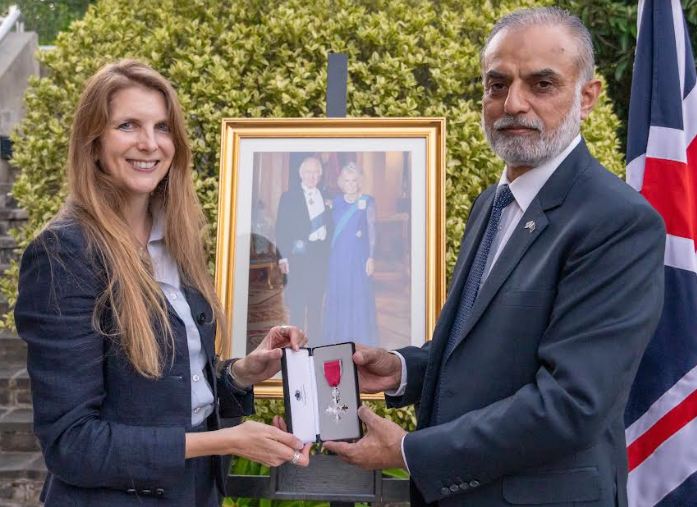
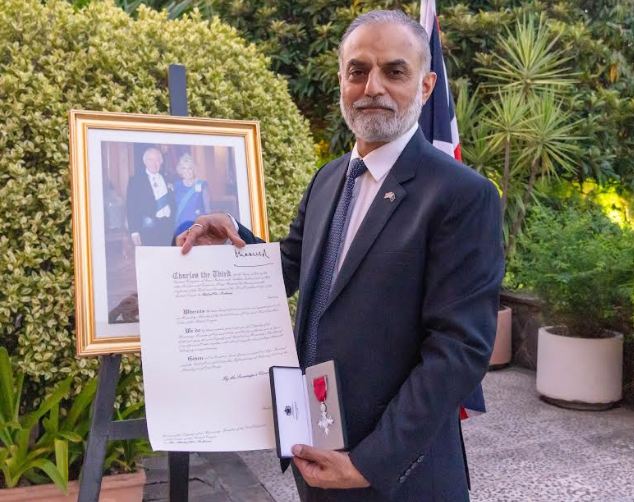
ISLAMABAD, AUG 28: /DNA/ – Captain Shakeel ur Rehman MBE, formerly of the Pakistan Army, has been awarded an honorary MBE for Services to UK-Pakistan Relations.

Rehman, who joined the British High Commission in 2005, was presented his award by the British High Commissioner, Jane Marriott. During his time at the High Commission, he has worked for seven High Commissioners, and overseen security for several UK Ministerial and Royal visits.

Before joining the British High Commission, Captain Shakeel ur Rehman served in the Pakistan Army from September 1989 to May 2022, where he held roles such as Company Commander, Staff Captain, and MTO Infantry Battalion.

Notably, Captain Rehman played a critical role during the 2006 earthquake in Islamabad, where he was among the first to be deployed to Shifa hospital, ensuring support for the British High Commission personnel under treatment. His standout moments also include managing security for Royal visits in 2006 and 2019, as well as visits from Prime Ministers Tony Blair and David Cameron.

British High Commissioner, Jane Marriott CMG OBE, said:

“There is no greater priority for a High Commission than keeping our people safe. Captain Rehman has gone above and beyond the call of duty through his career, and for that we are all extremely grateful. In doing so, he does it with a kindness that positivity that make him a delight to work with, and it is wonderful to see his efforts recognised.”

Captain  Shakeel ur Rehman MBE said:

“I am deeply honoured to be recognised by His Majesty King Charles III for my contributions for my work at the British High Commission. This award is a testament to the hard work and dedication of many, and I am proud to be a part of a community striving for excellence.”

The Most Excellent Order of the British Empire was established by King George V in 1917 to honour individuals who have made significant contributions to the Arts, Sciences, Charitable work, and Public Service.

Jeddah to host Pakistan Investment Summit in Nov 2024

Jeddah to host Pakistan Investment Summit in Nov 2024

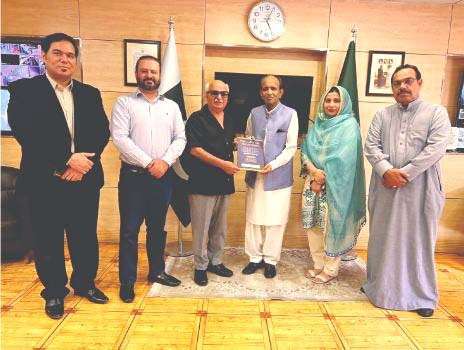
Jeddah Consul General Khalid Majeed will fully participate in the second Pakistan Investment Summit and Smart Expo in Jeddah on November 2.

It is very important to hold a conference and expo between Pakistan and Saudi Arabia, Commercial Consul Sadia Khan

 The business community associated with tourism, minerals, medical, civil aviation industry, construction materials and other sectors will participate in large numbers in the exhibition, Khurshid Barlas.

ISLAMABAD, AUG 28 /DNA/ – Founder Chairman of Pakistan Association of Exhibition Industry Khurshid Barlas and Fahad Barlas Convener  Exhibition met Consul General Khalid Majeed and Commercial Consul Madam Sadia Khan at Pakistan Consulate Jeddah.

 In the meeting, Chairman Khurshid Barlas gave a detailed briefing to Consul General of Pakistan Khalid Majeed and Madam Sadia Khan Commercial Consul about the arrangements for the second Pakistan Investment Summit and Smart Expo on November 2, 2024 at Jeddah Hilton Hotel.

A large number of different business community related to tourism, minerals, medical, civil aviation industry, construction material, private developer, education and other sectors will participate in the exhibition. Consul General Khalid Majeed inaugurated the first Pakistan Investment Summit and Smart Expo in Jeddah. Appreciated the organization and assured Khurshid Barlas that he will also be a part of this conference and support you fully and we stand by your side. Your efforts to increase the country’s economy are commendable.

 It is very important to hold a conference and expo between Pakistan and Saudi Arabia, it will strengthen the mutual relations between the two countries and strengthen the economy. on this occasion the Chairman of Pakistan Association of Exhibition Industry Khurshid Barlas presented the invitation letter to Consul General Khalid Majeed for the exhibition and  Madam Sadia Khan, Commercial Consul Fahad Barlas, Convener Exhibition and Marketing Director of Jeddah Vision for Expo and Conference, Najdi Bakhsh were also present.

Turkish Ambassador bids farewell, praises bilateral economic progress

Turkish Ambassador bids farewell, praises bilateral economic progress

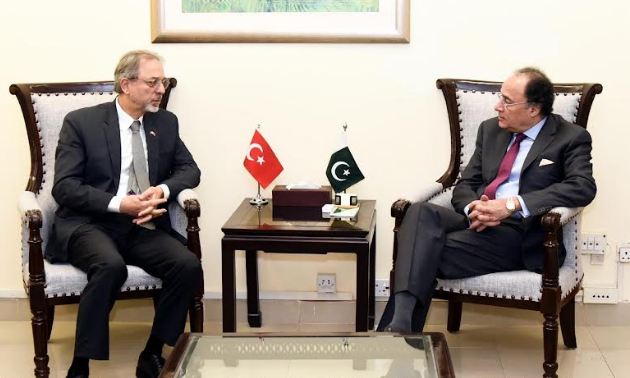
ISLAMABAD, AUG 28 /DNA/ – Mehmet Paçaci, Ambassador of the Republic of Türkiye, paid a farewell courtesy call on Federal Minister for Finance and Revenue, Senator Muhammad Aurangzeb, at the Finance Division today. The meeting underscored the deep-rooted and brotherly relations between Pakistan and Türkiye, founded on shared faith, history, and cultural affinities.

The Finance Minister expressed appreciation for the outgoing Ambassador’s contributions to strengthening bilateral relations and reiterated Pakistan’s commitment to continue deepening its partnership with Türkiye across various sectors, including trade, investment, technical cooperation, and more. The Minister also highlighted the progress made during the recent visit of the Turkish trade delegation to Pakistan, led by Prof. Dr. Omer Bolat, Trade Minister of Turkiye, which helped in exploring new avenues for cooperation in sectors such as energy, agriculture, infrastructure, and technology.

Ambassador Paçaci, in his remarks, expressed gratitude for the cooperation and support extended by the Government of Pakistan during his tenure. He also extended appreciation on behalf of the trade delegation of Turkiye and noted that these engagements would further solidify economic ties and help unlock the vast potential for bilateral trade and investment.

The meeting also highlighted the signing of the Trade in Goods Agreement 2022, as a significant step towards achieving the bilateral trade target of USD 5 billion. Both sides underscored the need for enhancing the trade and investment portfolio through more Government-to-Government (G2G) and Business-to-Business (B2B) arrangements.

In the end, the Minister extended his best wishes to Ambassador Paçaci in his future endeavors and expressed confidence for continued collaboration and enduring friendship between Pakistan and Türkiye. The Ambassador also assured of Turkiye’s continued commitment to working towards the common goals of both nations.

Traders across Pakistan observe strike against hike in taxes, electricity bills

Traders across Pakistan observe strike against hike in taxes, electricity bills

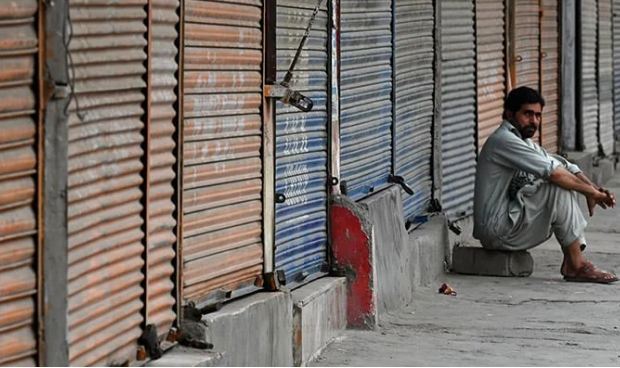
ISLAMABAD, AUG 28: To protest against the government’s tax reforms, traders across the country are observing a nationwide strike on Wednesday with support from traders associations and political parties.

The political parties throwing weight behind the traders include Jamiat Ulema-e-Islam Fazl (JUI-F), Pakistan Tehreek-e-Insaf (PTI), Jamaat-e-Islami (JI) and Awami National Party (ANP).

Ahead of the countrywide strike, Anjuman-e-Tajiran Karachi had announced a complete closure of business today.

“The political leadership has failed,” said Javed Shams, the president of the All Pakistan Anjuman-e-Tajiran’s Sindh chapter, announcing his support for the nationwide strike.

Shams added that all business will be completely closed today in all small and big cities of Sindh. “[We] reject the hike in taxes and electricity bills.”

He added that the ruling class wants to take away the right to live from the business class and the people, insisting that the “Trader Friendly Scheme” is not acceptable in its current form.

The Karachi Electronics Dealers Association has also backed the strike call. KEDA President Mohammad Rizwan said all trade unions from Karachi to Khyber are participating in the strike.

“If the issues are not resolved, the duration of the strike may increase,” said Rizwan.

All Karachi Traders Union President Atiq Mir termed the strike as one of the citizens and not traders. “The common man is worried about inflation.”

Punjab, KP also observe strike
Meanwhile in Punjab, cities including Vehari, all business centres are closed following the call of nationwide strike by the Central Traders Association of Pakistan with all markets including those at the Club Road, Jinnah Road, Luddun Road, Rail Bazaar, Choori Bazar and Multan Road completely closed.

The president of the association, supporting the call, said that the government has imposed “cruel taxes” on the traders.

In Gujranwala, all small and major markets in the cities’ inner parts including Cloth Market, Steel Market and Sanitary Market, as well as those in the Satellite Town will be closed. The city’s mobile phone association has also endorsed the call for strike.

In Khyber Pakhtunkhwa’s Peshawar, traders’ organisations are observing the strike, as various markets remain shut across the city with trade unions demanding the withdrawal of the hike in power bills and reduction in tax rates.

All markets including Sadar Bazaar, Shafi Market, Qisa Khwani and Khyber Bazaar have been shut, while traders organisations have set up protest camps in front of the closed markets.

In Dera Ismail Khan, traders are observing a complete strike with all commercial centers closed following support from traders’ association, traders’ union and traders’ action committee.

Traders across cities in Sindh — including Nawabshah, Tando Allahyar and others — are also striking with central commercial areas as well as small- and large-scale businesses shut in adhere with the strike.

“Monthly tax, withholding tax, professional tax are anti-business policies,” said Sindh Traders Association President Waqar Memon.

Markets and commercial centres in Punjab cities including Chichawatani are closed following the strike with traders demanding the government to withdraw “cruel” taxes and reduction in electricity cost.

On the other hand, JI in Charsadda have also called for the traders’ strike, as all food shops including hotels remain closed.

Earlier this week, the religio-political party had announced to observe a shutter-down strike across the country on August 28 (today) to mount pressure on the coalition government to provide relief to the masses.

The announcement came after the party postponed its 14-day long sit-in on August 9 following successful negotiations with the government over demands including slashing high power tariffs and reviewing agreements with the Independent Power Producers which have been under the spotlight as people are paying hefty bills blamed on capacity payments being made to independent power producers.

The True Price of Peace: Understanding the Pain of a Martyr’s Family

The True Price of Peace: Understanding the Pain of a Martyr's Family

By Muhammad Mohsin Iqbal

In the course of life, there is one inevitable truth that no one can escape—death. It is the one certainty that transcends all boundaries, uniting every soul regardless of status, wealth, or power. Every living being is destined to taste death, and its timing is as fixed as the rising and setting of the sun. This universal fact is often accepted in theory, yet the reality of facing the departure of a loved one is a profoundly painful experience, one that shakes the very foundations of those left behind.

The grief is especially poignant when death comes unexpectedly, claiming the life of someone who is neither aged nor suffering from any life-threatening illness. Such losses are like a thief in the night, robbing families of their joy and leaving a void that can never be filled. The shock is compounded when the deceased is young, full of dreams, and with their whole life ahead of them. For those who had only just begun to experience the springtime of their lives, who were on the cusp of milestones such as marriage or the birth of a child, death seems unbearably cruel.

Imagine a family preparing to decorate their daughter’s head with the crown of a bride, only to be told that the groom has been taken by the cold hand of death. Picture a father who has not yet seen the face of his unborn child, or a brother who was planning to arrange for his sister’s wedding, only to receive the heart-wrenching news that their loved one has fallen in battle. The dreams of a future filled with joy and celebration are shattered in an instant, replaced by the harsh reality of loss and mourning.

In Pakistan, such tragedies are not uncommon, particularly among the families of soldiers. These brave men—whether they be Sepoy, Havildar, Lance Naik, Second Lieutenant, LieutenantCaptain, or Major—serve with honor and courage, knowing full well that death could claim them at any moment. Yet they go forth willingly, not for the paltry sum of money they earn, but for the love of their homeland and the protection of its people. The salary of a soldier, no matter how high, can never truly compensate for the life they risk every day. Human life is far too precious to be measured in rupees, yet these soldiers lay down their lives with the knowledge that their sacrifice is for a greater cause.

The land of Pakistan has also been a witness to countless sacrifices, where the atmosphere has reverberated with the tales of valor and dedication. Those who bore the weight of four stars on their shoulders and chests, symbols of their courage and glory, have selflessly embraced death for the sake of the nation. These brave souls, standing at the forefront of duty, have laid down their lives with unwavering commitment, ensuring that the spirit of patriotism and honor continues to inspire future generations. Their legacy is etched into the very soil of the country, a testament to their unwavering devotion to Pakistan.

When the body of a martyr returns to his home, the scene is one of unspeakable sorrow. The wails of mothers, the silent tears of fathers, the devastated expressions of siblings and spouses—all speak to the immeasurable loss that has befallen them. The grief of losing a loved one to war is compounded by the pride in knowing that they died a hero, yet this pride does little to ease the pain. It is in moments like these that the true cost of freedom and security is felt, not in abstract terms, but in the raw, personal agony of families who must go on without their beloved son, brother, or husband.

It is difficult to truly understand this pain unless one has experienced it firsthand. The sudden absence of someone who was once the center of a family’s world leaves an indelible mark on the hearts of those who remain. And yet, for the sake of the nation, these families bear their grief with dignity, knowing that their loved one’s sacrifice was not in vain. It is a reminder that the freedoms and security we often take for granted are built on the sacrifices of those who came before us, and those who continue to serve.

As a responsible citizen, it is our duty to honor these martyrs, not just in words, but in our actions and attitudes. We must recognize the enormity of their sacrifice and appreciate the peace and safety they have provided for us. It is easy to become absorbed in the trivialities of daily life, forgetting that there are those who have given everything so that we may live in peace. Yet, it is precisely because of their sacrifice that we have the luxury to do so.

Living nations are those that remember and honor their heroes. They understand that their freedom was bought with blood, and they do not let the memory of their martyrs fade away with time. Instead, they keep their legacies alive, teaching future generations about the price of freedom and the value of sacrifice. In this way, the memories of the fallen are preserved, and their sacrifices continue to inspire and protect the nation long after they have gone.

So, the next time you hear of a soldier who has been martyred, take a moment to reflect on the life that was lost and the family that is now grieving. Consider the dreams that will never be fulfilled, the joys that will never be experienced, and the future that was cut short. Let this be a reminder to cherish those who are still with you, to appreciate the sacrifices made on your behalf, and to honor the memory of those who gave their lives for your tomorrow.

A regional approach could help address Afghan challenges, say experts

A regional approach could help address Afghan challenges, say experts

ISLAMABAD, AUG 28 /DNA/ – Speakers at a roundtable discussion organized by the Institute of Regional Studies (IRS) have called for adopting a regional approach towards the various challenges confronting and emanating from Afghanistan, including economic, human rights, and terrorism related challenges.

Various speakers at the event argued that with the establishment of de facto diplomatic relations with more and more capitals of the world, the Afghan Interim Administration was slowly expanding its diplomatic footprint. They maintained that even as the Afghan Interim Administration did not enjoy support of all ethnic groups in Afghanistan, it was seen as a force that had brought about a certain amount of political stability and an end to large-scale violence in Afghanistan.

The experts pointed out, however, that notwithstanding the relative political stability, human rights, especially women rights, remained compromised in Afghanistan. The enactment of a strict ‘promotion of virtue and prohibition of vice’ law was mentioned as a recent case of additional restrictions on the fundamental rights of Afghans, especially the Afghan women, whose future remained uncertain amidst the prevailing restrictions on their movement and education.

The participants alsofelt that forming an inclusive government remained a major challenge for the Afghan Interim Administration besides the economic situation of the country.The speakers were of the view that even though Afghan economy did not collapse as some had predicted, it remained precariously fragile.

While highlighting the efforts of Afghan Interim Administration towards expanding economic relations with the neighbouring countries, concerns were also expressed over the long-term health of the Afghan economy. Many speakers also urged the Afghan Interim Administration to ease restrictions on the travel of journalists to Afghanistan to report from the ground so that a factual picture of Afghanistan could be presented to the world. 

The participants of the roundtable included President IRS, Ambassador Jauhar Saleem,Director-General Institute of Strategic Studies Research and Analysis(ISSRA) at the National Defence University Major General Muhammad Raza Aizad,senior journalists Tahir Khan, Sumera Khan, and Khalid Khan, Director-General Pak-Afghan Youth Forum Salman Javed, athlete and women’s rights activist Samar Khan, and IRS researchers Aarish U. Khan and Aleena Shah.

A large audience including diplomats, academics, researchers, opinion-makers, and students witnessed the lively discussion.

Muscat hosts eighth session of Pakistan-Oman bilateral consultations

Muscat hosts eighth session of Pakistan-Oman bilateral consultations

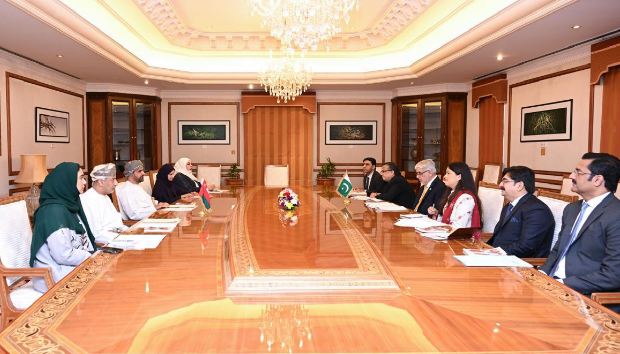
MUSCAT, AUG 27 /DNA/ – The eighth session of the Pakistan-Oman Bilateral Political Consultations was held today in Muscat, Oman. The Additional Foreign Secretary (Middle East), Ambassador Shehryar Akbar Khan and the Chief of GCC and Regional Neighborhood Department, Ambassador Sheikh Ahmad bin Hashil bin Rashid Al Maskari of Foreign Affairs of the Sultanate of Oman, led their respective sides.

Stay Connected

64FansLike
60FollowersFollow

Latest Reviews

Exchange Rates

USD - United States Dollar
EUR
1.17
GBP
1.34
AUD
0.67
CAD
0.73