Home Blog Page 572

PAC blacklists 8 NGOs over missing audit records: license cancelled

PAC blacklists 8 NGOs over missing audit records: license cancelled

By Nazir Siyal / DNA

KARACHI: In a high-level meeting held on Tuesday, the Public Accounts Committee (PAC) of Sindh, chaired by senior politician Nisar Khuhro, exposed alarming financial irregularities involving eight non-governmental organizations (NGOs) under the provincial government’s Community Development Program. The PAC has ordered the blacklisting and license cancellation of these NGOs for failing to provide required audit records, invoices, and proof of expenditure against over Rs. 800 million in public funds.

The named NGOs include HANDS, SRSO (Sindh Rural Support Organization), IBA Karachi, HELP (Health Education Literacy Program), Engro Foundation, Women & Children Medical Care Trust, and District Development Association Tharparkar. These organizations had received funds for various health, skill development, and education projects across Sindh.

Despite receiving three formal notices, these NGOs failed to submit any verifiable financial documents. The PAC has directed the Sindh Social Welfare Department to take immediate action and revoke their registrations and licenses.

According to the audit presented by the Planning and Development Department, funding distribution was as follows, including HANDS: Rs. 18.5 million (health projects), SRSO: Rs. 25.4 million (skill training), HELP: Rs. 22.7 million (health), Engro Foundation: Rs. 935,000 (education), IBA Karachi: Rs. 1.18 million (skill education), Women & Children Medical Care Trust: Rs. 10.2 million (health) and District Development Association Tharparkar: Rs. 22.7 million (skill development)

Further compounding the controversy, PAC uncovered that SRSO, which received billions in poverty reduction funds, was allegedly charging 8–10% interest on interest-free microloans meant for widows under the Union Council-Based Poverty Reduction Program in Kandhkot-Kashmore, Jacobabad, and Shikarpur.

While SRSO’s CEO initially admitted in writing to collecting interest, he later claimed that the mention of interest was a “clerical error”j in meeting minutes. He added that the funds were disbursed through village organizations, not directly by SRSO.

PAC has ordered a fact-finding inquiry to verify the misuse of funds and investigate whether widows were illegally charged interest on government-backed loans.

PAC was further alarmed to learn that SRSO has not returned Rs. 380 million in interest earnings from a Rs. 9.67 billion grant issued under the People’s Poverty Reduction Program for projects in six districts, Khairpur, Sanghar, Mirpurkhas, Badin, Thatta, and Umerkot.

The project officially ended in June 2025, yet the funds remain unreturned.

SRSO claimed that the funds would be returned once the Planning Department sends a formal letter. PAC has now ordered a comprehensive investigation into SRSO’s financial practices, fund usage, and delay in repayment.
America Without Immigrants: Collapse in Real Time

Qamar Bashir

By Qamar Bashir

Imagine waking up to an America where every immigrant—documented or not—has vanished. In mere hours, fields lie barren, hospitals are crippled, software projects stall, and restaurants shutter. Markets nosedive, trucks stop moving, and cities fall eerily silent. This isn’t dystopian fantasy—it’s a projection grounded in data, real-life policy outcomes, and warnings from leaders like California Governor Gavin Newsom, who recently declared: “Without immigrants, California collapses—and America follows.”

California, the world’s fourth-largest economy with a GDP of $4.1 trillion, owes its strength to immigrants. From Silicon Valley coders to Central Valley farmworkers, from hospital nurses to hotel cleaners, immigrants form the invisible scaffolding of nearly every major industry. They don’t just fill gaps—they drive growth, productivity, and innovation. Their removal would not simply hurt America. It would break it.

Start with agriculture. Over 50% of farm laborers in the United States are immigrants, many of them undocumented. These men and women—often unseen—pick strawberries, milk cows, and harvest grains that keep America fed. Remove them, and crops rot in the fields. Dairy production stalls. Food prices spike. Shortages become the norm, not the exception. Rural America collapses first, followed swiftly by every grocery store in the nation.

Healthcare is next to shatter. Nearly 30% of doctors in the U.S. are immigrants. Add to that 23% of nursing assistants and 38% of home health aides. This isn’t an abstract number—it’s the emergency room doctor, the nursing home caregiver, the hospice nurse on a night shift. Their absence would render hospitals inoperable and elder care systems paralyzed. States already stretched thin on healthcare would face system-wide breakdowns within weeks.

In Silicon Valley, the effect would be equally catastrophic. Twenty-four percent of tech workers in the U.S. are immigrants. More than 55% of startups in America’s innovation epicenter are founded by immigrants or their children. They drive advancements in artificial intelligence, cybersecurity, green energy, and medical research. Pull them out, and Silicon Valley becomes a desert of abandoned code and shelved inventions. The U.S. loses its technological supremacy overnight.

Wall Street too is built on global minds. One in four financial analysts and fintech engineers is foreign-born. Their departure triggers a domino effect: portfolio instability, retreating investors, and algorithmic panic in global markets. Without the quantitative analysts from China, India, and Eastern Europe, the heart of American finance skips a beat—and may never recover.

On construction sites, nearly a third of the workforce is made up of immigrants. They build homes, wire buildings, lay bricks, and pave roads. Their sudden removal would halt housing projects, delay critical infrastructure, and choke efforts to rebuild after disasters. The affordability crisis would deepen; entire cities would freeze in mid-construction.

The service industry wouldn’t fare better. Immigrants hold more than 40% of jobs in hotels, restaurants, laundries, garbage disposal, and transportation. They clean rooms, prepare food, drive taxis, operate buses, and sweep streets. Without them, urban centers grind to a halt. Tourism dies. City sanitation collapses. Public transport shrinks to a shadow of itself. The American city, in every major state, begins to decay from within.

In the realm of manufacturing and logistics, 15% of the labor force is immigrant. These individuals assemble electronics, produce steel, fabricate auto parts, and staff meatpacking plants. Pull this vital workforce and the U.S. supply chain falls apart—factories shut down, exports plummet, and global contracts are cancelled.

Perhaps most dangerously, America loses its creative spark. Nearly half of all PhD holders in STEM fields are foreign-born. Immigrants contribute to over 25% of U.S. patents each year. These are the minds building new vaccines, designing space systems, and securing digital infrastructure. When these innovators vanish, so does America’s future.

Then there’s the fiscal nightmare. Immigrants contribute over $330 billion in taxes annually—funding Social Security, Medicare, Medicaid, and public schools. Their departure would tear massive holes in state and federal budgets. Pensions would become unstable. Infrastructure funding would dry up. Many rural hospitals and schools—already on financial life support—would shutter permanently.

Economic modeling by UC Merced and the Bay Area Council estimates that removing undocumented immigrants alone would cost California up to $275 billion annually—roughly 9% of its state GDP. Scale that across the country, and the U.S. economy could shrink by over $1.5 trillion, with ripple effects triggering global recession.

Governor Gavin Newsom has made it clear: “Immigrants are the backbone of California’s economy… They are the reason California leads in technology, agriculture, and service.” He warned that recent immigration crackdowns threaten the entire ecosystem. “Under the Constitution, the Governor of California and all staff will protect immigrants by all means possible, without relent. And this will be done with the cooperation and goodwill of all inhabitants of California—whether immigrants or not.” His words echoed as Los Angeles reeled from ICE raids that left neighborhoods terrified, businesses unmanned, and families torn apart.

Without immigrants, America doesn’t just lose labor—it loses soul, structure, and strength. It stops being a destination of dreams and becomes a monument to fear. No economy, no matter how powerful, survives by cannibalizing the very people who build it.

Immigrants have cleaned America’s homes and innovated its tech. They’ve raised its children and revitalized its cities. They’ve laid its foundations—literally and figuratively. To drive them out isn’t just a political miscalculation; it’s economic suicide.

Immigration isn’t America’s burden—it’s America’s engine. And without that engine, the world’s most powerful nation will stall—and fall.

Irish envoys meet Syed Naveed Qamar to strengthen ties

Irish envoys meet Syed Naveed Qamar to strengthen ties

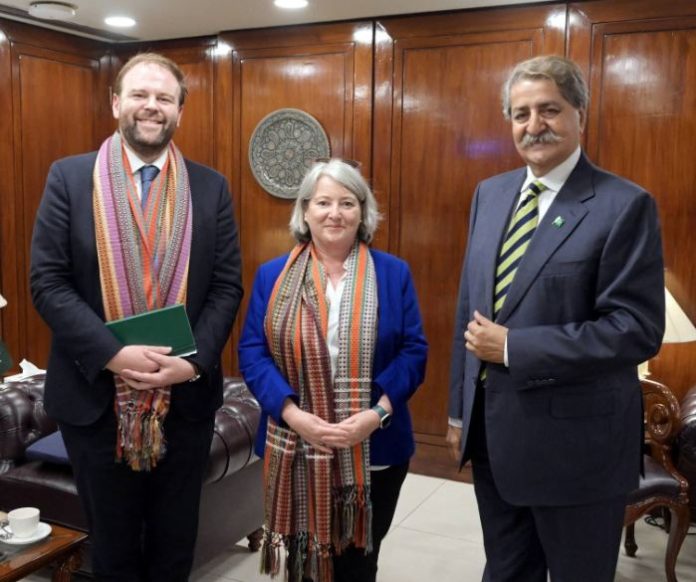
ISLAMABAD, JUL 15 /DNA/ – The Ambassador of Ireland to Pakistan, Mary O’Neill, along with the Deputy Ambassador of Ireland, Declan Johnston, called on the Hon’ble MNA/Chairman Standing Committee on Finance and Revenue, Syed Naveed Qamar, today at the Parliament House in Islamabad.

The meeting focused on areas of mutual interest between Pakistan and Ireland, with discussions centering on the bilateral relationship and ongoing efforts and collaborations, particularly in relation to the establishment of the Parliamentary Budget Office.

Syed Naveed Qamar presented the Ambassador Mary O’Neill and Deputy Ambassador Declan Johnston with traditional shawls as souvenirs. Syed Naveed Qamar – NA 221 Ministry of Foreign Affairs, Islamabad

Pakistan calls for peace, dialogue at SCO Foreign Ministers’ meeting

Pakistan calls for peace

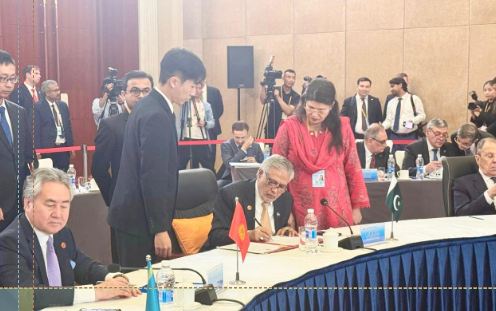
Tianjin, China – 15 Jul /DNA/ – Deputy Prime Minister and Foreign Minister of Pakistan, Mr. Mohammad Ishaq Dar, delivered a strong statement at the Shanghai Cooperation Organization (SCO) Council of Foreign Ministers meeting in Tianjin, China, emphasizing Pakistan’s unwavering commitment to regional stability, multilateralism, and peaceful dispute resolution.

Addressing fellow foreign ministers, Mr. Dar expressed gratitude to China for its warm hospitality and commended its leadership in strengthening the SCO during its chairmanship. He also extended congratulations to Belarus on its full membership in the organization.

SCO as a Stabilizing Force in a Challenging Global Order

Mr. Dar highlighted the SCO’s role as a stabilizing force amid global uncertainties, praising its inclusive approach based on sovereign equality, consensus, and mutual respect. He reiterated Pakistan’s adherence to the principles of the UN Charter, international law, and the SCO’s foundational goals, stressing the importance of non-aggression, non-interference, and peaceful dispute resolution.

Condemnation of Aggression and Call for Justice

The Foreign Minister strongly condemned Israel’s aggression against Iran and the U.S. strikes on Iranian nuclear facilities, labeling such actions as unacceptable violations of international law. He also denounced Israel’s disproportionate use of force in Gaza, calling for an immediate end to atrocities and urging the international community to uphold a two-state solution for Palestine based on pre-1967 borders with Al-Quds as its capital.

Concerns Over South Asian Tensions

Expressing deep concern over recent escalations in South Asia, Mr. Dar criticized the attribution of the Pahalgam attack to Pakistan without credible evidence, which brought nuclear-armed states to the brink of conflict. He reaffirmed Pakistan’s commitment to ceasefire and dialogue but warned against normalizing the arbitrary use of force. “Disputes must be resolved through diplomacy, not coercion,” he asserted, advocating for structured dialogue to address long-standing regional issues.

Strengthening the SCO’s Role

Mr. Dar welcomed the SCO’s growing influence and proposed reforms to enhance its efficiency, including adopting English as a third official language and bolstering the Secretariat’s capacity. He also endorsed the establishment of new security-focused centers to deepen cooperation among member states.

Conclusion

Pakistan remains a steadfast proponent of peace, stability, and multilateral cooperation within the SCO framework. The Foreign Minister’s statement underscored the need for collective action to address global challenges while upholding justice, sovereignty, and international law.

Rs 40 Billion Dried Up: Sindh’s RO Water Plant Exposes Deep Corruption and Dysfunction

Pakistan hockey team not invited to Azlan Shah Cup 2025


Over 2,500 RO and UF plants installed across Sindh to provide clean drinking water, yet 70% remain dysfunctional. Billions squandered in fake tenders, ghost installations, and political patronage while citizens thirst.

By Nazir Siyal / DNA


KARACHI: A massive corruption scandal has engulfed the Sindh government’s much-publicized Reverse Osmosis (RO) water plant initiative, revealing decades of misuse of funds, political favoritism, fake tenders, and abysmal performance of over 2,500 RO and Ultra Filtration (UF) plants installed across the province.

Despite spending over Rs 40 billion on the Drinking Water Hub (DWH) Project, the majority of RO plants lie abandoned, stripped for scrap, or never became operational.

Originally launched to provide clean drinking water to desert and drought-prone districts like Tharparkar, Badin, and Mirpurkhas, the plan included 450 RO plants in Tharparkar, 18 in Karachi’s District West, and 10 in each remaining district.

The reports showing that only 101 out of 832 RO plants in Tharparkar are functional at a dismal 12% success rate. A Statewide Failure is countless.

According to a 2025 report by the Public Health Engineering Department (PHE), out of 2,529 RO and UF plants, only a fraction are operational,

While others like the Shaheed Benazirabad, 445 of 1,329 functional it’s about 33%.

In Jacobabad, 46% functionality,

While rest including Sukkur 67%, Shikarpur: 88%, Jamshoro: 27%, Hyderabad: 69%, Tharparkar: 12%, Mirpurkhas: 98%
distinctional.

Despite massive failures, the government has announced a fourth phase of installations and plans to implement a digital GPS-based monitoring system.

However, critics and lawmakers argue this is “too little, too late” in the face of the scale of misappropriation.

Audit Exposes Unthinkable Mismanagement

The Supreme Court Water Commission, audit reports, and media investigations have exposed:

Rs 434 million wasted on reviving the non-functional Islamkot mega RO plant in Tharparkar.

Plants awarded to a single politically-connected firm without proper tendering.

Inflated unit costs (Rs 20–25 million per plant), despite lower market prices.

Scrap machinery, lack of maintenance, and fake installations.

Generators procured but never used, and hundreds of plants simply abandoned.

Audit records also showing that Rs 97.865 billion in unproduced documents. Rs 32.122 billion in irregular hiring. While Rs 55.408 billion in procurement lapses and Rs 65+ billion in operational inefficiencies.

The Sindh Finance Department alone is accused of Rs 66.556 billion in financial irregularities.

Meanwhile, 31 inquiries by finance and agriculture departments, and 22 by departmental accounts committees, have resulted in delayed justice and zero accountability.

Opposition lawmakers in the Sindh Assembly have repeatedly raised the alarm over the issue.

MNA Nand Kumar had also criticized that billions spent on 1,300+ RO plants have yielded no benefit to the public.

Mithi RO plant, once hailed as Asia’s largest, has never functioned.

The Asia’s largest capacity-wise RO plant at Missri Shah, Mithi, installed for Rs 300 million to supply 2 million gallons/day, was abruptly shut down due to unpaid salaries about a decade.

Employees of Pak Oasis, the contractor for all 750 RO plants in Thar walked off after 4 months of non-payment.

This Mithi plant, inaugurated by PPP co-chairman and former president Asif Ali Zardari.

With a Rs 35 million operational budget blocked by the Sindh government, hundreds of solar-based RO systems now lie dormant.

PAC (Public Accounts Committee) reviewed 1,383 audit paras in the past year, deferring 1,058 and recovering only Rs 16.22 billion, a fraction of the loss.

In a last-ditch effort, the Sindh government introduced real-time digital dashboards for monitoring RO and UF plants.

While GPS tracking and live dashboards are being rolled out, officials admit the revival of non-functional plants in low-performing districts like Tharparkar and Jamshoro is a top priority.

But for millions of rural Sindh’s citizens, who continue to walk miles for water or rely on contaminated sources, these reforms come after years of deception, negligence, and plunder.

What was launched as a lifeline project to quench the thirst of Sindh’s poorest has become a textbook case of elite impunity, development fraud, and public betrayal.

While billions flowed into ghost companies and fake contractors, not a single glass of clean water reached many of Sindh’s most vulnerable communities.

Until accountability is real and recovery efforts honest, the people of Sindh will remain victims of a state that failed them drop by drop.

COAS, Indonesian Defence Minister discuss regional security dynamics

COAS, Indonesian Defence Minister discuss regional security dynamics

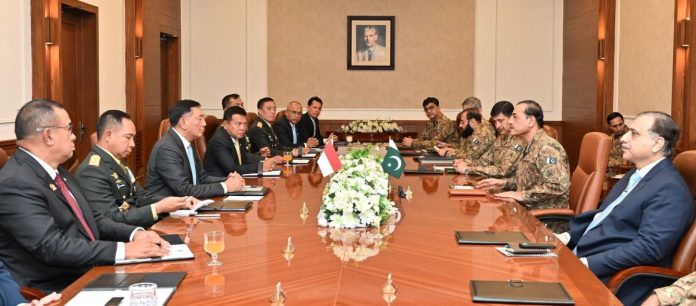
RAWALPINDI, 15 Jul /DNA/ – Lieutenant General Sjafrie Sjamsoeddin (Retd), Minister of Defence of Indonesia leading a delegation comprising representatives from various services and intelligence agencies called on the Field Marshal Syed Asim Munir, NI (M), Chief of Army Staff at General Headquarters, today.

During the meeting both sides exchanged views on bilateral defence collaboration, regional security dynamics and avenues to further strengthen military ties. The meeting underscored the longstanding friendship and cooperation between the two countries. Field Marshal highlighted the importance of mutual cooperation in maintaining peace and stability in the region.

Minister of Defence of Indonesia appreciated the role of Pakistan Army in fight against terrorism and reaffirmed Indonesia’s commitment to enhancing defence relations with Pakistan.

UK introduces eVisas for Pakistani and skilled workers

UK introduces eVisas for Pakistani and skilled workers

Most main applicants travelling to the UK on study or work-related visas will no longer need a physical sticker visa in passports from today (15 July).

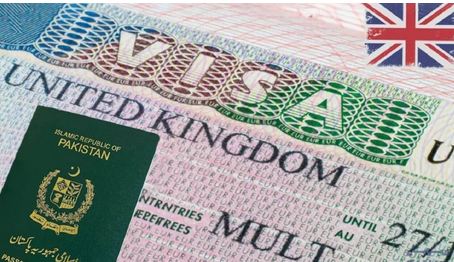
ISLAMABAD, JUL 15 /DNA/ – The UK Government is replacing physical immigration documents for most student and worker visas with a digital proof of immigration status, an eVisa. An eVisa is an online record of a person’s immigration permission in the UK, and any conditions which apply, which can be viewed by creating and accessing an online UK Visas and Immigration (UKVI) account.

eVisas are part of an enhanced border and immigration system that will not only make the visa process easier, but is more secure, digital and streamlined. eVisas are tried and tested, with millions of people already using them on select immigration routes.

British High Commissioner, Jane Marriott CMG OBE, said:

“These changes to the UK visa system will make it much simpler for students and workers to prove their identity and visa status. It also means applicants can hold onto their passports, saving them time.”

Updating from a physical document to an eVisa does not affect anyone’s immigration status or the conditions of their permission to enter or stay in the UK.

E-visas are being rolled out for the main applicants for:

Students, including short term study for 11 months  

Global Business Mobility routes (specifically, Senior or Specialist Worker, Graduate Trainee, UK Expansion Worker, Service Supplier, Secondment Worker)  

Global Talent   

International Sportsperson   

Skilled Worker (including Health and Care)  

Temporary Work routes (specifically, Charity Worker, Creative Worker, Government Authorised Exchange, International Agreement, and Religious work routes)   

Youth Mobility Scheme  

Holders can link their travel document (such as passport) to their UKVI account to facilitate straightforward international travel. People who have created a UKVI account will be able to use the view and prove service to prove their status securely with third parties, such as employers or landlords (in England).

Applicants applying as a dependant, or as a main applicant for visas other than study or work, e.g. general visitor visas, will still need a physical sticker visa. Anyone with existing, in date, physical visa stickers do not need to take any action.

This will eventually be rolled out to all visa routes meaning a more secure and streamlined process for all UK visa customers.=DNA

Japan grants 379 million yen for Pakistan education program

Japan grants 379 million yen for Pakistan education program

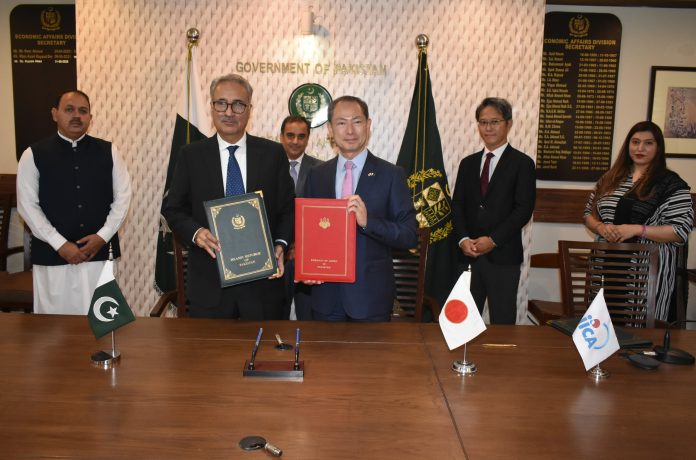
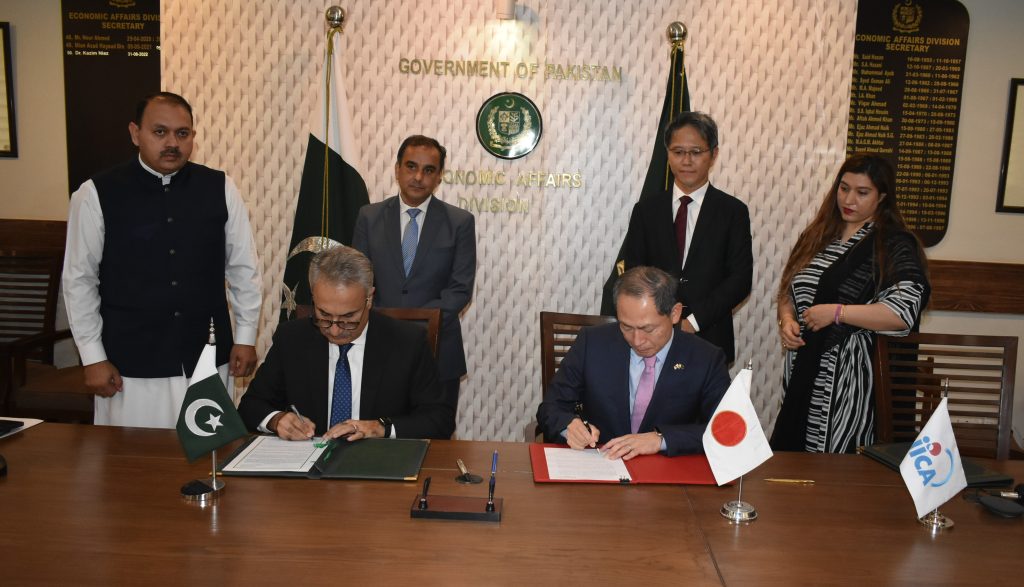
ISLAMABAD, JUL 15 /DNA/ – The Government of Japan has extended grant aid worth approximately 379 million Japanese Yen for the implementation of the Human Resource Development Scholarship (JDS) FY 2025 Program in Pakistan.

A formal signing ceremony was held in Islamabad, where Notes Verbale were signed and exchanged between H.E. Mr. AKAMATSU Shuichi, the Ambassador of Japan to Pakistan, and Dr. Kazim Niaz, Secretary, Ministry of Economic Affairs, Government of Pakistan. Additionally, a Grant Agreement outlining the implementation details of the project for fiscal year 2025 was signed between Mr. Naoaki MIYATA, Chief Representative of the Japan International Cooperation Agency (JICA) in Pakistan, and Mr. MiranMohiyuddin Soomro, Joint Secretary, Ministry of Economic Affaris.

The JDS Program is part of Japan’s commitment to strengthen the administrative capacities of the Government of Pakistan which was initiated in 2018. The program offers highly capable Pakistani government officers the opportunity to pursue Master’s and Ph.D. degrees at leading Japanese universities. These officers are selected from those involved in planning and implementing social and economic development policies.

Throughthe JDS Program JICA has so far sent over hundred government officers to Japan, out of which nearly 70 scholars have successfully completed their studies and returned to Pakistan, contributing their enhanced knowledge and skills to the country’s development. The focus areas of study under this program include public administration and finance (Disciplines of Public Policy and Development Studies), Industrial Promotion and Investment Climate, Energy Policy and Response to Climate Change and Agribusiness and Food Security.

On this occasion, Ambassador AKAMATSU stated: “The Government of Japan fully understands the importance of social and human capital development in Pakistan and believes among the key enablers is a responsive and accountable public administration. Building the capacity of young outstanding civil servants in various technical areas is thus imperative in strengthening public administration that can effectively address the multi-dimensional development challenges in this country.”

Mr. Naoaki MIYATA, Chief Representative of JICA Pakistan Office, added: “This program will make a significant contribution to human resource development in Pakistan. JDS fellows will acquire advanced knowledge and skills which will enhance their capacities in policy planning and implementation. We believe these individuals will play pivotal leadership roles within the Government of Pakistan, contributing to national development and the well-being of the people. Moreover, the JDS Program is a testament to the enduring partnership and friendship between Japan and Pakistan.”=DNA

Without cheaper electricity, Pakistan’s factories will struggle: ICCI

cheaper electricity

ISLAMABAD, JUL 15 /DNA/ – The leadership of the Islamabad Chamber of Commerce and Industry (ICCI) has called on the government to further reduce power tariffs in order to strengthen Pakistan’s industrial competitiveness in global markets. It emphasized that persistently high energy costs have long been a major barrier to productivity and growth in the country’s industrial sector.

President Nasir Mansoor Qureshi, along with Senior Vice President Abdul Rehman Siddiqui and Vice President Nasir Mehmood Chaudhry, underscored the urgent need for a sustainable and industry-friendly energy policy, warning that without timely reforms, the private sector would continue to face serious challenges in expanding and competing internationally.

Over the years, elevated electricity prices have drastically eroded industrial output and weakened our global market position, President Qureshi stated. “Now is the time to take bold, corrective measures to reverse this trend.

The ICCI leadership stressed the importance of stable and predictable electricity rates not only for industries but also for households, calling on the government to work hand-in-hand with the business community to ensure long-term affordability and reliability in power supply.

They maintained that acknowledging the private sector’s concerns and addressing them through practical, effective solutions will help rejuvenate industrial activity, promote investment, and accelerate national economic progress.

Reiterating ICCI’s commitment to being a constructive partner, the Chamber’s leadership assured full cooperation with the government in creating a conducive business environment that enables sustainable growth and enhances Pakistan’s global economic standing.=DNA

MNA Jamshed Dasti disqualified by Election Commission

MNA Jamshed Dasti disqualified by Election Commission

ISLAMABAD, JUL 15 /DNA/ – The Election Commission of Pakistan (ECP) has disqualified MNA Jamshed Dasti after a reference was sent against him by National Assembly Speaker Ayaz Sadiq. The action was taken following Dasti’s disruptive behavior during a speech by PML-N leader Khawaja Asif in the assembly.

Dasti had repeatedly interrupted Asif, accusing the government of “toeing the establishment line.” His remarks sparked controversy, prompting Speaker Sadiq to refer the matter to the ECP for further action. The commission ruled that Dasti violated parliamentary norms, leading to his disqualification.

Dasti, known for his outspoken stance, has faced similar issues in the past. His disqualification has stirred political debate, with critics calling it an attempt to silence opposition voices. Supporters of the ruling party, however, argue that maintaining decorum in the assembly is essential.

Dasti can challenge the decision in court. Meanwhile, the move has intensified tensions between the government and opposition, raising concerns about political victimization. The development comes amid ongoing political instability in the country.

Stay Connected

64FansLike
60FollowersFollow

Latest Reviews

Exchange Rates

USD - United States Dollar
EUR
1.17
GBP
1.35
AUD
0.72
CAD
0.73