Home Blog Page 57

Passport home delivery service rolled out to facilitate applicants

Passport home delivery service rolled out to facilitate applicants

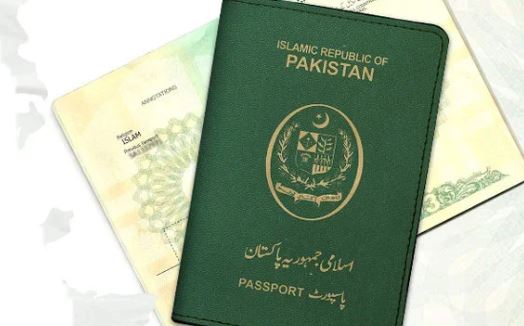
ISLAMABAD, JUL 3: The Directorate General of Immigration and Passports (DGI&P) has launched a passport home delivery service through a private courier service to facilitate applicants across Pakistan.

The initiative was introduced on the directions of Interior Minister Mohsin Naqvi as part of efforts to improve public convenience and streamline passport delivery.


According to an official statement, the new service will enable applicants to receive their passports at their registered addresses instead of collecting them from passport offices.

The development came days after Naqvi announced that cashless transactions had become operational at all passport offices across Pakistan.

Taking to his X handle, the interior minister said: “Applicants no longer need to stand in long queues or wait for hours to make payments.”

He maintained that this reform was initiated on the directions of Prime Minister Shehbaz Sharif, adding that his team has successfully delivered it.

“This is another step towards making public services faster, more transparent, and more convenient for our citizens. Many more milestones lie ahead, and, InshaAllah, we will continue to achieve them,” he added.

He also hailed the entire passport team, saying: “Keep up the excellent work.”

Khamenei lies in state in Tehran as Iran begins week of funeral ceremonies

Khamenei lies in state in Tehran as Iran begins week of funeral ceremonies

TEHRAN, JUL 3: The body of Ali Khamenei lay in state in a vast hall in Tehran on Friday as clerics, officials, foreign dignitaries and other mourners paid their respects to Iran’s late supreme leader, slain by US and Israeli bombs.

Iran is staging a week of mass funeral processions for Khamenei, whose 37-year reign was brought to an end in February by the first airstrike of the war, in a show of public devotion to the Islamic Republic’s theocratic state and revolutionary zeal.

Khamenei’s body was expected to be taken to Qom, Najaf and Kerbala, the great Shia centers of Iran and Iraq, before being laid to rest on Thursday in Mashhad, home to the country’s holiest pilgrim shrine.

For all the latest headlines follow our Google News channel online or via the app.

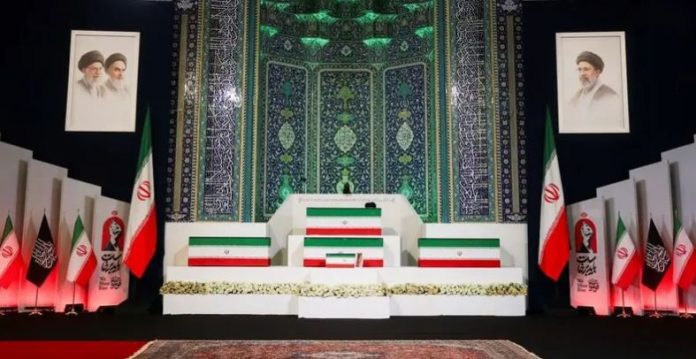
His coffin was unveiled late on Thursday to a throng of sobbing supporters, swaying and beating their heads in time to a sung lament as flowers were thrown from the bier into the crowd. On Friday the coffin – and those of family members killed with him – was laid in state in the great prayer hall built to honor his predecessor, Ruhollah Khomeini.

The funeral is taking place at a critical moment for Iran, where the clerical rulers backed by the Islamic Revolutionary Guard Corps (IRGC) are riding high from surviving what they saw as an existential war against their greatest and most powerful foes.

But nearly five decades after the 1979 revolution, and for all the official proclamations of national unity in the run-up to Khamenei’s funeral, the Islamic Republic has rarely been so internally fractured.

Support for the clerical leadership is paper thin, analysts say, and the new supreme leader, Khamenei’s son Mojtaba Khamenei, has not been seen in any new image since being wounded in the strike that killed his father.

Years of crippling sanctions have paralyzed the economy as accelerating bouts of mass nationwide protests have been put down by security forces with increasing force – culminating in the killing of thousands of demonstrators in January.

Those deep problems have been brushed aside this week, with the authorities mounting a display of state power and mass support, mobilizing what they hope will be millions of mourners to take part in the funeral.

Tehran streets were tightly controlled, with military and police vehicles lining the major roads and police and members of the black-shirted volunteer Basij paramilitary force patrolling on motorbikes. Iran warned the United States and Israel against any attacks during the funeral.

After the coffins arrived on Friday, borne high across the upraised hands of a waiting crowd, they were laid in the prayer hall on a white, stepped, dais before a high, intricately tiled, arched recess, flanked by national and black mourning flags.

A black turban, worn by clerics claiming descent from Islam’s Prophet Mohammed, lay on the coffin on a folded chequered scarf, a symbol in Iran of militant revolutionary ideals and solidarity with Palestinians.

Representatives from Russia and China were expected to attend. Top Iraqi, Armenian and Pakistani politicians arrived in Tehran for the funeral.

Families of Hezbollah leader Hassan Nasrallah and senior commander Imad Mughniyeh, close Lebanese allies of Iran killed in Israeli strikes, attended the ceremony.

Iran’s own political leaders – the president, parliament speaker, foreign minister and others – filed in to weep and pray on Friday morning. A group of generals stood saluting in front of the coffin.

In Iran’s theocratic system, Khamenei was not only head of state and leader of a revolutionary movement, but the representative on earth for Shia Islam’s 12th imam, who disappeared in the ninth century.

His death in an enemy attack plays into a powerful Shia tradition of martyrdom and mourning, in which processions of flagellants beat their chests or backs.

That potent symbolism has been evident in the black funeral flags hanging over city streets since his death referencing the seventh-century martyrdom of Shi’ism’s third imam, Hossein.

In central Tehran overnight, a crowd stood sobbing and chanting, led by a Basij member, as others handed out posters of the late Khamenei.

Killed alongside Khamenei, and displayed in coffins next to his, were his daughter, son-in-law and baby granddaughter, as well as the wife of his son Mojtaba.

Burial postponed due to war
Burials are meant to be conducted within a day of death in Islam, but because of the risks of holding a big funeral during the war it was postponed until after last month’s interim truce deal was agreed.

Hotels are offering 50 percent discounts, schools, mosques and sports halls have been prepared to house mourners, and bus and rail networks are being diverted to serve the main events.

After what authorities are billing as a massive procession in central Tehran on Monday, the remains will be taken to the seminary city of Qom, the center of Iran’s Shia hierarchy, for ceremonies on Tuesday.

Ceremonies will then be held in Iraq’s shrine cities of Najaf and Kerbala on Wednesday with prominent attendees from Iran’s regional network of Shia proxies.

He will be buried on Thursday, after another procession, in Mashhad near the tomb of the Imam Reza, a figure of great devotion in Iran.

With Reuters

Pakistani mangoes in the spotlight at Beijing event as new trade deals signed

Pakistani mangoes in the spotlight at Beijing event as new trade deals signed

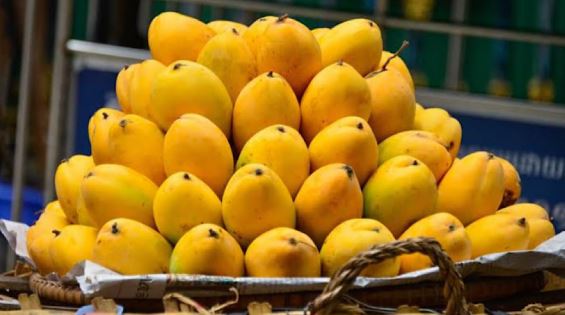
ISLAMABADD, 03 JULY (DNA) —    The aroma of Sindhri and Chaunsa mangoes filled Pakistan House as the Embassy of Pakistan in China hosted the Pakistan-China Silk Road Mango Festival 2026, celebrating the 75th anniversary of diplomatic relations between the two countries.

Co-hosted with the Asia-Africa Trade Promotion Office, the festival drew more than 400 guests, including Chinese officials, diplomatic envoys, business leaders, media representatives, artists and members of cultural and trade organizations, according to China Economic Net (CEN).

ICCI, CDA pledge steady ties for business-friendly federal capital

ICCI, CDA pledge steady ties for business-friendly federal capital

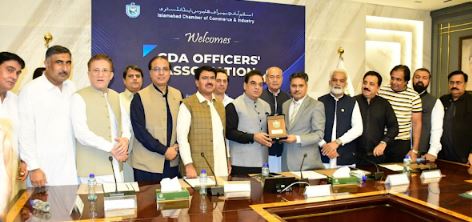
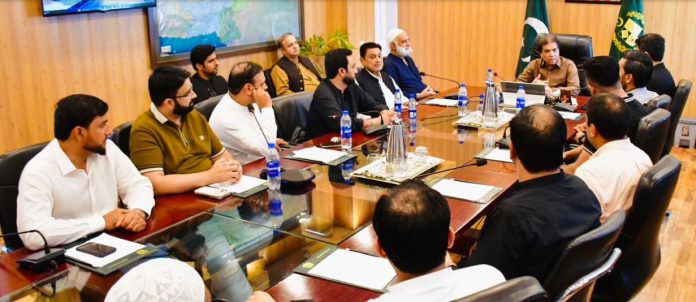
ISLAMABAD, JUL 3 /DNA/ – The Islamabad Chamber of Commerce and Industry (ICCI) and the CDA Officers Association have agreed to formulate a joint liaison committee aimed at ensuring the timely resolution of issues confronting the business community, strengthening institutional coordination and promoting sustained engagement between stakeholders for a more business-friendly and better-managed federal capital.

The decision was taken during a meeting held at ICCI in which it was agreed that the proposed committee would comprise representatives from ICCI and the CDA Officers Association and would meet regularly to deliberate upon issues relating to trade, taxation, urban management, regulatory affairs and civic services. The forum would serve as a mechanism for identifying challenges, evolving consensus-based solutions and ensuring prompt follow-up on matters affecting businesses and traders.

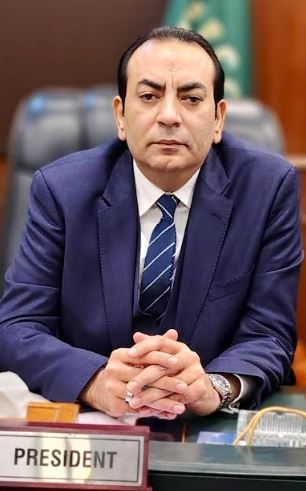
Speaking on the occasion, ICCI President Sardar Tahir Mehmood emphasized that the business community is a major stakeholder in Islamabad and contributes significantly to the national economy. He said that stronger coordination between the Chamber and CDA Officers Association would help improve governance, ensure continuity in policies and facilitate the resolution of longstanding issues faced by traders, industrialists and investors. He stressed the need for institutionalized dialogue and regular interaction to promote a conducive business environment in the capital.

President CDA Officers Association Aamir Shehzad said that both organizations had earlier discussed the idea of strengthening mutual engagement and now there was a need to institutionalize this cooperation through a formal coordination mechanism. He highlighted that Islamabad had faced increasing administrative and regulatory challenges over the past several years due to frequent changes in management and policy directions. He underlined the importance of stakeholder consultation, policy consistency and stronger representation of local voices in decision-making forums. He appreciated the role played by ICCI President Sardar Tahir Mehmood in taking up business-related concerns and said that the proposed liaison committee would become an effective platform for addressing issues through mutual consultation.

General Secretary CDA Officers Association Kamran Bakht reiterated that close cooperation between the business community and regulatory institutions was essential for sustainable urban development. He observed that many issues relating to encroachments, enforcement, parking management and civic amenities could be addressed more effectively through structured engagement and regular consultations. He expressed confidence that the liaison committee would help bridge communication gaps and facilitate timely resolution of concerns raised by traders and entrepreneurs.

Chairman CDA Officers Association Riaz Khan   emphasized that greater involvement of local stakeholders in policy making would contribute to better governance, improved service delivery and a more responsive regulatory framework for Islamabad.

Speaking on the occasion, Senior Vice President ICCI Tahir Ayub said that ICCI has consistently advocated for reforms aimed at promoting ease of doing business and reducing procedural bottlenecks. He stated that the proposed liaison mechanism would provide an effective platform for constructive engagement between regulators and the private sector, enabling both sides to work collectively towards practical and long-term solutions.

In his remarks, Vice President ICCI Irfan Chaudhry appreciated the initiative to establish a liaison committee and termed it a significant step towards fostering public-private partnership. He expressed hope that regular interaction and coordination would not only strengthen trust between institutions but would also enhance transparency, accountability and investor confidence in the federal capital.

Earlier, former President ICCI Mohammad Ejaz Abbasi also addressed the gathering and highlighted the importance of sustained engagement between regulatory authorities and the business community.  The event was conducted by former Senior Vice President Khalid Chaudhry and was also attended by ICCI Executive Members Rohail Anwar Butt, Ishaq Sial and Malik Aqeel Ahmed, senior members Israr Mishwani and Tehmas Butt, along with office-bearers of various Traders Welfare Associations including President TWA Blue Area Yousuf Rajput.

Mohsin Naqvi meets Saudi royals to strengthen relations

Mohsin Naqvi meets Saudi royals to strengthen relations

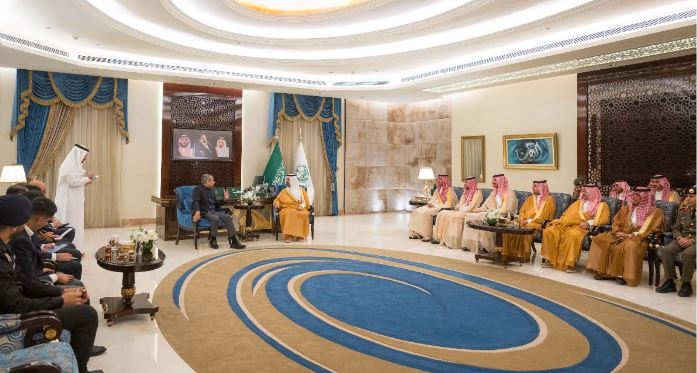
JEDDAH, JUL 3 /DNA/ – ‎Federal Interior Minister Mohsin Naqvi met with the Acting Governor of the Makkah Region, Prince Saud bin Mishaal bin Abdulaziz, in Jeddah. Governor of Jeddah Prince Saud bin Abdullah bin Jalawi, Governor of Taif Prince Saud bin Nahar bin Saud, and distinguished members of the Saudi royal family were also present on the occasion.

‎During the meeting, Interior Minister Mohsin Naqvi reaffirmed Pakistan’s commitment to further strengthening the historic and brotherly relations between Pakistan and Saudi Arabia. He also expressed his special gratitude to the Acting Governor of the Makkah Region for the excellent arrangements made for Umrah and Hajj pilgrims.

‎The Acting Governor of the Makkah Region reiterated the Kingdom’s strong commitment to its relations with Pakistan and assured every possible cooperation. He welcomed the agreement between the Pakistan Cricket Board (PCB) and the Saudi Arabia Cricket Federation, describing it as a positive development. He also appreciated the decision to construct Jeddah’s first international-standard cricket stadium.

‎The Saudi Governor expressed his full support and cooperation with the PCB for the construction of the stadium in the region.

PM Shehbaz, COAS attend funeral of Late Iranian Supreme Leader in Tehran

PM Shehbaz, COAS attend funeral of Late Iranian Supreme Leader in Tehran

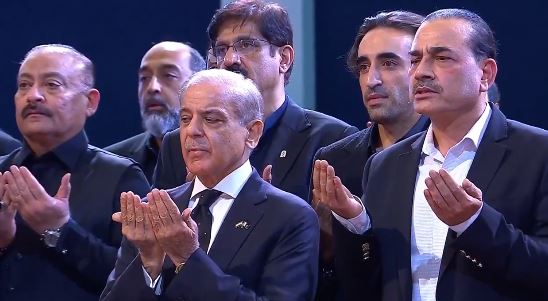
TEHRAN, JUL 3 /DNA/ — Prime Minister Muhammad Shehbaz Sharif led a high-level Pakistani delegation to Tehran today to attend the funeral ceremony of the late Supreme Leader of the Islamic Republic of Iran, Ayatollah Seyyed Ali Khamenei, who embraced martyrdom on February 28, 2026, during attacks on Iran.

The Prime Minister traveled to Iran at the invitation of President Dr. Masoud Pezeshkian. The Pakistani delegation included Deputy Prime Minister and Foreign Minister Senator Mohammad Ishaq Dar, Chief of Army Staff and Chief of Defence Forces Field Marshal Syed Asim Munir, Interior Minister Syed Mohsin Naqvi, Information Minister Attaullah Tarar, and Chairman of the Pakistan Peoples Party Bilawal Bhutto Zardari, along with other senior government officials.

On this solemn occasion, Prime Minister Shehbaz Sharif recalled the lasting contributions of the late Supreme Leader to Islam and paid rich tribute to his decades of leadership, during which he guided the Iranian nation with remarkable wisdom and sagacity.

The Prime Minister expressed full solidarity with the new Supreme Leader, His Eminence Ayatollah Seyyed Mojtaba Hosseini Khamenei, President Dr. Masoud Pezeshkian, and the brotherly people of Iran during this moment of national grief. He prayed to Allah Almighty for the forgiveness of the departed leader.

A parliamentary delegation led by Chairman Senate Syed Yousaf Raza Gillani and Speaker National Assembly Sardar Ayaz Sadiq, along with parliamentarians and Chief Minister Sindh Syed Murad Ali Shah, also attended the funeral alongside the Prime Minister.

Following the ceremony, the Prime Minister departed for Istanbul to begin his official visit to Turkiye.

Abbasi meets Gujrat Chamber delegation

Abbasi meets Gujrat Chamber delegation

ISLAMABAD, Jul 3: Federal Minister for Railways Muhammad Hanif Abbasi on Friday met with a delegation of the Gujrat Chamber of Commerce and Industry and discussed measures for promoting trade through Pakistan Railways, with a particular focus on enhancing cargo services and strengthening logistics infrastructure.

The delegation was led by Gujrat Chamber President Ahmed Hassan Mattu, said a news release.

During the meeting, both sides held detailed discussions on improving the efficiency of railway-based cargo transportation to facilitate industrial and commercial activities across the country.

The minister stressed the need to modernise cargo services, improve logistics facilities for industrialists and strengthen rail connectivity with major industrial hubs, including Gujrat, to ensure faster and more cost-effective transportation of goods.

Representatives of the business community presented their concerns and proposals regarding freight operations and called for greater collaboration between Pakistan Railways and the private sector to ensure timely delivery of cargo.

Speaking on the occasion, Hanif Abbasi said the government was committed to transforming Pakistan Railways into a strong pillar of the national economy.

He said expanding the capacity of cargo operations and introducing modern facilities remained a top priority.

The minister reiterated that Pakistan Railways would be developed into a fast, reliable and low-cost mode of commercial transportation, adding that practical recommendations put forward by the business community would be given due consideration and implemented where feasible.

The delegation appreciated the minister’s assurance of resolving the issues raised by the business community and welcomed his commitment to maintaining effective coordination with the private sector to promote trade and economic growth.

Pakistan’s trade deficit soars to $4.53 billion in June

Pakistan's trade deficit soars to $4.53 billion in June

KARACHI, JUL 3 /DNA/ – Atif Ikram Sheikh, President of the Federation of Pakistan Chambers of Commerce and Industry (FPCCI), has voiced severe alarm over the massive deterioration in Pakistan’s trade balance; which saw the trade deficit widen sharply on a month-on-month (MoM) basis to hit $4.53 billion in June 2026.

Mr. Atif Ikram Sheikh reiterated that the apex trade body had previously warned government over the last couple of years that the effect of plunging exports poses a critical threat to the country’s external account stability and foreign exchange reserves.

FPCCI Chief explained that according to data from the Pakistan Bureau of Statistics (PBS), exports in June 2026 plummeted by 16.73% to $2.24 billion; while, imports surged by 24.07% to $6.77 billion compared to the previous month.

Mr. Atif Ikram Sheikh termed the June 2026 trade figures a wake-up call for the economic team of the government. A nearly 17% drop in exports in a single month is not just a statistical decline; it is a clear indicator that our export-oriented industries are being pushed to the wall. The sheer cost of doing business – driven by prohibitive energy tariffs, high interest rates, and an unpredictable taxation environment – has severely crippled Pakistan’s competitiveness in the export markets.

FPCCI President has urgently appealed to the government to rationalize energy costs, reinstate the Final Tax Regime (FTR) for exporters, and lower the policy rate to prevent widespread industrial closures and decline in exports.  The cumulative trade deficit for the just ended fiscal year (FY26) reached a staggering $39.47 billion – showing a 21.57% year-on-year (YoY) increase compared to FY25.

Mr. Saquib Fayyaz Magoon, SVP FPCCI, highlighted the unsustainability of the current import-export gap. Ending the fiscal year with a trade deficit approaching $39.47 billion puts immense and immediate pressure on our macroeconomic stabilization efforts.

Mr. Saquib Fayyaz Magoon stressed that the government must strike a delicate balance – curbing luxury and non-essential imports while ensuring that the raw materials required by our export manufacturers remain accessible and free from unnecessary regulatory hurdles.

Mr. Abdul Mohamin Khan, VP FPCCI & Regional Chairman Sindh, FPCCI, emphasized the localized impact of the deteriorating trade metrics on the country’s largest industrial hub. The industries in Sindh, particularly in Karachi’s manufacturing zones, are bearing the brunt of this export contraction. Unbearable electricity tariffs, dilapidated infrastructure, and exorbitant land prices are making it impossible to scale up production.

Mr. Abdul Mohamin Khan called upon the provincial and federal governments to immediately abolish redundant levies and establish fast-track business facilitation centers across Sindh to lower operational frictions.

The FPCCI leadership unanimously urged the Ministry of Finance and the Ministry of Commerce to sit down with the business community immediately to devise a crisis-response strategy that transitions the economy from a strict stabilization model to an export-led growth model.

National Paigham-e-Aman Committee’s multi-faith, multi-sect delegation visits Jami

National Paigham-e-Aman Committee’s multi-faith, multi-sect delegation visits Jami

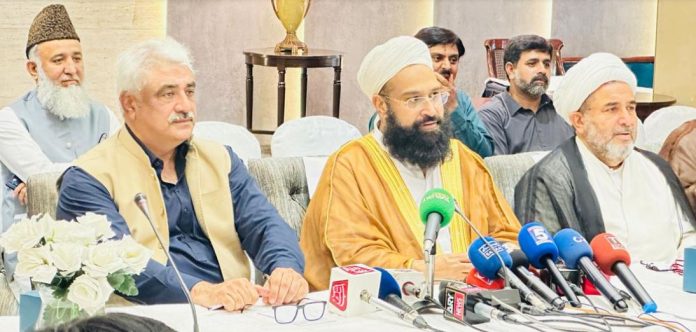
LAHORE, JUL 3: In a historic step towards promoting national harmony and religious coexistence, a delegation of the National Paigham-e-Aman Committee, comprising representatives of different sects and faiths, jointly visited Jamia Ashrafia, one of Pakistan’s leading religious institutions.

Historic moment for national harmony: National Paigham-e-Aman Committee’s multi-faith, multi-sect delegation visits Jami

The delegation, led by Prime Minister’s Coordinator and Pakistan Ulema Council, Chairman Hafiz Muhammad Tahir Mehmood Ashrafi, included representatives from Christian, Hindu, Shia and Sunni communities. They were warmly received by the leadership, faculty and students of Jamia Ashrafia.

Historic moment for national harmony: National Paigham-e-Aman Committee’s multi-faith, multi-sect delegation visits Jami

Among those were Bishop Kamran, Ramesh Kumar, Bhagat Lal Khokhar, Allama Muhammad Hussain Akbar, Allama Arif Wahidi, Maulana Ziaullah Shah Bukhari, Maulana Anwar-ul-Haq, Maulana Yousaf Kashmiri, Engineer Usman, Maulana Zahid Mahmood Qasmi, Allama Tauqir Abbas, Allama Salman Naqvi, Maulana Akbar Asif Mir, along with a large number of prominent religious scholars and leaders from various schools of thought.

During the meeting, they held detailed discussions on strengthening interfaith and inter-sect harmony, tolerance and mutual respect. They reaffirmed their collective commitment to work together for lasting peace, unity and social cohesion across Pakistan.

The participants described the joint visit as a historic milestone, expressing confidence that such initiatives would further strengthen national solidarity and promote the message of peace throughout the country.

Field Marshal Gen. Asim Munir arrives in Tehran

Field Marshal Gen. Asim Munir arrives in Tehran

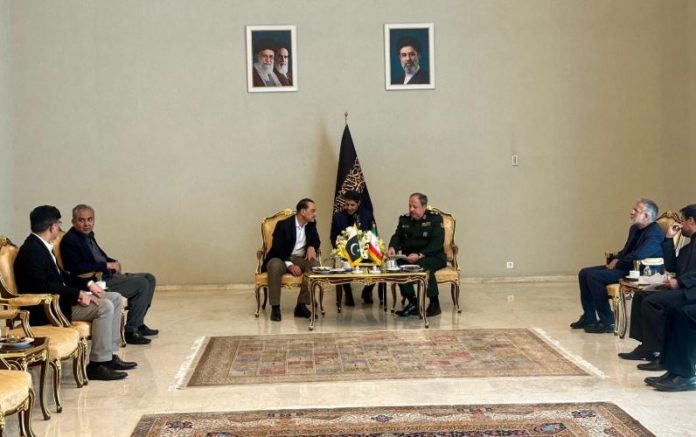
ISLAMABAD, Jul 3: /DNA/ – Chief of Army Staff (COAS) and Chief of Defence Forces (CDF) Field Marshal Syed Asim Munir arrived in Tehran on Friday to participate in the funeral prayers and commemorative ceremonies for Iran’s Supreme Leader, Ayatollah Ali Khamenei.

The Pakistani military chief was received at the airport by senior Iranian military officials and diplomatic representatives. His visit underscores the deep fraternal ties between Pakistan and Iran, with Field Marshal Munir expressing solidarity with the Iranian nation and armed forces during their time of grief.

According to a statement from the Inter-Services Public Relations (ISPR), the Army Chief is scheduled to offer funeral prayers alongside Iranian leadership and senior military commanders. He will also convey heartfelt condolences on behalf of the Pakistani leadership and people to the Iranian government and the Supreme Leader’s family.

Stay Connected

64FansLike
60FollowersFollow

Latest Reviews

Exchange Rates

USD - United States Dollar
EUR
1.15
GBP
1.35
AUD
0.70
CAD
0.71