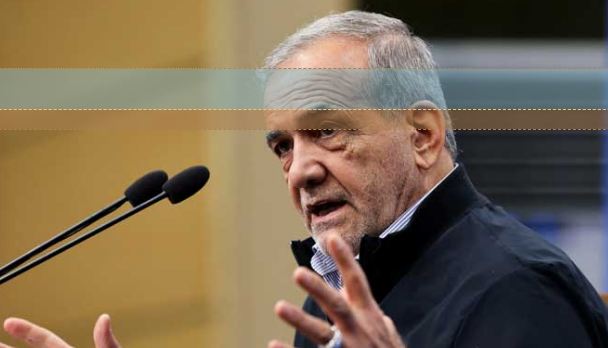
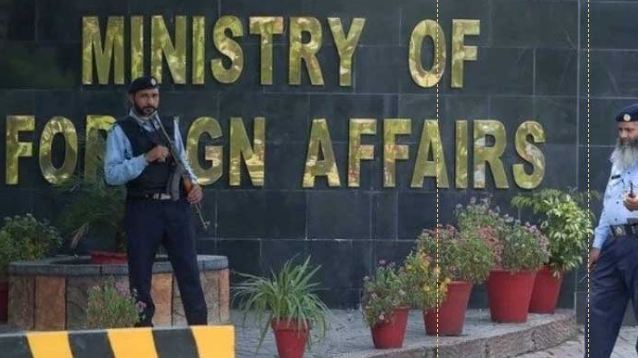
Tehran, AUG 1: Iranian President Masoud Pezeshkian is set to arrive in Islamabad on Saturday (tomorrow) for a two-day state visit to Pakistan, the Foreign Office said on Friday.
In a statement, the FO said the Iranian president is visiting the country at the invitation of Prime Minister Shehbaz Sharif.
“Dr Pezeshkian will be accompanied by a high-level delegation, including Foreign Minister of Iran Seyyed Abbas Araghchi, senior ministers, and other high-ranking officials,” the statement added.
During his stay, Pezeshkian will meet President Asif Ali Zardari, and hold delegation-level talks with PM Shehbaz Sharif.
This marks Pezeshkian’s first official visit to Pakistan as the President of Iran.
PM Shehbaz last visited Iran on May 26, 2025. The visit is expected to further strengthen the brotherly relations between Pakistan and Iran.
According to the Political Adviser to the Iranian President, Mehdi Sanai, official meetings and discussions with “cultural and business elites” were planned during the president’s visit.
“The relations between the two countries encompass political, economic, religious, and cultural dimensions,” he had said in a X post on July 30.
The development of provincial and border cooperation, as well as increasing trade from the current $3 billion, are among the objectives of the visit, the adviser concluded.
Pezeshkian will be the second Iranian president to visit Pakistan within two years. The visit was originally scheduled for the final week of July.
In April 2024, Ebrahim Raisi paid a three-day official visit to Pakistan — just a month before his death in a helicopter crash.
Earlier in May, Prime Minister Shehbaz Sharif undertook a two-day bilateral visit to Iran as part of his regional tour to friendly countries aimed at expre¬ssing gratitude for their support during the conflict with India.
During the two-day visit, the premier met Supreme Leader Ayatollah Seyyed Ali Khamenei and the Iranian president.
The meetings focused on Pakistan-Iran relations, particularly the promotion of trade and regional connectivity, besides covering regional issues, with appreciation for Iran’s efforts to maintain peace in the region during the war imposed on Pakistan by India.
Both sides also discussed the strengthening of strategic ties between the two countries, as well as the immediate cessation of Zionist oppression in Gaza and achieving a sustainable and lasting ceasefire.
He had previously visited Iran in May 2024 to attend the memorial ceremony of former president Raisi.
Speaking at the launch ceremony, Prime Minister’s Coordinator on Tourism Sardar Yasir Ilyas highlighted the significance of the rally; Ambassador of Pakistan to Uzbekistan, Alisher Tukhtaev, also addressed the gathering, terming the event a joyous occasion
Asnar M Bhatti / DNA
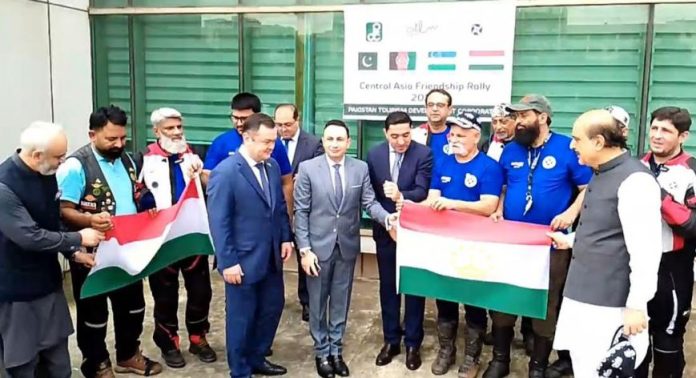
ISLAMABAD, AUG 1 – The Central Asia Friendship Rally was formally launched from Islamabad, aiming to promote peace, tourism, regional connectivity, and Pakistan’s soft image across Central Asian countries. Eleven bikers will ride through Afghanistan, Tajikistan, and Uzbekistan in a journey spanning 5,000 kilometers, carrying a message of friendship and cultural unity.
Speaking at the launch ceremony, Prime Minister’s Coordinator on Tourism Sardar Yasir Ilyas highlighted the significance of the rally. “These bikers are ambassadors of peace, culture, and regional cooperation,” he said. “This initiative will showcase Pakistan’s soft image and promote our tourism potential on an international stage.”
He further emphasized the role of media in portraying Pakistan positively. “We urge the media to highlight such positive initiatives. Pakistani people are known for their hospitality and do not charge tourists; this is our strength,” he remarked.
Sardar Yasir Ilyas also acknowledged the valuable support of the ambassadors of Uzbekistan and Tajikistan, appreciating their collaboration in making the rally possible. “This rally is a step towards greater regional connectivity,” he added.
He also shared that Pakistan is in the process of developing its first-ever National Tourism Policy, which will be a joint framework with input from all stakeholders. “Tourism is not just about travel, it’s an economic driver,” he said. “We aim to enhance both Pakistan’s image and its economy through the promotion of sustainable tourism.”
Ambassador of Pakistan to Uzbekistan, Alisher Tukhtaev, also addressed the gathering, terming the event a joyous occasion. “This rally, starting from our brother country, will pass through Afghanistan, Tajikistan, and Uzbekistan,” he said. “You will not only traverse mountains and tough terrains but will also serve as ambassadors of peace.”
He added, “This rally will boost tourism and enhance people-to-people ties between our nations.”
Managing Director of PTDC (Pakistan Tourism Development Corporation), Aftab-ur-Rehman Rana, praised the uniqueness of the initiative. “This is no ordinary trip; this is a journey that highlights our culture and promotes mutual understanding among friendly nations,” he noted.
He also commended the lead biker, Mukarram Tareen, for his leadership. “This ride will not only strengthen tourism ties but serve as a bridge between the people of these nations,” said Rana.
Mukarram Tareen, who is leading the rally, said: “This is a 5,000-kilometer-long journey with eleven bikers, and we are carrying a message of peace and love. Our brother countries – Afghanistan, Tajikistan, and Uzbekistan – are close to our hearts, and we aim to deepen the bonds with their people.”
The Central Asia Friendship Rally is not just a bike journey; it is a symbolic voyage to reinforce cultural ties, regional cooperation, and mutual peace among neighboring states through the power of tourism and people-to-people contact.
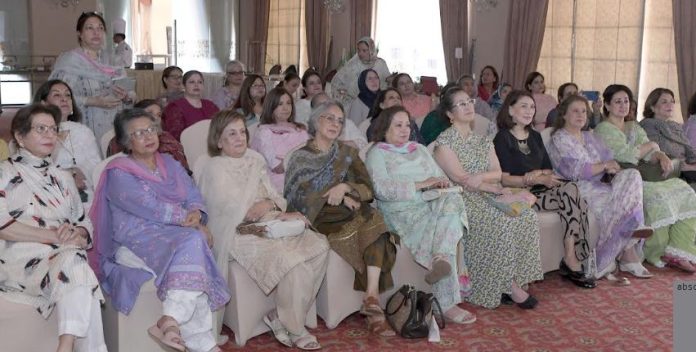
ISLAMABAD, JUL 30 /DNA/ – The annual general body meeting, attended by the spouses of the Ambassadors of Japan and the Philippines, was held at the prestigious Islamabad Serena Hotel. The event featured an engaging multimedia presentation by renowned artist Farhana Azim, captivating the audience with her creative work.
Mrs. Wiqarunnisa Boolani also addressed the gathering, sharing her insights and perspectives on the occasion. The event provided a platform for cultural exchange and intellectual discourse, strengthening ties among the diplomatic community and local dignitaries.
The meeting was marked by a vibrant atmosphere, fostering mutual appreciation for art and diplomacy. Attendees praised the enriching experience and lauded the organizers for hosting a successful event.
ISLAMABAD: (DNA): The 14th meeting of the Capital Development Authority (CDA) Board was held at CDA Headquarters, Islamabad, chaired by Chairman CDA and Chief Commissioner Islamabad Muhammad Ali Randhawa. The meeting was attended by Member Administration and Estate Talat Mehmood, Member Finance Tahir Naeem, Member Environment Esfandyar Baloch, Member Planning Dr. Khalid Hafiz, Member Engineering Syed Nafasat Raza, while Professor Dr. Muhammad Ali, Vice Chancellor of Punjab University, participated via Zoom link.
Several agenda items were discussed during the CDA Board meeting, the details of which are as follows:
The meeting approved the outstanding auction of CDA’s commercial plots and the appointment of an audit firm to improve CDA’s financial management system, along with the following decisions:
The meeting was informed that in 2025, CDA successfully auctioned 8 commercial plots and 4 shops, generating Rs. 19.56 billion. Furthermore, during the bidding process held from July 15 to 17, 2025, plots and shops were sold out through a transparent process at prices overall exceeding the market value by 11%, with some plots selling for 33% above the reserve price. Despite imposing strict conditions reducing the installment period from two years to one year and decreasing the lump-sum payment discount from 10% to 5% the auction of CDA’s commercial plots and shops in 2025 proved to be outstanding and successful. Financially strong, stable and serious businessmen not only demonstrated their full confidence in CDA but also played a key role in making the auction a success.
The meeting was informed that four chartered firms bid for auditing CDA’s five-year financial statements, with KPMG qualifying technically. The firm will conduct a detailed review of all CDA assets and improve the financial governance system. Chairman CDA directed that the project be completed within six months.
The meeting approved the fresh tendering process for outsourcing solid waste management services for urban and rural areas. The CDA Board decided to invite new tenders from nationally and internationally reputed firms and divide the waste collection system into different packages. Chairman CDA ordered further improvements in waste transfer stations and dumping sites to make them more efficient. The meeting also approved a three-month extension of the contract with Rawalpindi Waste Management Company (RWMC) for waste transportation.
In line with the direction of Chairman CDA and Chief Commissioner Islamabad, a committee comprising Member Administration, Member Environment, and Member Finance was formed to determine the seniority of the Director (BS-19) in the Environment cadre. Similarly, the meeting decided to refer the new promotion criteria for sub-engineers to the Service Rules Committee for a comprehensive review.
The CDA Board approved the budget estimates for the fiscal year 2025-26 based on proposals submitted by various departments.
The CDA Board meeting also decided to implement a cashless system for collecting water charges.
Chairman CDA Muhammad Ali Randhawa said that Islamabad’s development, prosperity, and beauty are CDA’s top priorities. “All resources and efforts are being utilized to provide the best housing and transport facilities to the citizens of Islamabad, helping to make it a model capital city,” he said.
Tehran, JUL 30: Iranian President Dr Masoud Pezeshkian will visit Pakistan on August 2 (Saturday) for a two-day visit, his political adviser said on Wednesday, Iran’s IRNA news agency reported.
Taking to X, Political Adviser to the Iranian President, Mehdi Sanai, said: “Dr Pezeshkian will travel to Pakistan on Saturday evening, August 2, at the invitation of Prime Minister Shehbaz Sharif.”
According to the adviser, official meetings and discussions with “cultural and business elites” were planned during the president’s visit. “The relations between the two countries encompass political, economic, religious, and cultural dimensions,” he said.
The development of provincial and border cooperation, as well as increasing trade from the current $3 billion, are among the objectives of the visit, the adviser concluded.
Pezeshkian will be the second Iranian president to visit Pakistan within two years. The visit was originally scheduled for the final week of July.
In April 2024, Ebrahim Raisi paid a three-day official visit to Pakistan — just a month before his death in a helicopter crash.
Earlier in May, Prime Minister Shehbaz Sharif undertook a two-day bilateral visit to Iran as part of his regional tour to friendly countries aimed at expressing gratitude for their support during the conflict with India.
During the two-day visit, the premier met with Supreme Leader Ayatollah Seyyed Ali Khamenei and the Iranian president.
The meetings focused on Pakistan-Iran relations, particularly the promotion of trade and regional connectivity, besides covering regional issues, with appreciation for Iran’s efforts to maintain peace in the region during the war imposed on Pakistan by India.
Both sides also discussed the strengthening of strategic ties between the two countries, as well as the immediate cessation of Zionist oppression in Gaza and achieving a sustainable and lasting ceasefire.
He had previously visited Iran in May 2024 to attend the memorial ceremony of former president Raisi.
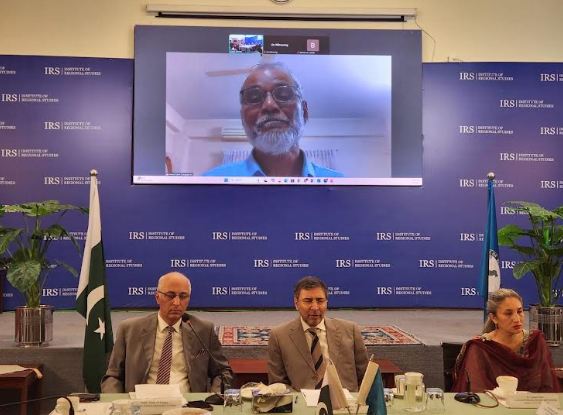
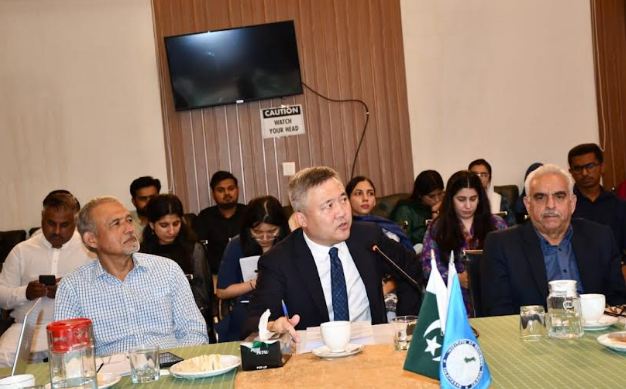
ISLAMABAD, JUL 30 /DNA/ – The China Program at the Institute of Regional Studies (IRS), Islamabad, hosted a panel discussion titled “China-led Cooperation in South Asia Beyond Geopolitics: Partnerships for Peace, Development and Common Prosperity.” The event brought together ambassadors, academics, policy analysts, and media professionals to examine the emerging trilateral cooperation of China, Pakistan, and Bangladesh.
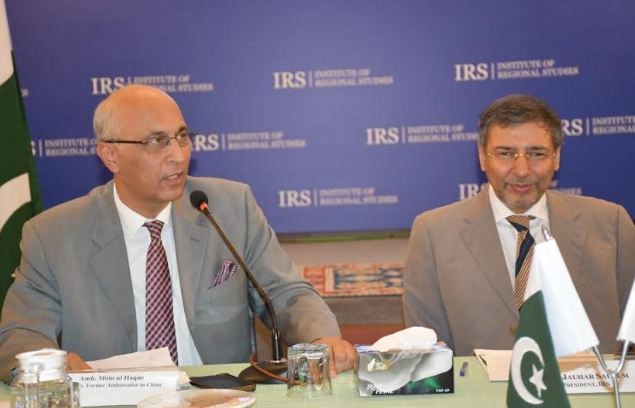
In his opening remarks, Ambassador Jauhar Saleem, President of IRS, highlighted the urgency of rethinking regional collaboration in South Asia, a region home to over 1.9 billion people yet plagued by persistent underdevelopment, limited integration, and pressing environmental and geopolitical challenges. “South Asia accounts for only 5% of intraregional trade, the lowest in the world. We need to move beyond outdated frameworks and explore new models that prioritize cooperation over confrontation,” he said. Ambassador Saleem underscored that the trilateral mechanisms involving China, Pakistan, and Bangladesh are not a replacement for SAARC but rather a pragmatic response to its stagnation. He noted that Bangladesh, once heavily influenced by India, is now undergoing a developmental shift and diversifying its regional engagement. He further pointed to a growing number of cooperative frameworks, including the recent China–Pakistan–Afghanistan trilateral meeting, which demonstrate a commitment to shared development without strategic or military overtones.
Building on this, Ambassador Moin ul Haque, Pakistan Former Ambassador to China, echoed the need for such platforms amid consistent obstruction of regional initiatives. “SAARC began with high hopes—it was once seen as South Asia’s answer to the European Union or ASEAN. But time and again, we’ve seen constructive initiatives, whether from Pakistan or China, being blocked by a single member state,” he said, alluding to India’s opposition.
Recalling his tenure as Ambassador to China, Mr. Haque shared insights on successful collaborations that excluded India due to its reluctance to participate. He cited the establishment of the China–South Asia Countries Emergency Supply Reserve and a poverty alleviation and development cooperation center, initiatives that emerged during the pandemic and have since contributed to vaccine access and poverty reduction across South Asia.
Lt. Gen. Dr. Aminul Karim, professor at Bangladesh University of Professionals, added that, it is both possible and desirable for the three countries to build cooperation in key non-traditional sectors such as climate change, information and communication technology (ICT), and human resource development. This form of collaboration does not require a military alliance, which reinforces the idea that these nations are not pursuing geopolitical or strategic rivalry. Instead, their primary objective is to promote mutual development and prosperity. Such cooperation is rooted in shared interests, not in power politics. At the same time, this framework respects the diverse values, cultures, and belief systems of other countries, allowing space for peaceful coexistence and constructive engagement. In this spirit, the partnership can serve as a model of harmony and inclusive development.
Panelist Dr. Salma Malik, Associate Professor at the department of Defence and Strategic Studies, Quaid-i-Azam University, Islamabad, noted that countries like Bhutan, Nepal, Maldives, and Sri Lanka are growing increasingly disillusioned with India’s hegemonic posture. “China’s model of cooperation, as seen in the China–South Asia Cooperation Forum and the South Asia Expo in Kunming, offers a contrast—one rooted in inclusivity, green growth, and connectivity,” she said. The Expo brought together over 200 delegates from 10 countries, excluding India, to align development strategies and promote collaboration in areas such as agriculture, digital technology, healthcare, and trade.
Professor Lin Minwang, Deputy Director of the Centre for South Asian Studies & Vice Dean at the Institute of International Studies, Fudan University, emphasized that China’s initiatives are often misunderstood or mischaracterized. “China has repeatedly tried to allay Indian suspicions. It has no intention of creating a sphere of influence. Rather, it seeks open, inclusive, and mutually beneficial cooperation. Unfortunately, India has consistently declined these invitations,” he noted.
The discussion also touched upon media narratives and public diplomacy. Senior journalist and Author Mr. Kamran Yousaf offered a critical reflection on Pakistan’s diplomatic posture. “Our approach tends to be too defensive, too apologetic. We need to project confidence in our foreign policy. India’s military rarely comments on political matters, but it made a point to criticize this trilateral mechanism. That in itself reflects the significance of this evolving cooperation,” he said.
Participants collectively agreed that the future of South Asian cooperation cannot remain hostage to geopolitical rivalries. Trilateral and multilateral frameworks rooted in shared development goals, such as those emerging under the Belt and Road Initiative (BRI)—offer a much-needed alternative. As traditional institutions like SAARC remain paralyzed, these new platforms present a more flexible, functional model for promoting peace, reducing poverty, and enhancing connectivity in the region.
The event concluded with a call to move beyond speculative criticism and focus on the tangible benefits of regional cooperation. Panelists emphasized that these emerging frameworks are not anti-anyone but pro-development, offering inclusive and forward-looking pathways to prosperity. A vibrant Q&A session followed, marked by active audience engagement, making the discussion both insightful and fruitful while underscoring the importance of such platforms in shaping South Asia’s cooperative future.
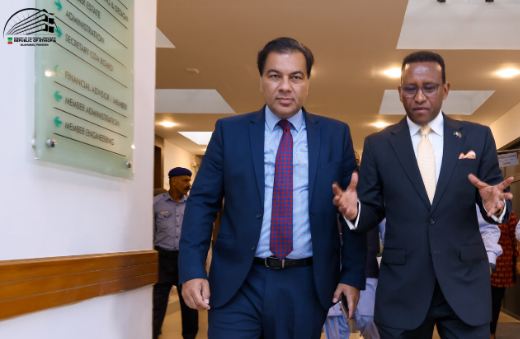
ISLAMABAD, JUL 30 /DNA/ – Jemal Beker Abdula, Special Envoy and Ambassador Extraordinary of the Federal Democratic Republic of Ethiopia, has been honored with the title of “Ambassador of Margalla Hills National Park” for his dedicated efforts to promote a clean and green environment within the park.
H.E. Muhammad Ali Randhawa, Chairman of the Capital Development Authority (CDA) and Chief Commissioner Islamabad, bestowed the title upon the Ambassador during their meeting at the CDA Headquarters.
The two officials discussed potential collaborations in smart city solutions, urban greenery, and capacity building through institutional linkages and technical exchanges.
The Ambassador briefed the CDA Chairman on Ethiopia’s corridor development project—a large-scale urban transformation initiative led by Prime Minister H.E. Dr. Abiy Ahmed. This project focuses on infrastructure development, mass plantations, and riverside beautification to enhance living standards across Ethiopian cities, he added.
He also proposed establishing a sister city relationship between Addis Ababa and Islamabad to foster cultural and commercial ties between the two nations.
The Ambassador also informed the Chairman about the Ethiopian Embassy Islamabad’s upcoming tree plantation campaign in Islamabad,as part of Prime Minister Abiy Ahmed’s “Green Legacy Initiative”.
He extended an invitation to the CDA Chairman to participate in the campaign, aiming to raise awareness about climate change.
The Chairman also shared insights into the CDA’s performance, highlighting key development projects completed and underway in Islamabad.
He emphasized the CDA’s strategic vision to develop the capital into a modern, inclusive, and environmentally sustainable city.
The Chairman commended the Ambassador’s leadership in various clean and green campaigns in Islamabad, particularly within the Margalla Hills National Park.
He expressed keen interest in learning from Ethiopia’s experiences in sustainable urban development and riverside uplifting initiatives.
ISLAMABAD, JUL 30 /DNA/ – The Deputy Head of Mission at the Embassy of the Netherlands in Pakistan, H.E. Hajo Provó Kluit called on Chairman Capital Development Authority (CDA) and Chief Commissioner Islamabad, Muhammad Ali Randhawa at CDA Headquarters today.
Chairman CDA warmly welcomed the Deputy Head of Mission at the Embassy H.E. Hajo Provó Kluit. During the meeting, matters of mutual interest were discussed, including opportunities for collaboration in urban development, sustainable infrastructure, and environmental conservation.
The Deputy Head of the Mission of Netherlands, H. E. Mr. Hajo Provo Kluit appreciated CDA’s excellent day and night efforts followed by the successful resolution of drained water issue after recently unprecedented heavy rainfall spell during moon soon season. He also appreciated CDA’s initiative of uplifting of Diplomatic Enclave, the ongoing projects of beautification especially making CDA Nursery as Gardenia Hub and digitalization of its services thus making Islamabad from safe city in to smart City. He expressed the Netherlands’ interest in contributing expertise in smart city planning and green technologies.
Chairman CDA and Chief Commissioner Muhammad Ali Randhawa briefed the Deputy Head of the Mission of Netherlands, H. E. Mr. Hajo Provo Kluit on the initiatives taken by CDA for uplifting of Diplomatic Enclave in line with the directions of the Federal Minister for Interior, Mohsn Naqvi thus transforming the Diplomatic Enclave into a model zone that meets the International Standards. This includes infrastructure improvement, beautification including landscaping & horticulture, implementation of long-term upgrades of the infrastructure and related facilities. He also briefed about making CDA’s Nursery as State of the art Gardenia Hub, thus making Islamabad as the most beautiful Capital of the world. He also expressed hope for future partnerships in areas such as waste management, water conservation, and eco-friendly urban planning and beautification.
Both sides agreed to enhance collaboration in horticulture and sustainable landscaping. Chairman CDA shared that CDA is actively promoting indigenous plantation drive and climate-resilient horticultural practices. The Deputy Head of Mission highlighted the Netherlands’ expertise in tulips, Dutch roses, and sustainable horticulture technologies. It was discussed that the Netherlands could share its expertise in the field of horticultural, soil advisory, and other related areas.
Both sides agreed to continue dialogue and explore avenues for bilateral cooperation in urban development and beautification. H.E. Hajo Provó Kluit assured full cooperation and expressed his country’s keen interest in deepening collaboration with CDA in the areas of green infrastructure, and urban beautification. The meeting concluded on a positive note, with both sides reaffirming their commitment to further deepen cooperation in areas of mutual interest.
ISLAMABAD, JUL 30: Pakistan has rejected the Indian leadership’s “fabrications” over the Pahalgam attack, saying that New Delhi should stop acting as judge, jury, and executioner.
“Pakistan categorically rejects the baseless assertions and provocative claims made by the Indian leaders during the Lok Sabha debate on the so-called ‘Operation Sindoor’,” said FO spokesperson Shafqat Ali Khan on Wednesday.
Indian Home Minister Amit Shah, a day earlier, claimed before the parliament that Indian security forces recovered Pakistani voter identity cards and locally made chocolates from three men killed in a gun battle in Indian Occupied Jammu and Kashmir (IIOJK), who according to him were involved in Pahalgam attack.
Addressing the same session, Prime Minister Narendra Modi also denied that any world leader pushed India to stop fighting Pakistan during their recent conflict, after repeated claims by US President Donald Trump that he had brokered peace.
The South Asian rivals fought an intense four-day conflict in May that took more than 70 lives on both sides before Trump announced a ceasefire between the nuclear-armed neighbours.
“The statements reflected a dangerous tendency to distort facts, justify aggression, and glorify conflict for domestic consumption,” the spokesperson added.
“The world knows that India attacked Pakistan without any verifiable evidence or a credible investigation into the Pahalgam Attack. During the intervening night of 6 and 7 May 2025, India’s targeting of the alleged terrorist infrastructure resulted actually in the martyrdom of innocent men, women, and children.”
“India failed to achieve any of its strategic objectives. On the other hand, Pakistan’s resounding success in neutralising the Indian fighter jets and military targets is an indisputable fact.”
The spokesperson asked the Indian leaders to acknowledge the losses incurred by their armed forces and accept the active role played by the third parties in realising the ceasefire, instead of misleading their compatriots.
“India did not avail itself of the immediate offer made by the Prime Minister of Pakistan for a transparent and independent probe into the Pahalgam attack.”
Slamming the Indian attacks on Pakistan, Shafqat said that New Delhi chose the path of belligerence and aggression. He added that India acted as a judge, jury, and executioner at the same time.
“Against this backdrop, any claims regarding the so-called “Operation Mahadev” do not hold any significance for us.”
“The account given by the Indian home minister is replete with fabrications, leading to serious questions about its credibility.”
“Is it a mere coincidence that the alleged perpetrators of the Pahalgam Attack were killed at the start of the Lok Sabha debate?” Shafqat questioned.
“We also reiterate our unequivocal rejection of the ceaseless Indian statements on establishing a ‘new normal’ in bilateral relations. As we have already shown through our resolute actions in May 2025, we shall forcefully counter any future aggression.”
Shafqat said: “For us, the only ‘normal’ in bilateral relations is respect for sovereignty and territorial integrity, and adherence to the principles and purposes of the UN Charter.”
Nuclear blackmail The FO spokesperson said that the Indian narrative of an alleged “nuclear blackmail” by Pakistan was a “misleading and self-serving construct”, and an attempt to veil its own escalatory impulses while shifting blame onto Pakistan.
“It is well known that Pakistan deterred India through its conventional capabilities, affirming that discipline and restraint remain its guiding principles.”
Shafqat also registered disapproval of the Indian leaders’ misplaced assertions regarding the Indus Waters Treaty.
He said that India’s decision to hold the Treaty in abeyance shows its blatant disregard for the sanctity of international treaties and strikes at a fundamental pillar of regional cooperation.
“Instead of taking pride in a unilateral and illegal move, India must immediately fulfil its treaty obligations,” he said, adding that India’s continued reliance on disinformation, jingoism, and chest-thumping risks destabilising South Asia.
“However, as a responsible country,” said Shafqat and concluded his remarks: “Pakistan remains committed to peace, regional stability, and a meaningful dialogue for resolution of all outstanding issues, including the core dispute of Jammu and Kashmir.”
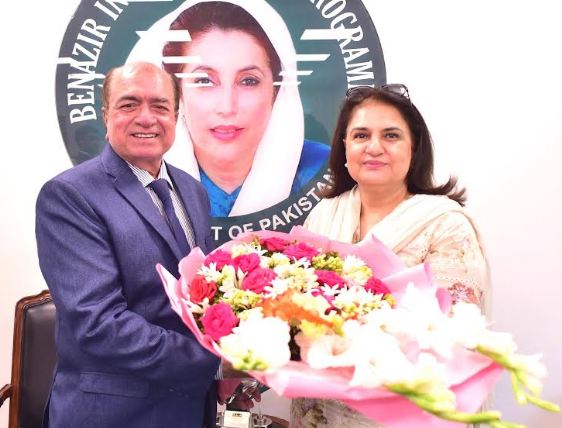
ISLAMABAD, JUL 30 /DNA/ – “The Benazir Income Support Programme (BISP) is not just a financial lifeline—it is a transformative initiative that restores dignity, builds resilience, and empowers the most marginalized women in Pakistan,” said Senator Rubina Khalid, Chairperson of BISP, during a meeting with Munir Ahmed, Executive Director of Development Communications Network (Devcom-Pakistan) and a leading voice in climate advocacy and environmental diplomacy. Munir Ahmed called on the Senator Robina Khalid to congratulate on her historic third consecutive term in the Senate.
Senator Rubina Khalid briefed Mr. Ahmed on BISP’s progress and the positive impact of its initiatives across Pakistan. She underscored the programme’s commitment to expand its outreach, especially in underserved and climate-vulnerable areas, by strengthening transparency, innovation, and inclusion.
Recognizing her re-election as a significant milestone, Munir Ahmed, a seasoned climate communication specialist with over two decades of experience in environmental policy advocacy, praised Senator Khalid’s dynamic leadership and BISP’s critical role in grassroots development.
The future of social protection lies in its ability to evolve with the challenges of our time—especially climate change,” said Munir Ahmed. As Pakistan grapples with recurring climate shocks, it is essential to integrate climate resilience into the social safety net. By empowering communities through locally-led adaptation strategies, we can reduce environmental risks, improve community health, and build sustainable livelihoods.”
He proposed the initiation of community-based climate resilience projects in partnership with BISP, focusing on nature-based solutions, climate-smart agriculture, water and sanitation improvements, and women-led green micro-enterprises. These initiatives, he said, could strengthen the economic and ecological resilience of vulnerable households, especially in areas most affected by floods, droughts, and glacial melt.
Both leaders agreed that there is a strong synergy between social protection and climate adaptation goals, and that collaborative efforts between public programmes like BISP and civil society actors like Devcom-Pakistan can significantly enhance community well-being and national resilience.
The meeting concluded with a commitment to continue dialogue and explore institutional pathways for integrating environmental sustainability into Pakistan’s social protection architecture.