Home Blog Page 550

Chairman CDA visits Capital Hospital

Chairman CDA visits Capital Hospital

By Faisal Munir / DNA 

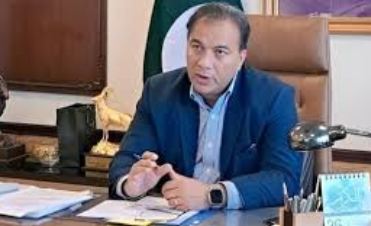
ISLAMABAD: Chairman Capital Development Authority (CDA) and Chief Commissioner Islamabad, Muhammad Ali Randhawa paid a visit to the Capital Hospital, CDA today. He was accompanied by Member Finance,  Member Engineering, DG Services and other senior officers of the authority.

During the visit, ED Capital Hospital briefed about medical facilities for the patients at the Capital Hospital, CDA. The Chairman CDA during his visit inspected various sections of the hospital, including emergency, OPD, wards, laboratories and Dispensary. 

The Chairman CDA personally interacted with patients, inquired about their health and listened to their concerns regarding medical facilities.

Chairman CDA and Chief Commissioner directed Executive Director,  Capital Hospital, CDA to ensure the provision of high-quality healthcare services to the patients and to improve cleanliness and hygiene within the premises. He said that  hospital plays a vital role in public service, health care and negligence in this regard will not be tolerated.

He directed for upgrading of hospital, special instructions to Biomedical staff for their presence 24/7. He said that all equipments should be functional and directed up gradation of Operation Theatre. Moreover, MRI Machine should be functional 24/7 and instrumental  functionality and availability should also be made up to date. The Chairman CDA directed Member Finance to provide and release necessary funds to capital hospital for its up gradation and purchase of new equipments. He also directed that presence of all Doctors on Biomedical attendance 24/7 should be ensured as Digitalisation of Capital Hospital should also be ensured through IT Wing.

The Chairman CDA instructed that maintenance and functionality of 

Elevator and Air conditioners should be made by DG Services. He further directed that concerned members should made daily visit of the Capital Hospital for ensuring that best of the best medical facilities to the patients as well as to ensure that all maintenance works have been done properly. 

Addressing the parking issue, Chairman CDA 

directed that 1122 should be shifted from Capital Hospital to Emergency and Disaster Management Premises near DMA. Most importantly, Chairman CDA said that emergency services are considered the face of any hospital, therefore emergency services of Capital Hospital, CDA should be at par with any reputable hospital, coupled with specialised doctors. He said that expansion of premises for emergency services should be expanded and all steps should also be taken to provide essential medicines, and equipments to the hospital especially modern medical machinery. 

The Chairman CDA said that CDA intends to revamp Capital Hospital. He asked  for a comprehensive plan to resolve the ongoing challenges faced by the capital hospital. 

The Chairman CDA directed planning wing CDA for a separate space for parking of vehicles of the attendants of the patients. 

The Chairman CDA, Muhammad Ali Randhawa’s visit was well-received by patients and members of the public, who expressed their gratitude and appreciation upon the personal interest of Chairman CDA Muhammad Ali Randhawa and hoped that the hospital facilities will soon be seen significant improvement.
Serena Hotels launches Global Prestige Club Programme

Serena Hotels launches Global Prestige Club Programme

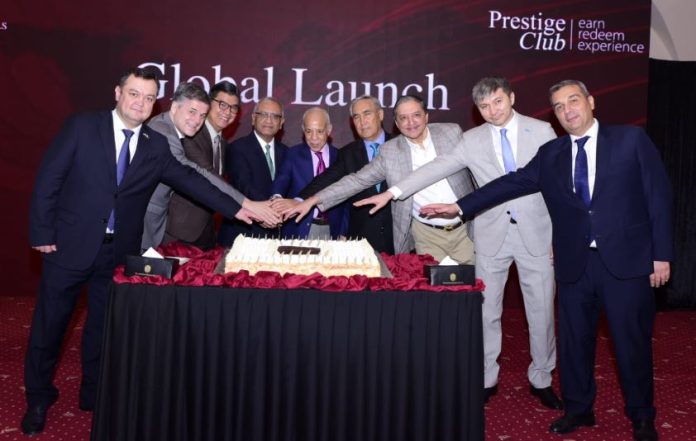
ISLAMABAD, AUG 6 /DNA/ – Serena Hotels officially launched its global loyalty programme, Prestige Club, at a special event hosted at Islamabad Serena Hotel and simultaneously across all Serena properties worldwide. The event was attended by ambassadors, government officials, corporate sector representatives, and esteemed Prestige Club members, marking a key milestone in the brand’s journey across eight countries and 33 destinations.

The launch introduced the enhanced Prestige Club Plus programme, offering exclusive benefits on dining, Maisha Spa & Health Club, and a range of hotel services, further enriching the guest experience across the Serena portfolio. Guests explored an interactive Experience Zone featuring a live demonstration of the new Prestige Club mobile app, designed to enable access to rewards, redemptions, reservations, and other services.

Speaking on the occasion, Aziz Boolani, CEO of Serena Hotels, stated, “Through the Prestige Club, we are bringing exceptional benefits to our members in recognition of their unwavering support at all Serena Hotels. This launch is not just a loyalty programme; it is a commitment to elevating every guest experience across our hotels.”

The celebration reaffirmed Serena Hotels’ dedication to innovation, hospitality excellence, and building deeper relationships with its valued guests worldwide.

APNS, PAA form joint committee to boost media collaboration

APNS, PAA form joint committee to boost media collaboration

KARACHI, AUG 6 /DNA/ – The inaugural meeting of the Joint Committee established by the All Pakistan Newspapers Society (APNS) and the Pakistan Advertising Association (PAA) took place today at the APNS House, Karachi.

The meeting was jointly chaired by Senator Sarmad Ali, President APNS, and Ahmad Hussain Kapadia, Chairman of PAA, and was attended by senior executive members representing both organizations.

The formation of this Joint Committee marks a significant step towards fostering collaboration between the advertising and print media sectors in Pakistan. Discussions at the meeting focused on strengthening industry relations, aligning policy interests, and advancing mutual goals in today’s evolving media landscape.

Today’s leadership, military or political, sincere and capable: Maryam Nawaz

Today's leadership, military or political, sincere and capable

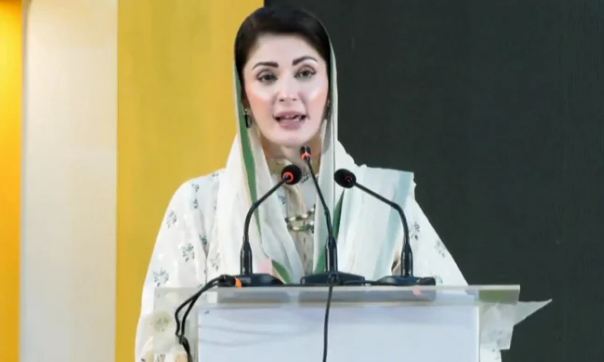
LAHORE: Punjab Chief Minister Maryam Nawaz on Wednesday declared that Pakistan is now led by sincere and capable individuals, whether in the military or in politics.

“The country is finally in honest hands,” she said, claiming success on both diplomatic and economic fronts.

Speaking at the ceremony for the ‘Apni Chhat Apna Ghar’ scheme, she said the noise and politics of abuse have ended.

“Those who spread chaos don’t understand the satisfaction of public service,” she said. “Setting fires and inciting unrest is easy, but serving the people is real leadership.”

Maryam launched the ‘Apni Zameen Apna Ghar’ project, under which 2,000 free plots will be given in the first phase, starting in 19 districts. She announced that those without land will be given free plots, while low-income families will be supported through interest-free housing loans.

‘Every city matters to me’
She revealed that 9,000 houses have already been completed and 45,000 are under construction. Over seven months, 64,000 individuals have received interest-free loans, all awarded strictly on merit.

“This is a claim I make: no government has issued 50,000 interest-free loans in just six months,” she said. “By the grace of Allah, Pakistan is also gaining success on the diplomatic front.”

The chief minister said she aims to complete 500,000 houses in five years and hopes to deliver up to 150,000 homes annually under the housing scheme.

She added that the project will continue without discrimination in every city of Punjab. “We are often accused of thinking only about Lahore. That’s not true. Every city matters to me, especially South Punjab, where I want even more homes to be built,” she stressed.

Maryam added that Punjab’s housing programme will soon be cited as a model internationally. “Many workers who built homes for others are now becoming homeowners,” she said. She credited Nawaz Sharif for encouraging her and said, “When I became CM, I promised homes—today we’re delivering.”

New electric buses
She also announced the arrival of 1,100 electric buses in Punjab, saying that each ride will cost only Rs20. Additionally, she pledged to resolve Punjab’s water shortage and deliver clean water to every home.

“Patients will receive medicines at their doorsteps,” she said. “I want the government to walk to the people’s doors — not the other way around.”

Addressing crime, she said incidents have declined since the formation of the Crime Control Department (CCD). She also shared that she had instructed the IG Police to remain alert ahead of protests — but no one came. “The politics of abuse and grabbing collars is over,” she added.

“We didn’t make a lot of noise or beat drums — we simply delivered. Let others show dreams; we make them real.”

The Return to Divine Reality

Qamar Bashir

By Qamar Bashir

For centuries, humanity has looked up at the stars and deep into atoms, hoping to uncover the secrets of the universe. With every equation solved and every particle smashed, we thought we were inching closer to truth. But truth—real truth—was never locked in matter. It was always hidden in something more elusive, more sacred: consciousness.

Today, a profound shift is occurring. The world’s most advanced scientists and spiritual thinkers are converging on a realization that religions proclaimed long ago: the foundation of the universe is not matter—it is mind. Not atoms—but awareness. Not logic—but the soul. This is not mysticism masquerading as science. It is science finally catching up with revelation.

In the words of Nobel laureate Max Planck: “I regard consciousness as fundamental. I regard matter as derivative from consciousness. We cannot get behind consciousness.” What does this mean? It means the laws of physics, the logic of philosophy, and even the frameworks of mathematics are not primal. They were created—by consciousness. This reverses everything we were taught. The human being is not a machine made of carbon and code. The human being is a carrier of divine consciousness, and through that consciousness, reality is perceived—and formed. The Qur’an hinted at this long ago: “And We breathed into him of Our spirit…” (Surah Al-Hijr 15:29).

In recent quantum research, it has been revealed that particles do not exist in any fixed form until they are observed. This is the infamous “observer effect.” In simple terms: the universe appears because we are conscious of it. One physicist said, “You are not inside space-time. Space-time is inside you.” Let that settle. The planets, stars, galaxies—all appear as phenomena within the field of our individual consciousness. The body is not separate from the cosmos. It is a living interface. And every cell within our body—over 30 trillion of them—contains the entire genetic code of the human being, making us holographic by design. The entire story of humanity is encoded in DNA in every part of us.

Further strengthening this narrative is the scientific discovery that human DNA emits scalar waves—energy pulses capable of traveling faster than light, crossing the cosmos without resistance, and returning with intact information. These waves, born of our conscious field, can metaphorically touch the moon and return in an instant. There is no delay, no degradation. Just presence, movement, and return—like divine will. “My command is but a single word: Be. And it is.” (Surah Al-Qamar 54:50). This is not science fiction. This is science validating scripture.

The more we learn about consciousness, the more the divide between body and soul disappears. We are not flesh alone. We are vessels of perception, imagination, and spiritual energy. As Donald Hoffman proposes in his “Conscious Realism” theory, space-time is merely a user interface—a simplified projection of a far more complex, unseen reality. This aligns with the Bible: “The Kingdom of God is within you” (Luke 17:21), and with the Qur’an: “Indeed, it is not the eyes that are blind, but the hearts within the breasts” (Surah Al-Hajj 22:46). Our consciousness, it seems, is not merely human—it is a reflection of divine light, capable of knowing, creating, and perceiving because it is rooted in the Source that made it.

Now, at this historical junction, humanity is doing something remarkable. It is breaking the chains of scientific reductionism and escaping the prison of philosophical abstraction. We are starting to see—not through telescopes or formulas—but through the eye of consciousness. We are realizing that science and philosophy, for all their power, cannot answer the ultimate questions: Why does anything exist at all? Who created it? What is our role in it? And most importantly: what happens when we understand it all?

Here lies the climax of the story. Scripture tells us that the Day of Judgment would arrive when truth is laid bare, when all veils are lifted. Perhaps that Day is not just a physical apocalypse—but a spiritual reckoning. The Qur’an encourages us to explore the universe, to reflect, to discover. Not as a mere intellectual exercise—but because discovery itself is a pathway to divine realization. Now, for the first time in human history, we are reaching a point where we can comprehend the mechanics of the universe, understand the role of consciousness in shaping reality, realize that the universe exists because we are aware of it, and finally accept that this awareness—this consciousness—is the command, the breath, the will of Allah.

And perhaps, once that realization becomes widespread—once the secret is uncovered—the universe will no longer need to exist. Its purpose fulfilled. Its Creator revealed. Its witnesses awakened. “On that Day, the people will be like scattered moths… and the mountains will be like carded wool” (Surah Al-Qari’ah 101:4–5). The universe may not end in fire or ice, but in awakening—when enough humans finally see the truth.

And so, as we step into this transformative age—one where science peers beyond its own frontiers and philosophy humbly pauses before the unknown—we begin to witness the slow but steady unraveling of the final veil. The process of breaking free from the inherited constraints of materialism, logic, and abstraction has already begun. Humanity is not yet fully awakened, but the path is now visible. With each passing day, with each open mind, we draw nearer to the understanding that consciousness is not merely a faculty of perception—it is the very origin, essence, and enduring substance of all that exists.

This awakening will not be sudden, but it will come. The realization that what we see is formed through consciousness. It may take time, perhaps generations, for this understanding to permeate our institutions, languages, and disciplines. But the trajectory is clear, and the momentum is irreversible.

When that truth is no longer debated, but deeply known—when humanity collectively understands that consciousness preceded the cosmos and shall remain when the stars burn out—then perhaps the universe will have fulfilled its purpose. Perhaps then, with grace and not with fire, the veiled reality will dissolve, and the final chapter of existence will quietly, divinely, be written.

By Qamar Bashir

Press Secretary to the President (Rtd)

Former Press Minister, Embassy of Pakistan to France

Former MD, SRBC | Macomb, Michigan, USA

Kashmir statehood restoration in any form would signal failure of India’s 2019 actions: IPS forum

Kashmir statehood restoration in any form would signal failure of India’s 2019 actions: IPS forum

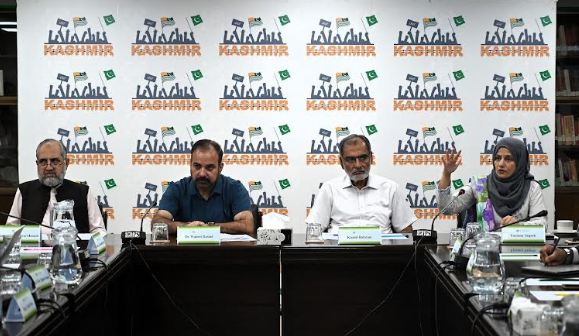
ISLAMABAD, AUG 6 /DNA/ – While the restoration of occupied Jammu and Kashmir’s statehood remains uncertain, any such development would signal the erosion of India’s unilateral actions since August 5, 2019. With India’s internal unrest, mounting international scrutiny, and evolving global power dynamics, a new trajectory has emerged. India may attempt to reframe the narrative and capitalize on emerging scenarios. However, Pakistan must build on this trajectory, grounded in optimism, strategic clarity, and the unwavering pursuit of the Kashmiri people’s right to self-determination.

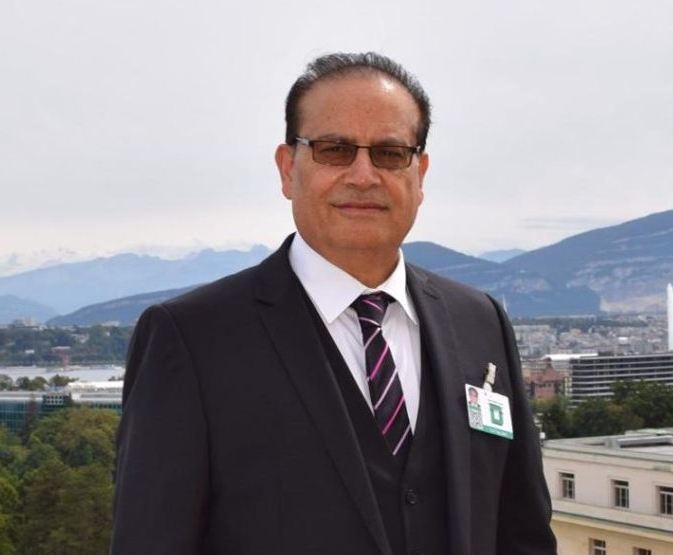
This was discussed during a session titled “Restoring Statehood of IOJ&K: A Step Forward or Political Mirage?” The meeting of the IPS’ Working Group on Kashmir (WGK) was addressed by Khalid Rahman, chairman IPS, Ambassador (r) Syed Abrar Hussain, vice-chairman IPS, Dr. Sheikh Waleed Rasool, director general Institute of Multi-Track Dialogue, Development and Diplomatic Studies, Farzana Yaqoob, secretary general WGK, Dr Khurshid Khan, IPS associate, Ambassador (r) Nasarullah Khan, Brig. (r) Raja Shozeb Majeed, international law expert, and Brig. (r) Said Nazir, IPS associate and security analyst.

The keynote speaker, Dr Waleed Rasool, noted that since 1947, the struggle of Indian Illegally Occupied Jammu and Kashmir (IIOJ&K) has been one of de facto versus de jure control. Once the territory came under Indian military control, it enabled India to engage in both legal and operational manipulation. The abrogation of Kashmir’s special status constituted a violation of multiple legal frameworks, including the Indian Independence Act, UNSC resolutions, bilateral agreements, and constitutional guarantees under Article 370. He emphasized the importance of Pakistan highlighting the Kashmir issue by engaging stakeholders at multiple levels. Equally important is the need to raise awareness about the legal status of Kashmir at international political, humanitarian, and legal forums.

Building on this legal and historical perspective, Brig (r) Khurshid Khan said India has been committing widespread human rights violations, but these atrocities have largely gone under-reported. However, the May conflict between Pakistan and India has once again brought the Kashmir issue to the international stage, giving rise to new geo-strategic realities. Global powers now increasingly recognize that the Indo-Pakistan conflict poses a serious threat to international peace. He noted that Pakistan must actively leverage its recently adopted UNSC resolution on the peaceful settlement of disputes to build diplomatic momentum.

Brig (r) Shozeb, while extending the strategic dimension, argued that Palestine serves as a test case, and India may attempt to replicate a similar model in Kashmir. However, he noted that India’s professed hegemony was severely shaken after the May standoff. This evolving scenario, he asserted, presents Pakistan with a strategic opportunity to shape the broader South Asian context in its favor. He recommended pursuing an advisory opinion from the ICJ on the Kashmir issue, leveraging the shift in international public opinion, engaging international think tanks, and establishing victim documentation centers to showcase testimonies via documentaries to expose Indian atrocities.

Adding a defense perspective, Brig (r) Said Nazir observed that Pakistan has effectively reestablished its deterrence in response to unwarranted Indian aggression. He cautioned that if India perceives this as the new normal, it would come at a significant cost for New Delhi.

In his assessment, Ambassador (r) Abrar Hussain stated that the actions taken on August 5, 2019, were both unconstitutional and illegal under domestic and international law. The BJP believed that by revoking Article 370, the people of Kashmir would submit to India’s will. However, the Pahalgam incident and subsequent developments have once again brought the Kashmir issue to the forefront, renewing calls for international attention and resolution.

Concluding the session, Khalid Rahman noted that a significant development since August 5, 2019, is that India has been exposed diplomatically and strategically, leading to a degree of isolation amid shifting regional and global geopolitical realities. Whether this results in the restoration of statehood to its pre-August 5 status or the division of IIOJ&K into two separate entities remains uncertain. Nonetheless, he emphasized that it is imperative for Pakistan to build on this evolving trajectory and intensify its advocacy for the Kashmiris’ right to self-determination.

Beast of Balochistan becomes showstopper at Gate of Natural History Museum

Beast of Balochistan becomes showstopper at Gate of Natural History Museum

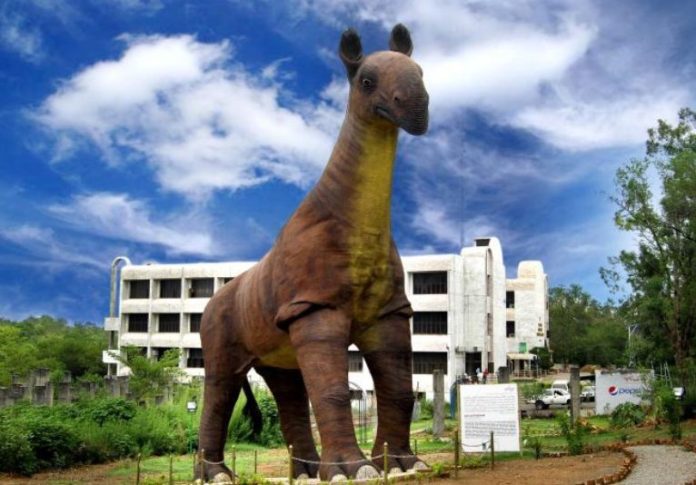
ISLAMABAD, Aug 6 (APP/DNA):The visitors at the Pakistan Museum of Natural History are pausing in amazement as they gaze up at   a colossal figure—
the towering skeleton of Baluchitherium, the legendary “Beast of Balochistan” and one of the largest land mammals to have ever walked the Earth.

Standing eighteen feet tall and weighing an estimated 20 tons, this gentle, plant-eating giant once roamed the dense, green forests of present-day Balochistan some 30 million years ago.

Its sheer size and the story of its discovery are captivating visitors from all walks of life.

“This discovery is a proud moment in Pakistan’s scientific history,” said Dr. Saima Huma Tanveer, Director General of the museum. “It’s a reminder that Balochistan was once full of greenery, life, and giant animals like Baluchitherium—very different from the arid landscape we know today.”

The first fossils were unearthed in 1908 in the Bugti Hills, but it was in 2000 that a joint Pakistani-French expedition made the landmark discovery of an almost complete skeleton.

Today, it stands reconstructed and preserved in the museum’s main hall, drawing hundreds of visitors daily.

“These bones are more than just a display—they connect us to a lost world,” said Ubaidullah Azeem, the museum’s Operational Manager. “They spark curiosity and help people, especially students, understand how life, climate, and nature have changed over millions of years.”

With a smile ,he remarked to APP,”In a way this is our very own Pakistani Dinosaur for Pakistani Children to marvel at -an inspiring piece of prehistory.

Among the crowd, a young mother, Sara Ahmed, was visiting with her two children, ages six and eight.

The children, their heads craned back and eyes wide, circled the display several times, pausing to stare at the enormous skull.

“My kids have only seen dinosaurs and prehistoric animals in cartoons,” she told APP with a smile. “Seeing something this huge in real life is magical for them. They’ve been asking about what it ate, how it survived, and why it disappeared. This visit turned into a science lesson they’ll never forget—and I’m learning alongside them.”

Her son clutched a small notebook, trying to copy the shape of the Baluchitherium’s massive legs, while his sister ran her fingers along the glass case protecting smaller fossilized bones.

A short distance away, a group of university students from Lahore were busy sketching and photographing the skeleton.

The group was working on a paleontology assignment but admitted that the trip was also a thrill for them.

“Reading about Baluchitherium in textbooks is one thing,” said Ali Raza, a geology major. “But standing here, looking up at this giant, it hits you just how vast life once was. You realize Pakistan isn’t just rich in culture—it’s rich in prehistoric heritage too.”

Another student, Maryam Khalid, said the visit was inspiring her to pursue a career in museum sciences. “We need more spaces like this where the public can connect with history in such a direct way,” she said.

The exhibit is also attracting foreign visitors.

Rebecca Turner, a tourist from Europe, said she stumbled upon the museum while exploring Islamabad.

“I’ve been to natural history museums in London, Paris, and New York,” she said, “but I wasn’t expecting something this extraordinary here. Baluchitherium is not just Pakistan’s treasure—it’s a gift to the world’s scientific record. The way it’s displayed here is impressive, and the historical context is beautifully explained.”

She added that she would be recommending the museum to fellow travelers.

From schoolchildren buzzing with excitement to scholars deep in research, and tourists seeking to discover the country’s lesser-known wonders, the Baluchitherium has become the beating heart of the museum.

More than a fossil, it is a bridge to a time when the Earth’s landscapes were greener, its creatures grander, and the land that is now Pakistan was home to giants.

Pakistan Navy, Turkish Navy conduct bilateral amphibious exercise in Karachi

Pakistan Navy, Turkish Navy conduct bilateral amphibious exercise in Karachi

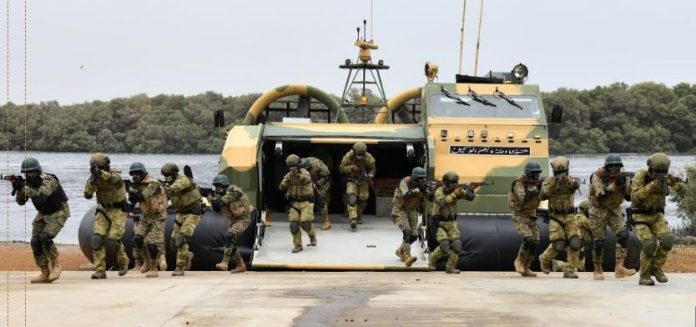
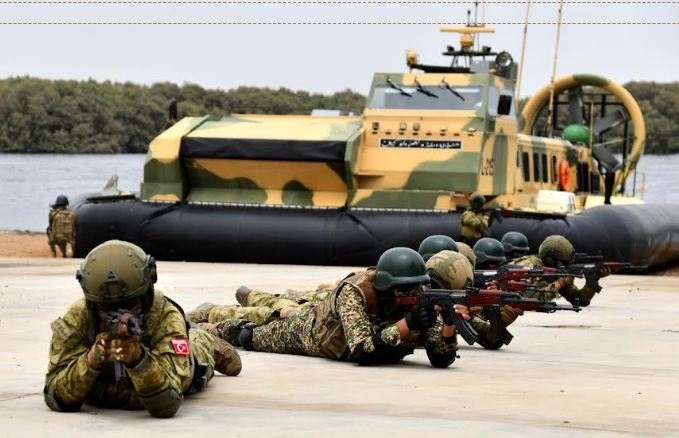
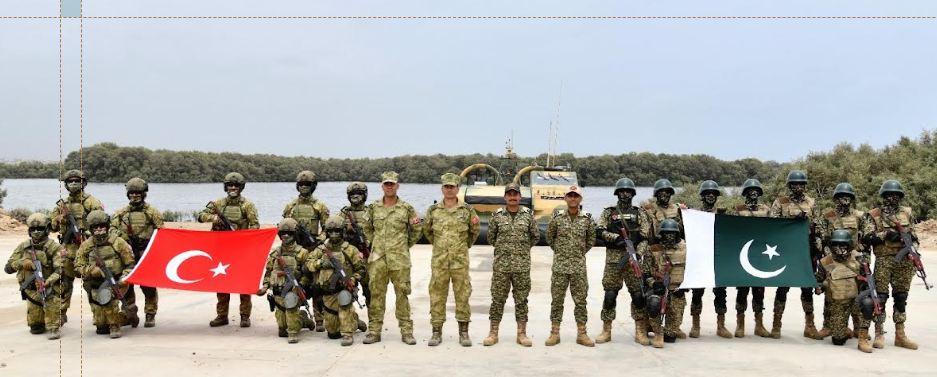
KARACHI, AUG 6 /DNA/ – Pakistan Navy and Turkish Navy have successfully concluded first Bilateral Amphibious Exercise. The exercise marks a significant milestone in strengthening maritime collaboration and interoperability between two friendly navies.

The exercise featured a comprehensive range of training activities including combat firing techniques, amphibious operation drills, convoy escorting drills and military operations in urban terrain. Live firing drills and close combat scenarios, designed to sharpen tactical coordination and readiness in littoral environments were also a part of the exercise.

The exercise culminated with a comprehensive amphibious drill in the designated coastal area validating operational readiness of both navies.

The conduct of bilateral exercise reflected deep rooted defence partnership between Pakistan and Türkiye and reaffirmed shared commitment towards regional peace through regular collaborative training initiatives.

PTI parliamentarians move PHC against ECP disqualification ruling in May 9 cases

PTI parliamentarians move PHC against ECP disqualification ruling in May 9 cases

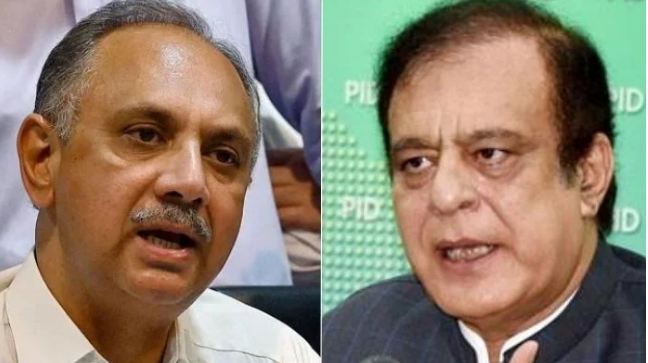
ISLAMABAD, AUG 6: Top Pakistan Tehreek-e-Insaf (PTI) leaders, including the opposition leaders in the Senate and National Assembly — Senator Shibli Faraz and Omar Ayub Khan, respectively — have moved the Peshawar High Court (PHC) against the Election Commission of Pakistan (ECP) ruling disqualifying them following convictions in May 9 cases.

PTI leaders Omar Ayub and Shibli Faraz have filed petitions in PHC against the election watchdog’s ruling that declared them ineligible for public office.

In separate pleas, the senior PTI leaders maintained that the ECP decision is unlawful and pleaded with the court to overturn the ruling.

The move comes a day after ECP de-notified nine PTI lawmakers following their convictions in the May 9 cases.

Those disqualified include five members of the National Assembly, one senator, and three members of the Punjab Assembly.

The list includes Omar Ayub (MNA from NA-18 Haripur), Rai Hassan Nawaz (MNA from NA-143 Sahiwal-III), Zartaj Gul (MNA from NA-185 DG Khan-II), Rai Haider Ali (MNA from NA-96 Faisalabad-II), and Sahibzada Hamid Raza (MNA from NA-104 Faisalabad-X) from the lower house of parliament.

Punjab Assembly members Muhammad Ansar Iqbal (MPA from PP-73 Sargodha-III) Junaid Afzal (MPA from PP-98 Faisalabad-I), and Rai Muhammad Murtaza Iqbal (MPA from PP-203 Sahiwal-VI) were also de-notified.

The disqualification came days after a special anti-terrorism court (ATC) in Faisalabad sentenced several PTI leaders to 10 years in prison each in connection with cases registered in the aftermath of the May 9, 2023, violence.

In its verdict, the special ATC sentenced 108 individuals of the total 185 accused and acquitted 77 others including former federal minister Fawad Chaudhry, Zain Qureshi and Khayal Kastro.

Meanwhile, the Peshawar High Court (PHC) has granted protective bail to PTI leader Zartaj Gul in May 9 case following her conviction by an anti-terrorism court in Faisalabad.

In her petition, Gul maintained that she intends to file an appeal with the Lahore High Court (LHC) and is seeking protective bail to ensure she can do so without fear of immediate arrest.

Subsequently, the court, after hearing arguments, granted protective bail to former minister.

‘Gohar hits out at ECP’
Speaking to reporters today, PTI Chairman Barrister Gohar Ali Khan strongly criticised the ECP and defended recent countrywide protests, claiming public support remains firmly behind party’s founding leader Imran Khan.

Gohar slammed ECP’s decision, saying that the election watchdog does not have the legal authority to issue direct disqualification notifications.

“This is the first Election Commission operating under a court stay order,” said Gohar.

Terming the ECP’s disqualifications as “unlawful”, Barrister Gohar said that PTI would challenge the Election Commission ruling at all legal forums.

While speaking on PTI’s August 5 protest, Gohar said the protests were held in 170 districts, tehsils, and union councils across the country, and people showed their love for Imran Khan.

Talk of Field Marshal becoming president ‘nonsense’: DG ISPR

Talk of Field Marshal becoming president 'nonsense': DG ISPR

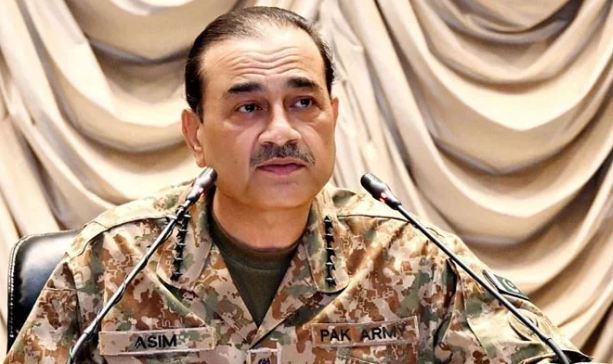
RAWALPINDI, AUG 6: Inter-Services Public Relations (ISPR) Director General Lt Gen Ahmed Sharif Chaudhry has firmly refuted reports claiming Chief of Army Staff (COAS) Field Marshal Syed Asim Munir has any intention of becoming the country’s president.

In an interview with the British journal The Economist, the chief military spokesperson termed such reports of the army chief becoming president as “nonsense”.

This reaffirmation comes after Prime Minister Shehbaz Sharif in July strongly dismissed the rumours suggesting that President Asif Ali Zardari may be asked to step down or COAS has any ambition to assume the presidency.

Terming such claims as “mere speculation,” the premier assured that there was no truth to the reports circulating in certain sections of the media.

Speaking to The News on the matter, the prime minister categorically stated: “Field Marshal Asim Munir has never expressed any desire to become the president, nor is there any such plan in the offing.” He emphasised that the trio of President Zardari, Field Marshal Asim Munir, and he himself share a relationship built on mutual respect and a common goal — the progress and prosperity of Pakistan.

PM Shehbaz’s clarification came after Interior Minister Mohsin Naqvi, in a statement shared on his official X handle, denounced what he called a “malicious campaign” targeting President Zardari, Prime Minister Shehbaz Sharif and the Army Chief.

“We are fully aware of who is behind the malicious campaign,” said Naqvi, who is considered close to the top military leadership. “I have categorically stated that there has been no discussion, nor does any such idea exist, about the president being asked to resign or the COAS aspiring to assume the presidency,” he added.

Meanwhile, DG ISPR, while responding to a question about how Pakistan would react if India repeats any act of aggression, Lt Gen Ahmed Sharif Chaudhry said that Pakistan would begin by striking deeper within India. “We’ll start from the east. “They [India] also need to understand that they can be hit everywhere,” he added.

Earlier in May, Pakistan and India engaged in the military confrontation triggered by an attack in April on tourists in Indian Illegally Occupied Jammu and Kashmir (IIOJK) that New Delhi blamed on Islamabad, before agreeing to a ceasefire.

In response to the Indian aggression, Pakistan’s armed forces launched a large-scale retaliatory military action, named “Operation Bunyan-um-Marsoos”, and targeted several Indian military targets across multiple regions.

Pakistan downed six Indian fighter jets, including three Rafales, and dozens of drones. After at least 87 hours, the war between the two nuclear-armed nations ended on May 10 with a ceasefire agreement brokered by the US.

The ceasefire was first announced by US President Donald Trump on social media after Washington held talks with both sides, but India has differed with Trump’s claims that it resulted from his intervention and threats to sever trade talks.

However, Pakistan has acknowledged Trump’s efforts and formally recommended him for the 2026 Nobel Peace Prize, citing his role in defusing tensions between Islamabad and New Delhi last month.

Stay Connected

64FansLike
60FollowersFollow

Latest Reviews

Exchange Rates

USD - United States Dollar
EUR
1.17
GBP
1.35
AUD
0.72
CAD
0.73