Home Blog Page 549

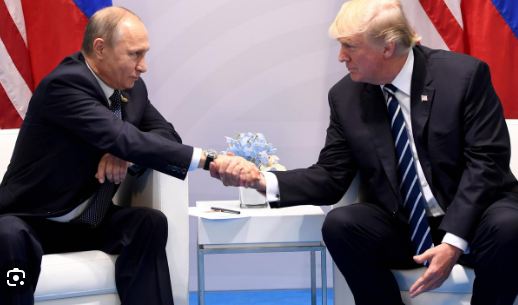
Will the upcoming Trump-Putin meeting mark a thaw in US-Russia relations?

Will the upcoming Trump-Putin meeting mark a thaw in US-Russia relations?

As the international community watches closely, the expected meeting between US President Donald Trump and Russian President Vladimir Putin has raised both hopes and eyebrows. For some, this meeting might signal a potential easing of tensions between the two global powers. For others, it raises concerns about the strategic motives behind such a dialogue and its broader implications for global geopolitics.

Donald Trump has always projected himself as a leader capable of forging unconventional relationships — especially with leaders traditionally at odds with Washington. His approach to diplomacy, often criticized as erratic and transactional, was also praised by supporters for its boldness. His past comments about Putin have ranged from respectful to admiring, often highlighting the Russian leader’s “strength” and “decisiveness,” in stark contrast to the approach taken by his predecessors and successor.

On the other hand, Vladimir Putin remains a central figure of controversy, especially after the invasion of Ukraine in 2022, his confrontational policies toward the West, and allegations of interference in democratic processes abroad. The current US-Russia relationship is arguably at its lowest point since the Cold War — marred by sanctions, diplomatic expulsions, proxy conflicts, and deep strategic distrust.

The key question remains: Can this meeting truly thaw frosty relations, or will it merely serve as a performative gesture with limited outcomes?

Trump, currently a dominant figure in US politics may see this meeting as a strategic move to position himself as a peace-seeker — someone who can do what others could not: sit across from Putin and potentially bring an end to or at least reduce hostilities. If successful, such optics could bolster his image at home, especially among conservative voters weary of endless conflicts and sky-high defense spending.

Putin, meanwhile, could also benefit. A meeting with Trump — who has criticized US support for Ukraine and NATO’s posture — allows the Kremlin to present a picture of diplomatic legitimacy. It also helps reinforce Putin’s narrative at home: that the West, or at least part of it, is willing to talk to Russia again. For a leader under intense international pressure and isolation, that perception alone can be a powerful tool.

The war in Ukraine remains the elephant in the room. While Trump has criticized US involvement in the conflict, it is unclear whether he has a coherent strategy to end it. Simply withdrawing aid to Ukraine, as some in his political camp have suggested, might not bring peace but could instead embolden Russian aggression. If this meeting is seen as Trump siding with Putin or appeasing him, it could alienate allies and provoke a bipartisan backlash in Washington.

Another issue is NATO. Trump has previously expressed dissatisfaction with NATO, criticizing allies for not paying their fair share and even suggesting the US could withdraw. Such remarks play directly into Russia’s strategic objectives — weakening or dismantling Western unity. If the meeting between Trump and Putin hints at any compromise on NATO’s relevance, it could shake the very foundations of Western security architecture.

Cybersecurity, arms control, and economic sanctions are other potential topics — each deeply complicated and unlikely to be resolved in one sitting. Trust between the two nations has eroded over years of cyberattacks, election meddling allegations, and broken treaties. Any talk of lifting sanctions, for instance, would be politically toxic unless accompanied by concrete steps from Russia on issues like Ukraine, political repression, or disinformation campaigns.

Realistically, the meeting may produce little in terms of policy breakthroughs. But in the world of international politics, symbolism often matters as much as substance. A cordial meeting, a joint press conference, or even an agreement to keep channels open could slightly lower the temperature of US-Russia relations — and that alone could be a modest success.

Yet, there is a risk. Diplomacy without discipline can do more harm than good. If the meeting is perceived as legitimizing Putin’s actions without demanding accountability, it could undermine Western unity and the principles of international law. Trump, known for his unpredictable style, could say or do something that inadvertently weakens America’s global position — especially if he prioritizes personal rapport over policy prudence.

In conclusion, the Trump-Putin meeting — if and when it happens — will be a moment of high drama and even higher stakes. It offers a fragile opportunity to reduce hostilities, open communication lines, and potentially lay the groundwork for more structured diplomacy in the future. But it also carries immense risks — of miscommunication, misinterpretation, and manipulation.

Any real thaw in relations would require more than a handshake or a press release. It would demand a long-term commitment to mutual respect, adherence to international norms, and a willingness to compromise on key issues — from Ukraine to arms control.

The world will be watching closely, not just to see what is said, but what is left unsaid — and whether this meeting marks the beginning of a new chapter or just another page in a complex, troubled history.

Trump’s War on America

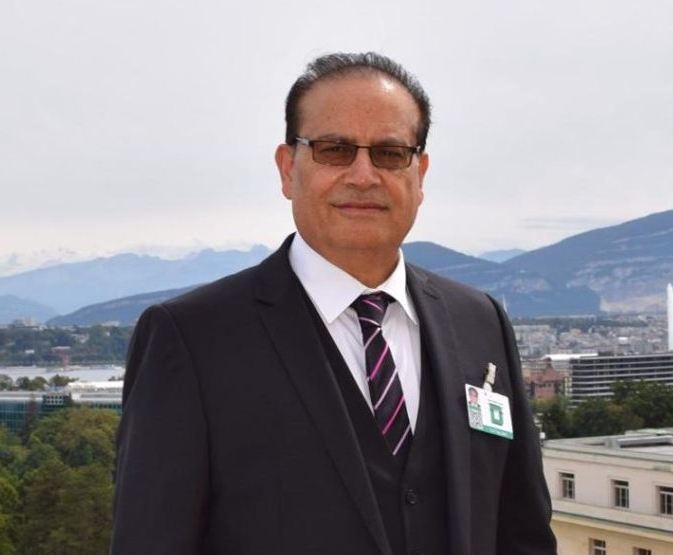
Qamar Bashir

By Qamar Bashir

President Donald Trump has done what no American president dared to do: declare war on the very states that make up the United States. In a stunning policy shift, his administration issued an executive directive conditioning federal disaster relief and aid—worth over $1.9 billion—on whether states comply with his unwavering support for Israel. FEMA grant guidelines quietly added that any state imposing restrictions or even symbolic boycotts on Israeli-linked industries could lose critical disaster funding—upending the core of federalism by making disaster survival dependent on foreign policy alignment with a foreign state.

This shocking decision wasn’t just condemned by legal scholars—it sent waves through legacy media and exploded across social platforms. Constitutional experts called it an unprecedented violation of the separation between federal and state powers, while commentators accused the administration of weaponizing disaster aid as political blackmail. In a nation where trust in federal institutions is already fragile, this move struck at the very idea of independent state governance.

What Trump has done is not a show of strength—it is the crossing of every constitutional boundary the American people can tolerate. Intellectuals and journalists are now speaking openly about the pervasive influence of AIPAC and other pro-Israel lobbies—now contributing well over $100 million annually in lobbying and campaign support. It is no longer fringe to suggest that lawmakers are compromised—claims intensified by allegations tied to the unsealed Epstein files and whispers of foreign intelligence leverage over U.S. decision-making.

But Trump’s betrayal does not end there. He has also declared war on the most vulnerable Americans—those depending on healthcare, Social Security, and disaster aid. The so-called One Big Beautiful Bill, enacted in July 2025, slashes Medicaid by nearly $1 trillion, cuts hundreds of billions from SNAP, and imposes strict work-reporting mandates. These cuts threaten healthcare access for more than 10 million people and push already struggling rural hospitals toward collapse—particularly in states like Oklahoma, Alabama, and West Virginia.

Then came the tariff tsunami. Under Trump’s economic nationalism, sweeping duties—ranging from 15 % to 55 %, especially on Chinese goods—now apply to imports from nearly 70 countries, including close allies. Canada faces 35 % tariffs, Brazil and Switzerland up to 50 %, India 25 %, and China some of the heaviest penalties in history. The average import tax rate has surged to 19 %, the highest since the Great Depression. The result: the typical American household is now losing between $2,400 and $3,800 a year in purchasing power—higher grocery bills, pricier clothes, more expensive electronics, and costlier cars.

Tariffs are not a tax on foreign exporters—they are a tax on Americans. Importers pay them first, then pass them on to distributors and retailers, who pass them on to consumers. Research shows that 60 % of the tariff burden falls directly on U.S. households, squeezing the middle class and deepening economic inequality.

The markets know the truth. On August 1, the Dow Jones dropped 542 points, the S&P 500 fell 1.6 %, and the Nasdaq plunged 2.2%—spooked by weak job growth, rising prices, and fears of foreign retaliation. America’s small businesses, farms, and neighborhood retailers face shrinking margins while multinational corporations with offshore operations remain largely shielded.

But Trump’s war isn’t only economic. It’s also demographic. He has targeted immigrants—the unspoken backbone of America’s agriculture, construction, and service sectors. These laborers feed the nation, build its homes, and staff its restaurants—jobs native-born Americans often refuse. Undocumented workers make up 40 % of crop farm laborers nationally and over 75 % in California. Mass deportations could shrink the U.S. labor force by 4–6 %, slashing GDP by as much as $5 trillion over the next decade. Agriculture and hospitality output could fall nearly 9 %, while retail and manufacturing lose $65–$74 billion annually.

The impact is already visible. In California, ICE raids in 2025 disrupted a $49 billion agricultural economy, cutting 20–40 % of the workforce, leading to $3–$7 billion in crop losses and pushing produce prices up by 5–12 % nationwide. These costs cascade through every grocery store and restaurant in America.

With inflation now at 2.7 % as of June 2025—up from post-pandemic lows—families are cutting back on necessities, not luxuries. The result will be fewer college enrollments, reduced healthcare access, and a generation of disenfranchised youth.

And while the world races toward a clean-energy future, Trump is dragging America back into its polluted past. His expansion of oil drilling, coal mining, and nuclear projects—coupled with rollbacks on renewables—will carry staggering costs. Climate-fueled disasters already average $149 billion in annual losses—up 50 % from the previous decade. In just the first half of 2025, wildfires and severe storms caused $131 billion in total damages, with $80 billion insured. Last year alone, climate-related disasters cost the U.S. nearly $1 trillion.

Beyond disasters, fossil fuel pollution costs the economy $790 billion annually in lost productivity, healthcare, and premature deaths—about 5 % of GDP. By doubling down on outdated energy, Trump is not just warming the planet—he’s cooking the economy.

Instead of bolstering U.S. global economic power, Trump is accelerating the unraveling of the dollar-based financial order. Central banks’ share of dollar reserves has fallen from around 70 % two decades ago to 57 % by late 2024. BRICS nations are increasingly settling trade in local currencies, and discussions for a shared BRICS currency are advancing. Africa’s PAPSS system already saves $5 billion annually by avoiding dollar conversions.

China, once America’s largest creditor, has cut its U.S. Treasury holdings from over $1.3 trillion a decade ago to $780–785 billion—its lowest in 15 years. Nations from Russia to Saudi Arabia are converting reserves into gold and non-dollar assets. With U.S. national debt at $36 trillion, a future in which creditors demand repayment could force the sale of American land, infrastructure, or even strategic assets—undermining sovereignty itself.

And all this unfolds while Trump clings to unconditional support for Israel—even as, for the first time in modern polling, a majority of Americans express sympathy for Palestinians. The narrative has shifted. The atrocities in Gaza—starvation, bombardment, and mass displacement—are no longer hidden from U.S. audiences. In this climate, Trump’s Israel policy is not only morally bankrupt but politically toxic.

The irony is devastating: while Trump claims to put America first, his policies—on disaster aid, healthcare, trade, immigration, environmental stewardship, and global finance—are systematically dismantling the country’s strength from within.

For now, the pain is unevenly distributed, but make no mistake: it is coming for every household. When higher prices, job losses, environmental collapse, and global isolation converge, Americans will see clearly who hollowed out their nation. And when that reckoning comes, it won’t be softened by speeches, spin, or scapegoats. It will be the moment America realizes it wasn’t foreign adversaries that broke its back—it was a president who declared war on his own people.

By Qamar Bashir

 Press Secretary to the President (Rtd)

 Former Press Minister, Embassy of Pakistan to France

 Former MD, SRBC | Macomb, Michigan, USA

Government actively supporting hockey revival: IPC Minister

Pakistan Hockey Federation still in a shambles

However, despite this generous financial support, the PHF has come under scrutiny for not submitting auditable vouchers and receipts related to the expenditure of these funds. “The PHF has so far failed to submit any verifiable documentation to substantiate the utilization of government-provided funds,” said the IPC Minister

Ansar M Bhatti

ISLAMABAD, AUG 8 /DNA/ – Minister for Inter-Provincial Coordination (IPC) Rana Sanaullah has stated that the Government of Pakistan remains committed to the revival and promotion of hockey in the country, and continues to extend significant financial and administrative support to the Pakistan Hockey Federation (PHF). However, concerns have been raised over financial mismanagement and lack of transparency within the PHF.

In a written response to queries regarding PHF’s performance and accountability, the IPC Minister revealed that a total of Rs. 119.6 million (Rs. 11 crore 96 lakh) was disbursed to the PHF during the financial years 2023-24 and 2024-25. This substantial support was aimed at revitalizing national hockey, assisting the federation with operational expenses, and ensuring the participation of national teams in international events.

The Minister further informed that air tickets worth Rs. 7 million were also provided by the government to facilitate Pakistan’s participation in the Men’s Nations Cup held in Malaysia. These efforts reflect the government’s intent to restore Pakistan’s former glory in the sport of hockey.

However, despite this generous financial support, the PHF has come under scrutiny for not submitting auditable vouchers and receipts related to the expenditure of these funds. “The PHF has so far failed to submit any verifiable documentation to substantiate the utilization of government-provided funds,” said the IPC Minister.

Adding to the concerns, the Minister disclosed that the players who represented Pakistan in the Nations Cup were not paid any daily allowances, despite the availability of sufficient funds. In fact, the PHF itself acknowledged in an official correspondence that it did not pay the players’ allowances even though adequate resources were available.

“This is a serious lapse in financial responsibility,” said the IPC Minister, noting that the Pakistan Sports Board (PSB) issued a letter to PHF on June 20, 2025, demanding a clear explanation for the non-payment to players. Instead of providing a response or justification, the PHF requested PSB to make the allowance payments on their behalf, which was categorically refused.

The Minister clarified that it is solely the PHF’s responsibility to pay the players, and such requests reflect poor financial management and misplaced priorities within the federation. “The delay in disbursement of players’ allowances is entirely due to the PHF’s internal mismanagement and financial irregularities,” the Minister added.

The government has reiterated that while it will continue to support national sports federations, accountability and transparency are non-negotiable. As part of a broader effort to ensure proper utilization of public funds, the IPC Ministry is closely monitoring the activities of all sports bodies receiving government aid.

The controversy surrounding the PHF’s financial practices has once again highlighted the urgent need for internal reforms and professional administration in sports organizations. For hockey to regain its place as the national pride of Pakistan, systemic governance issues must be addressed alongside athletic development.=DNA

Australian mushroom murderer accused of poisoning husband

Australian mushroom murderer accused of poisoning husband

SYDNEY, AUG 8 (AFP/APP): Australia’s recently convicted mushroom murderer also tried to poison her husband with a chicken korma curry, according to accusations aired Friday after a suppression order lapsed.

Home cook Erin Patterson was found guilty in July of murdering her husband’s parents and elderly aunt in 2023 by lacing their beef Wellington lunch with lethal death cap mushrooms.

  A series of potentially damning allegations about Patterson’s behaviour in the lead-up to the meal were withheld from the jury to give the mother-of-two a fair trial.

  Supreme Court Justice Christopher Beale on Friday rejected an application to keep these allegations suppressed.

    Patterson tried to kill her estranged husband Simon on three occasions between 2021 and 2022, police alleged in one of the major claims not heard during the trial.

  She was accused of serving him poisoned dishes of pasta bolognese, chicken curry and a vegetable wrap, according to freshly released evidence.

   Simon told a pre-trial hearing in October last year how Patterson had asked him to taste test a batch of curries she had made.

   “I remember Erin saying that the purpose of the taste test was so she could, I guess, customise future curry production for our respective tastes,” he said.

   He later fell ill after eating a mild chicken korma served by Patterson on a camping trip in 2022.

   “At first I felt hot, especially in my head, and that led to feeling nauseous and then that led to me quite suddenly needing to vomit,” he said.

       He later fell into a coma before surgeons operated to remove a section of his bowel.

    Simon later told doctor Christopher Ford that he had come to suspect Patterson might be deliberately poisoning him.

     He became worried when Patterson offered him a batch of homemade cookies, Ford said.

    “Simon was apprehensive about eating the cookies, as he felt they may be poisoned,” the doctor told a pre-trial hearing last year.

     “He reported to me that while they were away, Erin called several times and enquired about whether he had eaten any of the cookies.”

  Prosecutors dropped those charges before the start of Patterson’s trial, with tight restrictions preventing media from revealing any details.

  – Lethal fungus –

   Patterson hosted an intimate meal in July 2023 that started with good-natured banter and earnest prayer — but ended with three guests dead.

    A 12-person jury found the 50-year-old guilty of murdering Simon’s parents Don and Gail Patterson, as well as his aunt Heather Wilkinson.

       She was also found guilty of attempting to murder Heather’s husband Ian, a well-known pastor at the local Baptist church.

                  Patterson’s trial drew podcasters, film crews and true crime fans to the rural town of Morwell, a sedate hamlet in the state of Victoria better known for prize-winning roses.

      Newspapers from New York to New Delhi followed every twist of what many now simply call the “mushroom murders”.

  Throughout a trial lasting more than two months, Patterson maintained the beef-and-pastry dish was accidentally poisoned with death cap mushrooms, the world’s most-lethal fungus.

Death cap mushrooms are easily mistaken for other edible varieties, and reportedly possess a sweet taste that belies their potent toxicity.

     Patterson will return to court on August 25 for hearings that will determine how long she spends behind bars.

       Her legal team has 28 days after sentencing to appeal both her criminal convictions and her sentence.

Australia has always been a valued partner: Maryam

Australia has always been a valued partner: Maryam

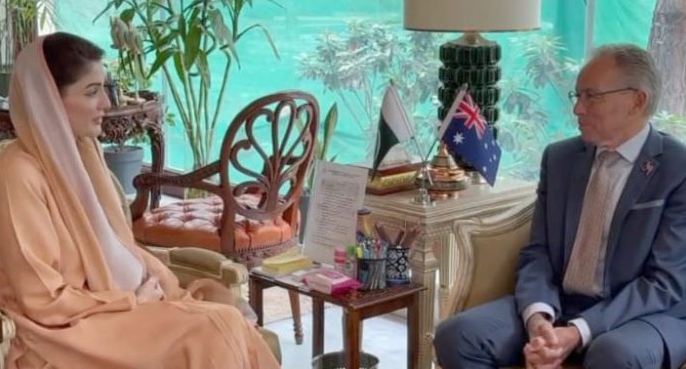
Australian High Commissioner Neil Hawkins Meets CM Punjab

LAHORE, AUG 8 /DNA/ – Chief Minister Punjab Maryam Nawaz met with the Australian High Commissioner to Pakistan, Neil Hawkins, in Lahore. The meeting focused on strengthening bilateral cooperation, ongoing development partnerships, and mutual efforts in education, agriculture, and climate resilience.

During the meeting, CM Maryam Nawaz appreciated the efforts of High Commissioner Neil Hawkins in promoting strong and productive relations between Pakistan and Australia. She noted that under his tenure, bilateral engagements between Punjab and Australian institutions had seen positive growth, particularly in areas such as vocational training, water resource management, and women’s empowerment.

“Australia has always been a valued partner, and your efforts in enhancing people-to-people contacts and institutional collaboration are commendable,” said the Chief Minister. She also emphasized the need for further cooperation in renewable energy, climate change adaptation, and agricultural technology — areas where Australia holds global expertise.

High Commissioner Neil Hawkins, in turn, expressed gratitude for the warm hospitality and reiterated his country’s commitment to deepening cooperation with Pakistan, particularly at the provincial level. “Pakistan and Australia are good and reliable partners,” Hawkins remarked, adding that Australia remains invested in supporting sustainable development initiatives in Punjab and beyond.

The meeting also covered ongoing Australian-supported projects in Punjab, including scholarships for Pakistani students, technical assistance in water conservation, and support for flood resilience infrastructure. Both sides agreed to explore new avenues of cooperation, particularly in education, trade, and environmental protection.

The visit by the High Commissioner comes at a time when Australia is looking to expand its development footprint in South Asia. His engagement with provincial leadership reflects Canberra’s commitment to inclusive diplomacy and grassroots partnerships.

Maryam Nawaz thanked Neil Hawkins for his constructive role and hoped that the strong foundation laid during his tenure would continue to evolve in the years to come.=DNA

=============

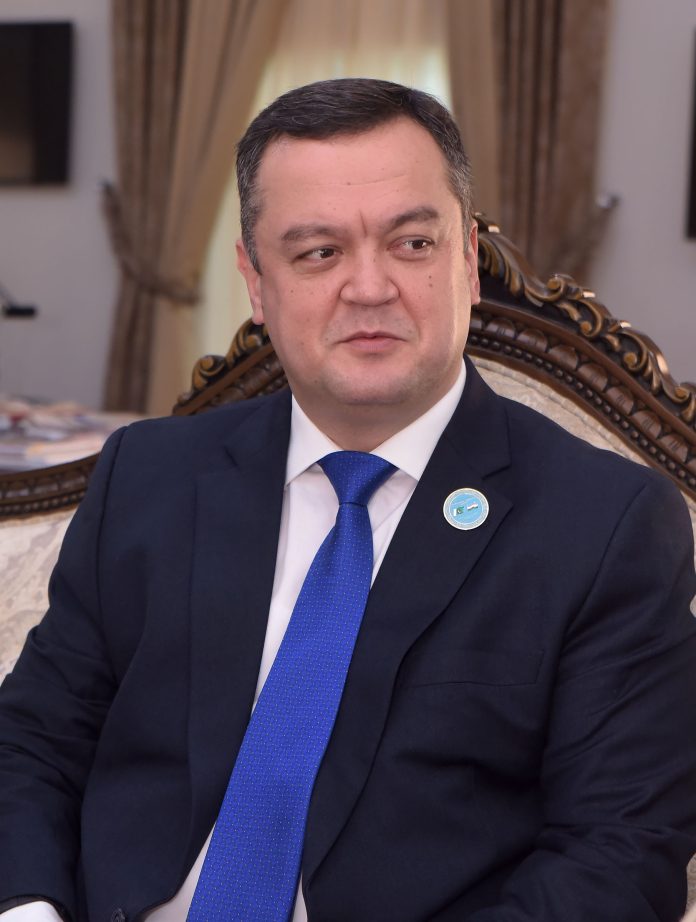
Uzbek envoy highlights expanding strategic ties with Pakistan

Ambassador Alisher Tukhtaev says the rail project holds transformative potential for regional trade and integration


Ansar Mahmood Bhatti

ISLAMABAD: Ambassador of Uzbekistan to Pakistan, Alisher Tukhtaev, delivered an in-depth overview of the growing bilateral ties between Uzbekistan and Pakistan at a media briefing session held at the Uzbek Embassy in Islamabad. The event brought together representatives from Pakistan’s leading media outlets, television channels, radio stations, and news agencies.

In his opening remarks, Ambassador Tukhtaev emphasized that the purpose of the session was to inform the Pakistani public about the evolving and multifaceted cooperation between the two nations. He underlined that the Uzbek-Pakistani relationship is rooted in a shared history, culture, religion, and mutual respect, and is now advancing into a strategic partnership.

The ambassador noted that the frequency of high-level meetings is evidence of the growing trust between both countries. He referred to the official visit of Prime Minister Shehbaz Sharif to Uzbekistan in February 2025 as a major milestone in bilateral relations. During the visit, several agreements were signed, and a Strategic Partnership Council was established, reflecting the two governments’ commitment to elevate relations to a higher level.

A major highlight of the visit was the reaffirmation of support for the Trans-Afghan Railway Project, which seeks to link Uzbekistan, Afghanistan, and Pakistan through a regional connectivity corridor. Ambassador Tukhtaev said this project holds transformative potential for regional trade and integration. He also pointed to several high-level engagements that have occurred on the sidelines of major international forums, including the ECO Summit in Khankendi and the Inter-Parliamentary Union Assembly, which further reinforced the commitment of both nations to practical cooperation.

A significant development took place in June 2025, when the foreign ministers of both countries signed a Joint Action Plan during the OIC Foreign Ministers’ meeting in Istanbul. The following month, Uzbekistan, Pakistan, and Afghanistan signed a Framework Agreement in Kabul to conduct a joint feasibility study for the railway project, a crucial step towards advancing regional connectivity.

Touching upon economic cooperation, the ambassador stated that Uzbekistan’s GDP reached $115.6 billion in 2024, while bilateral trade with Pakistan exceeded $400 million. In just the first half of 2025, trade reached $253.7 million — a 123% increase over the same period last year — making Uzbekistan Pakistan’s largest trading partner in Central Asia. Despite this growth, both sides aim to push the trade volume to $2 billion by removing trade barriers, improving logistics, and enhancing business-to-business ties.

He outlined the success of recent trade exhibitions held in Lahore, Islamabad, and Karachi under the “Made in Uzbekistan” and “Food Fest Uzbekistan” banners. These events collectively generated more than $120 million in trade agreements and featured hundreds of Uzbek companies engaging directly with Pakistani businesses. To facilitate trade operations, Uzbekistan-Pakistan Trade Houses have been opened in Lahore and Karachi, and significant progress is being made on banking cooperation to streamline mutual payment systems. The Preferential Trade Agreement (PTA) is under review, with plans to increase the number of goods covered from 17 to 100.

Ambassador Tukhtaev said Uzbekistan is also looking to enhance regional connectivity through Pakistan’s ports of Karachi and Gwadar, and is discussing a trilateral transit trade agreement with Afghanistan and Pakistan. A joint transport and logistics company is also being planned to improve cargo movement.

On the cultural and humanitarian front, the ambassador highlighted growing engagement in tourism, education, youth exchange, and cultural events. Uzbekistan has eased visa rules for Pakistani citizens and launched direct flights between Tashkent and Lahore in April and between Tashkent and Islamabad in June, which are expected to boost tourism, education, and business ties.

He noted that Uzbekistan’s participation in Pakistan’s cultural landscape has grown significantly. Uzbek delegations took part in events such as the Lok Mela Festival, the Charity Bazaar, and a Nowruz celebration in Islamabad. Promotional exhibitions have also been held at venues like Centaurus Mall. He mentioned a visit by Namangan State University to Lahore, as well as the Uzbekistan-Pakistan Young Entrepreneurs Forum, which was held in June as part of Global Youth Festival activities.

Several Pakistani ministers have participated in major events in Uzbekistan. The Minister for Climate Change attended the Samarkand International Forum, the Minister for National Heritage visited Samarkand for its designation as Cultural Capital of the Islamic World, and the Minister for Law and Justice took part in the Tashkent Law Spring forum. These exchanges, the ambassador said, have helped strengthen institutional and cultural cooperation.

A recent highlight was the departure of 16 Pakistani bikers on the “Central Asia Tour 2025,” which will cover Pakistan, Afghanistan, Uzbekistan, and Tajikistan. This initiative is seen as a powerful symbol of people-to-people connectivity and regional friendship.

In conclusion, Ambassador Tukhtaev called on Pakistani businesses and investors to take advantage of Uzbekistan’s promising economic environment. He described the country as business-friendly, with an attractive tax regime, low utility costs, rich natural resources, and a strategic location at the heart of Central Asia. He also emphasized Uzbekistan’s special economic zones, growing sectors like textiles and pharmaceuticals, and a skilled, youthful labor force.

He urged the media to help promote Uzbekistan as a key destination for trade, investment, and tourism, and extended an open invitation to the Pakistani people to visit and explore opportunities in his country. He concluded by expressing confidence that the two countries would continue to build on their strong foundations and make further progress by the end of the year.

The event concluded with a question-and-answer session and a renewed call for enhanced cooperation across political, economic, cultural, and people-to-people domains, reaffirming the robust strategic partnership between Uzbekistan and Pakistan.

Israeli military chief opposes Gaza war expansion, raising pressure on Netanyahu

Israeli military chief opposes Gaza war expansion, raising pressure on Netanyahu

GAZA, AUG 6: Israel’s military chief has pushed back against Benjamin Netanyahu’s plans to seize areas of Gaza it doesn’t already control, three Israeli officials said, as the prime minister faces increasing pressure over the war both at home and abroad.

During a tense, three-hour meeting on Tuesday, Eyal Zamir, the military chief of staff, warned the prime minister that taking the rest of Gaza could trap the military in the territory, which it withdrew from two decades ago, and could lead to harm to the hostages being held there, the sources briefed on the meeting said.

The Israeli military says it already controls 75% of Gaza after nearly two years of war, which began when militant group Hamas attacked southern Israeli communities in October 2023. It has repeatedly opposed imposing military rule, annexing the territory, and rebuilding Jewish settlements there – policies advocated by some government members.

Netanyahu is under intense international pressure to reach a ceasefire in the coastal enclave, which has been reduced to rubble Most of the population of about 2 million has been displaced multiple times and aid groups say residents are on the verge of famine.

The U.N. has called reports about a possible expansion of Israel’s military operations in Gaza “deeply alarming” if true.

The military, which accuses Hamas of operating amongst civilians, has at times avoided areas where intelligence suggested hostages were held and former captives have said their captors threatened to kill them if Israeli forces approached.

Netanyahu told Zamir that so far the military had failed to bring about the release of the hostages, the officials said, speaking on the condition of anonymity. Most of those freed so far came about as a result of diplomatic negotiations.

Defense Minister Israel Katz wrote on X Wednesday that the military chief has both the right and the duty to voice his opinion, but said that the military would carry out the government’s decisions until all war objectives are achieved.

The prime minister’s office confirmed the meeting with Zamir on Tuesday but declined to comment further and the military did not respond to a request for comment.

The prime minister is scheduled to discuss military plans for Gaza with other ministers on Thursday. A fourth source said Netanyahu wants to expand military operations in Gaza to put pressure on Hamas.

Netanyahu, who in May said that Israel would control all of Gaza, leads the most right-wing coalition government in Israel’s history and some of his key partners have in the past threatened to quit if the government ended the war.

Following a 40-minute meeting with the prime minister on Wednesday, opposition leader Yair Lapid told reporters he had advised Netanyahu that the public was not interested in continuing the war and that a full military takeover would be a very bad idea.

A public poll last month by Israel’s Channel 12 also showed support for a diplomatic deal that would end the war and secure the release of the hostages.

EMACIATED HOSTAGES

There are 50 hostages still being held in Gaza, of whom at least 20 are believed to be alive. Videos released by Hamas and Palestinian Islamic Jihad, another militant group in Gaza, last week of two extremely emaciated captives triggered international condemnation.

Close to 200 Palestinians have died of starvation in Gaza since the war began, about half of them children, according to Gaza’s health ministry. More than 20 died on Wednesday when a truck believed to be carrying food overturned as it was swarmed by a desperate crowd, according to local health authorities.

The latest ceasefire talks in Qatar broke down last month. Hamas insists any deal must lead to a permanent end to the war, while Israel accuses the group of lacking sincerity about giving up power afterward and must be defeated.

An expansion of the military offensive in heavily populated areas would likely be devastating.

“Where will we go?” said Tamer Al-Burai, a displaced Palestinian living at the edge of Deir Al Balah in central Gaza.

“Should people jump into the sea if the tanks rolled in, or wait to die under the rubble of their houses? We want an end to this war, it is enough, enough,” he told Reuters by phone.

OVEREXTENDED

The war in Gaza has also overextended Israel’s military, which has a small standing army and has had to repeatedly mobilise reservists. It is not clear if more reservists would be needed to expand operations and take more territory.

The military continued to carry out air strikes across Gaza on Wednesday, killing at least 135 people in the past 24 hours, the Gaza health ministry said, with the death toll since the beginning of the conflict now at more than 61,000, mostly civilians, it says.

About 1,200 people were killed, including more than 700 civilians, and 251 hostages taken to Gaza after the Hamas attack on Israel, according to Israeli tallies.

Climate smart village initiative launched in Pakistan to boost farming

Climate smart village initiative launched in Pakistan to boost farming

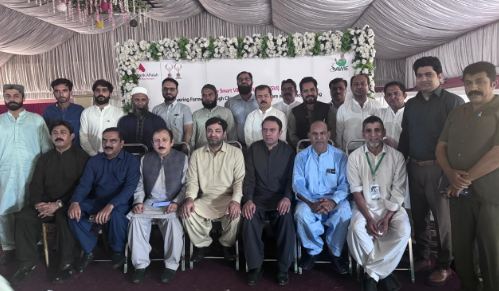
ISLAMABAD, AUG 6 /DNA/ – The Climate Smart Village Initiative (CSVI) was officially launched on August 4, 2025, at Lok Virsa Hall in Karor, Layyah, in a landmark event jointly organized by SAWiE Ecosystems Pvt. Ltd and Bank Alfalah.

The event brought together key stakeholders from government departments, academia, financial institutions, development partners, technology providers, and rural farming communities to mark the beginning of a transformative approach to agriculture in Pakistan. The CSVI is designed as a regenerative, climate-smart farming model that empowers smallholder farmers through digital advisory tools, sustainable agricultural practices, and access to green finance.

During the event, three pilot Climate Smart Villages were announced in Faisalabad, Vehari, and Layyah, each tailored to reflect the specific cropping systems and environmental conditions of their respective regions. Dr. Khalid Mahmood, Co-founder of SAWiE Ecosystems, introduced the initiative as a strategic response to the escalating challenges of climate change affecting Pakistan’s agriculture. He emphasized the integration of regenerative practices, digital innovation, and inclusive finance as a model to empower smallholders with the knowledge, tools, and incentives necessary for long-term sustainability.

Mr. Muhammad Yahya Wahla, Head of Agri Business at Bank Alfalah, reaffirmed the bank’s commitment to facilitating the transition toward sustainable agriculture by developing climate-aligned financial products, risk-sharing mechanisms, and farmer-focused credit lines. Punjab Assembly Member Ms. Somia Atta Shahani commended the inclusive nature of the initiative, particularly its emphasis on engaging youth and women, and encouraged the replication of the model in underserved areas through integration into provincial development strategies.

Experts from leading academic institutions and development agencies shared their insights on the scientific and technical aspects of climate-smart agriculture. Dr. Ishfaq Ahmad, Consultant to the Asian Development Bank, called for the development of a national measurement, reporting, and verification (MRV) framework to enable Pakistani farmers to access climate finance opportunities under the Paris Agreement. Professors from Ghazi University, the University of Agriculture Faisalabad, and Muhammad Nawaz Sharif University of Agriculture stressed the importance of university-led research in validating regenerative techniques. Additionally, experts from Ghulam Ishaq Khan Institute and BUITEMS showcased how artificial intelligence, remote sensing, and predictive analytics can enhance farm-level decision-making and climate risk reduction.

The launch of CSVI marks a significant step toward building climate-resilient and sustainable farming systems in Pakistan. The initiative has laid the foundation for a multi-stakeholder movement to promote regenerative agriculture, digital innovation, and inclusive rural development.

Trump tightens trade noose on New Delhi

Trump tightens trade noose on New Delhi

25 per cent more tarrif announced; India will take all actions necessary to protect its national interests, says its external affairs ministry

Centreline Report

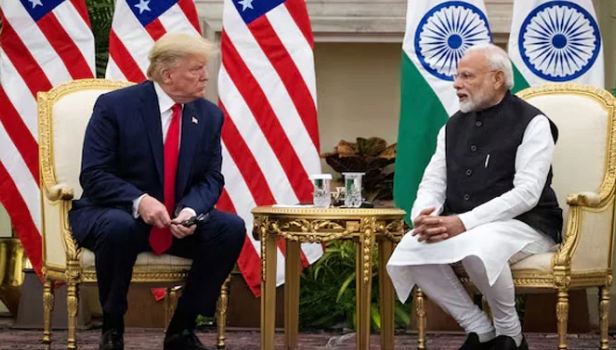
WASHINTON: US President Donald Trump on Wednesday issued an executive order imposing an additional 25% tariff on Indian goods citing New Delhi’s continued imports of Russian oil, sharply escalating tensions between the two countries after trade talks collapsed.

The new measure raises tariffs on some Indian goods to as high as 50% — among the steepest faced by any US trading partner.

In an executive order issued from the White House, the US president said: “I find that the government of India is currently directly or indirectly importing Russian Federation oil.

“Accordingly, and as consistent with applicable law, articles of India imported into the customs territory of the United States shall be subject to an additional ad valorem rate of duty of 25%.”

The US president further said he determined it “necessary and appropriate” to impose an additional ad valorem duty on imports of articles of India since it was directly or indirectly importing Russian oil.

The order maintains exemptions for items targeted by separate sector-specific duties such as steel and aluminum, and categories that could be hit like pharmaceuticals.

The move is expected to hit key Indian export sectors including textiles, footwear, and gems and jewellery and marks the most serious downturn in US-India relations since Trump returned to office in January.

It also comes as Indian Prime Minister Narendra Modi prepares for his first visit to China in over seven years, suggesting a potential realignment in alliances as ties with Washington fray.

“India will take all actions necessary to protect its national interests,” India’s external affairs ministry said in a statement, saying it was “extremely unfortunate that the US should choose to impose additional tariffs on India for actions that several other countries are also taking in their own national interest.”

It said India’s imports were based on market factors and aimed at energy security for its population of 1.4 billion.

Trade analysts warned the tariffs could severely disrupt Indian exports. The additional 25% tariff comes into effect 21 days after August 7, the order said.

“With such obnoxious tariff rates, trade between the two nations would be practically dead,” said Madhavi Arora, economist at Emkay Global.

Indian officials have privately acknowledged growing pressure to return to the negotiating table. A potential compromise could involve a phased reduction in Russian oil imports and diversification of energy sources.

A senior Indian official said New Delhi was blindsided by the sudden imposition of the new levy and the steep rate, as both countries continue to discuss trade issues.

Trump’s decision follows five rounds of inconclusive trade negotiations, which stalled over US demands for greater access to Indian agriculture and dairy markets.

India’s refusal to curb Russian oil purchases — which surged to a record $52 billion last year — ultimately triggered the tariff escalation.

“Exports to the US become unviable at this rate. Clearly, risks to growth and exports are rising, and the rupee may face renewed pressure,” said Garima Kapoor, economist at Elara Securities. “Calls for fiscal support are likely to intensify.”

Stay Connected

64FansLike
60FollowersFollow

Latest Reviews

Exchange Rates

USD - United States Dollar
EUR
1.17
GBP
1.35
AUD
0.72
CAD
0.73