Home Blog Page 54

Palestine body to take over control of Gaza

“The factions welcomed Hamas’s decision, describing it as a serious step toward enabling the National Committee to take up its governing role,” the official said

News Desk

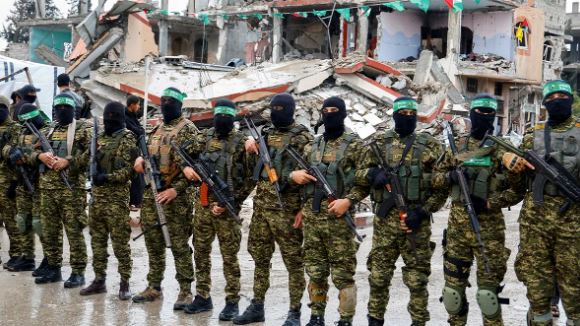
GAZA CITY: Hamas has dissolved the body that has governed the Gaza Strip for nearly two decades, officials from the group said Monday, clearing the way for a Palestinian technocratic committee to implement civilian rule.

The move marks a significant political shift by militant group Hamas, which has run Gaza since its fighters seized control from rival Palestinian movement Fatah in 2007.

Since a ceasefire took effect in Gaza last October between Hamas and Israel, the group has repeatedly said it is prepared to step aside from day-to-day governance, but the thorny issue of its disarmament remains unresolved.

“The movement has decided to dissolve the Gaza government committee and to appoint a nationally accepted figure to oversee the committee’s work until the National Committee for the Administration of Gaza formally assumes its responsibilities,” a Hamas official told AFP, speaking on condition of anonymity as he was not authorized to talk publicly on the matter.

Hamas’s media office in Gaza said it would hold “an important press conference” later on Monday, without providing details.

A second Hamas official said the group had already informed other Palestinian factions of the move at a recent meeting in Cairo.

“The factions welcomed Hamas’s decision, describing it as a serious step toward enabling the National Committee to take up its governing role,” the official said.

The dissolution of the Hamas body paves the way for the National Committee for the Administration of Gaza (NCAG), headed by Palestinian official Ali Shaath, to assume administrative responsibilities.

The NCAG was established by the Board of Peace, which was in turn set up by US President Donald Trump when he brokered the ceasefire between Hamas and Israel last October.

But it has remained based outside Gaza for months, reportedly due to Israeli objections to its entry into the war-devastated territory.

Hamas and other Palestinian factions have held several rounds of talks in Cairo with mediators to narrow differences, particularly over the second phase of the Gaza ceasefire.

The first phase involved the release of the last Israeli hostages held by Hamas in exchange for Palestinians detained by Israel.

The transition to the second phase, which was to involve Hamas’s disarmament and a gradual withdrawal of Israeli forces from Gaza, has been stalled for months.

Israeli forces have actually expanded their presence in the territory in recent months, taking control of nearly 70 percent.

Meanwhile, Hamas is demanding the establishment of a Palestinian administration before it will consider handing over any part of its arsenal.

The question of Gaza’s post-war governance remains one of the main sticking points in negotiations on implementing phase two.

Israel rejects any return of Hamas to power, but also rejects a direct takeover by the Ramallah-based Palestinian Authority at this stage.
Russian strike kills 14 around Kyiv on eve of NATO summit

Russian strike kills 14 around Kyiv on eve of NATO summit

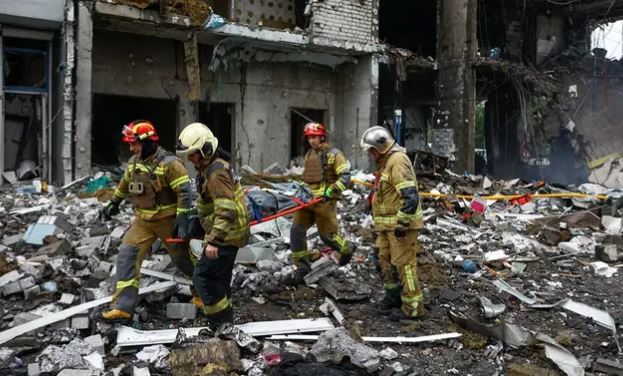
KYIV, JUL 6: Russia fired missiles and drones into apartment buildings in Kyiv for the second time in a week on Monday, killing at least 14 people on the eve of a crucial NATO summit, authorities said.

President Volodymyr Zelenskyy urged the alliance to take “strong decisions” on boosting Ukraine’s air defenses following the strike, which came just days after another Russian attack killed more than 30 people in Kyiv.

The European Union also said that Ukraine needs air defense reinforcements.

The morning strike punched a crater into a multi-story apartment block in the Ukrainian capital, ripping its top floors into two.

AFP reporters heard more than 10 explosions during a ballistic missile alert during the night, with flashes in the sky as the blasts rang out.

It was the second attack in a week in which Russia deployed the hard-to-intercept ballistic missiles — triggering Zelenskyy’s desperate new appeal for allies to send advanced missiles for the US-made Patriot air defense systems.

He is to discuss the war with US President Donald Trump on the sidelines of the NATO summit in Ankara, which begins Tuesday.

“It is critically important that the world — first and foremost the United States and our European partners — come out of the NATO Summit in Ankara with strong decisions in support of our air defense, and thus the protection of ordinary people’s lives,” he said on social media.

At least 14 people were killed in Kyiv and the surrounding region, with around 60 more wounded, he said.

Russia fired 68 missiles and 351 attack drones, he added.

Officials in the Kyiv suburb of Vyshneve said they were evacuating residents due to the possibility of unexploded munitions in the debris.

‘Massive strike’

Locals in the northern Podilsky district of the capital said their area had been targeted heavily in recent Russian strikes.

“At 1:30 am, a powerful hit occurred. A blast wave, all the windows blew out. And then it hit three more times,” Oleksandr Bakhlukov, who lives in a nearby building, told AFP.

“Glass was falling down. There wasn’t a single pane of glass left in the apartment,” the 68-year-old added.

Russia’s defense ministry said it had carried out a “massive strike” using missiles and drones against what it described as “military-industrial enterprises,” fuel and energy complex facilities in several Ukrainian regions.

Around 30 residential buildings in Kyiv were hit, with rescuers still sifting through the rubble hours after the attack, officials said.

Zelenskyy said Ukraine’s army had shot down the Russian drones and cruise missiles, but had “insufficient supply of interceptor missiles” to stop the ballistic missiles.

European Commission president Ursula von der Leyen said the attack showed that Ukraine “urgently” needs more air defense and that this would be discussed at the NATO meeting.

Russia’s army said its forces also shot down more than 500 Ukrainian drones overnight.

Moscow’s Mayor Sergei Sobyanin said on state-backed Max that several waves of the drones were bound for the Russian capital.

Kyiv has increasingly targeted energy facilities inside Russia in recent weeks in an effort to weaken the Kremlin’s war effort, triggering fuel shortages across the country.

Both sides had vowed fresh attacks after Russia struck apartment buildings in Kyiv last week, killing more than 30 people, including entire families.

US-led attempts to broker an end to the more than four-year war have gone nowhere.

The White House said Trump would meet Zelenskyy on Wednesday during the NATO summit in a big to invigorate diplomacy.

“The president’s obviously getting together with him to talk about how we can end the war. That’s been a priority of his for a long time,” a senior US official said, speaking on condition of anonymity.

The official said Trump would then “follow up” with Russian President Vladimir Putin.

The Kremlin chief has refused to back down on hardline territorial and political demands that Ukraine and its allies say amount to capitulation.

On the front, Moscow’s army said last week it had captured the strategic eastern town of Kostyantynivka, though Zelenskyy said Ukrainian forces were still fighting for the stronghold.

Kashmir: Memory, Martyrdom, and an Unresolved Question

Kashmir: Memory, Martyrdom, and an Unresolved Question

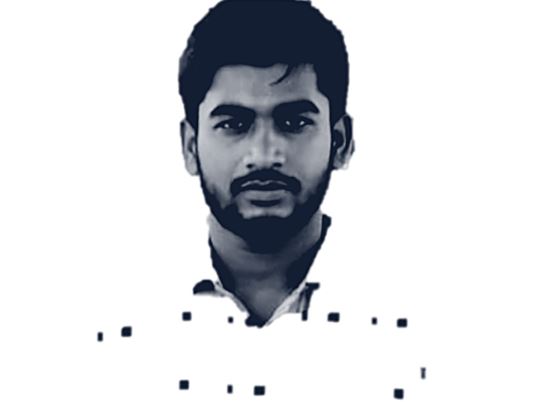
ABDUL WASSAY

Every year, Kashmir Martyrs’ Day is observed on 13 July to commemorate the indiscriminate killings of Muslims under the Maharaja Hari Singh’s rule. For Kashmiris, it symbolises a sustained struggle for rights, recognition, and independence. On this day, Kashmiris stood up against injustice and paid with their lives. That legacy of resistance, along with the demand for political and civil rights, continues to endure. This day is not just about remembering those sacrifices but also understanding why the struggle still continues.

The story of the 13 July 1931 Kashmir uprising starts outside the Central Jail of Srinagar. Thousands of Kashmiris gathered to witness the trial of freedom activist Abdul Qadeer Khan, who was accused of sedition for delivering a fiery speech against Dogra occupation. Tension rose when one man stood to deliver the “Azan” in an act of defiance toward Dogra rule, but was shot dead by state forces. Dogra police martyred 22 people as, one after another, individuals rose to complete the Azan. This act of defiance against tyranny transformed into a defining symbol of collective resistance, and it firmly embedded martyrdom into Kashmir’s political consciousness. This act started the organised struggle against the rule of oppression that continues to this day in Indian Illegally Occupied Jammu and Kashmir (IIOJK).

In the past 95 years, this organised struggle against systemic repression has produced multiple martyrs, including Burhan Wani, Abdul Ahad Guru, Ashfaq Majeed, Tuffail Ahmed, Ghulam Mohammad Lone, and others. Many peaceful political activists, like Yasin Malik, Asiya Andrabi, Shabbir Ahmad Shah, Khurram Parvez, Masarat Alam Bhat, and others, are also detained under the draconian laws of India. This shows that the issue is not episodic but structural. Across generations, the Kashmiri political resistance has faced indiscriminate killings, detentions, and torture.

Since the abrogation of Article 370 by the Indian Hindutva regime in 2019, the government has imposed severe restrictions such as lockdowns, communication blackouts, detentions, and targeted operations against freedom fighters. The oppressive regime has also stopped the public remembrance of the 13 July martyrs by removing the holiday from the official calendar. This is a blatant attempt to erase historical memory. Authorities have also blocked visits to the Srinagar graveyard, where those martyrs are buried. This shows that the Indian regime is afraid of the people of Kashmir.

In the Kashmiri struggle against occupation, mourning is seen as a political act of resistance, not just a cultural or religious activity. The Indian regime has systematically restricted the mourning of Kashmiri political activists. For example, one of the most influential freedom activists, Syed Ali Gillani, who died under Indian illegal detention, was buried in a tightly controlled, pre-dawn ceremony in 2021, just hours after his death. Police snatched his body and forced his burial without the presence of his family. Authorities implemented a strict security crackdown and communication blackout across IIOJK to prevent mass gathering, fearing his death would trigger large-scale anti-India protests. Commemorating Kashmir Martyrs’ Day, in this sense, becomes a day of resisting historical erasure and reinterpretation.

Kashmir’s long history of struggle and martyrdom is a continuation of legitimate political demands for rights, recognition, and dignity, which remain unaddressed. Kashmir Martyrs’ Day also reminds the world that the core political question of the future of IIOJK remains open and unanswered. The sacrifices made over generations will continue to shape the collective memory and identity of the Kashmiri people. The people of Pakistan share in the grief and stand in solidarity with their Kashmiri brethren.

The Pakistani government also continues to play its part by consistently highlighting, at all relevant international forums, that Jammu and Kashmir is an unresolved international dispute.This has been reflected in multiple United Nations Security Council Resolutions (UNSCR) like UNSCR 47, 51, 80, 91, and others. Pakistan will continue to support the Kashmir cause politically, morally, and diplomatically, and will not let the blood of Kashmiri martyrs go to waste. On this Kashmir Martyrs’ Day, there is a need for renewed commitment to support Kashmir’s struggle for self-determination and justice. Pakistan will also continue to raise this issue at all forums to ensure a peaceful and just resolution in accordance with the wishes of the Kashmiri people.

Kashmir Martyrs’ Day is not just about the past, but also about the present, where the core question remains unresolved, and the future is still being contested. The memory of the martyrs of the 1931 massacre and the decades that followed continues to shape the political consciousness of the people of Kashmir to keep the demands for rights and self-determination alive. Attempts by oppressive Indian authorities to suppress the freedom struggle, silence the remembrance of martyrs, and redefine history cannot erase the lived experience of the Kashmiri people. As long as these grievances remain unaddressed, the call for justice will continue across generations that refuse to forget.

Abdul Wassay is a Research Assistant at the Centre for Aerospace and Security Studies (CASS) Lahore. He can be reached at [email protected]

Ayatollah’s Nostalgic Goodbye!

Ayatollah’s Nostalgic Goodbye!

Sayed Anwar

Tehran this week is draped in red and black. The air over five cities of Iran and Iraq carries the low murmur of a nation staging its own resurrection through grief. Known as Ayatollah Sayyid Ali Hosseini Khamenei, this man spent thirty five years as the most powerful person in Iran and a global leader of millions.

He was born in 1939 in Mashhad, the son of a modest cleric, in a household where religious study was less a career choice than an inheritance. He came of age inside the seminaries of Qom and Najaf, absorbing the language of jurisprudence and revolution in equal measure. Like so many of his generation of Shia clerics, his political education happened in the prisons and exile networks of the Shah’s Iran, where a young mullah’s opposition to the monarchy hardened into something more systematic. He was arrested repeatedly through the 1960s and 1970s. By the time the 1979 Islamic revolution whisked the Pahlavi dynasty away, he was already a tried-and-true lieutenant of Ruhollah Khomeini, the man whose name would shape the Islamic Republic and, eventually, his own.

The new state wasted no time in repaying his loyalty. He became a founding ideologue of the Revolutionary Guard Corps’ political apparatus. In 1981, he escaped a bombing that nearly ended his career before it dawned, an assassination attempt that left his right arm permanently paralyzed. That same year he became president, a post he held for two terms while the country bled through its war with Iraq. The presidency in that era was a weaker office and subordinate to the Supreme Leader. Khamenei spent those years learning the limits of formal power and the deeper currents of informal power that actually moved the Islamic Republic. When Khomeini died in 1989, Khamenei was an unlikely heir. He lacked the religious credentials that the office of Supreme Leader traditionally demanded. Many senior clerics doubted he had the scholarly weight for the job. He got it anyway, elevated in rank almost overnight by an Assembly of Experts eager to approve Khamenei.

Khamenei built a system of parallel institutions, the Revolutionary Guard chief among them, that answered to him directly and could override the elected government whenever the elected government drifted too far from his preferences. He oversaw the curbing of the 2009 Green Movement after a disputed election, the calming of the 2019 fuel protests, and the quelling of Mahsa Amini uprising in 2022. He also presided over Iran’s nuclear program through years of sanctions, negotiations, and collapsed agreements like Joint Comprehensive Plan of Action (JCPOA), positioning the country as a regional power broker and a “pariah state” at the lens of the West.

His period as a supreme leader is also marked by the fatwa (religious ruling) against the production, stockpiling, and use of nuclear weapons, perceiving these to be haram (forbidden) under Islam, along with others such as prohibiting insults against Sunni revered figures and forbidding the “unlawful” use of social media. These rulings have had significant religious, social, and political influence within Iran and across the wider Muslim world.

His foreign policy was built on a durable hostility toward the United States and Israel, a posture that outlines his anti-colonial position at centre of Middle Eastern geopolitics. He was vocal against the apartheid, targeted racism, and settler colonial measures against the Palestinians by the Israelis. Iran’s proxy network across Lebanon, Gaza, Iraq, Syria, and Yemen absorbed enormous resources and drew enormous retaliation, and by 2025 that confrontation had turned direct. The Twelve Day War between Iran and Israel that year, followed by American strikes on Iranian nuclear sites, marked the moment his strategy of managed confrontation stopped being manageable.

On February 28, 2026, Khamenei was killed in Tehran during a series of Israeli airstrikes targeting senior Iranian officials, part of a joint operation with the United States using intelligence to locate the country’s leadership. His death was confirmed by the Iranian government the following day, and the state declared forty days of mourning alongside a week of public holiday. His son Mojtaba, whom he had reportedly resisted grooming as a dynastic heir, was nonetheless pushed into the role by Revolutionary Guard pressure on the Assembly of Experts, and was announced as the new Supreme Leader on March 9.

However, the funeral of Ayatollah Ali Khamenei, delayed for months, was finally scheduled for a multi city procession running from July 4 through July 9, ending at the Imam Reza shrine. It is not merely a burial. It is a speech delivered in silence, a message penned in the grammar of mourning rather than diplomacy. Every mourner who lines the streets of Tehran, Qom, and Mashhad this week is, whether they know it or not, a punctuation mark in that sentence. It is a party where piety and politics meet. It is, on one hand, a test of Mojtaba’s political career and Iran’s showcase of diplomatic and geopolitical muscle on the other, as delegations from more than hundred countries are expected to join the ceremony.

He carried Khomeini’s voice in his throat for thirty-five years, and now the incense rising over Tehran marks more than a death. It marks the passing of the founding generation itself. The mourners walking through Qom and Mashhad this week are not just burying a man; they are watching an era close, one whose full costs and achievements historians will spend decades weighing. The sentence he began must now, finally, find its own ending. Four months between death and burial, Ayatollah’s goodbye to Iran turned out to be nostalgia for millions of people all over the world. Iran’s goodbye to him may take it the longest. He will continue to live in the hearts of the people of Iran and beyond, maybe, forever.

Name: Sayed Anwar

Department of International Relations, Jahangirnagar University, Dhaka, Bangladesh.

His Email Address: [email protected]

Pakistan issues NOC to India for CAVA Championship

Pakistan issues NOC to India for CAVA Championship

By our correspondent

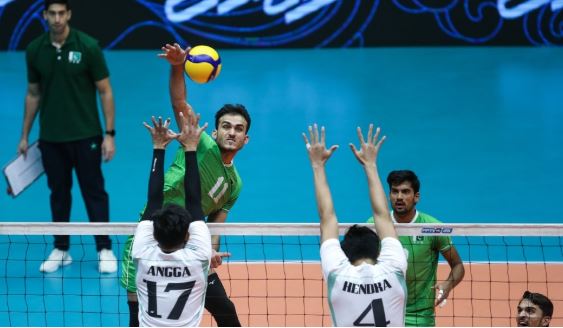
ISLAMABAD: In a major step towards promoting sports diplomacy and strengthening regional sporting ties, the Government of Pakistan has officially issued a No Objection Certificate (NOC) for the Indian men’s volleyball team to participate in the CAVA Men’s Volleyball Championship 2026, scheduled to be held in Islamabad from July 22 to 29.

Pakistan Volleyball Federation (PVF) Chairman Chaudhry Mohammad Yaqoob confirmed that the Indian authorities have been formally informed following the issuance of the NOC and expressed confidence that the Indian team will travel to Pakistan for the regional championship.

Yaqoob revealed that the Volleyball Federation of India (VFI) had earlier approached the PVF, requesting a political clearance and security guarantee letter from the Government of Pakistan to facilitate the process of obtaining approval from the Government of India and subsequently securing visas for the team’s participation.

Yaqoob said the Indian federation had remained in close contact with the PVF throughout the process. He added that all organizational, logistical and security arrangements for the championship have been finalized.

Describing the event as one of the biggest international volleyball tournaments ever hosted by Pakistan, the PVF chief said it would further strengthen the country’s image as a safe and capable destination for international sporting events. The championship will feature 10 participating nations: Pakistan, India, Afghanistan, Bangladesh, Nepal, Turkmenistan, Kyrgyzstan, Kazakhstan, Maldives and Sri Lanka.

Yaqoob also thanked the Government of Pakistan, the Ministry of Inter-Provincial Coordination (IPC), the Pakistan Sports Board (PSB), sponsors, coaches, athletes and all stakeholders for their continued support in promoting volleyball and helping bring major international competitions to Pakistan

Govt rejects allegations telecom bill drafted to benefit companies, individuals

Govt rejects allegations telecom bill drafted to benefit companies, individuals

ISLAMABAD, JUL 5: The federal government on Sunday denied allegations that the IT ministry had prepared the Pakistan Telecommunication (Re-Organisation) Amendment Bill, 2026, to provide undue benefit to any individual or company.

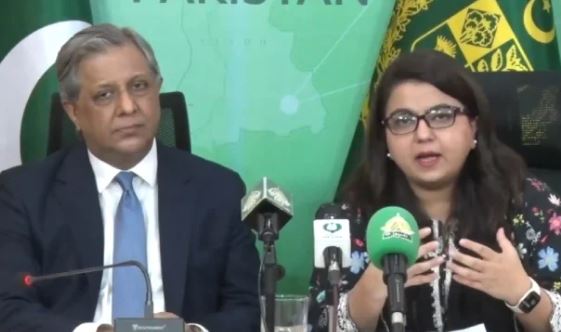
Addressing a press conference alongside IT Minister Shaza Fatima Khawaja in Islamabad, Law Minister Azam Nazeer Tarar said that the allegations of financial benefit against the IT minister and the IT secretary, made under the pretext of the bill, were unfounded.


According to Tarar, the parliamentary committee had found no evidence that the legislation was intended to favour any individual and noted that the National Assembly had passed the bill with six amendments.

The law minister said the legislation primarily addressed issues involving housing societies that entered into agreements but later created obstacles to the development of telecom infrastructure.

He clarified that the consent of property owners would remain mandatory before laying fibre-optic cables through private land.

The law minister emphasised that any citizen who did not wish to allow telecom infrastructure on their private property had the legal right to refuse, reiterating that the proposed law would not result in the forced use or occupation of anyone’s private property.

The telecom bill — passed by the National Assembly on June 11 — sparked controversy after being referred to the Senate Standing Committee on Information Technology, where lawmakers raised serious concerns over its Right of Way (ROW) provision.

Later, the IT ministry asserted that the ROW provisions in the bill do not permit telecom operators to enter individual private property without the owner’s permission or due legal process, and do not authorise compulsory acquisition of private land.

Prime Minister Shehbaz Sharif also constituted a high-level committee to examine the proposed legislation after public concerns and media discussions emerged regarding the bill.

Speaking during today’s press conference, the IT minister said she had requested the prime minister to order a formal inquiry after allegations made against her and the IT secretary regarding their financial integrity.

The minister said that she would fully accept responsibility if any wrongdoing was established through the investigation and would abide by whatever decision the prime minister made.

However, she added that if the allegations were found to be baseless, both she and the IT secretary reserved the legal right to pursue legal action under the Constitution and relevant laws after consulting legal experts.

Govt strengthens educational support for workers’ families

Govt strengthens educational support for workers’ families

ISLAMABAD, Jul 5: In line with the vision of the Prime Minister of Pakistan, Muhammad Shehbaz Sharif, and the Government’s unwavering commitment to the welfare and uplift of the working class, the Federal Minister for Overseas Pakistanis and Human Resource Development, Chaudhry Salik Hussain, has issued special directives to the Secretary of the Workers Welfare Fund, Zulfiqar Ahmad, to ensure the implementation of a landmark initiative aimed at providing educational facilities to an additional 100,000 children of registered workers across the country, from Grade 1 to 12.

This initiative is not merely an expansion of educational opportunities; it is a reflection of the State’s trust, respect, and commitment to securing a brighter future for the working class and their families, said a press release issued here.

Federal Minister Chaudhry Salik Hussain stated that this historic decision is a practical manifestation of the Government’s commitment, under the leadership of Prime Minister Muhammad Shehbaz Sharif, to providing equal opportunities for prosperity, and social advancement to every working family in Pakistan.

“Pakistan’s progress is not solely dependent on industries; it is equally linked to the education of the children of those workers whose hard work and dedication keep these industries running. Today, we are not merely providing educational facilities to another 100,000 children; we are giving hope, dignity, and a better future to 100,000 families, he mentioned.

The Federal Minister emphasized that the Government firmly believes that education is a fundamental right of every child and not a privilege reserved for any particular segment of society. The children of workers deserve the same opportunities and access to quality education as those available to all other members of society.

He further stated that this initiative will significantly expand educational access across the country, ensuring that no deserving child is deprived of education due to financial constraints.

Chaudhry Salik Hussain reaffirmed the Government’s commitment to transforming the Workers Welfare Fund into a modern, efficient, transparent, and people-centric institution, where every policy and every initiative revolves around the welfare of workers and their families.

Concluding his message he stated: “The hands that built Pakistan will now see their children write Pakistan’s future.”

ICT Police reshuffles three senior officers in key appointments

ICT Police reshuffles three senior officers in key appointments

ISLAMABAD, Jul 05:Islamabad Capital Territory (ICT) Police on Saturday reshuffled three senior police officers, assigning them key operational and administrative posts with immediate effect under a notification issued by the Office of the Inspector General of Police.
According to the notification, DIG Law & Order, Training and Discipline Muhammad Ateeque Tahir will continue in his current post and will also hold the additional charge of DIG Headquarters until further orders.


Capt (R) Hamzah Humayun, who was awaiting posting, has been appointed SSP Operations, Safe City. He has also been given the additional charge of SSP Law & Order and Training. Following his appointment, CTO Kainat Azhar Khan and Muhammad Ateeque Tahir have been relieved of the additional charges they were holding.


Meanwhile, Muhammad Shoaib Masood has been appointed AIG Establishment, replacing Syed Inayat Ali Shah, who has been relieved of the additional charge.


The notification further said Shoaib Masood would also hold the look-after charge of SP Rural Division until Flight Lieutenant (R) Zeeshan Ali returns from special duty.

Islamabad likely to host next round of US-Iran technical talks on July 14-15: sources

Islamabad likely to host next round of US-Iran technical talks on July 14-15: sources

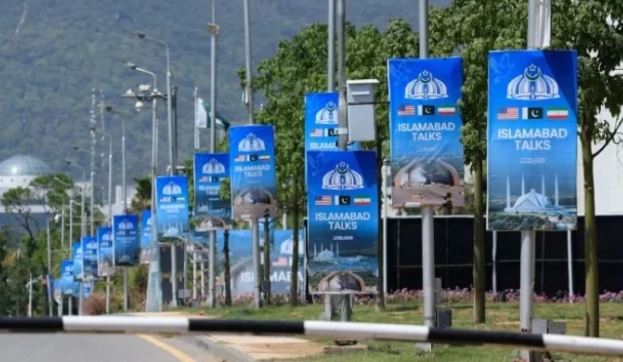
ISLAMABAD, JUL 5: Islamabad is expected to host a fresh round of US-Iran technical talks on July 14 and 15, said government sources on Sunday.

The sources privy to the matter revealed that Iranian and American experts on technical matters will participate in the third round of talks aimed at lasting peace in the Middle East.

Pakistan will participate in Iran-US technical talks as a mediator, the sources added.

Earlier, two rounds of technical talks between the US and Iran have been held in Switzerland’s Burgenstock and Qatar’s Doha.

According to Al Arabiya, the upcoming round of talks will focus on US sanctions on Iran, Iranian frozen assets, and the Iranian nuclear file.

The level of representation of the Iranian delegation will be decided after the funeral of late Iranian Supreme Leader Ayatollah Ali Khamenei, the publication said, citing sources.

The sources familiar with the Doha discussions said that the negotiators for the two countries spent two days in Doha discussing maritime traffic in the Strait of Hormuz and unfreezing Iran’s funds, two critical issues under the initial agreement.

According to Qatar’s Foreign Ministry, the Doha discussions produced “positive progress” on issues related to the memorandum that halted the war in June and were “building on the outcomes” of a summit in Switzerland.

In June, Washington and Tehran agreed to a memorandum of understanding, brokered by Pakistan and Qatar, which included a 60-day ceasefire pausing the war that broke out with US-Israeli strikes in late February, as well as the reopening of the blockaded Strait of Hormuz.

But the 14-point deal also set a timeline for talks to permanently end the war and settle issues like arrangements for Hormuz, reconstruction funding for Iran and the future of the Islamic Republic’s nuclear programme.

Following the foes’ indirect discussions in Doha on Wednesday, US President Donald Trump as well as mediators Qatar and Pakistan offered signs that diplomacy was holding.

“Qatari and Pakistani mediators concluded separate meetings with the US and Iranian negotiators in Doha (Wednesday), with positive progress made,” the two mediating nations had said in a statement.

At the talks’ conclusion, Iran’s Deputy Foreign Minister Kazem Gharibabadi, who led Tehran’s delegation, said an agreement had been reached to establish a communications channel by Thursday to report and record alleged violations of the memorandum.

Gharibabadi said discussions also covered frozen Iranian assets, whose release Tehran has demanded as part of any settlement.

He said officials reviewed the use of part of an initial $6 billion and agreed that goods needed by Iran would be purchased and made available.

The conflict, which began on February 28 following coordinated US-Israeli strikes on Iranian targets, has killed more than 2,000 people and destabilised the wider region.

Iran’s supreme leader Ayatollah Ali Khamenei and the country’s top civil and military leadership were martyred in the initial attack.

Iran responded with retaliatory actions, including disrupting shipping through the Strait of Hormuz and targeting US and Israeli interests.

Iran envoy says friendly nations to get ‘special’ Hormuz fee treatment

TEHRAN/BEIJING, JUL 5: Iran’s ambassador to China insisted Saturday that new fees would be charged to ships transiting the Strait of Hormuz — an idea rejected by Washington — while assuring that “friendly” nations would receive special treatment.

The initial deal struck between Iran and the United States to end their war stipulated that commercial ships would transit the strait free of charge for 60 days, but it remains unclear what will be in place after that period.

Iranian Ambassador Abdolreza Rahmani Fazli told the World Peace Forum in Beijing that his country was working in “collaboration and cooperation” with Oman on “new arrangements” for the vital waterway.

“As a country where the Hormuz is part of its territorial waters, we will definitely charge service fees,” Azli said in translated remarks, while insisting such fees would not be a “toll.”

“These new arrangements will be concerning guaranteeing the security of passage through the Straits of Hormuz, supervision of the passage of the vessels… and also guaranteeing and dealing with the environmental consequences of the massive number of ships,” he said.

“We will definitely consider special treatment for the countries that were friendly to us and specially stood by us during the hard times,” he added.

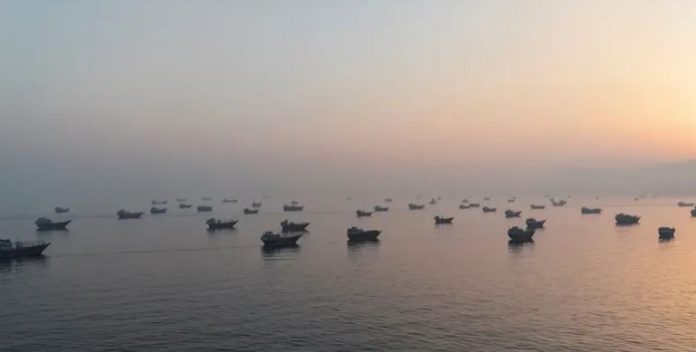
The strait normally carries one-fifth of the world’s crude oil and liquefied natural gas, but it was all but closed by Iran during the Middle East war, sending energy prices soaring.

Iran lifted its blockade of the Hormuz after it struck an initial deal with the US to end the Middle East war, and negotiations on a permanent settlement of the conflict are ongoing.

Stay Connected

64FansLike
60FollowersFollow

Latest Reviews

Exchange Rates

USD - United States Dollar
EUR
1.15
GBP
1.35
AUD
0.70
CAD
0.71