Home Blog Page 51

AI systems must be developed: Shaza

AI systems must be developed: Shaza

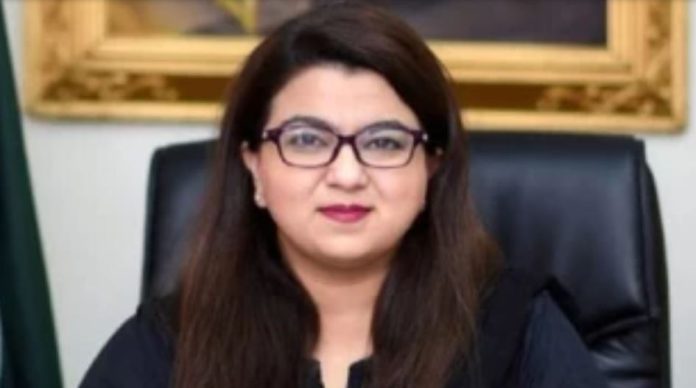
ISLAMABAD, Jul 7: Federal Minister for Information Technology and Telecommunication Shaza Fatima Khawaja on Tuesday said artificial intelligence (AI) systems must be developed and used in full compliance with international law and the United Nations Charter, with meaningful human oversight in both civilian and security domains.

Addressing the thematic discussion on “Safe, Secure and Trustworthy AI: Interoperability and Compatibility of Approaches” during the Global Dialogue on Artificial Intelligence Governance in Geneva, the minister said AI safety was a shared global interest but stressed that the process of defining safety must be transparent, inclusive and representative of all nations.

She said safety standards and benchmarks for trustworthy AI were increasingly being shaped by a limited number of countries and technology firms through national frameworks that excluded much of the developing world.

“Safety is not a purely technical matter. Language, culture and local realities shape it,” she said, adding that standards developed without the participation of developing countries risked being imposed rather than collectively adopted.

Shaza Fatima said Pakistan supported the formulation of AI safety norms through inclusive multilateral processes under the United Nations, where all countries could contribute as equal partners.

Highlighting the importance of interoperability, she said Pakistan supported compatible AI governance approaches, as envisioned in the Global Digital Compact, noting that interoperability promoted cross-border trade, research and data flows while allowing different national regulatory systems to coexist.

However, she cautioned that interoperability should serve as a bridge between governance systems rather than becoming a mechanism through which the rules of a few countries were imposed on others.

The minister emphasized that global AI standards should be developed through open and collaborative standard-setting bodies, ensuring safety, reliability, respect for human rights, and recognition of linguistic and cultural diversity throughout the AI life cycle.

She further stressed that trust in AI depended on countries having the capacity to independently test, evaluate and verify AI systems.

“The ability to assess AI systems remains concentrated in the countries where the technology is developed,” she said, warning that developing nations should not be expected to rely solely on external assurances of safety without having the means to verify them.

She called for strengthening AI evaluation and governance capabilities in developing countries through shared tools, technical cooperation and regional partnerships.

Shaza Fatima said safe and trustworthy AI should not mean safety for only a few while remaining opaque to the rest of the world.

She reaffirmed Pakistan’s commitment to working with international partners and the co-chairs of the dialogue to build an inclusive, transparent and durable global framework for AI governance.
NATO allies seek to win over Trump after Iran ire

NATO allies seek to win over Trump after Iran ire

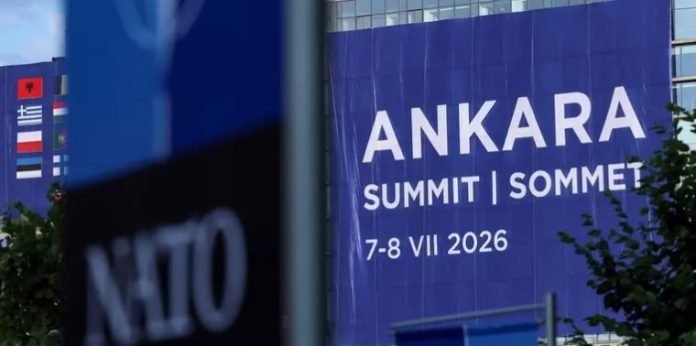
BRUSSELS, JUL 7: NATO allies will showcase surging defense spending at a summit in Turkey’s capital Ankara on Tuesday as they hope to placate US President Donald Trump after his fury over Europe’s response to the war with Iran.

The two-day gathering at Turkey’s sprawling presidential palace comes a year after NATO members pledged to ramp up security-related spending to five percent of GDP under pressure from the US leader.

NATO chief Mark Rutte insists European countries are “delivering” on their promise by bolstering military budgets and moving to take more responsibility for the defense of their continent in the face of Russia.

“Just one year later, we already see transformational progress,” Rutte told journalists in Ankara on the eve of the summit.

Trump departed Washington for the key summit late Monday, travelling with Secretary of State Marco Rubio and Defense Secretary Pete Hegseth in tow.

In a bid to impress the US leader, NATO has lined up a series of headline-grabbing figures.

“This is showtime,” a senior European diplomat said, speaking on condition of anonymity.

At an industry forum on Tuesday ahead of the main summit, leaders are set to unveil new arms deals worth tens of billions to show Trump they’re delivering on their words.

Underscoring that push, Canada announced on Monday that it had selected Germany’s Thyssenkrupp Marine Systems to build its new fleet of submarines, a multi-billion-dollar program Ottawa framed as part of a broader effort to deepen defense ties with European NATO allies.

But Trump — still smarting after European countries imposed restrictions on US forces using bases to attack Iran -– has spent the run-up to the summit slamming allies for not moving fast enough for his liking.

“Ridiculous for the U.S.A. to continue along this one-sided path when the relationship is not reciprocal. They were not there for us!!!” Trump wrote on Truth Social last week.

‘Real shift’

European leaders are aiming at least to avoid a bust-up with the mercurial US leader that could deal a further blow to NATO’s credibility after Trump repeatedly cast doubt on the US commitment to protecting its allies.

Diplomats are banking on Trump’s good relationship with Turkish leader Recep Tayyip Erdogan, and an unstinting charm offensive by NATO chief Rutte, to keep his mood in check.

But with Trump having had fallings out with a string of other leaders — most recently Italy’s Giorgia Meloni — there are plenty irritants that could ignite his anger.

Seeking to show willingness on Iran, European allies spearheaded by France and Britain have put together a potential naval mission to help in the Strait of Hormuz and countries have shifted vessels closer to the region to be ready.

But the situation remains volatile and the Europeans want clarity on how a fragile US deal with Iran is panning out before sending in their navies.

While they’ll be hoping that Trump strikes a conciliatory tone, European leaders have begun to come to terms with the reality that the US is inexorably pulling back from their alliance.

Washington has been clear it wants its allies to take the lead on the conventional defense of the continent and recently announced it was cutting back the assets it makes available to NATO commanders.

European nations will look to prove they’re ready to play a greater role while also trying to keep Trump, and the vast might of the US military, as engaged as possible.

“All of this is evidence of a real shift in mindset,” Rutte said. “This is NATO 3.0. A stronger Europe in a stronger NATO.”

‘Strong decisions’

Beyond taking greater responsibility for their own defense, European countries have also taken over the support of Ukraine almost entirely as Trump has wound back US aid.

President Volodymyr Zelenskyy — who will attend the leaders dinner on Tuesday — will score a commitment from his European backers at NATO to keep at least 70 billion euros ($80 billion) of military aid flowing to Kyiv each year in both 2026 and 2027.

Zelenskyy– who is set to hold talks with Trump at the Ankara summit — urged the alliance to take “strong decisions” on boosting Ukraine’s air defenses after a devastating Russian blitz killed nearly 30 people.

The Ukrainian leader will look to convince Trump — who held a phone call with Russia’s Vladimir Putin ahead of the gathering — that Kyiv is turning the tide in the war and that he should pressure Moscow back into serious peace negotiations.

Iran foreign minister says US threats are an impediment to deal-making

Iran foreign minister says US threats are an impediment to deal-making

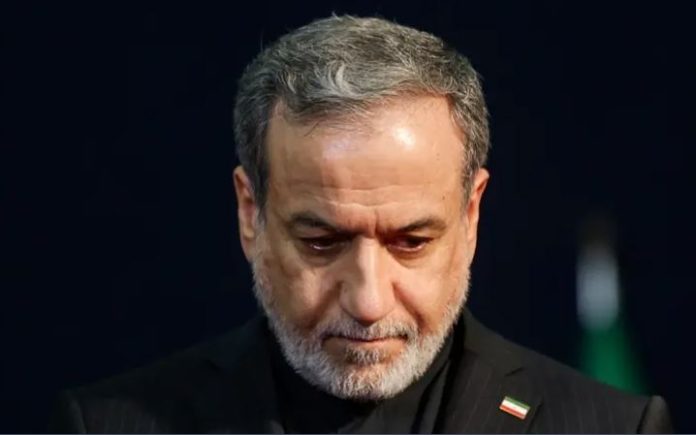
TEHRAN, JUL 7: Talks to reach a final deal between Tehran and Washington won’t start if US threats continue, Iran’s foreign minister said on Tuesday, following US President Donald Trump’s threat to “finish the job” if a deal is not made.

“Negotiations on final deal will not commence if threats continue. Honor your signature,” Abbas Araghchi wrote in a post on X.

Araghchi’s post was referring to an interim deal signed last month by Iran and the US that calls upon both sides to refrain from the threat or use of force against each other.

Pakistan, Kyrgyzstan reaffirm commitment to stronger bilateral cooperation

Pakistan, Kyrgyzstan reaffirm commitment to stronger bilateral cooperation

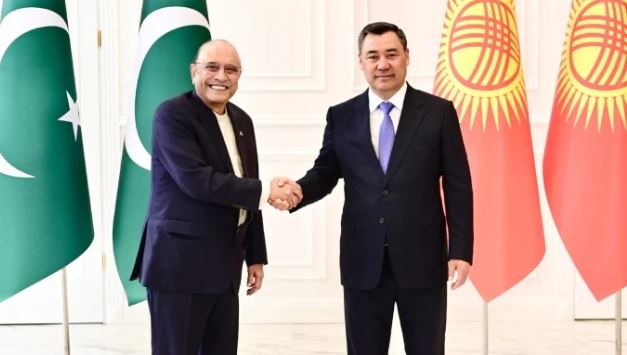
ISLAMABAD, JUL 7: President Asif Ali Zardari and Kyrgyz President Sadyr Japarov on Tuesday reaffirmed their commitment to further strengthening bilateral ties, expanding economic cooperation, and enhancing regional connectivity.

Speaking at the delegation level talks with the Kyrgyz President, President Zardari said Pakistan and Kyrgyzstan share deep-rooted brotherly relations based on common faith, shared history, and cultural links.

President Zardari, who is on on four-day official visit to Kyrgyzstan, stressed the need to further deepen cooperation by increasing trade, improving connectivity through more direct flights, and exploring new avenues of collaboration.

This is the first visit by a Pakistani president to the Kyrgyz Republic in 21 years, marking a historic milestone in the bilateral relationship.

The visit follows the successful trip of President Zhaparov to Pakistan in December 2025 and reflects the sustained upward trajectory of high-level engagement between the two countries.

The president said both countries should work together to achieve shared progress, noting that neighbours must strengthen cooperation for mutual prosperity.

He also congratulated Kyrgyzstan on its election as a non-permanent member of the United Nations Security Council for the 2027–2028 term, describing it as a reflection of the international community’s confidence in the country’s constructive role in promoting peace, security, and multilateral cooperation.

President Zardari said Pakistan looks forward to working closely with Kyrgyzstan on regional and international issues. He highlighted the historic links between the two countries through the ancient Silk Route and expressed confidence that the longstanding relationship could be strengthened further.

He said Pakistan is keen to expand trade by supplying quality products to Kyrgyzstan at competitive prices and called for enhanced cooperation in industry, research, innovation, and modern technology.

He emphasised the importance of investing in the younger generation and creating a peaceful and prosperous future through joint efforts.

Speaking on the occasion, President Sadyr Japarov said Kyrgyzstan attaches great importance to its brotherly relations with Pakistan and is committed to taking bilateral ties to new heights.

He reaffirmed his country’s resolve to implement the CASA-1000 project and enhance cooperation in the energy sector.

President Japarov also said the two countries would expand collaboration in agriculture, textiles, mines and minerals, the halal industry, healthcare, information technology, science, education, and tourism.

Pakistan and the Kyrgyz Republic enjoy warm and fraternal relations, anchored in shared history, faith, culture and common aspirations for peace, connectivity and prosperity in Central and South Asia, the Foreign Office said on Monday.

Indonesia to buy Indian supersonic cruise missiles as Modi begins two-day visit

Indonesia to buy Indian supersonic cruise missiles as Modi begins two-day visit

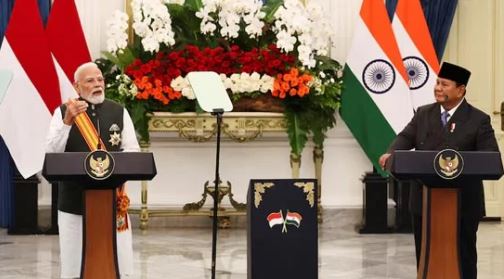
JAKARTA, JUL 7: India will supply BrahMos supersonic cruise missiles and Astra air-to-air missiles to Indonesia, an Indian government official said on Tuesday, as Indian Prime Minister Narendra Modi started a two-day visit to Jakarta.

Indian sources earlier told Reuters that the deal, worth around $630 million, would likely be signed during Modi’s visit.

Indonesia would be the third country to sign an agreement to buy the missiles, which are manufactured by BrahMos Aerospace Private Limited.

The deal would mark a major expansion of India’s defence exports and deepen strategic ties with Southeast Asia’s largest economy.

BrahMos missiles, jointly developed by India and Russia, are among the world’s fastest cruise missiles and can be launched from land, sea and air platforms.

The Astra beyond-visual-range air-to-air missiles can be integrated on Russian-made Sukhoi fighter jets in the Indonesian Air Force.

The Indian government did not respond to earlier emails seeking a comment. The Indonesian embassy in New Delhi did not immediately respond to a request for comment.

In March, Indonesia said it had entered an agreement with India to procure the BrahMos missile system, which is co-owned by the Indian and Russian governments.

At the time the Indonesian Defence Ministry told Reuters the deal was in advanced stages and could be worth $200 million to $350 million.

India has signed agreements to sell BrahMos missiles to Vietnam and the Philippines. It has received interest from more than half a dozen other countries, including the United Arab Emirates.

Modi is scheduled to hold talks with Indonesian President Prabowo Subianto and discuss maritime security, defence industrial cooperation, regional connectivity and broader strategic coordination in the Indo-Pacific, the Indian sources said.

Talks on the BrahMos deal are expected to focus on a phased acquisition model that would allow Indonesia to gradually expand its missile capabilities, a third Indian source said.

The package under consideration includes missile systems, supporting infrastructure, operator training, maintenance services and other technical assistance needed for long-term deployment, the third source said.

Bilateral trade with Indonesia reached $28.15 billion in 2024-25, with the country ranking as India’s second-largest trading partner in Association of Southeast Asian Nations.

Ahead of the trip, Modi said his visits to Indonesia, Australia and New Zealand would strengthen India’s “Act East” policy, its Mutual and Holistic Advancement for Security Across Regions vision and its commitment to a free, open and inclusive Indo-Pacific region.

India will supply BrahMos supersonic cruise missiles and Astra air-to-air missiles to Indonesia, an Indian government official said on Tuesday, as Indian Prime Minister Narendra Modi started a two-day visit to Jakarta.

Indian sources earlier told Reuters that the deal, worth around $630 million, would likely be signed during Modi’s visit.

Indonesia would be the third country to sign an agreement to buy the missiles, which are manufactured by BrahMos Aerospace Private Limited.

The deal would mark a major expansion of India’s defence exports and deepen strategic ties with Southeast Asia’s largest economy.

BrahMos missiles, jointly developed by India and Russia, are among the world’s fastest cruise missiles and can be launched from land, sea and air platforms.

The Astra beyond-visual-range air-to-air missiles can be integrated on Russian-made Sukhoi fighter jets in the Indonesian Air Force.

The Indian government did not respond to earlier emails seeking a comment. The Indonesian embassy in New Delhi did not immediately respond to a request for comment.

In March, Indonesia said it had entered an agreement with India to procure the BrahMos missile system, which is co-owned by the Indian and Russian governments.

At the time the Indonesian Defence Ministry told Reuters the deal was in advanced stages and could be worth $200 million to $350 million.

India has signed agreements to sell BrahMos missiles to Vietnam and the Philippines. It has received interest from more than half a dozen other countries, including the United Arab Emirates.

Modi is scheduled to hold talks with Indonesian President Prabowo Subianto and discuss maritime security, defence industrial cooperation, regional connectivity and broader strategic coordination in the Indo-Pacific, the Indian sources said.

Talks on the BrahMos deal are expected to focus on a phased acquisition model that would allow Indonesia to gradually expand its missile capabilities, a third Indian source said.

The package under consideration includes missile systems, supporting infrastructure, operator training, maintenance services and other technical assistance needed for long-term deployment, the third source said.

Bilateral trade with Indonesia reached $28.15 billion in 2024-25, with the country ranking as India’s second-largest trading partner in Association of Southeast Asian Nations.

Ahead of the trip, Modi said his visits to Indonesia, Australia and New Zealand would strengthen India’s “Act East” policy, its Mutual and Holistic Advancement for Security Across Regions vision and its commitment to a free, open and inclusive Indo-Pacific region.

Nine cops martyred, five abducted in Ziarat police checkpoint attack

Nine cops martyred, five abducted in Ziarat police checkpoint attack

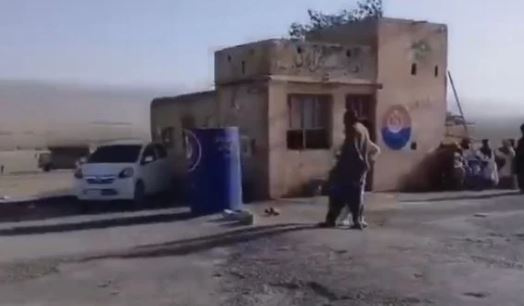
ZIARAT, JUL 7: Nine police personnel were martyred, and five others were abducted after armed assailants attacked their checkpoint in Balochistan’s Ziarat district late on Monday, police said.

Ziarat Superintendent of Police (SP) Abdul Qudoos said the attackers stormed the police post in Mangi area of the district, triggering a gun battle in which nine police personnel were martyred.


The official confirmed that the attackers took five police personnel with them after the assault. He said the bodies of the martyred officers had been shifted to the District Headquarters (DHQ) Hospital.

Meanwhile, in a clearance operation against terrorists after the attack, security forces and police killed 15 terrorists belonging to Fitna al-Khawarij, Balochistan government spokesperson Shahid Rind said.

He said the terrorists had paid a heavy price for attempting to undermine peace in Balochistan, adding that the security forces and police had foiled their malicious designs.

“There will be no safe haven for terrorists in Balochistan, and every attack will receive a decisive response,” he said, adding that intelligence-based operations against terrorists would continue across the province.

He also vowed that the sacrifices of the police officers and personnel martyred in the Ziarat attack would not go in vain.

Interior Minister Mohsin Naqvi strongly condemned the attack by India-sponsored terrorists and paid tribute to the cops who embraced martyrdom.

The interior minister extended his condolences and sympathies to the families of the martyred policemen and prayed for them to be granted patience and strength.

“Those who sacrificed their lives for peace are the pride of our nation,” Naqvi said, adding that the sacrifices of the martyrs would never be forgotten.

He also said such cowardly attacks could not sabotage peace or weaken the country’s resolve against terrorism.

The attack also triggered widespread protests in Ziarat, where local tribes, transporters and relatives of the martyred police personnel staged demonstrations at Ziarat Cross and other locations.

The protesters blocked key national highways linking Balochistan with Punjab and Khyber Pakhtunkhwa, police said.

The N-50 highway connecting Khyber Pakhtunkhwa and the N-70 linking Punjab remained closed, leaving hundreds of passenger buses and freight vehicles stranded.

The attack comes amid a renewed wave of terrorism in Pakistan, particularly in the provinces of Balochistan and Khyber Pakhtunkhwa — bordering with Afghanistan.

On May 24, at least 14 people, including three Frontier Corps (FC) personnel, were martyred and several others injured in a blast near the railway track at Chaman Phatak in Quetta.

On June 25 and 26, security forces killed eight India-backed Fitna al-Hindustan terrorists during separate intelligence-based operations in Balochistan’s Kharan and Mastung districts, according to the Inter-Services Public Relations (ISPR).

Pakistan has witnessed a sharp rise in militant attacks since the Afghan Taliban returned to power in Afghanistan in 2021, with Khyber Pakhtunkhwa and Balochistan remaining the worst-affected provinces.

In response, Pakistan launched Operation Ghazab lil-Haq, targeting terrorist hideouts across the border. The operation reportedly killed scores of Afghan Taliban operatives and allied militants and injured hundreds more.

Border tensions escalated further in October 2025 after the Afghan Taliban and affiliated militants launched what Pakistan described as unprovoked attacks on its border posts.

Despite multiple rounds of talks, Islamabad and Kabul have yet to reach an understanding, with Pakistan maintaining that the Afghan Taliban authorities have failed to take effective action against terrorists groups operating from Afghan territory.

Former Afghanistan pacer Shapoor Zadran passes away at 38

Former Afghanistan pacer Shapoor Zadran passes away at 38

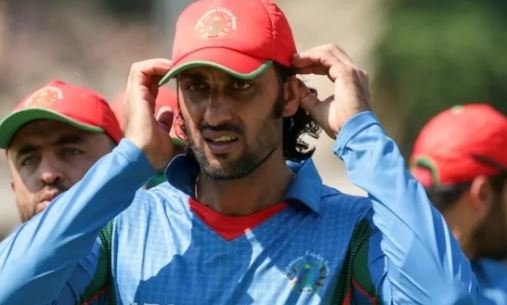
KABUL, JUL 7: Former Afghanistan fast bowler Shapoor Zadran has passed away at the age of 38 following a prolonged illness, the Afghanistan Cricket Board (ACB) confirmed on Tuesday.

Zadran had been battling Hemophagocytic Lymphohistiocytosis (HLH), a rare and severe immune system disorder that can trigger life-threatening inflammation and damage multiple organs.

According to reports, he had been receiving treatment in the Delhi-NCR region for the past several months.

He first fell ill in October last year and, after medical advice in Afghanistan, travelled to India for specialised treatment. Although his condition initially improved and he was discharged from hospital, he suffered a relapse around 20 days later.

Widely regarded as one of the pioneers of Afghanistan cricket, Zadran played a pivotal role in the national side’s rise on the international stage.

The left-arm fast bowler was renowned for his pace, aggression and ability to make early breakthroughs, becoming a cornerstone of Afghanistan’s progress from an Associate nation to an ICC Full Member.

Born on 8 July 1987 in Logar Province, Zadran made his One-Day International (ODI) debut against the Netherlands in 2009, announcing himself with impressive figures of 4/24.

During an international career spanning more than a decade, he represented Afghanistan in 44 ODIs and 36 Twenty20 Internationals, taking 43 ODI wickets and 37 T20I wickets. He featured in the 2010, 2012 and 2016 ICC Men’s T20 World Cups, spearheading Afghanistan’s pace attack in each tournament.

One of his most memorable performances came during the 2010 edition, when he dismissed Indian openers Virender Sehwag and Gautam Gambhir, underlining Afghanistan’s growing presence on the world stage.

Zadran’s finest moment came at the 2015 ICC Men’s Cricket World Cup in Australia and New Zealand. He finished as Afghanistan’s leading wicket-taker with 10 wickets and struck the winning runs against Scotland to secure the nation’s first-ever victory at a Cricket World Cup.

Daily Islamabad Post & DNA sign MoU with Uzbekistan’s DUNYO News Agency

Daily Islamabad Post & DNA sign MoU with Uzbekistan’s DUNYO News Agency

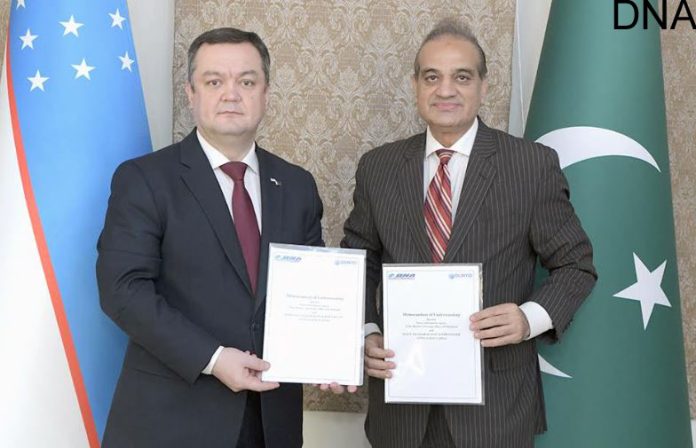
ISLAMABAD, JUL 7 (DNA) – In a significant step towards strengthening media cooperation between Pakistan and Uzbekistan, the Daily Islamabad Post and Diplomatic News Agency (DNA) have signed a Memorandum of Understanding (MoU) with DUNYO News Agency, the official news agency of Uzbekistan.

The ceremony was held in Islamabad where Ambassador of Uzbekistan, Alisher Tukhtaev, and veteran journalist Ansar Mahmood Bhatti, Chief Editor of Daily Islamabad Post and DNA, formally exchanged documents. Both sides pledged to promote each other’s content under the framework of media collaboration, aiming to enhance mutual understanding and coverage of bilateral relations.

The MoU is expected to further cement media contacts between Uzbekistan and Pakistan, opening new avenues for cooperation in journalism, information sharing, and cultural promotion. Ambassador Tukhtaev highlighted the importance of media in fostering people-to-people ties and expressed confidence that this partnership would bring the two nations closer.

On the Pakistani side, Ansar Mahmood Bhatti emphasized the role of independent media in bridging gaps between countries. He noted that DNA, Pakistan’s leading private news agency, and Daily Islamabad Post, the country’s first and only diplomatic daily, have always prioritized international collaboration. Bhatti, with over 35 years of experience in journalism and analysis, underscored that this initiative reflects Pakistan’s commitment to strengthening diplomatic and cultural bonds with Uzbekistan.

The collaboration will allow for the exchange of news, features, and analytical reports, ensuring that audiences in both countries gain deeper insights into each other’s political, economic, and cultural landscapes.

This partnership marks another milestone in Pakistan-Uzbekistan relations, reinforcing the role of media as a vital tool in diplomacy and international cooperation.

Macron arrives in Syria

Macron arrives in Syria

DNA

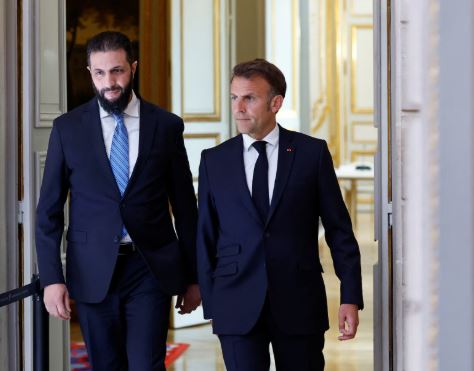
DAMASCUS: French President Emmanuel Macron arrived Monday in Syria, making him the first major western leader to visit the war-torn country since the ouster of Bashar Assad in 2024.

Ukrainian President Volodymyr Zelensky visited April but Macron is the first leader from western Europe or North America to do so.

The French president’s visit comes during a period of relative calm in the Middle East after the monthlong war in Iran and Lebanon. He will travel next to Ankara, Turkiye, for the NATO summit, where Syrian President Ahmad Al-Sharaa is also expected to attend and hold a high-profile meeting with US President Donald Trump.

Syria’s state-run SANA news agency said Macron would visit with a business delegation to discuss regional security as well as business and investment opportunities.

Macron was greeted at Damascus airport by Syrian Foreign Minister Asaad Al-Shibani.

Macron hosted Al-Sharaa in Paris in May 2025, where he urged European and US leaders to lift longstanding sanctions on Damascus. Most of those sanctions had since been lifted.

Al-Alimi calls for international investigation into IRGC plane landing in Sanaa

Al-Alimi calls for international investigation into IRGC plane landing in Sanaa

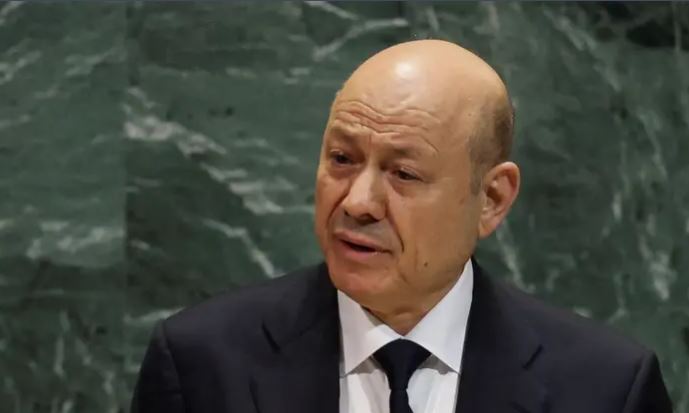
SANAA, JUL 6: Yemen’s Presidential Leadership Council Chairman Rashad al-Alimi on Monday called for an independent international investigation and tougher sanctions on the Houthis, after an Iranian plane landed at Sanaa International Airport.

Al-Alimi said the plane belonged to Iran’s Islamic Revolutionary Guard Corps (IRGC) and described the incident as “an extremely dangerous development, a blatant violation of Yemeni sovereignty and a challenge to the international order.”

Speaking during a meeting in Riyadh with ambassadors from countries sponsoring Yemen’s political process, al-Alimi said preliminary information confirmed that the flight was not humanitarian in nature. He said it was carrying Iranian military and security experts specialized in developing missiles and drones, as well as electronic technologies and communications equipment for command-and-control systems.

He also said the aircraft’s tracking system had been repeatedly switched off over Yemeni airspace.

Al-Alimi called on the international community to strictly enforce UN Security Council resolutions and the sanctions regime, particularly Resolution 2216, and to prevent civilian aircraft, airports and ports from being used as cover for transporting military equipment. He warned that allowing the global economy, maritime security and energy routes to become “hostage to the calculations of Iran’s militias” poses a threat that extends beyond Yemen’s borders.

Al-Alimi accused the Houthis of using large financial resources to buy and smuggle weapons and fund secret cells to carry out assassinations of civilian leaders in areas controlled by Yemen’s internationally recognized government, instead of using those funds to pay the salaries of public-sector employees.

He renewed the council and government’s commitment to a just peace based on the three agreed-upon references, while warning of a firm response to any military escalation on the front lines.

Al-Alimi also praised Saudi Arabia’s role in supporting peace efforts, sponsoring political initiatives, funding relief, development and reconstruction projects, and supporting Yemen’s central bank in a way that has helped strengthen monetary stability.

He also cited Saudi funding for electricity, water, health, education and basic services projects across Yemen’s provinces, as well as the Kingdom’s hosting of millions of Yemenis for work, residency, education and investment.

Stay Connected

64FansLike
60FollowersFollow

Latest Reviews

Exchange Rates

USD - United States Dollar
EUR
1.15
GBP
1.34
AUD
0.70
CAD
0.71