Home Blog Page 49

FPCCI launches “Home to Hub” initiative to propel women entrepreneurs toward exports

FPCCI launches “Home to Hub” initiative to propel women entrepreneurs toward exports

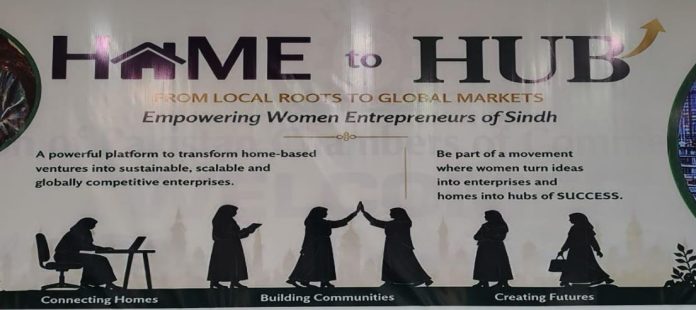
KARACHI, JUL 8 /DNA/ – Atif Ikram Sheikh, President of the Federation of Pakistan Chambers of Commerce & Industry (FPCCI), hosted the inaugural “Home to Hub Initiative” today at FPCCI Head Office, Federation House, Karachi.

Mr. Atif Ikram Sheikh apprised that the milestone event marks the formal beginning of a structured journey designed to transform Pakistan’s women entrepreneurs from home-based beginners to export-ready business leaders.

Mr. Atif Ikram Sheikh highlighted that the ice-breaking event gathered a carefully curated mix of established and emerging women entrepreneurs, university students, senior business mentors, and finance representatives.

Mr. Atif Ikram Sheikh thanked the key institutional partners; including, the Small and Medium Enterprises Development Authority (SMEDA), the State Bank of Pakistan (SBP), the Trade Development Authority of Pakistan (TDAP), and the Pakistan Single Window (PSW) for providing actionable insights on business planning, funding opportunities, and global export facilitation to the women entrepreneurs.

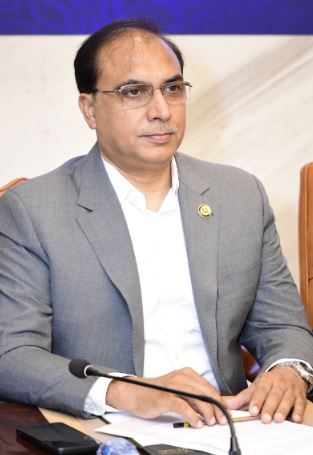
Mr. S. M. Tanveer, Patron-in-Chief, UBG, underscored the macroeconomic importance of the Home to Hub initiative. The transition from informal, home-based setups to structured, scalable hubs is vital. Providing women with the structural support to navigate this journey ensures their long-term integration into the mainstream commercial sector.

Mr. Saquib Fayyaz Magoon, SVP FPCCI, reiterated the apex body’s dedication to capacity building. Our focus is to ensure that emerging women entrepreneurs are not operating in isolation. Through structured networking, access to finance, and dedicated facilitation, FPCCI is committed to bridging the gap between local innovation and global supply chains.

Mr. Abdul Mohamin Khan, VP & Regional Chairman Sindh, FPCCI, explained that the Home to Hub framework is engineered to achieve six core outcomes for its participants; i.e. inspire, inform, connect, classify, register, and validate.

Mr. Qurrat Ul Ain, VP FPCCI, emphasized the apex body’s foundational role in female economic empowerment. FPCCI is a key supportive platform for Women Entrepreneurs. By formalizing these enterprises and providing them with direct pathways to international markets, we are driving critical, inclusive economic growth for the nation, she added.

The initiative was spearheaded and organized by Ms. Naheed Masud, Consultant on Women Entrepreneurs Affairs (Sindh Region) for FPCCI. Concluding the event and outlining the way forward, she noted that this inaugural event presents our program roadmap. Our goal is to classify participants into sector-specific clusters – such as IT & Digital, Fashion & Textiles, and Health & Nutrition – and register them into a digital database to provide customized mentorship and targeted access to finance.
Govt, humanitarian and development leaders unite to advance nature-based solutions in Pakistan

Govt, humanitarian and development leaders unite to advance nature-based solutions in Pakistan

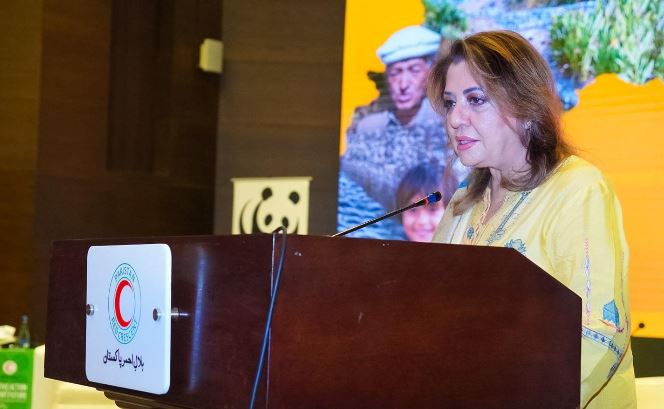
ISLAMABAD, JUL 8 /DNA/ – Recognizing the growing role of Nature-based Solutions (NbS) in addressing climate change, biodiversity loss and disaster risks, WWF-Pakistan in collaboration with Pakistan Red Crescent Society (PRCS), brought together senior government leaders, policymakers, development partners, academia, civil society organizations, and the private sector, to identify practical pathways for scaling up Nature-based Solutions (NbS) across Pakistan during a two-day national seminar held in Islamabad. The seminar provided a national platform to strengthen partnerships and accelerate the integration of NbS into climate adaptation, disaster risk reduction and sustainable development efforts.

Amir Mohyuddin, Additional Secretary, Ministry of Climate Change & Environmental Coordination MoCC & EC, the chief guest of the session, highlighted the changing flood dynamics in Pakistan, with monsoon patterns shifting westwards and floods increasingly occurring as GLOFs and urban flooding. He outlined the Ministry’s efforts to address these challenges, appreciated the contributions of WWF-Pakistan and PRCS in promoting innovative Nature-based Solutions (NbS), and emphasized that healthy forests, rangelands, wetlands, and protected areas are vital for biodiversity conservation and climate resilience.

Speaking on the occasion, Hammad Naqi Khan, Director General, WWF-Pakistan, said that WWF-Pakistan has been developing and scaling Nature-based Solutions, including floating treatment wetlands, gabion bunds, check dams and recharge wells, to improve water security, reduce flood risks, restore ecosystems and strengthen climate resilience. Through the Water Resource Accountability in Pakistan (WRAP) project, WWF-Pakistan has implemented over 320 Nature-based Solutions interventions across 16 districts of Gilgit-Baltistan, Khyber Pakhtunkhwa and Punjab over the past five years, benefiting more than 500,000 people. Building on these successful approaches, WWF-Pakistan is now preparing to implement Recharge Pakistan across the Indus Basin, which will directly benefit over 680,000 people and strengthen the climate resilience of more than seven million people.

Highlighting the growing importance of partnerships between humanitarian and environmental organizations, Mrs Farzhana Naek, Chairperson, Pakistan Red Crescent Society, underscored that scaling up NbS will require stronger institutional coordination, supportive policy frameworks, sustainable financing and meaningful engagement of local communities. They also reaffirmed the importance of partnerships across government, humanitarian organizations, academia, civil society and the private sector to accelerate implementation nationwide.

Across technical and panel discussions, participants examined practical experiences from across Pakistan and also focused on enabling policies, financing mechanisms, innovation and cross sector collaboration needed to scale implementation.

18 MW solar systems to be installed on 499 govt buildings in GB by Dec 2026: PM briefed

18 MW solar systems to be installed on 499 govt buildings in GB by Dec 2026: PM briefed

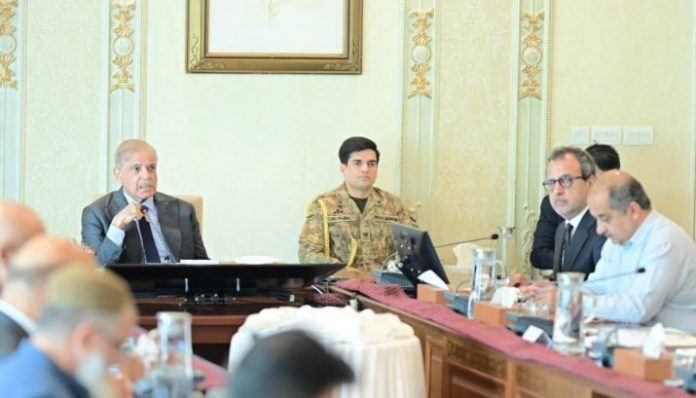
ISLAMABAD, Jul 8: Prime Minister Shehbaz Sharif was told on Wednesday that under the 100 MW Solar Energy Project for Gilgit-Baltistan, 18 MW of rooftop solar systems, including battery storage, will be installed on 499 government buildings by December 2026.

In addition, the PC-I for the 82 MW utility-scale solar project has been submitted to the Executive Committee of the National Economic Council (ECNEC) for approval.

Officials informed that the 82 MW utility-scale solar project is expected to benefit approximately 1.3 million people. Upon completion, the project will significantly improve the quality of electricity services in Gilgit-Baltistan and help eliminate load shedding across the region.

These updates were shared during a review meeting on the 100 MW Solar Energy Project for Gilgit-Baltistan, chaired by Prime Minister Shehbaz Sharif.

During the meeting, the prime minister said that the promotion of solar energy was a key component of the national energy strategy aimed at providing clean, affordable, and sustainable power. He described the 100 MW solar project as a gift from the Federal Government to the people of Gilgit-Baltistan.

The prime minister directed the Power Division to fulfill all its responsibilities to ensure the timely installation and completion of the project. He also instructed that complete transparency be maintained throughout the procurement process.

Emphasizing accountability, the prime minister further directed that all payments under the project be made only after third-party validation.

The meeting was attended by Federal Minister for Power Sardar Awais Leghari, Minister of State for Finance and Railways Bilal Azhar Kayani, and other senior government officials.

Ambassador Mahmood conveys D-8 condolences to Iranian leadership

Ambassador Mahmood conveys D-8 condolences to Iranian leadership

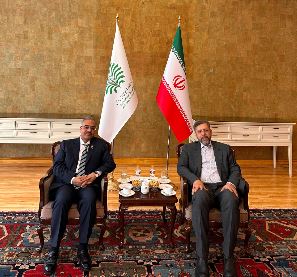
TEHRAN, JUL 8 /DNA/ – The Secretary-General of the Developing-8 Organization for Economic Cooperation (D-8), H.E. Ambassador Sohail Mahmood, concluded a two-day official visit to the Islamic Republic of Iran from 2 to 4 July 2026. The visit, which included participation in the official ‘Farewell and Tribute Ceremony’ held in honor of His Eminence Ayatollah Seyyed Ali Khamenei, underscored the deep bonds of solidarity between the D-8 Secretariat and the people of Iran.

Ambassador Mahmood conveys D-8 condolences to Iranian leadership

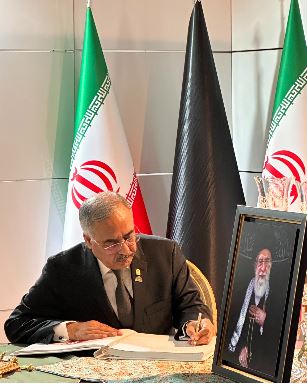
Accompanied by Mr. Muhammad Bilal Khan, Executive Assistant, the Secretary-General conveyed profound condolences on behalf of the D-8 Organization to Iran’s leadership, government, and citizens. During the solemn ceremony organized for foreign dignitaries, Ambassador Mahmood offered prayers for the departed soul and signed the official Condolence Book, expressing support for the bereaved family and the Iranian nation.

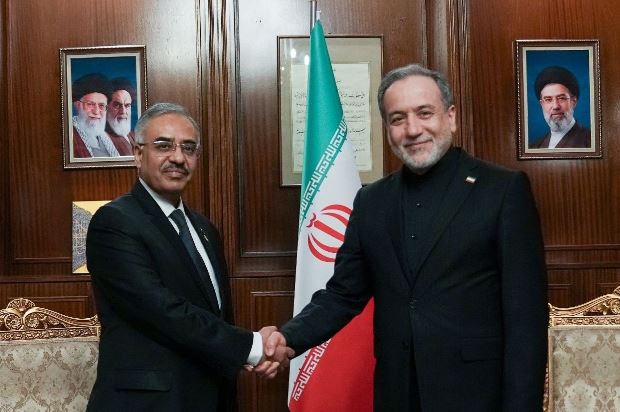
During his stay in Tehran, Secretary-General Mahmood held a key bilateral meeting with H.E. Foreign Minister Dr. Seyed Abbas Araghchi. The discussions centered on the long-standing partnership between Iran and the D-8 Secretariat, regional geopolitical developments, and the organization’s evolving strategic priorities.

Ambassador Mahmood conveys D-8 condolences to Iranian leadership

The Secretary-General apprised Foreign Minister Araghchi of recent advancements across various D-8 cooperation tracks, highlighting the organization’s current profile and future trajectory. He reaffirmed the D-8’s solidarity with Iran and extended best wishes for the nation’s pursuit of durable peace, progress, and prosperity.

Foreign Minister Araghchi thanked the Secretary-General for his participation in the tribute ceremony and reiterated Iran’s strong national resolve and commitment to peace through dialogue and diplomacy. He emphasized the need for enhanced economic cooperation in light of the transformed regional landscape and reaffirmed Iran’s steadfast dedication as a founding member of the D-8, pledging continued contributions to the organization’s broad cooperation agenda.

The two sides exchanged views on harnessing new opportunities for increased trade, investment, energy cooperation, and hard and soft connectivity arising from ongoing regional transformations.

Ambassador Mahmood conveys D-8 condolences to Iranian leadership

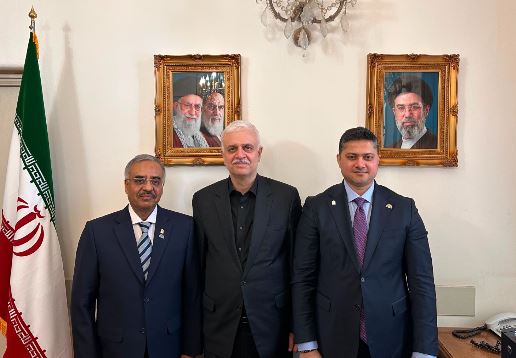
In addition to the meeting with the Foreign Minister, Ambassador Mahmood held substantive interactions with H.E. Deputy Foreign Minister and President of the Institute for Political and International Studies (IPIS), Dr. Saeed Khatibzadeh, and Iran’s D-8 Commissioner, Ambassador Alireza Tootoonchian. These discussions focused on deepening policy dialogue, advancing priority areas under the D-8 Decennial Roadmap 2020-2030, and strengthening the organization’s institutional capacity, effectiveness, and global visibility.

Throughout his engagements, Secretary-General Mahmood emphasized that the D-8 is entering a new phase of strategic transformation, centered on closer economic integration, trade and investment promotion, industrial cooperation, innovation, technology, energy security, sustainable development, and people-centered growth. He underscored that Iran’s industrial capabilities, technological expertise, manufacturing capacity, and strategic geographic position would remain invaluable in advancing the collective vision and objectives of the D-8.

The official visit served to further reinforce the partnership between the D-8 Secretariat and the Islamic Republic of Iran. Both sides expressed shared determination to support the organization’s capacity-building through enhanced human and financial resources, deeper economic integration across the D-8 geography, and increased international awareness as the D-8 prepares to mark the 30th anniversary of its inception in 1997.

PIDE welcomes 140 interns for 2026 training program

PIDE welcomes 140 interns for 2026 training program

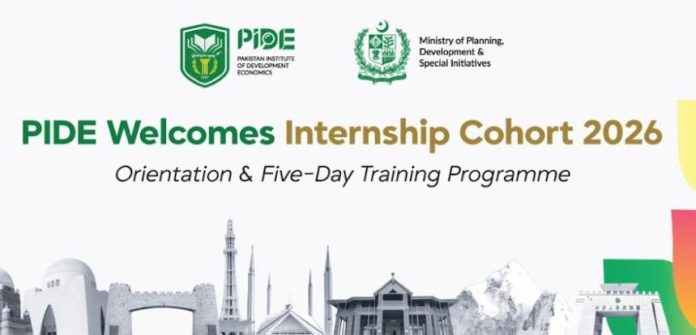
ISLAMABAD, JUL 8 /DNA/ – The Pakistan Institute of Development Economics (PIDE) welcomed its Internship Cohort 2026 at PIDE Islamabad, marking the beginning of a structured orientation and five-day training program for young university students and graduates interested in economics, public policy, data science, management sciences, and information technology.

Speaking at the opening session, Dr Nadeem Javaid (SI), Vice Chancellor, PIDE and Member, Planning Commission, linked the internship program with Pakistan’s broader development ambition under URAAN Pakistan, calling for a national journey towards a trillion-dollar economy by 2035. He emphasized that Pakistan stands at a critical crossroads and must address deep-rooted challenges, including the youth bulge, weak export performance, low human capital, climate vulnerability, energy constraints, social disparities, policy discontinuity, and fiscal pressures through evidence-based and people-centred policymaking.

Dr Nadeem Javaid stressed that Pakistan’s development challenge is not merely economic, but also a human development emergency. He noted that countries which invested in education, skills, population management, female workforce participation, and export competitiveness moved ahead, while weak education outcomes continue to limit Pakistan’s growth potential. He urged the young interns to think critically and contribute ideas that can support national transformation, improved governance, and real policy impact.

According to Dr Faheem Jehangir, Dean (Policy Advocacy), the PIDE Internship Program 2026 received an impressive response from across Pakistan and abroad, with 4,883 applications submitted. Following a rigorous selection process involving 14 interview panels278 candidates were shortlisted, and 140 interns were finally selected for placement across 14 research centres, technical sections, and PSDP projects. The cohort represents 62 universities, with participation from Punjab, Sindh, Balochistan, Khyber Pakhtunkhwa, Federal Area, AJK, Gilgit-Baltistan, and foreign participants.

The orientation session was also addressed by PIDE’s senior leadership, including Dr Nasir Iqbal, Professor/Registrar, PIDE; Dr Karim Khan, Dean (Academics); Dr Shujaat Farooq, Dean (Research); Dr Syed Hasanat Shah, Executive Director (Centre of Excellence for CPEC); and Dr Nadeem Ahmed Khan, Director (Executive Development Centre). The speakers introduced interns to PIDE’s structure, research, academic, policy advocacy and outreach, CPEC, and professional training ecosystem. Welcoming the interns, PIDE’s management emphasized that informed ideas lead to better policies, and better policies lead to a stronger sustainable future.

Through this program, PIDE aims to connect young talent with real policy questions, expose interns to evidence-based research, and equip them with analytical, writing, communication, and professional skills needed to contribute to Pakistan’s development sector. 

ICCI leadership appreciates PM’s initiative to build a robust SME ecosystem

ICCI leadership appreciates PM’s initiative to build a robust SME ecosystem

ISLAMABAD, JUL 8: /DNA/ – Acting President of the Islamabad Chamber of Commerce and Industry (ICCI), Tahir Ayub, has warmly welcomed Prime Minister Muhammad Shehbaz Sharif’s directives for formulating a comprehensive strategy, in coordination with the State Bank of Pakistan and commercial banks, to improve Small and Medium Enterprises’ (SMEs) access to finance. He termed the Prime Minister’s vision a timely and encouraging step towards revitalizing the SME sector, which serves as the backbone of Pakistan’s economy and plays a pivotal role in employment generation, exports and sustainable economic growth.

In a statement issued here on Wednesday, Tahir Ayub said that easier access to affordable financing has long remained one of the biggest challenges confronting SMEs. He noted that the Prime Minister’s emphasis on facilitating bank lending, developing dedicated financial products for SMEs and removing impediments to their growth reflects a clear commitment to creating a business-friendly environment. He expressed confidence that these initiatives would enable thousands of small businesses to modernize their operations, enhance productivity and strengthen Pakistan’s export competitiveness.

The Acting President appreciated the Prime Minister’s special focus on supporting farmers engaged in value addition and processing of agricultural produce and fruits. He observed that facilitating agro-based SMEs through financial access, technical guidance and awareness would significantly increase rural incomes, reduce post-harvest losses and expand the country’s export basket.

He reaffirmed ICCI’s commitment to working closely with the government, SMEDA, the State Bank of Pakistan and the banking sector to promote entrepreneurship, facilitate SMEs and contribute to sustainable economic development.

ICCI Vice President Mohammad Irfan Chaudhry also appreciated the Prime Minister’s proactive approach towards strengthening the SME sector, stating that timely and affordable financing is indispensable for the survival and expansion of small businesses.. He added that ICCI stands ready to collaborate with all relevant institutions to ensure that these initiatives translate into tangible benefits for the business community and the national economy.

The Perils of Power in Sports: From Biased Umpires to Presidential Calls

The Perils of Power in Sports: From Biased Umpires to Presidential Calls

by Muhammad Mohsin Iqbal

In the 1980s, when bilateral cricket between India and Pakistan burned with unmatched intensity, the two nations met not only as rivals on the field but as embodiments of national pride. Series were contested on home soil, featuring five Test matches and a handful of One-Day Internationals, with local umpires presiding over the proceedings. On the 13th of March 1987, at Bangalore’s Chinnaswamy Stadium, Pakistan, led by Imran Khan, faced India in a Test match overseen by umpires RB Gupta and WK Ramaswamy. Pakistan’s spinners, Iqbal Qasim and Tauseef Ahmed, delivered masterly spells, their every appeal for leg-before-wicket or caught behind resounding through the ground. Yet the umpires appeared resolute in their reluctance to dismiss the Indian stalwarts Sunil Gavaskar and Gundappa Viswanath. Despite such apparent partiality, Pakistan prevailed by a narrow margin of sixteen runs and claimed the series by a single victory.

The episode laid bare a troubling truth; when officials from the host nation wield the power of decision, fairness may yield to favouritism. Another Indian umpire, long remembered in cricketing lore as “Umpire Punjabi,” earned notoriety for his readiness to raise the finger against Pakistani batsmen while sparing his countrymen. Such conduct wounds the very soul of sport, breeding resentment among fans and eroding the trust that binds competitors and spectators alike. In time, the outcry compelled the appointment of neutral umpires, a reform born of necessity to restore credibility to the game.

Decades later, the world finds itself once more confronting the spectre of interference in sport, this time on the grand stage of the FIFA World Cup. Co-hosted by the United States, Canada, and Mexico, the tournament had unfolded with considerable promise until a recent controversy cast a long shadow over its integrity. In the Round of 32, American forward Folarin Balogun, who had already scored three goals and emerged as his side’s chief threat, received a red card for planting his foot awkwardly upon the ankle of Bosnia and Herzegovina’s Tarik Muharemovic. The offence, witnessed by referee Raphael Claus, triggered an automatic one-match suspension under established rules. Many viewed the decision as harsh, Balogun himself suggesting a yellow card might have sufficed for what appeared an accidental collision born of imbalance. Yet the laws of the game were clear.

What followed has shaken the foundations of fair play. United States President Donald Trump, declaring the incident no foul at all but merely two athletes colliding at speed, telephoned FIFA President Gianni Infantino to urge a review. FIFA, invoking Article 27 of its disciplinary code, suspended the implementation of the ban for a probationary period, permitting Balogun to line up against Belgium in the last sixteen. The decision marked the first time since 1962 that a World Cup red card had not resulted in automatic absence from the subsequent fixture. In that earlier case, Brazil’s Garrincha had benefited from the era’s less rigid procedures; here, the intervention bore the unmistakable imprint of political influence.

The reaction has been swift and severe. Belgium’s football authorities expressed astonishment, declaring their intent to safeguard the principles of fair play and investigating every avenue of recourse. Their coach, Rudi Garcia, likened the affair to an April Fools’ jest misplaced in July. UEFA condemned the ruling as having crossed a red line, while Sepp Blatter, former president of FIFA, warned pointedly that red cards are overturned by evidence and independent judgment, not by telephone calls from heads of state. “Quo vadis, FIFA?” he asked. Coaches of other nations voiced unease: Norway’s Stale Solbakken foresaw damage to the tournament’s reputation, while England’s Thomas Tuchel questioned where such overturns might end—might yellow cards too become negotiable? Former players, including Ian Wright and Roy Keane, decried the episode as shameful to the game’s integrity.

Critics rightly observe that FIFA appears to have strained its own regulations. The automatic suspension following a red card stands enshrined in multiple articles of the disciplinary code and World Cup regulations. By setting aside this provision after presidential intercession, the governing body has invited accusations of bending rules to accommodate a powerful host nation. The United States, as co-host, carries the weight of expectation and influence; yet when politics intrudes upon the pitch, the universal language of sport risks translation into the dialect of power. But alas, despite all these irregularities, the United States lost the match to Belgium 4-1 and was eliminated from the tournament.

History whispers caution. From the biased umpires of Bangalore to the controversial reprieve granted Balogun, the lesson endures; once the impartiality of officials is compromised, whether by national loyalty or political pressure, the spirit of competition withers. Fans across continents watch not merely for spectacle but for the assurance that merit, not manipulation, decides the outcome. As the World Cup advances toward its knockout climax, the controversy surrounding this American player lingers like a cloud. It serves as a reminder that sport, at its noblest, must remain a sanctuary from the machinations of the political realm. Should governing bodies fail to defend that sanctuary, they risk alienating the very hearts that sustain the game. In the end, true victory belongs not to nations or presidents, but to the timeless ideals of fairness and honour.

FIFA World Cup round of 16: Messi magic rescues Argentina in 3-2 thriller against Egypt

Messi magic rescues Argentina in 3-2 thriller against Egypt

MIAMI, JUL 7 /DNA/ – In a contest that will be etched into World Cup folklore, Argentina came back from the dead to defeat a heroic Egypt 3-2 in the Round of 16 at Hard Rock Stadium. Lionel Messi, at 39 years old, produced a second-half masterclass of dribbling wizardry and unrivalled vision to overturn a two-goal deficit and keep the defending champions’ hopes alive in what is already being called the match of the tournament.

Egypt, roared on by a deafening contingent of travelling fans, stunned the Albiceleste with two first-half goals from their own living legend, Mohamed Salah. The Liverpool icon broke the deadlock in the 14th minute, ghosting in behind the Argentine backline and bending a sublime finish past Emiliano Martínez. The stadium erupted again eight minutes before half-time when Salah pounced on a loose ball at the edge of the box and rifled a shot into the top corner, leaving Argentina shell-shocked and facing a humiliating early exit.

Trailing 2-0 at the break, the pre-match favourites needed inspiration – and Messi delivered a half of football that defied his years. Within seven minutes of the restart, the captain slalomed past three Egyptian defenders as if they were training cones, drawing gasps from the crowd. Though his shot was parried, Julián Álvarez was on hand to smash home the rebound and ignite the comeback.

What followed was a relentless wave of Argentine pressure, orchestrated entirely by their number 10. In the 67th minute, Messi received the ball near the right touchline, dropped a shoulder to leave Hamdi Fathi stranded, nutmegged a second defender, and floated a delicate chip into the path of substitute Lautaro Martínez, who was hauled down inside the area. Messi stepped up to take the penalty himself and rolled it nonchalantly down the middle as the goalkeeper dived away, making it 2-2.

Egypt refused to wilt, with Salah rattling the crossbar from a free-kick moments later. But the night belonged to Messi. With five minutes of normal time remaining, he produced the trick that will dominate highlight reels for decades. Receiving a pass with his back to goal on the edge of the box, he executed a no-look backheel volley that took out the entire Egyptian defence and sent the ball into the path of Enzo Fernández. Fernández’s first-time cross was met by a diving header from Nicolás González, sparking wild celebrations as the ball nestled in the net to make it 3-2.

Egypt threw everything forward in the dying minutes, including goalkeeper Mohamed El Shenawy, but Argentina held on through eight tense minutes of stoppage time. At the final whistle, players from both sides collapsed on the turf, having given everything in a breathtaking spectacle.

“This is why he is the greatest of all time,” Argentina coach Lionel Scaloni said of Messi. “At 2-0 down, many teams would have collapsed. But he simply refused to lose. The tricks, the skill, the leadership – it was a privilege to watch.”

A gracious Salah, who embraced Messi at full-time, called it “the most painful and yet the most beautiful game I’ve ever played in. He is a magician. We had them, but he did things tonight that are not normal.”

With its breakneck pace, six yellow cards, two posts hit, and a career-defining performance from the Argentine icon, this Round of 16 classic has set an impossibly high bar for the rest of FIFA World Cup 2026. Argentina will advance to the quarter-finals, but for now, the football world just wants to catch its breath.

Lifetime passports for KP MPs and their spouses

Lifetime passports for KP MPs and their spouses

However, the three laws have remained under wraps since the governor’s assent. The Acts and the gazette notifications have yet to be uploaded to the KP Assembly website

Bureau Report

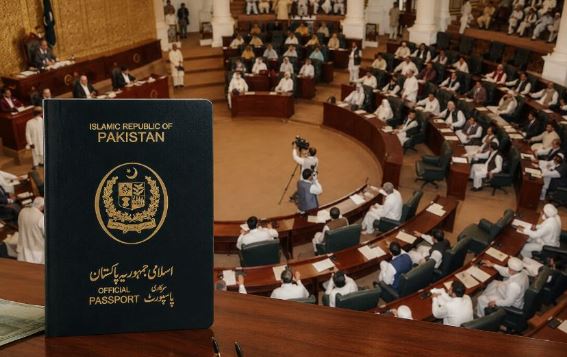
PESHAWAR: The Khyber Pakhtunkhwa government on Tuesday enacted a law expanding provincial assembly members’ powers and immunities, including the issuance of lifetime official passports to them and their spouses.

The KP Assembly passed the KP Provincial Assembly (Powers, Immunities and Privileges) Act, 2026, on April 30. On the same day, it also passed two other laws: the KP Province Speaker and Deputy Speaker (Powers, Immunities and Privileges) Act, 2026, and the KP Province (Salaries and Allowances of Members) Act, 2026. KP Governor Faisal Karim Kundi assented to the laws on May 6.

However, the three laws have remained under wraps since the governor’s assent. The Acts and the gazette notifications have yet to be uploaded to the KP Assembly website.

Through the KP Provincial Assembly (Powers, Immunities and Privileges) Act, 2026, the government has repealed the 1988 law on the same subject. Although most provisions of the repealed law have been retained in the new legislation, certain changes have been made to expand the privileges of assembly members. Section 8(1) of the aforesaid law provides that a member, for the purpose of discharging his official functions, can summon a meeting within his constituency or concerned district, at such public place as he may specify, whereas Section 8(2) makes it binding on government officers to attend this meeting.

“Every government officer of the district concerned shall be bound to attend the meeting summoned under section 1, provided that the officer has been duly informed,” reads the Section 8(2).

Section 8(3) provides that any government officer who, without sufficient cause, fails to attend a meeting summoned under Sub-Section 1 shall be deemed to have committed a breach of privilege.

Under Section 10 of the legislation, members have been granted blanket immunity from preventive detention.

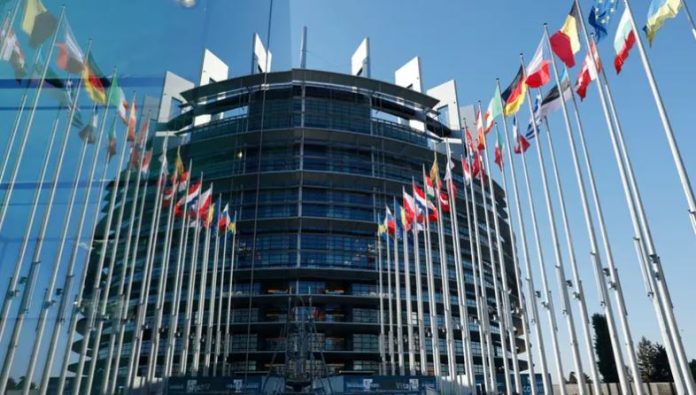
EU lawmakers call for probe of FIFA boss over Trump contact before US-Belgium match

EU lawmakers call for probe of FIFA boss over Trump contact before US-Belgium match

MEXICO CITY, JUL 7: Dozens of European lawmakers are gathering support to launch an investigation in the European Parliament of FIFA boss Gianni Infantino over his involvement in the decision to permit US striker Folarin Balogun to play despite an earlier red card.

Balogun was shown a red card during the US victory over Bosnia-Herzegovina on July 1, which normally would make him ineligible to play in team’s next game, but FIFA lifted his suspension for a match on Monday after US President Donald Trump intervened with Infantino on behalf of the 25-year-old striker.

For all the latest headlines, follow our Google News channel online or via the app.

European Parliament lawmakers Barry Andrews, Lara Wolters and Niels Fuglsang said in a joint statement that FIFAs decision to “change the rule on red card suspensions mid-tournament is a disgrace and a perversion of justice.”

“Once again, we’ve seen Infantino and FIFA surrender to the demands of the Trump administration,” the statement said.

The lawmakers are asking the national football associations of the EU countries to spur the FIFA Ethics Committee to investigate Infantino and whether pressure from the Trump administration was a factor in the lifting of the suspension, as well as “other potential breaches of political neutrality” like awarding Trump the FIFA Peace Prize.

FIFA has said the lifting of the suspension was a decision of a disciplinary committee

The lawmakers said that 35 colleagues have so far signed the letter.

“The beauty of sport is that it is based on impartial and transparent rules. When Infantino allows political pressure to determine who gets to play, this sense of fairness goes out the window,” they said.

Stay Connected

64FansLike
60FollowersFollow

Latest Reviews

Exchange Rates

USD - United States Dollar
EUR
1.15
GBP
1.34
AUD
0.70
CAD
0.71