Home Blog Page 478

Dialogue of Declarations promotes Uzbekistan’s policy of tolerance

Dialogue of Declarations promotes Uzbekistan’s policy of tolerance

TASHKENT, SEPT 16 (UzA/APP): The Second International Forum “Dialogue of Declarations” is organized by the Institute for Strategic and Regional Studies under the President of the Republic of Uzbekistan (ISRS) and the American NGO Love Your Neighbor Community (LYNC), with the support of the Committee on Religious Affairs, the Center of Islamic Civilization in Uzbekistan, the Ministry of Foreign Affairs of the Republic of Uzbekistan, and the Hokimiyat of Samarkand region.

The event becomes a logical continuation of a similar event held in 2022 in Tashkent, Samarkand, and Bukhara. It resulted in the adoption of the Bukhara Declaration, later recognized by the UN General Assembly.

The forum, which brings together about 50 experts, scholars of religion, theologians, and officials from 15 countries, including the United States, the United Kingdom, China, Saudi Arabia, the UAE, Indonesia, and the Central Asian states, is aimed at fostering constructive dialogue among religions and cultures as an essential factor in maintaining peace, harmony, and stability in society. The focus of the participants will be on issues such as promoting freedom of conscience and belief, combating discrimination based on religious symbols, and fostering interfaith trust.

The topic of contributing to the strengthening of interfaith harmony in civil society became a logical continuation of the dialogue on the role of the state in this sphere. In this regard, the contribution of non-governmental organizations, public associations, the media, and educational institutions to the formation of a culture of mutual respect and peaceful coexistence was analyzed.
FIA foils fake visa attempt at peshawar airport, 3 agents arrested

FIA foils fake visa attempt at peshawar airport, 3 agents arrested

PESHAWAR, Sep 16 (APP): The Federal Investigation Agency (FIA) Immigration on Tuesday carried out an operation at Bacha Khan International Airport, Peshawar, thwarting an attempt to travel abroad on forged visas.

According to FIA officials, two passengers, identified as Adil Raza and Musharraf Mehmood, were set to travel to Albania via flight FZ376. Upon verification, the work visas presented by them were found to be fake.

On the passengers’ indication, FIA also arrested three agents from the airport premises. The accused were identified as Ghulam Dastgir, Muhammad Riaz, and Tauqeer Ahmad, residents of Narowal and Mirpur, Azad Kashmir.

The arrested agents have been handed over to the FIA Anti-Human Trafficking Circle Peshawar for further interrogation. An FIA spokesperson confirmed that further investigation is in progress.

Pak’s strategic deterrence never affected during May 2025 standoff: Gen. Kidwai

Pak's strategic deterrence never affected during May 2025 standoff: Gen. Kidwai

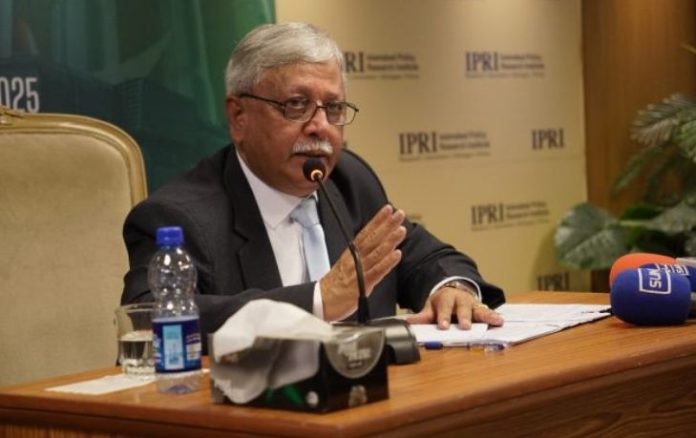
ISLAMABAD, Sep 16 (APP/DNA): Pakistan’s strategic deterrence remained unshaken and fully effective during the May 2025 standoff, asserted Lt. Gen. (R) Khalid Ahmed Kidwai, Advisor National Command Authority (NCA) and former Director General SPD, while addressing a high-level session at the Islamabad Policy Research Institute (IPRI) on Tuesday.

Speaking on the topic of “Stability of Pakistan’s Strategic Deterrence”, Gen. Kidwai said that strategic deterrence and limiting operational cap on crisis escalation are in-built in Pakistan’s capability of Full Spectrum Deterrence (FSD). “The stability of our strategic deterrence was never compromised during the May 2025 standoff,” he said, adding that Pakistan has triumphed in terms of stability of nuclear deterrence due to its robust conventional response, said a press release.

He said that Pakistan’s nuclear weapons, which India refers to as nuclear blackmail, will continue to define the limits of India’s kinetic freedom of action. Gen. Kidwai said that the Army Rocket Force Command (ARFC) provides an additional layer of strategic deterrence between the operations of conventional forces and the potential employment of nuclear forces, thereby in some ways raising the nuclear threshold.

He said the ARFC has simply responded to a need of the modern battlefield while nuclear deterrence remains in place as the ultimate shield against India.

Gen. Kidwai said unlike India, Pakistan has time and again demonstrated that restraint and responsibility are the key components of its nuclear policy.

He said that the Indian strategic judgement in risking a nuclear Armageddon post-Pahalgam can only be labelled as one of the most bizarre and irresponsible acts in the annals of military history.

He recalled the years from 1998 onwards, as Pakistan’s nuclear capability, slowly but surely, embarked on a well-defined and focused force development trajectory under the NCA/SPD, it matured and grew into a robust operationalized force as a comprehensive triad, in the ASFC, in the NSFC and in the AFSC.

“The large size of the Indian army does not tell the entire story like the large size of Arab States’ armies against Israel does not tell the whole story. Quality, technology and training are the force multipliers that determine the victor in an armed confrontation,” he remarked.

He observed that Operation Sindoor has embarrassed India and boomeranged on its planners.

“India not only failed to attain any of the politico-cum strategic-cum-military objectives; far from it, it suffered major military reverses especially in the IAF,” he pointed out.

Gen Kidwai said Pakistan’s Full Spectrum Deterrence worked in both directions, east and west, and it was no “bluff”.

He said India’s desire for seeking the so-called “space for limited war, despite a nuclear overhang”, remained shrunk as it opted to limit its initial escalation as openly admitted.

He remarked that the term ‘Strategic Deterrence’ was born out of necessity after the atomic shocks of Hiroshima and Nagasaki, as the world realised that a single weapon could annihilate a complete city.

Rainfall in KP, streams overflow

Rainfall in KP, streams overflow

PESHAWAR, SEP 16 (APP):The new spell of rainfall across various districts of Khyber Pakhtunkhwa has brought relief from scorching heat but also caused flooding in streams and nullahs.

According to different reports on Tuesday, In Upper Dir, Chitral, Swat, and other adjoining upper areas, the downpour has turned the weather pleasant and broken the intensity of the heatwave, putting smiles back on weary faces.

However, heavy rain in Upper Dir triggered flooding in local streams, leaving residents worried once again.

Chitral and Swat also witnessed heavy rainfall. In Chitral, flooding occurred in several areas overnight, forcing authorities to close the Ashret section of the Chitral road to traffic. Several other roads were also blocked due to flash floods. Meanwhile, the local administration has advised citizens to avoid unnecessary travel.

In Haripur district, monsoon rains continued late into the night across all three tehsils. The heavy downpour disrupted various link roads, while both water reservoirs in the district have reached capacity. The inflow of water at Tarbela Dam has reached 158,000 cusecs, while the water level at Khanpur Dam has risen to 1,980 feet.

IPRI book launch at University College Zhob

IPRI book launch at University College Zhob

ISLAMABAD, Sep 16 (APP/DNA):Underscoring the critical link between economic resilience and national security, the University College Zhob, BUITEMS hosted the launch of the groundbreaking book “Economy: Backbone of National Security”, authored by Dr. Aneel Salman, OGDCL–IPRI Chair of Economic Security, with contributions from Muneeb Shah and a multidisciplinary team of experts.

The event was chaired by Professor Dr. Abdul Salam Lodhi, Director of University College Zhob, BUITEMS, said a press

release issued here on Tuesday.

Dr. Abdul Salam Lodhi, in his keynote remarks, stressed that “economic security is essential for the prosperity of all sections of society”, echoing the book’s central premise that economic fragility represents a fault line that shapes national defense capabilities, diplomatic influence, and internal stability.

He congratulated Dr Aneel Salman and his Associate Muneeb Shah for producing a timely and urgent work that provides both analysis and actionable solutions.

The ceremony featured a detailed presentation by Muneeb Shah, Research Associate at IPRI and proud alumnus of BS Economics, University College Zhob, BUITEMS.

Shah highlighted that economic transformation, not mere survival, is Pakistan’s defining challenge. “Stability is a fleeting window. We must use it to build resilient institutions, future-proof markets, and empower our youth in emerging technologies,” he asserted, referencing the book’s roadmap for reform.

Shah also paid tribute to his alma mater for shaping his academic and professional journey, expressing gratitude for the mentorship and environment that enabled him to contribute meaningfully to one of Pakistan’s premier think tanks.

The launch brought together students, faculty, and members of the wider academic community in a lively discussion on

how economic strength serves as a foundation for national defense, diplomatic influence, and internal cohesion. Attendees lauded the initiative for bridging the gap between academic research and policy relevance.

Contributors to the book include leading voices such as Zafar Masud, Air Marshal Ashfaque Arain (retd), Dr. Usman W.

Chohan, Dr. Khurram Ellahi, Mr Sheraz Ahmad, Sayem Ali, Maryam Ayub, and others. Together, they map the complex intersections of economic policy, climate resilience, cyber threats, cryptocurrency regulation, regional trade, and geoeconomic strategy, particularly in the context of CPEC Phase II, regional diplomacy, and emerging technologies.

The event at University College Zhob also stood as a proud moment for the institution—celebrating its growing role in national dialogue and the impactful achievements of its alumni. As Professor Lodhi affirmed, “This ceremony reflects our commitment to fostering future leaders in policy, academia, and research who can shape Pakistan’s.

Operationalized dialysis center at RIUT a blessing: Hanif Abbasi

Operationalized dialysis center at RIUT a blessing: Hanif Abbasi

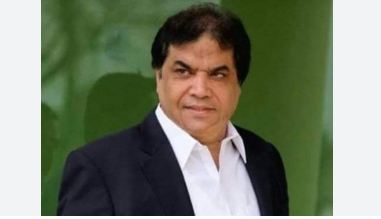
RAWALPINDI, Sep 16 (APP/DNA):Federal Minister for Railways Muhammad Hanif Abbasi has said that  Rawalpindi Institute of Urology and Transplantation (RIUT) will be a state of the art urology facility for the residents of Rawalpindi and surrounding areas. While appreciating the ongoing work of the hospital project, he said that lithotripsy procedures have also started at RIUT, with 30 beds available for emergencies.

The minister said this during his unannounced visit to the RIUT on Monday, where he reviewed patient treatment, hospital infrastructure, and other facilities and arrangements.

“The operational kidney dialysis center at RIUT is nothing less than a blessing for patients”, he said.

Project Director Dr. Zulfiqar Ali Khan briefed the minister that RIUT, a 250-bed hospital, is currently operational with 50 beds. The hospital has eight departments dedicated to kidney treatment, with OPD, emergency and ultrasound departments fully functional. It was briefed that the hospital is equipped with 30 modern dialysis machines, capable of treating 30 patients simultaneously. This is great news for kidney patients in Rawalpindi and surrounding areas, as they no longer have to endure long waiting times or visit multiple hospitals for dialysis.

It was further briefed that the RIUT Dialysis Center can provide dialysis services to an average of 100 patients daily, offering relief to those previously stuck on long waiting lists at other hospitals. The project, costing over five billion rupees, is 99% complete, and the hospital has created hundreds of jobs.

Initial flood damage estimates to be finalized within 10 days: Ahsan Iqbal

Initial flood damage estimates to be finalized within 10 days: Ahsan Iqbal

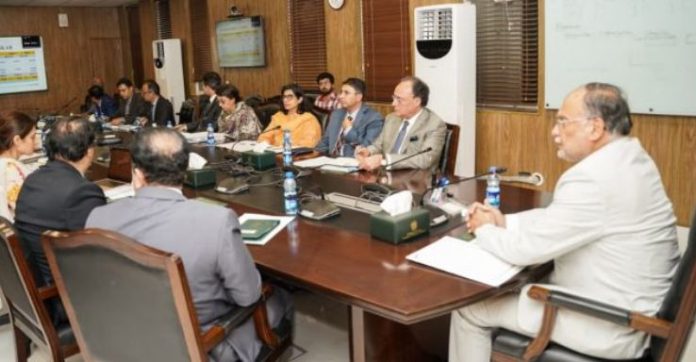
ISLAMABAD, Sep 16 (APP):Federal Minister for Planning, Development and Special Initiatives Professor Ahsan Iqbal on Tuesday chaired a meeting of the Prime Minister’s Committee to review the preliminary estimates of damages caused by the 2025 floods.

The meeting was attended by Minister for Finance and Revenue Senator Muhammad Aurangzeb, Chairman of the National Disaster Management Authority (NDMA), the Secretary of the Ministry of Climate Change, and Chief Secretaries of all provincial governments.

During the meeting, the provincial representatives said a final and accurate assessment of flood damages could only be conducted once floodwaters have fully receded.

In response, Ahsan Iqbal stressed the importance of working in close coordination with provincial governments to prepare a comprehensive damage assessment.

“The initial estimates of the flood damages will be finalized within the next ten days,” he expressed confidence, adding that the data would be based on accurate and transparent field reports.

 “Verified data will be shared soon,” the minister said while urging the media to refrain from speculation regarding flood losses as it could mislead the public and hinder relief efforts.

He said rehabilitation efforts were already underway in flood-affected regions, with federal and provincial institutions working jointly to deliver aid and relief to the affected communities.

Ahsan Iqbal said, as in 2022, a comprehensive Post-Disaster Needs Assessment of damages and requirements would be carried out with the participation of international organizations.

“Relief efforts will be based on accurate and verified data to ensure that help reaches those who need it most,” he affirmed.

The minister also highlighted the growing threat of climate change to Pakistan, citing both floods and droughts as its direct consequences.

“Climate change is a pressing challenge for Pakistan. Our glaciers are melting rapidly, increasing the risk of future flooding,” the minister said, adding that the government was preparing a national plan to address the crisis.

He criticized India for politicizing the natural disaster, saying “Even in the face of a natural calamity, India chose to engage in politics, which is deeply regrettable.”

Safe City Sialkot crackdown on unsafe school transport

Safe City Sialkot crackdown on unsafe school transport

SIALKOT, Sep 16 (APP/DNA):Safe City Sialkot has launched a crackdown on unsafe vehicles transporting school children.

According to a spokesperson for the safe city, strict legal action was being taken against the vehicles carrying children on temporary or extended seats.

He warned that not only drivers but also the school administrations concerned would be held  accountable for negligence.

The Safe City team was monitoring school transport through modern cameras to ensure  children’s safety, he added.

Parents have also been urged to arrange secure and registered rides for their children  to prevent any untoward incident.

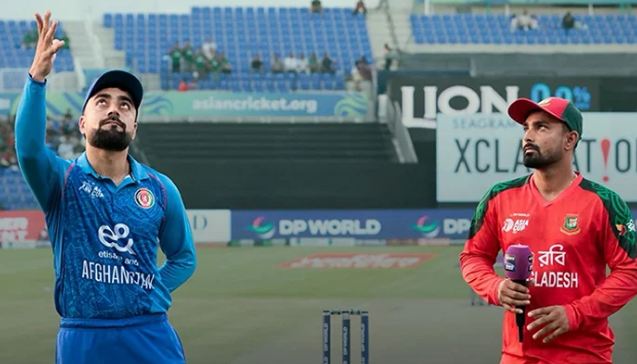
Asia Cup 2025: Bangladesh win toss, elect to bat first against Afghanistan

Asia Cup 2025: Bangladesh win toss, elect to bat first against Afghanistan

ABU DHABI: Bangladesh won the toss and elected to bat first against Afghanistan in the 9th match of the Asia Cup 2025 at Sheikh Zayed Cricket Stadium, Abu Dhabi, on Tuesday.

Playing XIs
Bangladesh: Tanzid Hasan Tamim, Saif Hassan, Litton Das(w/c), Towhid Hridoy, Nasum Ahmed, Nurul Hasan, Jaker Ali, Shamim Hossain, Rishad Hossain, Mustafizur Rahman, Taskin Ahmed

Afghanistan: Sediqullah Atal, Rahmanullah Gurbaz(w), Ibrahim Zadran, Mohammad Nabi, Gulbadin Naib, Azmatullah Omarzai, Karim Janat, Rashid Khan(c), Noor Ahmad, AM Ghazanfar, Fazalhaq Farooqi

Head-to-head
Afghanistan and Bangladesh have come face-to-face 12 times in T20Is, with the former boasting a dominant head-to-head record with seven victories, while the Tigers emerged victorious on five occasions.

Their most recent meeting came during the ICC Men’s T20 World Cup 2024 in Kingstown, where Afghanistan registered a narrow eight-run victory.

Matches: 12
Afghanistan: 7
Bangladesh: 5
Form Guide
The two teams enter the all-important Group B fixture with contrasting momentum in their favour as Bangladesh are coming off a seven-wicket defeat against Sri Lanka in their second match of the Asia Cup 2025, while Afghanistan thrashed Hong Kong by 94 runs in their solitary game of the ongoing continental tournament.

However, both teams have just one defeat in their last five completed T20Is.

Afghanistan: W, L, W, W, W (most recent first)

Bangladesh: L, W, NR, W, W

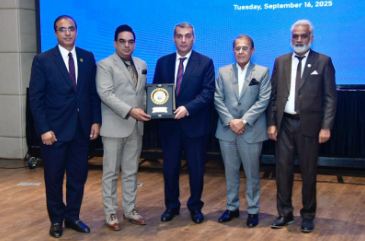
Azerbaijan–Pakistan joint chamber an economic bridge for trade expansion: President ICCI

Azerbaijan–Pakistan joint chamber an economic bridge for trade expansion: President ICCI

ISLAMABAD, SEPT 16 /DNA/ – Ambassador of Azerbaijan to Pakistan, Khazar Farhadov, has said that the private sector holds the key to transforming the deep-rooted brotherly relations between Pakistan and Azerbaijan into strong economic and commercial partnerships. He was addressing an awareness session titled “Online Trade Platform for Doing Business with Azerbaijan” held at the S.M. Munir Auditorium, Chamber House Islamabad.

He underlined that Pakistan and Azerbaijan are determined to expand cooperation across multiple sectors, with special emphasis on connectivity, trade, and investment. He further noted that increased air connectivity, five weekly flights from Lahore and two from Islamabad, is significantly enhancing business and people-to-people exchanges, adding that the frequency of flights will soon be increased to further boost the current $100 million trade volume. The Ambassador also expressed gratitude to the government, people, and media of Pakistan for extending diplomatic and moral support to his country during its war with Armenia.

Earlier, in his welcome remarks, Sardar Tahir Mehmood, President, Islamabad Chamber of Commerce & Industry (ICCI), said Pakistan greatly values its friendship with Azerbaijan and emphasized the need to translate political goodwill into robust economic partnerships. He said that the Pakistan–Azerbaijan Online Trade & Investment Platform will play a vital role in connecting exporters, importers, investors, and service providers from both countries. He explained that the platform would feature B2B matchmaking, e-contracting, secure payment gateways, logistics integration, and virtual exhibitions to eliminate physical barriers and reduce transaction costs. He assured ICCI’s full support in mobilizing trade delegations, exhibitions, and partnerships to unlock untapped potential.

Waqar Zafar Bakhtawari, President, Azerbaijan–Pakistan Joint Chamber of Commerce & Industry, in his detailed address, described the Chamber as an “economic bridge” between the two nations and stressed its pivotal role in building sustainable trade and investment linkages. He   emphasized that regular business-to-business engagement, joint trade exhibitions, and sector-specific collaborations are essential to unlock this potential. He also extended heartfelt appreciation to Ambassador Farhadov for his proactive role in fostering not only commercial partnerships but also cultural linkages that bring the two brotherly nations closer together.

Tariq Sadiq, Chairman ICCI Founder Group, recalled Azerbaijan’s consistent diplomatic and moral support for Pakistan and said that the session would help open new avenues of economic cooperation.

Babak Huseynli, Trade Facilitation Coordinator for Pakistan–Azerbaijan, shared his insights on the subject by expressing confidence that ties between the two countries will continue to grow and strengthen in the days to come.

Agha Haider Zain, Chief Coordinating Officer, Pakistan–Azerbaijan Technology Hub, through an impressive presentation, showcased the use of digital platforms for promoting trade and investment between the two countries.

In his vote of thanks, ICCI Senior Vice President Tahir Ayub reaffirmed the commitment to elevate Pakistan–Azerbaijan relations to new heights by fast-tracking the establishment of the Online Trade & Investment Platform. He said the initiative would serve as a landmark for regional connectivity, trade expansion, and shared prosperity.

The event concluded with a joint resolve to accelerate efforts for building stronger economic linkages. It was well attended by ICCI Vice President Mohammad Irfan Chaudhry, former ICCI Presidents Mian Shaukat Masud, Zafar Bakhtawar, Mian Akram Farid, executive members, and prominent business leaders of Islamabad.

Stay Connected

64FansLike
60FollowersFollow

Latest Reviews

Exchange Rates

USD - United States Dollar
EUR
1.14
GBP
1.33
AUD
0.69
CAD
0.70