Home Blog Page 413

PM Shehbaz arrives in Riyadh for Future Investment Initiative

PM Shehbaz arrives in Riyadh for Future Investment Initiative

RIYADH, OCT 27 /DNA/ – Prime Minister Muhammad Shehbaz Sharif arrived in Riyadh on Monday to participate in the 9th Edition of the Future Investment Initiative (FII), a premier global investment forum.

Upon his arrival at King Khalid International Airport, the Prime Minister was warmly received by Prince Mohammed bin Abdulrahman bin Abdulaziz, the Deputy Governor of Riyadh. The gesture underscores the close and fraternal relations between the Kingdom of Saudi Arabia and Pakistan.

Prime Minister Shehbaz Sharif is scheduled to attend the high-profile summit, which brings together world leaders, investors, and innovators to discuss the future of the global economy and investment opportunities.

The Prime Minister’s participation in the forum is expected to focus on attracting investment into key sectors of Pakistan’s economy and strengthening bilateral economic ties with Saudi Arabia.

Pakistan embassy in Ankara marks Kashmir Black Day

Pakistan embassy in Ankara marks Kashmir Black Day

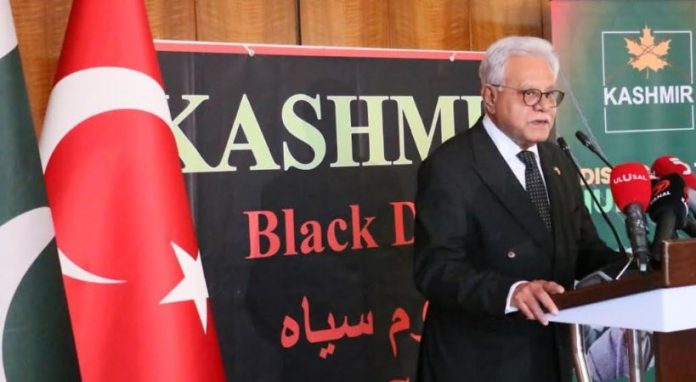
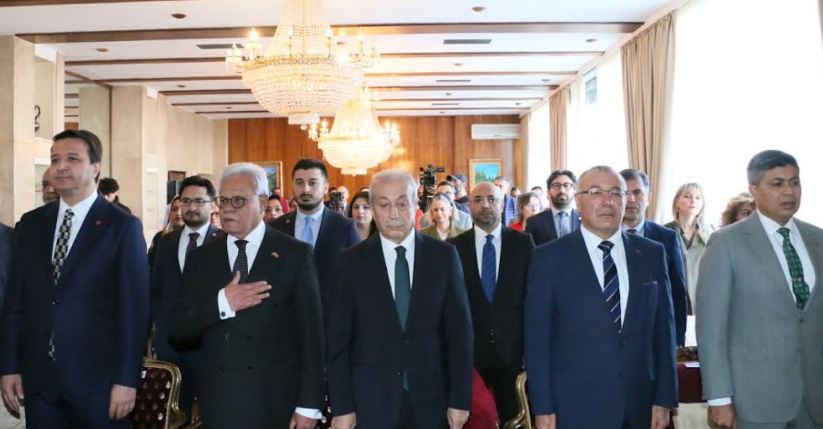
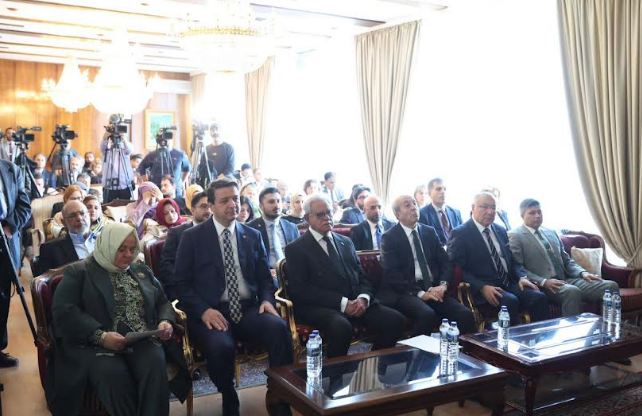
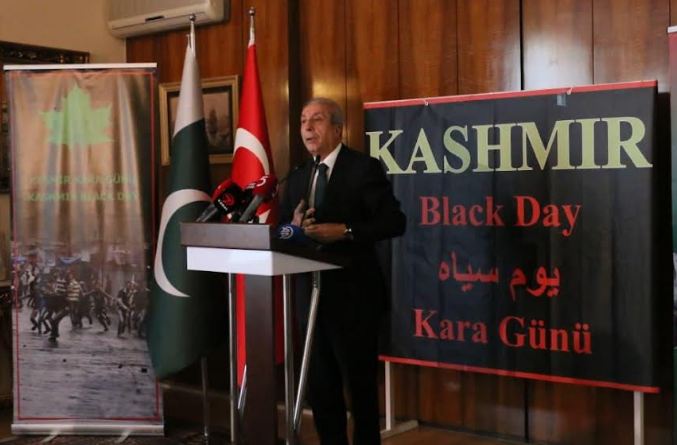
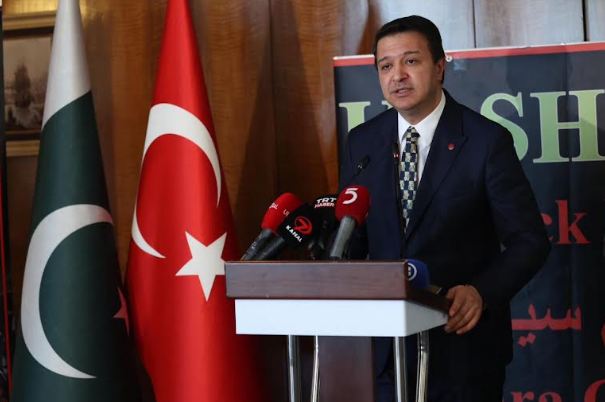
ANKARA, OCT 27 /DNA/ – The Embassy of Pakistan in Ankara organized an event to commemorate Kashmir Black Day. This year marks the completion of seventy-eight years of India’s illegal occupation of Jammu and Kashmir.

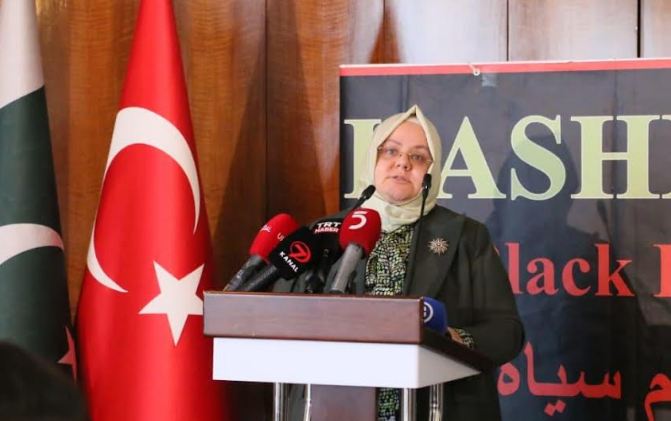
The event was attended by former Minister of Agriculture Mr. Mehmet Mehdi Eker, Chairperson Saadet Party, Member Parliament Mr. Mahmut Arıkan former Minister of Family and Social Services and Director General SESRIC Ms. Zehra Selçuk, President Geostrategic Foresight Institute General (R) Güray Alpar, as well as members of the diplomatic corps, media representatives, think tanks, and civil society.

In his remarks, Mr. Mehmet Mehdi Eker stated that the days of oppression and injustice in Indian Illegally Occupied Jammu and Kashmir (IIOJK) will inevitably come to an end, and the Kashmiri people will realize their inalienable right to self-determination. He emphasized that no amount of force can suppress a just cause, and the perseverance of the Kashmiri people stands as a symbol of their unyielding resolve for justice and freedom.

In his speech, Chairperson Saadet Party Member Parliament Mr. Mahmut Arıkan, emphasized that the Kashmir issue is not merely a political dispute but a question of justice, humanity and dignity. Stressing the need for greater Muslim unity and collective action, he noted that challenges such as those faced in Kashmir and Gaza underscore the urgency for the Muslim world to stand together in upholding justice and the rights of oppressed peoples. He called upon the international community, particularly the United Nations and the OIC, to play their due role in ending the ongoing atrocities in the Indian Illegally Occupied Jammu and Kashmir (IIOJK) and in facilitating a peaceful resolution in line with United Nations Security Council resolutions and the aspirations of the Kashmiri people.

In her address, Ms. Zehra Selçuk, reaffirmed the steadfast support of the Organization of Islamic Cooperation (OIC) for the legitimate struggle of the Kashmiri people. She underlined that the OIC has consistently condemned human rights violations in IIOJK and has called for the implementation of the relevant United Nations Security Council resolutions that guarantee the Kashmiri people their right to self-determination.

Mr. Guray Alpar, President Geostrategic Foresight Institute, emphasized that durable peace and stability in South Asia cannot be achieved without just resolution of the Jammu and Kashmir dispute. He observed that the persistence of the conflict not only undermines regional stability but also poses risks to global peace, calling for greater international engagement and respect for international norms.

In his address, Ambassador Dr. Yousaf Junaid stated that Kashmir Black Day marks one of the most tragic days in the history of South Asia — the day when India forcibly occupied Jammu and Kashmir in flagrant violation of international law and the will of the Kashmiri people. He elaborated on the grave human rights violations perpetrated by Indian occupation forces, including extrajudicial killings, arbitrary detentions, and efforts to alter the demographic composition of IIOJK.

Ambassador Junaid expressed profound gratitude to the people and government of Türkiye, particularly H.E. President Recep Tayyip Erdoğan, for their consistent and principled stance on the Jammu and Kashmir dispute and for raising the issue in the United Nations General Assembly. He also stated that for lasting peace in South Asia the Kashmir issue must be resolved according to the wishes and aspirations of Kashmiri people as per United Nations Security Council resolutions.

Field Marshal Asim Munir discusses regional issues with Jordan’s king

Field Marshal Asim Munir discusses regional issues with Jordan's king

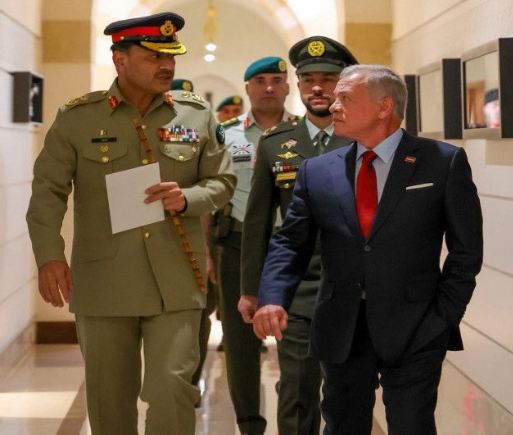
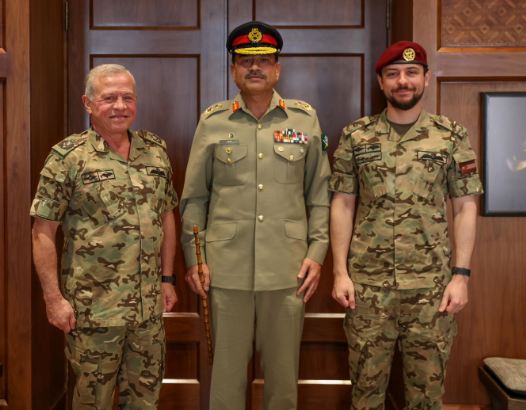
RAWALPINDI, OCT 27 /DNA/ – Field Marshal Syed Asim Munir, NI (M), HJ, Chief of Army Staff (COAS), who is on an official visit to the Hashemite Kingdom of Jordan, called on His Majesty King Abdullah II ibn Al Hussein, King of the Hashemite Kingdom of Jordan and the Supreme Commander of the Jordan Armed Forces.

His Royal Highness Crown Prince Al Hussein bin Abdullah II was also present during the meeting.

During the meeting, both dignitaries discussed matters of mutual interest, with particular focus on enhancing bilateral cooperation in defence and security, and exchanging perspectives on regional developments.

COAS conveyed warm regards from the people, Government, and Armed Forces of Pakistan to His Majesty the King and reaffirmed Pakistan’s commitment to deepening fraternal ties with Jordan. His Majesty appreciated the professionalism and contributions of the Pakistan Armed Forces towards regional peace and stability and expressed his desire to further strengthen defence collaboration between the two brotherly countries.

Earlier Field Marshal Asim Munir also called on Chairman of the Joint Chiefs of Staff of the Jordan Armed Forces (JAF), Major General Yousef Ahmed Al-Huneiti, at the General Headquarters, Amman. The Field Marshal was warmly welcomed and presented with a Guard of Honour at his arrival at the General Headquarters.

During the visit, both dignitaries reaffirmed the deep-rooted and historic ties between the Armed Forces of Pakistan and Jordan. Major General Yousef Ahmed Al-Huneiti also acknowledged Pakistan Armed Forces’ remarkable contributions towards peace and regional security.

7,500 police personnel deployed for Pakistan–South Africa ODI series: CPO

SPORTS DESK

FAISALABAD, Oct 27 City Police Officer (CPO) Sahibzada Bilal Umar announced a comprehensive security plan for the upcoming Pakistan–South Africa One-Day International (ODI) cricket series to be held in Faisalabad, aimed at ensuring foolproof security arrangements for players, officials, and spectators.

During a media briefing at the Police Lines Complex, he revealed that three ODI matches between Pakistan and South Africa are scheduled for November 04, 06, and 08 at Iqbal Stadium Faisalabad. To ensure the smooth and secure conduct of the event, the entire city police force is on high alert.

CPO Bilal Umar stated that more than 7,500 police officers and personnel would be deployed across the city. This includes the deployment of senior officers such as SPs, DSPs, Inspectors, SHOs, and constables to oversee security operations.

Security around Iqbal Stadium will be established in three layers, with additional security points set up at key locations including Faisalabad International Airport, Serena Hotel, and designated routes to and from the stadium.

To enhance vigilance, elite units such as the Dolphin Squad, Police Response Unit, and Elite Force will conduct thorough and continuous patrols. Additionally, lady constables will be assigned to handle security and checking of female spectators, he added.

CPO Bilal Umar also disclosed that additional force from the Punjab Constabulary and neighboring districts had been requisitioned to strengthen security arrangements, ensuring zero-compromise security throughout the series. The Punjab Safe Cities Authority will monitor key locations, including the stadium and surrounding areas, through a network of CCTV cameras to ensure real-time surveillance.

To maintain smooth vehicular flow, more than 1,000 traffic wardens and officers will be deployed across the city. Designated parking areas have been arranged at the Irrigation Department Ground (opposite State Bank), Dhobi Ghat Ground, and the University of Agriculture Neza Bazi (tent-pegging) Ground, from where shuttle services will transport cricket fans to Iqbal Stadium.

He emphasized that the safety of both players and spectators would be ensured, with public convenience being a top priority during the implementation of the security plan.

CPO Bilal Umar called on citizens to cooperate fully with the police and follow traffic and security guidelines to ensure the success of the international cricket event. He concluded by reaffirming Faisalabad Police’s commitment to safeguarding the visiting teams and maintaining peace and order, stating that the Pakistan–South Africa ODI series is a moment of pride for both the city and the country’s return to vibrant international cricket.

Pakistan eye strong start in  T20I series against South Africa

DNA

ISLAMABAD, Oct 27 Pakistan will take on South Africa in a three-match T20I series, with the first T20I set to take place at the Rawalpindi Cricket Stadium on Tuesday, October 28.

The second and third T20Is will be played at the Gaddafi Stadium in Lahore on October 31 and November 1, respectively, said a press release.

In all three T20Is, the toss will take place at 7.30 pm, with the first ball to be bowled at 8 pm local time.

The T20Is will be followed by three ODIs, which will be staged at the Iqbal Stadium in Faisalabad on November 4, 6, and 8.

Before the T20I series, both sides featured in the two-match Test series – part of the ICC World Test Championship 2025-27, which ended 1-1. The hosts won the first Test by 93 runs at the Gaddafi Stadium, while the tourists fought back to win the second Test at the Rawalpindi Cricket Stadium by eight wickets.

In T20Is, both sides have faced each other 24 times, winning 12 each. In three T20Is played in Pakistan, the hosts have won twice, while South Africa have emerged victorious once. For Pakistan, in the current T20I squad, Babar Azam has scored 447 runs in 13 outings against South Africa, while Shaheen Shah Afridi has grabbed 13 wickets in 12 matches.

Babar, who has featured in 128 T20I matches for Pakistan, requires eight runs to become the leading run-getter in this format in the world.

Salman Ali Agha, while talking to PCB Digital, said, “I think we have a very interesting and exciting side, with a few comebacks and a few new faces as well. I am very excited to lead this team, and we really hope to have a great series.

“We had a great series against Bangladesh at home and I am hopeful for good results in the upcoming series as well. We just want to execute our plans for a longer period. As I always say, we have a great team, a team that can beat any side. Obviously, South Africa are a very good side; they have a few misses, but still possess very good talent.”

During the first T20I, the Pakistan team will don specially designed pink-themed kits to support PCB’s initiative with Pink Ribbon Pakistan in creating awareness about breast cancer.

On broadcast, cricket fans in Pakistan will be able to watch the series live in high definition on A Sports and Ten Sports, while live streaming will be available on Tapmad and Tamasha.

Viewers around the world can watch the action live on Willow TV (North America), SuperSport (sub-Saharan Africa), Dialog TV (Sri Lanka), T Sports (Bangladesh) and Cricbuzz (Middle East and North Africa). 15-member T20I squad: Salman Ali Agha (captain), Abdul Samad, Abrar Ahmed, Babar Azam, Faheem Ashraf, Hasan Nawaz, Mohammad Nawaz, Mohammad Wasim Jnr, Mohammad Salman Mirza, Naseem Shah, Sahibzada Farhan, Saim Ayub, Shaheen Shah Afridi, Usman Khan (wicket-keeper), Usman Tar

Istanbul ranks among Europe’s top city breaks for travelers

Istanbul ranks among Europe's top city breaks for travelers

KARACHI, OCT 27 /DNA/ – Set across Asia and Europe along the Bosphorus Strait, İstanbul continues to charm travellers with its historic landmarks, vibrant culture, and dynamic culinary scene. The city welcomed 13.5 million visitors in the first nine months of 2025 and was recently ranked among Europe’s top five city breaks by consumer champion Which?, while Condé Nast Traveller readers also named it one of the best family-friendly destinations. As autumn arrives, İstanbul’s timeless appeal makes it an ideal getaway for those seeking both cultural discovery and modern comfort.

With its rich heritage shaped by empires over millennia, İstanbul seamlessly blends history with contemporary life. The UNESCO-listed Historical Peninsula, home to the Hagia Sophia, Blue Mosque, Basilica Cistern, and Topkapı Palace, remains a living testament to the city’s past. Nearby, the Grand Bazaar and Spice Bazaar immerse visitors in a world of colours and aromas, echoing İstanbul’s centuries-old trading spirit.

Beyond its historic core, the Bosphorus Strait offers a spectacular experience unique to the world’s only city spanning two continents. A ferry ride reveals panoramic views of palaces, mosques, and elegant waterfront mansions, while neighbourhoods like Karaköy, Galataport, and İstiklal Street pulse with art, music, and café culture. Venues such as İstanbul Modern, Arter, and the Atatürk Cultural Center further highlight the city’s creative vibrancy.

This season, İstanbul’s cultural calendar is packed with major exhibitions and festivals. Highlights include The Art of James Cameron at the İstanbul Cinema Museum, The Haunted Eye by Steve McCurry, the İstanbul Biennial, and the 29th İstanbul Theatre Festival, and Ars Electronica at Zorlu PSM. Visitors can also indulge in the city’s famed cuisine, from traditional breakfasts and bustling street food to MICHELIN-starred dining. With its unique blend of past and present, İstanbul continues to bridge continents and capture hearts.

Japan honors Pakistani woman for promoting cultural ties

Japan honors Pakistani woman for promoting cultural ties

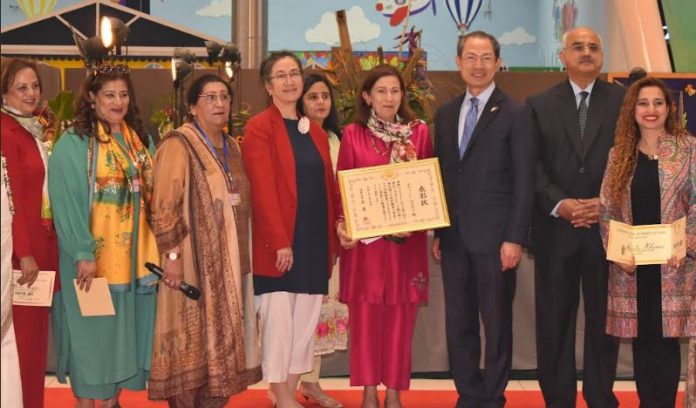
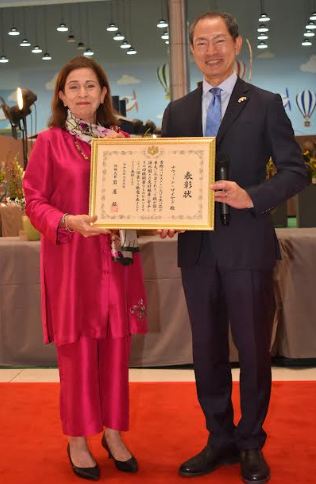
ISLAMABAD, OCT 27 /DNA/ – The Government of Japan has conferred Japanese Foreign Minister’s Commendations 2025 upon Ms. Neveen Syed, Chairperson of the Lahore Floritage Sogetsu Study Groupin recognition of her significant contributionstowards the promotion of cultural relations between Japan and Pakistan. On August 28 this year, the Ministry of Foreign Affairs of Japan had announced the conferment of award to Ms. Neveen.

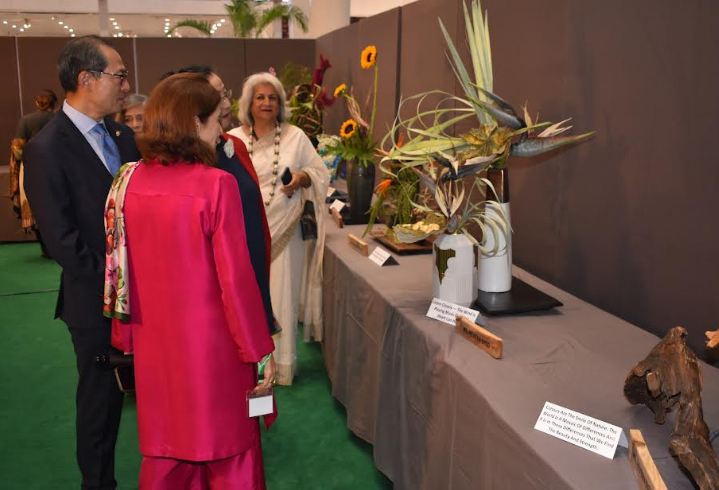
Lahore Floritage Sogetsu Study Group is a cultural organisation of Japanese-style flower arrangement, Ikebana.

The Ambassador of Japan to Pakistan, H.E. Mr. Akamatsu Shuichi, on behalf of the Minister for Foreign Affairs of Japan, presented the Commendations to Ms. Neveen on the occasion of an annual Ikebana flower arrangement exhibition hosted by the Lahore Floritage Sogetsu Study Group.

Ms. Neveen Syed, Chairperson of the Lahore Floritage Sogetsu Study Group, has been working selflessly and with full dedication to spread Japanese culture by providing opportunities to introduce Japanese culture to Pakistani people by holding Ikebanaflower arrangement classes and exhibitions in Pakistan.

While congratulating Ms. Neveen upon receiving the commendations, Ambassador Akamatsusaid that the conferment of Japanese Foreign Minister’s Commendationsis the acknowledgement of her efforts and dedication towards enhanced cultural relations and people-to-people interactions between Japan and Pakistan. In addition, Ambassador expressed his expectation that Ms. Neveen continues to play an essential role in the promotion of Ikebana in Pakistan and has acted as a bridge of friendship and goodwill between the two countries.

Finance Minister Aurangzeb lauds KTrade’s role in boosting investment culture

Finance Minister Aurangzeb lauds KTrade’s role in boosting investment culture

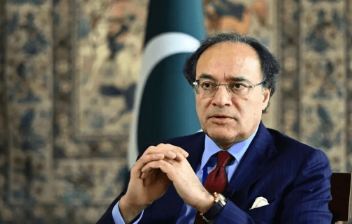
ISLAMABAD, OCT 27 /DNA/ – During his recent television interview, Finance Minister Muhammad Aurangzeb highlighted Pakistan’s improving economic indicators and emphasized the growing confidence of investors in the national economy.

President Trump embarks on far East Tour

President Trump embarks on far East Tour

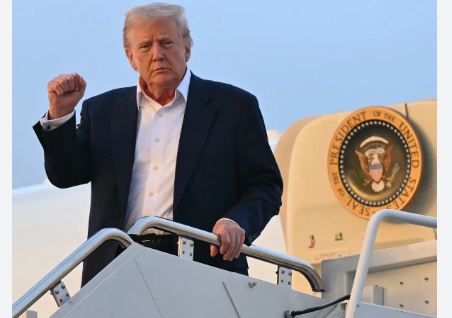
U.S. President Donald Trump has embarked on a high-profile tour of the Far East, with stops including Malaysia, Japan, South Korea, and the Philippines, as part of a renewed push to strengthen America’s economic and security partnerships in the Indo-Pacific region. The visit marks Trump’s first extensive trip to Southeast Asia since leaving office and comes amid a shifting geopolitical environment defined by China’s growing influence, regional trade tensions, and evolving security alliances.

The tour began in Tokyo, where President Trump met with Japanese Prime Minister Fumio Kishida to discuss trade, defense cooperation, and maritime security in the East China Sea. Both leaders reaffirmed their commitment to maintaining a “free and open Indo-Pacific,” emphasizing the importance of upholding international law in territorial disputes. Trump praised Japan’s role as a “key U.S. ally” and expressed appreciation for its contributions to regional stability.

From Japan, Trump traveled to Seoul, where he held talks with South Korean President Yoon Suk-yeol. The discussions focused on the North Korean nuclear issue, joint defense exercises, and strengthening trilateral cooperation with Japan. Addressing a business forum in Seoul, Trump highlighted the potential for expanded U.S.-Korea trade, stating that “economic partnership and security cooperation go hand in hand.” He reiterated his belief that peace on the Korean Peninsula could only be achieved through “strength, deterrence, and diplomacy grounded in mutual respect.”

The centerpiece of Trump’s trip, however, is his visit to Malaysia, where he met with Prime Minister Anwar Ibrahim and key members of the Malaysian business community. In Kuala Lumpur, President Trump underscored the importance of enhancing trade and investment ties between the U.S. and ASEAN economies. He also emphasized the role of Malaysia as a strategic partner in maintaining freedom of navigation in the South China Sea.

Speaking at a joint press conference, Trump said, “The United States values its friendship with Malaysia and supports its role as a regional leader committed to peace and prosperity. Together, we can ensure that the Indo-Pacific remains open, secure, and free from coercion.”

The visit to the Philippines will conclude Trump’s regional tour, where discussions are expected to center on maritime security, counterterrorism, and the strengthening of defense cooperation. The U.S. has been keen to reassure allies in Southeast Asia of its continued presence and engagement amid China’s expanding military and economic footprint in the region.

Analysts see the trip as a move by Trump to reaffirm his global diplomatic credentials and rebuild international relationships that were strained during his presidency. The Far East tour also signals renewed U.S. interest in balancing China’s influence by deepening partnerships with regional democracies and emerging economies.

While the trip is largely symbolic, it reflects Washington’s ongoing recognition of the Indo-Pacific as the world’s most dynamic and strategically critical region—where economic growth, energy routes, and geopolitical rivalries intersect. President Trump’s engagements in Asia reaffirm that the United States remains a pivotal player in shaping the region’s future trajectory.

From guns to gateways

From guns to gateways

F. Z. Khan

Pakistan stands today at a crucial crossroads; one that defines not only its own future but the destiny of an entire region long scarred by mistrust, manipulation, and missed opportunities. As the world order shifts and economic geography replaces military geography, Pakistan is increasingly projecting itself as a moderate, forward-looking nation seeking peace through diplomacy and strength through development. It is a vision built not on sentiment but on sober realism: a recognition that Pakistan’s long-term security and prosperity are inseparable from regional stability.

At the heart of this vision lies a simple truth that the age of zero-sum games is over. The 21st century does not reward confrontation; it rewards cooperation. The real strength of a state today lies not in its ability to fight others’ wars but in its capacity to serve as a bridge and a connective hub between South Asia, Central Asia, and the Middle East. Pakistan’s geographic centrality and importance gives it a unique opportunity to play precisely this role, transforming what was once seen as a fault line into a lifeline of trade, energy, and connectivity. Such a vision faces a deliberate and dangerous challenge. Across our western and eastern borders, there are forces hell bent upon keeping this region trapped in the logic of the past. The use of Afghan soil by hostile intelligence networks, specifically Indians to foment terrorism inside Pakistan is not a matter of speculation rather it is a documented reality, which have been repeatedly highlighted at all international forums, and through hard evidence shared with the world. It is no coincidence that whenever Pakistan moves closer to stability or economic progress, a fresh wave of violence is triggered in its border regions or urban centers.

For Pakistan, a peaceful, democratic, and representative Afghanistan is not a matter of charity or ideology. It is a matter of survival and mutual security. We know, better than the most, the human and economic cost of instability in our neighborhood. For four decades, Pakistan has hosted millions of Afghan refugees, borne the brunt of cross-border militancy, and sacrificed over 80,000 lives in its war against terror. Few nations have paid such a price for global peace, yet Pakistan continues to be portrayed through the prism of suspicion rather than recognition.

The world must understand, and so must India, that a stable Afghanistan is not an option; it is a necessity. For us the dream of regional integration cannot come true without Kabul’s cooperation. But this cooperation can only thrive if all external actors, particularly India, stop viewing Afghanistan as a chessboard to undermine Pakistan. For years, India has sought to exploit Afghan territory to finance, train, and facilitate anti-Pakistan terror groups such as the TTP and BLA. The evidence of Indian involvement, from the arrest of serving RAW officer to intelligence intercepts shared with the UN, is irrefutable. Such policies are not only reckless but self-defeating. A destabilized Pakistan does not translate into a stronger India; it leads instead to a more volatile South Asia, where the contagion of terrorism and extremism knows no borders.

It is time for New Delhi to understand that Pakistan’s pursuit of peace is not a weakness; it is a strategic choice born of maturity. The new Great Game is not played with guns and proxies but with corridors, currencies, and communication lines. China’s BRI and CPEC exemplify how regional connectivity can turn old rivalries into opportunities. These projects are not directed against any country; these are pathways to shared prosperity. What Pakistan seeks is to transform its geography into an engine of cooperation linking Gwadar to Kashgar, Karachi to Kabul, and Lahore to Tashkent.

India’s policymakers, if they look beyond narrow politics, would realize that their own economic aspirations are better served through engagement, not enmity. The Indian economy, too, depends on secure trade routes, energy access, and stable borders. Persistent hostility towards Pakistan only drains resources, breeds extremism, and diverts attention from poverty, climate change, and development. History offers a warning. When nations invest in division rather than dialogue, they find themselves prisoners of their own propaganda. South Asia today remains one of the least integrated regions in the world. Its collective GDP could multiply if trade and transit barriers were reduced, if cultural and academic exchanges were encouraged, and if mistrust were replaced by mutual respect. Pakistan, under successive governments and military leadership, has consistently signaled its willingness to engage — but peace cannot be a one-sided dream.

The message to our neighbors, therefore, is clear: the path of fomenting terrorism and proxy wars must end. Using Afghan soil to destabilize Pakistan serves no one. The chaos that spills across borders does not distinguish between ethnicity or ideology. It breeds a generation lost to hate, hunger, and hopelessness. Pakistan’s vision is different. It is a vision of “geo-economics” replacing “geo-politics”; of roads replacing trenches; of dialogue replacing diatribe. Our focus is on building internal resilience strengthening governance, empowering youth, promoting trade and expanding digital connectivity. This is how modern nations rise not through confrontation but through cooperation.

Yet, for peace to prevail, intentions must be matched with actions. Pakistan will continue to protect its sovereignty with full resolve. The Armed Forces of Pakistan, our intelligence agencies, and security apparatuses have demonstrated time and again that no external force can undermine the will of a united nation. But equally, Pakistan remains committed to working with all its neighbors including India and Afghanistan in order to create a regional order based on mutual respect, shared growth, and collective security.

It is time for the Indians, and indeed for all regional actors, to rethink their strategies. The age of secret wars and proxy networks is over. The world is moving towards connectivity, digital trade, and cooperative security. Those who cling to the politics of disruption will only isolate themselves. Pakistan’s message, therefore, is not one of hostility but of hope. We extend a hand of peace — firm, confident, and principled. But this hand cannot remain extended forever to those who keep it chained in suspicion. The road ahead can either lead to endless rivalry or to shared renewal. The choice lies not just with Pakistan but with all of South Asia.

(The writer is a freelance columnist. He can be reached at [email protected])

Stay Connected

64FansLike
60FollowersFollow

Latest Reviews

Exchange Rates

USD - United States Dollar
EUR
1.14
GBP
1.34
AUD
0.69
CAD
0.70