Pakistan remained among world’s most climate-affected nations “through no fault of its own,” says premier
DNA
ISLAMABAD: Prime Minister Shehbaz Sharif on Tuesday said Pakistan had sustained economic losses worth $130 billion due to climate-induced disasters, despite contributing less than a fraction of 1% to global carbon emissions.
Speaking during a panel discussion at the ninth edition of the Future Investment Initiative (FII9) conference in Riyadh, the prime minister said Pakistan remained among the world’s most climate-affected nations “through no fault of its own.”
“Our emission is less than a fraction of 1% and yet in 2022 we faced devastating [cloudbursts], floods and storms,” he said.
He recalled that the 2022 floods had submerged vast areas of land and destroyed crops, forcing the country to rely on external borrowing for reconstruction.
“It is like going up the ladder and then coming back down,” he said, lamenting that the gains made by the nation were reversed by repeated natural calamities.
The premier noted that Pakistan’s only option to rebuild flood-hit areas was through loans, underscoring the country’s economic vulnerability to climate shocks.
However, he said that borrowings for rebuilding were not the solution, saying that the country was making efforts to “stand up on our own feet”.
PM Shehbaz also called on the global community to share the burden and come to the rescue of humanity.
Acknowledging that Pakistan had made mistakes in the past, PM Shehbaz said the government was now implementing “robust and deep-rooted reforms” aimed at transforming governance.
He highlighted that the Federal Board of Revenue (FBR) had been completely digitalised and reaffirmed his government’s resolve to combat corruption “with full might.”
The prime minister further pointed out that Pakistan’s youthful population — which makes up around 60% of the total — was both a challenge and an opportunity.
He urged the global community to support developing nations like Pakistan that bear the brunt of climate disasters despite contributing minimally to the crisis.
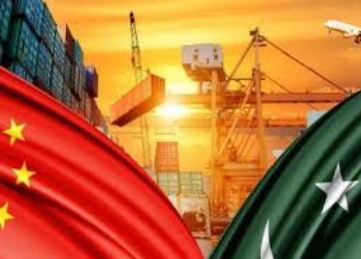
ISLAMABAD, 28 OCT (DNA) — Precise Development (HK) Limited of China signed an agreement with the Pakistan China Joint Chamber of Commerce and Industry (PCJCCI) in marking a significant step toward enhancing bilateral trade, investment, and economic collaboration between the two countries.
Under the agreement, the Chinese enterprise, will represent PCJCCI in China and at the International Trade Center located in Shenzhen, China, to enhance bilateral collaboration in trade, technology, investment, and industrial partnerships, Gwadar Pro reported on Tuesday.
Key components of the agreement include Precise Development (HK) Limited serving as the official authorized representative of PCJCCI in China, and facilitating coordination with government bodies, enterprises, and business associations.
The agreement also envisions the establishment of a Sino-Pak Cooperation Exchange Platform to promote B2B matchmaking, policy consultation, investment promotion, and market research between Chinese and Pakistani enterprises.
Through this partnership, both organizations aim to strengthen economic collaboration across various sectors including information technology, renewable energy, textiles, logistics, and consumer goods and build a long-term foundation for sustainable development and mutual prosperity between Pakistan and China.— DNA
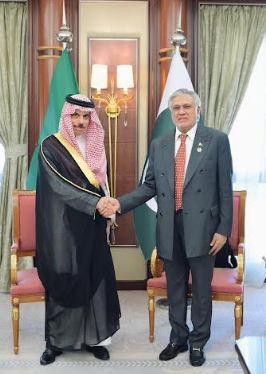
RIYADH: Deputy Prime Minister and Foreign Minister Senator Mohammad Ishaq Dar on Monday held a meeting with Saudi Foreign Minister Prince Faisal bin Farhan in Riyadh, where the two leaders discussed a wide range of issues concerning bilateral relations, regional developments, and cooperation at multilateral fora.
According to a statement, both sides reaffirmed their shared commitment to further deepening the longstanding Pak-Saudi partnership and strengthening the bonds of brotherhood and friendship between the two countries. They expressed satisfaction over the ongoing cooperation in diverse fields and agreed to enhance collaboration in political, economic, investment, and security domains.
The two foreign ministers also exchanged views on important regional and international issues, including the situation in Gaza, emphasizing the need for concerted diplomatic efforts to address humanitarian challenges and ensure lasting peace in the Middle East.
Senator Ishaq Dar congratulated Prince Faisal bin Farhan and the leadership of the Kingdom on the successful hosting of the Future Investment Initiative Forum, praising Saudi Arabia’s dynamic role in shaping global economic and investment trends. He also thanked the Saudi government for its warm hospitality.
Both sides reaffirmed their resolve to continue working closely for peace, stability, and prosperity in the region, while maintaining strong coordination at platforms such as the United Nations and the Organisation of Islamic Cooperation (OIC).
Pakistan and Bangladesh are two nations bound by shared faith, culture, and history. Emerging from the same ideological roots, both countries have realized over time that lasting peace, prosperity, and regional stability depend upon mutual respect, constructive engagement, and especially strong defence and security cooperation.
Recently, a significant development has taken place between the two countries. Chairman Joint Chiefs of Staff Committee (CJCSC) General Sahir Shamshad Mirza undertook an official visit to Bangladesh, where he met with H.E. Chief Adviser Dr. Muhammad Yunus, Admiral Mohammad Nazmul Hassan, Chief of Naval Staff, Air Chief Marshal Hasan Mahmood Khan, Chief of Air Staff and Lieutenant General S. M. Kamrul Hassan, Principal Staff Officer (PSO), Armed Forces Division of Bangladesh. During the separately-held meetings, both sides held detailed discussion on the evolving global and regional environment and security situation and recognized the importance of strengthening bilateral defence and security cooperation. The Chairman JCSC reaffirmed Pakistan’s appreciation for its longstanding fraternal ties with Bangladesh and highlighted the shared resolve to further deepen these relations on the basis of sovereign equality and mutual respect. Both sides expressed optimism about improving defence and security collaboration and reaffirmed their commitment to expanding military-to-military engagements and related initiatives.
Both countries reaffirmed their commitment to strengthening ties based on sovereignty, equality, and mutual respect. General Sahir Shamshad Mirza, NI, NI (M), Chairman Joint Chiefs of Staff Committee (CJCSC) also visited the School of Infantry and Tactics in Sylhet, where he addressed faculty members and students, highlighting the importance of modern military training and joint learning. The Bangladeshi civil and military leadership lauded the professionalism of the Pakistan Armed Forces and acknowledged their sacrifices and achievements in the global fight against terrorism.
Both sides expressed their resolve to expand military collaboration, enhance joint exercises, and promote counter-terrorism cooperation and technological exchanges. This renewed engagement holds particular importance in the evolving strategic environment of South Asia, where both nations occupy key geopolitical positions Pakistan at the crossroads of Central and South Asia, and Bangladesh at the gateway to the Bay of Bengal and the Indian Ocean. Together, they can serve as a bridge for regional peace and economic connectivity.
Pakistan has consistently emphasized that South Asia’s prosperity lies not in confrontation but in cooperation and shared development. The strengthening of defence ties with Bangladesh reflects this broader vision of peace, mutual understanding, and respect for each country’s sovereignty.
As Pakistan continues to bolster its regional partnerships, Bangladesh is equally focused on diversifying its strategic relationships. The renewed defence cooperation between the two countries reflects an evolving alignment that could contribute to greater regional stability and collective security. Both sides agreed that sustained dialogue and regular exchanges would further reinforce the partnership, opening new avenues for joint defence development, training initiatives, and enhanced interoperability between the two-armed forces.
The strengthening of Pakistan-Bangladesh defence ties signifies a maturing partnership rooted in mutual trust and respect. With increased cooperation across military, naval, and air domains, the collaboration not only enhances bilateral relations but also contributes to a more stable and interconnected South Asian security landscape
General Sahir Shamshad Mirza’s visit is not just a military engagement but also a symbol of diplomatic reconciliation. His gesture of laying a wreath at the Shikha Anirban (Eternal Flame) monument in Dhaka symbolizes remembrance, respect, and a new beginning turning a page toward a more cooperative and forward-looking relationship.
As the world enters a new era of geopolitical realignments, it is vital for both Pakistan and Bangladesh to move beyond historical differences and work toward a shared future. Collaborative ventures in defence industries, cyber security, naval operations, and counterterrorism could significantly benefit both sides.
In essence, this visit marks a new chapter in Pakistan–Bangladesh relations, one rooted in friendship, mutual trust, and shared aspirations for peace and progress. If this momentum continues, both nations can emerge not only as guarantors of regional security but also as role models of Muslim unity and strategic cooperation in the modern world.
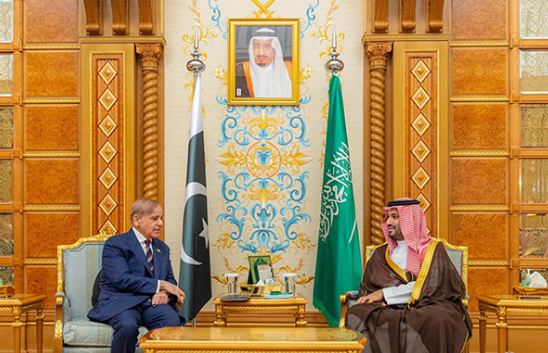
ISLAMABAD, OCT 28 /DNA/ – Based on the depth of the historic partnership between the Kingdom of Saudi Arabia and the Islamic Republic of Pakistan, which has spanned nearly eight decades, and based on the strong bonds of brotherhood and Islamic solidarity that unite the leadership of both nations, His Royal Highness Prince Mohammed bin Salman bin Abdulaziz Al Saud, Crown Prince and Prime Minister of the Kingdom of Saudi Arabia and His Excellency Muhammad Shehbaz Sharif, Prime Minister of the Islamic Republic of Pakistan, agreed during their meeting held in Riyadh on Monday 5 JamadaAl-Awwal 1447H, corresponding to October 27, 2025 to launch an Economic Cooperation Framework between the Kingdom of Saudi Arabia and the Islamic Republic of Pakistan. This framework is based on the two countries’ shared economic interests and reaffirms their mutual desire to strengthen trade and investment relations to serve their common interests.
As part of the framework several strategic and high-impact projects will be discussed in the economic, trade, investment, and development fields that will contribute to strengthening cooperation between the two governments, enhancing the pivotal role of the private sector, and increasing trade exchange between the two countries. Priority sectors include energy, industry, mining, information technology, tourism, agriculture, and food security. Both sides are currently studying several joint economic projects, including signing a Memorandum of Understanding for the electricity interconnection project between the Kingdom and Pakistan, in addition to assigning of a Memorandum of Understanding for cooperation in the field of energy between the two nations.
This framework represents an extension of both countries’ efforts to strengthen their fraternal relations and reaffirms their shared vision toward building a sustainable partnership across various economic, trade, and investment fields — in a manner that fulfills the aspirations of their leaderships and the brotherly peoples of both nations, and serves their mutual interests. The leaders of the two countries also look forward to convening the meeting of the Saudi- Pakistani Supreme Coordination Council.
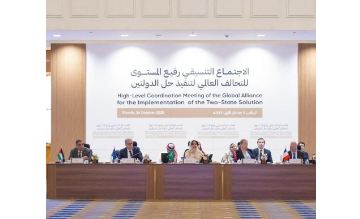
RIYADH, OCT 28 /DNA/ – State of Palestine Participates in the High-Level Meeting of International Coalition for the Implementation of the Two-State Solution in Riyadh.
The State of Palestine took part in the High-Level Meeting of the International Coalition for the Implementation of the Two-State Solution, held in Riyadh under the chairmanship of the Kingdom of Saudi Arabia, with the participation of the European Union, Norway, and representatives from over 40 countries and organizations.
Representing Palestine, Dr. Omar Awadallah, Deputy Minister for Political Affairs, emphasized the need to end the Israeli occupation and implement the two-state solution based on international law and UN resolutions.
The meeting highlighted efforts to support the Palestinian Authority, address the humanitarian situation in Gaza, and reaffirm the PLO’s central role as the legitimate representative of the Palestinian people.
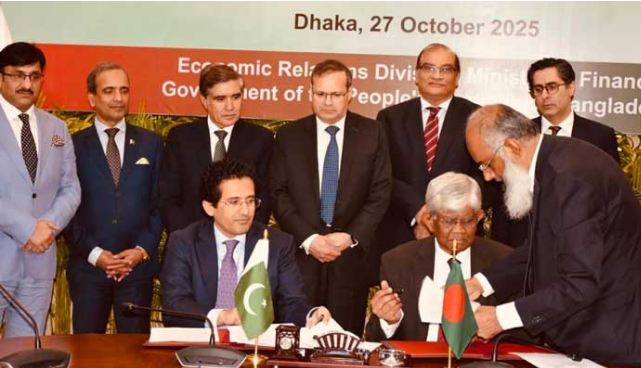
ISLAMABAD: Pakistan and Bangladesh have revived their long-stalled economic partnership after two decades, agreeing to expand cooperation in trade, investment, and regional connectivity during the 9th Joint Economic Commission (JEC) meeting held in Dhaka, The News reported on Tuesday.
The session — the first since 2005 — was co-chaired by Pakistan’s Federal Minister for Petroleum Ali Pervaiz Malik and Adviser for Finance to the Government of Bangladesh Dr Salehuddin.
Both sides signed the Agreed Minutes of the JEC, which outlined broad cooperation in trade, energy, industry, agriculture, education, health, tourism, IT, and climate change.
A major breakthrough came with the signing of a Memorandum of Understanding on Halal Trade Cooperation between the Pakistan Halal Authority and the Bangladesh Standards and Testing Institute, opening new opportunities for joint certification and exports of Halal products to global markets.
In a significant offer to strengthen logistics links, Pakistan proposed the use of Karachi Port Trust (KPT) as a regional trade gateway for Bangladesh’s commerce with China and Central Asian countries.
Both countries also agreed to work toward establishing direct air connectivity, which is seen as crucial for boosting tourism and business exchanges.
Pakistan announced the creation of a Pakistan-Bangladesh Knowledge Corridor, including 500 fully funded scholarships for Bangladeshi students, along with an expansion of technical training slots under the Pakistan Technical Assistance Programme from five to 25.
The two sides agreed to enhance cooperation in medical and religious tourism, promote cultural exchanges, and set up Joint Working Groups on trade, maritime affairs, and information technology to ensure sustained collaboration.
A Joint Working Group on Trade will meet soon to explore a concessionary trade arrangement and mechanisms for facilitating two-way commerce.
The meeting, held in a spirit of friendship and mutual respect, reaffirmed the shared commitment of both nations to deepening economic integration and regional stability.
Federal Minister Malik thanked the government of Bangladesh for its hospitality, expressing optimism that the renewed engagement would pave the way for a new era of Pakistan-Bangladesh economic cooperation.
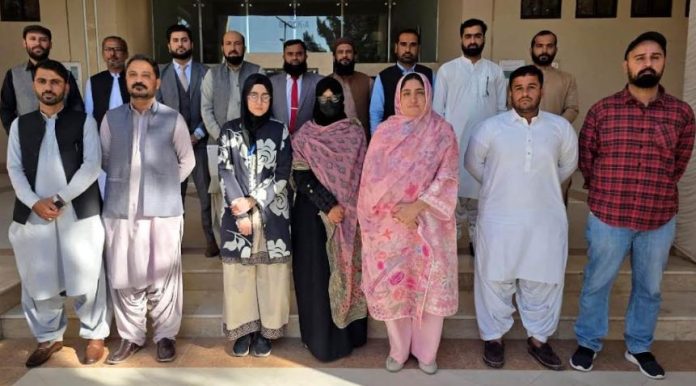
Islamabad/Quetta, Oct 28 /DNA/ – The Higher Education Commission (HEC), Pakistan conducted a capacity building and follow-up deliberative session on ‘Higher Education Statistics (HES) and Affiliated Colleges Data’ at Balochistan University of Information Technology, Engineering and Management Sciences (BUITEMS), Quetta. The session was organised by HEC’s Higher Education Data Repository (HEDR) Division for the focal persons of Higher Education Institutions (HEIs) across Balochistan.
The two-day activity aimed to provide comprehensive support to focal persons in ensuring the accuracy, consistency, and timely submission of data for the fiscal years 2023–24 and 2024–25.
The first day of the session focused on enhancing participants’ understanding of HES data templates, validation mechanisms, and submission procedures. The HEDR team conducted hands-on demonstrations, guiding representatives from public and private HEIs through data entry processes, reporting standards, and error rectification techniques. The session participants appreciated the practical approach and clarity of the training.
On the second day, the focus shifted to affiliated colleges. The HEDR team provided one-on-one technical assistance, addressing institution-specific challenges and offering on-spot troubleshooting to facilitate data completion. The session enabled HEIs to identify pending areas, clarify data requirements, and progress toward timely submission.
This initiative significantly contributed to improving the data reporting capacity of HEIs and their affiliated colleges, reaffirming HEDR’s commitment to strengthening the national Higher Education Statistics framework across Pakistan.
QUETTA, OCT 27 (APP/DNA): Governor Balochistan Jaffar Khan Mandokhel on Monday said that the 17th National Workshop (NW) Balochistan is being held to pave the way for a better understanding of issues at both the national and provincial levels.
While addressing at the participants of the National Workshop , he said that the main objective of the National Workshop Balochistan is to bring together selected people of the society on a forum, develop their skills and hone their abilities so that they could contribute fully in their respective fields, which will ultimately benefit the country and the nation.
He said that after receiving proper education and training, there is also an urgent need to take practical steps for national unity and national integrity because real knowledge is the one that could bring positive and constructive changes in the society.
He hoped that the participants of this workshop would play a more dynamic and effective role in promoting sustainable peace, harmony, tolerance and national spirit in the country and the provinces.
The Governor said that all of participants are very fortunate to have learned a lot from competent experts and exchanged experiences and observations with people from all over Pakistan.
“Now it is your responsibility to apply the knowledge and experience you have gained with dedication and integrity in your areas and in your fields, adding that in addition, we have the highest expectations from you that you would play an important role in the sustainable political and economic stability and development of the country with collective wisdom”.
The Governor also distributed commemorative shields and certificates among the participants of the National Workshop.
Earlier, a minute of silence was observed during the workshop to express solidarity with the Kashmiris.
RAWALPINDI, Oct 27 (APP/DNA): In connection to Kashmir Black Day, the Rawalpindi Cantonment Board (RCB), organized a solidarity walk along Saddar Bank Road to commemorate the anniversary of India’s illegal occupation of the region.
Additional CEO Rawalpindi Cantonment Zia Hussain, Deputy CEO Nasir Kamal, and a large number of officials and civil society members participated in the walk.
Participants carried banners expressing unwavering support for the Kashmiris and condemning Indian atrocities in the occupied territory.
“The purpose of this walk is to draw the international community’s attention to the grave human rights violations in occupied Kashmir,” said the Additional CEO Zia Hussain.
He highlighted the historical injustice, saying that on October 27, 1947, India unlawfully occupied Kashmir, in open defiance of United Nations’ resolutions.
He further emphasized the resilience of the Kashmiri people, who have offered unparalleled sacrifices in their struggle for freedom. “Our hearts beat with the Kashmiri people,” he reaffirmed.
Deputy CEO Nasir Kamal said that observing Black Day serves to renew our commitments to solidarity and the Kashmiris’ right to self-determination.
“The United Nations must fulfill its role in support of the Kashmiri people,” he urged, calling on the global community to take immediate action to halt Indian oppression.
Participants chanted slogans demanding justice and an end to the ongoing violations, reinforcing the call for international intervention to uphold UN mandates and protect the lives of people of Illegally occupied Kashmir.