Home Blog Page 3455

Chinese ambassador meets COAS Gen. Bajwa

RAWALPINDI, MAY 12 (DNA) – Yao Jing, Chinese Ambassador to Pakistan called on General Qamar Javed Bajwa, Chief of Army Staff (COAS).

During the meeting matters of mutual interest including regional security issues and COVID-19 were discussed.

COAS expressed gratitude for China’s support related to immediate medical supplies and all other assistance including visit of Chinese medical experts to help Pakistan fight the pandemic.

Visiting dignitary also re-assured China’s continued support for Pakistan at all forums.=DNA

=========

‘Azerbaijan able to eliminate epidemic, says WHO representative

BAKU, MAY 12 (DNA) -Despite the number of cases of coronavirus infection is decreasing in Western Europe per day, this indicator is still at the stage of growth in Eastern Europe and the CIS countries, but Azerbaijan is able to eliminate the epidemic, Head of the Country Office of the World Health Organization (WHO) in Azerbaijan Hande Harmanci said.

Harmanci made the remark at the briefing of the Operational Headquarters under the Azerbaijani Cabinet of Ministers, AzVision.az reports.

Thanking President of Azerbaijan Ilham Aliyev for the prompt and effective measures to combat coronavirus in Azerbaijan, the head of the country office of WHO in Azerbaijan stressed that while working in collaboration with WHO, Azerbaijan is distinguished in the fight against the pandemic at the international level.

“Thus, the country twice rendered humanitarian aid in the amount of $5 million while the fight against infectious diseases is an important sphere in the country’s social policy,” Harmanci added.

“The fight against coronavirus will be very useful if everyone cooperates with the state and at the stage of gradual softening of the tough quarantine regime will wear a medical mask and follow the social distance rules at least one meter,” the head of the country office of WHO in Azerbaijan said.

German humanitarian aid in context of COVID-19

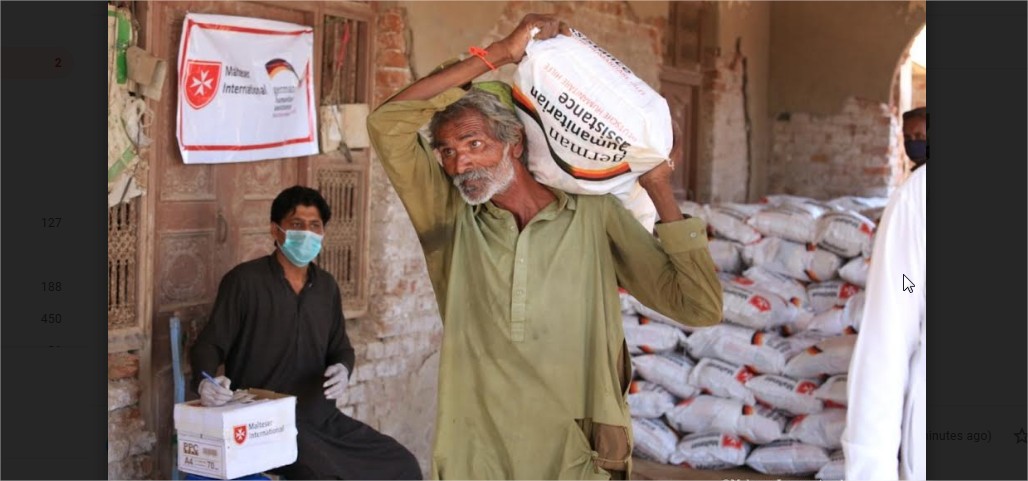
ISLAMABAD, MAY 12 (DNA) –  While in Germany cautious hope is growing that the curve of COVID-19 infections is gradually flattening, other countries like Pakistan are still facing rising numbers of cases. As the virus knows no borders, global solidarity is required which implies working on joint solutions as well as strengthening multilateralism. Germany is therefore offering humanitarian assistance to countries like Pakistan, both on a multilateral and bilateral level.

Hence, the German Federal Foreign Office is providing 300 million euros for COVID-19-related humanitarian assistance worldwide. Germany is thus making a substantial contribution in response to the global humanitarian appeals from the United Nations and the International Red Cross and Red Crescent Movement. These funds will contribute to global relief measures in countries already facing a humanitarian crisis. Additionally, Germany as part of Team Europe has pledged 525 million euros for the Global Response Initiative to fight COVID-19.

00

Most of Germany’s COVID-19-related financial support is realized through multilateral institutions like the World Bank or Asian Development Bank. However, in the wake of the COVID-19 crisis funds for bilateral projects in Pakistan have been partially reallocated – especially in the field of humanitarian aid. Thus, the German government financially supports humanitarian organizations like Malteser International or the German Red Cross which is closely cooperating with the Pakistan Red Crescent Society to provide the Pakistani people with access to emergency food assistance, hygiene knowledge and material as well as preventive health care services, particularly in Sindh. Moreover, the German Embassy is supporting Pakistani organizations to offer food rations and hygiene kits to vulnerable parts of the Pakistani population as well as education about physical and mental health.

Ambassador Bernhard Schlagheck underlined:

“These days the world is united in the face of the necessity to put a halt to the spread of COVID-19. Only in a spirit of solidarity and cooperation will we be able to address this common challenge. Many Pakistani families are hit hard by the loss of loved ones due to the pandemic. My sincere condolences are with all of them. The joint fight against the novel virus and its socio-economic consequences is yet another – a new – facet of the many-sided trustful cooperation between Germany and Pakistan. Let us try together to overcome economic hardships and bring relief to the vulnerable. With German financial support in the framework of multilateral organizations as well as bilateral support to fight COVID-19 in Pakistan, Germany would like to underline that it stands side by side with the Pakistani people in these trying times.”

‘No reason for Australia, England to skip Pakistan tours’

Former Pakistan cricketer Ramiz Raja has called for random lie-detector tests for players in order to tackle corruption in cricket.

“There should be an equipment to tell if the player is thinking to fix games like the ones being used to take temperature among patients during coronavirus testing,” the cricketer-turned-commentator said in a YouTube video. “Realistically, it can happen through a lie detector test. A random assessment of players should take place when they are playing domestic cricket. It can reveal if they have been fixing games or if they have been approached to do so.”

The former Test opener believes it is an idea worth exploring. “There is no harm to it. A debate must be held on this matter as the sport is getting a bad reputation.”

Raja went on to say that bookies tend to approach players for corrupt practices either when they are at the end of their careers or at the very beginning.

More than 1000 positive cases in Pindi

RAWALPINDI, May 12 (DNA):Around 4242 coronavirus suspected patients so far have been brought to the quarantine facilities of the district, out of which 1068 cases were tested positive who were provided the required treatment and 257 discharged after recovery.

According to daily situation report issued by Directorate of Public Relations (DPR) Punjab ,376 COVID-19 confirmed patients were admitted in different hospitals of the city including 145 belonged to Rawal Town, 70 Potahar Town, 91 Rawalpindi Cantt, 25 Gujar Khan,32 Taxila, 5 Kahuta, 3 Kalar Syedan and 5 from Murree,” he said.

“The result of 2623 suspects were tested negative while reports of 656 still awaited,” he added.

The DPR said that 380 patients were quarantined in isolation at homes while 257 discharged after recovery.

“ 55 coronavirus patients died in the district”,he added.

The residents were advised not to visit Kalyam Awan tehsil Gujarkhan, Dheri Hassanabad, Dhoke Paracha, Dhoke Ratta, Dhoke Mangtal, Ammar Pura, Zafar ul Haq Road, Satellite Town and Wah Cantt areas as number of positive cases were reported from these areas.

Meanwhile Chief Executive Officer Health Dr Sohail Chaudary informed APP that disinfection was being carried out in different areas of the district especially where suspected cases were reported. He advised the citizens to avoid crowded places, stay at home and follow safety measures issued by the government.=DNA

====================

Covid-19 outbreak led businesses to innovative digitalization

NEWS DESK

                ISLAMABAD, :The COVID-19 outbreak has led to the introduction of innovative digital applications in a number of business sectors.

                Real-estate firms, for example, are now showing properties to customers through virtual tours, while all transactions are being carried out electronically.

                Due to social-distancing measures, global production has declined drastically, with many sectors taking steps to adapt to “the new normal.” The real-estate industry has responded to the crisis by conducting sales and rentals through virtual tours.

                In a statement issued here, Chairman Antalya Homes, a real estate company, Bayram Tekçe said, within the last month, the organization preferred by foreigners wishing to buy property in Turkey through remote property selling methodology Tele Property, amid rising demand from European countries, has successfully sold 12 properties worth a total of $1 million.

                The exchange rates have also created a perfect opportunity to buy real estate in Turkey as upon the pandemic, foreign currencies have gained 15% against the Turkish lira in a month’s time, he added

                The chairman said, “We have adapted to new conditions by developing innovative solutions for those who want to buy property in Turkey.

                Tele Property lets us provide customers with all property details, such as title deed information, floorplans, prices, availability, and licensing. Customers can also take online viewing tours to examine properties in detail,”.

                “We negotiate, he added, with the seller on behalf of the buyer to determine price and conditions. We then deliver the final contract and all necessary documents to the customer, both online and by mail.

                Through Tele Property, we have sold 12 homes (in Istanbul, Antalya, and Alanya) to German, Swedish, and British citizens within the last month alone.” Tekçe added.

Virus tracing app raises privacy concerns in India

NEW DELHI (DNA) — As India enters an extended coronavirus lockdown, the government is actively pursuing contact tracing to help control infections. At the heart of the effort in the country of 1.3 billion people is a government-run smartphone app that critics say endangers civil liberties in how it uses location services and centralizes data collection.

In April, India launched the Aarogya Setu app, which helps people identify whether they have been near someone who tested positive for the virus. Since then, the app has been downloaded more than 90 million times in a country with a smartphone user base of about 500 million. To popularize it, a campaign featuring Bollywood celebrities was launched.

But the monitoring technology, which uses GPS and Bluetooth, has prompted a raft of questions about privacy, security and potential data breaches — and whether it gives the government snooping powers.

“Aarogya Setu is a form of surveillance and inflicts tangible privacy injury,” said Apar Gupta, executive director of the Internet Freedom Foundation.

On Wednesday, Ravi Shankar Prasad, a senior minister, said the app was “robust” in terms of privacy protection and data security. The government also said no data or security breach had been identified with the app after a French security researcher exposed a flaw he said could allow virus carriers to be pinpointed.

Mobile tracing apps to help contain infections have already been developed in the U.S., China, Singapore, Australia and many European countries. Other countries are scrambling to deploy their own smartphone tools and tech giants Apple and Google have jointly devised a software solution designed to preserve user privacy and avoid the kind of amassing of user data on centralized servers done by India.

But India’s approach is most alarming, in a country lacking a data privacy law, because sweeping orders have made the app mandatory for many.

The government requires the Aarogya Setu app be used by all workers, both private and public, and by members of the military. Installation of the app is also mandatory in regions declared as containment zones. Stranded Indians abroad who wish to be repatriated also need to install it on their mobile phones before entering the country.

Now, the police are stepping in.

In Noida, a burgeoning satellite town half an hour’s drive from New Delhi, police have made it a punishable offense if people don’t use the app.

App users must answer questions posed by a chatbot about whether they have any COVID-19 symptoms, pre-existing health conditions and about their travel history. Those suspected of being infected are contacted by health authorities, who track cases in a database.

Millions of Indians, many oblivious of any privacy concerns, have enthusiastically downloaded the app at Prime Minister Narendra Modi’s urging. Some businesses have said their employees cannot work without the app.

“It will be very good if almost everyone uses it,” said Umesh Ram, a food delivery rider.

But some are cautious.

Satish Kumar Rastogi, an electrician, recently deleted the app from his phone. “Imagine if I put wrong details by mistake, then it will give wrong information about me,” Rastogi said.

The government has not said if it plans to impose fines on people who don’t install the app, but hopes that if infections are tracked with the help of the app, more people will be able to resume at least part of their normal routines. India is the hardest-hit country in South Asia, with over 56,000 confirmed coronavirus cases and more than 1,800 deaths.

Critics fear the database could be breached by hackers and the monitoring technology used to collect personal information and exert social control. The app is vague about which government departments will have access.

Abhishek Singh, the chief executive of MyGovIndia, which developed Aarogya Setu, said the app “will not reveal anyone’s personal details”

But French security researcher, Baptiste Robert, said in a blog post Wednesday that he was able to modify the app to pinpoint the location of infected users. Writing under his online pseudonym Elliot Alderman, he said he was able to spoof his location in order to look anywhere in India for infected users.

Privacy rights organisations are urging the government to make the app’s source code public to increase transparency.
The monitoring technology is also opposed by the main opposition Congress party. Last week its leader, Rahul Gandhi, called the app “a sophisticated surveillance system.”

India is not new to privacy violations and data breaches. In 2018, a controversial billion-member biometric database called “Aadhaar” was breached, putting the identity details of more than 1 billion citizens at risk.

Similar cases of data breaches have been reported during the pandemic.

Many Indian states published quarantine lists on their official websites which included names of people who were suspected of being virus carriers. The app, experts say, presents similar concerns but on a much larger scale.

Apart from the privacy concerns, there is little evidence that the app will be effective without widespread virus testing, which India lacks. India is testing around 75,000 samples daily. Health experts say this number is not enough.

A recent study by epidemiologists at Oxford University estimated that 60% of the population in any given area need to use a contact tracing technology, combined with other measures such as broader testing and the quarantining of vulnerable people, for the app to be able to contain the virus.

“India has to couple contact tracing technology with far more broader testing. Testing is the primary solution to halt the infection spread,” said Dr. Anant Bhan, a public health and bioethics expert. 

United States in talks with chipmakers about building US factories

(DNA) – The Trump administration is in talks with semiconductor companies about building chip factories in the United States, representatives from two chipmakers said on Sunday.

Intel Corp is in discussions with the United States Department of Defense over improving domestic sources for microelectronics and related technology, Intel spokesman William Moss said in an emailed statement.

“Intel is well positioned to work with the U.S. government to operate a U.S.-owned commercial foundry and supply a broad range of secure microelectronics”, the statement added.

Taiwan Semiconductor Manufacturing Co (TSMC), on the other hand, has been in talks with the U.S. Department of Commerce about building a U.S. factory but said it has not made a final decision yet.

“We are actively evaluating all the suitable locations, including in the U.S., but there is no concrete plan yet”, TSMC spokeswoman Nina Kao said in a statement.

Intel Chief Executive Bob Swan wrote a letter to the Department of Defense in late March in which he expressed the company’s willingness to build a foundry – a term used in the industry to reference a chip factory – in partnership with the Pentagon.

“This is more important than ever, given the uncertainty created by the current geopolitical environment”, Swan wrote in the letter dated March 30 and seen by Reuters on Sunday.

It comes amid increasing diplomatic tensions between the U.S. and China during the coronavirus outbreak, with both sides trading barbs over who is to blame for the spread of the disease after already being involved in trade tensions for almost two years.

“We currently think it is in the best interest of the United States and of Intel to explore how Intel could operate a commercial U.S. foundry to supply a broad range of microelectronics,” the letter from the Intel CEO added.

The Trump administration’s discussions with chipmakers were reported earlier by the Wall Street Journal, with the report adding that TSMC also has been talking with Apple Inc, one of its largest customers, about building a chip factory in the United States.

Sony suspends PlayStation Store in China to upgrade security

HONG KONG (DNA) – Sony has suspended its PlayStation Store in China saying it wanted to improve the online store’s security, in a move that will temporarily prevent it from selling games in the world’s largest video game market.

PlayStation China announced the closure in a statement on its Weibo account on Sunday, saying it was for a “system security upgrade” without providing further details.

It also did not specify a reopening date.

The closure, however, comes on the heels of reports on social media that China PlayStation users were able to switch to overseas services via a backdoor and circumvent China’s restrictions to download unlicensed games.

Sony declined to comment on whether the reports had played a role in the closure and said the target of the temporary shutdown was to enhance the safety of the store’s services.

Stay Connected

64FansLike
60FollowersFollow

Latest Reviews

Exchange Rates

USD - United States Dollar
EUR
1.17
GBP
1.35
AUD
0.71
CAD
0.72