Home Blog Page 3298

China aids construction of Pakistan’s ‘Three Gorges Dam’ despite pandemic

DNA

BEIJING, Aug. 5 : Despite the coronavirus pandemic, China and Pakistan are stepping up efforts on committed projects focusing on cooperation in industrial development, agriculture and the improvement of people’s livelihoods.

Gwadar Pro reported on Wednesday that the Diamer-Bhasha Dam and Power Project, nicknamed the “Three Gorges Project” joins a long list of bilateral cooperation efforts between the two countries.

The construction of the Diamer-Bhasha Dam is of great strategic significance for improving Pakistan’s water security and sustainable development, Wang Zhihua, economic and commercial minister counsellor at the Chinese Embassy was quoted as having said that a dam construction fund was specifically set up, with full support at government and the public level.

“The Chinese company will extend and share all available technical experience with its Pakistani partner for the project. The dam is scheduled to be completed by 2029. During the construction of the project, 16,500 jobs will be directly created,” Wang said.

The contract for this project was signed between Chinese energy firm PowerChina and Pakistan’s Frontier Works Organization, with a value of 442 billion rupees ($2.75 billion). The project will be built in two phases.
The project is currently in the initiation stage, with focus on supplementary surveys and organizational planning. The construction of the camp at the early stage has not been seriously affected by the pandemic. PowerChina will share its experience in dam construction and large-scale project construction organization, Wang added.

“The Diamer-Bhasha Dam being the third largest dam in Pakistan – will achieve multipurpose objectives. The people of Pakistan are grateful to China, which has once again decided to help Pakistan secure and ensure its strategic water security in the 21st century,” said Syed Hasan Javed, Director of the Chinese Studies Center of Excellence at the National University of Science and Technology.
“The Diamer-Bhasha Dam is beyond any controversy, being constructed by two sovereign nations. The people of Pakistan are deeply grateful to China for undertaking several energy projects, both under the China-Pakistan Economic Corridor (CPEC) as well as through contracted projects like this one, which have greatly reduced the electricity shortage in the country,” he added.

“China has an excellent record of building huge dams not only for itself, but for other developing countries. The Pakistani authorities have completed all preparatory work related to land acquisition, resettlement, financial and operational mobilization, and the work has begun at the site,” Javed said.

Referring to media report that slandered the dam project as another “debt trap” set up by China, Hasan Javed said that Pakistan’s external debt is roughly $111 billion out of a GDP (calculated at market price) of $265 billion as of June 2020.

Almost 75 percent of Pakistan’s debt is owed to international financial institutions such as the World Bank, IMF, Paris Club and Asian Development Bank.

“The total amount of Chinese loans does not exceed 10 percent at $11 billion. Pakistan can take care of it. The propaganda of China laying a ‘debt trap’ is guided by malicious intentions of detractors. If you see the external debt to GDP ratio, Pakistan is not among the most highly indebted nations of the world,” he added.

Pakistan enjoys rich potential enhance banana production under CPEC: Prof. Shi

DNA

BEIJING, August 5 –  Professor Dr. Shi of Nanjing Agricultural University in China said Pakistan enjoys rich potential to enhance Banana production, particularly under China-Pakistan Economic Corridor (CPEC).

Gwadr Pro on Wednesday quoted Dr. Shi as having said, that the banana plantation area in Sindh accounts for 87% of Pakistan’s total area. There is large scope of enhanced production. However, he noted that many farmers abuse chemicals to control pests and diseases there.

Reviewing his research conducted with a Pakistani student at the University Rafey Waseem, Dr. Shi believes that Pakistan’s adoption of SAP is crucial. He said: “Pakistani students have a solid foundation in economics and management who have a deep understanding of Pakistan’s local banana farms and farmers. Sustainability is one of the key areas that they would like to explore since they think that local growers can receive more benefits from this study.”

Rafay is a graduate student who has studied on sustainable agricultural practices (SAP) of banana planting in Sindh province. He has worked with Professor Shi on this research at NanjingAgricultural University in China.

Banana growers in Sindh must adopt SAP. Dr. Shi said: “SAP can be divided into the following categories: land management, fertilizer management, pesticide management, crop management, harvest management, post-harvest and sales. Pakistan needs to continue to strengthen in these areas.”

“Pakistan has mastered traditional technologies such as direct return to the field after mechanical crushing, utilization of banana stalk feed, and fermentation to produce biogas,” he said adding, “Pakistan’s banana stalks are rich in resources, but Pakistan is inadequate for its recycling. In real life, there are many factors that limit the recovery of banana stalk resources, such as transportation technology, storage technology, and post-processing technology,”

To change this situation, the government still has a lot of work to do. Dr. Shi suggested Pakistani government to stimulate investment and strengthen education in SAP.

He also believes that CPEC will play an important role in SAP Banana Planting. He said that under CPEC, China can provide support in several respects, such as transportation construction, agriculture-related infrastructure, and related guidance.

Meanwhile, Pakistan can transport banana stalk resources to China and use Chinese technology for processing.

To secure justice in social protection system

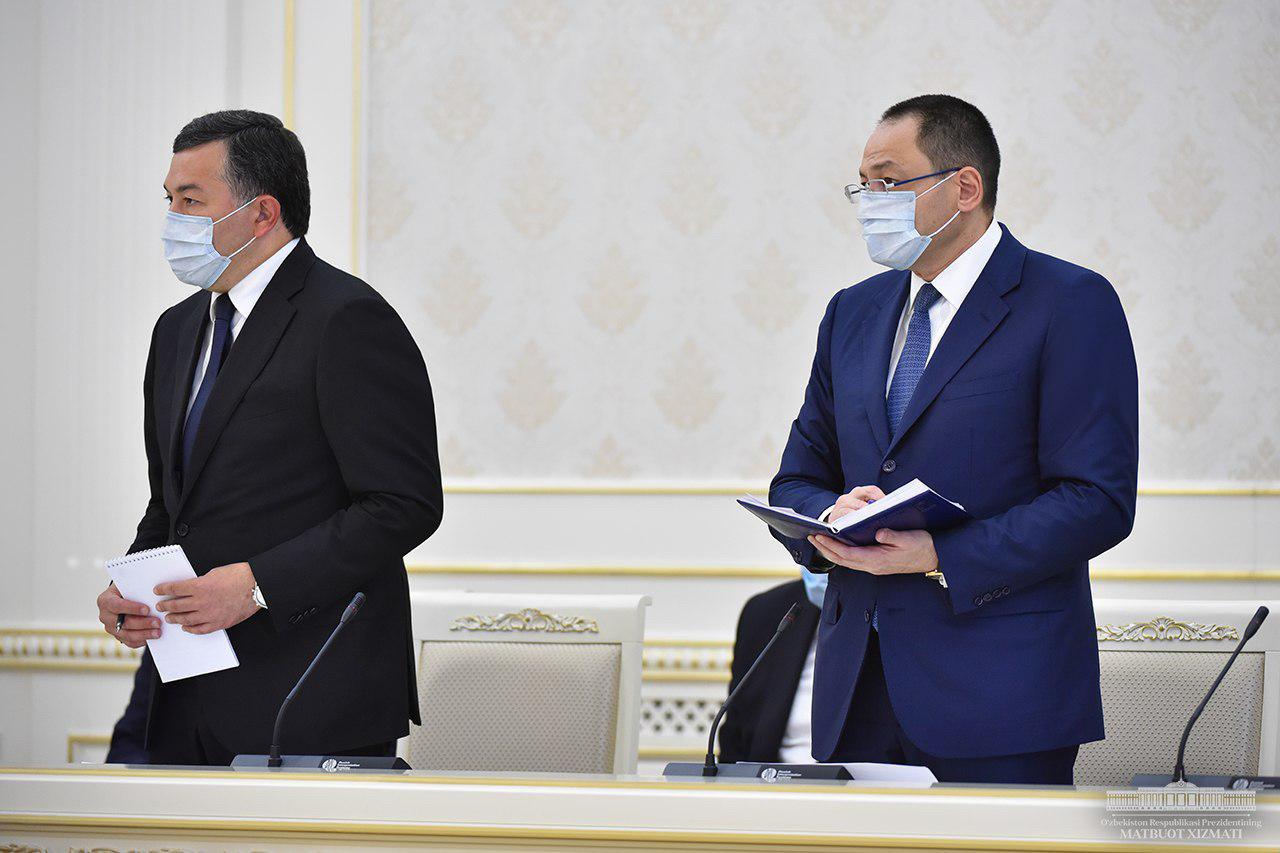
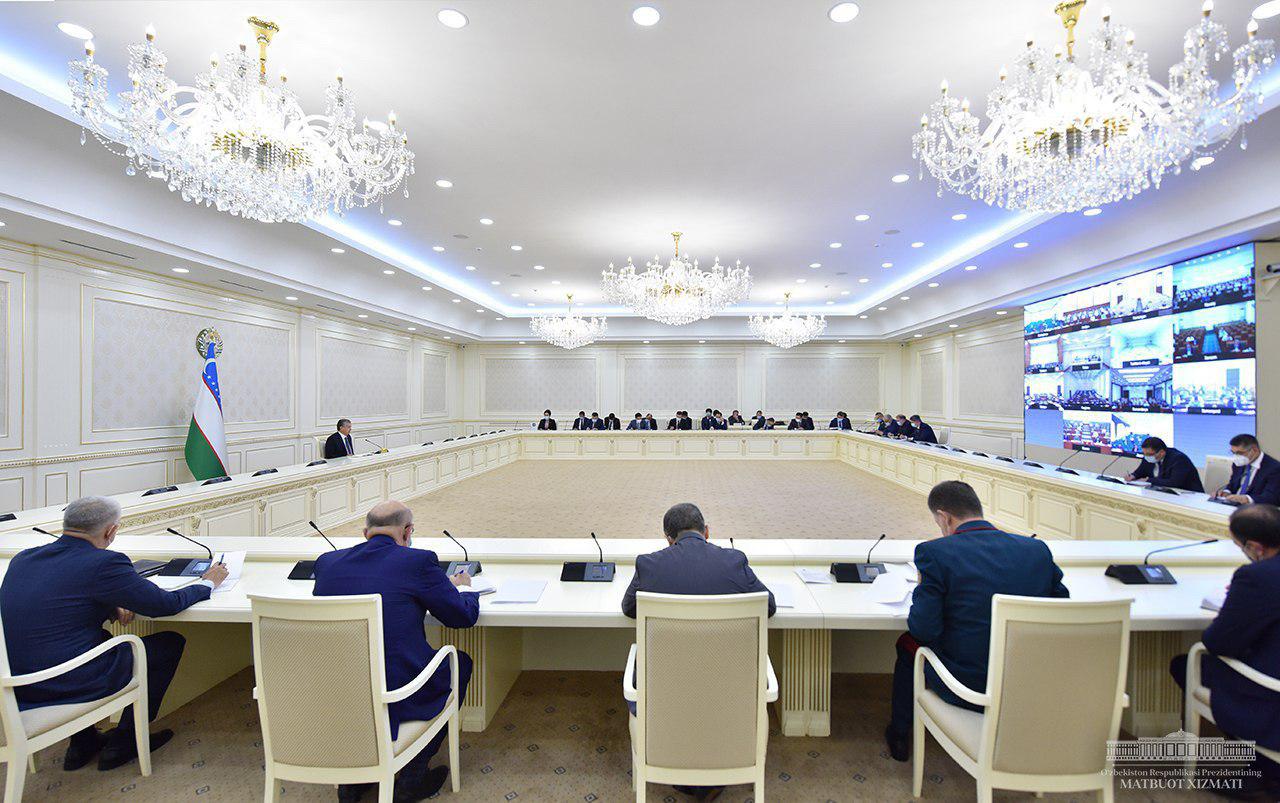
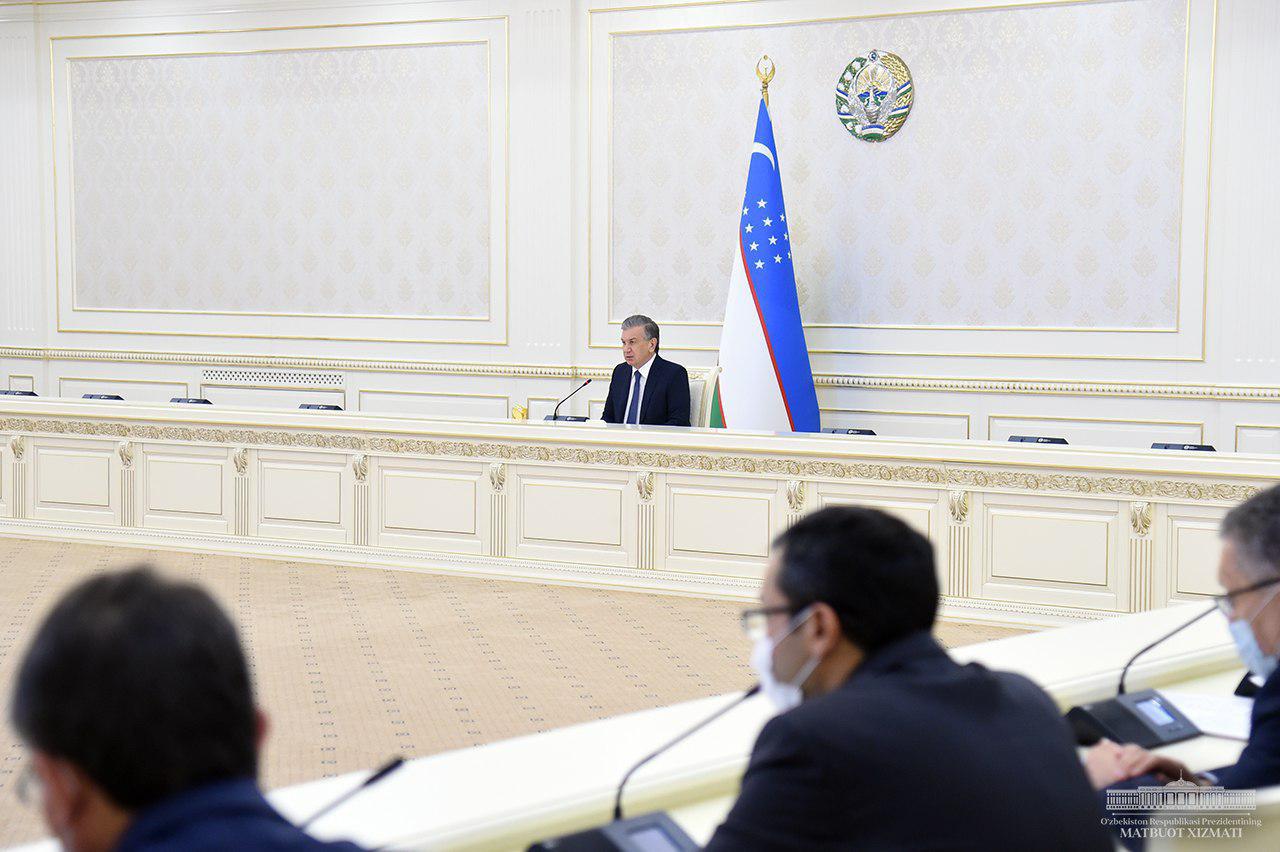
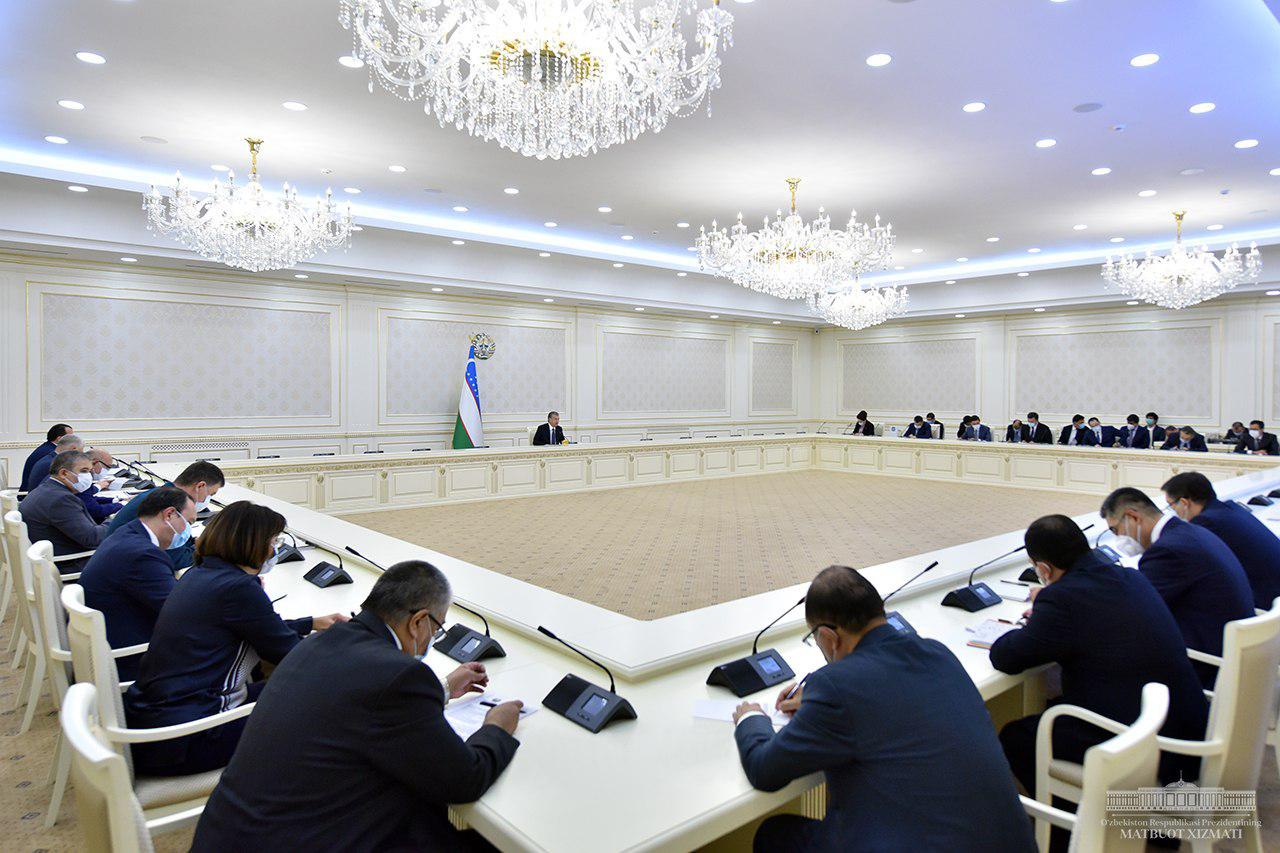
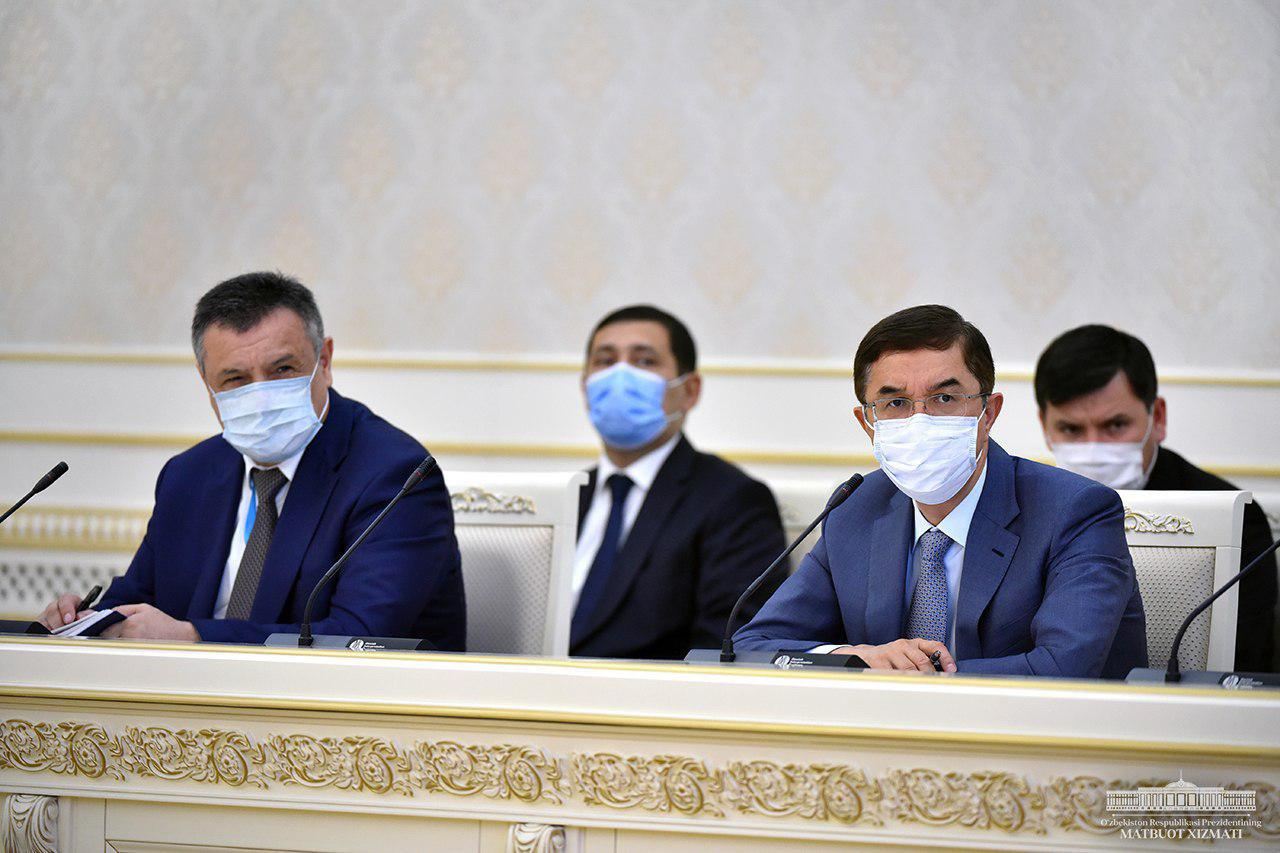
On August 4, the President of Uzbekistan Shavkat Mirziyoyev chaired a video conference to discuss issues of material support for the segments of population in need of social protection and assistance during the pandemic.

The decline in economic activity due to the coronavirus contagion has had a grave impact on living standards. In these circumstances, among the urgent tasks is to support people who have ended up jobless and hence lost their source of income.

The President’s July 30 Decree on additional measures to provide material support to the population in need of assistance and social protection during the coronavirus pandemic has proved an important step in this direction. In accordance with this document, an additional 2 trillion soums were allocated from the budget to be directed to support 1.7 million low-income people, 3.7 million pensioners and 500 thousand recipients of social benefits.

In particular, over the past 5 days, needy families received material assistance in the amount of 148 billion soums. In August, 780 billion soums are planned to be paid out to 1.7 million people along with more than 50 thousand medical staff.It is essential in current circumstances to correctly form the lists of families in need of financial assistance, to fairly distribute the allocated funds.

Resultant instructions have been given in this regard at the video session.The President stressed the responsibility of sector leaders and mahalla representatives for social payments to reach the target population.Supervisory authorities have been instructed at the meeting to establish constant control over the proper allotment of funds and take measures to prevent breaches of the law.Corresponding measures are defined in the presidential resolution signed today on additional measures to automate the procedures for the provision of state social services and assistance to the population, which envisages the introduction of Integrated Social Protection Register.

The system has been tested in the Syrdarya region and showed its effectiveness. It will be gradually introduced by the end of the year across the entire nation.The state has been expanding the scale of social assistance, thus implying the need for the register. It is expected that by the end of the year, the body of social benefit recipients will reach 1.2 million, increasing to 1.5 million in 2021. The Integrated Social Register will make it possible to provide all types of social assistance in accordance with the same criteria and single document.Crucially, from January 1 next year, citizens will not have to collect more than 30 types of certificates from 12 government agencies, as they do thus far. In addition, the provision of 30 types of social assistance and services will be greatly simplified.The list of families in need of material assistance, it was noted at the meeting, should be drawn up in mahallas in compliance with justice principles and approved by local councils of people’s deputies.Shavkat Mirziyoyev underlined the importance of strengthening the mahalla and public control over the fair distribution of funds, by engaging senior citizens and activists in delivering social assistance.The head of our state urged to convey 200 billion soums assigned to reward 50 thousand medical emergency personnel in a timely manner and without paperwork.Ministers, hokims and sector leaders reported on works undertaken on this front.

President critically reviews the efforts to contain the pandemic

President Shavkat Mirziyoyev is chairing a videoconference devoted to the work undertaken in Uzbekistan to combat the coronavirus pandemic.

It was noted with regret that the spread of COVID-19 in the world has recently accelerated, the total number of cases has reached 19 million and deaths increasing.

That the World Health Organization extended the global emergency for another three months on July 31 is also suggestive of seriousness of the situation.

Over the past week, more than 5,000 new cases of infection were detected in Uzbekistan, and the total number of infected approached 27,000. Moreover, the incidence of pneumonia with severe consequences is increasing.Taking this into account, additional measures have been taken in the country. In particular, over the past 20 days, the number of beds for treatment of COVID-19 has increased by 3.5 times and reached almost 65 thousand.

Almost 800 ambulances have been delivered to places.An additional 4,000 respiratory devices (ventilators, portable CPAP machines, oxygen concentrators) were imported, their total number reached 6.5 thousand.– It is necessary to continue and strengthen systemic work to prevent the spread of the virus among the population and treat patients, – said the Head of the state.

It was emphasized that the Ministry of Health, khokims and sector leaders should be fully prepared for treatment of coronavirus and pneumonia and are personally responsible for providing each patient with necessary medical care, their hospitalization based on the course of the disease, as well as treatment.The need was noted for further intensification of the local primary healthcare system.For example, in Tashkent, due to organization of well-coordinated work as part of the scheme “family polyclinic – mobile brigades – specialized polyclinics – ambulance service 103”, it was possible to increase the proportion of those who recovered from 45 to 58 percent within a week.In this regard, Deputy Prime Minister Bekhzod Musayev, as well as khokimiyats and heads of sectors were instructed to complete, within a week, the deployment across the regions of Tashkent-tested system for treating asymptomatic patients at home with the help and recommendations of mobile medical teams.President Shavkat Mirziyoyev noted the importance of redirecting small local hospitals back to their treatment profile for other types of diseases, including chronic ones, while continuing to organize centers for receiving and sorting out COVID-19 patients.– The Council of Ministers of the Republic of Karakalpakstan and regional khokimiyats should fully contribute to effective organization of the work of heads of specialized centers and higher education institutions assigned from Tashkent, – the President said.

Shavkat Mirziyoyev noted that in each case of severe course of the disease, it is advisable to consult on treatment tactics with domestic and foreign specialists via videoconference.As is known, intensive research is currently underway in a number of countries to find a cure for the coronavirus. It is reported that pharmaceutical companies in China, India, the United Kingdom and Russia will soon start producing the vaccine.In this regard, Deputy Prime Minister Bekhzod Musayev was instructed to study, within a week, the possibilities of purchasing vaccines and vaccinating Uzbekistan’s population, after consulting with leading scientists and experienced doctors.The need was noted for strengthening participation of makhalla institution in preventing the disease, delivering citizens with suspected coronavirus to hospitals, explaining quarantine requirements and implementing public control.For our people are accustomed to appealing to the makhalla with a great diversity of issues.– Almost 40 thousand people work in 9,150 makhallas across the country and receive salaries from the budget, – said the Head of the state. – We have increased their salaries almost by 1.5 times this year. They should not stay on the sidelines in such a difficult situation. There’s hardly anyone at the grassroots level who knows as well as representatives of the makhalla what the state of affairs is in the neighborhood, who is sick, who has what level of income, who needs help, and who needs a doctor.To this end, khokims and sector leaders should bring together makhalla chairpersons, crime prevention inspectors and other personnel, local activists and senior citizens, medical workers assigned to makhalla, toward connecting persons with suspected coronavirus and those who are infected on the one hand, and ambulance service and doctors on the other.Representatives of local civil society institutions should also take an active part in delivery of food to needy families and medicines for patients who are recommended for home treatment.– Meanwhile, they should lead explanation works and secure public control over the inexpediency of leaving home for no reason and getting together, over the need to wear a medical mask and observe social distance, refrain from holding weddings and other family events, – noted President Shavkat Mirziyoyev.

PM Imran to address Azad Kashmir Assembly

ISLAMABAD : Prime Minister Imran Khan will address the Azad Jammu and Kashmir (AJK) Assembly today as the country marks Youm-e-Istehsal, to show solidarity with Kashmiris who have been braving the Indian government’s ‘brutal fascist military siege’ since August 5 last year.

“Kashmiris in IIOJK have been subjected to a brutal fascist military siege by India since its illegal actions of 5th Aug last year followed by efforts to change the demography of IIOJK,” the prime minister said in a tweet on Wednesday.

“I will continue to be an ambassador for all Kashmiris whose voices India has tried to silence through its brutal illegal occupation of IIOJK,” PM Imran said, adding that after many years his government raised the Kashmir issue effectively at international forums.

“My government raised the Kashmir issue effectively before the UN and exposed the Hindutva Supremacist fascism of the Modi government,” he said.

PM Imran added, “We have also depicted the aspirations of the Kashmiri people ad our commitment to UNSC resolutions in the political map of Pakistan released yesterday.”

‘India has turned IIOJ&K into ‘open-air prison’ with destroyed economy’

Separately, in an exclusive interview with Aljazeera, the prime minister had said the Modi-led government’s revocation of the special status of Indian Illegally Occupied Jammu and Kashmir (IIOJ&K) last year has turned the disputed region into an ‘open-air prison’ with its economy destroyed.

“Modi was responsible for undermining his country’s legacy of secularism. India fell under the control of an extremist ideology [propounded by] the RSS,” the prime minister was quoted as saying by Radio Pakistan.

The premier added that what India’s Muslims were facing resembles what happened during the extermination of Jews in Nazi Germany.

AJK PM seeks UN’s intervention to get Indian brutalities stopped in IIOJK

AJK Prime Minister Raja Muhammad Farooq Haider Khan on Tuesday appealed to the permanent members of United Nations Security Council to prevail upon India to stop changing the demography of IIOJK and its atrocities on the innocent Kashmiris.

Farooq, in his message in connection with the Youm-e-Istehsal, said the clouds of war were hovering over the region as the Indian government’s intransigent attitude had disturbed the peace of the entire region.

He said India was bent upon snatching the culture, traditions and language of the Kashmiri people after revoking articles 35 A and 370 of its constitution, which was aimed at changing the demographic apartheid of the state.

He said Kashmiris were determined to continue their legitimate struggle as per the UN resolutions despite the military siege.

Refocus on August 5: Worldwide Anti-India Protests, Kashmir Under Siege

Sajjad Shaukat

August 5 is the blackest day of Indian so-called democracy when its Parliament, like thieves, snatched away legitimate rights from the people of the state of Jammu and Kashmir (J&K) and revoked articles 35A and 370 of the Constitution, which gave a special status to the disputed territory of the J&K. The act split the J&K which includes the Kashmir Valley and the Ladakh area, into two federal territories: Jammu and Kashmir, which will have a state legislature, and Ladakh area, which will be ruled directly from New Delhi.

Thus, Indian fanatic Prime Minister Narendra Modi’s government led by extremist ruling party BJP unilaterally annexed the Indian Occupied Kashmir (IOK) to turn Muslim majority into minority.

India also issued a notorious map on October 31, 2019 which displayed bifurcation of the J&K and identifies Pakistani side of Azad Kashmir, including certain areas of Gilgit-Baltistan as an Indian territory.

Besides Pakistan, China also rejected the Indian malevolent acts as “unlawful and void”, saying that India’s decision to “include” some of China’s territory into its administrative jurisdiction “challenged” Beijing’s sovereignty. Despite the latest agreement to resolve the issue through dialogue, border dispute between New Delhi and Beijing, which remains unsettled, has increased tensions between the two countries.

In fact, Premier Modi and the BJP in connivance with other similar outfits like RSS have accelerated anti-Kashmir measures. Implementing the ideology of Hindutva ((Hindu Nationalism), Indian extremist rulers’ various other moves such as issuance of domicile certificates to 40000 non-Kashmiris to bring demographic changes in the Muslim-majority area and intermittent shelling inside Pakistani side of Kashmir in relation to the Line of Control (LoC) has killed hundreds of innocent villagers show India’s fascist policies.

However, Indian cruel actions against the Kashmiris reached climax on August 5, 2020 when New Delhi also started the siege of the IOK and imposed strict lockdown in that region by increasing military troops up to more than 900,000.

Indian military and paramilitary troopers have martyred tens of thousands of the Kashmiris, including women and children through ruthless tactics, firing of pallets and extrajudicial killings.

Owing to the military clampdown in the IOK, shortage of foods, medicines for the patients and coronavirus-affected, Kashmiris have been facing painful deaths. In order to conceal India’s state terrorism, Kashmir has been cut off from rest of the world. But, under these adverse circumstances, Kashmiris are still violating the lockdown by protesting against Indian illegal actions.

And Indian forces led by Modi-regime have also increased gangs of RSS volunteers permanently stationed in occupied Kashmir.

Indian army has been given a free hand to play holly with the blood of the Kashmiris. Hence Indian forces have increased atrocious crimes, knowing that they would not be prosecuted.

Since 1989, Kashmiris have already been enduring various forms of state terrorism such as tortures, kidnappings, rapes and massacre. No Indian soldier has ever been taken to task for his heinous crimes. Therefore, since the military lockdown started in the Indian Held Kashmir, Indian forces have intensified the employment of these brutal tactics. Almost, 100,000 Kashmiris have died in the past 30 years.

Western media, human rights groups such as Human Rights Watch, Amnesty International etc. and leaders of various countries, including law-makers and UNO have repeatedly condemned Indian illegal measures and human rights violations which continue unabated in the IOK.  Even, moderate Hindu dignitaries and leaders of the Indian opposition parties, including Congress have strongly criticized the Modi-led government’s acts of August 5 and lockdown in the Indian Controlled Kashmir.

In this connection, US Democratic presidential Joe Biden stated on June 26, this year: “India should take all necessary steps to restore the rights of all the people of Kashmir.”

As regards the Indian military clampdown, The New York Times wrote: “On the streets of Srinagar…security officers…grabbed their guns and took positions behind checkpoints. People afraid to step outside…Many were cutting back on meals and getting hungry….Shops were shut. A.T.M.s had run dry…internet, mobile phones, even landlines…remained severed…life under lockdown in Kashmir and found a population that felt besieged…frightened and…Several residents said they had been beaten up by security forces for simply trying to buy necessities like milk. Many Kashmiris see India as an oppressive and foreign ruler. Tens of thousands of troops from the Indian Army, the Central Reserve Police Force and the Kashmiri State police have been deployed in just about every corner of the valley. In some villages, even remote ones, a soldier was posted outside the gate of each family’s home….The lockdown’s effects are visible everywhere….Baby food is running out…Many doctors couldn’t get to work.…Many Kashmiris fear that Mr. Modi’s sweeping decision, which also wiped away a decades-old provision that gave Kashmiris special land ownership rights…encourage millions of Hindu migrants from India to move into the valley…Kashmiris fear they will be turned into a minority in their own land.”

In this regard, dreadful practice of Indian state terrorism could be judged from the martyrdom of a 65 years old person Bashir Ahmed Khan on July 1, this year, who was dragged out of his car and shot dead by Indian paramilitary troopers in front of his grandson-three-year-old toddler in Sopore, Srinagar. It shocked the world.

Nevertheless, this merciless event displays that India does not have any qualms about murdering any Kashmiri civilians.

During special operations-house to house search, Indian forces have martyred and injured thousands of the Kashmiri people. These cruelties have compelled the Kashmiri youngsters to pick arms and to target the Indian forces, sacrificing their lives for the right of self-determination. Therefore, intermittent gunbattle between the freedom fighters and Indian military continues in various regions of the IOK.

It is regrettable that the US-led some major Western courtiers are silent on the Indian state terrorism also because of anti-China factor, favouring New Delhi regarding the perennial Sino-India border tensions.

Notably, when Indian troops destroy a village and conduct extrajudicial killings in the occupied Kashmir, rulers of the US-led some big powers call it an internal affair of the Indians and do not apply the term of state terrorism, but, when Mujahideen seek retaliation, it becomes a case of terrorism.

While, the UN resolution 1541 on the ‘Granting of Independence to Colonial Countries and Peoples’ adopted by the General Assembly in 1960 accepts the legitimacy of the right of self-determination and opposes repressive measures of all kinds against the freedom fighters by the colonial powers. And UN resolution 2625 of 1970 authorized the dependent people to seek and even receive support from outside to fight against the repressive machinery. So, in the light of these resolutions, the insurgency in Kashmir cannot be called terrorism.

World’s history proves that in the 20th century, a majority of the Third World countries got independence after an armed struggle against the colonial powers. Even independence of the US, unification of Germany and Italy became possible after an armed struggle. So, question arises that were the peoples of these countries terrorists at that time?

Nonetheless, 5th August was the first anniversary of India’s revocation of the special status of the state of the Jammu & Kashmir (J&K).

On this very day, Kashmiris living on both sides of the LoC and their brethren in Pakistan, including rest of the world celebrated this very day as the Black Day, while Pakistan, especially observed August 5 as ‘Youm-e-Istehsal-e-Kashmir’ (Day of Exploitation in occupied Kashmir).

Pakistan commemorated the bleak 5th August day as ‘Kashmir Military Siege Day’ in solidarity with the people of Indian Illegally Occupied Jammu and Kashmir (IIOJK). The Day was observed throughout Azad Jammu & Kashmir, Pakistan and by the overseas Pakistanis and Kashmiris to condemn the illegal, immoral, and inhuman Indian action of the August 5, 2019.

The Day was marked with the mass anti-India protest rallies and processions across many cities of Pakistan, including those of Pakistani side of Kashmir and its capital-Muzaffarabad against the unilateral Indian action, stabbing the special status of the disputed IIOJK.

In this context, seminars, conferences, rallies and demonstrations which had already started in world’s major capitals, including numerous other countries increased on August 5 as people protested against India, military lockdown in the IOK, brutal treatment of the Kashmiriss by the Indian forces, while reminding the international community of the rights of self-determination of the Kashmiris as recognized by the UNO-related resolutions.

In some Western countries, Kashmiris, Pakistanis and human rights activists also conducted demonstrations in front of the Indian embassies—thus, further internalized the Kashmir issue.

Despite the employment of various kinds of state terrorism on the Muslim Kashmiris and siege of the Indian Occupied Kashmir, the war of liberation keeps on going, while worldwide anti-India protests were conducted to commemorate August 5 as the Black Day by bringing the Indian extremist moves to the limelight of global media.

Sajjad Shaukat writes on international affairs and is author of the book: US vs Islamic Militants, Invisible Balance of Power: Dangerous Shift in International Relations

Email: [email protected]

Youm-e-Istehsal: President Arif Alvi urges UN to fulfill promises on Kashmir issue

Entire Pakistani nation is united on the Kashmir issue and it will continue its efforts for Kashmir cause, he reaffirmed.

President Alvi said Kashmiris should not consider themselves alone as Pakistan will continue its peaceful efforts for realization of their right to right to self-determination.

It is pertinent to mention here that Pakistan is observing Youm-e-Istehsal today (Wednesday) to express solidarity with the oppressed Kashmiri people on completion of the one-year military siege of Indian Illegally Occupied Jammu and Kashmir (IIOJ&K).

One minute silence was observed across the country at 10:00 am.

Rallies are being taken out across the country to denounce Indian unilateral illegal actions against Kashmiri people.

On the 5th August 2019, the special constitutional status of Indian Illegally Occupied Jammu and Kashmir was scrapped by the Modi government.

Prime minister “deeply pained” over life loss in Beirut blasts

DNA

ISLAMABAD, Prime Minister Imran Khan Wednesday expressed grief over the loss of precious lives in blasts took place in Lebanese capital Tuesday that claimed several lives and left many others injured.

“Deeply pained to hear of the massive explosions in Beirut with precious lives lost & thousand injured,” he said on Twitter.

He expressed solidarity with the people of Lebanon in that difficult hour and said that they shared their sorrow and grief.

The prime minister also prayed for speedy recovery to the injured and strength to the bereaved families.

PAF expresses solidarity with Kashmiris

DNA

ISLAMABAD, Pakistan Air Force (PAF) on Wednesday paid tribute to the valiant Kashmiris on Youm-e-Istehsal of Kashmir to highlight the brutal massacre and atrocities of Indian occupation forces after putting the entire valley under military siege since August 5.

On the occasion of Kashmir Exploitation Day, the Directorate of Public Relations PAF had released a special video based on the poem depicting the miseries of the oppressed Kashmiri people and showing solidarity with them, said a PAF press release.

The beautiful poem by the famous poet Shehzad Nair also highlights the ongoing Indian aggression in Kashmir. This poem salutes the struggle of the brave Kashmiri people for their right to self-determination.

At the same time, the poem seeks to awaken the conscience of the international community so that all countries could speak out in support of the Kashmiris’ freedom movement against the oppressive Indian rule.

Youm-e-Istehsal: Pakistan shows solidarity with Kashmiris braving Indian atrocities

Pakistan and the people of Kashmir, around the world, will mark ‘Youm-e-Istehsal’ as exactly one year ago today, on August 5, 2019, the Indian government illegally annexed occupied Kashmir into two union territories by revoking Article 370 of its constitution.

The main intent behind the move is to expose Indian atrocities and show solidarity with the people of occupied Kashmir. Today (Wednesday), Prime Minister Imran Khan is expected to visit Muzaffarabad to mark Youm-e-Istehsal.

Anti-India protests are planned throughout Pakistan, particularly in Azad Kashmir, while all major cities in Pakistan will hold solidarity marches, along with a one-minute silence.

CM Murad leads Youm-e-Istehsal rally at Sea View, Karachi

Chief Minister Sindh Syed Murad Ali Shah led a protest rally at Karachi’s Sea View against India’s unilateral move to bifurcate occupied Kashmir into two union territories.

“Shaheed Bhutto said that Pakistan will wage a war for thousand years but not forego its right on Kashmir,” he said. “India’s atrocities against Kashmiris is not hidden from anyone. New Delhi has imposed the longest curfew in the world there,” he added.

The chief minister said that Kashmiris have stated that they wanted to live and die by Pakistan. “Pakistanis have also decided that they will live and die beside their Kashmiri brethren,” he added.

He said that everyone was gathered today, voicing the same “Kashmir Banega Pakistan” slogan.

“Pakistan’s political parties are united on the issue of Kashmir,” he said. “Prime Minister Imran Khan is acting as the ambassador of Kashmir by ensuring their voice reaches the world.

The chief minster fired shots at the Indian Air Force’s decision to buy Rafale jets. “The more Rafale jets India buys, the more cups of tea we have ready for them,” he said, in reference to Pakistan shooting down Wing Commander Abhinandan’s MiG-21 Bison aircraft last year.

“The real power lies not with the aircraft but the one flying it,” he said.

India imposes two-day ‘full curfew’ in occupied Kashmir

Meanwhile, Indian officials announced a two-day “full curfew” on Monday citing intelligence reports of looming protests in the Muslim-majority region of seven million people, where locals have called for the anniversary to be marked as a “black day”.

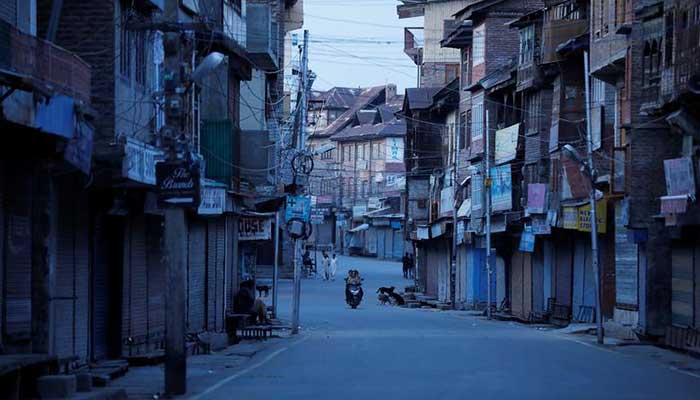
Kashmiri girls ride a scooter on a deserted road in Srinagar, August 20, 2019. Photo: Reuters

Fearing a massive reaction from the Kashmiris, New Delhi imposed the curfew on Tuesday in occupied Kashmir, blocking main roads throughout the valley with barbed wires and steel barricades.

The Modi-led government revoked Article 370 last year on this day, promising economic prosperity and progress after more than three decades of violence that has seen thousands die in the disputed region.

The situation in the occupied territory remained tense as police cars patrolled Srinagar after dark on Monday and again on Tuesday morning, with officers using megaphones to order residents to remain indoors.

 A “full curfew” means people can only move around with an official pass, usually reserved for essential services such as police and ambulances. The Himalayan region is already subject to restrictions to reduce the spread of the coronavirus, with most economic activities limited and public movement curtailed.

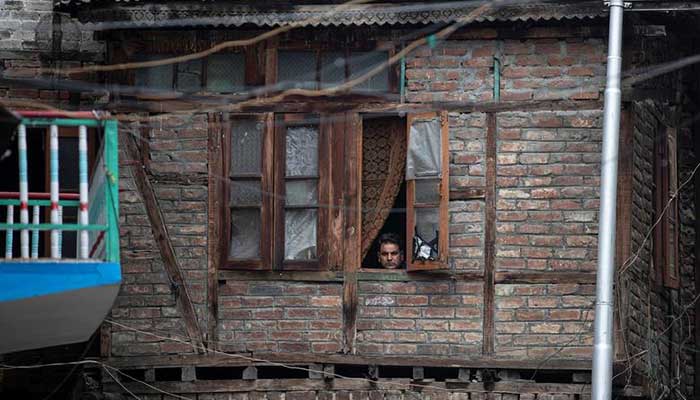
For locals, the new curfew brought back memories of the weeks-long clampdown a year ago. Then, a total communications blackout was imposed, with phone and internet access cut and tens of thousands of fresh troops moved into the valley — already one of the world´s most militarised regions.

A Kashmiri man looks out of his house during restrictions in Srinagar, August 14, 2019. Photo: Reuters

Around 7,000 people were taken into custody — including three former chief ministers. Hundreds remain under house arrest or behind bars to this day, mostly without charge.

Modi’s revocation of Article 370, which has been accompanied by an upsurge in violence that is set to make 2020 the bloodiest year in a decade, has triggered major economic hardship exacerbated by the coronavirus pandemic.

Many locals are also angry that for the first time, people from outside Kashmir are being granted rights to buy land, fearing that India wants to change the region’s demographic makeup.

In a fresh setback to New Delhi’s stance on the issue, the Human Rights Watch condemned New Delhi and urged it to reverse its “abusive policies” in occupied Kashmir.

“Indian government claims that it was determined to improve Kashmiri lives ring hollow one year after the revocation of Jammu and Kashmir´s constitutional status,” Meenakshi Ganguly from Human Rights Watch had said in a statement Tuesday.

“The authorities instead have maintained stifling restraints on Kashmiris in violation of their basic rights.”

New political map of Pakistan including IoK approved by PM Imran

Prime Minister Imran Khan on Tuesday announced the approval a new political map of Pakistan, which included Indian-occupied Kashmir in its entirety.

The approval was given in a Cabinet meeting chaired by PM Imran earlier on Tuesday during which the participants were apprised of the latest situation in the occupied Muslim-majority region.

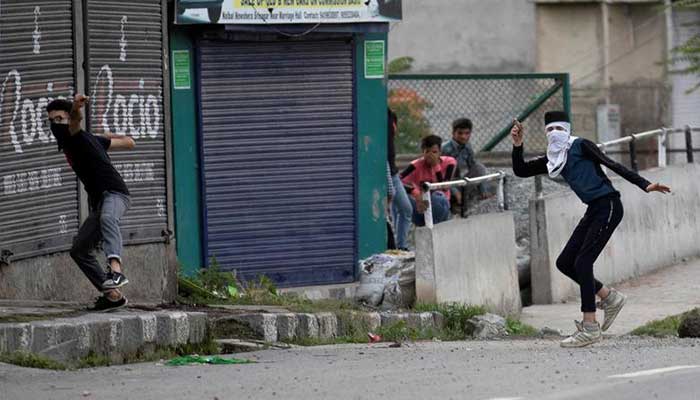
Kashmiri residents throw stones towards Indian security forces in Srinagar, August 10, 2019. Photo: Reuters

Speaking during a live televised address to the nation, the premier shared the details of the decisions made in the Cabinet meeting. “Today is the most important day in the history that we are presenting a new political map of Pakistan before the world,” he said.

“The cabinet has approved the map,” he said, adding that the Kashmiri and national leadership has also green-signalled it. The new map would now be used in school and colleges as well, he added.

The final status of “Indian Illegally Occupied Jammu and Kashmir” was to be decided in line with the relevant UNSC resolutions, read the map.

UN experts slam ‘alarming’ rights free-fall in IoK

A group of UN rights experts urged India to address the “alarming human rights situation” in Kashmir since it was stripped of its autonomy a year ago on Wednesday.

The independent experts, who do not speak for the United Nations but report their findings to it, called on other nations to pile the pressure on India if it does not do so.

“Urgent action is needed,” the 18 special rapporteurs and other experts said Tuesday in a joint statement.

“If India will not take any genuine and immediate steps to resolve the situation, meet their obligations to investigate historic and recent cases of human rights violations and prevent future violations, then the international community should step up.”

The experts urged New Delhi to schedule urgently visits by UN experts, particularly by those investigating torture and disappearances.

Stay Connected

64FansLike
60FollowersFollow

Latest Reviews

Exchange Rates

USD - United States Dollar
EUR
1.17
GBP
1.35
AUD
0.71
CAD
0.72