Home Blog Page 327

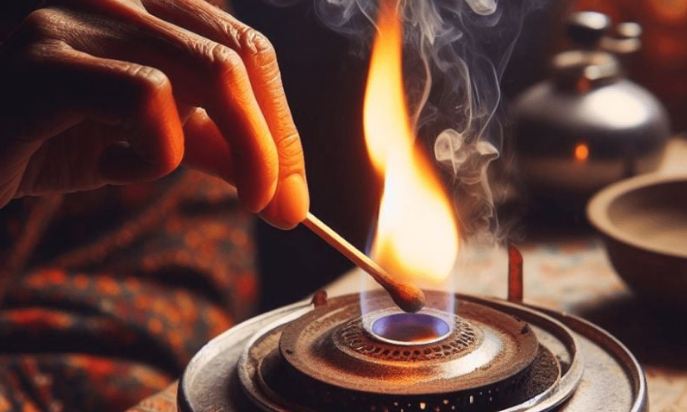
Ogra notifies 50% increase in fixed gas charges for domestic consumers

Ogra

Fixed charges for protected category increased from Rs400 to Rs600

DNA

ISLAMABAD: The Oil and Gas Regulatory Authority (Ogra) on Sunday announced revised gas prices for the fiscal year 2025-26, notifying a 50% increase in fixed gas charges for domestic consumers, effective from July 1.

“The federal government, in response to Ogra’s determinations of SNGPL [Sui Northern Gas Pipelines Limited] and SSGCL [Sui Southern Gas Company Limited] of estimated revenue requirement for FY 2025-26, has advised revised category-wise natural gas sales effective July 01, 2025,” stated a notification issued by Ogra..

According to the notification, the federal government increased the fixed charges for protected category from Rs400 to Rs600, while those in the non-protected category will now pay Rs1,500, up from Rs1,000.

For non-protected consumers whose gas consumption exceeds 1.5 cubic hectometres (hm³), fixed charges have been raised from Rs2,000 to Rs3,000, it stated.

Despite the hike in fixed charges, the actual gas tariffs remain unchanged, the notification clarified. The sale prices for both protected and non-protected domestic consumers, as well as for tandoors, commercial units, CNG stations, and ice factories, will remain the same.

However, the gas sale prices for general industries, power stations and independent power producers have risen.

The development came two days after the Economic Coordination Committee (ECC) of the Cabinet approved a revised natural gas pricing structure for the fiscal year 2025–26, allowing a hike in prices for bulk consumers.

Under the Oil and Gas Regulatory Authority (Ogra) Ordinance, the federal government is required to notify revised consumer gas prices within 40 days of determination to ensure cost recovery and regulatory compliance.

The move also aligns with structural benchmarks agreed with the International Monetary Fund (IMF), including rationalisation of captive power tariffs and a shift from cross-subsidies to direct, targeted support for low-income consumers.

The ECC decided to maintain gas prices for household consumers, with only fixed charges re-adjusted in the domestic sector to recover asset costs.

China ‘rolls over’ $3.4bn of commercial loans to Pakistan

China

Foreign loans, particularly from China, vital for stabilising Pakistan’s depleted foreign exchange reserves

DNA

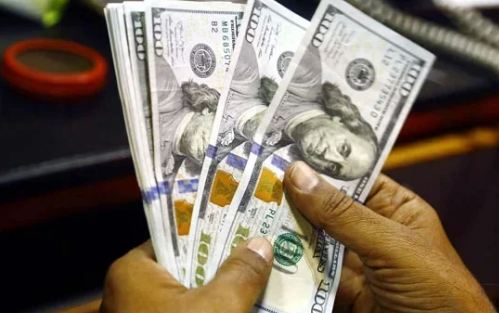
BEIJING: China has rolled over $3.4 billion in loans to Pakistan, which together with other recent commercial and multilateral lending will boost Pakistan’s foreign exchange reserves to $14 billion, a finance ministry source said on Sunday.

Beijing rolled over $2.1 billion, which has been in Pakistan’s central bank’s reserves for the last three years, and refinanced another $1.3 billion commercial loan, which Islamabad had paid back two months ago, the source said.

Another $1 billion from Middle Eastern commercial banks and $500 million from multilateral financing have also been received, he said.

“This brings our reserves in line with the IMF target,” he said.

The loans, especially the Chinese ones, are critical to shoring up Pakistan’s low foreign reserves, which the IMF required to be over $14 billion at the end of the current fiscal year on June 30.

Pakistani authorities say that the country’s economy has stabilised through ongoing reforms under a $7 billion IMF bailout.

Two fugitives wanted by Pakistan nabbed in Spain on Interpol’s red notice: ministry

Two fugitives wanted by Pakistan nabbed in Spain on Interpol's red notice: ministry

MADRID, JUN 29: Spanish authorities have arrested two fugitives wanted by Pakistan in cases related to terrorism, murder, and abduction for ransom following the issuance of Interpol’s red notice, interior ministry said on Sunday.

The proclaimed offenders will be handed over to Pakistan after formal formalities, the ministry’s spokesperson said, adding that one of the accused, Nawazish Ali Hunjra, was wanted in 23 cases of terrorism, murder, abduction for ransom, and others.

Furthermore, the second fugitive arrested in Spain was Haroon Iqbal. Iqbal was also wanted by Pakistani authorities in several cases, the statement added.

This development came after Minister of State for Interior Talal Chaudhry’s recent visit to Spain where he met his counterpart, Fernando Grande-Marlaska.

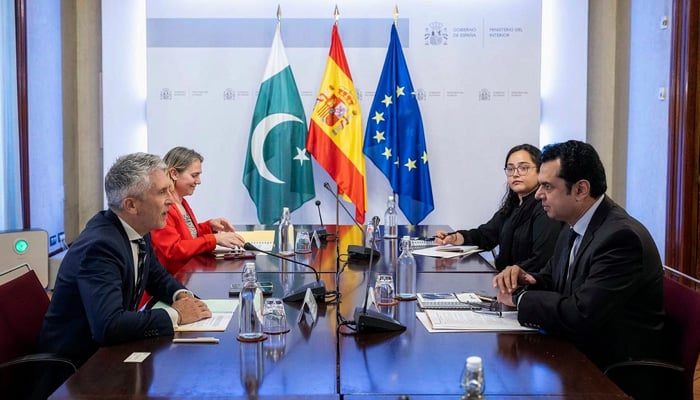
Minister of State for Interior Talal Chaudhry (right) holding a meeting with Spanish counterpart Fernando Grande-Marlaska. — PTV News/File

During the visit, Chaudhry sought action on the red notices issued against dozens of suspects.

Speaking on the development, Minister Talal Chaudhry thanked the Spanish government and Interior Minister Marlaska for their prompt action and cooperation.

He expressed confidence that this success marks the beginning of a broader crackdown on fugitives who flee Pakistan to avoid legal consequences.

“This is a major step forward in our commitment to justice. I am grateful to the Spanish authorities for understanding the gravity of the situation and taking swift action. We hope to see the remaining fugitives arrested and extradited soon,” said Chaudhry in a statement.

Legal proceedings are now underway to facilitate the extradition of the arrested individuals to Pakistan, where they will face trial under the country’s anti-terrorism and criminal laws.

Pakistan has long been seeking the arrest and extradition of 38 fugitives from Spain, most of whom are wanted in serious criminal and terrorism-related cases.

These individuals had managed to evade justice for years, exploiting legal loopholes and a lack of coordination between international enforcement agencies.

The development is being hailed as a milestone in international law enforcement cooperation, and a sign that Pakistan is intensifying efforts to bring back criminals who have found refuge abroad.


— With additional input from APP

SAMARKAND The Blue City

SAMARKAND The Blue City

Written by Munaza Kazmi

When we read the name Samarkand, unconsciously our mind took us to the blue gigantic monuments, glittering Domes, spices bazaars and to the Kingdom of Timur. Besides, travelling, Samarkand can be more than this, beside it dated back to 6th Century BCE as ancient Afrasiab, when it served the capital of Sogdian Dynasty, with which the city is associated with many archeological sites and a couple of mystical Persian legends.

However, much of the significant development it took was under the region of Timur from 14th to 15th Centuries, when it was center of powerful Temurid realm. And today Samarkand is known as the crossroad of world’s cultures, and corridor of ancient trade.

Located in a large oasis in the valley of the Zerafshan River, in the north-eastern region of Uzbekistan. The historical part of Samarkand consists of three main sections. In the north-east there is the site of the ancient city of Afrosiab, founded in the 6th century BCE and destroyed by Genghis Khan in the 13th century, which is preserved as an archaeological reserve.

Archaeological excavations have revealed the ancient citadel and fortifications, the palace of the ruler and residential and craft quarters. There are also remains of a large ancient mosque built from the 8th to 12th centuries.

Towards the south, there are architectural ensembles and the medieval city of the Temurid epoch of the 14th and 15th centuries, which played a seminal role in the development of town planning, architecture, and arts in the region. Where the old town still contains substantial areas of historic fabric with typical narrow lanes, articulated into districts with social centers, mosques, madrassahs, and residential housing. The traditional Uzbek houses have one or two floors and the spaces are grouped around central courtyards with gardens; built in mud brick, the houses have painted wooden ceilings and wall decorations. The contribution of the Temurid masters to the design and construction of the Islamic ensembles were crucial for the development of Islamic architecture and arts and exercised an important influence in the entire region, leading to the achievements of the Safavids in Persia, the Mughals in India, and even the Ottomans in Turkey.

To the West there is the area that corresponds to the 19th and 20th centuries expansions, built by the Russians, in European style. The modern city extends around this historical zone. This area represents traditional continuity and qualities that are reflected in the neighborhood structure, the small centers, mosques, and houses. Many houses retain painted and decorated interiors, grouped around courtyards and gardens.

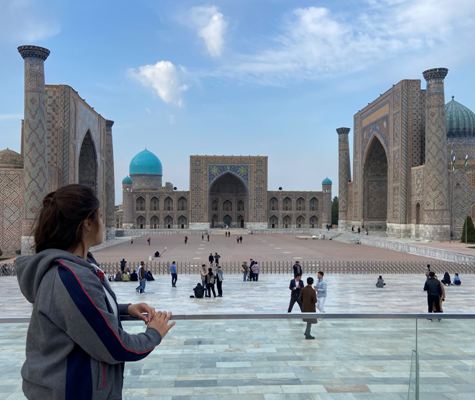
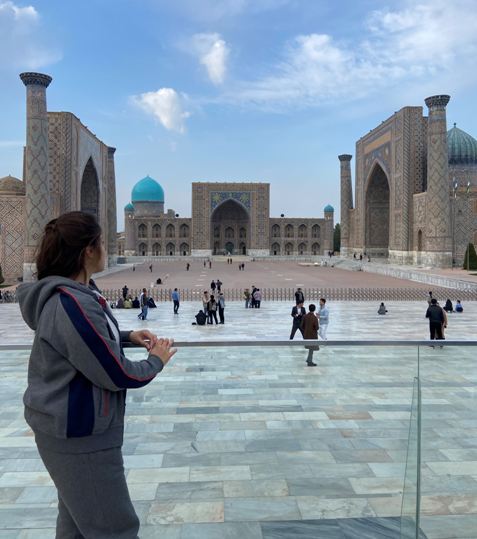
The major monuments include the Registan mosque and madrasahs, originally built in mud brick and covered with decorated ceramic tiles, the Bibi-Khanum Mosque and Mausoleum, the Shakhi-Zinda compound, which contains a series of mosques, madrasahs and mausoleum, and the ensembles of Gur-Emir and Rukhabad, as well as the remains of Ulugh-Bek’s Observatory and the Tomb of Imam Bukhari.

The monuments are well maintained, however, some of the medieval features have been lost, such as the city walls and the citadel, as well as parts of the traditional residential structures especially in areas surrounding major monuments. Nevertheless, it still contains a substantial urban fabric of traditional Islamic quarters, with some fine examples of traditional houses, but on the whole it’s on the edge of fading.

The architectural ensembles of Samarkand as well as archacological remains of Afrosiab preserved all characteristic features related to the style and techniques and have maintained traditional spatial plans of the urban quarter. However, inadequate restoration intervention well as the challenges faced in controlling changes, particularly the construction of mod buildings, and the modemization on private properties have affected the authenticity of property and make the property vulnerable to further changes.

Looking upon the social and cultural ethos, the Uzbeks seem to lost the respect of religion and their customs, as they openly denounce Islam, saying Uzbekistan is a Democratic country not Islamic, plus the wine is an everyday business, night clubs, and bars are operating freely, people specially youth don’t follow the basic Islamic laws. More to say they don’t even respect the name of Taimur, as everybody was entering into the tomb without even removing their shoe.

However, with this there were obviously some positive perspectives of the country , one such thing was that, they reserved I think specially in Samarkand Monday for cleaning, however I found more women than men in this occupation.

On the whole, I found Samarkand average, excluding the old blue architecture.

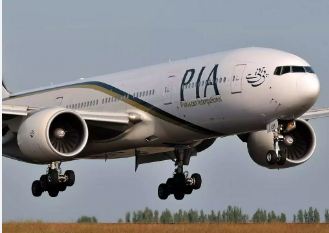
AG accuses PIA aviation medical safety standards with non-doctor in key role

PIA

By Nazir Siyal


KARACHI, JUN 29 /DNA/ – In a startling revelation, the Auditor General of Pakistan has raised serious concerns over Pakistan International Airlines’ (PIA) appointment of a senior cargo official to lead its Medical Services Department—bypassing long-standing requirements for medical qualifications and aviation health expertise.

According to the official audit report for the period 2022–2024, PIA appointed Mr. Tariq Hussain Khan, formerly General Manager (GM) Cargo, won the role of GM Medical Services. The position was historically held by a Chief Medical Officer (CMO)—a role requiring a specialized degree in Aviation Medicine and substantial clinical experience.

The audit highlights that PIA revised the eligibility criteria for this medically critical role in 2017, removing the condition for a medical degree and instead allowing candidates with a master’s or MBA to qualify. This change, the report argues, has diluted the medical integrity of the position and poses a risk to both passengers and crew.

“The decision to appoint a non-medical professional to a post that directly affects health certification, crew medical monitoring, and aviation safety is unjustified,” the report stated.

The auditors emphasized that such a move compromises international aviation health compliance and liaison with airport and emergency medical facilities.

In response, the Auditor General has issued the following recommendations:

Restore the original post of Chief Medical Officer (CMO)

Realign the job description with international aviation medical standards

Re-evaluate Mr. Tariq Hussain’s appointment based on relevant medical expertise. Ensure appointment of a qualified senior medical professional without delay

PIA Management Silent over the irregularity was officially communicated to PIA management on March 11, 2025. However, no formal response has been received.

The audit warns that continued negligence in addressing the issue could damage PIA’s operational safety record and credibility at the international level.

When contacted, PIA spokesperson Mr. Abdullah Khan told this scribe that “There is no new appointment as such safety or harm passengers technically.

The role is administrative only, and Mr. Tariq Hussain will deal solely with internal administrative affairs. He is already serving within the organization.”

However, the Auditor General’s report disputes this explanation, arguing that the role of GM Medical Services directly oversees health-related matters and cannot be reduced to administrative coordination alone.

Gas prices set to increase from July 1

Gas prices set to increase from July 1

ISLAMABAD, JUN 29: The federal government has issued a notification announcing an increase in gas prices for certain sectors, effective from July 1 (Tuesday).

According to the notification, the price hike applies to bulk consumers, the power sector and other industrial segments. However, there is no change in gas tariffs for domestic consumers, although their monthly fixed charges have been increased.

Prices for domestic users, tandoors, the commercial sector, general industry, CNG stations, cement and fertiliser sectors remain unchanged.

Naqvi hails security forces for Duki operation against India-linked terrorists

Mohsin Naqvi

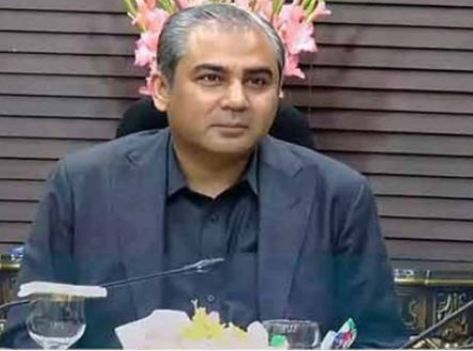
ISLAMABAD, JUN 29 /DNA/ – Federal Interior Minister Mohsin Naqvi has paid tribute to the security forces for their successful operation against India-backed terrorists in the Duki area of Balochistan.

Mohsin Naqvi praised the professional capabilities of the security forces for sending two terrorists of the India-backed network to hell and saluted the brave personnel for the successful operation.

He emphasized that the elimination of these India-backed terrorists will be ensured at all costs, adding that the entire nation stands shoulder to shoulder with the security forces in eradicating this menace.

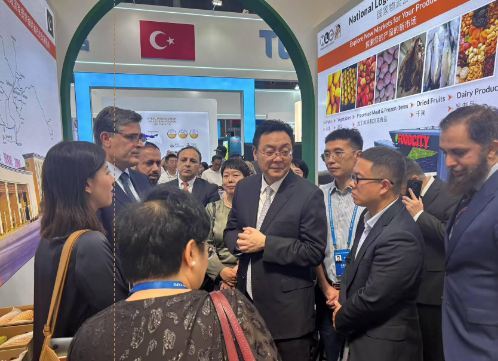
Pakistan Pavilion inaugurated at China-Eurasia Expo in Urumqi

Pakistan Pavilion inaugurated at China-Eurasia Expo in Urumqi

BEIJING, JUN 29 /DNA/ – Ambassador Khalil Hashmi, along with Mr. Zhu Lifan, Vice Chairman of the Xinjiang People’s Government inaugurated the Pakistan Pavilion at the China-Eurasia Expo in Urumqi, on 28 June 2025.

The pavilion’s showcase of premium Pakistani mangoes drew hundreds of visitors, making it one of the most popular exhibits. The fruit’s popularity highlighted Pakistan’s agricultural excellence and potential for growth.


​Another highlight was participation in the Expo for the first time by National Logistics Corporation and Green Pakistan Initiative. The Pakistan Pavilion also displayed a rich array of products, including jewelry, leather garments, luxury bags, and contemporary clothing, reflecting the country’s cultural heritage and manufacturing capabilities.


​Speaking on the occasion, Ambassador Khalil Hashmi briefed Mr. Zhu about the robust Pakistan-China ties, and Pakistan’s enhanced focus on increasing trade and investment relations with China, including Xinjiang. He gave the Vice Chairman a tour of the Pavilion, elaborating the high-quality of Pakistani products.

The Chinese VIP also praised the taste of Pakistani mangoes. The Ambassador also introduced the functioning of NLC and its role in ensuring the functionality of border integration between Pakistan and China. He also briefed Mr. Zhu about the Green Pakistan Initiative and its role in further augmenting people-to-people ties with Xinjiang.


​During his stay in Xinjiang, the Ambassador also met different levels of Xinjiang leadership, interacted with Chinese enterprises and media, and visited the Urumqi branch of Habib Bank Limited.

PM Shehbaz holds significant meeting with Chaudhry Nisar

PM Shehbaz holds significant meeting with Chaudhry Nisar

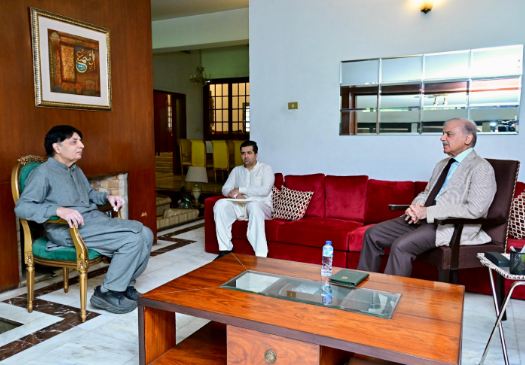
RAWALPINDI, JUN 29 /DNA/ – Prime Minister Muhammad Shehbaz Sharif held a high-level meeting with prominent political leader Chaudhry Nisar Ali Khan at the latter’s residence in Rawalpindi today. The meeting, marked by discussions on key national issues, reflected a shared commitment to strengthening political stability and addressing the challenges facing Pakistan.

The Prime Minister was warmly received by Chaudhry Nisar upon his arrival. The two leaders engaged in a detailed and cordial discussion, focusing on matters of national importance, including economic reforms, political unity, and governance. The meeting underscored the significance of inclusive dialogue and collaboration among political stakeholders to ensure the country’s progress.

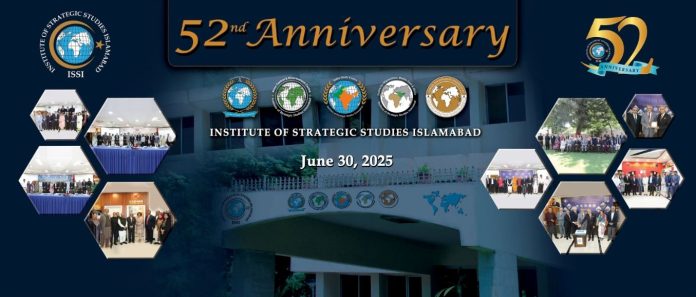
Curtain Raiser: ISSI to celebrate 52nd anniversary

Curtain Raiser: ISSI to celebrate 52nd anniversary

ISLAMABAD, JUN 29 /DNA/ – The Institute of Strategic Studies Islamabad (ISSI) will mark a significant milestone as it commemorates 52nd anniversary of its founding on June 30, 2025. Over the past many decades, ISSI has established itself as Pakistan’s premier think-tank, dedicated to advancing research and policy discourse on foreign affairs, national security, and global strategic issues. This anniversary will not only reflect on the Institute’s enduring legacy but also set the stage for future contributions to regional and international strategic thought. 

The occasion will see the release of the Institute’s new publications, offering fresh insights into evolving global and regional dynamics. With its five specialised Centres — China-Pakistan Study Centre (CPSC); Centre for Afghanistan, Middle East & Africa (CAMEA); India Study Centre (ISC); Arms Control & Disarmament Centre (ACDC); and Centre for Strategic Perspectives (CSP) — ISSI will continue to provide analysis on key themes, relating to security, foreign policy, and strategic issues. The Institute’s extensive network of partnerships with nearly 100 national and international think-tanks will further strengthen its mission to foster collaborative research and policy innovation. 

As ISSI steps into another eventful year, it will reaffirm the commitment to serving as a platform for intellectual exchange, policy advocacy, and informed decision-making. The anniversary celebrations will honour the contributions of researchers, practitioners, and partners who have been instrumental in shaping the Institute’s journey.

Speaking about the future, Director General Ambassador Sohail Mahmood said ISSI will continue to be in the vanguard of strategic discourse, reinforcing Pakistan’s foreign policy goals and promoting the cause of peace, security and international cooperation through knowledge, dialogue, and forward-looking analysis.

Stay Connected

64FansLike
60FollowersFollow

Latest Reviews

Exchange Rates

USD - United States Dollar
EUR
1.16
GBP
1.34
AUD
0.67
CAD
0.72