Home Blog Page 3259

Speakers laud China’s success to curb extremism in Xinjiang

ISLAMABAD, Aug. 22 (DNA): Xinjiang is one of the fast growing areas of China contrary to western propaganda, speakers at a webinar here said, according to a report published by Gwadar Pro on Saturday.

The webinar – titled ‘the success of Chinese policy against extremism in Xinjiang’ – was organized by the Pak-China Center for Friendship and Cooperation to highlight the economic development in Xinjiang due to effective policy of Chinese government.

The webinar was attended by foreign journalists, including Editor in Chief of the French monthly Nouvelle Solidarite Christine Bierre, National President of New Zealand China Friendship Society Dave Bormwich, Washington Bureau Chief of the Weekly Magzine Executive Intelligence Review Willam Jones and Chief Journalist of Chinese Guang Ming Daily Professor Zhou Rong.

The speakers hoped that the completion of China-Pakistan Economic Corridor (CPEC) would usher a new era of development and prosperity in Xinjiang.

“Xinjiang is today one of the fast growing areas of China with the energy sector leading the way. Big industries are being set up in the region and the CPEC will meet its growing energy needs,” said Columnist and Former Ambassador Javed Hafiz, highlighting success of the Chinese policy which spurred economic growth in the area.

Contrary to the propaganda peddled by foreign media about instability in Xinjiang, he said the Chinese government has been successful in poverty alleviation, controlling extremism and making this region a hub of development activities.

Javed said the central government had invested RMB2.35 trillion in Xinjiang during the last several years. Between 2014 and 2018, about 10 per cent of the provincial population had been lifted out of poverty.

He said last year, Xinjiang’s rural GDP (gross domestic product) increased by 9.7 per cent. “Today, no child is out of school in Xinjiang.”

The former ambassador rejected the propaganda of motivated quarters about presence of concentrated camps in the area. “The region has camps which only impart vocational trainings and language courses,” he added.

Sinologist Professor Engineer Zamir Ahmed Awan said the Chinese government, adopting unique model of development, had asked 19 other provinces to allocate certain amount of funds for Xinjiang development.

Former Air Force Officer Sultan Mahmood Hali said the fake news being churned out were based on lies and negated the on ground situation of Xinjiang.

He said China adopted ‘Going West’ policy in 1999 to reduce disequilibrium between western provinces of China through a dynamic investment policy, aimed at boosting industrial production infrastructure development.

Hali said Chinese President Xi Jinping brought this policy a leap forward with the launching of the Belt and Road Initiative which made Xinjiang the outpost to the Eurasian continent.
The speakers also rejected the propaganda of foreign media about prevalence of extremism in Xinjiang and endorsed the fact that the region had been witnessing economic development and prosperity.

They said the Belt and Road Initiative infused hope for a brighter future in Xinjiang as it connects China with eight countries including Afghanistan, India, Kazakhstan, Kirghizstan, Mongolia, Pakistan, Russia and Tajikistan.

Chairing the webinar, former information minister Nisar Memon said China had set new examples for the world.

“We are lucky that we have a friend like China. They give a solution for everything,” he added.

Xi says CPEC of great importance to promoting bilateral ties

BEIJING, AUG 21 (DNA) – Chinese President Xi Jinping said Friday that as a landmark project under the Belt and Road Initiative, the China-Pakistan Economic Corridor (CPEC) is of great importance to promoting in-depth development of the China-Pakistan all-weather strategic cooperative partnership and forging a closer China-Pakistan community with a shared future.

Xi, also general secretary of the Communist Party of China (CPC) Central Committee, made the remarks in a verbal message to Pakistani President Arif Alvi.

Xi said he appreciates the fact that Alvi sent a congratulatory letter to the opening of the Second Conference of the CPEC Political Parties Joint Consultation Mechanism, which fully demonstrated that Alvi attaches great importance to and supports the China-Pakistan relationship and construction of the CPEC.

China and Pakistan are good brothers and partners who share special friendship, Xi said, adding that political parties from both sides often carry out friendly consultations and constantly build political consensus, which is conducive to steadily advancing the construction of the CPEC as well as high-quality Belt and Road cooperation.

Since the COVID-19 epidemic broke out, the global fight has fully demonstrated that mutual support, solidarity and cooperation present a sure way for humanity to defeat this novel coronavirus, Xi said.

China stands ready to work with Pakistan to build a closer China-Pakistan community with a shared future, jointly promote regional solidarity and cooperation, and safeguard the good momentum of peace and development in the region.

Alvi had previously sent a congratulatory message to the Second Conference of the CPEC Political Parties Joint Consultation Mechanism.

He said in the message that building a community with a shared future for mankind and the Belt and Road Initiative put forward by Xi profoundly interpreted the true meaning of cooperation, peace and development and reflected the universal aspirations of the people around the world.

He thanked China specifically for providing timely medical assistance to Pakistan when it was ravaged by the COVID-19 pandemic.

He said Pakistan will continue to enhance cultural exchanges and mutual trust with China, share common goals with China and make joint efforts to promote regional peace and stability.

The CPEC Political Parties Joint Consultation Mechanism was established in 2019 between the CPC and the ruling and major non-ruling parties of Pakistan. On Thursday, the Second Conference of the CPEC Political Parties Joint Consultation Mechanism, organized by the International Department of the CPC Central Committee, was held via video link. = DNA

===========================

Speakers highlight need of multi-stakeholder engagement to achieve SDGs in After-Covid19 scenario

DNA

Islamabad, AUG 21 – Covid19 demands revisiting the planning and initiatives that aimed to achieve Sustainable Development Goals (SDGs).

This revisit is crucial, keeping the fact in view that the pandemic has resulted into new challenges and opportunities that need to be assessed properly as a way forward to achieve the SDGs. The speakers including the parliamentarians serving on SDGs Parliamentary task force,  said this while sharing their views with the participants at an online dialogue ‘COVID-19 and Pakistan’s SDG Agenda’ organized by the Sustainable Development Policy Institute (SDPI), in collaboration with Nestle Pakistan here on Friday.

Convener, Parliamentary Task Force on SDGs, Riaz Fatyana, while highlighting the overall impact of Covid19, said that education is the area that has been worst affected. He said that special focus is required to get education sector revived. He said that reopening of schools is being expected in mid September, depending on COVID-19 situation. On one hand we are mindful of the safety and health of our children. On other hand, we fear an increase in the number of out of school children. It is a challenge to maintain a subtle balance between the two situations.

He said that it is about time to initiate learning initiatives through involving civil society organization and other stakeholders so that education continues amidst pandemic. He also highlighted the importance of exchanges at parliamentarians’ level amongst different countries so that they may share experiences of how not to compromise on SGDs progress during these troubled times.

“Regular introspection about our response to Covid19 is need of the hour,” Mehnaz Akber Aziz, SDGs Taskforce Member and Chairperson Special Group on Child Rights, said while terming the pandemic as a huge challenge. She added further that unfortunately, the political commitment towards the programing and financing in social sector is not very strong while our healthcare and education sectors always remained ignored.

She said that the children-specific impacts of Covid19 haven’t been analyzed even though they are the ones that suffered the most during the pandemic. The pandemic is still far from being over and reopening of the schools would be a big risk, especially when the schools don’t have corona-financing available to ensure PPEs etc.  “As far as SDGs agenda is concerned, we need to identify 4 to 5 priority areas to focus upon keeping the available fiscal space in view”, she added. She also highlighted that online education has been expedited during the pandemic but we need to tackle digital equality now.

Dr Abid Qaiyum Suleri, Executive Director, SDPI, earlier highlighted the importance of a broader engagement with diverse stakeholders including the private sector to achieve SDGs. He said that good news is that COVID-19 has brought the policy focus back to social sector development. However,

“Digital divide has emerged as a key challenge that needs to be addressed at priority basis as we cannot leave anyone behind,” Dr Suleri remarked.

Waqar Ahmad, Head of Corporate Affairs, Nestle Pakistan, was of view that it’s time for all the stakeholders including the corporate/ private sector, to join hands for achieving SDGs. He said that venue should be provided for SME’s engagement around SDGs as SMEs are the backbone of our economy. He informed the participants that Nestle Pakistan has initiated Water Stewardship programme to benefit farmers and besides, an initiative for better nutrition for the children is also being implemented.

Economic Policy Advisor, SDG Support Unit, Ministry of Planning Development and Reform, Ali Kemal, while presenting the detail of pandemic impacts on SDGs, said that Covid19 has been a huge challenge for various sectors. However, the healthcare sector has shown improvement afterwards. He said that Ministry of Planning at present is in the process of mapping development expenditures in the context of progress on SDGs.

He said that Pakistan would be sharing its second Voluntary National Review (VNR) on SDGs and will be able to show progress towards achieving these goals.

The webinar concluded with the consensus that multidimensional challenges of SDGs can be tackled only through multi stakeholders engagement for which parliamentary task force is the right forum.

“Proactive initiatives required to explore potential of “Made in Pakistan” Halal food products “in global market” President FPCCI

DNA

Karachi , AUG 21 – Mian Anjum Nisar, President of the Federation of Pakistan Chambers of Commerce & Industry has urged upon the Government and the Private Sector to take proactive initiatives to explore the true potential of “Made in Pakistan” Products and to make niche in Global Market” while speaking to the gathering of Webinar organized by FPCCI on “Halal Industry” in Pakistan “Potential and Challenges” at Federation House, Karachi and Lahore Office. The President FPCCI asserted for improvement in quality of products, setting up accredited laboratories in order to meet standardization and conformity of Halal Food products to increase its exports manifold.

Mian Anjum Nisar, President FPCCI stated that globally the halal industry is expanding more rapidly in non-Muslim nations compared to Muslim nations due to safer, hygienic, reliable and nutritious products. He further added that the volume of global halal trade is more than US$ 3 trillion but the share of Pakistan is very minimal. He emphasized on the need to increase the halal food production and exports of semi cooked meat which is in highly demand in China and other Far East countries.

The webinar was organized and conducted by Sheikh Sultan Rehman, Vice President and attended by Vice Presidents FPCCI Dr. Muhammad Arshad and Qaiser Khan, Muhammad Ali Mian, Coordinator, FPCCI Regional Office Lahore,  Eng M A Jabbar Former Vice President FPCCI, Nasser Hyatt Maggo, Former President Karachi Chamber of Commerce and Industry, Shaukat Ahmed Former Sr. Vice President FPCCI,Dr. Akhtar Ahmed Bughio, Director General, Pakistan Halal Authority, Representative of Punjab Halal Development Authority, Mufti Yousaf Abdul Razzaq, CEO SANHA Halal Associates, Muhammad Zubair Mughal, Research Associate, Halal Research Council, Muhammad Awais Khan, Managing Director, Global Halal Services, Mr. Asad Sajjad Convener FPCCI Standing Committee on Halal goods and Services, Mufti Zeeshan Abdul Aziz, CEO international Halal Certification (Pvt) Ltd, Ms. Sehrish Zuberi, Renaissance Inspection & Certification Agency (Pvt.) Ltd and Syed Farrukh Mazhar, Managing Director F&M Inspections.

In his remarks, Sheikh Sultan Rehman, Vice President FPCCI stated that Halal industry has emerged into fast growing industry; attracting 2.4 billion people from all over the world. Pakistan, with a huge Muslim population, stands a chance of becoming a global hub for halal business, if the government pays attention to this industry. While quoting the statistics, he added that the trade of Halal industry has crossed three trillion dollars but the share of Pakistan is negligible (0.25 percent). He further stated that Pakistan has direct access to 470 million consumers of halal products in Central Asia, Middle East and Europe; we may achieve great success, if we adopt proper strategy and planning for establishing this industry. This industry is not limited to foods and beverages; but includes pharmaceutical, food services, cosmetics, financial services, logistics, tourism etc, he added.

Dr. Akhtar Ahmed Bughio, Director General, Pakistan Halal Authority stated that standardization and conformity of halal products is need of the hour to increase halal sector related exports. He added that halal is value addition and we need to modify our standards as per international requirement. He informed that there is huge demand of Pakistani Gelatin to be used in halal medicines in Muslim countries. At present, only 5-6 companies are working in this sector and Pakistan is importing 75 million Gelatin capsule. A Representative of Punjab Halal Development Agency informed that Halal standards are not uniform in all countries which increase the cost of

                                                                                                -2-

production and exports. There is need of development of one organization at OIC level which should develop their own rules and procedures of halal exports.

Dr. Muhammad Arshad Vice President FPCCI highlighted the potentials of halal meat which is highly demanded internationally due to texture and taste. He also informed that there is huge market of Pakistani meat in neighboring countries i.e. Afghanistan and Iran which can be explored by making new investment in cattle farming and slaughterhouses.

Muhammad Ali Mian Coordinator FPCCI Regional Office Lahore said that halal products cannot be deemed fully halal if they are produced through a process that is not entirely Shari’a compliance. A product will only be halal if its production and ingredients from start to finish, packaging, transportation and procedures are halal. As it happens, many halal manufacturers use interest-based borrowing or other Shari’a-repugnant methods of finance, therefore their products cannot be considered 100% halal.

Muhammad Awais Khan, Managing Director, Global Halal Services focused on the expansion of Pakistan Halal Development Council and requested to ban self developed halal logo which is creating problems in halal export.  Mufti Zeeshan Abdul Aziz, CEO International Halal Certification (Pvt) Ltd added that Pakistan has complete system of standardization which is internationally accepted by other countries. He further suggested that it should be mandatory for all imports of Pakistan to be halal certified. Moreover, there is a need of approval of Pakistan’s certification by other countries. Moreover, PSQCA should be strengthened to fulfill the mandatory standards requirement of other countries.

Muhammad Zubair Mughal, Research Associate, Halal Research Council proposed to introduce halal in tourism sector wherein Pakistan can earn millions of dollars.  Eng. M. A. Jabbar Former VP FPCCI underscored the need of development of Halal food industries through extending fiscal, monetary, trade policy adjustments along with regulatory framework. He further stated that Halal Development Authority should engage in facilitating mutual recognizing agreements on SPS to provide market access to our halal products. He added that Pakistan should take lead in exports of halal  meat as live stock contributed 60 percent in agriculture sector.

Mufti Yousaf Abdul Razzaq, CEO SANHA Halal Associates informed that Europe is currently generating 80 percent of global halal revenue and Pakistan has an opportunity to increase its export of halal commodity as 90 percent of our raw material are halal. He urged the government to give tax and monetary incentives to investors for promoting halal brands like other nations Brazil, Thailand, Indonesia, Malaysia etc. Moreover, Pakistan has to participate in international halal exhibitions for promotion of Pakistani products.

Mr. Farrukh Mazhar, Managing Director F&M Inspections underscored the need of creating awareness in our foreign missions as they can play important role in enhancing Pakistani exports.

Ms. Sehrish Zuberi, Food Manager Renaissance Inspection & Certification Agency (Pvt.) Ltd stated that the acceptance of halal standards is a big issue as all countries have their own standards. Mr. Asad Sajjad Convener FPCCI Standing Committee on Halal goods and services also talked about the activities of his standing committee and requested to take membership in it.

2nd Round of China-Pakistan Foreign Ministers’ Strategic Dialogue held in Hainan, China

DNA

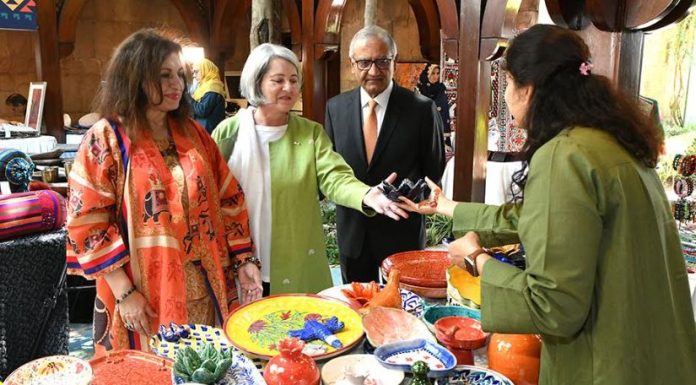
HAINAN, AUG 21 –  State Councilor and Foreign Minister Wang Yi of the People’s Republic of China and Foreign Minister Makhdoom Shah Mahmood Qureshi of the Islamic Republic of Pakistan held the 2nd Round of China-Pakistan Foreign Ministers’ Strategic Dialogue in Hainan Province, China.

The two sides exchanged views on COVID-19 pandemic, bilateral relations,and international and regional issues of mutual interest, and reached consensus to collectively take measures to safeguard their common interests and promote peace, prosperity, and development in the region.

Both sides agreed that Pakistan and China have stood in solidarity and worked together since the COVID-19 outbreak by timely sharing of experiences relating to the prevention and control of the virus, mutual support in providing medical materials, and have set an example for international community to jointly fight the pandemic. Both sides agreed to further strengthen cooperation in developing a vaccine to defeat the COVID-19 pandemic, and strive to promote establishment of China-Pakistan Community of Shared Future and Community of Common Health. Both sides emphasized that unity and cooperation are the most powerful weapon for the international community against the disease. Both sides opposed politicizing the pandemic, labeling viruses; supported WHO to play a leading role in global public health governance, and called for the international community to increase the sense of a community of shared future and carry out effective joint prevention and control measures in order to mitigate the negative effects of COVID-19.

Both sides reiterated that the enduring China-Pakistan All-weather Strategic Cooperative Partnership is beneficial to international and regional peace and stability, and serves the mutual security and development interests of both countries as well as of international community and regional countries. Both sides were committed to firmly implementing the consensus reached between the two leaders, enhancing mutual strategic trust, strengthening all-round cooperation, maintaining momentum of high-level exchanges, further advancing construction of Belt and Road Initiative, promoting bilateral relationship to a higher level, and delivering greater benefits to both countries and the two peoples.

Both sides agreed on continuing their firm support on issues concerning each other’s core national interests. The Chinese side reiterated that Pakistan and China are iron brothers and Pakistan remains China’s staunchest partner in the region and that China firmly supports Pakistan in safeguarding its territorial integrity, sovereignty and independence, independently choosing a development path based on its national conditions, striving for a better external security environment and playing a more constructive role on international and regional affairs. The Pakistani side appreciated China for standing together with Pakistan in safeguarding its national security and sovereignty, and reaffirmed its firm support to China on affairs concerning China’s core interests and issues of major concern, such as those related to Taiwan, Xinjiang, Tibet and Hong Kong.

Both sides underscored that China-Pakistan Economic Corridor (CPEC) has entered the new phase of high-quality development, and has played and will continue to play an important role in supporting Pakistan to overcome the impact of COVID-19 and achieve greater development. The two sides will continue to firmly advance the construction of CPEC, ensure in-time completion of those projects under construction, focus on economic and social development, job creation and improvement of people’s livelihood, and further strengthen cooperation in Specialized Economic Zones, industrial relocation, science and technology, medical and health, human resources training, poverty alleviation, and agriculture etc., with the aim to continuously unleash the great potential of CPEC to make it a hub of regional connectivity. Both sides expressed satisfaction on agreements reached on recent mega energy projects and look forward to convening the 10th JCC meeting at the earliest possible date to promote CPEC to make positive contributions to the high-quality construction of BRI.

Both sides reaffirmed the principle of wide consultation, joint contribution and shared benefits in building CPEC, and welcomed the international community to join in the CPEC construction on the basis of consensus to achieve shared development.

Both sides expressed satisfaction over cooperation on regional and international issues at multilateral fora such as the UN, Shanghai Cooperation Organization and ASEAN Regional Forum, and agreed to deepen coordination and cooperation to safeguard mutual interests and uphold principles of fairness and justice. Both sides reaffirmed their commitment to the purposes and principles of the UN Charter, and support for multilateralism, free trade and win-win cooperation, and opposition to unilateralism, protectionism and coercive practices.

Both sides underlined that a peaceful, stable, cooperative and prosperous South Asia was in common interest of all parties. Parties need to settle disputes and issues in the region through dialogue on the basis of equality and mutual respect. The Pakistani side briefed the Chinese side on the situation in Jammu & Kashmir, including its concerns, position and current urgent issues. The Chinese side reiterated that the Kashmir issue is a dispute left over from history between India and Pakistan, which is an objective fact, and that the dispute should be resolved peacefully and properly through the UN Charter, relevant Security Council resolutions and bilateral agreements. China opposes any unilateral actions that complicate the situation.

Both sides agreed to strengthen cooperation on the Afghan issue and appreciated the efforts made by Afghan government and the Taliban to initiate the Intra-Afghan Negotiations. They emphasized the importance of an inclusive, broad-based and comprehensive negotiated agreement for future political settlement in Afghanistan. While reaffirming their commitment to an Afghan-led and Afghan-owned Peace Process, both sides encouraged relevant parties in Afghanistan to seize this historic opportunity and commence the Intra-Afghan Negotiations at the earliest leading to durable peace and stability in Afghanistan. China appreciated Pakistan’s positive contribution to the Afghan peace process and efforts for promoting peace and stability in region and beyond.

Both China and Pakistan reaffirmed the vitality of the time-tested and All-Weather Strategic Cooperative Partnership between the two countries which remains unaffected by the vicissitudes of the regional and international developments and continues to move from strength to strength.

Khalilzad urges govt, Taliban to start intra-Afghan talks

DNA

KABUL, AUG 21  –  US Special Representative for Afghanistan Reconciliation Zalmay Khalilzad called on the Afghan government and the Taliban to immediately start intra-Afghan negotiations.

In a series of tweets, Khalilzad said: “there is no legitimate reason for delay.” Khalilzad Condemn the Wednesday’s attacks in Kabul that claimed the lives of two civilians, including Abdulbaqi Amin, who was the head of the science council at the Ministry of Education.

He further added that “His death at the hands of spoilers who seek to delay and derail Afghan peace is tragic. We condemn this terrorist act and offer our condolences to his family, friends, and the Afghan people who yearn for peace.”

“The right tribute to Dr Amin is for all sides to reduce violence and immediately start intra-Afghan negotiations,” he tweeted.

Naval chief inaugurates new joint maritime information coordination centre

DNA

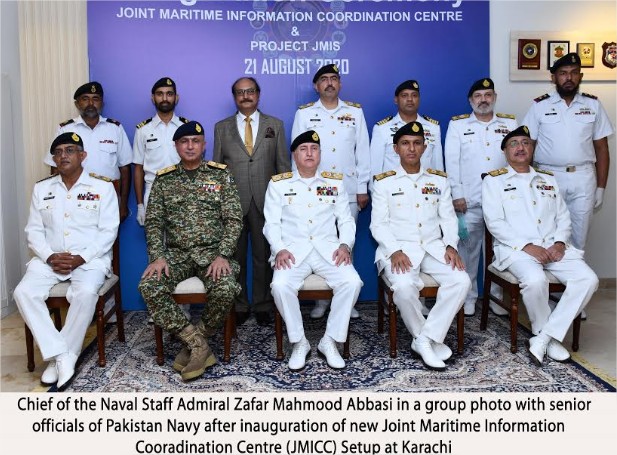
KARACHI, AUG 21 – The inauguration ceremony of new state of the art Joint Maritime Information Coordination Centre (JMICC) held at Karachi.  Chief of the Naval Staff, Admiral Zafar Mahmood Abbasi graced the occasion as Chief Guest and inaugurated the new setup.

Joint Maritime Information Coordination Centre (JMICC) functions as a nerve centre to harmonise the efforts of all maritime  related organizations/ agencies. It helps generating a coordinated response to maritime security challenges within Pakistan’s Exclusive Economic Zone (EEZ), primarily through information sharing and inter department/ agency coordination. The centre was established in February 2013 and is manned round the clock by a competent team which include reps of relevant stakeholders.

The new setup of JMICC has been equipped with indigenously developed Joint Maritime Information Sharing (JMIS) software, a modern Operations Room and associated infrastructure.  The capacity enhancement will enable JMICC to effectively knit maritime entities of Pakistan and International Information Fusion Centres (IFCs) to augment safety and security in the maritime domain.

DNA 21-8

During the ceremony, the Naval Chief termed the event an important milestone, which will further support PN’s effort to promote maritime security in the region.  He appreciated the indigenous efforts to develop such a state of the art system.

The inauguration ceremony was attended by Chief of Staff (Operations), Commander Pakistan Fleet, Commander Coast, Commander Karachi and other Senior Naval Officers.

Govt cannot blame former rulers for inflation after two years in power

DNA

ISLAMABAD, AUG 21 –  President Pakistan Businessmen and Intellectuals Forum and All Karachi Industrial Alliance and former provincial minister Mian Zahid Hussain on Friday said administrative action and threats have failed to reduce prices flour and sugar therefore strategy should be changed to negotiate to get the desired results.

The government has pushed IPP to reduce the electricity price through negotiations and it should follow the same path for flour and electricity, he said.

Mian Zahid Hussain said that the government should stop blaming former government to inflation and other problems as they are ruling the country for two years and now masses will not buy their accusations.

Talking to the business community, the veteran business leader said that former governments took interest in keeping prices balanced and frequently help price committees meetings but the present government has not held any reported meeting so far.

He noted that district administrations should also follow the footsteps of former district administrations to improve the situation.

The business leader noted that lack of investment opportunities has pushed many to invest in food items, local currency has eroded substantially, taxes on fuel are very high, while not a single kilogram of wheat or sugar has been imported since the crisis gripped the country.

The production of sugarcane is lowest in the last five years and the sugar production in 2019-20 was lowest in a decade which should also be noted, he demanded.

PARC, IWMI agree to bring Renewable Energy Transition in Irrigation Sector

Islamabad: PARC and International Water Management Institute (IWMI) agreed on joint research and implementation of the project on Solar Irrigation for Agricultural Resilience in South Asia (SOLAR-SA) through signing an MOU at PARC, Islamabad. In the presence of Chairman PARC Dr. Muhammad Azeem Khan, Wiqar Ahmed, Secretary PARC and Dr. Mohsin Hafeez, Country Representative, IWMI signed the document.

Dr. Muhammad Azeem Khan, Chairman PARC, while expressing his views, said that the best way to meet the nutritional needs of the depleted agricultural water and the growing population is to discover high yielding crops per acre. At the same time, modern methods of irrigation should be adopted instead of traditional methods of irrigation. The Chairman also spoke on MoU and told that with the project of SOLAR-SA, PARC and IWMI will be able to seek the potential of solar irrigation pumps by replacing it with existing diesel and grid connected pumps. Furthermore, Dissemination of the research results and technical support will be provided through organizing joint workshops, training programs, scientific conferences, forums and seminars.

Dr. Mohsin Hafeez, Country Rep. IWMI revealed, under this agreement both parties will promote policies and strategies for sustainable, gender inclusive and equitable renewable energy transition in irrigation sector, in ways that will mitigate the existing groundwater issues in Pakistan.

Solar irrigation pumps which are sustainable, climate resilient and beneficial for the end users, also provide a best alternative in the areas where there is no electricity. Dr. Mohsin Hafeez also appreciated the efforts of PARC scientists in the development of agriculture sector.

Stay Connected

64FansLike
60FollowersFollow

Latest Reviews

Exchange Rates

USD - United States Dollar
EUR
1.17
GBP
1.35
AUD
0.71
CAD
0.72