Home Blog Page 323

Naqvi hails security forces for Duki operation against India-linked terrorists

Mohsin Naqvi

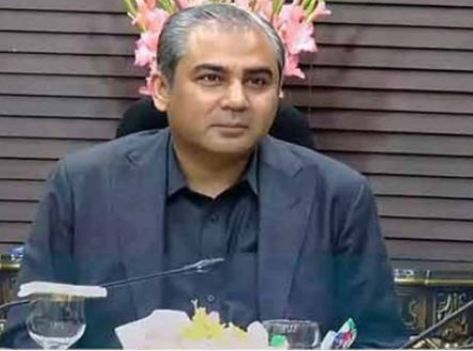
ISLAMABAD, JUN 29 /DNA/ – Federal Interior Minister Mohsin Naqvi has paid tribute to the security forces for their successful operation against India-backed terrorists in the Duki area of Balochistan.

Mohsin Naqvi praised the professional capabilities of the security forces for sending two terrorists of the India-backed network to hell and saluted the brave personnel for the successful operation.

He emphasized that the elimination of these India-backed terrorists will be ensured at all costs, adding that the entire nation stands shoulder to shoulder with the security forces in eradicating this menace.

Pakistan Pavilion inaugurated at China-Eurasia Expo in Urumqi

Pakistan Pavilion inaugurated at China-Eurasia Expo in Urumqi

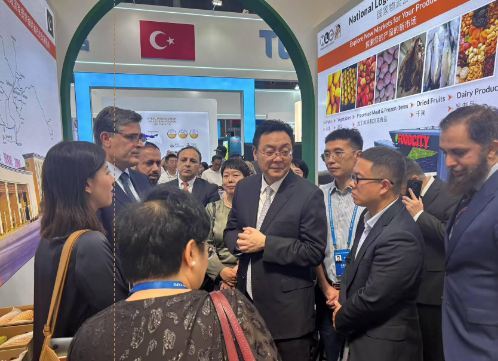
BEIJING, JUN 29 /DNA/ – Ambassador Khalil Hashmi, along with Mr. Zhu Lifan, Vice Chairman of the Xinjiang People’s Government inaugurated the Pakistan Pavilion at the China-Eurasia Expo in Urumqi, on 28 June 2025.

The pavilion’s showcase of premium Pakistani mangoes drew hundreds of visitors, making it one of the most popular exhibits. The fruit’s popularity highlighted Pakistan’s agricultural excellence and potential for growth.


​Another highlight was participation in the Expo for the first time by National Logistics Corporation and Green Pakistan Initiative. The Pakistan Pavilion also displayed a rich array of products, including jewelry, leather garments, luxury bags, and contemporary clothing, reflecting the country’s cultural heritage and manufacturing capabilities.


​Speaking on the occasion, Ambassador Khalil Hashmi briefed Mr. Zhu about the robust Pakistan-China ties, and Pakistan’s enhanced focus on increasing trade and investment relations with China, including Xinjiang. He gave the Vice Chairman a tour of the Pavilion, elaborating the high-quality of Pakistani products.

The Chinese VIP also praised the taste of Pakistani mangoes. The Ambassador also introduced the functioning of NLC and its role in ensuring the functionality of border integration between Pakistan and China. He also briefed Mr. Zhu about the Green Pakistan Initiative and its role in further augmenting people-to-people ties with Xinjiang.


​During his stay in Xinjiang, the Ambassador also met different levels of Xinjiang leadership, interacted with Chinese enterprises and media, and visited the Urumqi branch of Habib Bank Limited.

PM Shehbaz holds significant meeting with Chaudhry Nisar

PM Shehbaz holds significant meeting with Chaudhry Nisar

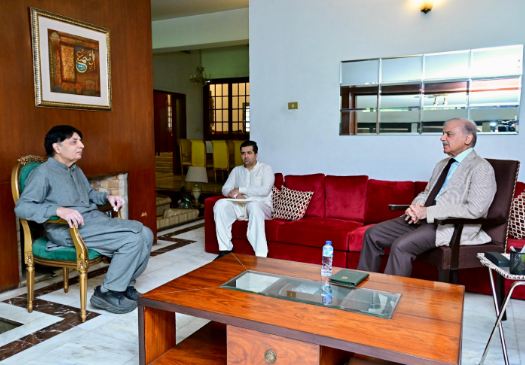
RAWALPINDI, JUN 29 /DNA/ – Prime Minister Muhammad Shehbaz Sharif held a high-level meeting with prominent political leader Chaudhry Nisar Ali Khan at the latter’s residence in Rawalpindi today. The meeting, marked by discussions on key national issues, reflected a shared commitment to strengthening political stability and addressing the challenges facing Pakistan.

The Prime Minister was warmly received by Chaudhry Nisar upon his arrival. The two leaders engaged in a detailed and cordial discussion, focusing on matters of national importance, including economic reforms, political unity, and governance. The meeting underscored the significance of inclusive dialogue and collaboration among political stakeholders to ensure the country’s progress.

Curtain Raiser: ISSI to celebrate 52nd anniversary

Curtain Raiser: ISSI to celebrate 52nd anniversary

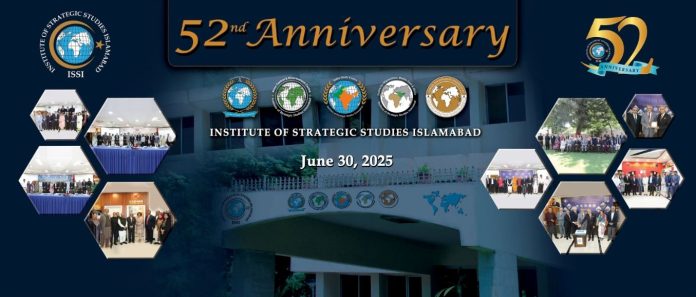
ISLAMABAD, JUN 29 /DNA/ – The Institute of Strategic Studies Islamabad (ISSI) will mark a significant milestone as it commemorates 52nd anniversary of its founding on June 30, 2025. Over the past many decades, ISSI has established itself as Pakistan’s premier think-tank, dedicated to advancing research and policy discourse on foreign affairs, national security, and global strategic issues. This anniversary will not only reflect on the Institute’s enduring legacy but also set the stage for future contributions to regional and international strategic thought. 

The occasion will see the release of the Institute’s new publications, offering fresh insights into evolving global and regional dynamics. With its five specialised Centres — China-Pakistan Study Centre (CPSC); Centre for Afghanistan, Middle East & Africa (CAMEA); India Study Centre (ISC); Arms Control & Disarmament Centre (ACDC); and Centre for Strategic Perspectives (CSP) — ISSI will continue to provide analysis on key themes, relating to security, foreign policy, and strategic issues. The Institute’s extensive network of partnerships with nearly 100 national and international think-tanks will further strengthen its mission to foster collaborative research and policy innovation. 

As ISSI steps into another eventful year, it will reaffirm the commitment to serving as a platform for intellectual exchange, policy advocacy, and informed decision-making. The anniversary celebrations will honour the contributions of researchers, practitioners, and partners who have been instrumental in shaping the Institute’s journey.

Speaking about the future, Director General Ambassador Sohail Mahmood said ISSI will continue to be in the vanguard of strategic discourse, reinforcing Pakistan’s foreign policy goals and promoting the cause of peace, security and international cooperation through knowledge, dialogue, and forward-looking analysis.

Forces kill two outlaws in Duki Distt

Security forces kill four terrorists in D.I.Khan

Two security personnel embrace martyrdom in Lakki Marwat blast

RAWALPINDI, 29 JUN /DNA/ – Security forces conducted an intelligence based operation in Duki District of Balochistan, on reported presence of terrorists belonging to Indian proxy, Fitna al Hindustan.

During the conduct of operation, own forces effectively engaged the Indian sponsored terrorists’ location, and after an intense fire exchange, two Indian sponsored terrorists were sent to hell, while two terrorists were apprehended.

Weapons, ammunition and explosives were also recovered from the Indian sponsored terrorists, who remained actively involved in numerous terrorist activities in the area.

Sanitization operation is being conducted to eliminate any other terrrorist found in the area, as the security forces of Pakistan are determined to wipeout the menace of Indian sponsored terrorism from the country, and reaffirm the nation’s unwavering resolve to bring the perpetrators of terrorism to justice.

Meanwhile,):A devastating blast struck a security forces vehicle in the Wanda Simo area of Lakki Marwat on Sunday, resulting in two soldiers being martyred and three injured, while security sources fear multiple casualties from the explosion’s

force.

According to details, the security officials said the vehicle involved in the blast was reportedly destroyed and claimed 2 precious lives on the spot, a private news channel reported.

The explosion is believed to have been caused by an improvised explosive device (IED), the sources stated.

An investigation has been launched, and the area has been cordoned off as authorities work to gather more details.

Sikhs attend Maharaja Ranjit Singh’s 186th anniversary in Lahore

Sikhs

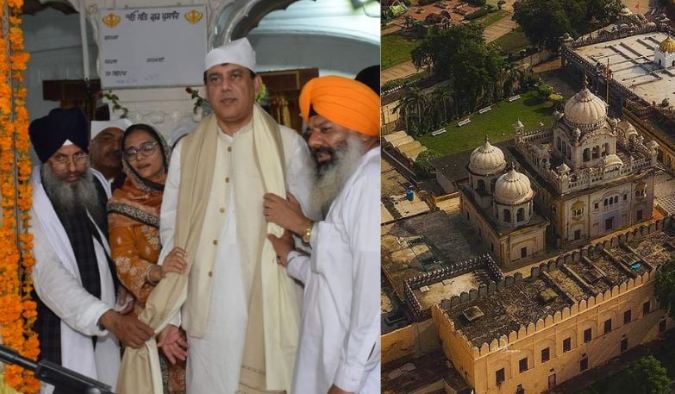
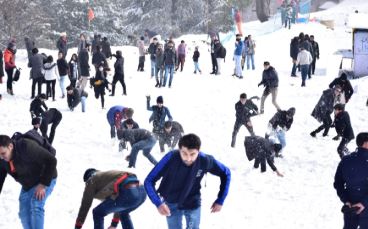
LAHORE, JUN 29: The central ceremony marking the 186th death anniversary of Maharaja Ranjit Singh was held at Gurdwara Dera Sahib in Lahore, attended by a large number of Sikh pilgrims from across the globe.

The Sikh pilgrims, along with the local Sikh community, performed religious rituals and expressed deep sorrow over the absence of Indian Sikh yatris, who were unable to attend due to restrictions from the Indian government.

The participants strongly condemned the Indian authorities for not allowing Sikh pilgrims to visit Pakistan for this sacred occasion.

Dr. Sajid Mehmood, Chairman of the Evacuee Trust Property Board, stated that Pakistan had made all necessary arrangements to host the Indian Sikh yatris and was fully prepared to welcome them.

Strict security measures were in place throughout the ceremony to ensure the safety of the visitors.

Iran, Pakistan Army Chiefs Discuss Regional Security Over Phone

Iran

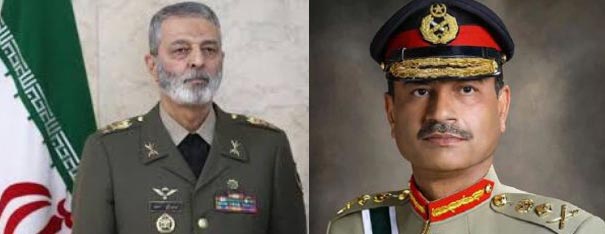
Tehran, Jun 29 (DNA) – The Chief of General Staff of the Iranian Armed Forces, Major General Seyed Abdul Rahim Mousavi, held a telephone conversation with Pakistan’s Field Marshal General Syed Asim Munir, on Sunday to discuss bilateral defense cooperation and regional security.

According to Iranian news agency, the two military leaders emphasized strengthening ties between their armed forces and enhancing joint efforts to combat terrorism and ensure stability in the region. Gen. Mousavi highlighted the importance of mutual trust and collaboration in addressing common security challenges, including border security and counter-terrorism operations.

Field Marshal. Munir reaffirmed Pakistan’s commitment to deepening defense relations with Iran and expressed appreciation for Tehran’s role in regional peace. Both sides agreed on the need for continued dialogue and coordinated actions to prevent threats to regional security.

This high-level contact follows recent diplomatic engagements between Iran and Pakistan, signaling a renewed focus on security partnership amid evolving geopolitical dynamics. Analysts view the conversation as a step toward greater military coordination between the two neighboring nations.

Supreme Court verdict on reserved seats: ‘a death knell for democracy’

Supreme Court verdict on reserved seats: ‘a death knell for democracy’

“The current ruling alliance appears powerful on the surface. With the judiciary’s decision gifting them enhanced parliamentary strength, they now wield near-absolute authority. But this power is conditional, fragile, and temporary. History tells us that the moment this “same page” narrative with the establishment fades, the very powers that elevated them will become their undoing”

Ansar Mahmood Bhatti

The recent Supreme Court decision regarding the distribution of reserved seats in the National Assembly has sent shockwaves across Pakistan’s political spectrum. By denying Pakistan Tehreek-e-Insaf (PTI) its share of reserved seats and directing that these be distributed among other political parties, the apex court verdict appears to have shifted the balance of parliamentary power .

With this verdict, the ruling coalition—comprising PML-N, PPP, and allied parties—is poised to gain a two-thirds majority in the National Assembly. This supermajority, made possible not by electoral strength but by judicial endorsement, has been rightly labelled by many as an undemocratic, even unjust, outcome. Whether or not PTI fulfilled the legal prerequisites to claim these seats is beside the point; what matters is that the ruling parties, who themselves did not contest these seats, are now reaping the political dividends. This manufactured majority is not a reflection of the people’s mandate—it is a result of ‘judicial engineering’, and it will have long-lasting consequences for Pakistan’s political landscape.

This decision is a glaring example of how state institutions, instead of playing a neutral role, have once again appeared to side with the powers that be. In this case, the ruling elite and the establishment seem to be the ultimate beneficiaries, while democracy lies ‘bruised and battered’. Indeed, Pakistan has never enjoyed a fully functional democratic system, but the small semblance of representative governance that did exist has now been severely undermined.

Let us be candid. The PTI government during its tenure failed on multiple fronts. Governance was chaotic, corruption reached record levels, and institutional dysfunction grew exponentially. PTI failed to live up to its lofty promises and instead indulged in political vendettas, poor policymaking, and an overall disregard for consensus-building. But does that justify the unprecedented crackdown on the party after its fallout with the establishment? Absolutely not.

The way PTI has been marginalized—its leaders jailed, its members coerced into disassociating from the party, and now, its rightful political space usurped—is not just troubling; it is dangerous. This appears to be a punishment not for incompetence, but for disobedience. PTI’s real crime was refusing to toe the line, to continue playing puppet.

The current ruling alliance appears powerful on the surface. With the judiciary’s decision gifting them enhanced parliamentary strength, they now wield near-absolute authority. But this power is conditional, fragile, and temporary. History tells us that the moment this “same page” narrative with the establishment fades, the very powers that elevated them will become their undoing. We have seen this cycle repeat with the PML-N, PPP, and now PTI. The question is: for how long will this vicious cycle continue?

This institutionalized power game is crippling the country. It has distorted the foundations of governance, hollowed out democratic institutions, and left the common citizen disillusioned and disenfranchised. With each passing day, poverty grows, corruption festers, and the gap between the rulers and the ruled widens. The state appears more interested in maintaining its internal power equilibrium than addressing the needs of its people. It is a shameful reality that we continue to celebrate IMF bailouts as achievements, rather than confronting the root causes of our economic dependence.

The ruling elite seems disconnected from the ground realities. Inflation is choking the masses, public services are deteriorating, and lawlessness is spreading. Yet, the corridors of power remain preoccupied with political maneuvering, rather than public welfare. Governance has become a sideshow to the main drama of power consolidation and political survival.

This Supreme Court verdict has not just handed over a few parliamentary seats—it has fundamentally altered the political equation of the country. It has given legitimacy to a distorted electoral outcome and has validated the exclusion of one of the largest political parties from the democratic process. The consequences of this will be far-reaching. It may create a short-term political stability for the ruling alliance, but it will do so at the cost of long-term national cohesion and democratic development.

Pakistan’s democratic journey has always been fraught with interruptions, but never before has the erosion been so systemic, so institutional, and so unapologetic. If the political class does not unite to resist this ongoing decay, the very idea of representative democracy will be rendered meaningless. What is needed now is not just an outcry from civil society and political commentators, but a serious introspection by all stakeholders—including the judiciary and the establishment—on the damage being done to the constitutional order of the country.

It is time to ask ourselves: What kind of Pakistan are we building? One where power is determined not by the ballot but by boardroom deals? One where judicial decisions tilt political fortunes? One where parties that challenge the status quo are decimated through non-political means? If this trajectory continues, then we are hurtling toward authoritarianism, whether civil or military, masked in democratic attire.

There is no doubt that PTI made grave mistakes during its tenure. It alienated allies, mishandled the economy, and eroded institutional trust. But political mistakes should be corrected through the democratic process—not by sidelining an entire party through legal, administrative, and coercive tools. Democracy demands inclusion, competition, and accountability. What we are witnessing is exclusion, manipulation, and repression.

The Supreme Court decision on reserved seats may have resolved a legal question, but it has opened a moral and political wound. The judiciary may have thought it was interpreting the constitution, but in doing so, it has added fuel to the fire of political polarization. This verdict, rather than being a triumph of law, will be remembered as a setback for democratic ideals. The road ahead for Pakistan appears even more uncertain, and unless corrective steps are taken soon, the dream of a democratic, prosperous Pakistan will remain elusive.

The first and most immediate casualty of the recent Supreme Court verdict on the distribution of reserved seats is likely to be the Pakistan Tehreek-e-Insaf (PTI)-led government in Khyber Pakhtunkhwa (KP). The decision, which has significantly altered the political calculus at the national level by denying PTI its share of reserved seats and allocating them to rival parties, is expected to embolden efforts to dislodge the provincial government in KP—a stronghold of PTI.

There is a growing consensus among influential quarters that KP, given its geo-strategic significance and security sensitivities, cannot be left under the control of a party that is perceived to be defiant and uncooperative with the federal government and other state institutions. In this context, the PTI government is increasingly being viewed as a destabilizing factor rather than a legitimate stakeholder in the democratic process.

However, replacing the PTI government in KP is not a straightforward task. Despite the political will to oust PTI, the practical question remains: who will run the province in its absence? Neither the Pakistan Muslim League-Nawaz (PML-N) nor the Pakistan Peoples Party (PPP) has the numerical strength in the KP Assembly to form a government. The only feasible political player with some presence in the province is the Jamiat Ulema-e-Islam (JUI-F), led by Maulana Fazlur Rehman. Yet, bringing the JUI-F on board is not without its complications. The party’s ideological rigidity, internal dynamics, and long-standing opposition to certain federal policies make it a difficult coalition partner.

Given these constraints, an increasingly likely scenario is the imposition of Governor’s Rule in the province. This would effectively place KP under direct federal control—an extraordinary move that may provoke legal and political challenges but is being seriously contemplated. The justification offered will likely center on maintaining law and order, national security, and the need to ensure “governance continuity.” However, such a step would also risk exacerbating the political divide and could trigger strong public and institutional reactions in KP and beyond.

Beyond the immediate provincial implications, the Supreme Court’s verdict could pave the way for deeper, more structural changes in Pakistan’s political framework. One potential and highly consequential outcome could be the introduction of a constitutional amendment aimed at formalizing the role of the Establishment in political decision-making. Such a move would, in effect, legitimize the behind-the-scenes influence that the Establishment has historically exerted over civilian governments. This would not only insulate it from criticism but also provide legal cover to its interventions in political processes, including elections, governance, and parliamentary affairs.

If pursued, this amendment would mark a significant shift in Pakistan’s constitutional order—one that would further blur the lines between civil and military domains. While proponents might argue this ensures political stability and national security, critics would view it as a step backward for democratic norms and civilian supremacy.

In sum, the Supreme Court’s verdict is not just a legal pronouncement—it is a political earthquake with aftershocks that may fundamentally reshape Pakistan’s political and constitutional architecture. KP stands on the frontlines of this unfolding drama, with its future governance structure hanging in the balance.

‘Power Smart App’ to curb overbilling, billing transparency

Power Smart App

The app enables consumers to take a photograph of their electricity meter on a specified date and upload it to the App. Based on this user-submitted image, monthly electricity bills will be generated

Mahnoor Ansar

ISLAMABAD, JUN 29 /DNA/ – The Ministry of Power Division has introduced the Power Smart App under the “Apna Meter, Apni Reading” initiative to make electricity consumers directly part of the system and promote transparency in the billing process.

The App was formally launched by Prime Minister Muhammad Shehbaz Sharif on Sunday, said the spokesperson of the power division.

The app enables consumers to take a photograph of their electricity meter on a specified date and upload it to the App. Based on this user-submitted image, monthly electricity bills will be generated—offering a technological response to long-standing issues such as overbilling, reading errors and delay in reading.

This is not just a technology feature but a solid reform in governance, which truly empowers consumers. With this system, consumers will not only be able to keep an eye on their bill, but now they will also be the guardians of the reading process.

One of the key advantages of the Power Smart App is its potential to protect subsidy-eligible users from losing financial support due to delayed or inaccurate readings. Officials cited the example of users consuming up to 200 units of electricity, whose subsidized bills total approximately Rs 2,330. If usage rises even slightly above that threshold, the subsidy ends and the bill can jump to over Rs 8,000. Through this app, it will be possible to ensure that the beneficiaries benefit from their subsidy by providing timely readings.

Another feature included in the app, if the user provides the reading on the due date, the meter reading taken after that day will not be given priority and only the reading provided by the user will be fed.

Features like “Apna Meter, Apni Reading” will not only create transparency in the electricity system but will also empower the consumers to the extent that they can monitor their own billing. This will significantly reduce overbilling, unnecessary interference and complaints.

This innovative and revolutionary solution was implemented with the efforts of Secretary Power Division Dr. Fakhar Alam and the entire team working on it under the leadership of Federal Minister for Energy Sardar Awais Ahmed Khan Leghari.=DNA

A wave of diplomatic departures: Several envoys did farewell to Pak

A wave of diplomatic departures: Several envoys did farewell to Pak

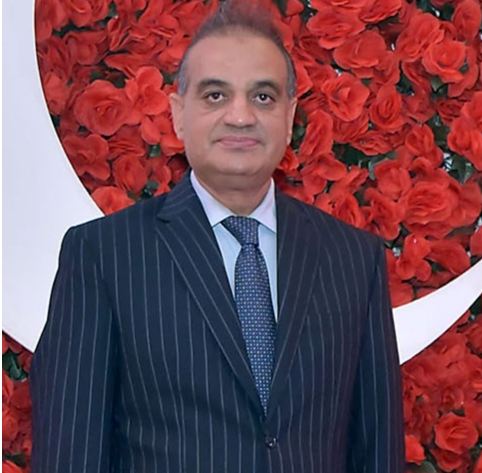
Hungarian Ambassador Bela Fazekas holds a unique position in diplomatic history, having served as Hungary’s envoy not once, but twice. His first term was in 2007, and he returned years later for a second stint, making him one of the few ambassadors to be appointed to the same country multiple times

Mahnoor Ansar

ISLAMABAD, JUN 29 /DNA/ – In recent months, Pakistan has witnessed a significant transition in its diplomatic landscape as several foreign ambassadors have either completed their tenures or are preparing to leave. This wave of departures includes long-serving diplomats, retiring envoys, and those leaving due to political changes in their home countries. Among them is Hungary’s Ambassador Bela Fazekas, who is set to depart after completing his second term in Pakistan—a rare distinction in the world of diplomacy.

Hungarian Ambassador Bela Fazekas holds a unique position in diplomatic history, having served as Hungary’s envoy not once, but twice. His first term was in 2007, and he returned years later for a second stint, making him one of the few ambassadors to be appointed to the same country multiple times. His deep understanding of Pakistan’s political and cultural dynamics allowed him to strengthen bilateral ties, particularly in trade, education, and cultural exchange.

Fazekas is part of an exclusive group of diplomats who have had the rare opportunity to serve twice in the same country. Another notable example is Aybek Osmanov, the former Ambassador of Uzbekistan to Pakistan, who also served two separate terms. Such reappointments are uncommon in diplomacy, as ambassadors are typically rotated to different postings after their terms end.

Alongside Ambassador Fazekas, several other high-profile envoys are bidding farewell to Pakistan: Austria’s Ambassador Andrea Wicke: After a distinguished career, Ambassador Wicke is retiring from foreign service. During her tenure, she worked to enhance Austria-Pakistan relations, particularly in economic cooperation and cultural diplomacy.

Iraq’s Ambassador Hamid Abbas Lafta has already left Islamabad, marking the end of his diplomatic assignment. His departure follows the completion of his term, with Iraq expected to appoint a new ambassador soon.

South Korea’s Ambassador is set to leave Pakistan in the coming weeks. His tenure saw significant progress in Pakistan-South Korea relations, especially in technology, automotive industry collaboration, and workforce exchanges.

EU Ambassador Riina Kionka as the head of the European Union delegation to Pakistan, played a pivotal role in shaping EU-Pakistan relations, particularly in trade, governance, and human rights. Her departure marks the end of a dynamic term.

Denmark’s Ambassador Jakob Linulf, known for his active engagement in development projects and climate advocacy, is also concluding his assignment in Pakistan.

In some cases, ambassadors have left before completing their expected tenures, likely due to political shifts in their home countries:  Kyrgyzstan’s ambassador departure was abrupt, with no official successor named yet. Given recent political developments in Kyrgyzstan, his exit may be linked to changes in government priorities.

Sri Lanka’s high commissioner left Pakistan earlier than anticipated. Colombo has not yet announced a replacement, suggesting internal political factors may have influenced the decision.

The simultaneous departure of multiple ambassadors signals a transitional phase in Pakistan’s foreign relations. While some exits are routine (due to retirements or term completions), others—like those of Kyrgyzstan and Sri Lanka—reflect broader geopolitical changes.

For now, the country bids farewell to these diplomats, acknowledging their service in strengthening Pakistan’s global partnerships. The coming months will be crucial as new envoys take charge, shaping the next chapter of Pakistan’s diplomatic relations.

Stay Connected

64FansLike
60FollowersFollow

Latest Reviews

Exchange Rates

USD - United States Dollar
EUR
1.17
GBP
1.36
AUD
0.67
CAD
0.73