Home Blog Page 322

ECP dismisses disqualification plea against PML-N’s Punjab Assembly member

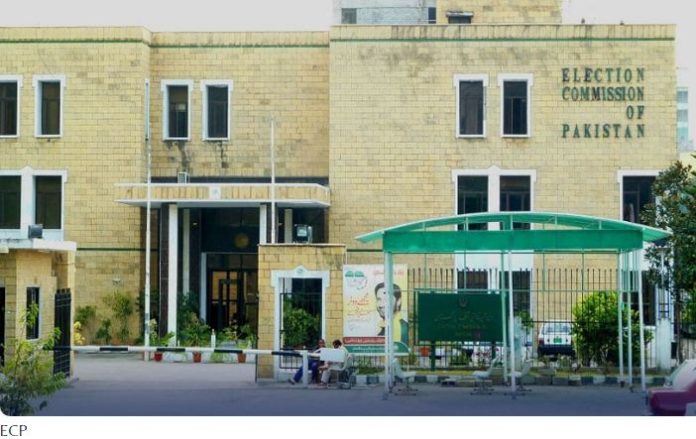
ECP

ISLAMABAD, JUN 30: Election Commission of Pakistan (ECP) has dismissed the petition seeking the disqualification of Pakistan Muslim League-Nawaz (PML-N) Punjab Assembly member Sonia Asher.

The verdict was announced by a three-member bench headed by Chief Election Commissioner Sikandar Sultan Raja.

In its ruling, the ECP clarified that minority women are eligible to contest and be elected on women’s reserved seats. The petition against Sonia Asher was filed by Saadia Muzaffar and Fiza Maimoona, challenging her eligibility on the grounds of being a non-Muslim candidate on a women’s reserved seat.

The commission emphasized that there is no constitutional or legal restriction preventing non-Muslim women from contesting either general or reserved seats. “Minority women cannot be barred from contesting elections on general or reserved seats,” the decision stated.

The ECP further noted that restricting minority candidates to only non-Muslim reserved seats would be a violation of Article 25 of the Constitution, which guarantees equality of all citizens.

The ruling is seen as a significant precedent affirming the right of minority candidates to participate fully in the democratic process without discriminatory limitations.

Pakistan records 32% decline in violence during second quarter 2025

Pakistan records 32% decline in violence during second quarter 2025

ISLAMABAD, JUN 30 /DNA/ – With at least 615 fatalities and 388 injuries – among civilians, security
personnel, and outlaws – in about 273 incidents of violence, including terror attacks and counterterror operations, Pakistan witnessed a nearly 32% decline in overall violence, and several other
promising trends in its security landscape for the second quarter of 2025, according to the Center
for Research and Security Studies (CRSS). These include:


i) Fatalities dropping from 900 in Q1 to 615 in Q2, 2025, a metric behind the reported 32%
reduction in violence.


ii) The fatalities suffered by security personnel and civilians combined (282) were still less than
the total number of outlaws’ fatalities recorded (333) – amounting to over 15% less comparative
losses among civilians and security officials,


iii) Around 32% and 40% less violence recorded in Khyber Pakhtunkhwa (KP) and Balochistan
provinces, respectively, compared to Q1. Violence-linked fatalities dropped from 567 to 389 in KP,
and from 317 to 190 in Balochistan, indicating a possible strategic breakthrough on the back of a
pro-active hunt-neutralise-capture campaign.


While the terrorism and insurgency-induced violence receded in these conflict-hit provinces, both
regions continued to bear the brunt of violence, accounting for over 94% of the total fatalities
and 93% incidents of violence recorded in this quarter.


The TTP continued to lead the violence in KP, and Balochistan remained a parallel epicenter of
unrest, marked by a deadly mix of separatist militancy and targeted violence, particularly against
state forces.


The spread of militancy into previously calmer areas is also concerning. Pakistan’s largest province
of Punjab, on the other hand, witnessed an alarming trend, recording a surge in fatalities by 162%,
though the number of fatalities was low; from 8 in Q1 to 21 in Q2, 2025. Notably, Azad Jammu &
Kashmir, which reported zero fatalities in Q1, recorded 6 deaths in Q2. Islamabad and Sindh
remained largely unaffected with minimal fluctuations.


While the intensity of violence has eased in traditional hotspots, its spread into new or lessprepared regions will require continued attention and policy adjustments.

Analysis of the overall fatalities and casualties recorded in Q2, 2025 by the victims of violence
reveals some interesting security trends; with both alarming and encouraging insights.


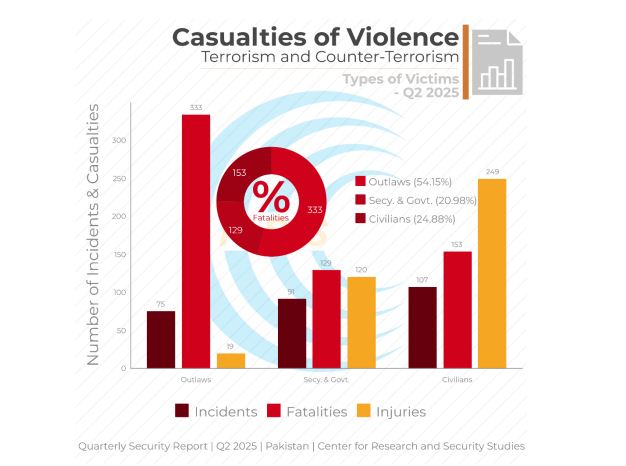
The outlaws suffered the majority, over 54% (333) of all fatalities in this quarter, followed by
civilians with 25% (153), and security and government officials with 21% (129).


The outlaws may have suffered the majority of fatalities recorded in this quarter; however, the
civilians were the most targeted group compared to security officials and outlaws, in terms of the
number of attacks and injuries suffered. They were involved in the majority of incidents and
injuries of violence recorded in this quarter.


In this regard, the civilians suffered 107 terror attacks, compared to security officials suffering 91
and outlaws targeted in 75 security operations. Moreover, they suffered 249 injuries compared
to security officials suffering 120 injuries and outlaws with only 19.


The high number of attacks and injuries suffered by civilians indicates terrorists’ aim to instill fear
and disruption rather than carry out precision strikes.


Moreover, with the outlaws suffering the least number of injuries, being involved in the least
number of incidents (which in their case were security forces operations), and still accounting for
the majority of fatalities compared to civilians and security officials indicates a high degree of
lethal precision in state-led counter-terrorism operations.


And as another promising trend like stated earlier, even the combined fatalities of security
personnel and civilians (282) were less than the total outlaws’ fatalities recorded (333).

Meanwhile, deaths among outlawed – militants and insurgents – elements fluctuated around 35%
during 2021 to 2024 but surged to around 55 by Q2, 2025, indicating intensified and successful
counter-terrorism campaigns.

Chairman CDA’s efforts win praise for extended One-Window Services

Chairman CDA’s efforts win praise for extended One-Window Services

ISLAMABAD, JUN 30 /DNA/ – In line with the direction of Chairman CDA, Chief Commissioner Islamabad and DG Civil Defense Muhammad Ali Randhawa, and under the supervision of CDA Member Estate Talat Mehmood and Member Finance Tahir Naeem, the citizens have not only appreciated CDA but have also expressed thanks to Chairman CDA for making excellent arrangements at One-Window Facilitation Center for the timely recovery of outstanding dues. The citizens of Islamabad visiting the One-Window Facilitation Center praised the special measures and efficient systems implemented on the instructions of Chairman CDA Muhammad Ali Randhawa, including digitization and cashless payment facilities. They also commended CDA’s modern digital system, transparent procedures, and the professional competence of the staff, stating that these measures have made the payment process extremely simple and transparent for the citizens.

On this occasion, the citizens witnessed the extended operational hours and citizen-friendly system at the One-Window Facilitation Center, implemented on the directives of the Chairman CDA, have significantly helped them in clearing their pending dues on time. They lauded the efforts of the CDA Chairman and expressed hope that such initiatives would continue in the future to prioritize citizens’ convenience and service delivery.

On the direction of the Chairman CDA, the CDA One-Window Facilitation Center remained open from 9 AM to 12 midnight on June 30, 2025, to facilitate citizens in clearing all their pending dues, including property charges, development charges, water charges, remaining installments for commercial/residential plots, transfer fees and other related charges.

The CDA has informed that action will be taken against those citizens who have failed to clear their dues till mid night of June 30, 2025, which may include heavy fines, cancellation of property allotments/leases, and property auctions. Furthermore, the names of defaulters will be published in newspapers as per law, which could damage their reputation and
image due to their own fault as per law.

The CDA has urged citizens to clear all their dues at the CDA One-Window Facilitation Center before 12 midnight on June 30, 2024 in order to avoid any legal consequences. For further details, citizens may contact CDA Headquarters and relevant offices for further assistance.

Pakistan’s UN envoy elected President of UNIDO Industrial Development Board

Pakistan’s UN envoy elected President of UNIDO Industrial Development Board

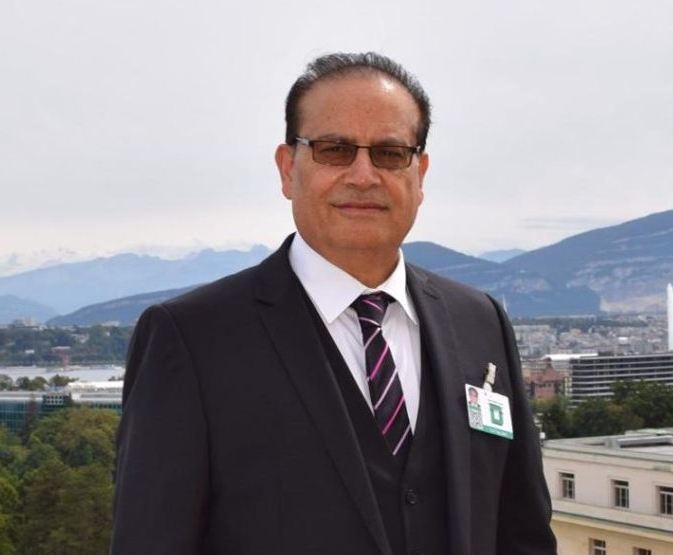
ISLAMABAD, JUN 30 /DNA/ – The Permanent Representative of Pakistan to the UN, Ambassador Kamran Akhtar, has been elected as President of the 53rd session of the Industrial Development Board. This is the first time Pakistan has been honoured with this prestigious position. The Director General of UNIDO, while congratulating Ambassador Kamran Akhtar, praised Pakistan’s commitment and contribution to the organization.

Ambassador Kamran Akhtar, in his statement, thanked all UNIDO Member States for their trust and expressed his commitment towards further enhancing the Organization’s role in industrial development, particularly in developing countries, LDCs, and SIDS. The election manifests the trust reposed in Pakistan by the UNIDO Member States.

Like all Vienna-based international organizations, Pakistan maintains an active diplomatic profile at UNIDO and remains committed to the organization’s core mandate, which is inclusive and sustainable Industrial Development. Pakistan has one of the largest portfolios with UNIDO, with several ongoing and planned projects worth over Euro 350 million. UNIDO has, inter alia, supported Pakistan’s textile, leather, fisheries, food safety, climate action, and renewable energy sectors.

Moreover, Projects like PAIDAR and PAFAID have helped in poverty alleviation, job creation, and the sustainable growth of rural communities. This year, Pakistan expects to launch a new cycle of its Country Partnership Program with UNIDO, along with several projects in myriad sectors.

Naval Chief stresses joint military readiness at Air War College

Naval Chief stresses joint military readiness at Air War College

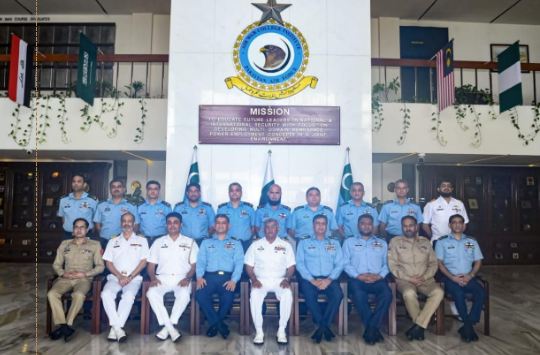
RAWALPINDI, JUN 30 /DNA/ – Admiral Naveed Ashraf, Chief of the Naval Staff, Pakistan Navy visited PAF Air War College Institute, Karachi today. On his arrival, he was received by Air Vice Marshal Rashid Habib, President Air War College Institute. The Chief Guest lauded the academic and professional excellence being imparted at the institute and acknowledged its vital role in grooming future military leadership capable of meeting the multifaceted challenges of modern warfare.

While addressing the participants of Air War Course, Chief of the Naval Staff underscored that operational preparedness remains the cornerstone of triumph in modern warfare. He referenced recent developments along the eastern front as a vivid illustration of the critical need for constant readiness and strategic foresight. He lauded the leadership of Air Chief Marshal Zaheer Ahmed Baber Sidhu, recognizing his role in modernizing PAF and swiftly integrating advanced technologies that have significantly enhanced operational readiness of Pakistan Air Force and have recalibrated the region’s deterrence landscape. The Naval Chief reiterated that Pakistan Navy’s combat capabilities have undergone a substantial enhancement across all operational domains—surface, sub-surface and aerial—enabling a more agile and potent maritime force. Emphasizing the imperative of cohesive national defence, he stressed the importance of inter-services collaboration in achieving strategic objectives. In this regard, he announced the initiation of more frequent and integrated joint operational exercises with Pakistan Air Force, aimed at further reinforcing the synergy and interoperability between the two services. The Naval Chief also highlighted the transformative role of technological innovation in contemporary conflicts. Citing the growing significance of Unmanned Aerial Systems, he highlighted an upcoming strategic collaboration between the National Aerospace Science & Technology Park (NASTP) and Pakistan Maritime Science & Technology Park (PMSTP). This partnership, he noted, will focus on advancing indigenous capabilities in unmanned systems, thereby bolstering Pakistan’s technological self-reliance and operational edge in the defence sector.

PAF Air War College Institute is a prestigious institution of Pakistan Air Force, where mid-level officers of Pakistan Armed Forces and friendly countries are prepared for assumption of key Command and Staff appointments. The course participants are exposed to over a hundred subject matter experts including Civil & Military Professionals, Diplomats, Scholars / Academicians, Lawyers, Industrialists, Scientists, Economists and Media personnel. Exclusive interaction with foreign faculty and strategists is also ensured to provide in-depth and academic rigor to the course.

HRCP 2024 report notes decline in rule of law in Khyber Pakhtunkhwa

HRCP 2024 report notes decline in rule of law in Khyber Pakhtunkhwa

From Our Correspondent 

PESHAWAR, JUN 30 /DNA/ – The Human Rights Commission of Pakistan (HRCP) its flagship annual report on the state of human rights in 2024 highlights a significant decline in democratic standards in the country, fueled by increasing concerns over the legitimacy of the general elections and the weakening of the parliamentary system.

The report made public in a press conference on Monday also pertained to deteriorated law and order situation along with increasing acts of violence against women, children, non Muslim minority and transgenders.

Its findings with respect to Khyber Pakhtunkhwa show that the province endured significant casualties among civilians as well as law enforcement and security personnel in 2024 as a result of militancy, reflecting the region’s deteriorating security environment. In Kurram, sectarian violence and tribal rivalries also contributed to nearly 250 deaths, while the consequent closure of roads and supplies triggered a humanitarian crisis.

The deterioration in democratic governance, civic freedoms and law and order raised serious concerns over the region’s political and social stability. However, the increased electoral participation of women in 2024, signaled a modest but welcome step towards political inclusion.

Data from the provincial police indicates that 77 people were charged with blasphemy and 49 people arrested, including one woman. However, the brutal lynching of a tourist in Swat, following an accusation of blasphemy, reflects an alarming rise in vigilantism nationwide.

The state’s ban on the Pashtun Tahafuz Movement ahead of a national jirga restricted civic space further. The report also recorded at least 105 new cases of enforced disappearances in the province, based on official data, prompting repeated judicial interventions. While some progress was seen in freedom of movement through the reopening of the Torkham border, mobility restrictions and local protests persisted.

Legislative output remained limited, with only 30 bills introduced and 21 passed. The judiciary continued to face pressure, with more than 23,000 cases pending at the Peshawar High Court and a backlog exceeding 38,000—many involving contempt proceedings against political and police actors.

The report documents persistent gender-based violence, including hundreds of cases of domestic abuse, sexual assault, and honour killings. Violence against children also surged, with scores of minors killed, assaulted or sexually abused, reflecting serious gaps in child protection. Khyber Pakhtunkhwa remained a key route for the deportation of Afghan nationals under the federal government’s Illegal Foreigners Repatriation Plan.

Labour rights violations continued unabated. At least 26 miners lost their lives due to hazardous working conditions and militant attacks, underscoring the ongoing risks faced by workers in extractive industries. A spate of kidnappings saw at least 30 labourers abducted by militants in separate incidents. Persistent wage issues were also reported across sectors, despite provincial pledges to raise the minimum wage.

Environmental challenges intensified, with floods and torrential rains claiming over 100 lives and Peshawar ranking among the world’s most polluted cities.

Trump’s Dual Triumph at Home and Abroad

Qamar Bashir

By Qamar Bashir

President Donald J. Trump’s return to office in January 2025 triggered swift, sweeping action. Armed with the same defiance and unfiltered confidence that defined his first term, Trump immediately reimposed the America First doctrine, introducing tariffs and demanding stricter compliance from allies. Predictions of economic collapse, rising inflation, and diplomatic backlash flooded the media. But within six months, reality tells a different story: the U.S. economy is gaining strength, international alliances are being redefined, and old taboos—particularly around America’s unconditional support for Israel—are being questioned as never before.

Recent economic data shows a striking rebound. According to the June 2025 jobs report, the U.S. added 139,000 private sector jobs in May alone, exceeding expectations for the third consecutive month. Unlike the previous two years, when foreign-born workers accounted for much of the labor force growth, the gains since January have been entirely among native-born Americans. Key industries such as leisure and hospitality, construction, and transportation are experiencing consistent growth, while private sector job creation stands at 99.8% of total employment expansion—marking a decisive shift away from government-led hiring trends under the previous administration.

Wage growth is equally notable. Real average hourly earnings have increased by nearly 4% over the past year, with real disposable personal income rising at an annualized rate of 7.5%—a sharp contrast to the 2.3% pace during President Biden’s final year. Inflation has cooled, with the May 2025 CPI showing a year-over-year increase of just 2.4%, the lowest in recent memory. Meanwhile, falling gas prices and stable food costs have contributed to rising consumer confidence. The Nasdaq Composite reached a record high of 20,273 points in late June, driven by renewed optimism in the technology sector and AI-driven investments.

Yet, this domestic optimism is set against a complex and evolving foreign policy backdrop. In April, a 12-day exchange of missile strikes between Israel and Iran raised fears of a broader war. Though conflict was narrowly avoided, the global response—particularly in Europe—marked a turning point. For the first time in decades, the European Union began publicly signaling discomfort with Israel’s conduct in Gaza. The European Council, in its official conclusions dated June 26, 2025, called for an immediate ceasefire and expressed alarm at the dire humanitarian situation. It also acknowledged that Israel may be violating human rights obligations under its existing EU trade agreement. Separately, 17 out of 27 EU member states have supported initiating a formal review of the EU–Israel Association Agreement—a move that underscores rising European frustration with Israel’s military policies.

These developments represent a profound shift in the EU’s position. While not formalized through a European Parliament resolution, the coordinated statements by EU leaders and ministers signal an emerging consensus across the continent. No longer content to follow Washington’s diplomatic lead, Europe is carving out its own space—politically, economically, and morally. This divergence has been accelerated by Trump’s aggressive demands that NATO countries not only increase defense spending to 5% of GDP but also prioritize the purchase of U.S.-manufactured arms. While this has bolstered the U.S. defense industry, it has strained alliances and created room for greater European independence in foreign policy decisions.

In the United States, debates over Israel’s actions have intensified. Senator Bernie Sanders introduced two resolutions—one to suspend military aid to Israel, the other to impose economic sanctions in response to what he described as collective punishment of civilians in Gaza. Both were overwhelmingly defeated in Congress, gaining only 15 and 20 votes respectively. Sanders blamed the pro-Israel lobbying establishment, arguing that most lawmakers fear political retaliation for any stance that challenges the Israeli government. Although President Trump did not endorse these measures, his administration has allowed such debates to surface without obstruction—a contrast to the traditionally unified bipartisan defense of Israel in past decades.

At the local level, symbolic shifts are also taking place. The election of Zoran Mamdani, a progressive Muslim, as mayor of New York City was a milestone. Mamdani’s unapologetic criticism of Israeli airstrikes and his pledge not to host Prime Minister Netanyahu in the city represent a growing undercurrent of opposition, particularly among younger, urban voters. These sentiments, once considered fringe, are increasingly part of mainstream political discourse.

Despite these changes, Trump’s approach to Israel has remained tactically cautious. He has not imposed sanctions or formally suspended aid, but he has made rare and significant public criticisms of Israel’s conduct. He openly expressed frustration when Israel violated a ceasefire that his administration had helped broker, signaling a clear deviation from traditional U.S. deference to Israeli actions. Now, with growing international condemnation of Israel’s military operations—characterized by many as genocidal and ethnically targeted—the moment is ripe for decisive American leadership.

European allies have begun distancing themselves from Israel, and public opinion within the United States has shifted dramatically in favor of a two-state solution. Increasingly, Americans are rejecting unconditional support for Israeli policies and calling for a just and lasting peace.

In this climate, Trump possesses both the leverage and the opportunity to use his influence to bring the involved parties—Israel, the Palestinian leadership, and regional stakeholders—toward a viable two-state solution. Such a move could restore hope to the Middle East, break the cycle of violence and displacement, and lay the foundation for long-term stability and prosperity across the region, benefiting not only those directly affected but also the broader global community.

Domestically, Trump’s approval ratings have benefited from the perception of economic strength. With job creation up, wages climbing, and inflation under control, even some of his skeptics acknowledge the effectiveness of his economic management. At the same time, his reluctance to intervene forcefully in foreign conflicts has earned him rare support from both anti-war conservatives and segments of the progressive left.

Six months into his second term, Trump has demonstrated that shock and disruption, when channeled effectively, can yield both economic and political gains. However, the defining challenge of his presidency may still lie ahead.

The humanitarian crisis in Gaza is deepening, and the chorus of global voices demanding justice is growing louder. If Trump chooses to leverage America’s unparalleled influence to mediate peace and push for a two-state solution, he could reshape not only his legacy but the trajectory of the Middle East. If he fails to act, the current window for diplomatic progress may close, leaving future generations to reckon with the consequences.

As 2025 unfolds, the defining test of Trump’s leadership may not be measured in job numbers or trade balances, but in whether he can guide the world’s most powerful nation toward a more balanced and just role in global peace building. With public opinion aligned, Europe asserting independence, and Israel under scrutiny, the opportunity is not only present—it may be historic.

By Qamar Bashir

 Press Secretary to the President (Rtd)

 Former Press Minister, Embassy of Pakistan to France

 Former MD, SRBC | Macomb, Michigan, USA

Pakistan welcomes Court of Arbitration

Pakistan welcomes Court of Arbitration

ISLAMABAD, JUN 30 /DNA/ – In a Supplemental Award announced on 27 June 2025, the Court of Arbitration hearing the Pakistan-India dispute over Kishenganga and Ratle hydroelectric projects has found that its competence remains intact, and that it has a continuing responsibility to advance these proceedings in a timely, efficient, and fair manner.

The Court of Arbitration decided to announce this Supplemental Award in the wake of India’s illegal and unilateral announcement to hold the Indus Waters Treaty in abeyance. Pakistan welcomes this Supplemental Award.

The  Award vindicates Pakistan’s position that the Indus Waters Treaty remains valid and operational, and that India has no right to take a unilateral action about it. We urge India to immediately resume the normal functioning of the Indus Waters Treaty, and fulfil its treaty obligations, wholly and faithfully.=DNA

Pakistan takes a major step towards a Crypto revolution

Pakistan takes a major step towards a Crypto revolution

In a historic and unprecedented move, Pakistan has officially entered the global digital economy with the announcement of its first state-backed Bitcoin Reserve, a bold step that signifies the country’s serious commitment to integrating blockchain and cryptocurrency into its financial future.

The groundbreaking announcement was made by Bilal Bin Saqib, Special Assistant to the Prime Minister on Blockchain and Cryptocurrency and CEO of the Pakistan Crypto Council (PCC), during the prestigious Bitcoin Vegas 2025 conference. According to sources, this moment marks a transformative shift in Pakistan’s approach to digital assets and financial innovation.

In a surprising diplomatic highlight, Bin Saqib extended special thanks to U.S. President Donald Trump, acknowledging his contributions to global crypto adoption and his behind-the-scenes efforts to help ease recent tensions between India and Pakistan. The event was also attended by U.S. Vice President JD Vance, Eric Trump, and Donald Trump Jr., underscoring the high-level international interest in Pakistan’s digital finance ambitions.

Bin Saqib highlighted Pakistan’s strong foundation in the digital economy, revealing that the country now hosts over 40 million cryptocurrency wallets. This positions Pakistan among the world’s most active digital finance participants, thanks largely to its massive freelance economy, rising digital literacy, and growing youth population. These factors, he noted, create the ideal conditions for the country to embrace a blockchain-driven future.

One of the central initiatives unveiled during the event was the creation of a National Bitcoin Wallet—a digital infrastructure designed to store state-held crypto assets securely. This step reflects Pakistan’s ambition to integrate digital currencies into its sovereign financial framework, making it one of the few countries in the region to take such a forward-looking measure.

To support the technical backbone of this initiative, the Pakistani government has allocated 2,000 megawatts of surplus electricity for use in Bitcoin mining and AI-powered data centers. These facilities will not only cater to local tech enterprises but also invite foreign blockchain companies and independent miners to establish operations within Pakistan. This massive infrastructure move is expected to create thousands of jobs, boost foreign investment, and position Pakistan as a regional leader in blockchain computing.

In line with these developments, Pakistan also announced the establishment of the Pakistan Digital Assets Authority—a regulatory institution responsible for overseeing all blockchain-based financial systems. The Authority will enforce transparency, provide legal protections, and offer clear regulatory guidelines to both local and international stakeholders.

These sweeping reforms signal a paradigm shift in Pakistan’s digital economic strategy. No longer content to remain on the sidelines, the country is now actively pursuing a leadership role in the global crypto landscape. With a clear vision, strong policy direction, and infrastructure investment, Pakistan’s crypto revolution has officially begun.

As Bilal Bin Saqib remarked, “This is not just about Bitcoin—it’s about building a future economy that is decentralized, inclusive, and globally connected. Pakistan is ready to lead.”

IHC seeks reasons from govt for not becoming party

Court says this is a constitutional court and it cannot be happening that one comes and says what the decision is but does not give the reasons

DNA

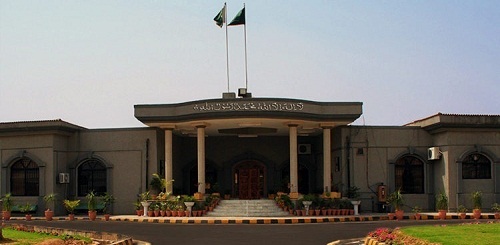
ISLAMABAD, The Islamabad High Court (IHC) on Monday sought reasons from federal government for not becoming a party in the US court in the Dr. Aafia Siddiqui case.

It directed the Additional Attorney General to explain the reasons for the government’s decision on next hearing.

Justice Sardar Ijaz Ishaq, hearing the case, remarked that when the government or the Attorney General takes a decision, there are reasons for it.

Justice Sardar Ijaz Ishaq Khan of the Islamabad High Court heard the petition of Dr. Fawzia Siddiqui regarding the return of Dr. Aafia Siddiqui.

During the hearing, the petitioner, lawyer Imran Shafiq, Additional Attorney General and other officials appeared in the court.

The Additional Attorney General told the court that the government has decided not to provide legal assistance and become a party in the Aafia Siddiqui case in the US.

Justice Sardar Ijaz Ishaq asked the Additional Attorney General why this decision was made and what are the reasons for it? To which the Additional Attorney General said that this is the decision taken by the government.

Justice Sardar Ijaz Ishaq remarked that when the government or the Attorney General makes a decision, there are reasons for it, no decision is made without reasons, this is a constitutional court and it cannot be happening that one comes and says what the decision is but does not give the reasons.

The court directed the Additional Attorney General to inform the court about the reasons at the next hearing. The hearing of the case has been adjourned until July 4.

Stay Connected

64FansLike
60FollowersFollow

Latest Reviews

Exchange Rates

USD - United States Dollar
EUR
1.17
GBP
1.35
AUD
0.67
CAD
0.73