Home Blog Page 3211

Commencement of Intra-Afghan Negotiations Remarks by FM Qureshi

DNA

ISLAMABAD, SEPT 12 – We meet today to mark an historic occasion, when our Afghan brethren take a major step forward in their long quest for peace. Indeed, a long phase of tribulations seems ending.  A new dawn is upon us.

This journey has not been easy. There have been obstacles and setbacks; moments of doubt and despair.

Yet, progress has been made, and preserved.

Arriving at this inflection point has been an accomplishment, and this success belongs, first and foremost, to the Afghans.

Pakistan has walked along-side you in every possible way, by encouraging reduction in violence and by urging dialogue and negotiations.

Pakistan has fully facilitated the process that culminated in the U.S.-Taliban Peace Agreement in Doha on 29 February 2020 and has reached this juncture.

Commencement of Intra-Afghan Negotiations, today, is the fruit of our combined efforts.

Pakistan and Prime Minister Imran Khan has long maintained that there is no military solution to the conflict in Afghanistan. Political solution is the only way forward.

We are gratified that our perspective is now widely shared across the international community.

We are also gratified that we have fulfilled our part of the responsibility.

It is now for the Afghan leaders to seize this historic opportunity, work together constructively, and secure an inclusive, broad-based and comprehensive political settlement.

The forthcoming negotiations are for the Afghans to decide about their future. The Afghans alone must be the masters of their destiny, without outside influence or interference.

Spoilers, from within and from without, will pose formidable challenges. Constant vigilance will be required to guard against their machinations.

We hope all sides will honour their respective commitments, persevere in the face of all challenges and setbacks, and remain unflinchingly committed to achieving a positive outcome.

Besides Afghanistan, Pakistan is the country that has suffered the most from the Afghan conflict.

Over the past 40 years, we have endured terrorist attacks, loss of precious lives, mass population displacements, instability at the borders, and huge economic costs.

But we have persevered in the face of all difficulties and negativity.

Our citizens and law enforcement personnel have rendered invaluable sacrifices. Our leadership has decisively demonstrated that Pakistan will only be a partner for peace.

At this historic juncture, it is imperative that the mistakes of the past are not repeated. The Afghan people must not be abandoned, as happened before. The progress achieved must not be frittered away.

A peaceful and stable Afghanistan will bring new opportunities for the progress and prosperity of the Afghan people. It will also open new vistas of cooperation and connectivity in the region and beyond.

I suggest a four-pronged way forward. We call upon the international community and all concerned:

  1. To continue to support the Afghan-led and Afghan-owned peace process while respecting the consensus that emerges from Intra-Afghan Negotiations.
  2. To ensure that Afghanistan neither witnesses the violent days of the past nor becomes a space for elements who would harm others beyond its borders.
  3. To deepen and sustain economic engagement with Afghanistan for its reconstruction and economic development.
  4. To ensure a well-resourced, time-bound return of Afghan refugees to their homeland with dignity and honour.

At this moment of hope, I reassure our Afghan brethren that Pakistan will always be in full support and solidarity with them as they continue their momentous journey on the path of peace, security and development.

Pakistan will always support a peaceful, stable, united, democratic, prosperous and sovereign Afghanistan, at peace with itself and with its neighbours.
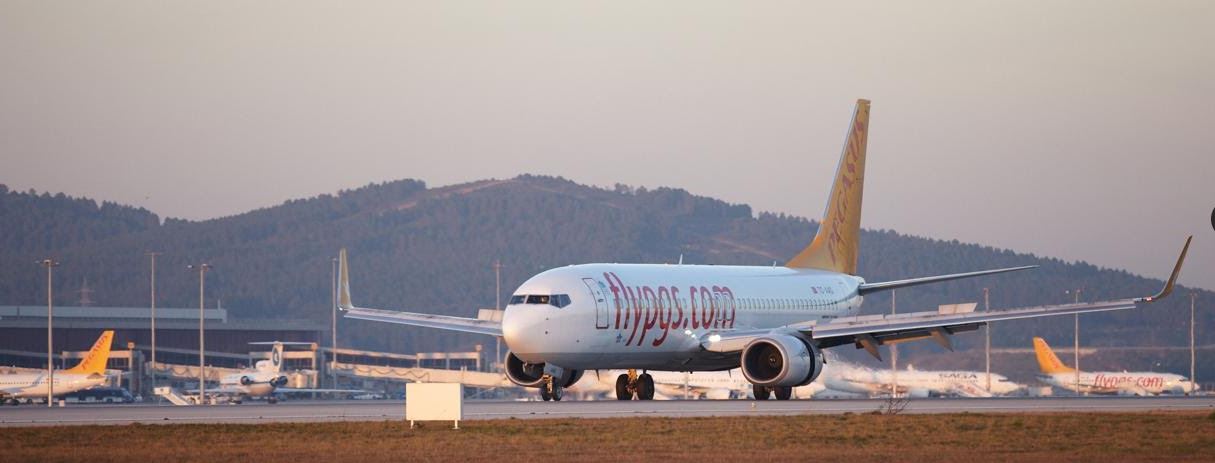
Pegasus Airlines launching a new route between Istanbul SabihaGökçen, Karachi

DNA

Islamabad, SEPT 12 – Turkey’s digital airline, Pegasus, continues to expand its international network with the launch of its new Karachi – Istanbul SabihaGökçen flights, connecting Karachi, Pakistan to Istanbul, Turkey. Pegasus’ Karachi – Istanbul SabihaGökçen flights will commence on 25 September 2020.

Flights from Istanbul SabihaGökçen Airport to Quaid-E-Azam International Airport will operate every Monday, Wednesday, Friday and Sunday at 20:35; whilst flights fromQuaid-E-Azam International Airport to Istanbul SabihaGökçen Airport will depart every Monday, Tuesday, Thursday and Saturday at 04:55 (local times apply).

Pegasus Airlines will connect guests from Karachi to its destinations in Manchester, London, Zurich, Paris, Amsterdam, Copenhagen, Dusseldorf, Hamburg, Stockholm, Frankfurt, Berlin, Vienna, Rome, Cologne, Brussels, Kyiv, Bucharest, Kharkiv, Moscow, Stuttgart, Geneva, Barcelona, Marseille, Zaporizhia and Prague, via Istanbul Sabiha Gökçen, with flights now on sale from $309.99.

Capture 1

Pegasus Airlines was founded in 1990 with the mission that everyone has the right to fly. Since launching its scheduled services in 2005, Pegasus Airlines has become Turkey’s first and leading low-cost airline and one of the region’s aviation frontrunners with a growing network across Europe, Russia and the Caucasus, the Middle East, North Africa and Asia. Pegasus Airlines launched its first charter flights in 1990 and was then acquired by ESAS Holding in 2005, since then it has been operating scheduled flights, offering guests competitively priced, comfortable and punctual point-to-point and transit flights operated with the newest aircraft under the auspices of its low-cost model.

‘Pegasus Airlines is warmly welcomed by Gerry’s Group in Pakistan as their local partners.

Turkey and Pakistan have strong cultural history along with the ever-improving economic ties. Pegasus Airlines as a new entrant will further strengthen ties between the two countries.’

Gerry’s has the distinction of being one of the largest aviation groups in Pakistan. With 57 years of success and over 4000 employees in 200+ locations worldwide, Gerry’s Group has a diversified scope of business. Its portfolio stretches over as General Sales Agents for International Airlines, Air Freight, Airport Ground Handling, Telecommunications, Visa Processing, Travel & Holiday, Air Express, Freight & Logistics, Food & Beverage, Information Technology and Real Estate.

China rejects German’s newspaper against Xinjiang

DNA

ISLAMABAD, SEPT 12 – The recently published news item titled “Xinjiang has become a ‘digital police state’ in the name of lockdown” by German state media outlet Deutsche Welle was another lie and conspiracy against China.

According to China Economic Net (CEN), the news alleged that “Xinjiang’s lockdown is being monitored under extensive surveillance, which has made the Xinjiang autonomous region a ‘digital police state’.”

A CEN’s report says, as a matter of fact, many developed countries around the world are currently copying China’s digital monitoring system against the coronavirus.

Everywhere from South Korea to Saudi Arabia, suspected corona patients are being monitored through mobile apps and the sole purpose is to prevent the spread of corona by the carelessness of a single patient.

Therefore, distorting normal prevention and control measures to “digital police” is nothing more than double standard, a trick frequently employed by western media.

Being the first country in the world to have regular cases of coronavirus, the Chinese government has overcome them with tough but effective measures to lock down cities, which helped control the spread of coronavirus in a short time and consequently attained the economic recovery.

Countries that have not considered lockdowns, like the United States, do not need much research to determine how bad the coronavirus situation is.

The news accused China of violating medical ethics and based this accusation on the statements of three people, who allegedly posted on social media that they were given Chinese traditional medicine.

The newspaper did not disclose its source, which contradicts the basic norms of news to be authentic and can stand verification.

Therefore, the one-sided reporting of a German newspaper hostile to China, ignoring journalistic principles and standards, is reprehensible.

It’s foreseeable that lies about China will continue unabated and widespread, with American support and patronage, the report added.

Palestine rejects US-Bahrain-Israel declaration

DNA

RAMALLAH: The Palestinian leadership has declared its strong rejection and condemnation of the US, Israeli, and Bahraini tripartite declaration on the normalization of relations between the Israeli occupation state and the Kingdom of Bahrain.

It considers it a betrayal of Jerusalem, Al-Aqsa, and the Palestinian cause and a step in support of legalizing the ugly crimes of the Israeli occupation against the Palestinian people.

 Israel continues to control and annex the Palestinian lands by military force and actively works to Judaize Jerusalem, control the Islamic and Christian holy sites, and commit crimes against the Palestinian people.

The Palestinian leadership considers this step extremely dangerous, as it torpedoes the Arab peace initiative, the decisions of the Arab and Islamic summits, and international legitimacy. The Palestinian leadership rejects this step taken by the Kingdom of Bahrain and calls on it to immediately retreat from it due to the great harm it causes to the inalienable national rights of the Palestinian people and joint Arab action.

The Palestinian leadership also renews its call to the brotherly Arab nations to adhere to the Arab Peace Initiative of 2002 and calls on the international community to adhere to international law and international legitimacy decisions.

The Palestinian leadership affirms once again that it has not and will not delegate anyone to speak in its name. It also confirms that peace and stability in the region will only be achieved by ending Israel’s occupation of all Palestinian and Arab lands- and with the Palestinian people gaining their independence in their sovereign state, on the borders of 4 June 1967, with East Jerusalem as its capital, and resolving the refugee issue based on UNGA 194. It’s delusional to believe that these concessions at the expense of the Palestinian people’s rights will serve peace, security, and stability in the region.

ISLAMABAD POST E-PAPER’S SEPT 12

World First Aid Day: saving lives amid Covid-19

By Khalid bin Majeed

The World First Aid Day is being celebrated today around the globe, but in an entirely changed world this time. The International Federation of Red Cross and Red Crescent Societies (IFRC) introduced the World First Aid Day in 2000 and it is celebrated on second Saturday of September every year with an aim to raise public awareness of how first aid can save lives in everyday and crisis situations as well as to encourage first aid training for all. Initially the theme for World First Aid Day 2020 was chosen as ‘First Aid for Schoolchildren’ but it was later changed to ‘First Aid during Covid-19 Epidemic’, since schools had been closed for months due to global outbreak of coronavirus.

While Covid-19 pandemic has reshaped almost the whole world, it has also given new meanings and dimensions to the first aid. Knowing first aid at all times, especially in emergencies, is important but it became extra important in the wake of Covid-19 epidemic because going to medical facilities was not recommended and people would spend more time at home. Hence, for as many people as possible, at least one in each household must know how to provide first aid to themselves and others in time of need.

The International Federation of Red Cross and Red Crescent Societies is a world leader in providing first aid, and for more than 150 years, first aid has been one of the essential services provided to the injured by volunteers of the Red Cross and Red Crescent. The Pakistan Red Crescent Society has been continuously working on training the population on how to provide first aid during any emergency situations. Even during the Covid-19 peak days in Pakistan, when all routine trainings had been suspended, the PRCS first aid trainers, under the Corona Muhafiz Response Campaign, remained engaged in providing psychosocial support to the Covid-19 patients at their doorsteps as well as hospitals. The premise of psychosocial support intervention was to control the side- and after-effects on psychosocial aspects of an infectious disease and attempt to minimize psychological impact with timely assessment, prevention and control.

The scare of Covid-19 has been so strong and widespread that it has stolen all the attention of the world capitals due to which important health issues like the annual child immunization, blood donation campaigns, first aid training sessions and a slew of important health issues paled into insignificance. These issues have now shaped up into another serious challenge for the world to tackle.

It is heartening to note that compared to the regional and international situation, the disease has subsided in Pakistan, with daily infections curtailed to a few hundred now. Though the battle is not over yet and there may be still a long way to go, the improvement in domestic situation of disease demands that other serious health-related issues, especially the stalled first aid training (FAT) program, must be addressed with dedication, devotion and commitment.

The Covid-19 pandemic also slammed the breaks on the PRCS FAT program, disabling the first aid educators from continuing their activities. However, as the situation has eased up, the PRCS has resumed its flagship FAT program on full scale under the leadership of its Chairman Abrar ul Haq. The aim of the program is to make the communities resilient to absorb shocks from any natural or manmade disasters.

Under the FAT program, thousands of people from public, private and corporate sector and students of almost educational institutions from schools to colleges and universities have been trained by the PRCS. In a landmark development, the PRCS first aid curriculum has also been accredited by the Ministry of National Health Services, Regulations and Coordination.

Currently, the PRCS is actively planning to institute a ‘Red Crescent Corps’ (RCC) on the pattern of the National Cadet Corps (NCC) of the past. Among other things, the first aid training will also be a core component of the RCC under which trainings for emergency response and blood campaigns will be imparted. Under a long-term strategy, the scope of RCC will be expanded to all provinces and efforts will be made to make it an integral part of early college education just like the NCC trainings. The objective of the initiative is to raise a whole generation of trained youngsters who are readily available to help out in the wake of any large-scale emergency or disaster situation in the country.

Efforts are on to make first aid part of the syllabi to achieve the aim of developing a resilient nation which is able to deal with the pre- and post-disaster shocks through better planning and response. Talks with the federal and provincial governments are in progress for incorporation of first aid in the national syllabi.

The PRCS is a huge humanitarian organization with extensive network in every nook and corner of the country. Being part of the Red Cross and Red Crescent Movement as well as a member of the ICRC and IFRC, the PRCS has movement partners in 194 countries of the world. As the international community celebrates World First Aid Day today, it is important that our government shows seriousness towards this issue and gives ownership to the first aid training program of the PRCS which will definitely help transform Pakistanis into a resilient nation.

The writer is Secretary General of Pakistan Red Crescent Society.

Pakistan, China share a common vision for regional prosperity; Senate Chief

DNA

Islamabad, SEPT 11 –  Chairman Senate Sadiq Sanjrani has said that Pakistan and China have exponentially enhanced cooperation on a number of fronts and such cooperation is reflective of strong ties and linkages at both government and parliamentary levels.

He expressed these views at a reception hosted in honor of the outgoing Chinese Ambassador Yao Jing here at Islamabad on Friday.

He said that augmenting relations with China is the cornerstone of our foreign policy, and our friendship with China represents national consensus and the common desire of all Pakistani people.

“We support and commend President Xi Jinping’s visionary Belt and Road Initiative (BRI) that aims at enhancing regional and international connectivity”, Chairman Senate remarked. He further added that this vision resonates with Pakistan’s own resolve and commitment to promote peace, development and prosperity through cooperation, inclusivity and mutual respect.

Chinese Ambassador presented 3rd volume of “The Governance of China” to the Chairman Senate.  The book is a compilation of speeches of Chinese President Xi Jinpig.

Chairman Senate expressed his gratitude to Ambassador Yao Jing for this wonderful gesture of presenting the 3rd Volume of “The Governance of China” to the Senate of Pakistan.  He also congratulated President Xi Jinping, for documenting another volume of his highly revered collection of speeches and writings on the subject.

Chairman Senate expressed his confidence that Pakistan and China will continue to explore numerous avenues of further cooperation.

He said that Pakistan and China have a shared vision of regional prosperity and cooperation between the two reflects trust and confidence.  He underlined the need for more linkages at different levels for the benefit of the people of two sides.  He also expressed his well wishes to the outgoing Ambassador.

 Speaking on the occasion Chinese Ambassador said that Pakistan and China are peace loving counties. Both the countries also love their integrity and sovereignty.

We have stood together through thick and thin.

We work together for international justice and  collective regional development and connectivity.

We are together on principal stance of Kashmir cause .

It is an emotional moment as Pakistan has not been part of my job but also my life.

Experts from Central and South Asia discuss improving connectivity in the region

DNA

The international video conference “China – Pakistan Economic Corridor and Central Asia: Emerging connectivity opportunities” was held With  the participation of leaders and experts from analytical and research centers from China, Pakistan, Afghanistan, Iran, Kazakhstan, Kyrgyzstan, and Uzbekistan.

According to the Institute for Strategic and Regional Studies (ISRS), during the online dialogue, an exchange of views took place on the current situation in the Central and South Asia, the implementation of China’s Belt and Road Initiative, the China – Pakistan Economic Corridor, and other projects designed to strengthen the connectivity of the region’s countries.

Speaking at the conference, head of the ISMI Department Sadullo Rasulov noted Tashkent’s interest in implementing energy and transport and logistics projects that can ensure the formation of a network of sustainable strategic communications between the regions of Central and South Asia.

In this regard, S.Rasulov recalled that Uzbekistan has forwarded a number of initiatives aimed at increasing connectivity in Central Asia. Among them, an important role is assigned to the construction of Uzbekistan – Kyrgyzstan – China railway, which is designed to unlock the transport potential of the region and form China – Central Asia – Western Asia economic corridor.

The importance of this road lies in the fact that it is the shortest route from China to the European and the Middle East countries. Compared to the existing routes, the distance will be reduced by 900 km, and the delivery time will be reduced by 7-8 days.

Uzbekistan is also promoting a number of projects that will connect Central Asia by the shortest route through Afghanistan with Pakistan and the Middle East, provide an opportunity for the states of South Asia and the Middle East to enter the CIS and Europe markets.

The first is the construction of Mazar-i-Sharif – Kabul – Peshawar railway with access to Pakistan’s Gwadar and Karachi ports. The second is the construction of Mazar-i-Sharif – Herat – Qandahar railway with access to Iran’s Chabahar port.

The ISRS expert pointed to the prospect of a possible conjugation of the corridor to Peshawar with flagship project “Belt and Road” – “China – Pakistan Economic Corridor”. Taking into account the infrastructure development in Gwadar, this port will have every reason to become a key regional hub.

He emphasized that Uzbekistan supports the implementation of such energy projects as TAPI, CASA-1000, and PTL-500 Surkhon – Puli-Khumri, not limited to laying transport corridors.

According to him, transport communications and a unified energy infrastructure solve not only the problems of connectivity. They also serve to create new jobs, stimulate trade, motivate development, and thereby form the necessary socio-economic basis for the process of political settlement of the crisis in Afghanistan.

In addition, the region’s economic development programs will serve as a key factor in building consensus among regional countries on the need for early achievement of long-term and sustainable peace in this long-suffering country.

Other participants of the virtual discussion also supported this view. Huseyin Bоtsali, OIC’s Permanent Representative in Afghanistan, noted that the Afghan crisis is one of the main barriers to strengthening connectivity in Central and South Asia. At the same time, he highly appreciated the efforts of Uzbekistan aimed at involving Afghanistan in trade-economic relations in Central Asia through the implementation of transport and energy projects.

According to him, the Government of Afghanistan has intensified negotiations with China and Pakistan on the development of cooperation within the framework of China – Pakistan Economic Corridor. Kabul also expresses interest in establishing cooperation with Central Asian countries bоth within the framework of Belt and Road and in a bilateral format.

Huseyin Bоtsali believes that more active involvement of Afghanistan in the regional process in Central and South Asia will serve to maintain long-term stability in this country.

The videoconference showed the interest of Central and South Asian countries, as well as China in further deepening connectivity.

RCCI shows strong concern on Lahore-Motorway incident

RAWALPINDI, SEPT 11 (DNA) – Saboor Malik, President, Rawalpindi Chamber of Commerce and Industry (RCCI) has expressed his grief and anger over the Lahore- motorway incident.

He said that this tragic incident has created unrest among the citizens especially the business community.

Speaking at a meeting of former presidents at the Chamber House, he said the motorway has been considered a safe route for travel.

The incident has damaged the reputation of the motorway. Group leader Sohail Altaf said that the higher authorities should take immediate notice of the matter and the accused should be arrested and brought to justice.

Such accused should be given the harshest and exemplary punishment so that such incidents do not happen again. The government should ensure safe travel for citizens on all highways.

Sohail Altaf added that families always prefer to travel on the motorway. This incident has caused fear and worry in everyone. He demanded that the department, officers or personnel involved in the incident should be brought to justice. DNA

==============

Stay Connected

64FansLike
60FollowersFollow

Latest Reviews

Exchange Rates

USD - United States Dollar
EUR
1.17
GBP
1.36
AUD
0.72
CAD
0.74